Tag Archives: women

21 Quotes from Sylvia Plath

31 Jul

1. “Can you understand? Someone, somewhere, can you understand me a little, love me a little? For all my despair, for all my ideals, for all that – I love life. But it is hard, and I have so much – so very much to learn.”

The Unabridged Journals of Sylvia Plath

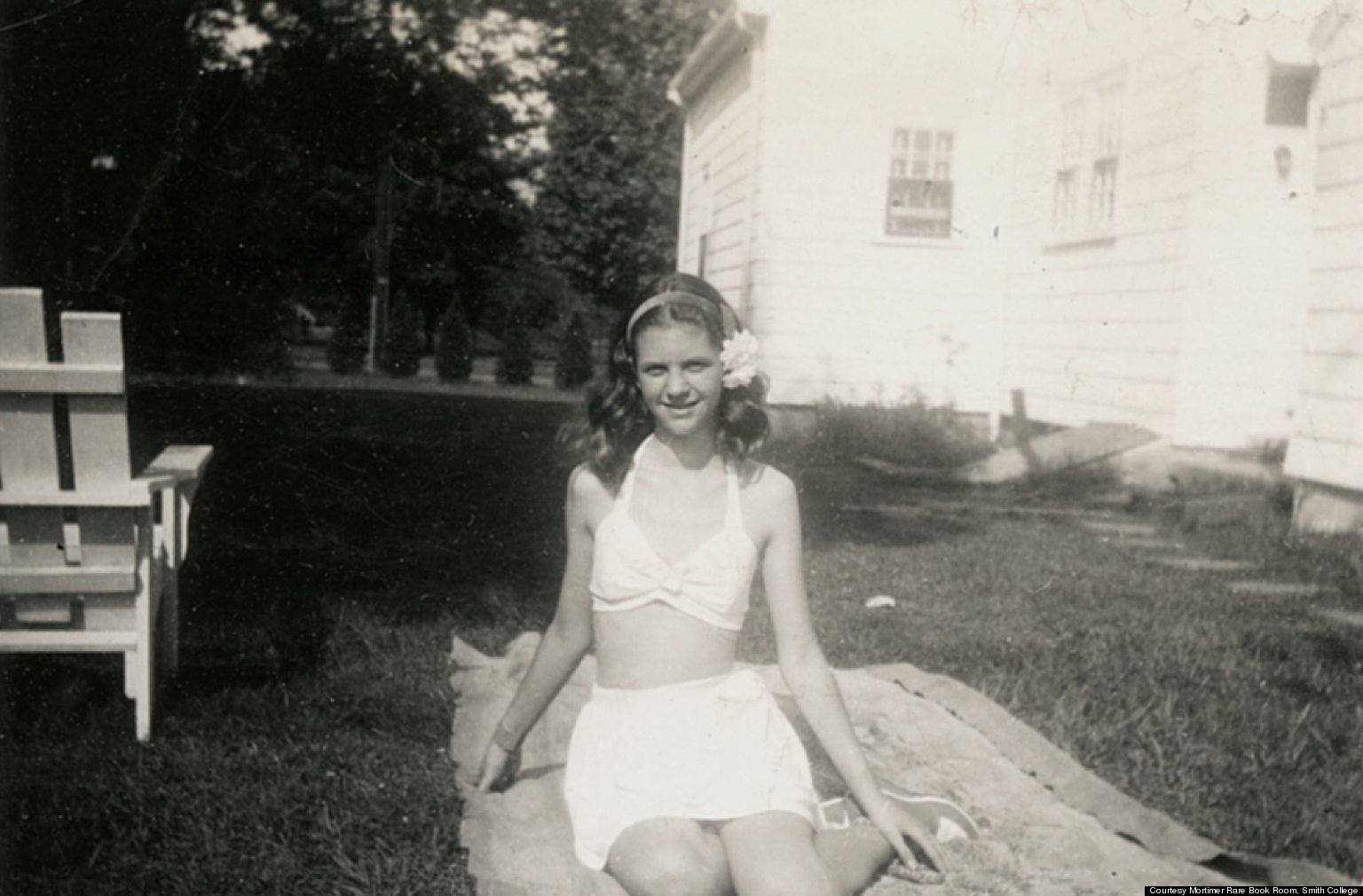
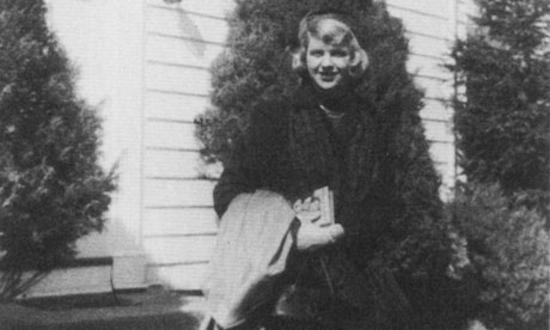
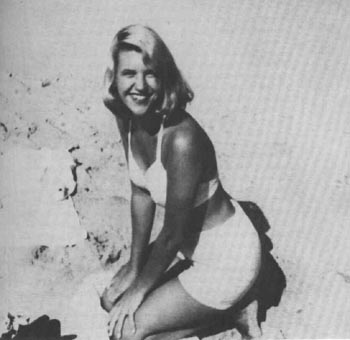
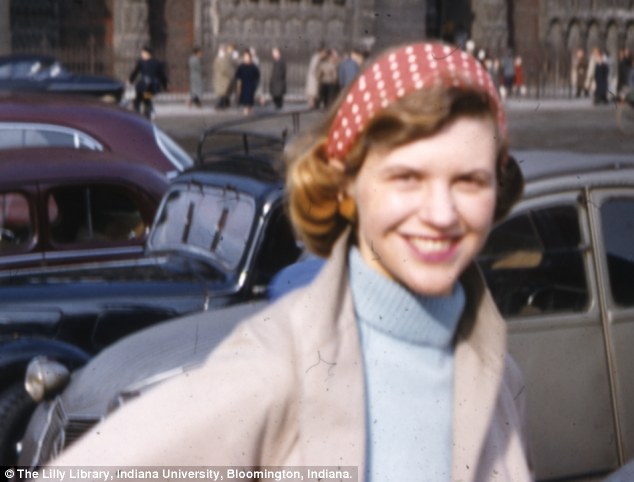
Young Sylvia Plath

Young Sylvia Plath

2. “God, but life is loneliness, despite all the opiates, despite the shrill tinsel gaiety of ‘parties’ with no purpose, despite the false grinning faces we all wear. And when at last you find someone to whom you feel you can pour out your soul, you stop in shock at the words you utter – they are so rusty, so ugly, so meaningless and feeble from being kept in the small cramped dark inside you so long. Yes, there is joy, fulfillment and companionship – but the loneliness of the soul in its appalling self-consciousness is horrible and overpowering.”

The Unabridged Journals of Sylvia Plath

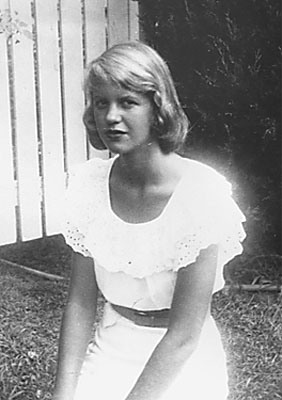
Sylvia+Plath

3. “If neurotic is wanting two mutually exclusive things at one and the same time, then I’m neurotic as hell. I’ll be flying back and forth between one mutually exclusive thing and another for the rest of my days.”

The Bell Jar

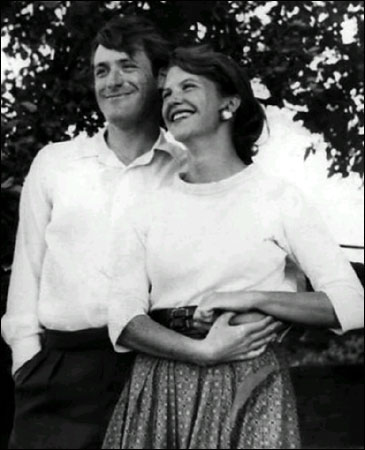
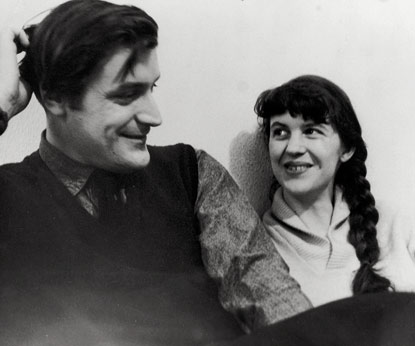
With Ted Hughes

With Ted Hughes

4. “Remember, remember, this is now, and now, and now. Live it, feel it, cling to it. I want to become acutely aware of all I’ve taken for granted.”

The Unabridged Journals of Sylvia Plath

944273_399121096866572_72379005_n

5. “The silence depressed me. It wasn’t the silence of silence. It was my own silence. I knew perfectly well the cars were making a noise, and the people in them and behind the lit windows of the buildings were making a noise, and the river was making a noise, but I couldn’t hear a thing. The city hung in my window, flat as a poster, glittering and blinking, but it might just as well not have been there at all, for the good it did me.”

The Bell Jar

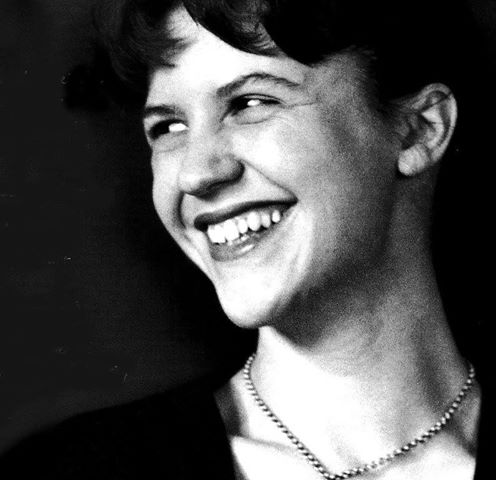
Syvia Plath

6. “Perhaps when we find ourselves wanting everything, it is because we are dangerously near to wanting nothing.”

Draft of letter to Richard Sassoon

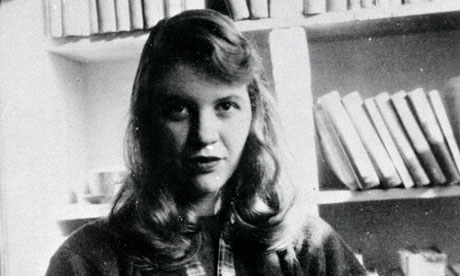
plath

7. “If you expect nothing from somebody you are never disappointed.”

The Bell Jar

plath 1

8. “With me, the present is forever, and forever is always shifting, flowing, melting. This second is life. And when it is gone it is dead. But you can’t start over with each new second. You have to judge by what is dead. It’s like quicksand… hopeless from the start.”

The Unabridged Journals of Sylvia Plath

tumblr_ljder1asa31qedsf0o1_400

9. “I like people too much or not at all. I’ve got to go down deep, to fall into people, to really know them.”

The Unabridged Journals of Sylvia Plath

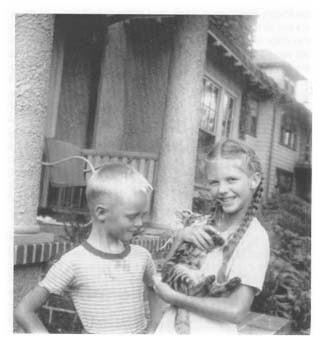
As a child, with her brother Warren

As a child, with her brother Warren

10. “I thought it sounded just like the sort of drug a man would invent. Here was a woman in terrible pain, obviously feeling every bit of it or she wouldn’t groan like that, and she would go straight home and start another baby, because the drug would make her forget how bad the pain had been, when all the time, in some secret part of her, that long, blind, doorless and windowless corridor of pain was waiting to open up and shut her in again.”

The Bell Jar

sylvia1

11. “We should meet in another life, we should meet in air,
Me and you.”

Lesbos

sylvia-plath-010_1360487421_crop_550x330

12. “Yes, my consuming desire is to mingle with road crews, sailors and soldiers, barroom regulars—to be a part of a scene, anonymous, listening, recording—all this is spoiled by the fact that I am a girl, a female always supposedly in danger of assault and battery. My consuming interest in men and their lives is often misconstrued as a desire to seduce them, or as an invitation to intimacy. Yes, God, I want to talk to everybody as deeply as I can. I want to be able to sleep in an open field, to travel west, to walk freely at night.”

The Unabridged Journals of Sylvia Plath

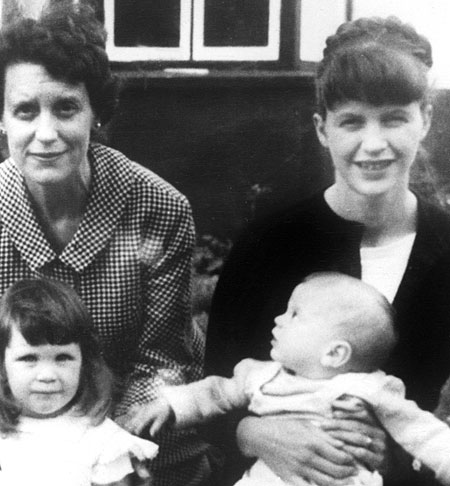
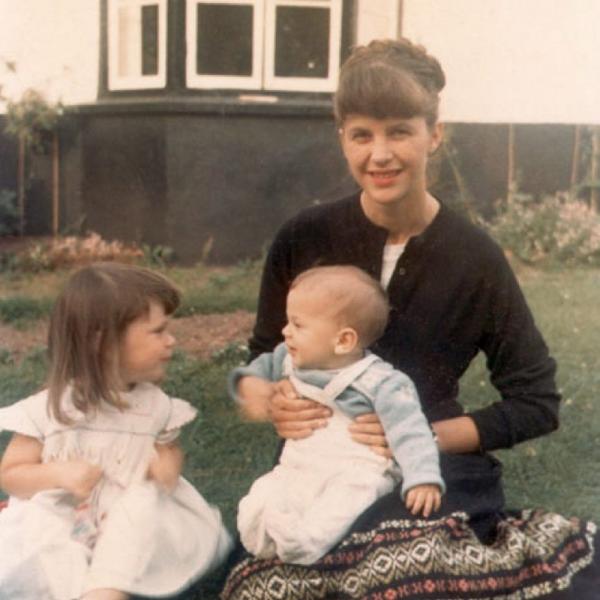
Sylvia with her mother, Aurelia, and her children, Frieda and Nicholas

Sylvia with her mother, Aurelia, and her children, Frieda and Nicholas

13. ” I am terrified by this dark thing
That sleeps in me;
All day I feel its soft, feathery turnings, its malignity.”

Elm

sp013

14. “I felt very still and empty, the way the eye of a tornado must feel, moving dully along in the middle of the surrounding hullabaloo.”

The Bell Jar

sylvia_plath

15. “I write only because
There is a voice within me
That will not be still.”

Letters Home: Correspondence, 1950 – 1963

plath--3

16. “If they substituted the word ‘Lust’ for ‘Love’ in the popular songs it would come nearer the truth.”

The Unabridged Journals of Sylvia Plath

222379632_a53b9f0135_o

17. “There must be quite a few things a hot bath won’t cure, but I don’t know many of them.”

The Bell Jar

With Frieda and Nicholas

With Frieda and Nicholas

18. “To annihilate the world by annihilation of oneself is the deluded height of desperate egoism. The simple way out of all the little brick dead ends we scratch our nails against.”

The Unabridged Journals of Sylvia Plath

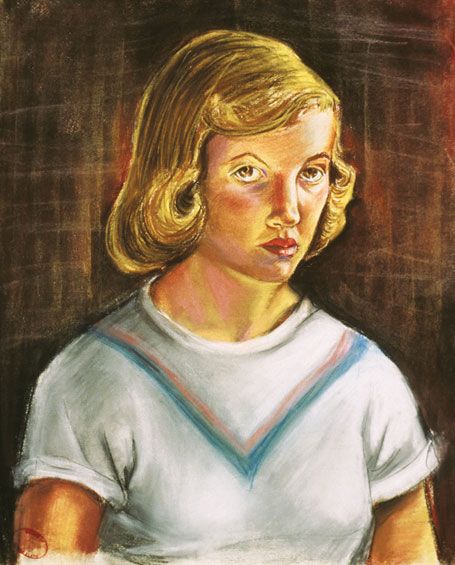
Self- portrait

Self- portrait

19. “What horrifies me most is the idea of being useless: well-educated, brilliantly promising, and fading out into an indifferent middle age.”

The Unabridged Journals of Sylvia Plath

plath4

20. “I took a deep breath and listened to the old brag of my heart: I am, I am, I am.”

The Bell Jar

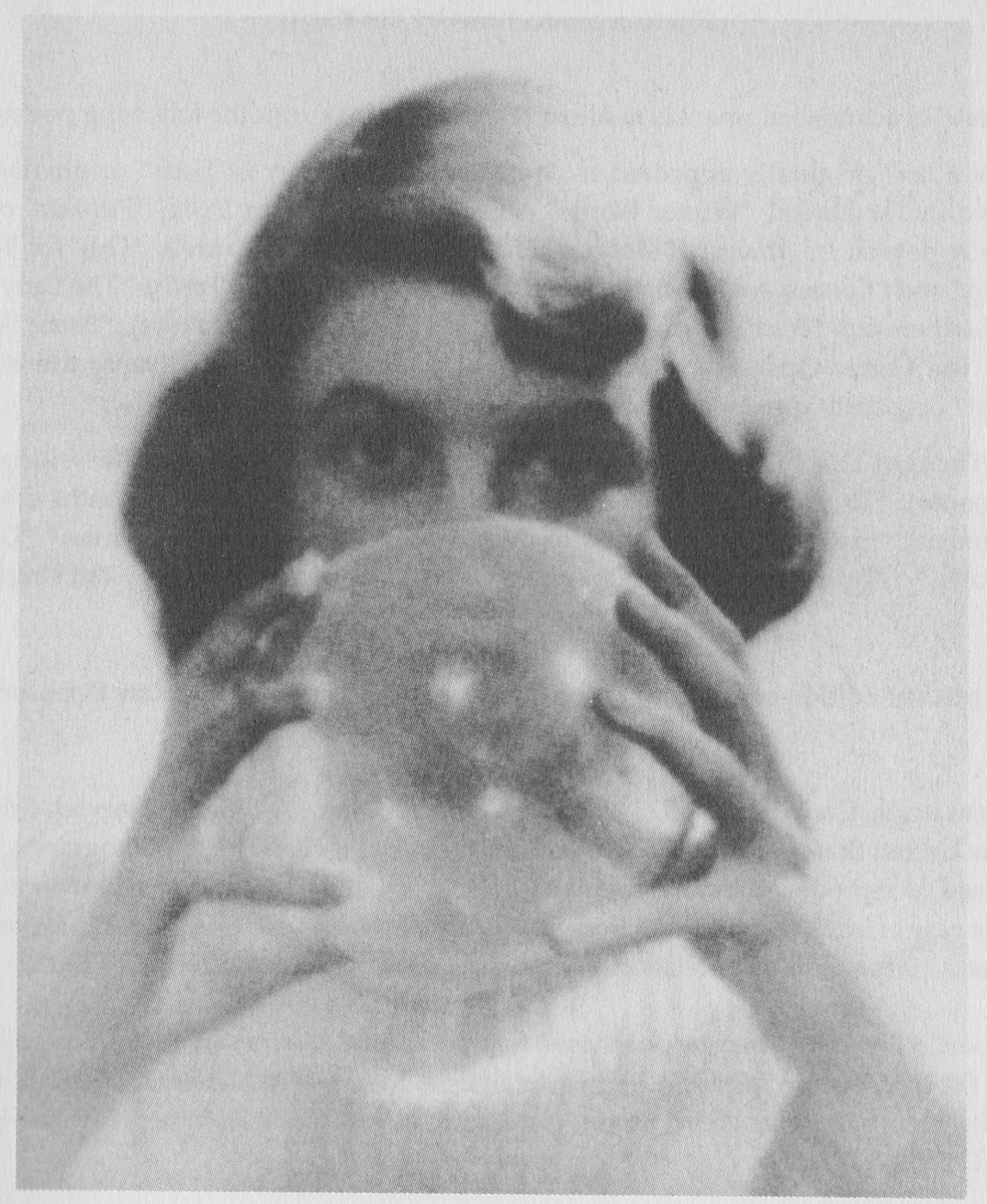
Plath_CrystalBallbw_NEW


21. “But everybody has exactly the same smiling frightened face, with the look that says: ‘I’m important. If you only get to know me you will see how important I am. Look into my eyes. Kiss me, and you will see how important I am.’”

article-2265000-1708DC73000005DC-341_634x482

Disney’s Rape Problem

19 Jun

Disney.

Now there’s a word that’s bound to conjure up some kind of feeling in pretty much everyone in the western world. And, I mean, love ’em or hate ’em (and there are tons of people in both camps), you can’t ignore the fact that, as a brand, they’ve had an enormous cultural impact.

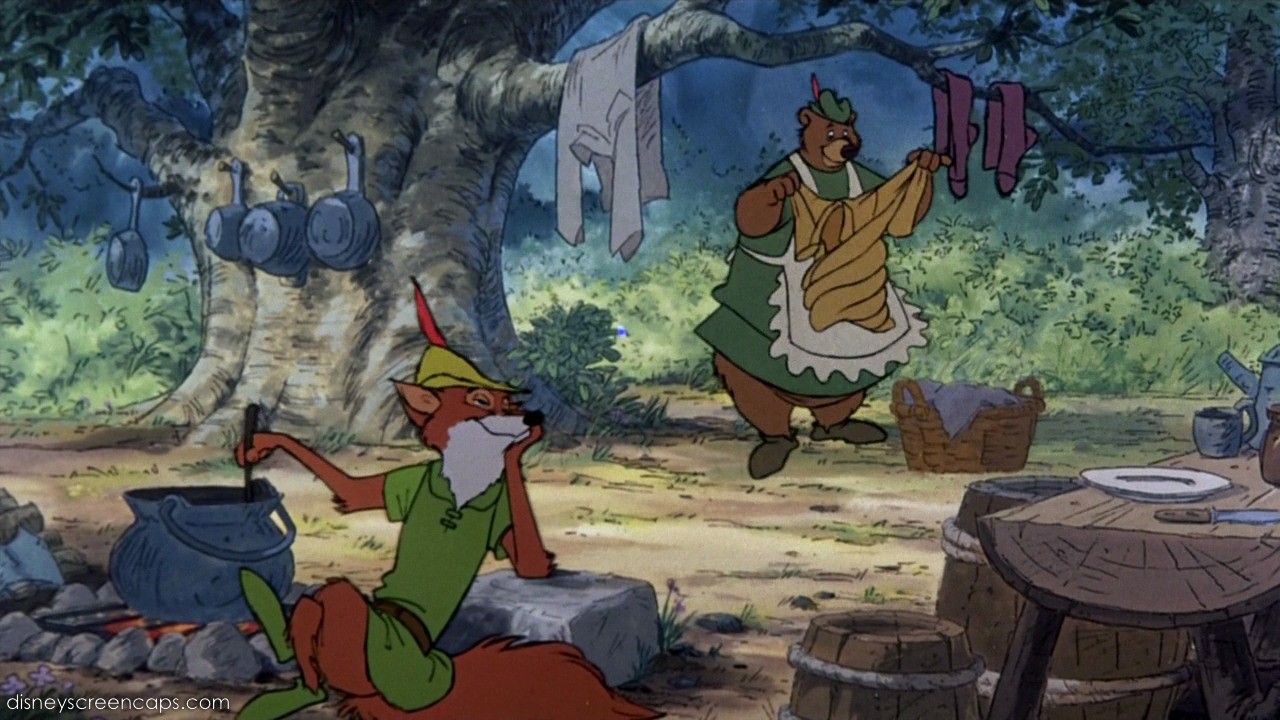
My own relationship with Disney is pretty ambivalent. I grew up watching the movies, and I would be lying if I said that there aren’t a few of them that I can still quote, verbatim, to this day – especially Disney’s Robin Hood. Man, I watched the shit out of that movie, and I still love it, even now. I like to joke that it was my introduction to the social justice movement; it was the first time that I’d ever realized that just because something was against the law didn’t mean that it couldn’t also be morally right, and it taught me that even just a few people standing up against powerful government forces could affect change. I also think that that movie was the beginning of my love for all things historical, especially the medieval period in Europe. And yeah, for sure, Disney didn’t come up with the story of Robin Hood, but they did present it in a way that was fun and relatable for children, and they added foxes. Man, I love foxes! In fact, I can’t help but wonder if Disney’s Robin Hood is responsible for that, too.

Disney's Robin Hood also taught me that men can cook and do their own laundry!

Disney’s Robin Hood also taught me that men can cook and do their own laundry!

As a teenager and young adult, I became pretty critical of Disney and all that it stood for. I became conscious of the toxicity of “princess culture,” and began to question why basically everyone in their movies was white. I became cynical of how aggressively Disney tried to breed brand loyalty among even the youngest of children, up to and including offering free Disney onesies to new babies in hospitals. On top of that, the more that I learned about Walt Disney and his business practices, especially the special deals that he brokered in Florida while building Disney World, the more weirded out I became.

Still, when my mother announced a family vacation to Disney World a few summers ago, I was game. I’d never been before, but my mother and sisters had done the Disney thing back in 2005, while I was still living in Halifax, and I knew that they’d had a blast. It wasn’t so much about the brand or even all the fun things to do, my family insisted, it was about how well the staff treated you, how special and important you felt. And when my family and I, my five-month-old son in tow, descended on Disney World in July of 2011, I discovered that they were right. And maybe it was because I was still in the middle of that funny culture shock that comes after you have a kid, those few months where you’re slowly and painfully discovering that the world is nowhere near as easy to navigate as you once thought it was, but I remember being so incredibly grateful for the fact that Disney World seemed to have thought of absolutely everything when it came to dealing with families with small children. Disney World was the first place that I’d ever taken Theo where I didn’t feel like my child’s needs were a burden or a hassle to the staff.

And let’s just get one thing straight here: Disney’s staff are excellent. Really, really excellent. They are people that the company should be incredibly thankful for. Instead, as I’ve recently learned, Disney doesn’t have much interest in caring for or protecting their staff. In fact, when it comes to the issue of sexual assault in the workplace, they’re pretty happy to throw their female employees to the wolves and wash their hands of any responsibility.

In fact, Disney is pretty firm on the idea that if you are an employee who was raped while drinking and socializing with employees of the opposite sex, then it’s all your fault.

Many of you have probably already read Dana Wierzbicki’s post on XOJane from Monday called “It Happened To Me: I Was Raped Disney World And Nobody Cared” – for those of you who haven’t, I’ll give you a  brief rundown:

Dana was an employee at Disney World while participating in the Disney College Program, a program that allows post-secondary students from all over the world to come live in Florida, work at Disney World, enjoy unlimited access to the parks all summer, and take a few courses in business management on the side. It should have been the best summer of Dana’s life, and it was, up until she was raped by a co-worker. She says,

He and I went to a party together, we went back to his apartment later, and I said “no,” but he wouldn’t stop.

For two months I kept everything that happened that night to myself. I told my roommates that things went fine and I had a good night.  I didn’t know how to feel about what happened. In the beginning, I told myself it was a misunderstanding; maybe he hadn’t heard me. I blamed myself; I should have yelled louder. I should have pushed harder. I should have punched him and ran out of the room.  I always thought that if I was ever raped I would beat the guy up. Does that mean I wasn’t raped?
After trying to handle the emotional and physical fallout of the rape on her own, Dana eventually decided to seek help from the counselling service that Disney provided. This decision, she writes, was triggered by the fact that she later saw her rapist flirting with other girls at a party, and realized that if she didn’t do something, anything, then he would almost certainly end up raping someone else.
Her experience with the counselling service was, unfortunately, pretty grim. At one point, the counsellor told her, “Well, now you know not to be hanging around boys in the middle of the night. You know what they want.”
When Dana told her about seeing her rapist flirting with girls at a party and expressed concern that he was likely to rape again, the counsellor took this to mean that she was jealous of the attention that these other girls were receiving. She advised Dana to show up at the next party looking “hot” and tried to reassure her by saying, “You’re a pretty girl. I’m sure you get all the boys.”
Dana then spent several days trying to figure out how she was supposed to properly report her rapist. She was passed from one department to another, and no one seemed to be entirely sure who or what was supposed to handle this type of stuff. Finally, she spoke to someone in Employee Relations who gave her more victim-blaming bullshit and told her that she should have gone to the police back when the rape had happened, but there was nothing that anyone could do now. The woman in Employee Relations told Dana that they would open an investigation, but likely nothing would come of it.
Dana flew home and tried to resume her normal life, but she did follow up with the Employee Relations office several times. She was eventually told that her case had been closed. She called a friend of hers who was still working at Disney World and was told that her rapist was still employed there, and had suffered no repercussions for what he’d done.
After reading Dana’s story, I was admittedly shocked by how terrible Disney’s response was. Surely they couldn’t actually care so little about their employees, could they? Dana’s experience must have been a fluke right? So I spoke to my friend Laura*, who had also participated in the Disney College Program, and asked her if any of Dana’s story meshed with what she’d seen during her own time at Disney World. She said that Dana’s experience unfortunately wasn’t uncommon, and that she’d realized from pretty much day one that Disney was not interested in dealing with sexual assault. She said,
In my first week I was in a room with about 250 Canadian kids learning the rules of the dorms and this big, corporate guy comes in and starts talking to us. He tells us – and I’m paraphrasing a little here – that this is a high crime area and there are sexual assaults regularly around the dorms. That if you are a girl, you should not go out after dark alone, or you might get assaulted. That you should not go to the bars, and definitely not alone, because ‘girls get drugged.’ That you should not make friends with strange men, not go into other people’s dorms alone and not dress provocatively, because girls get assaulted and go home all the time. And if you do get assaulted, don’t go to the housing department, call the police, because there is nothing that housing or Disney can do for you.
And, you know what, without even touching on any of the victim-blaming bullshit that Disney is spewing, can we talk about how fucking ridiculous this is when it comes to anti-rape advice? Like, you are bringing in hundreds of people in their teens and early 20s to work and live together, and you somehow think that it’s sensible to tell people not to associate with the opposite sex? Not to drink? Not to wear “provocative” clothes? Not to go to boys’ dorm rooms? Like, that’s what these kids are there for – I mean, yeah, they are there to work at Disney, but a lot of them are also there to have a good time, and that good time involves drinking and having sex. That is what a lot of people do, and just flat-out advising them not to do it is not going to change anything. But Disney, meanwhile, feels as if they’ve covered all of their bases, and if a girl ends up being the victim of a sexual assault, well, Disney doesn’t want to hear about it because it’s all her fault.
And before you jump in and say that Disney has no control over what their employees do within the comfort of their own apartments, and that the girl should have gone to the police instead of Disney, let’s be clear on something – these dorms and apartments are belong to Disney. Laura says,
[The apartments] are not in “Walt Disney World” itself, they are about 10 minutes away in Lake Buena Vista, FL. Which is fine. They are contracted out from Disney and run by a separate property company for maintenance and stuff, but they are gated residence complexes run exclusively for the Disney college program, the rent money is taken by Disney and Disney Housing arranges everything and has offices on the properties and as a member of the program you are not allowed to live anywhere else but these residences. So, while the rape wouldn’t have happened on “Disney property,” as in not in Walt Disney World proper, it did happen at Disney, in a residence run by Disney, where Disney was forcing it’s program participants to stay and collecting money for it.
With regards to the whole “she should have gone to the police” idea, the fact is that the majority of the people participating in the Disney College Program are not from Florida. In fact, many of them are not from the United States. So it makes sense that they would go to Disney, the employer that brought them there and was housing and educating them, for help after being raped. It’s also not uncommon for people to be intimidated or afraid of the police, and it’s totally logical for someone to feel that going to their traditionally helpful and caring employer when dealing with the fact that their co-worker has raped them.
Look, Disney, you are totally dropping the ball when it comes to handling sexual assault. Not only is your approach gross and victim-blaming, but you’re fucking up from a brand approach as well. So if you can’t bring yourself to change your policies with regards to employee rape and sexual assault out of sheer human decency (which, by the way, you should), then maybe you need to look at it this way: you are losing customers. Big time. The people who go to work at Disney World are some of your most brand-loyal consumers. They want to work at Disney because they love the company and the brand. When you can’t step up and do what’s right for your employees, you are losing their loyalty, and the loyalty of any children that they might have, and their friends’ loyalty, and their family’s loyalty.
You can do this, Disney, you really can. You can make these changes, and I guarantee that they will make Disney World a safer, better place for your employees. You can fix this, I promise. You need to start by providing better training for your counsellors, You need to reach out to organizations that fight against sexual assault, and get some tips on how to deal with rape without blaming the victim, You need to provide better training and education for your employees. This stuff might not be easy, but it’s necessary. Please, please make this effort – if you don’t, stories like Dana’s will continue to happen. And the outcry against you will grow. And you won’t be able to stop it.
I’ve started a petition here to try to convince Disney to put some of these changes in place.
*Not her real name
Cinderellas_Castle

Fiction: Georgiana

17 Jun

*TRIGGER WARNING FOR SUGGESTION OF SEXUAL ASSAULT*

It’s important to find the perfect words.

Not everyone believes this, of course. People will often say that they don’t have the right words to explain or describe something, but in Georgiana’s experience, there is a perfect word for anything if only you’re willing to look hard enough for it.

Most people aren’t willing to make enough of an effort to find the perfect word. They’re happy to stick to the nouns, verbs and adjectives that they know, doing their best to to pinch and pull them into new shapes for new situations. This is, in Georgiana’s opinion, like trying to shove a square peg into a round hole – you might be able to do it, and you might even be able to convince yourself that it fits, but everyone else will still feel awkward and uncomfortable.

Right now, sitting at the kitchen table, she is testing out a new word. She does this by writing it out, letting her hand feel the truth of it as it guides the pen across the paper. First she prints COURTESAN in neat block letters across the top, then, after a moment’s consideration, she writes MY MOTHER IS A COURTESAN in elegant script half-way down the page. Georgiana’s handwriting is the best in her eighth-grade class. In fact, she won an award in a penmanship competition held at her school last year. Georgiana’s mother had snorted at this and said that it was ridiculous to give a prize for something no one cared about anymore, but Georgiana disagrees, and keeps the certificate they gave her in her second-best desk drawer. Penmanship, like baking bread or crocheting lace, is a skill that she has no immediate use for, but could very likely come in handy sometime in the unforeseeable future.

Georgiana slouches in her seat and stares at the paper, narrowing her eyes until her brow begins to furrow. My mother is a courtesan. Does it fit? Is it right? She tilts her head first to one side, then the other, then slowly lets her eyes drift out of focus. She’s feeling as though she’s getting quite close to something when the sound of her mother’s keys in the door interrupts her meditation. She quickly sits up and folds the paper neatly in half, then in half again before sliding it into the pocket of her skirt. A moment later, her mother, Peggy, appears in the kitchen and drops a quick kiss on the top of Georgiana’s head before heading over to refrigerator.

“Jesus Christ have I ever had a long day,” Peggy says to the carton of eggs on the second shelf. “I need about three drinks and then another drink on top of that. Honey, what do I want to drink? Do I want beer or wine?”

“I don’t know,” Georgiana answers, peevishly. “How should I know what you want? I’m not a mind-reader. You’re being stupid. You’re being stupid and you’re wasting energy by leaving the fridge open.”

“My thirteen-year-old daughter thinks I’m stupid. Quelle surprise. Next you’ll be insulting my taste in music.”

Georgiana twists a stray lock of hair around her finger as she watches her mother pour herself a glass of riesling.

“Mom,” she begins, keeping her voice carefully bored and distant. “Mom, what’s a courtesan?”

“Look it up. You know how to work a dictionary, and God knows that there are enough of them around here.”

“I tried, but I can’t find mine, and the door to your office is locked.”

This is patently untrue. Or rather, the lost dictionary is untrue, although Peggy’s office really is locked – it’s always best to add a little bit of truth into your lies, Georgiana has learned. It makes them that much more believable. With the right amount of fact and fiction, Georgiana knows that she can manipulate her mother into giving her some approximation of what the word means.

Not that she really wants a definition. What she wants is to see her mother’s reaction to the word.

Peggy sighs and rolls her eyes heavenward, as if deep in thought.

“Oh, I don’t know. I guess a courtesan is a woman who’s involved with a married man, and lives off the money and gifts he gives her. A sort of sex-worker, but not really in the way that we currently understand that term. She’s not exactly a prostitute, more like a professional mistress. I wouldn’t worry too much about it, though – it’s an old-fashioned word that no one really uses anymore.”

Like penmanship, Georgiana thinks, coolly maintaining her blank gaze as she watches her mother’s face. Is that a ripple of anxiety? Or embarrassment? It’s gone too soon for Georgiana to tell.

“Go change in to something nice,” says Peggy, ignoring her daughter’s stare. “We’re going to Eric’s for dinner,”

“But I’m already wearing a skirt,” Georgiana protests, conscious of the childish whine creeping into her voice.

“Well, I guess you’re going to have to put on a nicer skirt, then, aren’t you?”

And with that, her mother takes her drink into the living room and turns on the news, neatly ending the conversation before Georgiana can voice any other complaints. She sighs and begins to mount the stairs to her bedroom, dragging her feet as loudly and obnoxiously as possible.

Eric is her mother’s boss, and Georgiana is certain that the two of them are an item, as her grandmother would say. Although Eric has been a part of Georgiana’s life for nearly as long as she can remember, she has only recently become aware of his true feelings for her mother. After reviewing all of the evidence, though, Georgiana can’t believe she’s been so blind for so long.

First of all, there’s the fact that Georgiana and her mother should not be able to afford to live the way that they do. Take this house, for example – their neighbours all have high-powered, lucrative careers, and the street is dotted with doctors, lawyers and hedge fund managers. Peggy, meanwhile, is the arts editor for the small, left-wing magazine that Eric owns. Georgiana has heard Eric say more than once that the magazine will never be profitable. How, then, are they able to own this house? How is Peggy able to keep Georgiana adequately clothed and fed? How does the liquor cabinet manage to stay so well stocked?

Next, there are all the evenings that Peggy spends at Eric’s house, supposedly “working”. But why do they need to meet at night? They see each other at the office all day long.

Georgiana’s mother used to leave her with a babysitter on the evenings when she had to “work late”, but lately she’s been bringing her daughter along, forcing her to dress nicely and pick her way through so-called gourmet meals cooked by Eric himself. But where is Eric’s wife? She is always noticeably absent during Georgiana’s visits to his house. The official story is that Eric’s wife is frequently out of town, “on business”, a reply that is both vague and entirely unsatisfying.

And then there are the swanky vacations her mother takes, alone, if you believe what she says. At least once a year Georgiana is dumped at her grandmother’s apartment, left to navigate her way through a sea of porcelain figurines and doilies, while her mother flies off to Barcelona, Rio de Janeiro, Milan. Last year it was Paris. Paris! Who goes to the most romantic city in the world by themselves? It’s clear that, when thoughtfully examined, Georgiana’s mother’s stories are totally lacking in credibility.

There are other, smaller things, as well. There’s the way that her mother behaves during Eric’s late night phone calls, like a giddy schoolgirl who suddenly has the attention of the cutest boy in the class. There’s the mysterious jumble of soft, velvety jewellery boxes in her mother’s underwear drawer, a stash that has grown alarmingly over the past several years. Worst of all, there’s the way that Georgiana’s mother treats Eric’s thoughts and ideas as though they come from God himself. If Georgiana has to hear “Eric thinks…” or “Eric feels…” one more time, she might slit her wrists.

Up until today, Georgiana hadn’t exactly been entirely certain that something was going on between her mother and Eric. The problem was that she’d been missing the right word to describe their relationship. She’d tried out fuck-friend, but that was crass and uncouth and not befitting of two adults involved in an adult situation. She’d also given the term mistress a whirl, but it was too dowdy, too boring. The word courtesan, on the other hand, has a lovely sing-song rhythm that Georgiana can’t get out of her head. It sounds vaguely foreign, and yet is a perfectly respectable English word. It’s elegant, rich, sensual, and bordering on obsolete.

Exactly the term she’s been waiting for.

After pulling on a suitably nice dress, Georgiana stands in front of her mirror and braids her coarse, wavy brown hair. She stares at herself critically, then suddenly leans in towards her reflection and viciously whispers, your mother’s a whore and you’re a stupid, ugly bitch.

She stays suspended in this position, her mouth so close to the glass that her breath appears as a fog. The edge of the bureau digs uncomfortably into her stomach, but she doesn’t mind. It actually feels sort of good, in a strange way. She waits until the funny ache bisecting her abdomen becomes more than she can stand, then pushes herself back and turns to rummage around in her closet, pulling out a pair of well-worn ballet flats.

She steps into her shoes and then sits on the edge of her bed, her face as blank and impassive as a mask.

The drive to Eric’s house is short and silent. Georgiana slides as far down in her seat as possible, fiddling with her braid, clenching the end of it between her mouth and her nose to make a mustache. Her mother, who hates driving, stares grimly at the road, her hands clenched in a death grip around the wheel from the moment they leave the house until they pull into Eric’s driveway. Eric, as always, is waiting for them, ready to open the door before they can even ring the bell.

“Peggy, you look lovely,” Eric says, kissing Georgiana’s mother on the cheek as he takes her coat. “I can’t believe you’re the same person who was having a minor meltdown three hours ago.”

“Oh God,” Peggy laughs, “wasn’t that a nightmare? I need a drink. I mean, another drink.”

“And the young Georgiana, beautiful as always,” Eric continues as Georgiana shrugs her jacket into his waiting hands.

She watches him out of the corner of her eye, saying nothing, listening for the crackle of her secret paper, stealthily transferred from one pocket to another, as he hangs her jacket in the closet. The noise is wonderfully satisfying.

Dinner is paella, and Georgiana spends the first half of the meal picking out the vegetables and moving them to the edge of the plate. Once that’s done, she concentrates on the edible parts of the dish. She has her first forkful of beans, rice and meat halfway to her mouth when Eric says,

“So, Georgiana, what are you studying these days?”

Georgiana is hovering between answering his question and stuffing her mouth full of food when Peggy replies for her.

“Don’t bother asking her, she’ll just tell you she doesn’t remember. Gigi never remembers what she’s learned at school, it’s one of her charming trademarks.”

Georgiana drops her fork with a clatter and turns on her mother.

“Don’t call me that,” she spits out.

“What, Gigi? Don’t be silly, I’ve always called you that.”

Peggy rolls her eyes at Eric, a gesture so entirely dismissive that Georgiana feels her face and chest flush with rage. Part of her knows that she will later feel embarrassed by what she’s about to say, but right now all she can feel is the rush of it, the exhilarating sense of being swept up in her anger.

“It’s a stupid name. It’s the name for a dog. It’s so humiliating. No one calls me that but you.”

“What do your friends call you?” asks Eric.

It’s such an unexpected question that Georgiana is immediately disarmed. She looks between Eric and her mother, their faces both calm and inquiring, and feels herself deflate.

“George,” she says, neglecting to mention the fact that she doesn’t have any friends. “It’s nice and short and gets right to the point.”

“Ah, yes, but what is the point?” Eric wonders aloud.

Georgiana, unable to tell if he’s laughing at her, ducks her head and takes refuge in her dinner. After a few minutes the centre of her dish is clear, leaving only a ring of vegetables.

“May I take my dessert in the library?” she asks, pushing her plate away.

Eric looks at Peggy, who shrugs her assent.

“It’s the chocolate cake on the counter in the kitchen,” he calls out as she beats a hasty retreat.

Or rather, she beats what only appears to be a hasty retreat. After she’s taken several loud steps towards the kitchen, Georgiana does a quick pirouette on the hardwood floor of the hall and then creeps back towards the dining room. She lingers at the edge of the pool of light spilling from the doorway, her mouth hanging half open as she strains to listen.

God, I’m so sorry about that,” she hears her mother say. “She’s been so terrible lately. I’m trying so hard to just ignore her, because I know that at that age any attention is good attention, but Jesus Christ is it ever hard not to smack her sometimes.”

Eric murmurs something in response, but Georgiana can’t hear what it is.

She know that she should be upset over what her mother said, but instead she feels meanly glad. Good, she thinks, I’m glad she wants to smack me. I hope she does someday. I hope she does tomorrow.

Eavesdropping makes her hungry, and Georgiana feels entirely justified in cutting herself two enormous slices of cake. She carries her plate and a glass of milk down the dim hallway, towards the back of the house. The library, as Eric calls it, is really just a small-ish sitting room lined with bookshelves and furnished with two comfortably ancient armchairs, a couple of mismatched lamps and a sturdy but beat up old table. Most of the shelves are tall, reaching almost to the ceiling, but one of them is a squat, handsome case fronted by two neat little glass doors. This houses Eric’s collection of rare, first edition and out-of-print books, and Georgiana makes a beeline for it.

She spends an hour and a half with a 19th century medical encyclopedia, poring over woodcut drawings of syphilis infected genitalia and deformed fetuses. The pictures are fascinating and nauseating at the same time; looking at them makes Georgiana’s skin crawl, but she feels compelled to keep turning the pages. When she finally can’t take any more she closes the book and reverently places it back on the shelf. She feels strange, shivery and sweat-slicked, as though she’s just awoken from a bad dream. A thin, piercing headache is blooming right between her eyes.

She decides to go find her mother. Peggy and Eric will be upstairs, she knows, in the office, which is shinier and newer than the library. The office is probably where they do it. The thought makes Georgiana’s stomach turn over and causes her headache to spread until she can feel it pulsing through every vein, her scalp alive with tiny filaments of pain. The door to the office is closed, and Georgiana can hear her mother and Eric talking and laughing softly behind it. She is about to knock, about to tell her mother that she’s feeling sick and wants to go home, when suddenly she hears something. It’s her mother’s voice, contorted almost beyond recognition, groaning, sighing. Georgiana turns on her heel and runs to the bathroom.

She crouches over the toilet, sweat beading along her hairline. Her arms are shaking and her heart is pounding, sickness welling inside of her as she stares at the water. She wishes that her mother was there to hold her hair. She wishes that she’d never left the library, that she hadn’t been so rude at dinner, that she’d never started this whole stupid thing. Her breath comes in gasps, her stomach clenches hard and she gags, but nothing comes up. Her body, completely beyond her control, relaxes and then stiffens as she gags again and again. Tears begin to drip down her face, splashing into the toilet bowl beneath her.

Then, slowly, the nausea begins to recede, leaving her trembling and empty. When she feels steady enough, she pushes herself to her feet and runs cold water in the sink, splashing it on her face. Her head still aches, so she eases the elastic off the end of her braid and shakes her hair out until it frames her face like a mane. Between the cloud of her hair and her thin, pale face, the effect is distinctly pre-raphaelite, a wan Rosetti goddess, perhaps, or a despairing angel. She takes a step back and turns first one way, then the other. Her dress is made out of soft, stretchy fabric and she pulls it down over her shoulders, exposing both breasts. She lightly runs her hand across her nipples until they stand up like pencil erasers. Something begins to uncoil inside of her, like a vine, like a snake.

In her earlier haste to get into the bathroom she left the door ajar and now it begins to swing inward. Georgiana turns towards it, sort of almost accidentally forgetting to pull her dress back up. Eric is outlined in the doorway, bright against the dimness of the hall behind him. Georgiana gives him a look that she hopes is defiant, daring, her lashes lowered over what she thinks of as smouldering eyes. She expects him to be embarrassed, or even shocked at the sight of her breasts, but the expression on his face is frank, appraising. She shrinks back as he takes a step towards her, pulling her dress up over her chest. She is trembling again.

“I think I had too much cake,” she hears herself say, her voice childish and faltering. To her relief, he turns away.

She watches Eric leave the room, hears him call her mother. Peggy comes, lays a hand on her daughter’s forehead, then guides her out of the bathroom and down the stairs. Georgiana feels dreamily detached, like a spectator seated very far away from the action. She stands calmly as her mother rushes around, gathering her notebooks and folders together. She allows Peggy to help her into her coat and shoes while Eric hovers solicitously in the background.

At home, Peggy leads her daughter up to her bedroom and peels the dress off her feverish body.

“I’m sorry,” Georgiana says she burrows under her sheets, although she’s not sure what she’s apologizing for.

“My poor Gigi,” Peggy says, kissing the tip of her nose, “I forgive you, even if Eric and I were in the middle of something very important.”

Georgiana, her cheeks flushing pink and her mouth suddenly twisting into a snarl, uses the last of her strength to push herself up close to her mother’s face.

“I know what you do,” she spits, “I know what you and Eric do together. I know exactly what you are, and I think you’re revolting. You make me sick.”

A look of deep, frightened hurt spread’s across Peggy’s face, but is quickly replaced by a wintry smile.

“Go to sleep,” Peggy says calmly, “it’s late. Call me if you need anything.”

Georgiana sinks back, exhausted, feeling strangely empty now that’s she’s divulged her secret. Her mind is very still and quiet, the restless anger drained from it like pus from an abcess.

The next day, Peggy lets her daughter stay home from school, although she herself goes to work. Georgiana, for her part, enjoys her fever, the lightness and giddiness of it, and also the weakness. She spends the day in bed, eating grapes and reading comic books. The light outside is grey, soothing. She is safe, cocooned in her illness.

The day darkens into twilight, and her mother comes home. She brings a little tissue paper-wrapped package into her daughter’s room and lays it on her lap. Georgiana peels back the soft, thin layers slowly, revealing a small, lacquered wooden box. On the lid there is a young deer looking nervously over its shoulder, its eyes somehow both frightened and curious.

“It’s from Eric,” her mother says, perhaps a bit too casually, “he says that it reminded him of you. Don’t ask me why.”

Georgiana feels a small surge of triumph as she turns the box over in her hands. Triumph over what? She will have to untangle this later. For now, she contents herself with watching her mother’s face. Is that anxiety, creasing the edges around her mouth? Is that anger flashing somewhere deep in her eyes? Georgiana isn’t sure.

She settles back against her pillow and looks at the box, stroking her fingers along the deer’s back.

“Tell him thank you,” she says, finally. “Tell him that I know exactly what it means.”

Peggy gets up and leaves the room. Georgiana falls asleep, her flushed cheek pressed up against the cool painted wood. Outside her window, the streetlights come on and the world, for once, is very, very quiet.

1499481_3_l

Wet (Or, I Am Acadian)

24 May

Earlier in the week I participated it Write Club Toronto, which is basically like Fight Club, but for writers. Eight writers are pitted against each other in two-person bouts, and whoever wins gets to pick a charity that the proceeds of the evening will be donated to. Each writer is given a topic, and has a little over a week to prepare a seven minute piece based on that topic. My topic was “wet” (my opponent’s, naturally, was “dry”), and I somehow emerged victorious even though I mostly wanted to throw up all over everyone.

I think that my proudest moment was when they asked what my charity was, and I accidentally said the Toronto Ripe Crisis Centre. Go team awkward.

Anyway, if you’re interested, you can find a free podcast of it here.

You can also read the full text below:

My great-grandmother, Alma LeBlanc, was born in this dilapidated old wooden house just outside of Arichat, Nova Scotia. If you’ve ever been to the east coast, you know exactly the kind of place that I mean – peeling paint, sagging walls, everything suffused with an air of grim defeat. The house was on the edge of a cliff on Ile Madame, which is an island off the coast of Cape Breton, and the place where it stood feels like the ends of the earth. When you stand on that cliff, all of North America lies behind you while in front of you the cold, dismal, grey Atlantic stretches on forever and ever. The ground drops away at your feet, and far below you the heartless, grinding waves smash against the rocks.

The climate is damp there, always. Sometimes it’s barely noticeable, just a faint clamminess blowing in off the ocean, and other times it takes the form of a suffocating fog so thick that the droplets of water hang suspended in the air, and it seems like a marvel that you can still breathe. But you can, and you do; you force yourself to keep breathing, you put one foot in front of the other, you keep going. And eventually the damp becomes a daily fact, and you barely notice its presence.

We’re a water people, us Acadians; it’s our element, you might say. This wasn’t always true – not so long ago we were farmers in the Annapolis Valley, that warm, rich, fertile strip of land across mainland Nova Scotia. In those days, our only interaction with water was through the dikes that we built. We were famous for those dikes. In fact, the other day, I did a google image search for “Acadian dykes” and not a single lesbian came up. Our dikes were ingenious, apparently, with mechanisms called aboiteaux that allowed fresh water in from the marshes but kept back the salt water from the sea. Our farms thrived. Things were good.

Of course, this idyllic life didn’t last for long. In 1755 The English rounded up the Acadians and put us all onto boats heading who-the-hell-knew where. Our expulsion officially had something to do with the Seven Year War, French and English politics, oaths we were supposed to swear and the religion that prevented us from doing so, but really, it was about the English wanting to have free run of the east coast.

We could have fought the expulsion, I guess, but that seems foolish when you consider the fact that the English had guns while we had pitchforks and shovels. We don’t come from fighting stock, anyway; most of us are short and pretty scrawny. So we went fairly quietly. But when the English turned us off our land, we threw aboiteaux wide open and let the salt water pour in, our own version of a scorched earth policy. Maybe that was the first time we realized that the water was our ally. A dangerous, unreliably ally, but an ally all the same.

We were split up, families torn apart, and sent off to wherever the English thought there might be room. We were dispatched to places like Baltimore, Boston, Williamsburg – they even built special forced labour camps in England. The boats were little more than prison ships, and over half of us died, but still. We kept going. We had to. And on those ships we learned to tentatively embrace our new home, the water, and treat it with equal measures of fear, love and respect. Thus far we’d thrown our lot in with the land gods, who were by and large fairly gentle and generous. The sea gods, on the other hand, are different. They’re cold, grey and pitiless, and view humans with complete contempt. You wouldn’t make a compact with them unless you had no choice.

We had no choice.

So we became fishermen and shipwrights, we learned to weave nets and build lobster traps. We added widow’s walks to our houses and learned to get used to losing our loved ones to the sea. Some of us straggled back home to Acadia, now called New Scotland, and settled the grim, barren coastlands that no one else wanted. We chose to isolate ourselves from the world around us, with the result that our clothing, speech and way of life didn’t much differ from what would have been found in 17th century France. We grew insular, as a way of protecting ourselves. We tried our best, on the whole, to steer clear of the modern world, and as a result we grew a bit peculiar.

Our names, for example, were peculiar.

I mentioned earlier that my great-grandmother’s name was Alma, but that’s not exactly true. Her full name was Marie Alma, and all of her sisters were also Marie, and all of her brothers were Joseph. Their middle names, though, the names they were called by, are what really fascinate me – Artemise, Evangeline, Sabine, Stella, Napoleon, Casimir, Leander. Strange names, old names, nearly all Greek or Latin; names you wouldn’t think to find among a largely uneducated population. I asked my great-grandmother once where they came from, and she said they came out of the “other” book. Because they had two books, the Bible and the “other” book, though exactly what that second book was she didn’t know.

Alma came from a family of twenty three – twenty three! I can’t even imagine. But as my grandmother says, “My God, Annie, what do you think they did on those long, cold winter nights? They didn’t have tv or radio, and they sure as hell didn’t have birth control.”

What they did have was a farm, and all those children came in handy as free labour. It was impossible to scrape a living for so many people out of that thin, rocky soil, so Alma’s father left his wife and children behind and took to the sea, wrestling the bitter Atlantic waters for whatever he could get. He would leave for weeks, sometimes even months at a time, often returning to discover that all that keeping-warm-on-cold-winter-nights had resulted in yet another mouth to feed. Meanwhile, Alma’s mother oversaw the farm, managed the household accounts and raised their children. Or rather, she did all of these things until she died giving birth to poor Joseph Alfred, unlucky baby number thirteen.

Alma’s father remarried almost immediately, because who the hell was going to take care of his thirteen kids? But like an evil stepmother straight out of a fairytale, his new wife hated her new life, and took out her resentment on her husband’s children. While he was off at sea, she beat them. She starved them. She let them freeze during the bitter winters. She forced one of them, Sabine, who had a bleeding disorder, to walk across sharp grass until her feet bled. The blood oozed out of her for nearly a week, and the priest came three times to give her extreme unction. Somehow, though, she managed to survive.

Survival is the reason that my great-grandmother left Cape Breton as soon as she was able to. Survival is the reason she married an Englishman, had ten English kids with ten English names, and gave up her mother tongue entirely. Assimilation can sometimes seem like the only way forward.

I’m pretty much assimilated. Really, I’m barely Acadian. I’m not even really sure what it means to be Acadian. Is it where you live? The food you eat? The language you speak? I mean, I speak French, but only rarely, and with great embarrassment. I grew up in the wilds of suburban southwestern Ontario, far from any ocean or sea. I don’t know the first thing about dikes or irrigation or anything like that. I can’t even swim, not really – the most I can manage is a pathetic dogpaddle.

Still, though, I’m a water person. It’s in my blood – I mean, both literally and figuratively. As removed as I am from the ocean, it’s still my element. I love being wet. I run outside during thunderstorms and let myself get soaked to the skin. If there’s a lake or river or stream, I have to be in it. Even a public fountain will do, if I have no other options.

Water is where I feel the most like myself.

And when I stand in the spot where my great-grandmother’s house was, and I feel the cold sting of the saltwater on my skin, and I look out into the vast grey Atlantic in front of me, I feel like I’m finally home.

Cape Breton

Cape Breton

Mother’s Day

12 May

I’m gonna be totally honest here: Mother’s Day makes me feel weird.

I think that part of it is that I have an automatic distrust of anything that’s gender-specific. Like, why is it Mother’s Day? Why not just Caregiver’s Day? Or Excellent Parental Unit Day? Or, as a friend of mine mentioned on Facebook, Gender-Diverse Parents’ Day? I mean, I get that it’s supposed to be about how hard mothers work, and how under-appreciated they are, but something about this sentiment seems … off to me. We spend most of the year crapping on moms, picking apart their parenting choices and publicly lambasting mothers that we disagree with, but suddenly we’re supposed to spend a day talking about how great they are? It sort of reminds me of the way that a good friend spoke about her ex – he was great at the big things (like buying her lavish gifts and taking her on fancy vacations), but not so much with the little day-to-day stuff. And really, it’s that day-to-day stuff that keeps the world turning, you know?

I guess that part of my ambivalence comes from the fact that Mother’s Day was never a big deal when I was growing up. We would make cards for my mother, and maybe bake her a cake or something, but it never went much beyond that. I mentioned once or twice that I might make my mother breakfast in bed, but she always vetoed that idea, saying that she would be the one left to clean up my mess (which was, to be fair, probably true). Even when my dad still lived at home, we never went out for brunch or anything fancy like that. I think I remember really wanting to make it a special day for her, because school and television and books made me feel like that that’s what I should be doing, but not being entirely certain of how to about that. I realize now that the best gift I could’ve given her would have been a kid-free afternoon or more help with household chores, but those things didn’t occur to me at the time. I wanted to either go big or go home (and I had no way of knowing just how “big” a few childless hours would have seemed to a single mother).

I guess that what I’m trying to say is that I didn’t really understand how HUGE Mother’s Day is for some people until I became a mother myself. Then, all of the sudden, people wanted to know what I was doing for Mother’s Day – they seemed especially interested in what, exactly, my husband was going to buy me. As my first Mother’s Day approached, I heard more and more about all the gifts I should be expecting. What do you think you’ll get for Mother’s Day? people kept asking, as if I had submitted a list of desired items months ago and had only to use my mad deductive skills to figure out which one my husband would pick. When I told them that we would likely go out for a nice family brunch and then go to the park, they seemed disappointed, as if I was somehow missing the whole point of the holiday.

The whole “Mother’s Day is too commercialized” thing has basically been done to death, but you guys? It’s pretty much true. It’s now more about picking out the perfect jewellery or the cutest card or the fanciest chocolates than it is about honouring the hard work your mother does. And to get back to that weird gender thing, why are we so obsessed with honouring how hard our mothers work? Or rather, why are we only interested in thinking about it only once a year, and why is our solution to throw sparkly things and candy at it, and then ignore the issue for the next 364 days?

I can’t help but notice the differences between how Mother’s Day and Father’s Day are marketed. Mother’s Day is all about honouring the sacrifices your mother made for you, showering her with pretty, mostly useless things as a sort of payback for all that she “gave up” in order to raise you. Father’s Day, on the other hand, seems to be about high-fiving your dad for being such an awesome friend, and maybe thanking him for somehow, occasionally having had a hand in how you turned out. Even these lists of suggested Mother’s Day and Father’s Day gifts are pretty telling – a whole lot of stuff to make Mom look and smell pretty (with a few gardening items thrown in), and then a bunch of fun, boozy, outdoor-adventure stuff for Dad. I mean, I’ll be honest – I would way rather read a book on my Kobo while sipping a glass of nice scotch than put on a stupid scarf and spritz myself with floral-scented chemicals. Not unexpectedly, all of the gifts for mothers are about her appearance, whereas all of the gifts for fathers are about going out and having a good time.

I guess that, at the end of the day, what really bothers me about Mother’s Day is this idea that sacrifice is somehow inherent in the idea of being a mother. And also that there’s something sacred about getting knocked up and then giving birth, as if that raises you on a pedestal above all other women. I feel particularly irritated by this image from Indigo’s website:

105468_MothersDayShop_03_mini

Because, you know, everyone doesn’t have the best mom in the world. The ability to be sperminated and pop out a kid doesn’t really mean anything; I definitely know enough people with awful mothers who pretty firmly disprove that rule.

Instead of celebrating how much women have to give up in order to have children, why don’t we look at ways that we can even the playing field? Instead of insisting that mothers have to be the nurturing caregivers, how about finding ways to help promote these behaviours in fathers? And instead of having Mother’s Day and Father’s Day, why not just a day that celebrates all of the people who help make our kids the way they are? Why not have a day that acknowledges the fact that some people owe more thanks to their aunts, uncles and grandparents than they do to their mothers or fathers?

But if we have to have a Mother’s Day, I would much rather celebrate Julia Ward Howe’s proposed Mother’s Day for Peace. I would rather honour the sentiments put forth in her Mother’s Day Proclamation than receive a bunch of flowers that will be dead in a week. Because you know what? This is a Mother’s Day that I can really get behind:

Arise, then, women of this day!

Arise, all women who have hearts, Whether our baptism be of water or of tears!

Say firmly: “We will not have great questions decided by irrelevant agencies, Our husbands will not come to us, reeking with carnage, for caresses and applause. Our sons shall not be taken from us to unlearn All that we have been able to teach them of charity, mercy and patience. We, the women of one country, will be too tender of those of another country To allow our sons to be trained to injure theirs.”

From the bosom of the devastated Earth a voice goes up with our own. It says: “Disarm! Disarm! The sword of murder is not the balance of justice.” Blood does not wipe out dishonor, nor violence indicate possession. As men have often forsaken the plough and the anvil at the summons of war, Let women now leave all that may be left of home for a great and earnest day of counsel.

Let them meet first, as women, to bewail and commemorate the dead. Let them solemnly take counsel with each other as to the means Whereby the great human family can live in peace, Each bearing after his own time the sacred impress, not of Caesar, But of God.

In the name of womanhood and humanity, I earnestly ask That a general congress of women without limit of nationality May be appointed and held at someplace deemed most convenient And at the earliest period consistent with its objects, To promote the alliance of the different nationalities, The amicable settlement of international questions,

The great and general interests of peace.

—Julia Ward Howe


To those of you who celebrate Mother’s Day, I hope that you have a wonderful day. To those of you for whom this day is painful, I hope that it passes quickly and peacefully for you. And if you’re someone looking to give a mother that you know a really amazing gift, consider finding a way of giving her some time to herself. I promise you that she’ll love that more than almost anything else.

And finally, to the amazing kid who came along two years ago and made me a mother: thank you. The same goes for Matt, who does more than his fair share of co-parenting. I’m super lucky to have these two dudes in my life. It’s been a hell of a ride, but I wouldn’t have wanted to do it with anyone else.

IMG_1776

Five Year Old Indian Girl Kidnapped, Sexually Assaulted and Left For Dead

26 Apr

Trigger warning for rape, sexual assault, abduction, torture and murder.

A reader from India asked me to blog about this at the end of last week. At the time, I told her that I was feeling burned out, but promised to write about it on Monday or Tuesday. I’ve been procrastinating, though. As much as I know that this is something that’s important to talk about, I’ve had a hard time bringing myself to read about it, let alone write about it.

But I promised that I would. And it’s important. So let’s do this.

In India, a five-year-old girl was kidnapped, raped, tortured and left for dead.

She was held captive for four days.

Her parents say that the police ignored their reports that their daughter was missing.

Her parents say that the police offered them money to keep quiet about their daughter’s rape.

She is now in critical condition in the hospital.

She’s five.

When I was five, my biggest upsets in life were that I couldn’t wear my party dresses to kindergarten and that I wasn’t allowed to have chocolate milk with every meal.

And, you know, here I sit in my privilege saying that I’m too burned out to read her story, that it’s too hard for me to write about.

Of course, for other people, other women, this type of story is the daily reality that they have to live with. They don’t have the ability to tune out and think about other things the way I do.

This girl, this five year old girl, is fighting for her life, in part because the police weren’t terribly interested in finding her. Because she’s just a girl. Because she’s disposable. Because she was born in a country where sex-selective abortion is so common that, in some provinces, 126 males are born for every 100 females.

This, on the heels of the brutal gang rape in India that happened back in December. In that case, the victim wasn’t so lucky – she died of her wounds several days after her attack. The most brutal of her rapists, who was sixteen years old, received a sentence of only three years in a “reform home” because of his status as a minor.

This, in conjunction with another breaking story about a five year old Indian girl who was raped and murdered.

And yet another breaking story about a thirteen year old Indian girl who was gang-raped.

And a story about a six year old Indian girl who was raped.

And a story about eleven and thirteen year old sisters who were raped by their mother’s boyfriend.

All of these rapes happened within a week’s span. All of this is in just one country. And these are just a few select stories I pulled – there are more, so many more. Not just in India, but everywhere.

There are people who want to dismiss this as a problem with the way that Indian culture treats women. There are people who say that, sure, this type of thing happens over there, but it would never happen here. Maybe India has a culture of rape, but here in the West we sure don’t.

But, of course, we do.

Rape culture knows no borders, and while it might be worse or more obvious in certain parts of the world, the truth is that it’s everywhere. We all live in it. We all participate in it.

In fact, just today, a university student in Arizona was photographed holding a sign that said, “You Deserve Rape.” This man, Dean Saxton, is well-known for delivering “inflammatory sermons” on the University of Arizona campus. Today’s sermon was about how women who dress like “whores” are responsible for being raped or assaulted.

It just seems so relentless. Every day there’s a new story of some kind of horrific sexual assault, every day I hear about police and politicians who don’t care, every day there are men and women spreading the message that rape is somehow the victims fault. It just feels like it never ends, and it’s sometimes so hard to keep fighting in the face of something that’s so unbelievably pervasive and overwhelming.

But we need to keep fighting. That much is obvious.

I want to share with you guys the message that my reader sent me, because her words are more powerful than anything that I can come up with right now:

The last time it happened, I signed petitions with friends for severe punishment to those rapists who raped a 23 year old, I wrote articles, protested, debated. But the second case, that happened just yesterday has shattered me so much I seem to have lost my voice In India, we all protest and then our voices just die down. No kind of internal pressure makes the government take strict decisions. Rather, in the December 2012 case, a religious leader came up with the hideous statement that had the girl begged for her life from the rapists and called them her brothers, they would have stopped and she would have survived. One of the leading female politicians said, “Women shouldn’t go out after 9 at night or dress provocatively.” We scream, we shout and the police bashes up innocent protesters and social workers and students. Our voices die down within the country and awareness is blindfolded by our own leaders.

I am writing to you to beg you to talk about these women just like you talk about those who are close to home. Perhaps international pressure and shouts for justice would reach the deaf ears of our religious and political leaders and the pathetic, perverse men who don’t think twice before doing this to us women. Why should we dress modestly? Clothes provoke them, no clothes provoke them, we get raped in a sari, in jeans, in skirts, in salwaar kammeez and even if only our face shows. We get raped in the morning and at nights. If they can’t control their desires after 9, shouldn’t the men be locked up after 9? A lot of people blame the victim back home and not the criminal. How is that fair? 
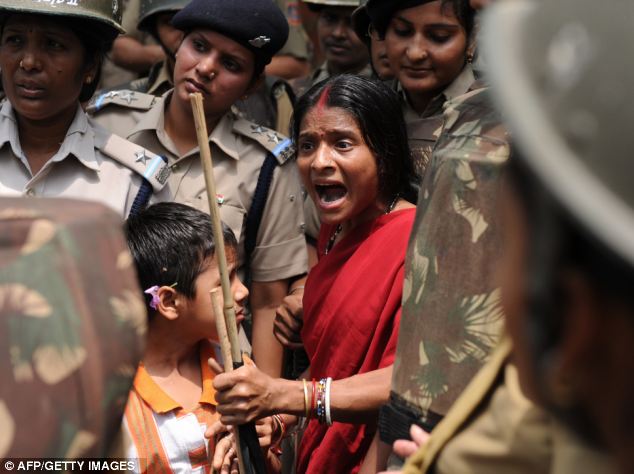
Indian women today are aware, enlightened and educated but far from safe. We are scared to go out and work and we’re scared to stay inside. Who knows what familiar face would be the Big Bad Wolf? And he strikes us at any age, at 23, at 45, at 5! 

So as a woman to another, this is a plea to support our protest because even though we may speak different tongues and belong to different nations, we suffer the same abuses. 

Please raise your voice. Help spread the word about this. Join us in this fight. Because together, we are much stronger. Together, we can beat this.

We have to.

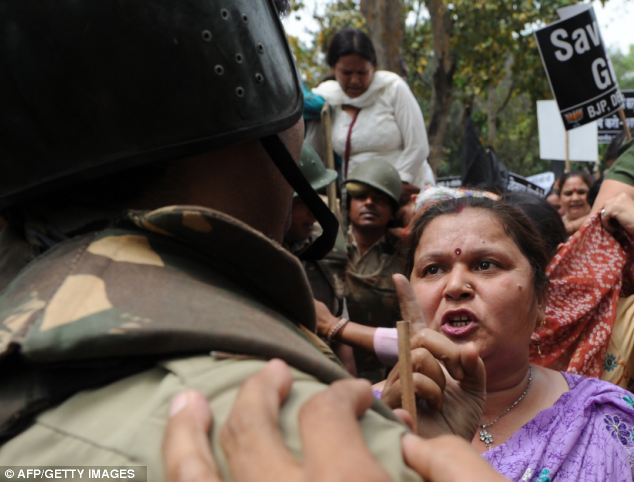
A few inspiring images from the protests in India:

article-2312536-196962B3000005DC-644_634x405

article-2312536-19696FC5000005DC-228_634x482

article-2312536-19694EB2000005DC-646_634x474

On Wanting

22 Apr

I.

The problem is wanting.

Sometimes I think that the trick to living a happy life is to stop wanting things. If only you could not want anything, not even happiness, then you could be happy. But then you end up wanting to not-want, which is maybe one of the weirdest paradoxes ever. How does one achieve a state of not-wanting? I could probably ask one of the many pseudo-Buddhist white ladies that I know, but to be honest, I’m not sure that they’d have a good answer. They’d just tell me to maybe read the Bhagavad Gita and then meditate, but I’ve already done both of those things, and no dice.

The main problem with wanting is that sometimes you actually get what you want, and in some weird way that actually feels worse than not getting it. Like, what if you get what you want and then you’re still sad? What if you get what you want and it just doesn’t feel as good as you thought it would? Do you then A) start wanting something else or B) actually try confront your existential sadness crisis, since it seemingly cannot be solved by fame or love or material objects?

I guess that choosing option A is how capitalism works. You want and want and want but then nothing is ever enough so then you want some more, and then everybody makes money off of each other or whatever.

II.

I wanted a kid because I thought that having one would be like taking on a massive, life-long project. I liked the idea of being able to shape a person. I thought that if I just knew the right things to teach my kid, then he would end up being an artistic, scientific super-genius. Honestly, though, I don’t know why I believed that I was the type of person who knew all of the right things to teach my kid, but I thought that probably I could just learn from all the mistakes that I’ve made in trying to be a good human being. Then if I taught him to do all of the opposite things to what I did, probably he would turn out perfect.

It’s weird having a kid. Like, one day you’re just sitting in the hospital, minding your own business, when suddenly you’re handed this little bundle of raw potential. And you’re supposed teach this totally empty, blank little creature about how to live in the world, but the truth is that you don’t even know how to live in the world, so how can you act as a reliable compass for someone who can’t even hold up their own head?

How do I explain all of the arbitrary rules of life to him? Like, when I make dinner but he doesn’t want to eat his dinner because he’s still playing, what reasonable basis do I have for saying that my desire trumps his? Because I’m bigger? Because I earn the money that keeps him fed and clothed and housed? Because I can pick him up and carry him over to the table and force him to sit down in his chair?

I mean, the real reason is, of course, because his still-developing brain lacks the necessary critical thinking skills that he needs in order to competently make decisions for himself. If it were up to him, we would play with his train set all day, pausing only to eat cupcakes, and never go to bed. Which would be fine, if no one ever had to worry about going to work, or paying rent, or getting scurvy.

But I guess that what I really need to know is how I am supposed to train him to be a polite, conscientious, productive member of society without sucking all the joy out of him. He has all of these things that he thinks would be fun or good to do, things that seem perfectly natural to him, and here I am telling him to ignore all of his spontaneous wants.

Like, how do I teach him not to burp at the table or play with his food or splash in the bath without making him second-guess his every want or desire? On the other hand, I can’t send a kid to school who thinks that, for example, throwing toys or saying rude things are acceptable behaviour. And while, yes, all kids burp and fart and think that it’s hilarious, probably those aren’t things that future employers are looking for. But do I want to raise a kid who is exactly what future employers are looking for?

Where do you draw the line?

Maybe raising a kid is really just about teaching them to want the right things? But who gets to decide what’s “right”?

III.

Whenever I meet someone and they ask what I do for a living, I say that I’m a yoga teacher. Then I pause and say that I’m also a freelance writer (I think the word “freelance” makes it seem more legitimate, although to be honest most of what I do is blog about my stupid life).

Then, as soon as I say the word writer, I stop talking and gauge the other person’s reaction.

Because when I tell someone that I’m a writer, what I’m really doing is asking, Do you think that I’m a writer?

And then depending on how they respond, I think that they’ve either said yes or no.

I have no issues calling myself a yoga teacher, because I paid $5,000 and spent a year learning how to teach. I even have a certificate with my name on it that tells everyone that I’m a yoga teacher. I don’t have any certificates that tell people that I’m a writer. I don’t even know what the criteria for being a writer are. According to some people, it’s being published. According to others, it’s being paid to be published. And then some folks think that if you write, no matter whether you write for an audience or not, well, then, you’re a writer. But if you go by that logic, then isn’t everyone a writer? I mean, wouldn’t you consider anyone who’s ever made a grocery list or left a note for someone or sent a quick email to be a writer?

The problem is that I want so badly to be a writer.

IV.

How would you even live a life without wanting anything? How would you ever get up in the morning, or go to work, or write a blog post about want?

Why would you ever procreate if you didn’t want a hilarious, incontinent, miniature version of yourself?

How boring would it be to eat food just because it kept you alive and not because you loved the taste and smell and the satisfaction of filling your stomach? How awful would it be to get dressed just to protect your body from the elements and not because you love the colour, fabric, texture or cut of what you’re wearing? How sad would be it be to have a kid just because you feel as if you’re under some kind of obligation to perpetuate the human race, and not because you wanted a sweet, stinky little bundle of wriggly joy?

What kind of a life would you live if you did things only because you had to and not because you wanted to?

And if you were to get rid of that want, what would fill you up instead? How would you spend your days? Would the absence of want truly make you happy? Or would it just make you feel emptier?

I don’t really have any answers, so I apologize if you’ve made it this far and thought that you were going to have some kind of epiphany. I’m not very good at epiphanies, anyway. I don’t think I’ve had one since I was about eighteen, and even then, it was kind of a pitiful epiphany, to be honest.

I do think that it’s important to find the balance between wanting and not-wanting, and I think that it’s hard not to fall into any of the tricky traps that desire sets up for you, and I think that a lot of the times our wants set us up for misery.

I’m just not sure how to find that balance.

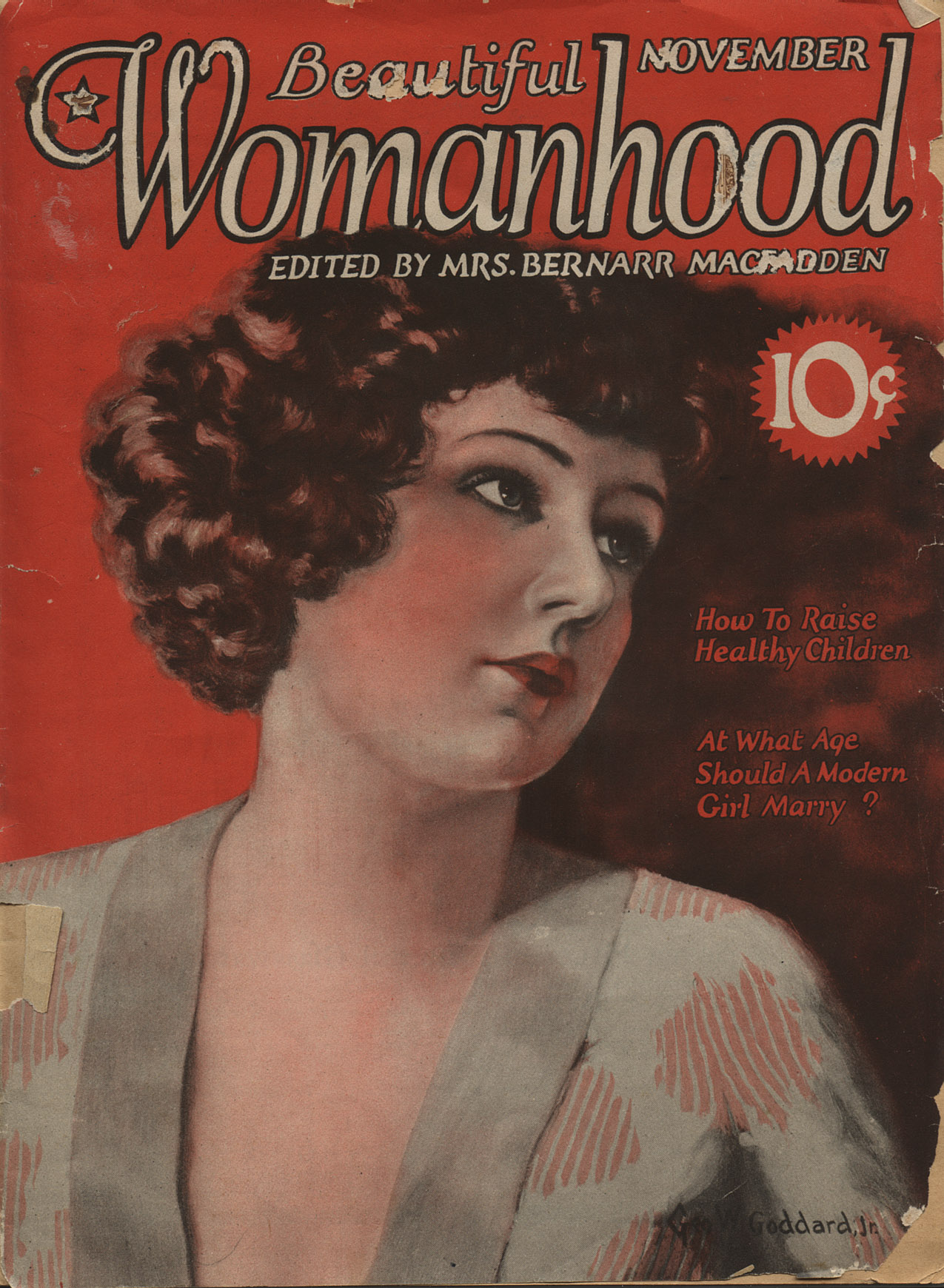
vintage-beautiful-womanhood-magazine

Nostalgia Machine: On Re-Watching Girl, Interrupted

1 Apr

Those of you who are fairly new to my blog may not know this, but on days when I’m not busy kicking the patriarchy square in the nuts or deconstructing inaccurate Facebook memes, I like to indulge in a little bit of nostalgia. Well, maybe a lot of nostalgia. Then I tweet extensively about my my indulgences, and sometimes end up writing about them here.

Which is all to say that I re-watched Girl, Interrupted the other night and now I want to talk about it.

I saw Girl, Interrupted in theatres, when it first came out, and it gave me a lot of Feelings. Actually, it gave me one main Feeling, namely that I basically was Winona Ryder’s character, if slightly less gamine and winsome. I mean, I was a depressed teenager who had a) frequently contemplated suicide, b) felt lonely and isolated, and c) wrote obsessively in serious-looking leather-bound journals. Of course I identified with the film version of Susanna Kaysen.

Every single scene, every thought, word, and action in that movie struck me as being perfectly, achingly true. Every time Winona Ryder looked at the camera with her wide, tearful eyes, every time her mouth trembled with emotion, every time she stared sadly off into the middle distance, I thought, yes. Yes, I get this.

Then, a few years ago, I bought Girl, Interrupted on DVD, fuelled by memories of how important it had been to me. But after watching it for less than an hour I had to turn it off. It was awful, unbearable even. The performances were overwrought, the dialogue ridiculously, almost comically, dramatic. I was embarrassed that I’d ever even liked this movie, let alone identified with the main character. I put the DVD back in its case, stuck it on the shelf and didn’t touch it again.

Or rather, I didn’t touch it until earlier this week, when Catherine, my sister and frequent accomplice in nostalgic endeavours, suggested that we watch it. Sure, I said, figuring that I could hate-watch it and then later make fun of it. Maybe we could even invent a drinking game, like, take a shot every time Susanna cries over how hard it is to be a white, middle-class American. Hilarious, right? I mean, right?

Except that on re-watching Girl, Interrupted, I discovered that it had, in the last five years, somehow gone past bad and straight back to good again.

At its core, this film isn’t really about mental health, or suicide, or Susannah Kaysen’s stay at the famed McLean Hospital. I mean, of course it is about all of those things, at least peripherally, but at its heart it’s about friendship. Specifically, it’s about a sort of intense, parasitic friendship that seems to exist only between young women, those deceptively bright, canny girls just on the cusp of entering the adult world.

And maybe this isn’t the type of friendship that every girl experiences. Maybe this is just me, projecting my own pathetic history onto the blank canvas of Winona’s smooth, perfect face. Maybe I’m the only one who sees this when I watch this movie. But I know that this is a type of friendship that I’ve engaged in not just once but over and over, and maybe I still do, to this day. It’s possible that it’s a pattern that will play out for the rest of my life, or at least until I grow up and finally get some sense knocked into me.

Can you believe that I’m thirty and still talking about growing up in the future tense?

The dynamics of this specific type of friendship are as follows: half of the friendship, let’s call her Girl One, is a strong, loud, brash character who doesn’t give a shit about what anyone thinks, says whatever’s on her mind and gives very little thought to the consequences of her actions. The other half is someone, call her Girl Two, who is almost the photographic negative of the first – quiet, reserved, terrified of how other people see her.

Think Peppermint Patty and Marcie from Peanuts, except amplified, grotesquely exaggerated.

When I say that this friendship is parasitic, maybe what I really mean is that it’s symbiotic. As a lifelong Girl Two, I’ve always thought that I needed Girl One more than she needed me, but I wonder, now, whether that’s true or now. Maybe we’ve needed each other in equal amounts. I’ve needed someone to act out all of the things that I would never, or could never, dare to do, someone whose own loud voice might give me permission to raise mine, someone who would never sugarcoat whatever they wanted to tell me. But perhaps my friends, in turn, needed someone to occasionally hold them back, someone to steady them, someone who would listen to them and not pass judgment.

The truth is that I don’t know why or how much these other girls loved or needed me, but I do know that I loved and needed them with an intensity that sometimes bordered on obsessive. Because these girls, these loud, strident girls, had both a popularity and notoriety (not that my teenage self could differentiate between the two) that I could only dream of. People either fiercely loved or passionately hated these girls; as for me, they didn’t even bother to notice that I existed.

But these girls noticed that I existed.

And the fact is that as much as I like to think that I’m the type to stand up for what I believe in, the type to shout down the misogynists, the racists, the homophobes, the transphobes, I still sometimes need someone to give me a push. I need someone to raise their voice first, show me how it’s done, teach me not to be afraid. Because for whatever reason, these gifts don’t exist inside of me, or if they do, they lie perpetually dormant, and need to be awakened again and again and again.

On my own, I am not good at challenging authority. Not really. I need other people, people like Angelina Jolie’s character Lisa, to egg me on. And, much like Winona Ryder’s Susanna, I’m not always good at figuring out when the Lisas in my life have gone too far. I put too much trust in them, and then end up places, sometimes frightening places, that I never intended to be. I let myself be blinded by love, or at least by longing and envy, and don’t notice that some of these Lisas are downright bad news. Or rather, I don’t notice until it’s too late.

So yeah, maybe at thirty years old I do still get Susanna. Maybe there are more layers to the similarities between us than I’d originally thought.

And all that absurd dialogue and overwrought acting? This time around, they seem to me to be a painfully realistic portrayal of how teenagers actually behave. When you’re in your teens, everything that you feel is so intense, so immediate, so overwhelming that you can speak only in terrible, laughable clichés. My mother has always said that teenagers are like toddlers with better language skills, and now, watching my son struggle to express frighteningly huge emotions with his sadly inadequate vocabulary, I’ve realized how right she is.

I’ve realized that when I watched Girl, Interrupted a few years ago, what embarrassed me the most was the idea that at one time I might have spoken or acted in any way that resembled Susanna. Surely, even as a teenager, I’d been too smart, too articulate to ever behave so pretentiously. But the truth is that I was ridiculously, probably amusingly, pretentious. I just didn’t recognize this trait because all of my peers were just as overwrought and dramatic as I was.

All of this is to say that I’m now back at a place in my life where I can like, maybe even love, this movie, if only because it seems like a neatly preserved time capsule of how I thought and felt half a lifetime ago. I remember what it was like to be where Susanna was. To suddenly find yourself at the end of high school faced with choices, choices, choices, and yet not to see any of them leading anywhere. When I was a teenager, I lived in terror of being “normal,” because I worried that choosing a normal path and ending up with a normal life would make me just as grey and miserable as all of the adults that surrounded me. There would come a time, of course, when having a normal life and a nuclear family and a nine-to-five job would seem wonderfully, almost exotically appealing to me, but that came much later. When I was in high school, I didn’t understand that opting out had its costs, some of which, it turned out, I wasn’t willing to pay.

And sometimes I miss my teenage self, because even if she lacked her own voice, she still somehow managed to be totally steadfast and uncompromising in her beliefs, even if those beliefs made her feel miserable and isolated. But mostly I’m just glad that I’ve learned how to trade off one thing for another, to give a piece of myself away in order to be able to keep a different part that is more necessary, more valuable. I’m grateful to the Lisas in my life who have taught me when to stand up mouth off and, somewhat by extension, when to sit down and shut up. I’m thankful for every time I’ve had to learn the lesson that it’s important not to trust the Lisas out there too implicitly, and that I need to learn how to think for myself. It’s a hard lesson, and one that it feels like I’ve had to learn often, but it’s a good one.

Mostly, though, I’m glad that I’ve found my way to where I am.

Girl--Interrupted-winona-ryder-154518_1000_667

I Am Not Your Wife, Sister or Daughter

18 Mar

I don’t have to tell you that Steubenville is all over the news.

I don’t have to tell you that it’s a fucking joke that Trent Mays and Ma’lik Richmond, the two teenagers convicted of raping a sixteen year old girl, were only sentenced to a combined three years in juvenile prison. Each will serve a year for the rape itself; Mays will serve an additional year for “illegal use of a minor in nudity-oriented material.”

I probably don’t even have to tell you that the media treatment of this trial has been a perfect, if utterly sickening, example of rape culture, with its focus on how difficult and painful this event has been for the rapists who raped a sixteen year old girl then bragged about it on social media.

And I almost certainly don’t have to tell you that the world is full of seemingly nice, normal people who want to go to bat for the convicted rapists. I’m quite sure that you already know about the victim-blaming that’s been happening since this case first came to light. You know about the fact that people have actually come out and said that the real lesson to be learned here is that we need to be more careful with social media (i.e. go ahead and rape but make sure you don’t get caught). You already know that people seem to think that being a sports star and having a good academic record should somehow make up for the fact that you are a rapist.

I don’t have to tell you any of that because it’s all par for the course.

What I do want to tell you is that you need to stop using the “wives, sisters, daughters” argument when you are talking to people defending the Steubenville rapists. Or any rapists. Or anyone who commits any kind of crime, violent or otherwise, against a woman.

In case you’re unfamiliar with this line of rhetoric, it’s the one that goes like this:

You should stop defending the rapists and start caring about the victim. Imagine if she was your sister, or your daughter, or your wife. Imagine how badly you would feel if this happened to a woman that you cared about.

Framing the issue this way for rape apologists can seem useful. I totally get that. It feels like you’re humanizing the victim and making the event more relatable, more sympathetic to the person you’re arguing with.

You know what, though? Saying these things is not helpful; in fact, it’s not even helping to humanize the victim. What you are actually doing is perpetuating rape culture by advancing the idea that a woman is only valuable in so much as she is loved or valued by a man.

The Steubenville rape victim was certainly someone’s daughter. She may have been someone’s sister. Someday she might even be someone’s wife. But these are not the reasons why raping her was wrong. This rape, and any rape, was wrong because women are people. Women are people, rape is wrong, and no one should ever be raped. End of story.

The “wives, sisters, daughters” line of argument comes up all the fucking time. President Obama even used it in his State of the Union address this year, saying,

“We know our economy is stronger when our wives, mothers, and daughters can live their lives free from discrimination in the workplace, and free from the fear of domestic violence.”

This device, which Obama has used on more than one occasion, is reductive as hell. It defines women by their relationships to other people, rather than as people themselves. It says that women are only important when they are married to, have given birth to, or have been fathered by other people. It says that women are only important because of who they belong to.

Women are not possessions.

Women are people.

I seriously cannot believe that I have to say this in 2013.

On top of all of this, I want you to think of a few other implications this rhetorical device has. For one thing, what does it say about the women who aren’t anyone’s wife, mother or daughter? What does it say about the kids who are stuck in the foster system, the kids who are shuffled from one set of foster parents to another or else living in a group home? What does it say about the little girls whose mothers surrender them, willingly or not, to the state? What does it say about the people who turn their back on their biological families for one reason or another?

That they deserve to be raped? That they are not worthy of protection? That they are not deserving of sympathy, empathy or love?

And when we frame all women as being someone’s wife, mother or daughter, what are we teaching young girls?

We are teaching them that in order to have the law on their side, they need to be loved by men. That they need to make themselves attractive and appealing to men in order to be worthy of protection. That their lives and their bodily integrity are valueless except for how they relate to the men they know.

The truth is that I am someone’s wife. I am also someone’s mother. I am someone’s daughter, and someone’s sister. But those are not the things that define me, or make me valuable in this world. Those are not the reasons that I should be able to live a life free from rape, sexual assault or any kind of violent crime.

I have value because I am a person. Full stop. End of argument. This isn’t even a discussion that we should be having.

So please, let’s start teaching that fact to the young women in our lives. Teach them that you love, honour and value them because of who they are. Teach them that they should expect to be treated with integrity because it’s a basic human right. Teach them that they do not deserve to be raped because no one ever, ever, ever deserves to be raped.

Above all, teach them that they are people, too.

449850811_o

My Sister Claire, Or Why No One Should Ever Tell Folktales To Children

12 Mar

Have you ever heard of the myth of the changeling? It’s an old one, woven throughout most of the folklore of Western Europe. The details differ from region to region, but the basic premise is always the same: some kind of fantastical being, usually a fairy, elf, or troll, secretly switches its own offspring for a human child. The switch isn’t discovered until it’s too late.

This exchange might be made for a variety of reasons – some tales tell of fairies and elves taking children as servants or slaves, while a handful of Norwegian myths explain that trolls were left in the place of human babies to help prevent inbreeding (because, of course, we all need a fresh injection of troll in our family trees every now and again). Some stories say that the fairies and elves did it out of a desire for human love, and some, like a few variations of the ballad of Tam Lin, refer to the idea that the fairies must sacrifice a life to hell every seven years. One popular version of the tale tells that fairy children require human breast milk, and so the switch is made to ensure the continuation of the fairy species.

When my youngest sister was born, though, I wasn’t overly concerned with why the fairies had left her in place of the child my mother gave birth to – I was just fascinated by the fact that we now had what I thought was almost certainly a changeling in the family.

It was my Irish grandfather who first put the idea into my head. See, my sister was born with slanted eyes and sharply pointed ears, and although the hospital staff seemed to feel that the shape of her ears, at least, had somehow been stretched or compressed into that shape as she’d passed through the birth canal, my Poppa thought otherwise. I remember him muttering darkly that she looked like she had the fairy blood, something that made my mother laugh. When my four-year-old sister Catherine heard, she started crying, saying that she wanted to be a fairy and it wasn’t fair.

I wasn’t laughing or crying, though. I was paying attention.

When Claire was born, I was nearly eleven years old, and happened to be cursed-slash-blessed with a huge appetite for books, a love of mythologizing my own life, and a day-dreamy streak a mile wide. I’d recently been reading books of Irish and Scottish folk tales, so it didn’t take me long to put the idea of my sister having fairy blood and the myth of changeling together.

It didn’t help that Claire was totally unlike my sister Catherine and I. We’d both been skinny, temperamental babies, chronically underweight throughout our childhoods. Claire, meanwhile, was enormous and placid, constantly ranking in the 99th percentile for height and weight and nearly always in a happy, smiling mood. And while, yes, her ears did round out as she grew older, her eyes kept their epicanthic fold and turned a startling green. On top of all that, my mother gave her an other-worldly sounding Gaelic middle name, one that she’d found in a Maeve Binchy book.

I tried to treat Claire as my very own human sister, but the idea that she was a changeling almost certainly coloured some of the things I did and said to Claire.

Like the time when I told her when she was about three years old that she was actually a Victorian princess stolen from her real family by time-traveling bandits.

I even had evidence to back me up – a picture frame that someone had given us containing a sepia-toned image of a thoughtful-looking woman in a huge, frilly dress. This photograph, I told Claire, was a picture of her real mother. Maybe she would see her again one day, and maybe not. She couldn’t go looking for her unless we told her the secrets of time travel because, of course, at this point, the mid 1990s, everyone she’d known and loved in her own time was dead.

Catherine got in on the act, and my mother laughed a couple of times over Claire’s reactions.

She laughed, that is, until she went to hug Claire, who pushed her away, screaming,

“I HATE YOU. I WANT MY REAL MOTHER. TAKE ME BACK TO MY REAL MOTHER.”

She may or may not be scarred for life. It’s probably too early to say.

It was around that time that my parents separated, and my mother, sisters and I moved into low-income housing. The only benefit to our new living situation was that it was backed by a former land-fill site, nicknamed Mount Trashmore, which was covered by acres and acres of meadows and fields. The landfill, which leaked methane gas but was, naturally, considered safe enough for poor people, was a paradise to us. It was that fact, coupled with the series of books I was reading around that time that took place in Renaissance England, that renewed my interest in fairies. After all, if Queen Elizabeth and Shakespeare believed in fairies, then why couldn’t I?

And it’s not like I really believed, except that I sort of did. Or rather, like Mulder’s famous poster, I wanted to believe.

Did I mention the daydreaming and tendency to mythologize?

I started having my sisters perform little rituals. We would leave food in the backyard for the fairies, and chant rhymes that I’d made up. We built nests for the fairies in the fields near our house. I wove daisy chains for us to wear in our hair, and tried to build a maypole. And while Catherine and Claire and I were far apart enough in age that we were rarely able to find something that interested all three of us, these activities, for whatever reason, deeply absorbed each one of us.

I don’t really know how or why our own personal fairy kingdom came to and end. I guess I outgrew it, or at least became embarrassed by it, once I started high school and discovered boys. I don’t know, either, what effect it had on Catherine or Claire, or if they even fully remember it. I do know, though, that it was a nice time, maybe one of the nicest the three of us had together while growing up.

So thanks for that, little changeling sister. I’m glad we got you, although I would still like to know what happened to the real Claire. If you ever find her, let me know okay?

I love you. Happy birthday. You’re the best (possibly non-human) baby sister ever.

Claire, Catherine and I - see what I mean? Totally a changeling.

Claire, Catherine and I – see what I mean? Totally a changeling.