Tag Archives: happiness or something like it

Your Life As A Play

18 Aug

You think that if you get all the window dressing right then everything will be fine.

The floral-patterned dress, the beat up cowboy boots, the vintage leather jacket.

The carefully tousled hair, the oversized sunglasses, exactly the right shade of peachy-pink lipstick.

The golden tan, the throaty laugh, the full smile.

The way the sun hits you from behind, so that you’re sweetly backlit in the late summer afternoon haze.

The books on your shelf. The distressed furniture. The tacky knick knacks you wouldn’t have been caught dead with five years ago.

The antique china tea set your grandmother gave you.

The mint green bike you bought second hand.

The midcentury modern buffet you found on the street on garbage day.

The smart, funny, handsome husband.

The smart, funny, precocious child.

The off-beat, artsy career.

The morning yoga classes you teach, the playlists you create timed perfectly with the flow of poses, the warm, sympathetic tone to your voice.

The afternoons you spend in coffee shops drafting up your novel, your screenplay, your heartwrenching poem.

Everyone who looks at you is envious. You can feel it when they size you up. You can tell how much they covet your life, all of it, every tiny detail.

You’re so good with details.

You’re so good at so many things.

You lucky, lucky girl.

It’s like creating a set for a play, isn’t it? A play about a life you’d like to live. You think that if everything is placed just so then it must follow that you will be happy. If the print on the table cloth is exactly right, if the soft cotton quilt that your grandmother gave you is just tattered and faded enough, then you will break the spell. You will finally feel alive.

It doesn’t work that way. Your things are just things. Your hair, makeup and clothing are part of an elaborate, time-consuming disguise. Your husband and child are not as perfect as they seem, because no one is perfect, but the tantrums, the arguments, the dull drag of day-to-day life never make it on to your Instagram account. The print on the table cloth is just slightly wrong.

The window dressing is just window dressing. Your heart is the reality, and it cracks in a way that can never be repaired. You will always be you, no matter what your life looks like, no matter how many best-sellers you write, no matter how envious anyone else might be.

You will always be you, living in this particular skin, on this particular planet, at this particular time in history.

You will always be you.

Talk about a life sentence.

Talk about a life sentence.

Talk about a life sentence.

Alice Summers in Paris

Ten Lies Depression Tells You

7 Aug

1. You are a bad person who deserves bad things.

2. You are unhappy because you are lazy or lacking in willpower. Happiness is a choice, a choice that you have failed to make. Somehow, somewhere over the course of your lifetime, when faced with some metaphysical fork in the road, you chose the wrong path. You brought this curse down on yourself.

3. Your sadness is the baseline by which the rest of your life should be measured. This sadnesss is your norm, and any other emotions, especially positive ones, are exceptions to the rule. Yes of course there will be good times, of course there will be flashes of joy; you will certainly, on occasion, experience the pleasure of a good book or a ripe juicy peach,  However, those experiences will be few and far between. Your bad days will always outnumber the good.

4. Your family and friends do not love you. Your family are people who feel obligated to spend time with you because as luck would have it you share a similar genetic makeup. Your friends are people that you somehow tricked into thinking that you, as a person, have some kind of value, and now they don’t know how to extricate themselves from your pathetic, needy grasp. No one spends time with you because they enjoy it; they do it out of a sense of duty, a feeling of pity. Whenever you leave a room everyone breathes a sigh of relief.

5. Your family and friends do not want to hear about how sad you are. No matter how sympathetic they may seem, no matter how sincerely they might ask how you are feeling, remember that it’s all an act. The more that you open yourself up to them, the more you pour your heart out, the more resentful of you they become. Do not fall into the trap of sharing your feelings; do not give into the temptation to draw back the curtain and, like a tawdry magician, reveal your grotesque sadness. Your sadness is a choice, remember? This burden is yours to bear alone.

6. Your friends and family deserve better than you. Everyone deserves better than you

7. In order to make up for your unhappiness, it is your responsibility to make sure that everyone around you is happy. If you can manage to maintain a near-constant veneer of kindness, helpfulness and sincere interest in others, then that will make your presence more tolerable. Your amiability, though entirely inadequate, is the best apology that you can make for your existence.

8. Everything is your fault.

If you plan a picnic and it rains, it’s your fault. You should have been more thorough when you checked the weather. You should have learned to be an amateur meteorologist so that you could better read the clouds. You should have packed a canopy. If you go out for dinner, for your once-in-a-blue-moon, hire-a-babysitter-and-wear-a-nice-dress date and the food or service or conversation is anything less than exceptional, it’s your fault. You should have read more restaurant reviews, should have asked friends for more recommendations, should have prepared cue cards with talking points. If someone is unkind to you, it’s your fault. You should have smiled more, been more gracious, tried harder to be whatever it was that they needed in that moment.

Everything is your fault.

9. There is no cure for your sadness, no effective treatment, no way of managing your symptoms. There are, of course, doctors and pills and various therapies that help other people, but you’ve tried all these things and they don’t work for you. Nothing will ever work for you.

10. You will feel this way forever.

trona-fullmoon-1

21 Quotes from Sylvia Plath

31 Jul

1. “Can you understand? Someone, somewhere, can you understand me a little, love me a little? For all my despair, for all my ideals, for all that – I love life. But it is hard, and I have so much – so very much to learn.”

The Unabridged Journals of Sylvia Plath

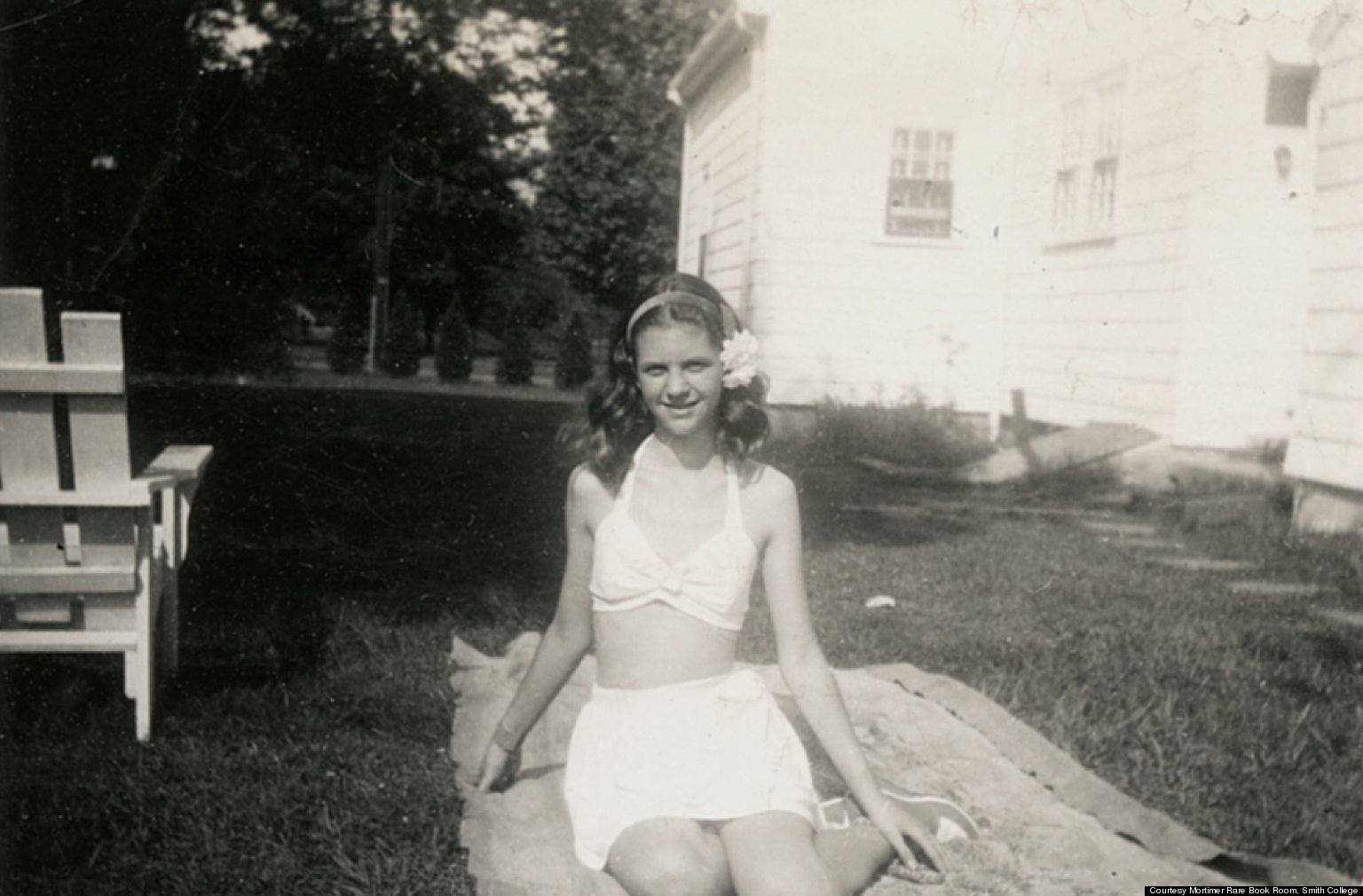
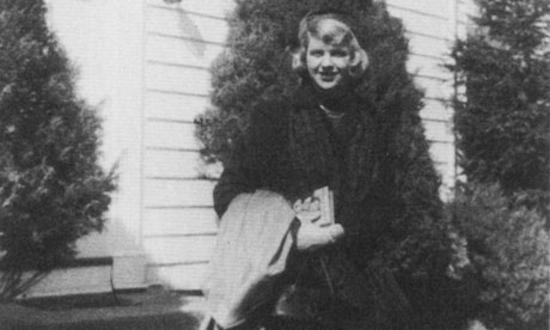
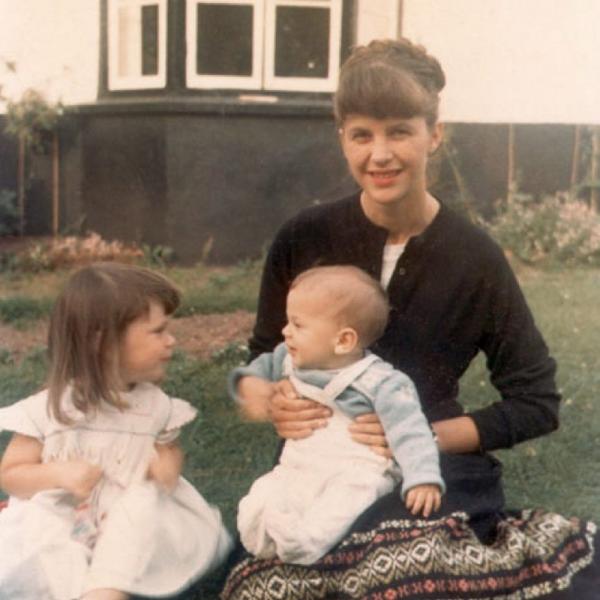
Young Sylvia Plath

Young Sylvia Plath

2. “God, but life is loneliness, despite all the opiates, despite the shrill tinsel gaiety of ‘parties’ with no purpose, despite the false grinning faces we all wear. And when at last you find someone to whom you feel you can pour out your soul, you stop in shock at the words you utter – they are so rusty, so ugly, so meaningless and feeble from being kept in the small cramped dark inside you so long. Yes, there is joy, fulfillment and companionship – but the loneliness of the soul in its appalling self-consciousness is horrible and overpowering.”

The Unabridged Journals of Sylvia Plath

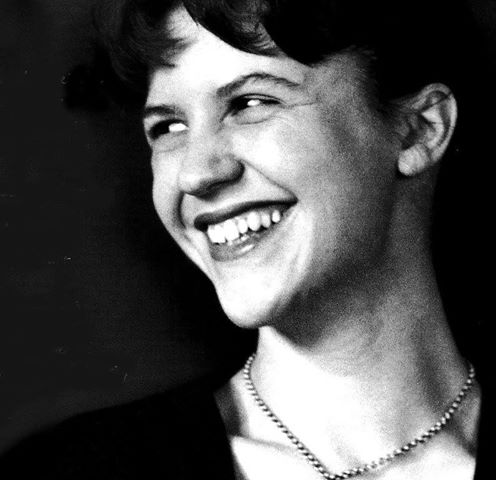
Sylvia+Plath

3. “If neurotic is wanting two mutually exclusive things at one and the same time, then I’m neurotic as hell. I’ll be flying back and forth between one mutually exclusive thing and another for the rest of my days.”

The Bell Jar

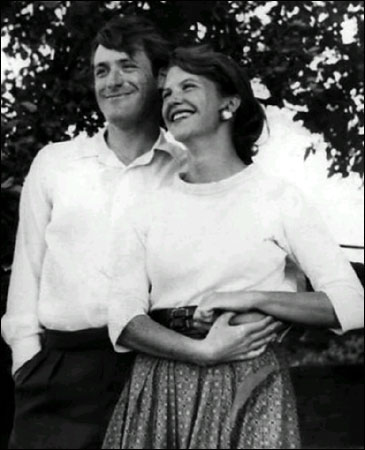
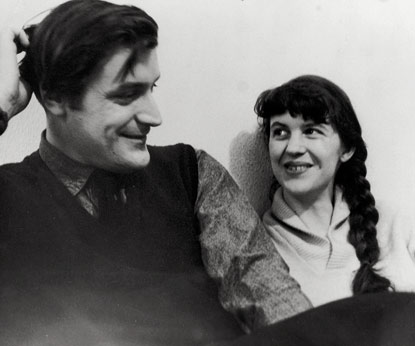
With Ted Hughes

With Ted Hughes

4. “Remember, remember, this is now, and now, and now. Live it, feel it, cling to it. I want to become acutely aware of all I’ve taken for granted.”

The Unabridged Journals of Sylvia Plath

944273_399121096866572_72379005_n

5. “The silence depressed me. It wasn’t the silence of silence. It was my own silence. I knew perfectly well the cars were making a noise, and the people in them and behind the lit windows of the buildings were making a noise, and the river was making a noise, but I couldn’t hear a thing. The city hung in my window, flat as a poster, glittering and blinking, but it might just as well not have been there at all, for the good it did me.”

The Bell Jar

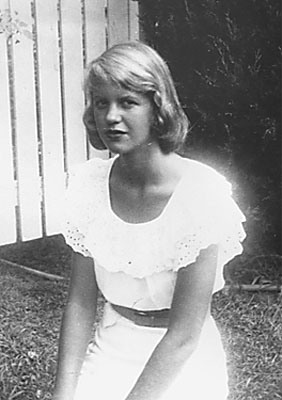
Syvia Plath

6. “Perhaps when we find ourselves wanting everything, it is because we are dangerously near to wanting nothing.”

Draft of letter to Richard Sassoon

plath

7. “If you expect nothing from somebody you are never disappointed.”

The Bell Jar

plath 1

8. “With me, the present is forever, and forever is always shifting, flowing, melting. This second is life. And when it is gone it is dead. But you can’t start over with each new second. You have to judge by what is dead. It’s like quicksand… hopeless from the start.”

The Unabridged Journals of Sylvia Plath

tumblr_ljder1asa31qedsf0o1_400

9. “I like people too much or not at all. I’ve got to go down deep, to fall into people, to really know them.”

The Unabridged Journals of Sylvia Plath

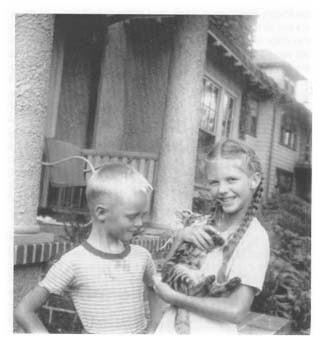
As a child, with her brother Warren

As a child, with her brother Warren

10. “I thought it sounded just like the sort of drug a man would invent. Here was a woman in terrible pain, obviously feeling every bit of it or she wouldn’t groan like that, and she would go straight home and start another baby, because the drug would make her forget how bad the pain had been, when all the time, in some secret part of her, that long, blind, doorless and windowless corridor of pain was waiting to open up and shut her in again.”

The Bell Jar

sylvia1

11. “We should meet in another life, we should meet in air,
Me and you.”

Lesbos

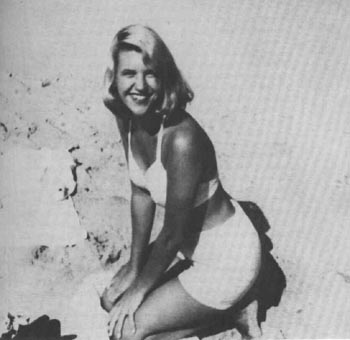
sylvia-plath-010_1360487421_crop_550x330

12. “Yes, my consuming desire is to mingle with road crews, sailors and soldiers, barroom regulars—to be a part of a scene, anonymous, listening, recording—all this is spoiled by the fact that I am a girl, a female always supposedly in danger of assault and battery. My consuming interest in men and their lives is often misconstrued as a desire to seduce them, or as an invitation to intimacy. Yes, God, I want to talk to everybody as deeply as I can. I want to be able to sleep in an open field, to travel west, to walk freely at night.”

The Unabridged Journals of Sylvia Plath

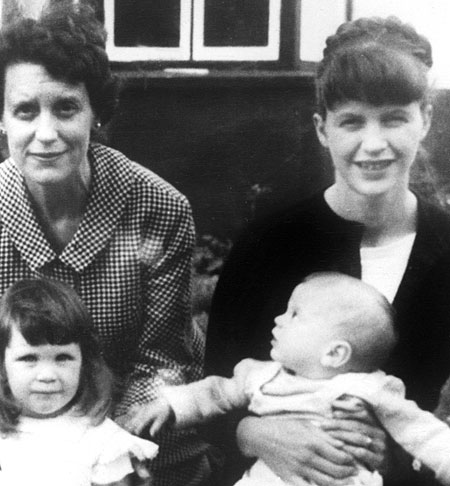
Sylvia with her mother, Aurelia, and her children, Frieda and Nicholas

Sylvia with her mother, Aurelia, and her children, Frieda and Nicholas

13. ” I am terrified by this dark thing
That sleeps in me;
All day I feel its soft, feathery turnings, its malignity.”

Elm

sp013

14. “I felt very still and empty, the way the eye of a tornado must feel, moving dully along in the middle of the surrounding hullabaloo.”

The Bell Jar

sylvia_plath

15. “I write only because
There is a voice within me
That will not be still.”

Letters Home: Correspondence, 1950 – 1963

plath--3

16. “If they substituted the word ‘Lust’ for ‘Love’ in the popular songs it would come nearer the truth.”

The Unabridged Journals of Sylvia Plath

222379632_a53b9f0135_o

17. “There must be quite a few things a hot bath won’t cure, but I don’t know many of them.”

The Bell Jar

With Frieda and Nicholas

With Frieda and Nicholas

18. “To annihilate the world by annihilation of oneself is the deluded height of desperate egoism. The simple way out of all the little brick dead ends we scratch our nails against.”

The Unabridged Journals of Sylvia Plath

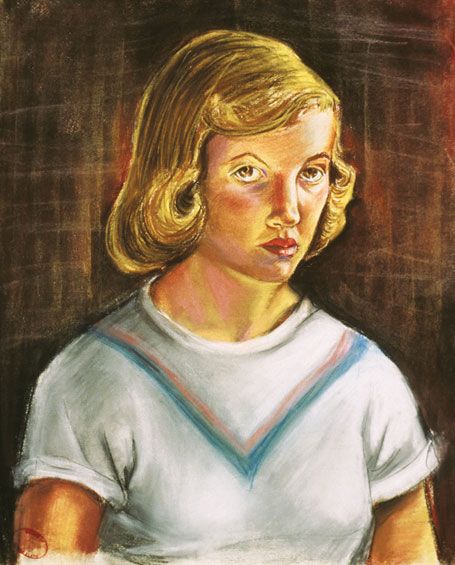
Self- portrait

Self- portrait

19. “What horrifies me most is the idea of being useless: well-educated, brilliantly promising, and fading out into an indifferent middle age.”

The Unabridged Journals of Sylvia Plath

plath4

20. “I took a deep breath and listened to the old brag of my heart: I am, I am, I am.”

The Bell Jar

Plath_CrystalBallbw_NEW


21. “But everybody has exactly the same smiling frightened face, with the look that says: ‘I’m important. If you only get to know me you will see how important I am. Look into my eyes. Kiss me, and you will see how important I am.’”

article-2265000-1708DC73000005DC-341_634x482

Stigma

26 Jul

When BlogHer asked me to speak at their annual conference on a panel called Mental Health in the Online Space, I wasn’t entirely sure what to expect. For one thing, I’ve never spoken at a conference before, and for another, I’m hardly a professional when it comes to talking about mental health. I mean, sure, I have lots of thoughts and opinions and feelings about it, and I feel pretty comfortable writing about my own experiences, but I’m by no means an expert. In fact, when I first received the invitation to speak I was sure that BlogHer had sent it to me by mistake.  But it turned out not to be a mistake, which is how I found myself sitting in a fancy conference room in a fancy hotel in fancy ol’ Chicago talking about whacky brain things.

The whole thing went pretty smoothly; a lot of it felt like we were preaching to the choir, to be honest. Our audience was mostly made up of people who had either had their own mental health struggles or else had experience with mental illness through their friends and family. Most of what we said was met with sympathetic nods or else comments from audience members who wanted to share similar issues that they’d experienced. About halfway through the session, though, just as I was starting to settle in and feel like I was getting the hang of things, one question caught me by surprise.

One of the panelists had mentioned that she hadn’t told her employer why, exactly, she was speaking at BlogHer, because she hadn’t wanted to divulge her mental health history. This is a pretty common dilemma faced by most people who live with mental illnesses, so I didn’t think anything of it until a hand shot up in the audience.

“I don’t have a mental illness, so I’m sorry if this is offensive,” said the woman, “but you’ve all talked a lot about stigma and, well, if you don’t tell your employer that you’re mentally ill, aren’t you contributing to that stigma?”

At that moment, we all looked at each other, and I could tell that all of us were thinking the same thing:

Ohhhhhh, she doesn’t know.

She doesn’t know that when you tell someone that you’re mentally ill, they look at you differently. When you tell your boss that you’ve struggled with your mental health, they start to treat you like something other, something lesser. Instead of your usual assignments or tasks, you might be asked to take on something a little more boring, more mundane. When you want to know why your role has changed, your boss might tell you that they were concerned that your former duties were too stressful for you. When you try to explain that, no, it’s not like that, you might get a look that’s a cross between father-knows-best and we’re-just-looking-out-for-you.

She doesn’t know that even if you do divulge your status as mentally ill, that doesn’t mean that you can talk about it, casually, as if it’s just another illness. For example, when someone at work asks you how you’re doing, you can never just reply, oh, you know, sad and a little anxious. If you have to take the day off because you woke up to a panic attack and you feel as if the grim, grey sky might crush you if you move from your bed, you can’t tell your employer the real reason why you won’t be at work; instead, you have to fake a convincing cough or else invent disgusting details about a fictional stomach flu.

She doesn’t know that when people talk about mental health in their workplaces, they run the risk of getting fired. Oh, not fired specifically because of mental illness, because that’s illegal, but fired for one of any number of trumped up reasons that their employer might come up with. She doesn’t know that someone can be fired for taking too much time off for doctor’s appointments and therapy sessions, even if those things are necessary in order for them to function. She doesn’t know that someone can be fired while they’re on a leave of absence due to anxiety or depression just because they’ve posted pictures of themselves smiling on Facebook.

I wish I was making that last one up, but I’m not.

Most of all, what this audience member doesn’t know about is the stigma; stigma felt by everyone, your friends, your family, your doctor, and even you, yourself, the mental health advocate. She doesn’t know what it’s like to have to learn as much about your illness as you can because your doctor’s understanding of it is, at best, incomplete. She doesn’t know what it’s like to go to see a psychiatrist, one of the best in his field, and, after you’ve explained your history to him, none of which has been in any way violent, harmful, or neglectful towards others, have him ask if Children’s Aid has ever been involved with your family. She doesn’t understand that those of us who struggle with mental health issues grew up in the same world as everyone else, and we absorbed all the same toxic messages about mental illness that everyone else did. She doesn’t know about how we internalize that stigma, how we have to fight against our own shame, guilt, fear and doubt in order to love ourselves or even just take ourselves seriously.

She doesn’t know about how some of us hate ourselves for these things that are not our fault, and then feel like hypocrites for hating the very things that we’re trying to educate others about.

And that’s the key, isn’t it? Education, I mean. That’s the way to end the stigma and shame and fear. I know that, other mental health advocates know that, and even that woman in the audience knows that – which is why she was asking about how my co-panelist could hide her mental health issues from her employer rather than taking the time to educate them. The fact is that education about mental illness is incredibly important. But (and this is a big but) you can’t put all of the responsibility for educating others solely on the shoulders of mental health advocates. For one thing, it can be exhausting and emotionally draining to try to explain over and over again the particulars of brain chemistry and trauma and he ways that those things can shape your life. For another, being one hundred percent open about your mental health all of the time can, as mentioned above, have real-life consequences. And yeah, in a perfect world you could be like, fuck this job if they’re going to look down on me for an actual, bonafide illness, but we don’t live in a perfect world, and sometimes you have to take what you can get just so that you can pay the bills.

Education about mental illness needs to start earlier for everyone, and it needs to come from the top down. It should be included in grade school health classes, in curriculums designed, in part, by mental health advocates. Education needs to come from doctors, who need to be properly educated themselves about all the ins and outs of the sad, lonely world so many of us find ourselves in. Education needs to be everywhere and be accessible to everyone in the community, because that’s honestly the only way we’re ever going to get to a place where someone can casually say at a dinner party, oh man, I had a manic episode yesterday and coming down sucked but I feel way better now, without everyone else giving them the side eye.

Because I don’t know about you, but I’d be pretty down with living in that world.

tumblr_m1e5nksACb1qeh05po1_500

It’s Just A Piece Of Paper

13 Jul

I’ve been thinking a lot about my education, or lack thereof, lately.

I’m sure that a lot of this is because of my book; I’ve been editing the shit out of it this week, and it feels like it’s sort of taken over my life. Most of the book takes place in 2003, right around the time that I had to drop out of university. That personal failure, combined with a bunch of other stuff, made that autumn one of the lowest points in my life. In fact, leaving school was a huge part of the reason that I ended up being hospitalized for depression that year.

I’d always known that I’d go to university; there was never any question about that. My father was a lawyer, and my mother spent most of my childhood finishing her Bachelor of Arts in night school, graduating when I was sixteen. I can still remember what I wore to her graduation – a long, sort of shiny black skirt with pinky-purple flowers on it, and a pink tank top with spaghetti straps. Fuck, I can even remember what I had on when my father was called to the bar. I was four years old, and my mother insisted I wear this red flowered dress with a huge white, lacy collar. I hated that dress, because that damn collar made me feel like a clown. After the ceremony, my father took me to meet a supreme court judge. Trying to think up something suitably grownup to say, I shyly said to her, “I certainly admire these burgundy carpets.”

So education was always a big part of my life, and I grew up with the understanding that I would earn at the very least an undergraduate degree. And considering the fact that, after earning her BA, my mother took a leave of absence from her job in order to earn her Master’s of Social Work, I don’t think that it’s much of a stretch to say that my parents hoped I would go on to complete a graduate degree or two as well.

Look, before we go any further, let’s get this out of the way now: I’m smart. I know that. I’m not trying to be vain or conceited; I honestly don’t think there’s anything vain about knowing your strong points. And for a long time, “smart” was the only thing I had – I wasn’t pretty, or popular, or especially talented in any of the ways that I wanted to be talented. The funny thing is, back then I would’ve given up being smart in a heartbeat if that meant that I could have been any of the other things on that list, especially the oh-so-desirable “pretty.” But I couldn’t, so I stuck with being the brainy geek.

In my final year of high school, I applied to a bunch of universities, all of them at least a couple of hours away from home. I knew that there was no fucking way that I was sticking around Kitchener; I’d been waiting pretty much my entire life to get out of there. I was thrilled when I got into my top pick, Dalhousie, and I moved to Halifax in August of 2001.

I was a good student. I got As or Bs in all of my classes, even Astronomy which, by the way, was technically a physics class (although, to be fair, it was a physics class geared specifically towards arts students). I’d thought that I wanted to study English, but in first year I fell in love with Latin and that class, along with Ancient History, was my favourite that year. In my second year, I officially declared Classics as my major, and settled in for the four year slog towards a Bachelor of Arts with honours. And you know what? I loved every fucking minute of that slog. I loved my classes, I loved my profs, I loved the other students, I loved the stupid wine and cheese events my department had, I loved all the nerdy Classics jokes, I even loved studying and writing papers. I loved all of it. Most of all, I loved learning.

Unfortunately, sometime during my second year, things started to fall apart for me financially. My government loan suffered at the hands of a bureaucratic fuck up, and I couldn’t get a student line of credit because I had no one to co-sign for me. I ended up somehow doing a full year of classes without paying for them and Dalhousie, needless to say, was pretty pissed. Then, when I tried to figure out how to register for my third year, I discovered something tricky: you can’t register for classes if you owe the school money, but you can’t get a government student loan if you’re not a registered student.

Can anyone say Catch-22?

So, after spending a month enduring a ridiculous circle-jerk involving various student services employees (with a couple of useless assists from the student aid office), I realized that I had to quit. Finishing my degree just wasn’t going to happen. Not then. Probably not ever, if I’m being totally honest with myself.

That moment, when I went from thinking of myself as a student to realizing that I was now one of the working poor, was one of the most shameful in my life. I can’t think of anything else in my life that embarrasses me as much as the fact that I had to leave school. Even now, it makes me fucking heartsick to think about; in fact, when I was talking about it with a friend today, I started crying. Ten fucking years later, and the memory of having to leave my degree unfinished still turns me into a stupid, mascara-smeared mess.

I guess I’d thought that I would’ve been over this whole lack-of-education thing by now, but I’m not. Oh boy, am I ever not. When I meet someone new, I’ll mention that I went to Dal, and that I took Classics, but unless I absolutely have to, I will never, ever admit that I didn’t finish my degree. If, somehow, it does come up, I will always carefully point out that I had to leave for financial reasons, and not because I failed any of my classes. When faced with well-educated people, I have a borderline pathetic need to prove how smart I am, to the point of being obnoxious about it.

The funny thing is, when I tell people that I wasn’t able to finish my degree, they’ll often laugh and say, “Oh, it’s just a piece of paper.” Which is easy to say when you’ve come out the other side with that piece of paper clutched firmly in your hands. But to dismiss it as being just a piece of paper is to ignore the fact that it’s a very, very expensive piece of paper that has the ability to magically gain respect and open doors. I get that saying that is an attempt to put me at ease, to make me feel like the playing field has been levelled, but let’s be honest: the field will never be level. You and your degree will always been on the higher ground, and I will always, always be down here, feeling small and stupid and mean.

We talk a lot in our society about how education is pretty much a cure-all for all kinds of social ills. Poverty, neglect, abuse, poor health and hygiene: you name it, and a bunch of people will tell you that education is the key. But what we don’t talk about is how fucking unattainable post-secondary education is to a huge part of our population. Oh, sure, there are government loans, but they can be hard to get, and they often fall short. Student lines of credit aren’t available to kids who don’t have someone to co-sign, and working full time over the summer just isn’t enough to cover tuition anymore. And all of that doesn’t even touch on the fact that tuition fees are rising at an alarming rate; I don’t even want to think about what they’ll be like by the time my son graduates from high school.

Higher education is a business, and don’t you ever forget it. We may like to have these misty-eyed ideas that we live in an egalitarian country where everyone has an equal opportunity for success, but anyone who honestly believes that is seriously fucking kidding themselves. Universities and colleges want your money, and if you can’t find a way to pay them, well, they’re not interested in educating you. You could be the smartest kid in the world, but if you’re poor – well, I’m not going to say that post-secondary school is impossible, but I will say that you’ve got a way harder road ahead of you than most. What makes all this even more difficult is the fact that most people who’ve earned university degrees don’t seem to be aware of the luck or privilege that helped them along; they truly believe that it was all their own hard work and sacrifice.

Which is really just another way of saying that poor people don’t work as hard or sacrifice enough.

Whenever I talk about my half-finished degree, someone will inevitably tell me that I’ll finish it someday. But the truth is that I probably won’t. What’s the point? Why shovel tens of thousands of dollars into that hole when all that I’ll get out of it is a piece of paper that says that I’m pretty good at translating things into Latin? I mean, sure, I would love to someday earn my BA, but if I’m being honest with myself, I know that there are so many other things that I would need to spend that money on before I wasted it on myself.

My kid, though? My kid is going to earn that piece of paper. We started an education fund for him when he was born, and we’ve asked our family to contribute to it in lieu of presents. My kid is never going to have to quit school because he doesn’t have enough money. My kid is never going to have to sit through two months of classes without a textbook because his loan hasn’t come in and he can’t afford them. My kid will never have to live off of one crappy cafeteria dinner a day because he had to cancel part of his meal plan in order to pay his phone bill. My kid is going to accomplish what I was never able to.

And once he has his degree, I will never, ever refer to it as just a piece of paper.

women graduates_0

Insomniac

2 Jul

You start by carefully arranging everything on the bed: the long skinny pillow on one side, the regular pillow at the top, the pretty handmade blanket folded just so. You place your glasses and phone and kleenex on the night table and turn off the light. You lie down, wriggle yourself into position, and close your eyes.

Stop thinking, you tell your brain. Go to sleep.

But your brain won’t stop. Instead, it offers you bits and pieces of information, things that are useless on their own but suggestive of something deeper, more frightening. Or else it takes one small event from the day and expands it, blows it up like a grainy old photograph, then picks it apart. Or else it gives you just the beginnings of sentences, stuff like:

My kid is. My partner doesn’t. My boss won’t. My friend says. She knows. He wants. I can’t. I can’t. I can’t.

You try to stay very still and think about nothing, but since when does thinking about nothing ever work? And while we’re at it, how does sleep work? How does everyone make the daily transition from conscious and thinking and feeling to, well, unconsciousness?

You squirm around, trying to find that elusive perfect spot on the pillow, the one that’s smooth and cool to the touch. Your legs get tangled up in the blanket, and the sheets feel wrong and scratchy. Frustrated, you strip the sheets and blanket off the bed and throw them into a pile on the floor. But now you’re cold, so you put on a sweatshirt and a pair of socks.

You lie there. You check the clock. You close your eyes. You open them. You check the clock. You count down how many hours are left until you have to get up.

And your brain says, Let’s have a drink.

And your brain says, Let’s read Sylvia Plath’s journals.

And your brain says, Let’s make a list of all of your shortcomings.

But you’re smarter than that, aren’t you? So instead, you do this relaxation exercise that you learned years ago in some theatre class that you took, where you bring some kind of mindful awareness (what does that even mean?) to each of your body parts in turn, starting from your toes all the way to the crown of the head. And as you’re doing this, you remember how, another time, in another theatre class, you learned to do a sort of bastardized version of the Alexander Technique. After class, you went back to your dorm and offered to teach it to the boy you had a crush on, just so you would have an excuse to touch him.

From there, it’s just a hop, skip and a jump to the memory of how you told him that you were in love with him. It was in a friend’s dorm room, where five or six of you were lying piled on a bed, watching South Park. At some point, people decide to go find snacks and drinks and you end up alone with your crush and you suddenly, bravely, think, now or never. And so you tell him, awkwardly, in fits and starts, how you feel about him and then you start to cry because you’re so nervous and you love him so much and anyway how could anyone ever love you back?

Then he takes your hand and, very kindly, tells you what everyone but you already knows – namely that he’s been fucking your best friend for the past three weeks.

That anecdote offers an easy transition into the list of people who you’ve loved but couldn’t, or wouldn’t, love you back. Also included on this list are those who loved you at first but eventually stopped loving you. And then, of course, there are the people who really did love you, but loved you badly, or too much, or not in the way that you needed.

But why didn’t these people love you? They must have had reasons, good reasons, even. What on earth did you do to drive them away? And ohhhh shit here it comes, the list of all your shortcomings. And it’s too late to stop yourself, because you’re already halfway done.

You’re a fucking sneaky bastard, brain. Did you know that?

In the morning, you drag yourself out of bed. The insides of your eyelids feel like cat’s tongues, with all those scratchy little barbs. There’s grit in your mouth, like someone’s tried to bury you in sand. You feel queasy.

You don’t want to eat anything, but you force yourself to, hoping that it’ll give you a boost of energy.

You spend the day downing coffee and you swear to god that if one more person tells you that you should cut caffeine from your diet you’re going to punch them in the face. Caffeine is the only thing that’s currently making your life bearable, and the idea of not drinking it makes you feel like you might want to die.

Everyone has some sort of solution to your sleep problem, but none of them, in your experience, work. Or rather, they work for a few nights, maybe even a few weeks, but then they stop. For all you know they never worked in the first place, and it’s all one big placebo effect. The fact is that you should just stop complaining about how tired you are. You don’t sleep. You’re never going to sleep. End of story.

By the end of the day, you’re so tired you could cry. Sometimes you really do cry, and when your partner asks what’s and you tell him that you’re not sad, you’re just so tired, you feel like a stupid little kid. You spend the evening in a daze on the couch, your brain too fuzzy for activities like reading or conversation. You wish you were dead.

Then ten o’clock comes and it’s like someone’s flipped a switch in your brain. You’re wide awake, wired, even, ready to take on the world. But it’s bedtime, and you have to work in the morning. So you turn off the lights, lie down, and let the whole cycle start all over again.

Man.

Fuck sleep.

628x471

Plus ça change, plus c’est la meme chose

30 Jun

It’s been a crazy week, eh, internet? I mean, between Wendy Davis’ filibuster  and the American supreme court repealing DOMA, it’s been pretty exciting all up in here!

And it’s Pride in Toronto right now!

And tomorrow is Canada Day!

Meanwhile, I’m working all weekend, and have spent the last several days alternating between being screamed at by my toddler and struggling to find the motivation to finish my book, since my deadline is July 15th. I mean, in case you were wondering why I haven’t been posting much and also have maybe noticed how incredibly shitty I’ve become at replying to comments. Sorry guys, I kind of suck right now.

Basically my life write now - trying to finish my book while doing my best not to drown

Basically my life write now – trying to finish my book while doing my best not to drown

I can’t remember if I’ve talked about the book on here or not. Probably not. I’m pretty terrible at self-promotion, which is a problem, I guess, when you’re a young, unknown whippersnapper of a writer. Like, when people ask me what my book’s about, I just sort of mumble incoherently and then change the subject. Mind you, I’ve never actually published a book, so I can’t say this with complete certainty, but I’m pretty sure that that’s not how you get people interested in what you’re writing.

Anyway. This book. It’s going to be an e-book, published through Thought Catalog, and will be sold both on their website and on Amazon. The first draft is mostly done, which is kind of bad news, because that means that editing comes next, and editing my own work mostly makes me want to gouge my eyes out. I’m pretty excited about it, though. It even has a title – My Heart is an Autumn Garage. That’s a Salinger reference, specifically a reference to a line from Franny & Zooey, so right away you know that it’s going to be an awesome book.

So what’s this mystery book about? Welllll, it’s about the time that I was hospitalized for depression back in 2003, and all the crazy hijinks and hilarious misadventures that ensued! That is, if by crazy hijinks and hilarious misadventures I mean “possibly the worst, most frightening thing that has ever happened to me.”

Writing this book has been both a weirdly nostalgic experience and super anxiety-inducing. The former because even though the summer and fall of 2003 were a really fucking terrible time in my life, it was neat cracking open my old journals and reading all the weird little details about my life back then. And yeah, a lot of what I wrote was heartbroken and angry, but there were a few things that made me smile –  for example, a pros and cons list that I wrote of reasons why I should or should not kill myself (spoiler alert: I didn’t, even though there was only one item on the “should not” list). That list, by the way, was made with complete earnestness, and there really shouldn’t be anything funny about it, but somehow it feels pretty damn good to read it ten years after the fact and be able to laugh.

Writing this has also brought up a bunch of anxiety because, to be honest, I actually thought that I’d changed a lot since 2003. Like, I’d somehow become  an entirely different person or something. But, of course, even though my circumstances have altered since then, my actual core self is pretty damn similar. Reading those old journals reminded me that I still have all the same old insecurities and fears as ever, and sure, maybe I’m better at coping with them now, but my coping abilities feel fragile and feeble at best, and it seems like it wouldn’t take much to bring me right back to where I was.

And speaking of being right back where I was, that’s sort of what I’ve been doing while writing this book, isn’t it? I mean, I’ve been working really hard to get into the headspace I was in ten years ago, those good old days when Halifax seemed like a mean, grey trap and suicide felt like the only way out. By and large I’ve been pretty successful at recapturing those feelings (thanks Past Self for all your extremely detail-oriented journal entries – way to look out for Future Self!), and while I do think slipping back into how I felt and thought in those days will make the book much stronger and more immediate, it hasn’t exactly felt great for my present-day self. It’s hard not to read pages and pages of hopelessness, regret, and suicidal ideation without starting to think, hmmmm, maybe she has a point.

So that’s basically where I am these days. There’s been a lot of writing and self-reflection over the past few weeks, and a healthy dose of change, too. These have, in the long run, all been good things, I think, but they’ve also been kind of wearing on me, and I haven’t exactly been the most fun person to be around. I also feel that I never have enough hours in the day, although somehow I always magically have enough time to refresh Facebook obsessively or check my email fifty times, so I dunno. I’d better get my shit together soon, though, because it’s summer and I fucking love summer. First of all, it’s my birthday in a little over a month. Second of all, summer. And if you’re one of those assholes who hates summer and will spend the next two months complaining about how hot it is, well, you know where the door is.

In other news, I will be in Chicago at the end of July speaking at the BlogHer conference on the topic of “Mental Health in the Online Space.” I’ve never been to Chicago, so I am pretty stoked! I know all about how their hospitals work, though, based on my obsessive teenage watching of both ER and Chicago Hope.

Hey, Dr. Carter?

Call me, okay?

Also, my friend Audra started a blog called Enthusiasm Makes the Difference. I asked her if it was going to be a blog about blow jobs, because I feel like that is a scenario where enthusiasm really can mean the difference between a great blow job and just a so-so blow job, but she said that it was only going to be about oral sex sometimes. Anyway, she is a great writer and you should probably check her out!

Oh, and if you want to read some advice that I gave Sheila Heti about change and decision-making, you can check that out here.

In conclusion, I will leave you with my favourite scene from The Royal Tenenbaums, which I have been watching this week in the name of RESEARCH. Because the fact is that only ten days before I was planning on killing myself, Elliott Smith committed suicide by stabbing himself in the chest. And I can’t think of Elliott Smith without remembering the part in the Royal Tenenbaums when Luke Wilson’s character slashes his wrists while Smith’s Needle In The Hay plays on the soundtrack. And oh frig, you guys, this scene gets me every time. There’s just so much feeling, but it’s so quiet and lovely and happy-sad. Oh man.

On Friendship (Or, How To Over-Think Everything)

13 Jun

This past Sunday I took Theo to the park, hoping to score a little mother-and-son quality time. We went to the “Secret Park”, so-called because of the way it’s tucked behind our local high level pumping station, an Art Deco monstrosity that’s designed to fit in with the rest of the gorgeous early 20th century architecture in our neighbourhood (rich people: even their municipal pumping stations are pretty). My plan was for Theo and I to spend the morning chilling out on the climber, engaging in some witty banter and maybe taking turns pushing each other on the swings.

I hadn’t counted on my toddler totally ditching me for a new-found friend.

This other kid was already at the Secret Park when we got there, running around like a madman, waving a huge stick in the air and screaming. Theo was immediately entranced. He watched, shyly, as this boy tore around the grassy slopes, and I could tell that he wanted to join in but wasn’t quite sure how to achieve that. I suggested that we could go play on the climber or on the swings, thinking that doing some park-type stuff might make him feel a little more at ease and thus help put him into the right frame of mind to make friends. He shook his head, though, his eyes never leaving the other boy. Finally, still not looking at me, he said with a great deal of seriousness,

“I need a stick.”

So I found him a stick, and that was all it took for him to feel comfortable enough to start playing with the other boy (whose name, it turned out, was Duncan). Once Theo had that stick in his hand, he and Duncan were running around shrieking delightedly together. Then they played in the sand doing something at once precise and elaborate and yet totally mystifying with a plastic cup and a Christmas tree ornament shaped like a chilli pepper. Then they buried Duncan’s extensive collection of dinky cars, then dug them all up again and started racing them up and down the trunk of a nearby tree.

Insta-best-friends.

I was hella jealous.

I’ve been thinking about how that situation would have played out had it involved myself and some other adult who just happened to be doing something that I found incredibly intriguing. Would I have been able to just jump right in and befriend them, without even so much as an introduction? Oh, fuck, no. Here’s how it would have gone if I’d been in Theo’s place:

Anne’s internal monologue: Whoa, that person seems amazing. I really want to run around and wave sticks with her! But probably she’s way better at waving sticks than me. I mean, I guess I could ask her to teach me, but isn’t that a little pathetic? And anyway, I’m sure that she has more than enough friends. I’m sure that she doesn’t want to talk to me. Maybe if I google “how to wave sticks and scream” I could just do it by myself? Maybe it’ll turn out that I’m really great at it? Maybe if I do it awesomely enough, she’ll come over and try to make friends with me? Do I even really want to make friends with her, though? I mean, she seems great now, but she’s probably not as awesome as she seems. I have a lot of great friends – I don’t need this not-as-awesome-as-she-seems stick waver!

Anne (out loud): Guhhh nice stick!

At what age does the ability to instantly click with someone over something like screaming and waving sticks end? At what age do all these stupid, tangled thoughts take over and prevent people (and by people I mean me) from taking any kind of initiative from befriending others? My kid is (currently, at least) the kind of person who can just jump right in and assume that his awesomeness will be evident enough that he can make friends with anyone he wants to. Or, going even further, he doesn’t even bother to wonder about the state of his awesomeness. He just does his thing and goes from there. And I’m kind of jealous. I fucking want that personality trait so badly, like, you don’t even know.

I really, really want to be the type of person who sees someone cool and is like, “Hey, let’s hang out sometime.” But I’m not, and I never have been.

Instead, I am the type of person who, when I went camping as a little kid, would get my father to visit the campsites of families with kids and act as a sort of friendship matchmaker.

I am the type of person who daily descends into the bottomless black hole of saying too much and then trying to correct that by saying even more.

I am the type of person who goes out for dinner with a writer that she particularly admires and brings cue cards full of things to say in case the conversation lags.

I really, really want to be the kind of person who says, fuck cue cards, but you guys? I actually love cue cards. And I’m not saying that there’s anything wrong with loving cue cards, except that maybe it’s a problem when you come to depend on them as a sort of social crutch.

I don’t want to be the type of person who, in the middle of a nice dinner, whips out a list of interesting conversation topics, but what the fuck else am I supposed to do? Think thoughts and say words in real time? As Barney Stinson would say: please. Putting my thoughts down in a blog post is fairly easy, because I can edit and then re-edit until I’m sure that I’ve got it right. But having an actual, un-plannable, give-and-take conversation with another person is a different beast entirely.

I mean, seriously, how does anyone ever figure out the right thing to say? Because this must be something that other people are capable of doing, unless everyone else has somehow learned to be extremely stealthy with their cue cards. And how do people not only manage to say the right thing, but also avoid saying exactly the wrong thing? And how do you come to accept that it’s not actually a binary, that there is a wide gulf between right and wrong, a deep valley full of conversational material that’s perfectly fine, but for whatever reason isn’t particularly scintillating or thought-provoking.

And that’s just the basics of general small talk. That’s just beginner’s stuff. What about all the crap that comes later, once you’ve managed to become friends with someone and actually establish some kind of relationship? Then comes the really tricky stuff – carefully cultivating that relationship, making sure that you make time for that person, learning how to deal with any conflict that arises with them.

Ugh, conflict. Oh, conflict. My old nemesis.

On Sunday, I watched my kid get into an argument with Duncan over who got to hold which car. It didn’t quite come to blows, but there were definitely angry words and hurt feelings involved. Then, miraculously, two minutes later they were firm friends again, discussing the various merits of blue race cars versus red race cars as if nothing at all had happened. Meanwhile, when I get into a fight with someone, I end up spending days, sometimes even weeks, treading and retreading the same mental ground over and over and over again. I I spend ages trying to figure out what I could have done differently, as if I’m ever going to be presented with the exact same set of circumstances at some point in the future. Worst of all, I need an incredibly amount of reassurance that yes, I am a still good, yes, I am still loved.

This last one has been killing me lately. I’ve realized that a huge part of it is because when you take up residence in anxiety-town, you lose any ability to trust your own senses. So you end up feeling like you have to sort of crowdsource your thoughts and feelings, constantly asking, “Is this okay? Is this a normal reaction? Am I right to respond this way or am I going overboard? Do you still love me? Is it okay for me to love myself?” And yes, sometimes this way of coping is super helpful, but sometimes it can be totally toxic as well. Even when all of your neurons are misfiring in exactly the right way to make you feel like you are a terrible person, it’s dangerous to think that someone else can give you an accurate read on what you’re doing or how you should feel about yourself. On top of that, you might not get the answer that you want, and at the end of the day constantly demanding feedback and reassurance can make you feel pretty pathetic.

So what’s the answer? I’m not sure, to be honest. Lately I’ve been making a lot of checklists for myself (for whatever reason I find list-making to be very soothing). After a couple of days of trying to unsnarl this mess in my head that I call my brain, I now have a bunch of easily-accessible documents that I can refer to whenever I start to doubt any given situation. These lists are full of reminders about all of the empirical evidence that I have that yes, people do love me, and yes, there is value in the things that I say and do. I’ve also made lists that help me to remember that conflict isn’t the end of the world (even if it sometimes feels that way), and that it’s totally possible to have a horrible fight with someone and then move past it and maybe not exactly forget that it ever happened but also not let it be what defines your relationship from that moment forward.

All of this is to say: I really want to be the kid who one minute is screaming about how it’s my fucking turn to hold the red car, and then the next minute is fine. I want to be the kid who jumps right in without a single thought. I want to be that goddamn kid who runs around waving a stick and screaming without first having to google how and why I should do this so as to prevent myself from looking like an idiot.

Because that kid? That kid seems really fucking rad.

12497-1

The Extra Bicycle

28 May

There are three bicycles on my balcony right now.

Normally there are only two – my shiny blue bike, with its giant seat and extra-wide wheels, and Matt’s sturdy green mountain bike. But for the last week or so there’s been another bicycle out there, one with a funky wire basket and a badly-warped frame frame.

This third bike belongs to a mystery woman who was involved in a cycling accident at the foot of the hill that I live on. I don’t know exactly what happened, but I do know that she landed face-first on the pavement, and I know that by the time the paramedics arrived her breathing was shallow and her heart rate uneven.

Her bicycle ended up on my balcony because Matt and Theo happened to be walking by the scene of the accident shortly it happened. Theo is fascinated by and and all emergency vehicles, so the sight of the firetrucks and ambulances was an instant hit with him. Ever since that day, he keeps saying:

“The firefighters took the woman away. The firefighters took the woman to the doctor to make her better.”

For Matt, the scene was a reminder of my own bike accident, which happened almost five years ago. Seeing that woman being strapped onto a stretcher and loaded into the waiting ambulance triggered all kinds of memories for him of my ill-fated tangle with a set of streetcar tracks down at Church and Adelaide. That was why he brought the bike home and left his name and number with the paramedics – because he remembered the kind stranger who had dragged my bike out of the road and locked it up, then given me his business card in case I couldn’t find it when I went to get it back.

I think about that accident fairly often. It’s hard not to, to be honest; the stiffness and occasional ache in my left knee are a constant reminder of the fact that my leg is packed with hardware. And anyway, that crash was a sort of turning point in my life; I’m not going to get all dramatic on you and say that it was a near-death experience or that it changed my view of humanity, but it definitely altered the course that I thought I was on. At the time, I was upset, even angry about that, but now I’m mostly thankful for it, because if I hadn’t fallen and banged up my knee, who knows where I would be now? If I’d kept on going in the direction I was headed in, I probably wouldn’t have Theo, for one thing. For another, who knows if I’d be writing, or teaching yoga? Who knows where I would be at all?

The reason that I happened to be at Church and Adelaide that morning was because I was starting my second week of George Brown’s Sign Language Interpreter program. I was running late, and I probably, almost certainly, wasn’t being as careful as I should have been. I’d always been wary of streetcar tracks, because I knew of other people who had had dangerous interactions with them, but I guess that I let my guard slip a bit that morning. I remember that I had to turn left onto Adelaide and I had to move into the left lane to do that, so I was simultaneously pedalling furiously to make it to the intersection before the light changed while signalling the lane change with my left hand and also looking back over my shoulder, watching out for cars. Just as I was getting ready to turn, I felt the traction change underneath my front tire – it went from rumbling over rough pavement to, for just a moment, skidding sickeningly, uncontrollably over smooth metal. Then with a jolt my front wheel slid neatly into the groove of the track, and I was stuck. At the same time my back wheel jerked forward, causing my bike to jackknife beneath me.

I knew that I was going to fall, but I thought, for some reason, that I could prevent it. I put my left foot down to try to steady myself, but my bike’s momentum was too much. I went down.

I don’t actually have any recollection of falling. I remember realizing that I was screwed, and then I remember lying sprawled on the hot pavement, my bike upended beside me and its wheels spinning pathetically in the air. I don’t think that I blacked out or anything – I’d somehow managed to avoid hitting my (unhelmeted) head – but I guess that whatever I was experiencing in that moment was too much for my brain to handle and it just shut down or somehow blocked it all out.

I remember thinking that I should stay sitting there in the middle of the road, even though cars were zooming around me, because it seemed like the safest place. A crowd had gathered around me soon after I’d crashed, and a few of them had to convince me that it was much smarter to get over to the side of the road. Two people helped me up, and that was when I realized that I couldn’t put any weight on my left leg. It didn’t hurt, exactly, it just didn’t work. So these two people had to half carry me over to the curb, while a third person went and rescued my poor bike (her name was Frida, by the way, as in Frida Kahlo, and she had an elegant if  heavy vintage solid metal frame with a beautiful, now-smashed, wicker basket on the front).

By the time I reached the side of the road I was crying, hard, and hyperventilating. Not because I was hurt or scared, but because it had suddenly hit me that I could maybe, possibly have died. A woman sat beside me and told me to breathe while someone else called an ambulance on their cell. A third person handed me their phone so that I could call Matt. Back then I didn’t have my own cell phone, so I told him that I didn’t know where they were taking me but would call him from the hospital once I got there.

Once I got to the hospital no one, myself included, thought that there was any rush to look at my leg. I was certain that my knee was just sprained or twisted – after all, it barely hurt at first, and I hadn’t even torn my jeans. But by the time Matt got there, my leg was aching something fierce, and he found me huddled up in a wheelchair in the waiting room, crying quietly, trying not to bother anyone with my sobbing.

Eventually, someone called my name, Matt wheeled me through the big metal door, had some x-rays done and then sat for another hour or two on a hospital bed. Finally, a doctor came in and said brusquely,

“Your left tibial plateau is fractured. An orthopaedic surgeon will be coming to discuss the details of your surgery with you. Okay bye!”

I mean, I’m sure it didn’t exactly play out like that, but that was the general feeling of it. The doctor’s routine view of what I’d managed to do to my left knee was miles and miles away from my experience as a person whose life had just been turned upside down by a few brief sentences. Everything suddenly started to sound like it was very grainy and far away, and my vision began to go dark. I had to lie down before I passed out.

The technical details of what happened were this: my left femur, that big, heavy, club-like thigh bone, had, in the course of my accident, slammed into my tibial plateau (the place where the tibia and fibula meet to form the bottom part of the knee joint) hard enough to dent it. Surgery was needed to build the surface of the plateau back up, or else I would almost certainly walk with a limp for the rest of my life. So they took a bone graft from their bone bank, and held it in place with a metal plate and a series of large metal pins.

Why yes, this does mean that I have a dead person’s bone in my body! I kind of hope that it comes from a murderer or a genius or a murderer-genius or some other interesting type of person, but of course you can’t be too picky in these types of situations.

After surgery, I didn’t walk for three months. I went from having a giant, heavy cast to a much lighter, foam-and-plastic brace. When the took the cast off, I’d lost so much muscle mass that my thigh was narrower than my knee joint. It was gross. Oh and speaking of gross, if you ever want to terrify your needle-and-generally-medical-phobic partner, please invite them into the room while your cast is removed and the twenty six enormous metal stitches in your knee are suddenly revealed.

Yeah.

Matt had to leave after that.

Once I was ready to start putting weight on my leg again, I discovered that I’d somehow forgotten how to walk. I went to physiotherapy twice a week and, slowly and painstakingly, re-learned something that I’d mastered at the age of fourteen months. I still walk funny, even now, five years later – my left arch collapses and my entire left leg rolls inward, so that if I’m not thinking about it, I walk with a tiny bit of a limp. A limp, mind you, that becomes much more exaggerated when I’m tired or the weather is bad.

It goes without saying that I had to drop out of school – for the first few weeks after surgery, I could barely get out of bed, let alone go to class. On top of that, I was totally, totally loopy from the drugs I was on. I was so loopy that I read Twilight and thought it was good. No joke.

So I left school and, once I was able to function like a person with two legs again, returned to my nearly-minimum-wage retail job. I started trying to put my life back together and figure out what I wanted to do with myself, but I was at loose ends. I’d written a book the year before, and had had it tentatively accepted by a publisher and an agent, but the summer after my accident both of them ended up rejecting my manuscript. I didn’t know what to do with it, or myself. My life felt totally directionless.

In the summer of 2009 I married Matt, as planned. Eight months later I was suddenly, unexpectedly pregnant. And now, nearly five years after my accident, I have a hilarious toddler and a fantastic partner, I manage a yoga studio, I teach yoga, and I’m sorta, kinda, maybe accepting the fact that I might be a writer.

If I hadn’t fallen, there’s a chance that I would still be in an equally good, equally happy place in my life. But I’m not willing to take that gamble – if given the choice, I would always, always pick the prize on display over whatever’s behind the closed door. A bird in the hand, etc. So I guess that in a weird way I’m kind of thankful that my wheel slid into that streetcar track. I’m thankful that I ended up sprawled out on the ground, and I’m thankful that I smashed my knee up badly enough to need major surgery. Because all of that, every single little aspect of it, lead me to be right where I am.

I also think that falling off my bike was a big part of what helped me learn to love Toronto. I’d only been living here for a little over a year, and so far the city had seemed strange and unfriendly to me. If you’d asked me before my accident what would happen if a Torontonian fell off their bike in the middle of traffic, I would have said that everyone on the street would have gone about their business while that poor unlucky soul got run over. The people at Church and Adelaide that day proved me wrong, though, and since then I’ve learned over and over again that this city can, when necessary, have a heart.

The mystery woman, the woman whose bike is currently taking up real estate on my balcony, called this past weekend. She’d spent three days in the ICU, she said. She’d bled out into her brain and nearly died, she said. She kept thanking Matt for saving her life, and he had to tell her, over and over, that he’d only saved her bike.

She’s home now from the hospital, and her nephew is coming over sometime soon to pick up her bike. I hope she ends up being okay. I hope that someone told her just how many people stopped to help her, how much love and care she got from total strangers. Most of all, though, I hope that however this accident changes her life (as it certainly will) it ends up somehow being for the better.
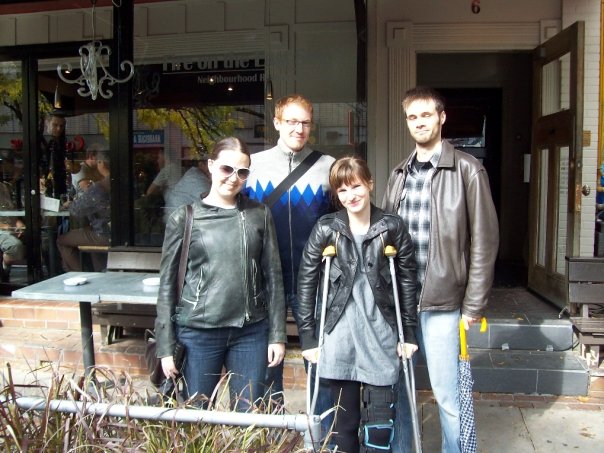
Me, on crutches, out for brunch with friends

Me, on crutches, out for brunch with friends

May Day (M’Aidez)

3 May

I’ve read a lot of historical fiction in my time. Too much, probably. Especially during my formative years. As a kid I read a lot of Rosemary Sutcliff‘s books, the earliest of which are so very English and charming and achingly nostalgic that I spent far, far too much time daydreaming about what it would be like to live in Tudor London, wear a kirtle and spend my days working on a sampler.

It’s been a cold, grey, miserable spring so far but then yesterday, May Day, the weather suddenly smartened up. The trees have finally put forth quivering, fragile, little buds, so tiny and compact that it’s hard to believe that they’ll ever unfurl enough to provide any kind of shade. The magnolias are starting to open their pinky-purple blossoms, and the bluebells, crocuses and daffodils are everywhere.

All of this gives me a funny sort of heartache, like I’m missing out on something that I’ve never known, and never will know.

Oh, I know that it’s ridiculous, and I’m thirty, and when am I ever going to grow the hell up, but you guys? I wish that May Day was still a thing. I want to go out before dawn and bring in the May. I want to sing madrigals as the sun is coming up. I want maypoles and morris dancers and May Queens and all of that stupid shit. I want bonfires, and the moon, and the cold, starry sky. I mean, we don’t even get to have stars anymore. At least not in the city, anyway.

I guess what I really want is some kind of communal way to celebrate the coming of spring. I want to be able to mark the passage of the year, from the barrenness of winter through the promise of spring and the fullness of summer to the dead lands of autumn and then all the way back to winter again. I want some way of measuring my life other than stingy little increments of twenty four hours, each hour chopped up and neatly ticked out in precise little seconds. I’m so tired of days – Mondays, workdays, weekdays, holidays, day, days, days. They seem so cold, so clinical, so entirely devoid of meaning.

I taught a late class tonight, and as I walked home the air was warm and heavy with the scent of fresh earth and flowers. Through open windows I could hear soft laughter and the clink of dishes, sounds of happiness and comfort. The kids were all out tonight, smoking pot on park benches, their bored, drawling voices floating towards me on the breeze. Some of them were playing on the swings, their sneakers flashing as they swung in and out of the streetlights’ glow, always daring each other to further, faster, higher.

Everything is unbearably lovely, much more lovely than it should be. Nights like this make me feel as if something ought to be made out of them – a story, a song, a play. Otherwise, what purpose do they serve? Surely they don’t just exist for our enjoyment. Surely we’re meant to do something with them, meant to find a way to explain or celebrate their perfection.

I get so damn tired of feelings sometimes, the way they crash over you, threaten to drown you, and then slowly recede, leaving you wet and stinking and covered in seaweed. I think that in my next life I’m going to come back as a robot that’s incapable of feeling obligation or regret. I think that that would be nice.

Queen Guinevere's Maying by John Collier

Queen Guinevere’s Maying by John Collier