Tag Archives: depression

Stigma

26 Jul

When BlogHer asked me to speak at their annual conference on a panel called Mental Health in the Online Space, I wasn’t entirely sure what to expect. For one thing, I’ve never spoken at a conference before, and for another, I’m hardly a professional when it comes to talking about mental health. I mean, sure, I have lots of thoughts and opinions and feelings about it, and I feel pretty comfortable writing about my own experiences, but I’m by no means an expert. In fact, when I first received the invitation to speak I was sure that BlogHer had sent it to me by mistake.  But it turned out not to be a mistake, which is how I found myself sitting in a fancy conference room in a fancy hotel in fancy ol’ Chicago talking about whacky brain things.

The whole thing went pretty smoothly; a lot of it felt like we were preaching to the choir, to be honest. Our audience was mostly made up of people who had either had their own mental health struggles or else had experience with mental illness through their friends and family. Most of what we said was met with sympathetic nods or else comments from audience members who wanted to share similar issues that they’d experienced. About halfway through the session, though, just as I was starting to settle in and feel like I was getting the hang of things, one question caught me by surprise.

One of the panelists had mentioned that she hadn’t told her employer why, exactly, she was speaking at BlogHer, because she hadn’t wanted to divulge her mental health history. This is a pretty common dilemma faced by most people who live with mental illnesses, so I didn’t think anything of it until a hand shot up in the audience.

“I don’t have a mental illness, so I’m sorry if this is offensive,” said the woman, “but you’ve all talked a lot about stigma and, well, if you don’t tell your employer that you’re mentally ill, aren’t you contributing to that stigma?”

At that moment, we all looked at each other, and I could tell that all of us were thinking the same thing:

Ohhhhhh, she doesn’t know.

She doesn’t know that when you tell someone that you’re mentally ill, they look at you differently. When you tell your boss that you’ve struggled with your mental health, they start to treat you like something other, something lesser. Instead of your usual assignments or tasks, you might be asked to take on something a little more boring, more mundane. When you want to know why your role has changed, your boss might tell you that they were concerned that your former duties were too stressful for you. When you try to explain that, no, it’s not like that, you might get a look that’s a cross between father-knows-best and we’re-just-looking-out-for-you.

She doesn’t know that even if you do divulge your status as mentally ill, that doesn’t mean that you can talk about it, casually, as if it’s just another illness. For example, when someone at work asks you how you’re doing, you can never just reply, oh, you know, sad and a little anxious. If you have to take the day off because you woke up to a panic attack and you feel as if the grim, grey sky might crush you if you move from your bed, you can’t tell your employer the real reason why you won’t be at work; instead, you have to fake a convincing cough or else invent disgusting details about a fictional stomach flu.

She doesn’t know that when people talk about mental health in their workplaces, they run the risk of getting fired. Oh, not fired specifically because of mental illness, because that’s illegal, but fired for one of any number of trumped up reasons that their employer might come up with. She doesn’t know that someone can be fired for taking too much time off for doctor’s appointments and therapy sessions, even if those things are necessary in order for them to function. She doesn’t know that someone can be fired while they’re on a leave of absence due to anxiety or depression just because they’ve posted pictures of themselves smiling on Facebook.

I wish I was making that last one up, but I’m not.

Most of all, what this audience member doesn’t know about is the stigma; stigma felt by everyone, your friends, your family, your doctor, and even you, yourself, the mental health advocate. She doesn’t know what it’s like to have to learn as much about your illness as you can because your doctor’s understanding of it is, at best, incomplete. She doesn’t know what it’s like to go to see a psychiatrist, one of the best in his field, and, after you’ve explained your history to him, none of which has been in any way violent, harmful, or neglectful towards others, have him ask if Children’s Aid has ever been involved with your family. She doesn’t understand that those of us who struggle with mental health issues grew up in the same world as everyone else, and we absorbed all the same toxic messages about mental illness that everyone else did. She doesn’t know about how we internalize that stigma, how we have to fight against our own shame, guilt, fear and doubt in order to love ourselves or even just take ourselves seriously.

She doesn’t know about how some of us hate ourselves for these things that are not our fault, and then feel like hypocrites for hating the very things that we’re trying to educate others about.

And that’s the key, isn’t it? Education, I mean. That’s the way to end the stigma and shame and fear. I know that, other mental health advocates know that, and even that woman in the audience knows that – which is why she was asking about how my co-panelist could hide her mental health issues from her employer rather than taking the time to educate them. The fact is that education about mental illness is incredibly important. But (and this is a big but) you can’t put all of the responsibility for educating others solely on the shoulders of mental health advocates. For one thing, it can be exhausting and emotionally draining to try to explain over and over again the particulars of brain chemistry and trauma and he ways that those things can shape your life. For another, being one hundred percent open about your mental health all of the time can, as mentioned above, have real-life consequences. And yeah, in a perfect world you could be like, fuck this job if they’re going to look down on me for an actual, bonafide illness, but we don’t live in a perfect world, and sometimes you have to take what you can get just so that you can pay the bills.

Education about mental illness needs to start earlier for everyone, and it needs to come from the top down. It should be included in grade school health classes, in curriculums designed, in part, by mental health advocates. Education needs to come from doctors, who need to be properly educated themselves about all the ins and outs of the sad, lonely world so many of us find ourselves in. Education needs to be everywhere and be accessible to everyone in the community, because that’s honestly the only way we’re ever going to get to a place where someone can casually say at a dinner party, oh man, I had a manic episode yesterday and coming down sucked but I feel way better now, without everyone else giving them the side eye.

Because I don’t know about you, but I’d be pretty down with living in that world.

tumblr_m1e5nksACb1qeh05po1_500

Insomniac

2 Jul

You start by carefully arranging everything on the bed: the long skinny pillow on one side, the regular pillow at the top, the pretty handmade blanket folded just so. You place your glasses and phone and kleenex on the night table and turn off the light. You lie down, wriggle yourself into position, and close your eyes.

Stop thinking, you tell your brain. Go to sleep.

But your brain won’t stop. Instead, it offers you bits and pieces of information, things that are useless on their own but suggestive of something deeper, more frightening. Or else it takes one small event from the day and expands it, blows it up like a grainy old photograph, then picks it apart. Or else it gives you just the beginnings of sentences, stuff like:

My kid is. My partner doesn’t. My boss won’t. My friend says. She knows. He wants. I can’t. I can’t. I can’t.

You try to stay very still and think about nothing, but since when does thinking about nothing ever work? And while we’re at it, how does sleep work? How does everyone make the daily transition from conscious and thinking and feeling to, well, unconsciousness?

You squirm around, trying to find that elusive perfect spot on the pillow, the one that’s smooth and cool to the touch. Your legs get tangled up in the blanket, and the sheets feel wrong and scratchy. Frustrated, you strip the sheets and blanket off the bed and throw them into a pile on the floor. But now you’re cold, so you put on a sweatshirt and a pair of socks.

You lie there. You check the clock. You close your eyes. You open them. You check the clock. You count down how many hours are left until you have to get up.

And your brain says, Let’s have a drink.

And your brain says, Let’s read Sylvia Plath’s journals.

And your brain says, Let’s make a list of all of your shortcomings.

But you’re smarter than that, aren’t you? So instead, you do this relaxation exercise that you learned years ago in some theatre class that you took, where you bring some kind of mindful awareness (what does that even mean?) to each of your body parts in turn, starting from your toes all the way to the crown of the head. And as you’re doing this, you remember how, another time, in another theatre class, you learned to do a sort of bastardized version of the Alexander Technique. After class, you went back to your dorm and offered to teach it to the boy you had a crush on, just so you would have an excuse to touch him.

From there, it’s just a hop, skip and a jump to the memory of how you told him that you were in love with him. It was in a friend’s dorm room, where five or six of you were lying piled on a bed, watching South Park. At some point, people decide to go find snacks and drinks and you end up alone with your crush and you suddenly, bravely, think, now or never. And so you tell him, awkwardly, in fits and starts, how you feel about him and then you start to cry because you’re so nervous and you love him so much and anyway how could anyone ever love you back?

Then he takes your hand and, very kindly, tells you what everyone but you already knows – namely that he’s been fucking your best friend for the past three weeks.

That anecdote offers an easy transition into the list of people who you’ve loved but couldn’t, or wouldn’t, love you back. Also included on this list are those who loved you at first but eventually stopped loving you. And then, of course, there are the people who really did love you, but loved you badly, or too much, or not in the way that you needed.

But why didn’t these people love you? They must have had reasons, good reasons, even. What on earth did you do to drive them away? And ohhhh shit here it comes, the list of all your shortcomings. And it’s too late to stop yourself, because you’re already halfway done.

You’re a fucking sneaky bastard, brain. Did you know that?

In the morning, you drag yourself out of bed. The insides of your eyelids feel like cat’s tongues, with all those scratchy little barbs. There’s grit in your mouth, like someone’s tried to bury you in sand. You feel queasy.

You don’t want to eat anything, but you force yourself to, hoping that it’ll give you a boost of energy.

You spend the day downing coffee and you swear to god that if one more person tells you that you should cut caffeine from your diet you’re going to punch them in the face. Caffeine is the only thing that’s currently making your life bearable, and the idea of not drinking it makes you feel like you might want to die.

Everyone has some sort of solution to your sleep problem, but none of them, in your experience, work. Or rather, they work for a few nights, maybe even a few weeks, but then they stop. For all you know they never worked in the first place, and it’s all one big placebo effect. The fact is that you should just stop complaining about how tired you are. You don’t sleep. You’re never going to sleep. End of story.

By the end of the day, you’re so tired you could cry. Sometimes you really do cry, and when your partner asks what’s and you tell him that you’re not sad, you’re just so tired, you feel like a stupid little kid. You spend the evening in a daze on the couch, your brain too fuzzy for activities like reading or conversation. You wish you were dead.

Then ten o’clock comes and it’s like someone’s flipped a switch in your brain. You’re wide awake, wired, even, ready to take on the world. But it’s bedtime, and you have to work in the morning. So you turn off the lights, lie down, and let the whole cycle start all over again.

Man.

Fuck sleep.

628x471

Plus ça change, plus c’est la meme chose

30 Jun

It’s been a crazy week, eh, internet? I mean, between Wendy Davis’ filibuster  and the American supreme court repealing DOMA, it’s been pretty exciting all up in here!

And it’s Pride in Toronto right now!

And tomorrow is Canada Day!

Meanwhile, I’m working all weekend, and have spent the last several days alternating between being screamed at by my toddler and struggling to find the motivation to finish my book, since my deadline is July 15th. I mean, in case you were wondering why I haven’t been posting much and also have maybe noticed how incredibly shitty I’ve become at replying to comments. Sorry guys, I kind of suck right now.

Basically my life write now - trying to finish my book while doing my best not to drown

Basically my life write now – trying to finish my book while doing my best not to drown

I can’t remember if I’ve talked about the book on here or not. Probably not. I’m pretty terrible at self-promotion, which is a problem, I guess, when you’re a young, unknown whippersnapper of a writer. Like, when people ask me what my book’s about, I just sort of mumble incoherently and then change the subject. Mind you, I’ve never actually published a book, so I can’t say this with complete certainty, but I’m pretty sure that that’s not how you get people interested in what you’re writing.

Anyway. This book. It’s going to be an e-book, published through Thought Catalog, and will be sold both on their website and on Amazon. The first draft is mostly done, which is kind of bad news, because that means that editing comes next, and editing my own work mostly makes me want to gouge my eyes out. I’m pretty excited about it, though. It even has a title – My Heart is an Autumn Garage. That’s a Salinger reference, specifically a reference to a line from Franny & Zooey, so right away you know that it’s going to be an awesome book.

So what’s this mystery book about? Welllll, it’s about the time that I was hospitalized for depression back in 2003, and all the crazy hijinks and hilarious misadventures that ensued! That is, if by crazy hijinks and hilarious misadventures I mean “possibly the worst, most frightening thing that has ever happened to me.”

Writing this book has been both a weirdly nostalgic experience and super anxiety-inducing. The former because even though the summer and fall of 2003 were a really fucking terrible time in my life, it was neat cracking open my old journals and reading all the weird little details about my life back then. And yeah, a lot of what I wrote was heartbroken and angry, but there were a few things that made me smile –  for example, a pros and cons list that I wrote of reasons why I should or should not kill myself (spoiler alert: I didn’t, even though there was only one item on the “should not” list). That list, by the way, was made with complete earnestness, and there really shouldn’t be anything funny about it, but somehow it feels pretty damn good to read it ten years after the fact and be able to laugh.

Writing this has also brought up a bunch of anxiety because, to be honest, I actually thought that I’d changed a lot since 2003. Like, I’d somehow become  an entirely different person or something. But, of course, even though my circumstances have altered since then, my actual core self is pretty damn similar. Reading those old journals reminded me that I still have all the same old insecurities and fears as ever, and sure, maybe I’m better at coping with them now, but my coping abilities feel fragile and feeble at best, and it seems like it wouldn’t take much to bring me right back to where I was.

And speaking of being right back where I was, that’s sort of what I’ve been doing while writing this book, isn’t it? I mean, I’ve been working really hard to get into the headspace I was in ten years ago, those good old days when Halifax seemed like a mean, grey trap and suicide felt like the only way out. By and large I’ve been pretty successful at recapturing those feelings (thanks Past Self for all your extremely detail-oriented journal entries – way to look out for Future Self!), and while I do think slipping back into how I felt and thought in those days will make the book much stronger and more immediate, it hasn’t exactly felt great for my present-day self. It’s hard not to read pages and pages of hopelessness, regret, and suicidal ideation without starting to think, hmmmm, maybe she has a point.

So that’s basically where I am these days. There’s been a lot of writing and self-reflection over the past few weeks, and a healthy dose of change, too. These have, in the long run, all been good things, I think, but they’ve also been kind of wearing on me, and I haven’t exactly been the most fun person to be around. I also feel that I never have enough hours in the day, although somehow I always magically have enough time to refresh Facebook obsessively or check my email fifty times, so I dunno. I’d better get my shit together soon, though, because it’s summer and I fucking love summer. First of all, it’s my birthday in a little over a month. Second of all, summer. And if you’re one of those assholes who hates summer and will spend the next two months complaining about how hot it is, well, you know where the door is.

In other news, I will be in Chicago at the end of July speaking at the BlogHer conference on the topic of “Mental Health in the Online Space.” I’ve never been to Chicago, so I am pretty stoked! I know all about how their hospitals work, though, based on my obsessive teenage watching of both ER and Chicago Hope.

Hey, Dr. Carter?

Call me, okay?

Also, my friend Audra started a blog called Enthusiasm Makes the Difference. I asked her if it was going to be a blog about blow jobs, because I feel like that is a scenario where enthusiasm really can mean the difference between a great blow job and just a so-so blow job, but she said that it was only going to be about oral sex sometimes. Anyway, she is a great writer and you should probably check her out!

Oh, and if you want to read some advice that I gave Sheila Heti about change and decision-making, you can check that out here.

In conclusion, I will leave you with my favourite scene from The Royal Tenenbaums, which I have been watching this week in the name of RESEARCH. Because the fact is that only ten days before I was planning on killing myself, Elliott Smith committed suicide by stabbing himself in the chest. And I can’t think of Elliott Smith without remembering the part in the Royal Tenenbaums when Luke Wilson’s character slashes his wrists while Smith’s Needle In The Hay plays on the soundtrack. And oh frig, you guys, this scene gets me every time. There’s just so much feeling, but it’s so quiet and lovely and happy-sad. Oh man.

On Friendship (Or, How To Over-Think Everything)

13 Jun

This past Sunday I took Theo to the park, hoping to score a little mother-and-son quality time. We went to the “Secret Park”, so-called because of the way it’s tucked behind our local high level pumping station, an Art Deco monstrosity that’s designed to fit in with the rest of the gorgeous early 20th century architecture in our neighbourhood (rich people: even their municipal pumping stations are pretty). My plan was for Theo and I to spend the morning chilling out on the climber, engaging in some witty banter and maybe taking turns pushing each other on the swings.

I hadn’t counted on my toddler totally ditching me for a new-found friend.

This other kid was already at the Secret Park when we got there, running around like a madman, waving a huge stick in the air and screaming. Theo was immediately entranced. He watched, shyly, as this boy tore around the grassy slopes, and I could tell that he wanted to join in but wasn’t quite sure how to achieve that. I suggested that we could go play on the climber or on the swings, thinking that doing some park-type stuff might make him feel a little more at ease and thus help put him into the right frame of mind to make friends. He shook his head, though, his eyes never leaving the other boy. Finally, still not looking at me, he said with a great deal of seriousness,

“I need a stick.”

So I found him a stick, and that was all it took for him to feel comfortable enough to start playing with the other boy (whose name, it turned out, was Duncan). Once Theo had that stick in his hand, he and Duncan were running around shrieking delightedly together. Then they played in the sand doing something at once precise and elaborate and yet totally mystifying with a plastic cup and a Christmas tree ornament shaped like a chilli pepper. Then they buried Duncan’s extensive collection of dinky cars, then dug them all up again and started racing them up and down the trunk of a nearby tree.

Insta-best-friends.

I was hella jealous.

I’ve been thinking about how that situation would have played out had it involved myself and some other adult who just happened to be doing something that I found incredibly intriguing. Would I have been able to just jump right in and befriend them, without even so much as an introduction? Oh, fuck, no. Here’s how it would have gone if I’d been in Theo’s place:

Anne’s internal monologue: Whoa, that person seems amazing. I really want to run around and wave sticks with her! But probably she’s way better at waving sticks than me. I mean, I guess I could ask her to teach me, but isn’t that a little pathetic? And anyway, I’m sure that she has more than enough friends. I’m sure that she doesn’t want to talk to me. Maybe if I google “how to wave sticks and scream” I could just do it by myself? Maybe it’ll turn out that I’m really great at it? Maybe if I do it awesomely enough, she’ll come over and try to make friends with me? Do I even really want to make friends with her, though? I mean, she seems great now, but she’s probably not as awesome as she seems. I have a lot of great friends – I don’t need this not-as-awesome-as-she-seems stick waver!

Anne (out loud): Guhhh nice stick!

At what age does the ability to instantly click with someone over something like screaming and waving sticks end? At what age do all these stupid, tangled thoughts take over and prevent people (and by people I mean me) from taking any kind of initiative from befriending others? My kid is (currently, at least) the kind of person who can just jump right in and assume that his awesomeness will be evident enough that he can make friends with anyone he wants to. Or, going even further, he doesn’t even bother to wonder about the state of his awesomeness. He just does his thing and goes from there. And I’m kind of jealous. I fucking want that personality trait so badly, like, you don’t even know.

I really, really want to be the type of person who sees someone cool and is like, “Hey, let’s hang out sometime.” But I’m not, and I never have been.

Instead, I am the type of person who, when I went camping as a little kid, would get my father to visit the campsites of families with kids and act as a sort of friendship matchmaker.

I am the type of person who daily descends into the bottomless black hole of saying too much and then trying to correct that by saying even more.

I am the type of person who goes out for dinner with a writer that she particularly admires and brings cue cards full of things to say in case the conversation lags.

I really, really want to be the kind of person who says, fuck cue cards, but you guys? I actually love cue cards. And I’m not saying that there’s anything wrong with loving cue cards, except that maybe it’s a problem when you come to depend on them as a sort of social crutch.

I don’t want to be the type of person who, in the middle of a nice dinner, whips out a list of interesting conversation topics, but what the fuck else am I supposed to do? Think thoughts and say words in real time? As Barney Stinson would say: please. Putting my thoughts down in a blog post is fairly easy, because I can edit and then re-edit until I’m sure that I’ve got it right. But having an actual, un-plannable, give-and-take conversation with another person is a different beast entirely.

I mean, seriously, how does anyone ever figure out the right thing to say? Because this must be something that other people are capable of doing, unless everyone else has somehow learned to be extremely stealthy with their cue cards. And how do people not only manage to say the right thing, but also avoid saying exactly the wrong thing? And how do you come to accept that it’s not actually a binary, that there is a wide gulf between right and wrong, a deep valley full of conversational material that’s perfectly fine, but for whatever reason isn’t particularly scintillating or thought-provoking.

And that’s just the basics of general small talk. That’s just beginner’s stuff. What about all the crap that comes later, once you’ve managed to become friends with someone and actually establish some kind of relationship? Then comes the really tricky stuff – carefully cultivating that relationship, making sure that you make time for that person, learning how to deal with any conflict that arises with them.

Ugh, conflict. Oh, conflict. My old nemesis.

On Sunday, I watched my kid get into an argument with Duncan over who got to hold which car. It didn’t quite come to blows, but there were definitely angry words and hurt feelings involved. Then, miraculously, two minutes later they were firm friends again, discussing the various merits of blue race cars versus red race cars as if nothing at all had happened. Meanwhile, when I get into a fight with someone, I end up spending days, sometimes even weeks, treading and retreading the same mental ground over and over and over again. I I spend ages trying to figure out what I could have done differently, as if I’m ever going to be presented with the exact same set of circumstances at some point in the future. Worst of all, I need an incredibly amount of reassurance that yes, I am a still good, yes, I am still loved.

This last one has been killing me lately. I’ve realized that a huge part of it is because when you take up residence in anxiety-town, you lose any ability to trust your own senses. So you end up feeling like you have to sort of crowdsource your thoughts and feelings, constantly asking, “Is this okay? Is this a normal reaction? Am I right to respond this way or am I going overboard? Do you still love me? Is it okay for me to love myself?” And yes, sometimes this way of coping is super helpful, but sometimes it can be totally toxic as well. Even when all of your neurons are misfiring in exactly the right way to make you feel like you are a terrible person, it’s dangerous to think that someone else can give you an accurate read on what you’re doing or how you should feel about yourself. On top of that, you might not get the answer that you want, and at the end of the day constantly demanding feedback and reassurance can make you feel pretty pathetic.

So what’s the answer? I’m not sure, to be honest. Lately I’ve been making a lot of checklists for myself (for whatever reason I find list-making to be very soothing). After a couple of days of trying to unsnarl this mess in my head that I call my brain, I now have a bunch of easily-accessible documents that I can refer to whenever I start to doubt any given situation. These lists are full of reminders about all of the empirical evidence that I have that yes, people do love me, and yes, there is value in the things that I say and do. I’ve also made lists that help me to remember that conflict isn’t the end of the world (even if it sometimes feels that way), and that it’s totally possible to have a horrible fight with someone and then move past it and maybe not exactly forget that it ever happened but also not let it be what defines your relationship from that moment forward.

All of this is to say: I really want to be the kid who one minute is screaming about how it’s my fucking turn to hold the red car, and then the next minute is fine. I want to be the kid who jumps right in without a single thought. I want to be that goddamn kid who runs around waving a stick and screaming without first having to google how and why I should do this so as to prevent myself from looking like an idiot.

Because that kid? That kid seems really fucking rad.

12497-1

On Self-Loathing

27 May

I hate myself.

I say those three words in conjunction with each other on a fairly regular basis. Most of the time, I’m joking – if I’ve screwed up while trying to do something easy, for example, I’ll roll my eyes, laugh and say oh God, I hate myself. Sometimes I say it in a half-kidding, half-serious way, like if I’m really frustrated with a situation that I feel is somehow my fault. Sometimes, though, I really, really mean it. Oh fuck do I ever mean it.

I hate every little thing about myself, but what I hate the most is how annoying I am. I hate the grating sound of my voice, the way I start to cry, publicly, when I’m too worked up or angry, and I especially hate what a goddamn Pandora’s Box my stupid heart is. The minute I open it, everything awful flies out. Worst of all, once that happens, I can’t seem to stop talking about all of the awfulness. It’s like there’s another me, standing there watching myself go on and on and on about  everything, and I can see the glazed, irritated look on the other person’s face, but I can’t seem to stop. By that point, I’m annoying even myself, but I just keep on going, digging myself in deeper, thinking that the words that got me into this mess will somehow get me out of it.

I hate how often I look to other people for reassurance.

I hate how insecure I am about myself.

I hate how no one can fix this but me, but for some reason I seem to keep asking the people who love me to put me back together.

I’ll believe anything about myself, so long as it’s bad. I can hear a thousand nice things about the way I look, or how smart I am, or how great my writing is, but the moment someone criticizes me, I assume that they’re right and everyone else is wrong.

I sometimes think that one day I’ll go in for surgery and they’ll cut me open and there won’t be anything inside of me, nothing at all, just a black pit of self-loathing that goes on and on and on.

I sometimes think that I don’t believe in good things anymore, just things, regular, plain old things, each with their own unique capacity to hurt.

I sometimes think about myself and I feel sick. Actually, physically sick, like, the type of thing where you taste bile at the back of your throat.

The hardest part about all of this is the tendency to purposefully, if subconsciously, damage everything positive in my life. Because I know that I don’t deserve anything that makes me happy, so I set little traps, miniature emotional minefields for myself and other people to ensure that I stay miserable. And then I stupidly act surprised when these tactics work.

God, I hate myself so much.

And before you ask, yes, I see a therapist. I’ve seen a string of them. They always want to talk about stuff that happened when I was a kid, or how I feel about my parents, or when this all started. And I answer these questions as honestly as I can, but those answers never get me anywhere. It makes no difference knowing how or why you got somewhere when you know that you can’t go back by the way you came, and all the ways forward seem blocked

Part of it is probably that it’s easier to hate myself than anyone else. If someone else hurts me or upsets me, it’s so much easier to turn all of my bad feelings inward. That sounds counterintuitive, I know, but think about it this way: if I’m angry at someone else, then I have to use up all kinds of mental and emotional energy being upset with them, plus I have to take all this time explaining to them why what they did hurt me, and on top of that I may not even be in the right anyway. In fact, I’m really bad with conflict, so if I try to argue with someone about who was right and who was wrong in any given situation, I will invariably end up feeling like everything was my fault. So it’s much less complicated to assume that everything bad that happens is because of me, and leave it at that.

If I were a different person, I would probably try to kill the way I feel about myself with drinking or drugs. I would go out and do self-destructive things, I would lose control, I would, for even just a few minutes, feel completely different. But I’m not that type of person – for one thing, I’m terrified of not being in control of myself. For another, I have a kid, which isn’t really conducive to that type of lifestyle. So instead I sit at home and seethe with anger at myself, anger at how stupid I am and anger at my inability to change. I sit and make a list of all the ways that I’m toxic to other people, all the ways that I’m unintentionally hurtful, all the ways that I keep fucking up.

And then I go to bed and I don’t sleep and in the morning, when I get up, I’m still my own stupid self.

bampw-black-and-white-road-run-away-self-hatred-Favim.com-434354

What It’s Like To Live Here, Part III

20 May

Your stupid, treacherous heart is like the Sacred Heart of Jesus, naked and quivering on your chest. Except that whereas Christ’s heart rests on his fully clothed breast, your bare skin has been cut and neatly pinned back, your torso resembling nothing so much as a biology class dissection. The muscle and sinew of your heart are gone, too. All that remains in the well of your chest is a tangle of glistening arteries and blood vessels, and a bundle of nerves, jangling and raw.

You talk and talk and talk as if you can’t stop. Words keep tumbling from your mouth, hard and fast, and you wince whenever they hit the ground. Everything sounds wrong, but by the time you’ve said it, it’s too late. You can’t ever call it back.

You feel as if you’re living underwater. People try to speak to you, but their words are warped, distorted beyond recognition. They might have meant something once, but it’s impossible to say, now, what their original shape might have been.

There is a grooved track inside your mind, and all of your favourite fears and worries follow it round and round and round. At night they gain momentum, and even though you’re tired, so goddamn tired, you can’t sleep. The racket in your brain never stops.

You try to explain what it feels like. You try to make people understand that this, this gibbering, twitching creature, isn’t really you. Everything you say falls short of what you mean, and you realize that every single word you know is completely insufficient. You wonder if this would be any easier in another language, if the Germans have a word for waking up to the raw, grey dread that’s become your norm.

You start to cry. You hate yourself for crying. Is there anyone that you will ever hate more than yourself?

You sit. You stand. You pace. You chew your nails. You check your email five times, and then once more for good luck. You put on your shoes. You walk across the street. You buy a pack of Belmonts. You strike a match, but your hand is shaking so badly that you can’t light your stupid cigarette. You wonder if people walking by think you’re some kind of junkie, and laugh because nothing could be further from the truth. You finally manage to light the damn thing, inhale deeply, and then immediately stub it out on the sidewalk beside you. You walk home. You take off your shoes. You sit. You feel as if you’ve accomplished something, even though all you’ve done is blow twelve bucks on something you’ll never use. But maybe the action itself was the accomplishment. Maybe it’s enough that you kept yourself busy, gave yourself some sort of direction, even for just five minutes. Maybe that was worth every penny you spent.

You lie in bed under your heavy down blanket, even though it’s still early in the afternoon and hot as hell outside. Your mouth is a cavernous desert; you couldn’t swallow even if you wanted to. A feeling of doom hangs over you, so palpable that you’re sure you could reach up and touch it. You listen to your neighbour downstairs playing twangy, plaintive songs on his guitar. You make a list of all the ways that you’ve wasted your life.

The telephone rings, over and over and over again. You don’t even consider answering it. There isn’t a single person in the world right now whose voice you want to hear.

You ride it out, like a bad bout of malaria. Anxious tremors wrack your body the way that fever chills might. Your bones seem as if they’re made of glass, and you can feel them clinking, gently, achingly, every time you move. Everything hurts. But still, somehow, you know that there’s a life on the other side of this. There is, of course, always the possibility that this time the disease is going to kill you, this time you won’t make it out alive, but still. It hasn’t yet. And that thought cheers you up, because in spite of everything, the odds are on your side. You feel almost optimistic.

The bundle of nerves in your chest, the ones that have replaced your heart, twitch and quiver. You know that it’s not safe to leave them exposed like this, but you don’t know how to protect them. They’ve always been like this, stripped down, bare, too painful to be of any real use. But they’re yours and, somehow, you wouldn’t have them any other way.

3-2_ross-craig_primrose_british_plants

May Day (M’Aidez)

3 May

I’ve read a lot of historical fiction in my time. Too much, probably. Especially during my formative years. As a kid I read a lot of Rosemary Sutcliff‘s books, the earliest of which are so very English and charming and achingly nostalgic that I spent far, far too much time daydreaming about what it would be like to live in Tudor London, wear a kirtle and spend my days working on a sampler.

It’s been a cold, grey, miserable spring so far but then yesterday, May Day, the weather suddenly smartened up. The trees have finally put forth quivering, fragile, little buds, so tiny and compact that it’s hard to believe that they’ll ever unfurl enough to provide any kind of shade. The magnolias are starting to open their pinky-purple blossoms, and the bluebells, crocuses and daffodils are everywhere.

All of this gives me a funny sort of heartache, like I’m missing out on something that I’ve never known, and never will know.

Oh, I know that it’s ridiculous, and I’m thirty, and when am I ever going to grow the hell up, but you guys? I wish that May Day was still a thing. I want to go out before dawn and bring in the May. I want to sing madrigals as the sun is coming up. I want maypoles and morris dancers and May Queens and all of that stupid shit. I want bonfires, and the moon, and the cold, starry sky. I mean, we don’t even get to have stars anymore. At least not in the city, anyway.

I guess what I really want is some kind of communal way to celebrate the coming of spring. I want to be able to mark the passage of the year, from the barrenness of winter through the promise of spring and the fullness of summer to the dead lands of autumn and then all the way back to winter again. I want some way of measuring my life other than stingy little increments of twenty four hours, each hour chopped up and neatly ticked out in precise little seconds. I’m so tired of days – Mondays, workdays, weekdays, holidays, day, days, days. They seem so cold, so clinical, so entirely devoid of meaning.

I taught a late class tonight, and as I walked home the air was warm and heavy with the scent of fresh earth and flowers. Through open windows I could hear soft laughter and the clink of dishes, sounds of happiness and comfort. The kids were all out tonight, smoking pot on park benches, their bored, drawling voices floating towards me on the breeze. Some of them were playing on the swings, their sneakers flashing as they swung in and out of the streetlights’ glow, always daring each other to further, faster, higher.

Everything is unbearably lovely, much more lovely than it should be. Nights like this make me feel as if something ought to be made out of them – a story, a song, a play. Otherwise, what purpose do they serve? Surely they don’t just exist for our enjoyment. Surely we’re meant to do something with them, meant to find a way to explain or celebrate their perfection.

I get so damn tired of feelings sometimes, the way they crash over you, threaten to drown you, and then slowly recede, leaving you wet and stinking and covered in seaweed. I think that in my next life I’m going to come back as a robot that’s incapable of feeling obligation or regret. I think that that would be nice.

Queen Guinevere's Maying by John Collier

Queen Guinevere’s Maying by John Collier

High School Redux

29 Apr

So a little while ago I blogged about how I absolutely, no-way, seriously was not going to my high school reunion.

I hated high school. Hated it. There was no fucking way that I was going to be talked into setting foot in that building again.

An old friend and I exchanged several emails coming up with long, detailed reasons for why we were going to miss the reunion.

Naturally, I ended up going.

A couple of notes about reunions:

1. If you blog about how you’re not going to your reunion, every one will spend all evening coming up to you and asking if you’re glad that you went after all. Not that I’m complaining about this – just mentioning, is all. You know, in case you were planning on emulating my life choices (note: I do not recommend this).

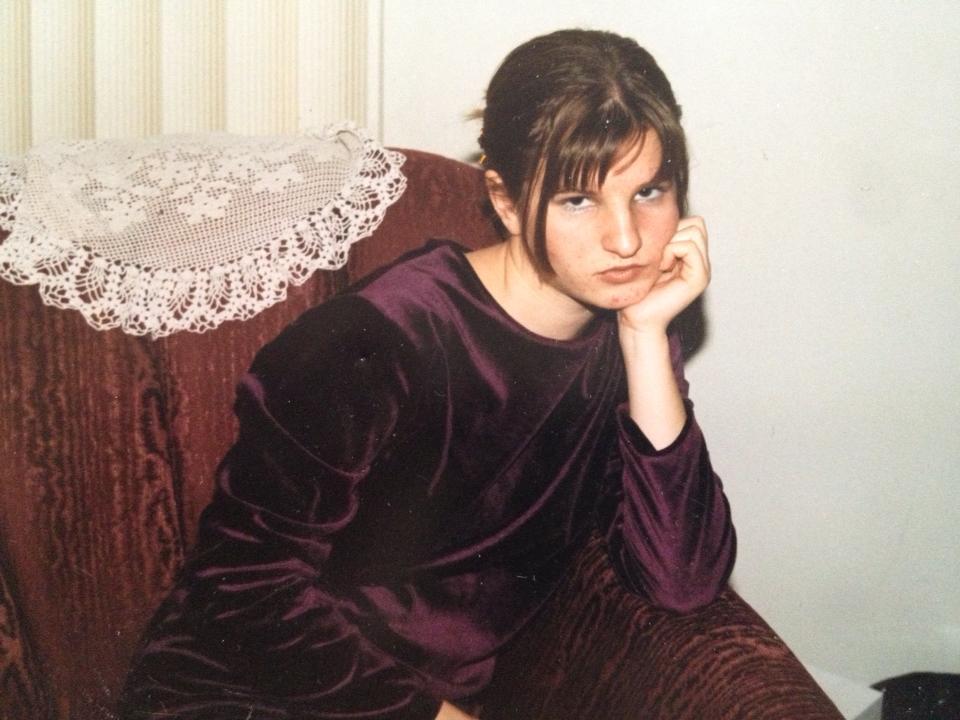
2. Everyone will tell you that you look exactly the same. This is meant as a compliment, although admittedly I didn’t initially take it as one. I mean, come on – the whole point of going to this reunion was to prove to people that I’m not the gross, ugly, greasy-skinned loser that I was in high school. But then I realized something – everyone is, in one way or another, an ugly loser in high school. I doubt that even the prettiest, most popular girls were immune from hating the way they looked. I also realized that, as hard as I was on myself back then, I didn’t look that bad.

64416_10152759236850215_1357646103_n

I mean, sad, angry and consumed with ennui, sure. Wearing an ill-fitting velour shirt, yes. But not exactly the horrific, Medusa-like creature I’ve been picturing all these years.

Anyway, in response to everyone who is absolutely dying to know whether or not I’m glad I went: Yes. I am.

That’s not to say that it wasn’t overwhelming, because it was. The first part of the reunion, which took place at the school itself, was especially tough. I feel like I spent a good chunk of the afternoon wearing my I’m-so-emotional-right-now-but-I’m-trying-hard-to-smile grimace, so if we ran into each other and I seemed flustered and weirdly toothy, that’s why. It was just a lot of people, and a lot of energy, and a lot of complicated feelings all at once, you know? And by “complicated” I mean “run the whole spectrum of emotions from great to achingly terrible.

The “great” moments include running into friends that I haven’t seen for years and years and spending hours starting every sentence with, “Hey, remember when?” For example: hey, remember when John Winter told the drama teacher on her last day at the school that she had a beautiful body and he wanted to make love to her? Remember how our mascot was Johnny Rebel, the Confederate soldier, and we had a Confederate flag hanging in our foyer, and NO ONE THOUGHT THIS WAS A PROBLEM UNTIL 1999? Remember every fucking crazy thing that Jason Baker ever did?

I was also super happy to be able to see a bunch of my old teachers, including my two favourite English teachers of all-time (one of whom occasionally reads this blog, YEAH, YOU KNOW WHO YOU ARE). Some of my old teachers barely remembered me (or else didn’t remember me at all but faked it pretty convincingly), but most of them seemed glad to see me. One of them, a music teacher, took me aside later in the night and said that she was really, really happy to see that I was in a good place with my life, and that was kind of gratifying because it meant that at least one of my teachers had noticed how miserable I was back then.

Another high point was finding this extremely adorable (if I do say so myself) picture of me from when I was fourteen:

48038_10152780669790215_1756970793_n

This was from a writing “mystery tour” that happened in my first year of high school. It was a small group of students, and I was one of only three ninth graders invited along. They took us to various exotic locations around Waterloo Region (including the West Montrose Kissing Bridge and the boiler room of our high school), and at one point a photographer from the local newspaper showed up and took a picture of me sitting on a giant pile of tires behind Paleshi Motors in Elmira. The whole idea was that we were supposed to be inspired to write amazing things by all the places that we visited, and maybe that worked out for some people, but not me. Every word I wrote that day was terrible, and even as I was writing them, I knew they were terrible.

But you know what? My English teacher thought that I was a good writer, and that’s how I ended up being asked along on the trip. And now I look back at this picture and I think, Whoa, someone actually thought that I was a writer, and look, there’s me writing like a real gosh-darn writer lady.

Plus I am just super adorable. LOOK AT HOW SERIOUS MY FACE IS.

The less-than-great moments were watching the “documentary” that someone had made about the Integrated Arts Package and hearing people talk about how the program had absolutely, definitely, for-sure been a wonderful, life-altering experience. Because I guess the fact is that I’m jealous of those people, jealous in a gross, green-eyed-monster kind of way. I wanted to have been able to say that I, too, had come out of high school feeling brave and confident and talented. I wanted to be able to go on record saying that the Eastwood arts program was the best thing that had ever happened to me in my whole stupid life, but it wasn’t. The fact was that I couldn’t get my shit together, and not a whole lot of people there really seemed super interested in helping me get my shit together, and that was that. And, I mean, I did get my shit together later, and I have a great life now, and everything worked out fine, etc. It’s just that I feel sad that I missed out on this apparently amazing time that everyone else was having.

Except that not everyone else was having an amazing time – you just don’t find out until afterwards that pretty much everyone else was, in some way, miserable, too.

At one point on Saturday, while we were still at the school, I texted a friend and referred to Eastwood as the “pit of despair.” And like, I was kind of joking? But also kind of not?

I mean, I guess maybe that’s the thing – maybe high school is supposed to be a pit of despair, you know? Maybe that’s what these reunions are really about – reconnecting with people who went through this terrible, hormone-fuelled hell at the same time that you did. Maybe reunions are supposed to help you realize that everyone was so wrapped up in their own self-loathing that they had no time or energy to notice how much of a loser you were. Maybe you were fine all along and you just didn’t know it. Maybe.

Your high school classmates are like people that you lived with through a war, or a natural disaster, or some other awful event. You might not have a whole lot in common, and maybe they wouldn’t be the people that you’d pick as your friends if you were given a choice, but they understand something about you that not many other people do. Just the fact that you were able to push through and survive and make it out the other side with all of your faculties intact somehow binds you together, even if nothing else does.

I guess that one of the main things that I took away from the reunion was a realization that so many of these people would have been willing to be my friends, if only I’d let them. At the time I didn’t think that I was building walls and pushing people away from me, but of course I actually was. And I’m not saying oh God imagine what could have been, but still. I keep thinking about the part in A Tree Grows In Brooklyn, when Francie graduates from the eighth grade and discovers to her astonishment that all of her classmates, none of whom were her friends, suddenly want to write in her yearbook and know what her summer plans are and where she’ll be going to high school:

“They’re nice,” Francie thought. “I could have been friends with them all the time. I thought they didn’t want to be friends. It must have been me that was wrong.”

I mean, I guess that’s the thing about walls, emotional or otherwise – they make excellent defences, but they can be isolating, too. If you’re smart enough, you’ll let the good people in and keep the bad ones out, but Jesus, who’s that smart? Especially when they’re fifteen?

I guess what I really want to say is this: high school. It fucking sucked, and maybe it didn’t have to. But it did, and that suckiness got me to where I am now.  And my life now is pretty sweet, so there’s not much point in regretting any of it, or feeling bitter about it. I mean, okay, maybe I still regret some stuff, but on the whole I’m a lot more at peace with everything. And that’s pretty cool.

My only disappointment with the reunion was that they didn’t play this song:

Because you know what? I would have fucking nailed it.

On Wanting

22 Apr

I.

The problem is wanting.

Sometimes I think that the trick to living a happy life is to stop wanting things. If only you could not want anything, not even happiness, then you could be happy. But then you end up wanting to not-want, which is maybe one of the weirdest paradoxes ever. How does one achieve a state of not-wanting? I could probably ask one of the many pseudo-Buddhist white ladies that I know, but to be honest, I’m not sure that they’d have a good answer. They’d just tell me to maybe read the Bhagavad Gita and then meditate, but I’ve already done both of those things, and no dice.

The main problem with wanting is that sometimes you actually get what you want, and in some weird way that actually feels worse than not getting it. Like, what if you get what you want and then you’re still sad? What if you get what you want and it just doesn’t feel as good as you thought it would? Do you then A) start wanting something else or B) actually try confront your existential sadness crisis, since it seemingly cannot be solved by fame or love or material objects?

I guess that choosing option A is how capitalism works. You want and want and want but then nothing is ever enough so then you want some more, and then everybody makes money off of each other or whatever.

II.

I wanted a kid because I thought that having one would be like taking on a massive, life-long project. I liked the idea of being able to shape a person. I thought that if I just knew the right things to teach my kid, then he would end up being an artistic, scientific super-genius. Honestly, though, I don’t know why I believed that I was the type of person who knew all of the right things to teach my kid, but I thought that probably I could just learn from all the mistakes that I’ve made in trying to be a good human being. Then if I taught him to do all of the opposite things to what I did, probably he would turn out perfect.

It’s weird having a kid. Like, one day you’re just sitting in the hospital, minding your own business, when suddenly you’re handed this little bundle of raw potential. And you’re supposed teach this totally empty, blank little creature about how to live in the world, but the truth is that you don’t even know how to live in the world, so how can you act as a reliable compass for someone who can’t even hold up their own head?

How do I explain all of the arbitrary rules of life to him? Like, when I make dinner but he doesn’t want to eat his dinner because he’s still playing, what reasonable basis do I have for saying that my desire trumps his? Because I’m bigger? Because I earn the money that keeps him fed and clothed and housed? Because I can pick him up and carry him over to the table and force him to sit down in his chair?

I mean, the real reason is, of course, because his still-developing brain lacks the necessary critical thinking skills that he needs in order to competently make decisions for himself. If it were up to him, we would play with his train set all day, pausing only to eat cupcakes, and never go to bed. Which would be fine, if no one ever had to worry about going to work, or paying rent, or getting scurvy.

But I guess that what I really need to know is how I am supposed to train him to be a polite, conscientious, productive member of society without sucking all the joy out of him. He has all of these things that he thinks would be fun or good to do, things that seem perfectly natural to him, and here I am telling him to ignore all of his spontaneous wants.

Like, how do I teach him not to burp at the table or play with his food or splash in the bath without making him second-guess his every want or desire? On the other hand, I can’t send a kid to school who thinks that, for example, throwing toys or saying rude things are acceptable behaviour. And while, yes, all kids burp and fart and think that it’s hilarious, probably those aren’t things that future employers are looking for. But do I want to raise a kid who is exactly what future employers are looking for?

Where do you draw the line?

Maybe raising a kid is really just about teaching them to want the right things? But who gets to decide what’s “right”?

III.

Whenever I meet someone and they ask what I do for a living, I say that I’m a yoga teacher. Then I pause and say that I’m also a freelance writer (I think the word “freelance” makes it seem more legitimate, although to be honest most of what I do is blog about my stupid life).

Then, as soon as I say the word writer, I stop talking and gauge the other person’s reaction.

Because when I tell someone that I’m a writer, what I’m really doing is asking, Do you think that I’m a writer?

And then depending on how they respond, I think that they’ve either said yes or no.

I have no issues calling myself a yoga teacher, because I paid $5,000 and spent a year learning how to teach. I even have a certificate with my name on it that tells everyone that I’m a yoga teacher. I don’t have any certificates that tell people that I’m a writer. I don’t even know what the criteria for being a writer are. According to some people, it’s being published. According to others, it’s being paid to be published. And then some folks think that if you write, no matter whether you write for an audience or not, well, then, you’re a writer. But if you go by that logic, then isn’t everyone a writer? I mean, wouldn’t you consider anyone who’s ever made a grocery list or left a note for someone or sent a quick email to be a writer?

The problem is that I want so badly to be a writer.

IV.

How would you even live a life without wanting anything? How would you ever get up in the morning, or go to work, or write a blog post about want?

Why would you ever procreate if you didn’t want a hilarious, incontinent, miniature version of yourself?

How boring would it be to eat food just because it kept you alive and not because you loved the taste and smell and the satisfaction of filling your stomach? How awful would it be to get dressed just to protect your body from the elements and not because you love the colour, fabric, texture or cut of what you’re wearing? How sad would be it be to have a kid just because you feel as if you’re under some kind of obligation to perpetuate the human race, and not because you wanted a sweet, stinky little bundle of wriggly joy?

What kind of a life would you live if you did things only because you had to and not because you wanted to?

And if you were to get rid of that want, what would fill you up instead? How would you spend your days? Would the absence of want truly make you happy? Or would it just make you feel emptier?

I don’t really have any answers, so I apologize if you’ve made it this far and thought that you were going to have some kind of epiphany. I’m not very good at epiphanies, anyway. I don’t think I’ve had one since I was about eighteen, and even then, it was kind of a pitiful epiphany, to be honest.

I do think that it’s important to find the balance between wanting and not-wanting, and I think that it’s hard not to fall into any of the tricky traps that desire sets up for you, and I think that a lot of the times our wants set us up for misery.

I’m just not sure how to find that balance.

vintage-beautiful-womanhood-magazine

How To Be Loved

8 Apr

Is there anything worse than being offered nice, pat aphorisms instead of actual advice?

For example, when you don’t get into your post-secondary school of choice and suddenly everyone and their mother gives you some variation on the old everything happens for a reason theme.

Or when your high school best friend is a jerk to you again and, instead of sympathizing, your mother reminds you that a leopard never changes its spots. Like, great, Mom, I just wanted a hug and maybe some chocolate, not a biology lesson about large jungle cats.

Or else how, when you were a kid and you were feeling kind of bummed out about the fact that your birthday party or whatever had just ended and all of your friends had to go home, some asshole grownup decided to remind you that all good things must come to an end. Like, no shit, Sherlock, I didn’t think I’d managed to bend the time-space continuum in order to create some kind of eternal birthday party. The fact that I knew that it was going to end didn’t make saying goodbye to my friends any less sucky.

For me, though, the worst saying was always, always, “You can’t love someone until you learn to love yourself.”

Seriously, hearing that is like the auditory equivalent of biting tin foil.

First of all, it always seems to come up whenever one of two things happens:

a) You’re experiencing abnormally high amounts of self-loathing

(slight digression: define “abnormally”)

b) You’ve just had some kind of romantic experience that ended badly

I used to get so irritated when people told me that I couldn’t love anyone else until I loved myself. I mean, first of all, it’s demonstrably untrue. I’m a chronic self-loather, and I fall in love at the drop of a hat. Seriously, a dude just has to say something smart, or be nice to a small child, or stand so that the light is hitting him in just the right way, and I’m done. Gone. Smitten. Head over heels.

Second of all, whenever I would hear this, I would think great, thanks, you’re basically telling me that I’m going to be single for the rest of my life. I mean, sure, it would be nice not to hate myself, but self-love isn’t really something that I see happening for me anytime soon. Don’t get me wrong, my therapist and I are working on it, but let’s be realistic here: Rome wasn’t built in a day, and those Ancient Romans had way more stick-to-itiveness than I do.

And you know what? I would even argue that it’s actually easier, in some cases, to love someone else when you don’t love yourself. Because what else are you going to do with all that pent up love and affection you’ve got stored away somewhere? And if that person doesn’t reciprocate, or treats you badly in any way, that just goes to show you that you weren’t really worth anything in the first place after all. The cycle perpetuates itself, and everybody wins. Except you, of course.

It’s also just kind of a weird, victim-blamey thing to say to someone. Like, maybe you could have love if you would stop feeling so shitty about yourself all the time. Just make a choice to be happy! Bootstraps, people. BOOTSTRAPS.

It wasn’t until I started dating Matt that I suddenly realized what this old saying actually meant. It’s not about being unable to love another person while you hate yourself because; it’s about how hard it is to be loved by someone else while you’re stuck in a deep pit of self-loathing.

Matt started using the L word (no, not lesbians) pretty early on in our relationship. And it made me uncomfortable, but it took me a while for me to figure out why, exactly, that was. I started feeling weird about him, started picking apart his behaviours, looking for something wrong with him. I called my friend Debbie, who had known him slightly longer than I had, and asked,

“What’s his deal? Is he some kind of weirdo or psychopath?”

“No,” she said, “he’s a totally nice guy, as far as I know. Why? Did he do something.”

“He keeps telling me he loves me.”

Debbie just laughed and said,

“Well, that’s nice, isn’t it? I mean, isn’t it?”

It didn’t feel nice, though. It felt weird.

I don’t remember what triggered it, but sometime during our first summer together I had some kind of epiphany. I realized that I was trying to figure out what was wrong with Matt because there was a part of me, a fairly big part of me, that didn’t believe that a sincerely nice, normal human being could actually love me or want to be with me. I figured that anyone who said they loved me and meant it probably had bodies buried in the basement or wanted to have sex with their mother or actually thought that Atlas Shrugged was a good book.

But Matt is nice, and (mostly) normal. He wasn’t the one who was fucked up. I was.

To be depressed is to constantly have his very calm, very rational voice whispering in your ear, telling you how awful and worthless you are. It’s being trapped inside an airless glass room, watching everyone around you pile up success after success while you can barely button your shirt or tie your shoes. It’s knowing that you are not capable of doing anything, not one single thing, of value.

Depression is mistrusting every good thing that happens. Depression is realizing that, when things seem to be going your way for once, this is always the part of the movie when aliens attack and destroy the earth. Depression is the need to constantly be on the lookout for the secret trap door, for the ulterior motive, for whatever the catch might be.

Depression is the certainty that you’ve finally taken off the rose-coloured glasses are seeing yourself quite clearly for the first time.

Depression is being sickened by your own reflection.

So how can you ever trust a person who loves someone like you?

And I’ve been wondering, lately, if it’s ever, at any time, possible to be depressed and love yourself? If you are someone who is clinically, chronically depressed, does that mean that you’re stuck with self-loathing for the rest of your life? Are misery and self-love ever able to co-exist? Or are those states totally, fundamentally contradictory?

I guess what I’m really trying to get at here is this:

Will I ever like, maybe even love, myself?

And I try. I really do.

I make lists. I remind myself of all of the good things in my life. I try to view my successes in their own right, rather than seeing them as opportunities to fail even harder somewhere further on down the road. I give myself pep talks. When all else fails, I call my mom.

Being depressed means that I have a hard time accepting anything positive. Good news makes me feel sick to my stomach. Compliments make me deeply uncomfortable. Smiling makes my cheeks ache.

And, after eight years of being with Matt, accepting the fact that someone else loves me is still a struggle. I ask him, often, if he still loves me. I make him promise that he’ll never leave me. I bury my face in his chest and tell him to wrap his arms around me as tightly as he can.

Other times, when I’m in a real low, I don’t even want him near me. I don’t want to be touched, I don’t want to be held, I don’t want to be loved. His affection for me irritates me, sometimes even angers me. When I’ve reached rock bottom, all I want is to be totally and utterly alone. Preferably forever.

I’m hard to love.

And I have a hard time being loved.

Eight years in and I’m still waiting for the other shoe to drop. I’m still waiting for the bodies in the basement to be discovered, or else for the Oedipus complex to be revealed.

Still.

I want to ask if this is going to get any easier, but I would guess that the truth is that it’s a process. You learn to stop the negative self-talk, and you learn to let other people get close to you. You learn to accept that good things happen, too, sometimes. You stop balking at the idea of happiness, that elusive state which somehow manages to simultaneously be the goal that you’ve spent the majority of your life chasing and also the thing that terrifies you the most.

You stop giving all of your love away and learn to keep some for yourself.

Maybe that’s the secret to being loved.

309_68974385214_3487_n

309_68974395214_3830_n

309_68974405214_4152_n