Tag Archives: writing

Goodbye, Old Store

31 Oct

I woke up this morning and logged into Facebook, thinking that I would take a few minutes before work to check and make sure that all of my friends had survived Superstorm Sandy. Instead, I was distracted by the news that the Roots store on Queen West had burned down overnight.

People in neighbouring buildings felt an explosion around 12:30 am, and the force of the blast broke the front windows of the store and forced the back door open. Roots merchandise spilled out onto the streets and, according to witnesses, there were looters grabbing whatever they could get, in spite of the flames pouring out of the second storey windows. Sandy’s winds meant that the fire fighters (over 80 of them) had a hard time controlling the blaze, but by the early hours of the morning they had managed to put the fire out and save the adjacent buildings. Unfortunately, this was all that was left of 369 Queen West:

(c) Torontoist, Ink Truck Media

This Roots store was the site of my first job in Toronto. I’d worked for Roots in Halifax, and when we moved here they offered to transfer me to local store. This Queen street location (there had previously been another one a block down the street) opened not long after I arrived in the city; I loved the Queen West neighbourhood, lived only a short subway ride away, and thought working at a brand new store would be exciting. It seemed like a perfect fit.

I was there to help set up the store, piling sweatshirts on tables and artfully arranging leather bags on shelves that smelled of fresh wood. I was there day they opened, too, a sunny but cold day in the spring of 2007. I worked there for over a year, until, in the summer of 2008, I transferred to the Rosedale store so that I could also work at the Roots Yoga Studio. I’ve been back to visit the old store once or twice, but honestly I haven’t thought about it that much. All day today, though, I’ve been using my spare moments to collect and sift through memories of my time there. It’s almost as if I used to rely on the building itself to hold onto all the things that happened, but now that it’s gone I have to be the one to safeguard my own experiences.

I thought about my old co-workers – there was Kari, the manager and the person I worked with most often, who kept us all entertained and worked her ass off to make sure that things ran smoothly. Elise, an art school student who took amazing photographs. Georgea, the stand-up comedian who taught me how to draw unicorns (the first time I tried I put the horn at the end of the nose, and she explained that it went between the eyes – when I groaned about how stupid I was, she said, well, it’s not really fair because I have a unicorn at home). Lindsay, the smarty-pants U of T student who is now doing her MA in Cinema Studies.

There was Rachel, who became one of my closest friends and played the cello at my wedding. Adam, our token straight male and the dude who explained the “drink and dance” diet to me (hit: it involves drinking a lot of beer and then dancing a lot, and apparently results in losing weight). Sasha, who is now a superstar makeup artist. Alexei, the high school student who had his first real hangover on my watch (he swore that he would never drink again, but pictures on his Facebook prove that he’s a liar). Emily, who was only 16 and was like everyone’s little sister, and now inspires me with her feminist rhetoric and general bad-assery.

I remembered how we used to make candy store runs when summer afternoons dragged on too long, running a block west to Tutti Frutti and returning with giant bags of various gelatine-based sweets for everyone to share. The rickety stairs leading down into the horror movie of a basement. The funny pictures and signs we put up in the staff areas, some of which were still there long after the people who made them had moved on to new jobs:

I remembered staff outings and movie dates, pot lucks and parties. The time we all went to the Ex together and Kari and I ate a million Tiny Tom donuts. The time we went to watch the fireworks down at the Princes Gates and sat in the grass trying to stealthily drink our beer. How we used to hang out in the alley behind the store, sometimes with staff from the Silver Snail next door, soaking up some sunshine on our breaks.

I remembered the time a pipe burst in the basement bathroom, covering the floor with inch-thick black sludge. We had to call a plumber, a little old Asian man who explained that what looked like mud and mulched leaves was actually hundred-year-old poop that had been sitting in the pipe for a century or more. When Kari and I yelled “EW!“, the plumber exclaimed, “No, no, that’s my gold! That’s how I make my money!

I remembered the tiny baby tree that grew through the crack in the wall of the staff room. I remembered the giant centipedes that lived in the basement, terrifying creatures who liked to hide under the boxes we stored down there (RIP giant centipedes).  I thought about how we used to hang bells inside the drawers where we kept the leather bags in an attempt to prevent shoplifting.

I remembered doing good-cop-bad-cop interviews when we were hiring new staff (one potential employee asked to use our microwave at the end of the interview – that’s weird, right?).

I remembered eating a thousand Swiss Chalet meals with Kari, who swore that she would have her wedding dinner there.

I remembered the time Elise got a giant tattoo of geese (or was it ducks?) on her side. The time Emily’s hair turned pink and she had to make an emergency appointment to fix it. The time the owner of the building wanted to sell it and hired a building inspector who showed me the knob and tube wiring in the basement. The day there was a giant snowstorm and we took Kari to see the Nutcracker ballet and Matt fell asleep.

I remembered the time Samantha Bee came into our store, and Kari and I tried SO HARD to be funny but she didn’t even laugh once. When Audra came in, before we were even really friends, and I was like, hey, I think I know you from the internet, and then sold her a red purse. I thought about the many times Emily broke up with (and inevitably got back together with) her boyfriend, each instance a mini drama requiring ice cream and an in-depth analysis of their relationship.

What happens when a building is destroyed or torn down or otherwise ceases to be? What occupies the space where it used to exist, other than open air and the occasional bird passing through? It’s strange to look at that giant hole two storeys in the air and think about how that used to be a place where people lived. A place where they slept, and cooked, and laughed, and made love, and cried, and did all the other little things that make up our lives. What happens to all of those experiences once their physical remainders, all the scuff marks and scratched paint and cracked plaster, literally go up in smoke?

I’ve been wondering why this fire has affected me so much. Am I going to get this nostalgic over every former workplace? I mean, yeah, I’m great at being nostalgic, but this seemed a bit much, even for me. Then I realized that my time at that store has had a huge impact on the shape my life in Toronto has taken. The people I worked with helped me learn to navigate the city, and introduced me to places and events that I might not have discovered on my own. Some of the friends I made there are still a part of my life, and have certainly helped influence choices that I’ve made. Perhaps most importantly of all, working at this store indirectly lead to me becoming a yoga teacher. See, the Roots Yoga Studio offers free classes to all of its employees. If I hadn’t been able to take free classes, I doubt that I would have started a regular practice; knowing me, I would have given up early on due to laziness or being a cheapskate. But the fact that they were free, and that I’d shaped my work schedule around the classes I took, meant that I didn’t have much of an excuse to quit. So I persevered, and I grew to love yoga and, well, here I am.

I haven’t been in the Queen West store in years. Mostly I’m just not hip enough to spend much time in that part of town anymore, and when I am there I prefer to go to stores that I can’t find anywhere else in the city. I haven’t seen many of my former coworkers in a long time either; after we stopped working together, our paths diverged, and now most of us are in totally different places in our lives. We keep up with each other on Facebook, and promise to get together soon, but never do.

I miss them, though. And I know I’ll miss the store, too. Just not the centipedes.
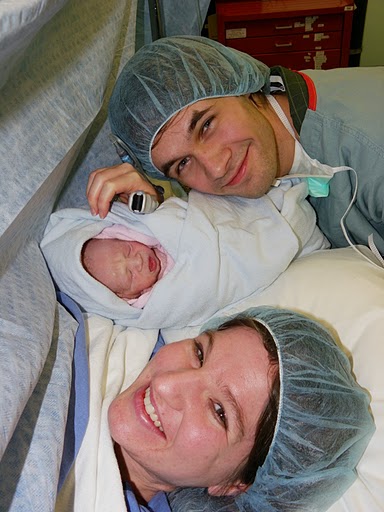
How To Have A Good C-Section (or, how I learned to stop worrying and love major surgery)

26 Oct

I woke up the morning of January 8th, 2011, and lay in bed, waiting for Theo to kick me good morning. I was 34 weeks pregnant, and this was our wake-up ritual: he would wriggle around like a maniac, and I would spend a few minutes lying on my side, rubbing the outline of his body and telling him what we were going to do that day. Sometimes he would stick his feet in my ribs, and I would tickle his toes. Sometimes he would take a big stretch and I would try to map out how he was sitting inside of me.

That morning, though, I didn’t feel anything.

No big deal, I figured; he was probably asleep. Surely it wouldn’t be long before he was awake and kicking up a storm.

I had a bagel and coffee for breakfast and then lay on the couch with Matt, waiting for the caffeine to pass through the placenta and jolt Theo awake. We were watching a movie, but I couldn’t concentrate on it; all I could think about was the absence of movement inside of me.

I tried everything I could think of to get Theo to move – I drank ice water and lay on my side, poked and prodded him until I worried that I might be bruising my baby in utero, had Matt put his mouth up against my belly and talk to his son. Nothing worked.

We decided that we should go to the hospital.

When we got to the labour and delivery ward, I had to sit and wait for a bed to become available. Then we discovered that I hadn’t properly registered, so Matt had to go back down and re-do the paperwork. I was becoming increasingly anxious, and I was frustrated that the nurses didn’t seem to share my sense of urgency. Finally, they got me into an examining room and asked me where my OB usually found the baby’s heartbeat. I said it was loudest on the left side of my belly, so they put the doppler there.

Silence.

I started to cry. Matt tried to say something to calm me down, but he had tears in his eyes, too. The nurse frowned and moved the doppler around while the continuing silence made me sob harder and harder. This must have only gone on for a few seconds, but it seemed like hours. I was sure that Theo was dead; I pictured having to call my mom to tell her that her grandchild wouldn’t be born alive. I pictured myself having to be induced and delivering a cold, white baby.

Finally, way over on my right side, the nurse found a faint but steady heartbeat. The nurse smiled and said that she’d known all along that he was fine. I still couldn’t stop crying.

The nurse brought in a portable ultrasound machine, since I still wasn’t feeling Theo move. As she moved the probe over my belly, she asked me if I knew that he was breech. No, he’s not, I said, he’s been head down since 26 weeks. In fact, I had seen my OB three days earlier, and he had confirmed that the baby was head down. Not anymore he’s not, said the nurse.

They brought in the on-call doctor who confirmed that no only was Theo breech, he was footling breech, one of the rarest fetal positions and the most dangerous to the baby. On top of that, his umbilical cord was hanging down by his feet, which meant that, if my water were to break, he would be at high risk for a cord prolapse.

They hooked me up to a contraction monitor and told me that I was having strong contractions (none of which I could feel, by the way). They checked my cervix and I was 2 cm dilated and 100% effaced. Not a big deal, they said – some women dilate early. Two hours later I was 5 cm dilated.

At 34 weeks pregnant, I was in labour with a baby who wanted to meet the world feet first.

They wanted to do a caesarean that night. They would have, too, except that two emergency c-sections came in, tying up all the operating rooms. While we waited for an OR to open up, I sat in my bed and tried to use Jedi mind-tricks to stop my labour. Think calm thoughts, I told myself. I stared at the printout on the contraction monitor and willed the jagged lines to smooth themselves out. I stared at my belly and willed Theo to stay put.

Whatever I did must have worked, because by the time they checked my cervix again, I was still 5 cm dilated. My contractions continued, but were definitely less frequent than before. I made a deal with the on-call OB – if they would agree to delay my c-section, I would stay on bed rest in the hospital until I was full-term and/or my cervix started dilating again. She wasn’t thrilled with the idea, but she agreed to admit me for the night and check with my doctor. Luckily, he was a super cool dude, and when he came to see me on Monday morning he said he thought I’d made a good suggestion, and was totally fine with me hanging around the hospital until whenever.

This gave me some time to figure out what I was going to do. Up until this point, I’d planned on having a natural birth; I’d read books like Ina May Gaskin’s Guide to Childbirth , Martha Sears’ Birth Book and Henci Goer’s The Thinking Woman’s Guide To A Better Birth. I’d looked forward to giving birth, imagining that I would have some kind of mystical earth goddess experience; I’d been weirdly excited to know what real contractions felt like. I’d spent months participating in online pregnancy forums, decrying the medicalization of childbirth and the deplorable c-section rate in the western world. I hadn’t even read anything about c-sections, because there was no way that I was going to have one.

Except now I was.

I started to look for online resources for moms who were having caesareans but still wanted the whole touchy-feely earth goddess experience. I discovered, to my chagrin, that there weren’t many. Most people seem to think that a good birth and c-sections are diametrically opposed. Many people in the natural birth community are very, very anti-caesarean (one woman even went so far as to send me a video of a midwife delivering a footling breech birth, like, hey, thanks for your support), and many of those who support the medical model of childbirth tend to see birth as something that you just endure and get through, rather than a positive experience. I think that it’s totally possible to have a c-section and still have a good birth.

I’ve put together a list of things that worked well for us and resources that I found helpful:

If You Are Having A Planned Caesarean:

1. Educate yourself. This one is huge. Read as much as you can about c-sections, both about the procedure itself and what recovery will be like. Talk to other women who have had c-sections, and ask your OB for a run-down of how the procedure typically happens at your hospital. It’s also a good idea to read about the possible emotional effects of a c-section.

2. If you plan on breastfeeding, consider contacting a lactation consultant (the nice thing about being in the hospital was that the lactation consultant came to me), or else join the La Leche League and talk to women who have had similar experiences. Find out what kind of resources your hospital offers breastfeeding mothers – for example, mine held a breastfeeding class twice a day and had a lactation clinic. Make sure you get yourself a nursing pillow, because I promise you that you will be SO THANKFUL for it. Also,there are some good resources online here and here and here.

3. If you plan on breastfeeding, do so as soon as possible after surgery. I was able to breastfeed in the recovery room, less than half an hour after my son’s birth.

4. Make a birth plan of what you would ideally like to happen. You can ask for things like playing your own music during the surgery, doing skin-to-skin in the OR, and delaying (or even forgoing) the application of the eye gel. Remember that it doesn’t have to be the mother who does skin-to-skin – your partner also has some important bonding to do.

5. Eat really well at your last meal before your surgery (this will typically be 8 hours earlier). Make sure you get a lot of protein and that whatever you have is really filling, because they won’t let you eat afterwards until you fart (not kidding).

6. If you are having a c-section because your baby is breech, consider trying an external cephalic version. I wasn’t able to do this because I continued having contractions right up until my c-section (and we discovered during my surgery that I have a heart-shaped uterus, so it wouldn’t have worked anyway), but it’s definitely worth trying.

If You Are Planning On Having A Vaginal Birth

1. Educate yourself about c-sections anyway! It won’t hurt, and you’ll be prepared in case you do need one.

2. Include a “Caesarean Contingency Plan” as part of your birth plan. Sure, chances are that you won’t have a c-section, but if something goes wrong, it’ll probably go wrong pretty quickly, which means that it would be better to have what you want written out ahead of time.

3. Make sure that your partner is clear on what you want if you need a c-section – in the craziness of the OR, you’re going to need them as an advocate more than ever.

For Everyone

1. Allow yourself the time to mourn the birth you didn’t have. Some women feel that they’ve “failed” if they end up having a c-section; some feel that they haven’t really given birth. Talk about your feelings with your partner, and remind yourself that your experience was just as important and valid as anyone who had a vaginal birth.

2. Keep in mind that women who have c-sections are at a higher risk for postpartum depression. Make sure to watch yourself carefully for any of the signs and talk to a healthcare professional immediately if you think you might be showing some of the symptoms.

3. Take all of your medication on time. Trust me, you will feel way worse if you delay or skip a dose. The vast majority of medications are safe for breastfeeding; if you’re not sure, ask your doctor, nurse, pharmacist or La Leche League leader.

4. Hold a pillow against your incision whenever you cough, sneeze or laugh. I don’t know why, but this helps.

5. Take a shower as soon as you are feeling up to it. It will be the best shower of your whole life.

6. Accept help. If you have someone willing to do everything for you, let them.

Theo’s birth wasn’t what I had planned for, and it wasn’t the birth I would have chosen, but it was still good. I sometimes think that this was my first real lesson in parenting: the idea that not everything would happen on my own terms, that there would be times when I was not in control of the situation, but could still try to make the best of things.

So no, Theo’s birth wasn’t ideal, but I do think that it was the best birth that it could have been. And I’m thankful for that.

If you follow the simple steps that I have outlined above, then you, too, can look this happy while having a giant gash cut in their abdomen.

If you have any other suggestions, please feel free to add them in the comments!

Frida

22 Oct

On Friday night, Matt and I went on a For Real Date to see the Frida & Diego exhibit at the Art Gallery of Ontario. Frida Kahlo is probably my all-time favourite painter; I have literally been counting down the days until this show opened.

I have friends who know a lot more about galleries and exhibiting art than I do. They make intelligent remarks like, I wasn’t thrilled with how this collection was curated, or, I thought the lighting in the third room really brought an interesting tone to the whole show. I hope you’re not here to read anything like that, because I honestly know very little about how galleries should or shouldn’t display art. On top of that, I’ve been waiting at least ten years to see Frida’s works in person, so the AGO could probably have held the show in a dank basement room lit by a single 60-watt bulb and I would still have been thrilled.

The Frida & Diego exhibit is an assortment of Kahlo and Rivera’s works, often juxtaposed in interesting ways. The first room is filled with paintings from Rivera’s days as an art student in Madrid and Paris; they’re neat because you can clearly see the time he spent dabbling in Realism, Cubism and Post-Impressionism. That being said, although his early paintings are clearly technically very good, for the most part they aren’t terribly interesting or different.

Three of Rivera’s earlier works

The second room is more still more Rivera, and includes a reproduction of one his most famous murals, The Arsenal, starring Frida as a communist bad-ass distributing weapons to the people.

Finally, in the third room, we begin seeing some of Kahlo’s work. I dragged Matt from painting to painting, drinking in the familiar scenes and pointing out details that I was noticing for the first time. I began to look at the dates of the paintings, trying to slot them into the narrative of her life, and in doing so  I was struck me was how young she was. I mean, I’d always known that she’d died young, but for the first time I realized that she’d been painting masterpieces when she was younger than me.

Frida was born in 1907 (although she often gave her birthdate as 1910 in order to coincide with the beginning of the Mexican Revolution), and was the third of four daughters born to Guillermo and Mathilde Kahlo. Frida’s father came from a German-Jewish background, and her mother was of Spanish and Indigenous descent; Frida was fascinated by her parents’ history, and her own mixed heritage would come to play an important part in her art. In 1927, at the age of 20, she already considered herself to be a professional painter. She married Diego Rivera in 1929.

Her seminal painting Henry Ford Hospital, which depicts a bed-ridden Kahlo shortly after a traumatic miscarriage, dates from 1932. I kept looking at it and thinking, she was only 25 when she went through that. She was only 25 when she painted that.

Henry Ford Hospital, 1932

Kahlo’s 1932 miscarriage (which was the second of three that she suffered) was by no means the first time she’d experienced pain or hardship in her life. At the age of six she was stricken with polio and, although she made a near-full recovery, for the rest of life her left leg remained smaller and weaker than the right. Then, at the age of 18,  she was riding a bus that collided with a tram car. She suffered massive injuries, including three breaks in her spinal column, a shattered pelvis and multiple other broken bones. She was also skewered by a steel handrail, which pierced her abdomen and came out her vagina. She later told her family that the handrail took her virginity (totally untrue, by the way).

Her boyfriend at the time, Alejandro Arias, described the scene of accident to Kahlo biographer Hayden Herrera in gory but also hauntingly beautiful terms:

Something strange had happened. Frida was totally nude. The collision had unfastened her clothes. Someone on the bus, probably a house painter, had been carrying a packet of powdered gold. This package broke, and the gold fell all over the bleeding body of Frida. When people saw her they cried, ‘La bailarina, la bailarina!‘ With the gold on her red, bloody body, they thought she was a dancer.” – Hayden Herrera, Frida: A Biography of Frida Kahlo

Frida suffered from the effects of that accident for the rest of her life. She underwent 35 separate surgeries in an attempt to repair the damage. The handrail had gone through her uterus, leaving her unable to carry a baby to term; this was especially heartbreaking, as Frida wanted almost more than anything to have a child with Diego.

Part of the reason that Kahlo wanted to have Rivera’s child is that she thought it would bind them together in a way that marriage on its own couldn’t. Diego was a known womanizer, and continued to sleep with other women even after he married Frida. Deeply hurt by Diego’s infidelity, as well as her own inability to carry a child (which would have been Rivera’s fifth, as he had four others by past wives and mistresses), Frida began to have her own affairs with both men and women. Throughout the rest of her life Frida had dozens of lovers, including, purportedly, Josephine Baker and Leon Trotsky.

The fact that both Frida and Diego had numerous love affairs over the course of their marriage (which lasted from 1929 until 1939, then resumed in 1940 and lasted until Frida’s death in 1954), and the fact that both of them slept with women, makes the AGO’s juxtaposition of the two portraits of Natasha Gelman, one each by Kahlo and Rivera, all the more interesting.

Kahlo’s portrait of Gelman, 1943

Rivera’s portrait of Gelman, 1943

In Kahlo’s portrait, Gelman is unsmiling, even stern, while Rivera’s version of Gelman is languorous and sensual, a small smile playing on her lips. Kahlo’s Gelman seems matriarchal, perhaps even a bit masculine, with a square jaw and intently serious gaze. Rivera’s Gelman, on the other hand, takes on a more traditionally feminine appearance, both in the softness of her face and the curve of her hip and leg. Simply put, Kahlo’s version of Gelman looks like a fucking awesome boss lady, and Rivera’s looks like someone he would want to sleep with.

I’m no expert, but I feel like these two pictures say a lot about how Kahlo and Rivera view women, both in general and as prospective partners.

It was also fascinating to see a selection of works by Kahlo that were inspired by her miscarriages hung alongside a series of paintings by Rivera depicting mothers of young children. I can’t imagine how heartbreakingly difficult it must have been for Frida to know that Diego had children with other women; how at times she must have felt inferior and defective because she could bring another “Little Diego” into the world.

Frida Kahlo – Frida Y El Aborto

Diego Rivera – Maternidad

One of my favourite parts of the exhibit was the room that contained media by other people of Frida and Diego. There were photographs on the walls, and a black and white video of the couple was playing on the large screen. Of all the photographs that were included in this show, my favourites by far were those taken by Nickolas Muray, Frida’s former-lover-turned-good-friend.

Nickolas Muray – Frida In The Dining Area Coyoacan With Cigarette

Nickolas Muray – Frida Kahlo on White Bench

In many of Muray’s pictures, Frida is looking straight into the camera. Her gaze is intimate, disarming; her eyes bore into you, and it seems like she’s just about to speak. In some of the pictures, her mouth is quirked into a half-smile, as if she and the viewer share some kind of inside joke. No one else really understands, her expression tells you, no one but you and I, that is. You feel complicit in something, but you’re not sure what.

The video was just as wonderfully intimate as Muray’s photographs. In it, Frida and Diego are shown at home, in the courtyard of Casa Azul. In their every movement, their every look and touch, their tenderness for each other is evident. At one point Frida reaches out to take Diego’s hand and place it on her cheek; her expression when she feels his palm against her face is like that of a cat sleeping in a puddle of sunlight.

On the whole, the show is wonderful. My only issue with it (aside from the fact that several of my favourite Kahlo pieces are missing) is the subtitle, Passion, Politics and Painting. The advertising done for the show, which includes the slogan, “He painted for the people. She painted to survive.” makes it seem as though the politics were all Diego’s and the passion all Frida’s. Even within the exhibit, there is much attention given to Diego’s political activities, and only a few brief mentions of Frida’s membership in Mexico’s communist party.

To say that Frida wasn’t political is a mistake; she was deeply political, and on a very personal level. The way she dressed was political, as was the way she behaved, not to mention her art. In a time when the Western culture and its concept of beauty was beginning to take over Mexico’s cultural landscape, Frida, in many ways, turned her back on it and embraced her Mexican of her heritage. She traded the European clothing of her childhood for traditional Spanish and Indigenous garb. She refused to alter her unibrow, and, in fact, accentuated it and her mustache in her self-portraits. She was known to be unfaithful to her (equally if not moreso unfaithful) husband, and took women as lovers. Perhaps most importantly, she painted and talked about things that no one had ever publicly discussed before: things like miscarriage, infertility, sexuality, violence against women and infidelity.

In many ways, she started conversations that we’re still having today.

Plus, how can you think someone is not political when they paint this on their own body cast?

Kahlo’s Body Cast with Hammer & Sickle and Fetus

I wish I could explain to you how and why I love Frida so much. I keep starting sentences and then deleting them; all the words I pick seem fumbling and wrong, the emotion either overwrought and clumsy or woefully lacking. Even the things that I’ve already written here seem stilted and lifeless, which is the opposite of what writing about Kahlo’s life should be.

I guess that the best thing that I could say would be this: Frida had a really hard fucking life, but instead of backing down, she took all of her pain and heartache and turned it into something beautiful. She lived and she worked and she loved and she challenged and she pushed and in the end, I think, she won.

***

Frida died of a pulmonary embolism in 1954, at the age of 47. I mean, 47. Fuck. She was so heartbreakingly young. Shortly before her death, she wrote the following in her diary:

I hope the exit is joyful — and I hope never to return — Frida”

I hope that wherever you are now, Frida, you are joyful. I hope that you’re finally free from pain. Most of all, I hope that Diego is there with you.*

Frida and Diego ofrendas

The exhibit closes with a pair of ofrenda depicting Frida and Diego. An ofrenda is a type of Mexican home altar, most often built for el Dia de los Muertos (The Day of the Dead). An ofrenda typically represents a dead family member, and is honoured by the living with traditional offerings of food and flowers. On October 24th, Mexican artist Carlomagno Pedro Martinez will construct an ofrenda in the gallery space; visitors on that day will be given art supplies and encouraged to contribute drawings and words to Martinez’s work. The installation (along with the entire exhibit) will be on display until January 20th, 2013.

*And that he’s, like, hanging out with you and not busy macking on angels or whatever (I am JUST SAYING, okay?)

p.s. In case you weren’t sure how I felt about Frida Kahlo in general, and this exhibit in particular, here is a visual aid for you:

A Few Small Things

16 Oct

Hey y’all, here are a few things I wanted to share with you today:

1. Here is a post about women in geek culture that I wrote for Shameless Magazine’s blog. I am really proud of it! I am also super stoked that I had the chance to write it, and want to give Shameless Magazine a thousand smooches for publishing my stuff. If you want to read about misogyny, racism, and the lack of representation of queer and trans folks in geek culture, you should check it out. If you want to read about my love for Wil Wheaton, you should DOUBLE check it out.

OMGGGGGG IMAGINE IF WIL WHEATON EVER READ IT, I WOULD DIIIIIEEEEEE.

Hi, Wil Wheaton, call me, okay?

2. It looks like The Gap has pulled the Manifest Destiny shirt, and offered this lukewarm non-apology:

They tweeted something very similar yesterday, but it looks like the tweet has been removed.

I would really love for them to handle this the way Paul Frank handled the recent outcry over their racist and offensive fashion show, and I’m still hopeful that they might, but it’s looking less and less likely.

One of my favourite parts of Paul Frank’s response is that they said they like to collaborate with an Aboriginal artist on future designs and that the profits from that collaboration would be donated to an Aboriginal cause. How amazing would it be if The Gap could follow their lead?

3. My Manifest Destiny post was featured on BlogHer! It’s on the front page of the site, and it feels bananas to load the page and see something I wrote front and centre. I feel super flattered that they featured it!

4. You should really check out my friend L’s response to Gap’s Manifest Destiny debacle over at her blog, Life In Pint-Sized Form. Her grandfather is a full-blood Chippewa, and she brings a fantastic perspective to this issue. Reading what she wrote literally gave me chills.

5. Artist Gregg Deal, who is Aboriginal and a member of the Pyramid Lake Paiute Tribe, created this image in response to Manifest Destiny shirt:

I love these designs because they show so clearly the subtext behind the term Manifest Destiny, a subtext that many people seem hesitant to acknowledge. Let’s call a spade a spade, shall we? I also love that he used humour to address the racism of Gap’s design, because I think that humour can be a super important weapon against all forms of intolerance.

5. October 15th was Pregnancy and Infant Loss Awareness Day. Two of my friends wrote very movingly about their experiences with miscarriage and stillbirth, and I wanted to share their posts with you. The first is from my friend Jodi, who blogs over at Mama To Bean and whose son Joel was stillborn last year – you can read her reflections on what this day means to her here.

The second post comes from The Yellow Blanket, which is written anonymously by a woman who has suffered multiple unexplained pregnancy losses. She writes incredibly movingly about her losses, and what her pregnancies have meant to her.

If you plan on reading these posts, I would suggest that you break out the kleenex.

6. A lot of the stuff in this post has been pretty heavy. If you need something to lift your spirits after all this profound grief/righteous indignation/sadness that you are not, in fact, married to Wil Wheaton, then I highly recommend The Hairpin’s Texts From Little Women. I was reading this in the yoga studio while there was a class going on, and I was trying SO HARD to stifle my laughter because, well, Jo March. God I love Jo March.

Here’s a sample – the italicized text is Jo March, and the plain text is Meg March:

I hope you realize you’re breaking up the family 

I really wish you wouldn’t see things that way

a broken home 
that’s what I come from now 
a broken home

that’s not what they call it when your sister gets married

then why does it feel broken, Meg
why does it feel broken
this is the worst thing 
that has ever happened 
to anyone 
since Father died 

Father didn’t die, Jo!
he’s only been wounded!

oh 
didn’t he? 
for some reason I thought he’d died 

no
he’ll be home in a few weeks
Ah

do you suppose he’s going to want his old greatcoat 
and riding boots 
and shaving things 
and top hat
when he gets back? 

I expect that he will

HANG EVERYTHING” 

Hang everything indeed.

Failure Is Easy (And Sometimes Success Fucking Sucks)

4 Oct

I did a teaching demo today for the owners of a local yoga studio. It was an amazing opportunity – their space is beautiful, they have a ton of teachers that I love and respect on their schedule, and it’s walking distance from my house. I’ve known the two owners for nearly a year, and they’re wonderful women – both are amazing instructors who have a quiet, gentle presence that would put anyone at ease.

Needless to say, I was fucking petrified.

I started out by nervously giggling my way through a short interview, and then spent a few minutes fumbling around with the audio system, trying to get my music to play and hoping that the trembling in my hands wasn’t obvious. I’d planned and reviewed the sequence that I was going to teach, so fortunately I didn’t forget it or anything, but my voice had gone strangely squeaky, and I could tell that my breathing was shallow. After a few minutes, though, I hit my stride and started to feel more confident. After all, I teach several times a week, right? I know how to do this.

Right?

Afterwards, they smiled at me, and told me what a lovely teaching voice and style I had, mentioned that I’d given excellent cues and had clearly been well-trained, and finally said that I had a beautiful practice.

Even a three-year-old could have heard this but coming a mile away.

But, one of them said gently, we noticed that you didn’t look at us. Do you ever walk around the room while you teach? Do you ever offer adjustments?

I do, I do, I stammered, I mean, maybe not as many adjustments as some other teachers, but I can do them. I mean, we learned how to. And I can walk around the room while I teach. We did focus on that in our training. Walking, that is, around the room, and not just demonstrating the poses to the students. It was something my teachers talked a lot about.

It must have been hard to teach to us, said the other, it was probably overwhelming to teach to the two owners of the studio.

I was totally nervous, I said. Didn’t you hear my voice shaking?

It was the sort of thing I knew I shouldn’t have said even before I said it, but then it came out anyway.

They talked to me a bit longer about the importance of connecting with your students, of having a relationship with them, and of maintaining an awareness of what’s happening in the room at all times. I said a few thing that probably sounded like feeble excuses. They thanked me for coming in, said that they had no immediate spots available on the schedule, but would keep me in mind for the future. I thanked them a little too profusely for having me in to demo for them (because it’s an honour to even be asked, right?) and then rushed out the door.

I don’t know which reaction to criticism is worse: to tell yourself that what other people see is wrong, that they just don’t understand what you’re trying to do, that they’re the ones with the ones with the problem, not you, or to do what I did, which was to tell myself that I’d flat out failed.

The thing is, they were right. I didn’t look at them while I was teaching. I probably don’t connect with and engage with my students enough. I do need to get up off the mat and walk around the room more often.

I could have said to myself that I would work harder, that I would take workshops on how to give adjustments, that I would get better and be the best teacher possible. The problem with that line of thought is that it seemed overwhelming and exhausting. I was tired just thinking about it.

It was easier to tell myself that I’d failed, that I was a bad teacher, that I should just give up and move on. It was easier to blame myself for not being prepared enough, for not thinking to look at them often enough, or even for scheduling a demo like this before I felt fully confident in my skills.

Failure is easy. Failure means that I get to give up, relax, not be so hard on myself. Failure means that I get to spend more time at home with my husband and son, and less time improving myself. Failure, somehow, means less anxiety.

Success, on the other hand, can be totally scary. With every success comes the idea that you need to build on it, keep the momentum going, continue to grow bigger and better every day. And success, of course, makes every little failure seem all the more bitter.

Every time I write something on here that elicits a reaction from people, that ends up being passed around on Facebook, or generates a lot of comments, I feel like my next post has to be even better. And then if I go a few days without posting anything that gets a big response, I feel like I’ve lost it, whatever it is: the ability to write, maybe, or to communicate effectively, to touch people.

A few things, though:

1. Every post I write doesn’t have to win the Nobel Fucking Prize for Bloggers

2. I am still just getting started as a writer who is writing things for other people, and not just scrawling messy feelings in my diary.

3. I am still a novice teacher; I just graduated in June for Pete’s sake

4. Who the hell is Pete, anyway? Is it Peter like the apostle Peter, the one who became the first Pope?

5. I really hate that dude.

I am a good teacher; I am also a good writer. I have innate talent in both of those areas (I mean, if I do say so myself). BUT (did you see that but coming?), innate talent will only get you so far. The rest of the way to success is hard fucking work. It’s hard work, and the road is never smooth – every time I succeed, it will likely be followed by a few failures, and it will be a while before I get to the point where I feel like everything is settling down and working out the way I want to. Maybe I never will. See? Fucking scary.

People like to say that failure is not an option, except that it totally is. I could totally pack up my yoga mat and go home. And I could justify that decision a million ways: teaching was wearing me out (true!), I felt like I wasn’t seeing my family enough (also true!), I wasn’t sure how to improve or move forward (double true!). Failing would be easy.

But I don’t want to fail.

I don’t want that to be the lesson that I teach Theo.

I don’t want that to be the lesson that I teach myself.

So if you’ll excuse me, I will take my lovely voice, my excellent cues and my beautiful practice and go work on learning how to properly walk around the room. It’s going to suck at first, and I’ll probably screw it up the first few times I try it, but I’ll ride that out and see it through until I get better. And I will get better, because I am a smart lady who can figure this shit out.

My child, even though I am a stupid misogynist and it’s totally my fault women can’t be priests, I will pray for you.

Writing, Yoga and Doing What You Love

1 Oct

When you first start writing, chances are you’re not doing it for anyone other than yourself. You might begin by keeping a journal, or producing badly illustrated, yarn-bound books about anthropomorphic cats named Stubby, or else writing raw, angst-written teenage poetry by moonlight while the rest of your family (who, by the way, don’t understand you) are asleep. I mean, maybe. It’s not like I’m drawing examples from my personal life here or anything.

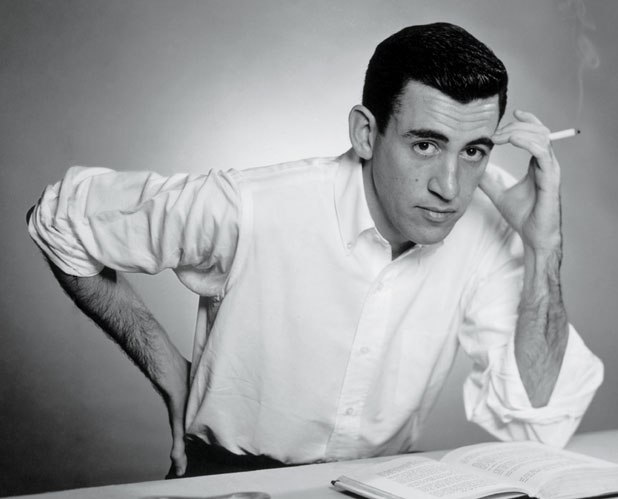
It might be that writing for yourself is all you want to do, and that’s great. That means that you can write whatever you want, edit as much (or as little) as you want, and basically be able to not give a fuck about, well, anything. JD Salinger (the king of giving no fucks) said,

There is a marvelous peace in not publishing. … It’s peaceful. Still. Publishing is a terrible invasion of my privacy. I like to write. I live to write. But I write just for myself and my own pleasure. … I don’t necessarily intend to publish posthumously, but I do like to write for myself. … I pay for this kind of attitude. I’m known as a strange, aloof kind of man. But all I’m doing is trying to protect myself and my work.

If you want any kind of commercial success, though, you need to start thinking about other people. In a best case scenario, you could write exactly what you want to write, and, due to some crazy alignment of the stars or a perfect moment of cultural zeitgeist, it would make the New York Times bestseller list. For example, you could write smutty Twilight fan fiction, change a few names, and have it become a wildly successful work of erotica. However, if that business model isn’t working for you (and don’t worry, you’re not alone), you need to figure out who your audience is and what the hell they want to read.

I feel like this is kind of where I am right now, not just with writing but also with yoga.

When I first started practicing yoga, it was (obviously) something I only did for myself. I remember my first class vividly; I struggled through it, but afterwards I was so relaxed that I felt high. It was love at first downward dog.

In the beginning it was just a physical practice, but later it became something more. I’m hesitant to describe it as “spiritual”, but the way I practice now certainly goes deeper than just my body. There have been times when yoga has triggered unexpected emotions in me; I laughed the first time I went into urdhva dhanurasana (full wheel), and kicking up into handstand still makes me insanely happy. There have been poses that have made me feel irrationally angry, and, much to my embarrassment, I’ve cried in class once or twice. Luckily, the lights were dim, and I was able to slink out the door without anyone noticing that something was amiss.

The feeling that I associate the most with yoga, though, is what I like to refer to as the “bell jar” feeling. I call it that because of the way Sylvia Plath describes feeling after her first shock treatment:

All the heat and fear had purged itself. I felt surprisingly at peace. The bell jar hung, suspended, a few feet above my head. I was open to the circulating air.

The bell jar, of course, is the metaphor she uses to describe her depression:

If Mrs. Guinea had given me a ticket to Europe, or a round-the-world cruise, it wouldn’t have made one scrap of difference to me, because wherever I sat – on the deck of a ship or at a street café in Paris or Bangkok – I would be sitting under the same glass bell jar, stewing in my own sour air.

I mean, let’s face it, we all have bell jars of one sort or another, though some may be lighter and clearer than others. For me, yoga, both the physical practice and the philosophy, was the best way of lifting mine for a little while.

Then I started teaching yoga, and it went from being this beautiful, deeply personal thing to being, well, a business. When you’re teaching, you can’t just do whatever you want. You can’t just teach your favourite poses over and over, or have a 20 minute savasana. I mean, sure, if you’re some kind of yoga superstar and you’re having to turn people away from your overcrowded classes, then maybe. But I’m still working my way up the ladder, and for now I have to figure out what the people want and how to give it to them.

It’s been a tough lesson to learn, especially since people in the yoga world aren’t always exactly, well, yogic. They can get angry if a class isn’t exactly what they wanted, or if they think you’ve made a mistake, or if you go five minutes too long or too short. You, the teacher, are providing a service, and the student, your customer, is always right. Or, rather, they are if you want them to ever come back to your class. Which, by the way, you probably do.

And then there’s the fact that you, as a teacher, should maintain a personal practice. It’s hard, though, to convince myself to roll out my mat when I get home from a day that’s been nothing but yoga: teaching yoga, doing yoga studio admin, writing emails about yoga. By the time I make it back to my apartment, all I want to do is snuggle Theo, hang out with Matt, and write.

So yeah, I’m feeling a little burned out on yoga these days. And then I feel guilty for feeling burned out, because it seems unfair to my students that their teacher is kind of tired of yoga. And then I think about how everyone always tells you to try to find work doing what you love, and I wonder if the natural consequence of doing what you love is that instead of loving your job, you end up feeling resentful about something that used to bring you so much joy.

Today, though, I cracked Patanjali’s Yoga Sutras for the first time in months. Reading through the second sutra, I caught myself thinking, oh yes, I do love this. Later, when I went to teach my class, I ended by talking a little bit about what I’d read in the sutras that day, and that felt good. Afterwards one of my students came up to me and told me how much she’d enjoyed the class, especially the bit at the end. And that felt really good.

I guess that what I’ve realized is that there has to be balance between what you love and what you give out to other people. Yes, you need to offer something that people want, at least if you want to make any money doing whatever it is you’re doing, but you need to inject some of yourself into your work as well. Being yourself when you teach or when you write is what makes your work authentic, and people can sense that. Have you ever read a book that was written specifically to appeal to a certain demographic? Usually they’re pretty terrible. By the same token, a book that’s just the author nattering on and on about whatever their pet subject is can often be just as bad.

So if you can find that perfect sweet spot of sharing what you love and giving what people need, then you’re probably golden. If you can find a way of separating thing-that-I-love-doing from thing-that-I-get-paid-for while at the same time acknowledging that, to a certain degree, they are the same thing, then you’re probably way ahead of the curve. And if you can find a way to admit that it’s okay to feel burned out on the places, people and leisure activities in your life, and that you can come back to them when you feel ready, then you get a thousand high fives.

And that, my friend, is a lot of high fives.

Check out all the fucks I’m giving. Oh wait, there are none.

That Time I Wrote A Book And Couldn’t Get It Published (or, you’re all silently judging me right now, aren’t you?)

29 Sep

Did you know that I wrote a book? A novel, even?

Probably not. I haven’t told many people. I’m actually kind of embarrassed about it.

I wrote it back in 2008. One night, Matt and I went to see a Toronto Consort performance of medieval labyrinth music (I guess this is a thing) at Trinity St. Paul’s. It was February, or maybe March, and there was still snow on the ground. Inside the church was warm, cozy even, and the lighting and music were both conducive to drowsy daydreams. By the end of the concert I had the whole plot mapped out in my head, and spent the walk home explaining it to Matt, expanding and solidifying my ideas as I said them out loud.

It took about six months to write, and when I finished, I thought, Phew, the hard part is over.

I’d met a literary agent the year before who had read one of my short stories and liked it so much that she asked me to contact her if I ever wrote a novel. I foolishly thought I was totally set. I finished my first draft in August of 2008, and I was supposed to be going back to school that September, so I gave my little book a quick once over (too quick, I realize now) and sent her off the day before my classes started.

Of course, I ended up having a cycling accident a few days into classes, which effectively ended my educational plans for the next several months.

I decided to devote my suddenly copious amounts of spare time to getting my book published. I started contacting agents and publishers, and actually heard back from a few. A woman at a major Canadian literary agency asked me to send in the first few pages, and then wrote back and asked me to send the rest. A small publisher asked me to send the full manuscript. A few other agents asked for the first chapter, or writing samples.

In early 2009, I heard back from the small publisher. Unbelievably, they were interested in my book. I was so happy. So ecstatically, incredibly, terrified-of-the-other-shoe-dropping happy. Matt and I went out for dinner. I started telling people about my book. Matt’s parents sent him money to buy me flowers. When I met new people, I started introducing myself as a writer.

The publisher asked me to do a second, and then a third draft. They didn’t provide much direction, beyond some vague show-instead-of-tell type of instructions. I felt like I wasn’t doing a great job at editing, but figured if I just pushed through, everything would be fine.

I sent the publisher my third draft, and then in May emailed to follow up with them. They wrote back to say that they weren’t sure if they wanted to publish my book, but that they would let me know for sure in two weeks’ time. In the meantime, they said, I should continue to do rewrites and focus on showing instead of telling.

Three months later, in mid-September, the day after I returned from my honeymoon, I received the following email:

Hi Annabelle,

Sorry for the long stretch between emails. Your manuscript is being sent back to you with a bunch of edits. We can not accept it at this time but we hope that you will read over what we have done and try a new draft. I will be sending you a list of comments made by our editors and hopefully you will be able to put them to use. Thank you for your patience and hopefully we will hear from you again in the future.

The week after that, I received an email back from the original agent I’d contacted, the one who’d liked my short story so much, saying,

[This manuscript] has many of the elements needed for a successful piece of commercial fiction: an authentic-feeling setting—due here, in part, to the author’s attention to period dress and historic cooking; an intriguing premise; and a likeable heroine. However, what [this manuscript] lacks is strong, forward momentum in its narrative.  

Another rejection.

I felt like I was at a total loss. I didn’t know what to do. The hardest part was realizing that this whole thing was my own damn fault – I’d rushed to get it out before it was properly edited, because I just couldn’t be bothered to do it properly. Surely, I told myself, if it shows so much promise, if the characters are likeable and the setting feels authentic, there must be some way to fix momentum of the narrative?

Not only did I have to live with the fact that I’d sabotaged my own success, but I also had to deal with everyone that I’d told about my book. How’s the novel? they asked. When will it be published? Who’s the publisher? 

Embarrassed, I would stutter out that there was a delay, that I wouldn’t be going with the original publisher, that I was still shopping around.

Oh, they said, in a way that was totally loaded with meaning.

Even my mother, who knew the whole story, kept asking and asking about my book. Finally, I had to make her promise to never mention the damn book again until I was the one who brought it up.

It wasn’t just about the book itself; this novel was supposed to Show People. It was supposed to be a giant fuck you to all of the people who had looked down on me, or made fun of me, or just plain wouldn’t give me the time of day. I’d convinced myself that once my book was published, all of the people who didn’t invite me to their high school parties would be kicking themselves for not realizing earlier how awesome I was.

Now, it seemed I’d proven them right. I wasn’t awesome enough to come to their parties, and I definitely wasn’t awesome enough to publish a book. Double whammy!

I stopped writing after that. I felt weirdly guilty devoting my energy to new writing, when here was my poor old book, still waiting to be published. Starting something new seemed tantamount to cheating on her, even though I knew I should put her aside for a while and focus on something else.

I sent out a few more query letters, and a small publisher in Brooklyn asked me to send in my manuscript. So I sent her off again, and waited and waited and waited to hear back. I wasn’t worried, because waiting a billion years is basically standard in the publishing industry. Then, sometime last year, my book, in the same wrapping I’d sent her out in, came back to me.

They hadn’t even bothered to pick her up from the post office.

I often think of the writing process as being like pregnancy, except that you’re gestating a book instead of a baby. But what happens when you’re unable to give birth? What happens to all the time, thought and energy you’ve devoted to making your novel live? What is it that you’ve created, exactly? I mean, other than a stack of paper in a battered brown package that sits on your bookshelf and serves as a reminder of what a failure you are.

I don’t know what to do now. I’m not even sure if my book is any good. I avoid those files on my computer like the plague, and every time I accidentally catch site of one of them, I feel sad and ashamed.

I miss her, though. I think about her a lot. On good days, I tell myself that with a bit of effort, a bit of good old-fashioned elbow grease and some stick-to-itiveness on my part, I could get her out there. On bad days, seeing the name of one of my characters in a newspaper or hearing it in a movie makes me want to cry.

I’m sorry, little book. It’s my fault you’re languishing in my apartment instead of sitting pretty on a shelf at Indigo.

Starting this blog has been an attempt to get myself writing again. By and large it’s been a really positive experience. One of the things that I hated about writing my novel was that it was such a solitary activity – I sat in my dark bedroom and wrote, and the only one who ever read it was Matt. I was dying for feedback, but I felt bad about asking my friends to proofread for me. On top of that, I was terrified that they would hate it.

With blogging, on the other hand, I get instant feedback, most of it insanely great. People read what I write, and for that I’m incredibly grateful. But sometimes I wonder what I’m doing here; I wonder what good it does to write these posts.

And then I wonder if everything I do has to do something or be worth something, and then I wonder why I write at all, and then I kind of get caught up in this endless cycle of self-deprecating wondering.

I guess what I really want to say is:

I failed at something, and I’m not ashamed (much).

I wrote a novel, I poured my heart and soul into it, and it wasn’t good enough (but maybe it could be, someday).

I don’t know what to do now, but maybe someday I will figure it out (I hope).

And maybe someday my little book will find her spot on the shelf at a bookstore, or, even better, the shelf of someone I don’t even know.

Oh and by the way, in case you were wondering, this is what a manuscript looks like after it’s spent a year gathering dust in a Brooklyn post office:

Just (or, an insidious little word that I use too often)

27 Sep

I teach a regular yoga class on Sunday evenings. My friend Charlene, who is an amazing teacher that I respect like whoa, teaches the class right before mine. For a few weeks now she’s been threatening promising to take my class, the thought of which was basically vomit-inducing.

I mean, imagine this: you, a neophyte in your field, suddenly have someone with years of experience and training under their belt, someone who has been inspiring you with their amazingness for quite some time now, who wants to be your student. Pretty nerve-wracking, right?

Anyway, I was nervous, my voice quavered a little when giving instructions, and every time I looked at her I forgot everything I’d ever learned, but other than that it went pretty well. Afterwards she thanked me for the class and said she’d enjoyed it, so I asked if she would email me with some feedback and constructive criticism.

I received her (extremely lovely and thoughtful) email the other night, and one paragraph really jumped out at me:

I noticed that you say “just _________”  a lot, as in, “just reach your arm up, just step forward”.  I catch myself doing this as well sometimes and realise that it detracts from the impact of the practice and my presence. There are no “justs” in yoga, since every movement and breath should be linked with some degree of awareness and attention- everything we do matters. Saying “just” a lot also makes the class seem more casual than perhaps we want it to be, since after all, people come to class to learn….they need to trust that we are confident in our capabilities to guide them.

Having read this, I’ve been carefully monitoring my speech for the last few days, and I’ve come to the following conclusion: I say just a lot.

I don’t just say it in a yoga context, either. I use it quite often when I’m talking about myself, and about my accomplishments. This morning I was sitting in the cafe across the street from the studio, and a woman asked me what I did for a living. Oh, I just manage a yoga studio, I replied without thinking. The real kicker is, it’s NOT EVEN TRUE. I don’t just manage a yoga studio – for one thing, phrasing it that way makes it sound lesser or inferior to other jobs, and for another thing, I also teach yoga and write, but for some reason I never think to mention those.

I mean, I say some reason, but I totally know the reason. It’s because I am a woman and, as such, it makes my life easier to constantly diminish my own accomplishments and make myself appear less threatening.

Every time I say just, what I’m really saying is, This isn’t important. I’m not important. Please don’t question me on this.

Every time I say I think when I really mean I know, what I’m actually saying is, Please don’t think that I’m trying to show you how smart I am or how accomplished, I’m sure you’re very smart and accomplished too.

The dangerous thing is that I keep telling myself that if I just teach more often, or get more stuff published, or accumulate more successes, then I will stop feeling this way. I tell myself that I use this kind of demeaning language against myself because I’m just not good enough yet, but someday I’ll get there. Really, though, the truth is that if I don’t think I’m there yet, then I will never get there and I will never be good enough, because my desire to self-deprecate will continue to push my goals just out of reach.

Let’s go back to the basics here:

Men feel threatened by women, especially powerful, successful women. This is ground that’s been covered over and over, but it bears revisiting.

Women also feel threatened by the success of other women, because we’ve been set up by society to compete against each other. There’s some jealousy in there, of course, but I also get the feeling that women often feel like success is something finite, and if one woman uses up a big chunk of success, then there will be less for everyone else. And maybe that’s a even a bit true, because while society seems to tolerate plenty of successful men, it doesn’t seem to have a lot of room for women at the top.

So how do you react when you’re challenged by someone on your success? Do you get defensive, grow angry and maybe start to lose your temper as you try to prove your point? Some people do, and that’s not necessarily a bad or wrong reaction – but it is one that’s certainly far more accepted from men than it is from women. If a man becomes righteously angry, he’s often lauded for it. If a woman does the same thing, it’s frequently blamed on her menstrual cycle, or her lack of sex, or because, you know, ladies.

So what’s one way around this problem? To be nice and reasonable, because you catch more flies with honey? To be nice enough that you can convince men that sure, you’re smart and well-educated, but you’re not one of those women. To be reasonable enough to prove that not all feminists are hysterical and crazy, some are totally kind and thoughtful and soft-spoken.

To be so fucking nice and reasonable that you start to undermine yourself, to diminish yourself because you don’t want to cause conflict. To be so respectful of other people’s opinions, so concerned about not offending them, that it starts to become hard to stand up for what you yourself believe in.

I’m not saying don’t be nice and respectful, but what I am saying is that these are qualities that men have come to expect from what they think of as “reasonable” women. And every time you describe yourself as just being whatever, every time you back away from an argument by conceding that everyone’s allowed an opinion even though what the other person is saying is totally wrong and offensive to you, you are playing right into that expectation.

I’ve written here about being careful about the words we use when talking about other women, but we also need to watch the words we use when talking about ourselves. In order to be successful, we need to learn to talk ourselves up, to speak positively about our accomplishments, and not be afraid of a little conflict. We need to learn to be assertive, because society isn’t going to begin tolerating assertive until more women are comfortable in that role.

So I challenge you to spend a few days watching what you say, and taking stock of how often you use words like just or think or only when you’re talking about yourself or your opinions. Ask yourself what your speech would sound like without those words. Finally, try to make a few statements about yourself every day that celebrate your work, your life, or your accomplishments instead of demeaning them.

Because if you don’t take yourself seriously, probably no one else will.

What It’s Like To Write

27 Sep

Writing here is sometimes like standing in the middle of a crowded auditorium, peeling off layer after layer of clothing, asking, Do you like me yet? How about now? Or now?

It’s sitting in a confessional and whispering my secrets into the gloom, inhaling the church fug of old incense, furniture polish and a thousand rainy days and exhaling all of my sins.

It’s feeling like a grubby-faced kid writing a note to their crush, trying desperately to play it cool but ending  up with a barely articulate mess of feelings.

It’s sometimes like being pregnant and giving birth to a kitten, while all along I thought I was carrying a baby. And it’s not that I don’t like, maybe even love, the kitten, it’s just not what I set out to make in the first place.

It’s slogging through the morass of possible words, digging in the muck to find the perfect turn of phrase.

It’s realizing that nothing I write will ever be perfect, no matter how obsessively I revise and revise and then revise some more.

It’s hearing Audra say, Perfect is the enemy of good.

It’s wondering if anything I write will ever be good, or even good enough.

***

My friend Meredith posted this poem on Facebook and it’s so exactly right. Every word is like a knife straight through me.

My party piece:
I strike, then from the moment when the matchstick
conjures up its light, to when the brightness moves
beyond its means, and dies, I say the story
of my life

dates and places, torches I carried,
a cast of names and faces, those
who showed me love, or came close,
the changes I made, the lessons I learnt

then somehow still find time to stall and blush
before I’m bitten by the flame, and burnt.

A warning, though, to anyone nursing
an ounce of sadness, anyone alone:
don’t try this on your own; it’s dangerous,
madness.

Simon Armitage, 1993

Shameless

23 Sep

On Thursday my piece about girl culture was featured as a guest post on Shameless Magazine’s website.

My response was as follows:

1. Stare blankly at computer screen, totally dumbstruck

2. Run around in circles, yipping excitedly

3. Run down to the store below my studio and tell the two dudes who are working

4. Try to explain to said dudes why I am so excited

5. Send my mother the following email:
MOM MOM LOOK I AM A REAL WRITER CHECK IT OUT
xoxo
Annabelle

6. Receive this in response:

Congratulations. Great Job! Of course you are a real writer. I always knew you were a writer. Love, Mom

7. Go home. Realize that I am really, truly happy. Decide not to do anything about being happy, but instead just sit there and experience it.

8. Put on a pretty dress

9. Pick up Theo from daycare and take him to the park

10. Try not to think about the future

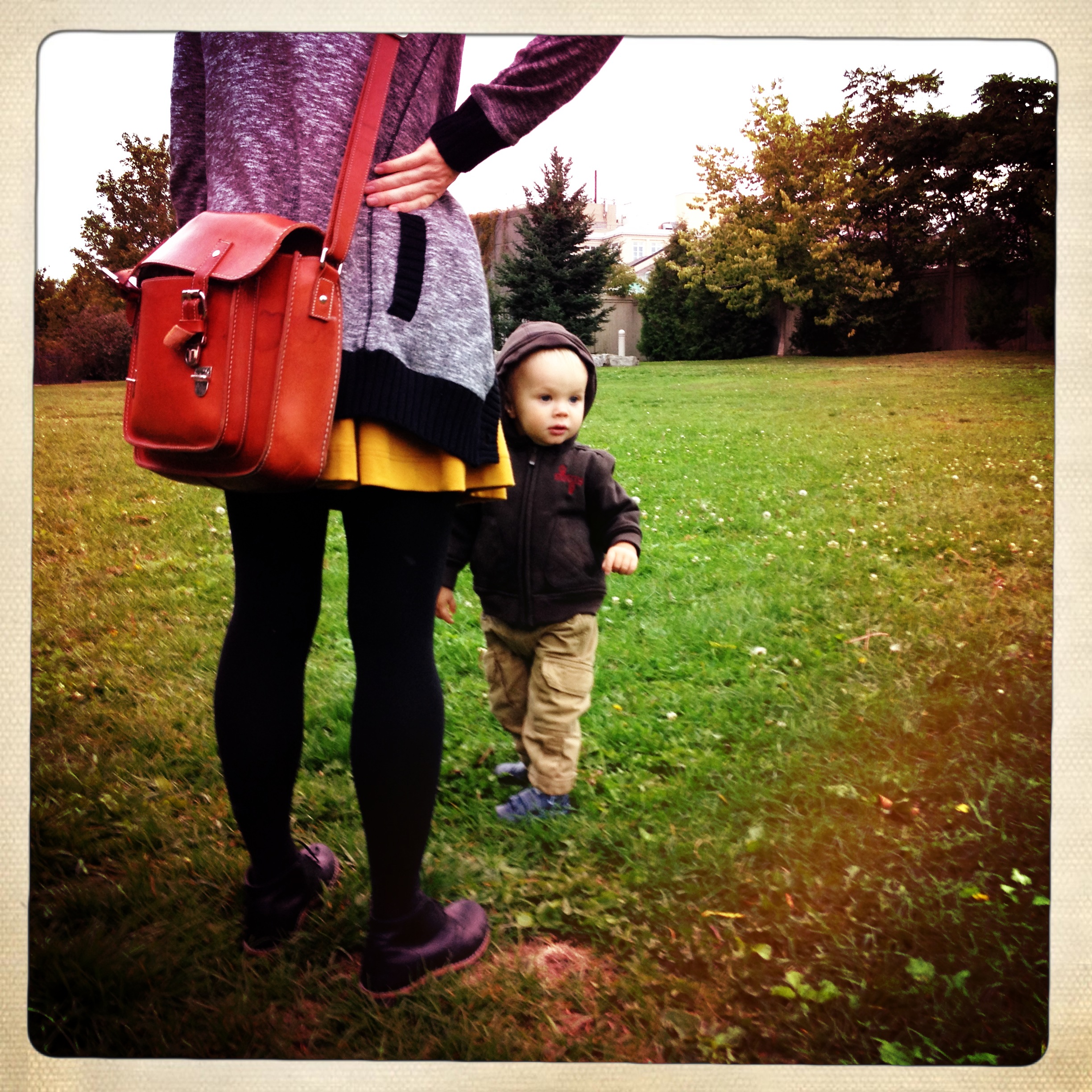
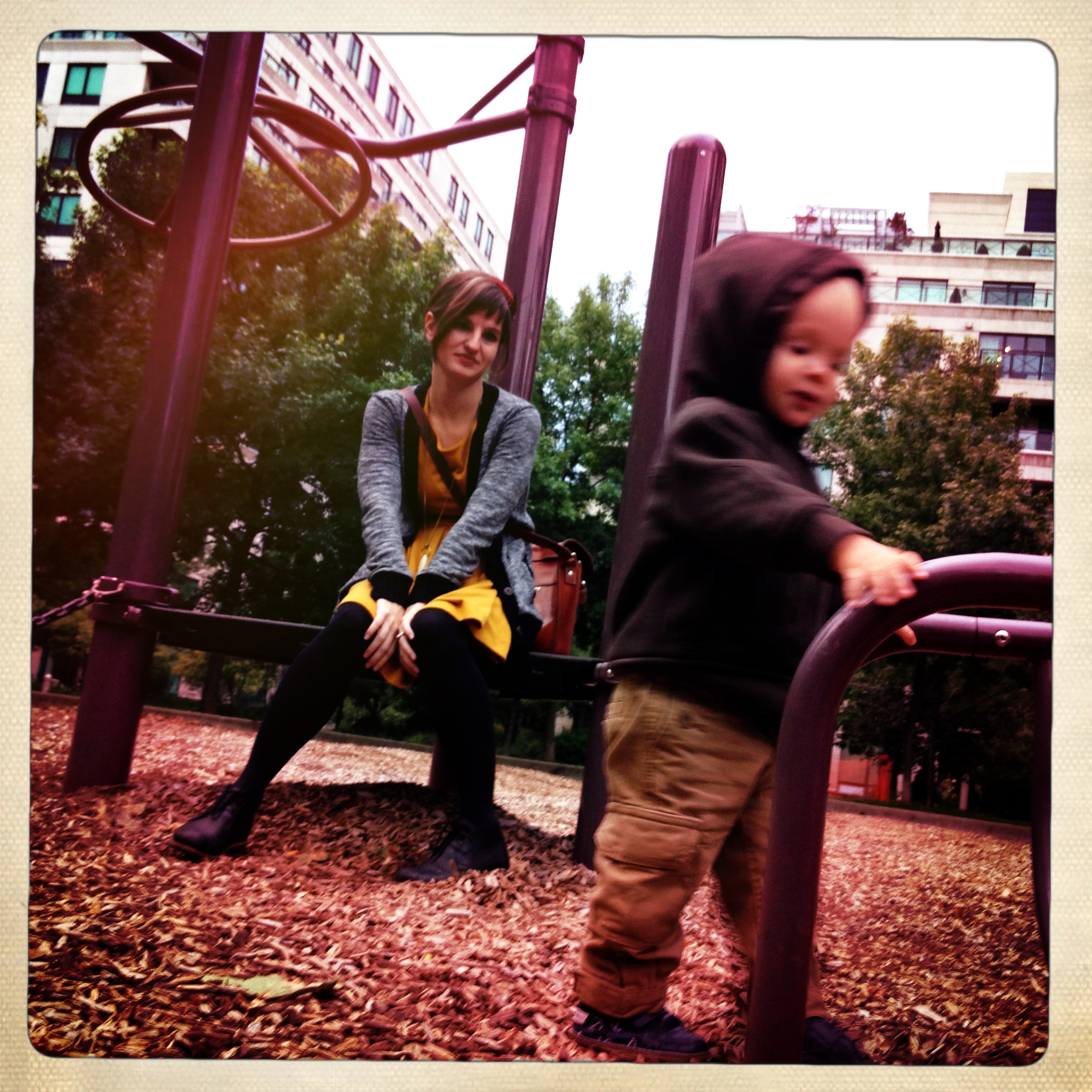
When I say, try not to think about the future, what I mean is: I will try not to stress at this moment about what and where I will be published next. I will try not to worry about writing something amazing, about being The Best I Can Be. I will take this for what it is: pure and unadulterated awesomeness.

Image

Image

Image

This is good. This is good. This is good.