Tag Archives: women

On Bullying And Being A Clothes Horse

6 Oct

I like clothing. I like it a bunch, and not just because it gives me the ability to not be naked. If avoiding nudity was my only concern, I probably wouldn’t have as many clothes as I do.

For those of you who don’t know me very well, let me be really super clear on something here: I own a lot of clothes. A lot.

I used to not care so much about what I wore; I mean, sure, I liked getting dressed up, but if someone gave me money, I spent it all on books (or sometimes books and candy). Gifts of clothing at Christmas or my birthday were considered boring, and beneath my interest; they were quickly set aside in favour of more interesting packages. When my mother gave me money to go back-to-school shopping, I would spend as little of it as I could on a few shirts and a pair of jeans at Walmart, then save the rest for the more interesting stores.

Then puberty hit, and people started making fun of the way I dressed. Why? Because teenagers, that’s why.

Not only was I lacking in fashion sense, but I was also widely considered to be quite ugly. A classmate of mine took a sort of informal poll on the relative attractiveness of the girls in our class, and I rated lowest. Out of 28 classmates, only one (a girl named Cindy who was well-known to be the nicest person ever) had said that I was “sort of pretty”; everyone else, even (especially?) the boys had marked down “ugly” next to my name.

I tried to laugh it off, but underneath I was heartbroken.

I went home, cried, sassed my parents, ate some ice cream, cuddled my cat, scrawled in my diary, etc.

Then I decided that this was, in part, a solvable problem.

I couldn’t change my facial features or the basic structure of my body, of course, but what I could do was learn how to apply makeup and wear the correct clothes. In order to do this, I would have to figure out what the right ways to do these things was, because I honestly had no idea. I began to observe my classmates as if I were a cultural anthropologist; I made notes on what they wore, how they did their hair, and what shade of lipstick they applied. I bought fashion magazines and pored over their pages, cutting out pictures of the outfits I liked. We didn’t have a lot of money, so I started spending time at Value Village, Goodwill and the Salvation Army, digging through the racks for things that might look good, or fit me well.

I began replacing my wardrobe of printed pastel sweatshirts, track pants, babyish puffed-sleeve dresses and unflattering stovepipe jeans with slightly more grown-up attire. Back then, I wasn’t necessarily trying to be fashionable, or even dress particularly well; I just wanted to fit in and be able to disappear into the crowd. I gravitated towards basics like plain t-shirts and tank tops paired with jeans, khakis or a simple skirt. All I wanted was to be normal, because I thought normal meant that I wouldn’t be bullied anymore. I wanted to use clothing as a sort of protective armour, one that would make me look like an average high school student instead of someone with a target on their back.

By the beginning of university, I’d begun to wear things like vintage slips and old, beat-up leather jackets. I tied my hair back with old kerchiefs I’d bought for cheap in Kensington Market. My grandmother gave me an old coat of hers from the 60s, and I wore the shit out of it. I was starting to look kind of good.

While in Halifax, I was lucky enough to have two roommates who a) were approximately the same size as me, and b) had awesome, badass fashion sense. We instituted an open-closet policy, and having access to a sort of communal wardrobe gave me the chance to experiment with different looks without having to commit to them. I stopped wanting to look normal, and started wanting to look interesting. I learned to accessorize. I started putting outfits together in unconventional ways, and discovered that I kind of liked doing that.

Now, weirdly, some people actually consider me to be fashionable. It’s still a label that feels strange to me (and I often think it means “you sure do own a lot of clothes!”), and I don’t really believe that I dress particularly well. I still sometimes feel like my clothing is a disguise rather than an a form of self-expression. In a lot of ways, I’m still that skinny, ugly teenager who has no idea what to wear; I still study the way people dress (more out of habit, now, than out of necessity), and although I don’t cut pictures out of magazines anymore, I do pin copious amounts of fashion on Pinterest. But now, instead of feeling like this is something that I have to do in order to fit in, I do it because I’m looking for ways to stand out from the crowd. I also do it because I enjoy it.

Having taken the time to look back and write all this down, I’ve realized something: I took an experience that was ultimately really sad and tough and demoralizing, and out of that I developed a passion for something that I didn’t really care about before. Being bullied led me to explore and learn to love something that I might not have thought much about otherwise, something that still brings me happiness as an adult. And really, isn’t that the best possible outcome of a situation like this?

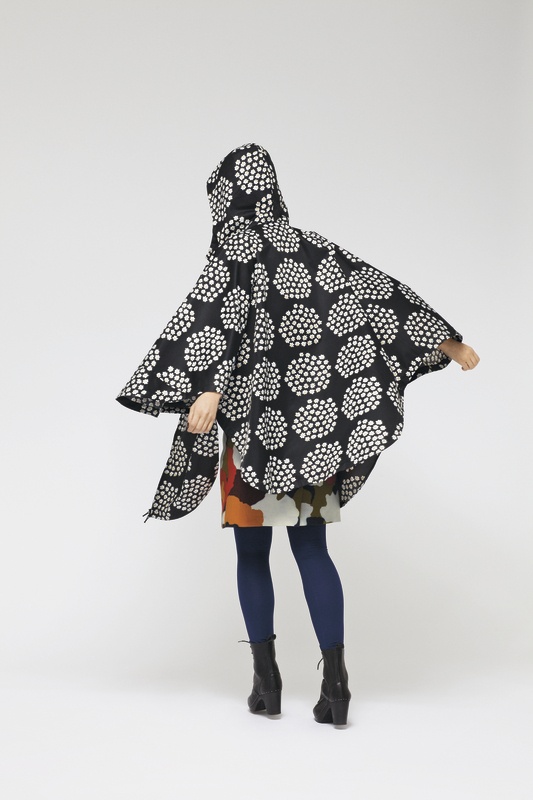
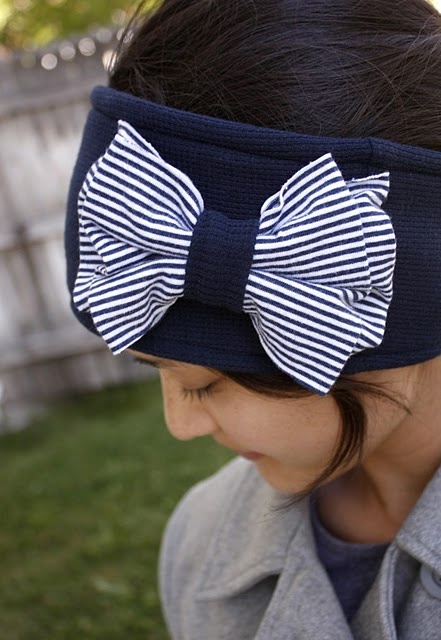
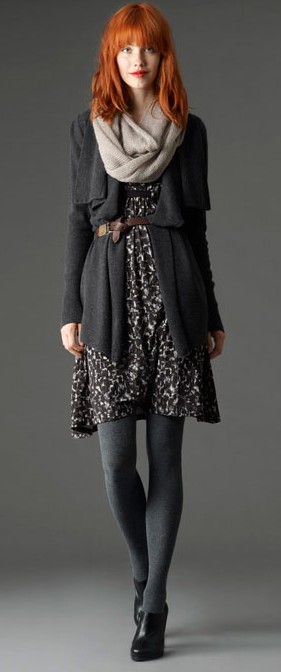
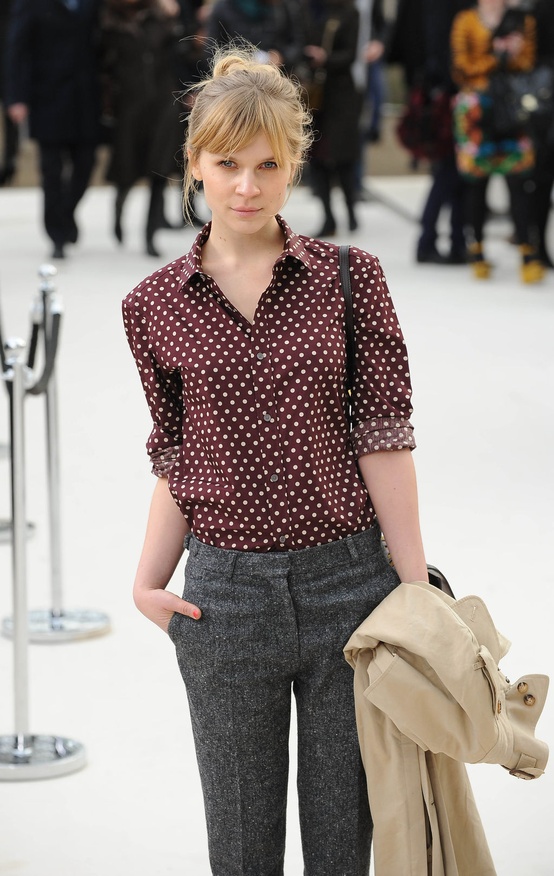
Anyway, here are a few things that are inspiring me these days. Maybe they’ll inspire you, too!
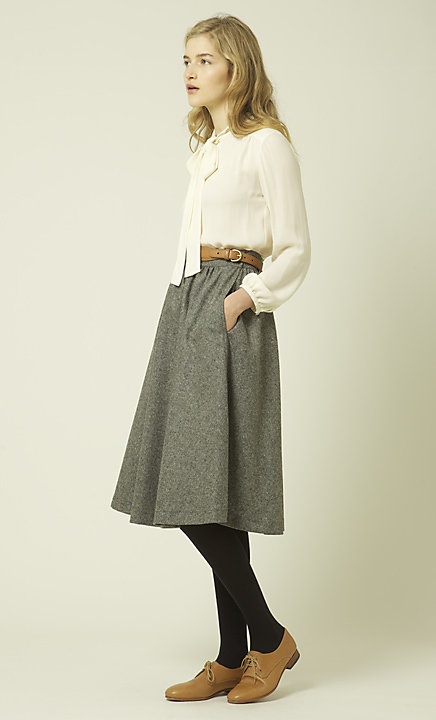
Tweed Skirt from Steven Alan

The Myth of the 39th Week Abortion

29 Sep

If you are a Canadian living in Canada (or even a Canadian living abroad, or maybe even a non-Canadian), you’ve probably been hearing a lot about Motion 312. I know I have!

In case you’ve been living under a rock and/or you’re not up on Canadian politics, here’s a section of the motion that should give you a good idea of what it’s about:

That a special committee of the House be appointed and directed to review the declaration in Subsection 223(1) of the Criminal Code of Canada which states that a child becomes a human being only at the moment of complete birth and to answer the questions hereinafter set forth;

 (i)            what medical evidence exists to demonstrate that a child is or is not a human being before the moment of complete birth?,
 
   (ii)            is the preponderance of medical evidence consistent with the declaration in Subsection 223(1) that a child is only a human being at the moment of complete birth?,
 
 (iii)            what are the legal impact and consequences of Subsection 223(1) on the fundamental human rights of a child before the moment of complete birth?,
 
 (iv)            what are the options available to Parliament in the exercise of its legislative authority in accordance with the Constitution and decisions of the Supreme Court of Canada to affirm, amend, or replace Subsection 223(1)?

You can read the full text of the motion here, on Conservative MP Stephen Woodworth’s website.

The Conservative government has been quick to point out that this is not a motion put forth to criminalize abortion, or even reopen the abortion debate. They want you to believe that they simply want to update the 400 year old definition of what a human being is.

The issue is that this motion could pave the way to giving personhood to fetuses, which would certainly cause legislation to be passed on when and how abortions can be performed.

Currently, abortion is not limited by law in Canada. This means that you can have an abortion at any point in your pregnancy, right up to the moment when you give birth. By ascribing personhood to a fetus, the Canadian government would begin moving towards criminalizing abortion. Because, of course, having status as a “person” would mean that the fetus would be protected by the Canadian Charter of Rights and Freedoms.

And on the surface, that seems pretty reasonable. I mean, a typical pregnancy can go to 40+ weeks, but we all know that a baby born earlier can often survive with little or no medical intervention. My son was born at 36 weeks and, other than a little time on the C-PAP machine (which was more likely needed because of my c-section than because of his premature birth), he was totally fine. I even have a friend whose daughter was born at 25 weeks gestation and, while she obviously needed a lot of medical aid in the beginning, she is now two years old and thriving.

So how, in good conscience, could we allow women the legal right to abort a fetus that could survive outside of the womb?

I’m here to tell you that we can, and we should.

When I was pregnant with Theo, I had my first ultrasound at 11 weeks gestation. I’d had some bleeding early on in my pregnancy, and, going into the ultrasound, I was terrified that they would find something wrong with him.

The minute the probe hit my belly, though, itty bitty Theo appeared on the screen. He was perfect; all blobby torso-head and stubby little limbs. When I saw him, I laughed with relief, and when I laughed, he jumped, waving his arms and legs in protest. We watched, mesmerized, as he wriggled around, his heart a flickering beat in the middle of his chest.

To me, in that moment, he went from being two-lines-on-a-pregnancy-test-morning-sickness-and-achy-breasts to being an actual little person. Seeing him on the screen made me fall in love with him.

And this is the problem: if my feelings could make me believe that a baby the size of a fig is a person, then someone can likely argue that any fetus, at any gestational age, is a person. If I, a staunchly pro-choice feminist can, under the right circumstances, believe that a fetus of 11 weeks gestation is a person, then it’s not impossible for our government to come to the same conclusion.

Yes, I understand that in M-312 they promise to examine “medical evidence” in order to decide whether or not a fetus is a “person” before birth, but really, you could find “medical evidence” to back up just about any claim.

Would they say that a fetus is a person once it can survive on its own, outside of the womb, without any medical aid? Because there is honestly no foolproof way to test this.

Would they say that a fetus is a person once it reaches viability  at 24 weeks? Because the truth is that only 50% of babies born at 24 weeks gestation will survive, and those that do live are likely to have a lifetime’s worth of medical complications. As well, dating ultrasounds are not very accurate, especially once a woman enters her second trimester. Without knowing the exact date of conception, no ultrasound tech could say for certain whether a fetus is 23 weeks or 24 weeks.

Would a fetus become a person at 20 weeks, the age at which some studies have said that they can feel pain?

Would a fetus be declared to be a person at 19 weeks, which is the gestational age at which, if a Canadian woman miscarries, she becomes eligible for maternity leave?

Would a fetus become a person when their heart starts to beat, when they start to grow limbs, or even from the very moment of conception?

You could find medical evidence for all of these claims, but there’s no way of empirically proving when a fetus turns into child, except for the moment of birth, when they begin to live independently of their mother’s body. So, ultimately, the decision would, at least in part, have to be based on the emotions of the committee appointed to decide when personhood begins.

Pro-life advocates would like you to believe that abortion is too common in this country, that people use abortion as a form of birth control, or that it’s wrong to abort a fetus because it could grow up to be the person who cures cancer. Most of all, they want you to believe that women in Canada are actually aborting fetuses at 39 weeks gestation via intact dilation and extraction (more often, and incorrectly, called partial birth abortion).

First of all, let’s look at the prevalence. In 2005, the last year for which this data is available, the abortion rate was 14.1 abortions for every 1,000 women – so, 1.41% of Canadian women had an abortion that year. You guys, that is not a very big number.

Of that number, only a tiny percentage – in 2010, it was something like 0.2 percent of the TOTAL NUMBER OF ABORTIONS – were performed after 21 weeks gestation. I am having a hard time finding actual government statistics for this, but I got that number from a pro-life site, so I doubt that they are underreporting.

Regarding the use of abortion as the only form of birth control – I have honestly never known anyone who has done this. Abortion is still a painful medical procedure, and it’s not something anyone wants to go through. My other issue with this line of thinking is that it’s a way of saying that some abortions are okay, but some are wrong. Like, if it’s your first abortion and it’s because the condom broke and you took the morning after pill and for some reason that didn’t work, then it’s fine to have an abortion. But if you’re not careful with your birth control and you’ve have multiple pregnancies terminated, then it’s wrong to abort. As this brilliant article says, there should be no hierarchy of abortions. On demand, without apology.

The any-fetus-could-grow-up-to-cure-cancer argument is one of my favourites, only because it totally ignores the fact that, if the woman does terminate her pregnancy, maybe she will be the one to go on to cure cancer. Maybe the financial burdens of having a child would have made university impossible for her, or maybe the mental distress of carrying an unwanted pregnancy would have meant that she wasn’t up to the task of higher education. Maybe raising a kid would mean that she couldn’t spend hours and hours in a lab looking at test tubes or whatever the fuck it is researchers do. We so often hear about the fetus could-have-beens, but no one ever talks about what greatness the mother could have gone on to achieve.

And, finally, the 39th week abortion. The great myth of the 39th week abortion. This myth exists because technically, legally even, it could happen. Yes, it could happen – but it doesn’t.

I challenge you to find me an incidence of a healthcare professional who provided an abortion at 30+ weeks, because I doubt you can. Even second trimester abortions are hard to obtain in Canada, and women often end up being sent to clinics in the States if they are over 20 weeks gestation. The vast majority of these women are choosing to terminate that late in their pregnancy because they’ve only just learned that the fetus is severely or fatally impaired, or that there’s a significant health risk to the mother, or both.

I promise you that no one gets to 39 weeks of pregnancy and is suddenly like, gee, I’ve been meaning to get this thing aborted, I guess I should stop putting it off!

Finally, criminalizing abortion won’t stop it from happening; history has proved this time and time again. What it will mean is that women will be forced to seek out unsafe abortions with possibly life-threatening consequences. Sadly, this is an indisputable fact.

I’ve never had an abortion, and I hope I never will. I would frankly be beyond horrified if a woman terminated her pregnancy at 39 weeks. I’m still glad, though, that it’s possible from a legal standpoint. I’m glad that there are no laws that say what a woman can or can’t do to her pregnant body, which, by the way, is still her body. Because once you start creating that legislation, no matter how well-meaning it is, it’s a slippery fucking slope. A slope that ends in the Handmaid’s Tale. Kidding. Well, mostly kidding.

Just (or, an insidious little word that I use too often)

27 Sep

I teach a regular yoga class on Sunday evenings. My friend Charlene, who is an amazing teacher that I respect like whoa, teaches the class right before mine. For a few weeks now she’s been threatening promising to take my class, the thought of which was basically vomit-inducing.

I mean, imagine this: you, a neophyte in your field, suddenly have someone with years of experience and training under their belt, someone who has been inspiring you with their amazingness for quite some time now, who wants to be your student. Pretty nerve-wracking, right?

Anyway, I was nervous, my voice quavered a little when giving instructions, and every time I looked at her I forgot everything I’d ever learned, but other than that it went pretty well. Afterwards she thanked me for the class and said she’d enjoyed it, so I asked if she would email me with some feedback and constructive criticism.

I received her (extremely lovely and thoughtful) email the other night, and one paragraph really jumped out at me:

I noticed that you say “just _________”  a lot, as in, “just reach your arm up, just step forward”.  I catch myself doing this as well sometimes and realise that it detracts from the impact of the practice and my presence. There are no “justs” in yoga, since every movement and breath should be linked with some degree of awareness and attention- everything we do matters. Saying “just” a lot also makes the class seem more casual than perhaps we want it to be, since after all, people come to class to learn….they need to trust that we are confident in our capabilities to guide them.

Having read this, I’ve been carefully monitoring my speech for the last few days, and I’ve come to the following conclusion: I say just a lot.

I don’t just say it in a yoga context, either. I use it quite often when I’m talking about myself, and about my accomplishments. This morning I was sitting in the cafe across the street from the studio, and a woman asked me what I did for a living. Oh, I just manage a yoga studio, I replied without thinking. The real kicker is, it’s NOT EVEN TRUE. I don’t just manage a yoga studio – for one thing, phrasing it that way makes it sound lesser or inferior to other jobs, and for another thing, I also teach yoga and write, but for some reason I never think to mention those.

I mean, I say some reason, but I totally know the reason. It’s because I am a woman and, as such, it makes my life easier to constantly diminish my own accomplishments and make myself appear less threatening.

Every time I say just, what I’m really saying is, This isn’t important. I’m not important. Please don’t question me on this.

Every time I say I think when I really mean I know, what I’m actually saying is, Please don’t think that I’m trying to show you how smart I am or how accomplished, I’m sure you’re very smart and accomplished too.

The dangerous thing is that I keep telling myself that if I just teach more often, or get more stuff published, or accumulate more successes, then I will stop feeling this way. I tell myself that I use this kind of demeaning language against myself because I’m just not good enough yet, but someday I’ll get there. Really, though, the truth is that if I don’t think I’m there yet, then I will never get there and I will never be good enough, because my desire to self-deprecate will continue to push my goals just out of reach.

Let’s go back to the basics here:

Men feel threatened by women, especially powerful, successful women. This is ground that’s been covered over and over, but it bears revisiting.

Women also feel threatened by the success of other women, because we’ve been set up by society to compete against each other. There’s some jealousy in there, of course, but I also get the feeling that women often feel like success is something finite, and if one woman uses up a big chunk of success, then there will be less for everyone else. And maybe that’s a even a bit true, because while society seems to tolerate plenty of successful men, it doesn’t seem to have a lot of room for women at the top.

So how do you react when you’re challenged by someone on your success? Do you get defensive, grow angry and maybe start to lose your temper as you try to prove your point? Some people do, and that’s not necessarily a bad or wrong reaction – but it is one that’s certainly far more accepted from men than it is from women. If a man becomes righteously angry, he’s often lauded for it. If a woman does the same thing, it’s frequently blamed on her menstrual cycle, or her lack of sex, or because, you know, ladies.

So what’s one way around this problem? To be nice and reasonable, because you catch more flies with honey? To be nice enough that you can convince men that sure, you’re smart and well-educated, but you’re not one of those women. To be reasonable enough to prove that not all feminists are hysterical and crazy, some are totally kind and thoughtful and soft-spoken.

To be so fucking nice and reasonable that you start to undermine yourself, to diminish yourself because you don’t want to cause conflict. To be so respectful of other people’s opinions, so concerned about not offending them, that it starts to become hard to stand up for what you yourself believe in.

I’m not saying don’t be nice and respectful, but what I am saying is that these are qualities that men have come to expect from what they think of as “reasonable” women. And every time you describe yourself as just being whatever, every time you back away from an argument by conceding that everyone’s allowed an opinion even though what the other person is saying is totally wrong and offensive to you, you are playing right into that expectation.

I’ve written here about being careful about the words we use when talking about other women, but we also need to watch the words we use when talking about ourselves. In order to be successful, we need to learn to talk ourselves up, to speak positively about our accomplishments, and not be afraid of a little conflict. We need to learn to be assertive, because society isn’t going to begin tolerating assertive until more women are comfortable in that role.

So I challenge you to spend a few days watching what you say, and taking stock of how often you use words like just or think or only when you’re talking about yourself or your opinions. Ask yourself what your speech would sound like without those words. Finally, try to make a few statements about yourself every day that celebrate your work, your life, or your accomplishments instead of demeaning them.

Because if you don’t take yourself seriously, probably no one else will.

How The Oatmeal Turned Me Into A Humourless Feminist

23 Sep

There’s this comic from the Oatmeal that’s been making the rounds on my Facebook feed. It’s called My dog: the paradox, and it’s basically a sequence of short vignettes about how stupid and crazy (but ultimately loveable) this dude’s dog is.

Most of it is funny and cute, but the seventh panel really rubs me the wrong way. The image is of a woman (wearing a tank top, short skirt and heels) being confronted by a furiously barking dog. Said dog is being restrained by his frustrated-looking owner. The text is as follows:

He’s hostile towards people that I’d like to get to know better.

Woman: Aw, what a cute dog. Can I pet hi-

Dog: I’LL KILL YOU! MAKE-UP SLATHERED HORSEBEAST STILLETOS AND PERFUME LYING HORSEBEAST SLAGBUCKET

Let’s be clear about a few things here:

1. I know that Matt from the Oatmeal is trying to be funny

2. I know that this is not his opinion on women

3. I don’t think that he was trying to be cruel or malicious

4. I know that most of you will say that I’m overreacting (and maybe I am)

I can’t help it, though. I read stuff like the words written above, and my heart starts to beat a little faster. I start to feel a little nervous, maybe even a little panicky. That kind of language, used against any woman in any context, makes my hands go clammy.

The thing is, even though I get that this is supposed to be a joke, I can’t find it funny. I can’t find it funny, because that line of thinking up there? Isn’t actually that uncommon.

I know, I know, it’s not real life, and the whole damn comic is supposed to be about how stupid the damn dog is, anyway. I mean, right? Only a stupid, crazy dog would think things like that about a woman. Certainly no nice, rational human being would ever say stuff like that.

Except that I’ve known nice, rational human beings who have said stuff like that. Maybe not in those exact words, and maybe not with such vitriol, but certainly the idea behind the words was the same.

She’s wearing too much makeup

She dresses like a slut

If she gets raped, it’s her own fault

All women lie

All women play games

All women are crazy

We live in a culture of casual misogyny, you guys.

We live in a culture of casual misogyny, and when Matt from the Oatmeal writes out words like the ones above, he is contributing to it, even if he doesn’t mean to. Every time someone laughs at what he’s written, and maybe thinks they find a tiny grain of truth in it, they’re contributing to it. Every time someone dismisses another person’s concern and tells them that they’re overreacting, or don’t understand the humour, or just plain need to get over it, they’re contributing to it.

What I want you to remember is this: whenever you use words like this, even as a joke, you are helping to normalize it. You are helping to perpetuate the idea that it is okay, or even funny to talk about women this way.

If you still don’t see why this bothers me, try looking at it this way: imagine that instead of being a woman, the character in the comic is Jewish, or a person of colour. Imagine that instead of saying lying horsebeast slagbucket, the dog is saying, greedy hook-nosed kike, or lazy nappy-haired n-word, or any other type of hateful speech. Would you still be fine with it?

I’m not angry, and I’m not offended. Mostly I’m disappointed, because I thought that The Oatmeal was smarter and better than this. Mostly I’m tired, because my kid was up puking all goddamn night and instead of going to bed, I decided to just start writing this post, and then I couldn’t stop. Mostly I’m sad, because I dunno, everything kind of makes me sad sometimes.

When I was a teenager, I used to get so irritated with my mother, because she would dissect everything I found funny and explain to me why it was offensive and gross. And now I get it. God help me, I get it. I’ve finally turned into the humourless feminist my mother always wanted me to be.

Don’t worry, though – I still think poop jokes are hilarious.

Shameless

23 Sep

On Thursday my piece about girl culture was featured as a guest post on Shameless Magazine’s website.

My response was as follows:

1. Stare blankly at computer screen, totally dumbstruck

2. Run around in circles, yipping excitedly

3. Run down to the store below my studio and tell the two dudes who are working

4. Try to explain to said dudes why I am so excited

5. Send my mother the following email:
MOM MOM LOOK I AM A REAL WRITER CHECK IT OUT
xoxo
Annabelle

6. Receive this in response:

Congratulations. Great Job! Of course you are a real writer. I always knew you were a writer. Love, Mom

7. Go home. Realize that I am really, truly happy. Decide not to do anything about being happy, but instead just sit there and experience it.

8. Put on a pretty dress

9. Pick up Theo from daycare and take him to the park

10. Try not to think about the future

When I say, try not to think about the future, what I mean is: I will try not to stress at this moment about what and where I will be published next. I will try not to worry about writing something amazing, about being The Best I Can Be. I will take this for what it is: pure and unadulterated awesomeness.

Image

Image

Image

This is good. This is good. This is good.

The Myth of the Woman-Child

20 Sep

My good friend Audra Williams challenged me to blog about this piece on Tavi Gevinson. Then she posted this ridiculous article from Jezebel on Facebook, and I thought I would address both of them at once. I am killing two birds with one stone! Two ugly, judgmental, anti-feminist birds!

Both articles are concerned with the girlification of today’s women. Katrina Onstad, author of the Tavi Gevinson piece, bemoans the rise of “girl culture”, complaining that the word “girl” is “wispy and feminine, destined for head-patting and glass ceilings“. Jezebel’s Deborah Schoeneman, on the other hand, uses the term “woman-child” to describe those of us she feels aren’t acting our age. The hallmarks of a woman-child are, according to Schoeneman, many and varied. She writes that, “from sporting sparkly nail polish to religiously reading every bestselling young adult novel, these women seem to be reliving their teenage years with real gusto.” 

First of all, I didn’t realize that there were rules on how to be an adult female. Maybe there’s a handbook I’m missing? The handbook that, according to Schoeneman, would tell me to watch What To Expect When You’re Expecting instead of The Hunger Games, and advise me against using nail art. Because as a lady I should want to watch movies about other lady-types having babies instead of movies about smart, strong teenage girls kicking ass and taking names, I guess. Also I should have really boring nails.

The funny thing is that Schoeneman is totally selling me on the idea of becoming a woman-child. The way that she describes the beliefs and behaviours she dislikes actually make them sound more appealing than appalling. For instance:

“[The woman-child] truly believes that women are in it together and is all about helping her friends start businesses, meet guys and pick out a cute outfit for a big event. Competiveness among females in the workplace is perceived as totally 80s.” 

I am really confused about what world Schoeneman is living in where the above would be considered a bad thing. I guess she’s maybe concerned that so-called “women-children” are naive about the way things really work? Do I need to point out that we can end competitiveness in the workplace among women if all of us would just flat-out refuse to compete?

Schoeneman is also pretty concerned about the lack of rings on ladies’ fingers and buns in their ovens. She writes that:

“The woman-child will likely get married later than the increasing national average. Advances in fertility treatments like egg freezing have also added to their confidence that they can reproduce older and potentially prolong their own girlhood.”

And this is where she (hopefully) totally lost everyone who identifies as a feminist. Because what she’s advocating here is the same old song the patriarchy keeps singing: marry young, have babies, fulfill your biological destiny, etc. It doesn’t seem to occur to her that women might want to delay (or totally avoid) marriage and children for reasons that have nothing to do with an extended adolescence. It seems like for Schoeneman, as with so many other people, a husband and child are still the ultimate goal.

Schoeneman’s article, while outwardly angrier and more condescending, is ultimately easier to dismiss. It reads like the frustrated rant of someone who has not found adulthood to be the land of fancy dinner parties and Cartier bracelets, the way she always thought it would be. It reads like she’s someone who doesn’t see herself or her style reflected in some of the current trends, and has therefore decided that the trends themselves are at fault. It reads as if she’s upset that her female friends and acquaintances have continued to be themselves, rather than morphing into SERIOUS GROWNUPS at the stroke of midnight on their 21st birthdays.

At the end of the day, Schoeneman is the one with the problem, not the so-called women-children. If the way that her friends behave is an issue for her, then she needs to find new ones. Maybe some married friends with kids?

Onstad’s article is trickier for me to dissect, in part because it talks a lot about the dangers of nostalgia, and I am a total nostalgia machine.

First off, Onstad begins by complaining about the use of the word girl to describe grown women, writing that “…a roaring, shag-cut “woman” is a powerful agent“, whereas “girl” is “the word before the drunken grope“, as if those four little letters are somehow responsible for what she perceives to be the diminishment of feminism. As if the very word girl is somehow responsible for the “drunken gropes” and everything else we’re subject to.

Onstad uses this opening to segue into a sort of review of Tavi Gevinson’s Rookie Yearbook One, a collection of pieces (and “girlie ephemera” like stickers and a 45) that mostly come from Rookie, Gevinson’s online magazine. 16 year old Gevinson is, Onstad assures us, an actual girl (and thus, I guess, allowed to call herself that), and her magazine is aimed at teenagers.

Onstad begins by praising the honesty and authenticity of Rookie Yearbook One, and then starts veering towards the but that you’ve been sensing since the beginning of the article. Rooke Yearbook One is great and all, Onstad tells us, BUT it is totally, totally nostalgic for the 90s. Ah, the wonderful 90s, described by Onstad as, “the time when “slut” was lipsticked across bellies and Donita Sparks of the band L7 threw her tampon into the audience“. Those were good times, right?

Onstad then draws the following conclusion:

Perhaps this, then, is why a surprising chunk of Rookie’s girl culture is about the former passions of 30- and 40-somethings. The promise of that tough, smart, sexually confident ’90s “girl” never died, but it’s never quite been realized either. For women of a certain age, it’s intoxicating – and possibly narcissistic – to revisit the pop trappings of girlhood, and attempt to make sense of what happened.

And, you know, this is where it gets tough for me, because revisiting the trappings of my girlhood in an attempt to make sense of what happened is, like, my favourite thing to do. So there’s a part of me that wants to call Onstad up and be like, okay, you got me, guilty as charged.

But then I think, hang on. Let’s hold the metaphorical phone, Joan. First of all, Tavi Gevinson was only a tiny kid in the 90s, which makes it pretty damn hard for her to feel nostalgic about them. Like many (most?) teenagers, she probably feels dissatisfied with the current state of teenager affairs, and perhaps thinks that things were better (or at least more riot grrrrrl-y) 20 years ago. I went through a phase like that, too, except it involved me wearing tie-dye and listening to bands from the 60s (much to my mother’s amusement/dismay). It wasn’t that I was nostalgic for that time – how could I have been? – it was that I was struggling to figure out where I fit in the particular pop culture landscape that I inhabited.

As for those of us who lived through the 90s, it’s hard not to look back and think that yeah, badass ladies were having a moment back then. I don’t think that this is so much nostalgia, though, as it is a desire to figure out how to bring about a similar moment for the badass ladies of this decade. It’s not wallowing in narcissism and the pop trappings of girlhood, it’s a need to sift through the past, to sort the bad from the good so that we can figure out what needs to be discarded and what we can keep.

And yeah, I’ll admit, the idea that there’s a smart, savvy generation of girls eager to take up the mantle of badassery and fight the good fight is pretty damn intoxicating.

Finally, let’s take a look at the term “man-child”, the male cultural counterpart to the “woman-child”. A “man-child” is typically described as someone who is emotionally immature, often refusing to own up to his responsibilities. A “man-child” often lacks any sort of motivation, and prefers to avoid many of the milestones of adulthood. Now, contrast that to the descriptions above of the “woman-child” as someone who reads YA books and wears sparkly nail polish. A man is a “man-child” because of his total lack of maturity; a woman is called a “woman-child” based on her likes and interests alone.

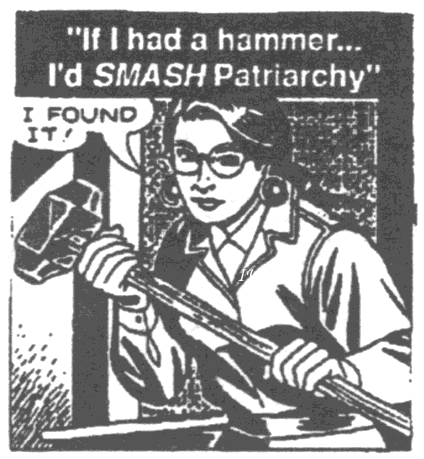
So, basically what I’m saying here is, fuck the patriarchy, and fuck this anti-woman bullshit. A woman can like whatever she wants, can wear whatever she wants, etc. By believing that they should avoid certain cultural phenomena just because it’s perceived as being young or girlish, Schoeneman and Onstad are missing out on a lot of good stuff. By telling us that we should avoid these things as well, they are attempting to create an even narrower definition of how we, as women, should behave. And believing that the way forward is to put limits on what a woman can like, say, or do is, like, the least feminist thing ever.

So there.

“Hi, it’s me, Tavi. I am way cooler than you. I mean, in case you were wondering.”