Tag Archives: women

An International Women’s Day Alphabet

8 Mar

A is for Austen, the Regency hellion

B is for Boudica, who raised a rebellion

C is Cleopatra, fierce Queen of the Nile

D is Diana, whose voice does beguile

E is for Ella, breaking down barriers

F is for Franklin, who made DNA merrier

G is Gloriana, anything but conventional

H is for hooks (lower case is intentional)

I is Isadora, who loved modern dance

J is Jo March, who wrote and wore pants

K is for Kennedy, who understood duty

L is Lamarr, who mixed science with beauty

M is MacPhail, political and proud

N is for Nellie, strident and loud

O is for Olave, keen about guiding

P is for Parker, whose wit was so biting

Q is Quvenzhané, who lights up the screen

R is for Rosa, who sat like a queen

S is Suu Kyi, the political prisoner

T is for Tubman, slavery abolitioner

U is Uhura, who kicked ass in space,

V is Victoria, who kept a stern face

W is Wollstonecraft, vindicator of rights

X is Xiang Jingyu, who fought the good fight

Y is Yousafzai, who refused to be rattled

Z is Zoë Washburne, ready for battle

We Can All Do It by Soirart

We Can All Do It by Soirart

On Race and Feminism

3 Mar

In the online fallout of The Onion’s vile tweet about Quvenzhané Wallis, one fact has become abundantly, dismayingly clear:

White feminists have a hard time talking about race.

And we have a hard time talking about the fact that we have a hard time talking about race.

Jessica Luther has a fantastic post up over on Shakesville about the lack of white feminists decrying what happened to Quvenzhané. And while I think that what she wrote is perfect and spot on and everyone should go read it right now, what I find truly fascinating is the weird backlash that she’s received from other white feminists.

It was the same backlash I saw on Twitter the other day when @graceishuman called out white feminists for not defending Quvenzhané.

That backlash? A whole bunch of white feminists explaining why they, personally, chose not to write about it. And I’m sure that they had some spectacularly good reasons (I’m not even being sarcastic), but that’s not what this about. Not by a long shot.

I have actually never seen so many people miss the point of something all at the same time.

What this is about is the lack of intersectionality in feminism. Specifically, it’s about the fact the women of colour do not feel that they are represented or heard within the feminist movement. As Kirsten West Savali wrote for Clutch, it can feel like the feminist movement encourages women of colour to,

” … shrug off our Blackness for the greater feminist good; the end result being a contemporary plantation tableau defined by Ole Miss and Mammie slaying the patriarchal dragon while the issues of racism and classism are hidden behind the veil of  “progress.”  And while this scenario is about as feel-good as The Help, expanding white privilege — feminist or otherwise — is not equality.”

So how the fuck did it ever get to this?

Is it because we (white feminists) feel that racism is an entirely separate issue from feminism? 

Most white feminists that I know would answer that no, of course it’s not, in the same way that homophobia, fatphobia and transphobia are not separate issues either. They would readily admit that women of colour experience misogyny in ways that white women do not. They would say that of course they care about racism.

But these same women, in their own writing, mainly stick to topics that specifically affect them or women like them. They very rarely address issues that are faced only (or mostly) by women of colour. They almost never talk about racism within the feminist movement. Which is funny, considering the racist history of our movement; shouldn’t this be something that we still talk about, all the time?

Is it because we worry that we’ll be co-opting women of colour when we speak out against something like what happened to Quvenzhané? Is it because we’re worried about making a misstep, about somehow accidentally being racist in our fight against racism? 

I would wager that the answer to this is yes, yes and yes. I’ve heard this same argument from several women as explanation of why they didn’t speak out against The Onion, or why they primarily focussed on the misogynist aspect of The Onion’s tweet and not the racist aspect. White feminists mentioned again and a again that they felt that women of colour should take the lead in this discussion, the rationalization being that white women speaking for others’ experiences was, in itself, a racist act.

And yeah, I guess if you’re a white feminist speaking for women of colour, that’s racist, but that doesn’t mean that you can’t call out racism when you see it. Like, fuck, I don’t want men speaking for me, but I sure as hell do want them to stand up against sexism. We complain so often about having to educate men with regards to feminism, and yet we (white feminists) do so little to educate ourselves when it comes to racial issues.

We make comments like, Well, I don’t even know what to call them, like do you say black or Black or women of colour or Women of Colour or minority or non-white or what? I don’t want to accidentally say the wrong thing.

We make comments like, They can write about the issues they face, and I can write about the issues I face. What’s wrong with that?

We make comments like, I thought we were all in this together.

For a group of people who are so hell-bent on (rightfully) pointing out male privilege, we sure as hell don’t like to be reminded of our white privilege, do we?

Which brings me to my next point …

Is it because we don’t want to admit that, as white women, while we do face a lot of overt and insidiously subtle misogyny in our day-to-day life, we face less barriers than women of colour do?

Privilege is comfortable. Privilege is easy. Privilege is invisible and difficult to quantify, facts that make us comfortable ignoring the fact that we benefit from it.

Privilege lead to write a post the other day that I felt was clever and insightful but, as others pointed out, was in several ways flawed and problematic.

I have a lot of privilege, white privilege, cis-privilege, thin-privilege, but it’s easier for me to talk about the privilege that I don’t have. I suspect that the same is true for many other women.

Being reminded of privilege makes people defensive – especially when those same people are complaining about the oppression that they face as women. There’s a tendency within feminism to want to gloss over racial issues and say, Well, first let’s fight against the problems that ALL women face, and THEN we can talk about racism, and I think that feels okay to a lot of us because in a fucked up way it feels like equality. In reality, though, it’s not equality at all – it’s asking women of colour to do work that will especially benefit white women, and then having those white women turn around and refuse to address the additional challenges faced by non-white women.

I think that another issue at play is that it can be hard to view yourself as both the oppressed and the oppressor. But the fact is that we do participate in the oppression of others, and our reluctance to examine that is pretty fucked up. Like, white feminists are perfectly articulate about how privilege works when they’re talking about male privilege, but they seem to plead ignorance pretty quickly when they’re reminded of the privilege that’s associated with their skin tone.

So what do we do about all of this?

Well, first of all, we fucking sit up and pay attention when women of colour tell us that they feel that we dropped the ball on this one. Because you know what?

A) They know what they’re talking about, and

B) They’re right

And then, after we admit that we fucked up, we talk about it. We talk about race until we’re blue in the face. Because pretending that this isn’t happening isn’t doing anyone any favours, and continuing to ignore the racial issues within the feminist movement is only going to serve to further divide us.

Finally, we need to change how things are structured in order to see real equality. We need to give more platforms to women of colour. We need to be more willing to listen to what they have to say. We need to be willing to be called out on our racism. Most of all, though, we need to let women of colour lead the way and let THEM tell us what they want and need in order to do that.

Because reaching down and giving a boost to someone who has less privilege than you do is what real fucking equality looks like.

And to those of you who aren’t interested in doing that, I would ask that you please stop using the word equality. You’re not interested in equality; you’re only interested in benefitting yourself.

I don’t want to just benefit myself. I want my actions to benefit everyone. And right now, I especially want my actions to benefit this kid:

Quvenzhane-wallis-beasts

It’s Okay To Feel Weird About Your Pregnant Body

23 Feb

Dear Fug Girls,

I like you. I like you a lot. I’ve been reading your site for, like, probably ten years now. I remember the days when Jessica wrote X-Files recaps for Television Without Pity (and those were some good days!). So, suffice to say I’m a pretty big fan.

And, as a fan, I want to tell you that what you wrote yesterday about Kim Kardashian wasn’t cool. Like, really not cool.

I get that hearing women talking about their weight can be stressful, maybe even triggering, and that one of the ways to deal with that is through humour, but I don’t think that it’s ever okay to make fun of a woman for being uncomfortable about her body. Because you know what? Everything in the freaking world is conspiring to make her feel uncomfortable about her body, and mocking her is not helping.

Look, pregnancy sucks. I mean, in some ways it’s kinda neat, but in a lot of ways it sucks big time. Your body, which has probably remained fairly static for most of your adult life, is suddenly taken over by a parasite and starts expanding in all kinds of weird ways. And suddenly, it’s not your body anymore. I mean, it is, but it’s totally unfamiliar to you, and also its housing a weird tiny thing that kicks and squirms a bunch. I spent a lot of my pregnancy feeling like the dude in Alien, to be honest, although thankfully I gave birth to an actual human being who was surgically removed from my abdomen rather than bursting out in a totally badass, metal way.

Anyway, what I’m trying to get at here is that even though I’m a thin woman, and even though my pregnancy weight looked perfectly fine on me, I still felt uncomfortable gaining weight. And I am not someone whose appearance is routinely picked apart by tabloids. I am not someone who felt obligated to prove that she’s “bikini ready” at six weeks postpartum. So if pregnancy made me feel weird about my body, I can only imagine how hard this must be for Kim Kardashian.

I’ll be honest: I don’t know a whole lot about Kim. I know that she’s with Kanye West, and I know that she’s done a bunch of reality shows, and I know that people love to hate her. I know that people like to make comments about how she’s famous for “nothing” (which is a hilarious criticism, because if anyone offered to let me be famous for nothing, I’d be like, “sign me up, bro” – who wouldn’t want to get tons of money for doing nothing?), although the number of times I see her out promoting stuff make me have a hard time believing that she really does nothing. I know that she’s a woman of colour who’s got hips and boobs, and I know that she’s already endured tons of criticism about her size from the media, long before she ever got pregnant. I know that she’s a woman, and as such she’s going to be scrutinized and mocked and ridiculed far more than her male counterparts.

At the end of the day, I’m just not really interested in shaming anyone for their feelings. Especially when those feelings have totally valid roots in the way our media and culture treat women. If Kim Kardashian wants to talk about how gaining weight while pregnant is upsetting, then more power to her. I’ll be happy to tell her a thousand times that she looks fantastic no matter what. Because there’s absolutely no good that can come from telling someone that their feelings are wrong, or bad, or stupid.

Anyway, that’s all I’ve got. I hope you guys will consider this the next time you post about someone’s weight gain. I mean, as much as I know that making fun of the way people dress is your gig (and usually it’s a pretty funny gig!), maybe you’ll be able to be a bit more empathetic the next time something like this comes up.

Sincerely,

Annabelle

p.s. The pants were pretty ugly, though, I’ll give you that

p.p.s. Say hi to the Mulder and Scully action figures for me! I hope they’re locked in an eternal embrace now that they’re retired from TWOP

p.p.p.s. I kinda hope these crazy kids make it, not gonna lie

kim-kardashian-kanye-west


ETA: Go Fug Yourself put an addendum on their post, which is pretty awesome:

** I may need to clarify that I am not trying to say that pregnant women can’t be thrown off by the changes in their bodies. But there is a difference between that and denial. To me, wearing those pants doesn’t say, “I am feeling awkward about my changing form.” Rather, that garment, to me, is a fingers-in-ears scream of, “LA LA LA NOTHING IS
CHANGING AT ALL.” My point was, don’t let denial get in the way of biological necessity — and also, those trousers are odious. But the former is dipping into armchair psychoanalysis, so I apologize if I overstepped…

Sylvia

11 Feb

Today marks the 50th anniversary of Sylvia Plath’s death.

Is this something that people do? Celebrate the anniversary of someone’s death? Certainly celebrate is the wrong word – mark is probably better, or even observe.

Today I am observing the 50th anniversary of Sylvia Plath’s death.

It’s no secret that I love Sylvia. I mean, I named my blog after her only novel (actually, I named it after what I would have called my all-girl rock band if I’d had one, but the band was named after the novel, so really it all amounts to the same thing). I’ve read everything she’s ever written. I have a weird sort of embroidered picture of her hanging on my dining room wall.

I’ve even joked about being her reincarnation. I mean, there are a few similarities between us, right?

We’re both depressed, oversharing lady-writers, for one thing. We both come from families whose finances went into decline at some point during our childhoods. Her father died when she was eight; mine left when I was thirteen. Of course you can’t compare death to a divorce, but I think it would be fair to say that those events left us both dealing with what are colloquially referred to as “daddy issues.”

Oh, and my son shares a birthday with her son Nicholas. So there’s that, too.

Of course, this is basically where the similarities end. Sylvia worked hard throughout high school and ended up attending Smith College on a full scholarship. She then went on to receive a Fullbright Scholarship to Newnham College, Cambridge. Meanwhile, I burned out early in high school, too tired and sad and stupid to get my shit together, and went from being an honour roll student in grade nine to receiving mostly Cs and Ds in my final year. I did get into Dalhousie University (though just how I managed that, I’m still not sure), and while there had all As and Bs, but still, I was never the academic star that Sylvia was.

Sylvia published her first poem when she was eight, and went on to publish several poems and short stories before she finished university. One of her stories, Sunday At The Mintons, won her a coveted spot as a guest editor at Mademoiselle magazine in New York.

I published my first poems and short stories, well, never, and I can’t even properly edit my own stupid blog, let alone a whole magazine. I’ve also never been to New York, although I have watched a lot of Friends and Mad Men, which is basically the same thing, right?

I guess that, all in all, Sylvia and I aren’t much alike, at least not on the surface. But when I read her writing, I feel that, as The Bell Jar‘s Esther Greenwood says about her friend Doreen, everything she writes is like a secret voice speaking straight out of my own bones.

I get Sylvia Plath. I mean, I get her. I get her dark, sad, humour, and I get her anxieties, and I get her hopelessness. Up until now, I’ve used her as a sort of guide in the darkness, reading and re-reading my well-thumbed copies of her books, looking for passages that will get me through my fits of sadness. A paragraph here, a stanza there, a kind of spiritual sustenance to tide me over until things get better. For most of my adult life, I’ve looked up to her.

But then, for all of my life until now, she’s been older than me. Wiser, hopefully. Maybe even more mature.

What do I do now that I’m about to out-age her? She’ll be thirty years old forever, but I’ll only be thirty for a few more months.

How do I continue to look up to someone who will soon be younger than me? Will I still love her writing in 10 years’ time? In 20? Will I look back someday and, instead of finding inspiration in her words, discover that all along she’s been a boring, self-obsessed, talentless hack?

What happens when you outgrow the people you admire the most? Probably nothing. Probably it’s normal.

But in a strange way I feel that by letting go of Sylvia and moving on, I’ll be abandoning her. In a funny way, I feel that she needs me, as much as I need her.

I’ve been thinking a lot about her last few weeks alive. Not much is known about what was going through her mind, since Ted Hughes burned her last journal, but we do have a handful of poems dating from late January and early February and, of course, a few firsthand accounts.

We know that the quality of her poems changed in those last weeks, becoming less about the self, their mood more disembodied, alien. We know that her incandescent poetic rage, that rage that has made her so famous, had begun to fade in her works, replaced by a sort of resigned hopelessness. We know that she worked feverishly, producing poem after poem, trying to translate her tangled thoughts into perfectly-ordered words.

We know that Sylvia went to her doctor and told him that she felt as if she was heading for a breakdown. We know that she began taking antidepressants and sleeping pills. We know that she reached out to her friends, Jillian and Gerry Becker,  for help and a place to stay. We know that several days before she died, her doctor began trying (unsuccessfully) to find her a spot in the hospital.

Each night that she stayed with the Beckers, Sylvia would take her sleeping pills and recite a sort of monologue about all of the people who had wronged her, all the men, beginning with her father, who had deserted her, and how utterly miserable she was. She would go on and on, ignoring any questions that Jillian put to her, as if she was in a trance. Eventually she would pass out.

Having Sylvia stay with them began to be a strain on Jillian – she had to do everything for Sylvia and her children, cleaning, feeding and entertaining them. When Sylvia announced on Sunday, February 10th that she wanted to go home, Jillian didn’t press her to stay. There was supposed to be a nurse coming to help Sylvia the next morning, and besides, surely the doctor would find a hospital bed for her soon. And also, as Jillian said in the article I linked to above, pity tires the heart.

Gerry drove Sylvia home Sunday afternoon, and she wept the whole way there.

That night Sylvia left the window in her children’s room open, and shoved cloths and towels underneath their door. She also placed tape all around the door frame, to stop up the cracks. She then turned the gas taps in her oven on all the way and, placed a little folded cloth in the oven to act as a pillow, and laid down.

She was found the next morning by the nurse and a handyman working on the property who broke into her flat when no one answered the door.

By that point, she’d been dead for several hours.

Her children, though cold from having slept next to an open window in February, were fine.

And pity tires the heart.

I think that there’s a state that you sometimes get into when you’re deeply depressed. You feel as though you’re walking along a sort of knife’s edge between artistic inspiration and suicide. In an instant, all the dead, flat hopelessness you’ve been feeling gives way to an ecstatic misery. You suddenly feel as if you’ve been given a special insight into how the world really is, and you work like mad to get that insight down on paper or on canvas or whatever. And you know that you’re playing a dangerous game, but you also think that it’s worth it.

It’s worth it to go that close to the edge, if there are rare, exotic gifts to bring back.

It’s worth risking death, so that you can tell everyone else what it was like.

It’s worth almost everything, if it means that you’ll write something great.

It’s like circling round and round a black hole, getting a few inches closer each time. You’re discovering all kinds of amazing things that no one has ever known before, but you never imagining that you yourself might be drawn in.

It’s like standing at the edge of a lake of poison, and knowing that the poison, if taken in small enough quantities, will give you brilliance and genius that you’ve only ever dreamed of. The poison, if taken one spoonful at a time, will give you an enormous drive to create. And you want that. Oh, how badly you want that, want all of it.

But even though you know that the poison could kill you, you’re not overly wary of it. You’re that you’ll be able to set limits. You’re confident that you’ll be able to stop when you need to. But after taking one sip, you talk yourself into taking another, and then another. And you feel fine, not sick at all. You drink and drink and drink, and maybe even dive right in.

And it’s not until it’s too late that you realize what a mistake you’ve made.

And maybe there’s no one to save you. Because pity tires the heart.

I am trying so hard not to tire all of your hearts.

Sylvia, I am thinking of you today. I promise that you do not tire my heart.

sylvia_kids

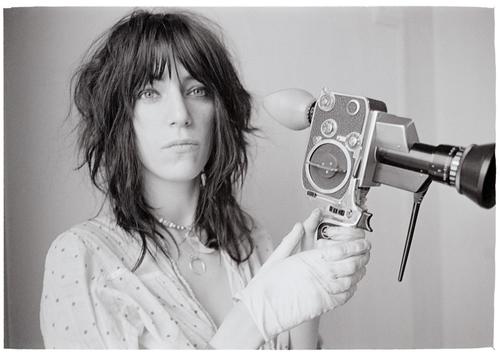
Patti Smith – Camera Solo

6 Feb

When the Art Gallery of Ontario announced that they would be doing a major exhibition of Patti Smith’s photographs, I can’t say that I was overly excited. We’re members there, so I figured that I’d see it eventually, but I wasn’t going to make a special trip for it or anything.

I have to admit that before today, I didn’t know much of Smith beyond her status as the godmother of punk and her seminal 1975 album Horses. Part of my disinterest in her show probably stemmed from the fact that I often don’t trust artists who dabble in other forms of art – actors who put out an album, say, or musicians who try to be novelists. I guess that part of my curmudgeonry is because they don’t have any obligation to be talented in fields other than their own – some label will release David Hasselhoff’s album because he’s David Hasselhoff, not because he’s good. I figured that Patti Smith and her photography had a similar story.

Then today, I scheduled myself two hours of do-something-pleasant time (which is a thing I’m trying to do lately) between 11 and 1. I decided to go down to the AGO, wander through the galleries, and maybe park myself in the members’ lounge (actually several shabby-chic rooms in a Victorian mansion that’s attached to the gallery) and write in my journal. But when I got to the AGO and showed off me membership card and ID to the woman working at the desk, she asked if I’d come to see the members-only preview of Patti Smith’s show. I told her no. She asked me if I wanted to see it. I shrugged and said sure, because I’d already seen just about everything else in the gallery.

Smith’s show was a revelation. After making a tour of the main room, I sat down in one of the comfortable old wooden chairs provided (tastefully arranged on an oriental rug) and started scribbling in my notebook. The first words that I wrote were, “miniature & melancholy & perfect,” which seem like an accurate way of summing up how I felt.

The exhibition is made up of approximately 70 photographs taken with Smith’s vintage Polaroid camera, presented there as gelatin prints, as well as a handful of personal objects, and Equation Daumal, a film Smith directed which was shot on 16mm using Super 8 film.

The room is bare and white, with the rug and chairs occupying the floor space along with a large piece of artwork constructed by Smith. The photographs that line the walls are tiny (as you imagine vintage Polaroids would be) and are displayed in groups of four or five, sometimes with cases full of related objects underneath.

Some of the photographs are self-portraits. Some are of Smith’s children. Most of them, though, can be summed up by this quote by Smith, which is posted on one of the walls:

I have a strong relationship with the dead, even a happy one. I get pleasure out of having their things and sometimes photographing them.

Some of the dead are people she knew – Robert Mapplethorpe, for example, the well-known photographer and her one-time partner who died of AIDS in the late 1980s. Most of the photographs, however, are of people who inspired her and the various objects they owned.

There’s Herman Hesse’s typewriter. The river Ouse where Virginia Woolfe drowned herself, her pockets full of stones. A stuffed bear belonging to Tolstoy that served to hold calling cards in its outstretched hands. A funeral wreath. William Blake’s grave. Nureyev’s ballet slippers. Virginia Woolfe’s bed. Victor Hugo’s bed. Frida Kahlo’s bed. So many photographs of beds belonging to dead, famous people.

Why beds? I wondered, then realized all the various uses we put them to.

Beds are places where we sleep, yes, and also dream. We fuck in beds. We eat, read, maybe write in bed. Beds are places where we fight with the people we love the most; beds are places where we make up those fights, with whispered reconciliations, skin brushing against soft skin. Sick days are spent in bed, sleeping, Facebooking or watching old movies. Nearly all of us are born in a bed; many of us will die in one, too. Beds are equally places of pleasure and pain, but even more than that, they’re places of transition. Beds are where we make our way in and out of this world, making them a sort symbolic doorway or portal.

There are objects in Smith’s collection, too. Her father’s chipped white bone china mug, a cross that belonged to Mapplethorpe, and a sort of totem Smith made for Brian Jones. There’s a pair of slippers belonging to Pope Benedict XV, the man who canonized Joan of Arc. There’s a stone from the river Ouse.

There’s an entire section devoted to Arthur Rimbaud, photographs of his bed, the path near his house, his grave. There are drawings that Smith has done of Rimbaud, black lines with a few dabs of colour. The large object in the middle of the room is a reconstruction she’s done of the litter Rimbaud designed to carry him 100 miles across Ethiopia, to a place where he could seek medical treatment after falling ill in the jungle.

As I walked around the room, I thought, yes. Yes. I live here. Here, in this grainy black and white land between living and death. I know the holiness that surrounds the grave of a painter or poet that you love. I know the happiness of holding an object that someone I love once cupped in their hands. I know this place. I live here.

The whole exhibit was a sort of communion with the dead. It was about the ways we connect with those we’ve loved and lost, through sight, through touch. It was a reminder that love still exists, even after death. And what do you do with all that leftover love, the heart-searing shit that’s left behind when you lose someone you care about? What do you do with the love you have for a poet or painter or musician who has greatly inspired you but died long before you were born?

You channel it into something, even someone else, I suppose. You put it into your own art, or your work, whatever it is, or into your children or your lovers or your friends. Or else maybe you waste it, let it drain out of you, use it to feed your loneliness.

I’ve been thinking all afternoon of the things that I have that once belonged to people who are now dead. My names, for a start – Annie, after my great-grandfather’s sister who died of tuberculosis when she was 16, and Rebecca, from my mother’s beloved Nana Kelley. I have a scarf that belonged to my Grampy, an old wool plaid affair that’s looking rather moth-eaten these days. I have my grandmother’s father’s Latin grammar book. I have a photograph of my Poppa in his RCAF uniform from when he served in WWII. I have a letter that my father’s grandmother sent to my mother when she was pregnant with me, a note that has my great-grandmother’s name, the date and “Halifax City” written neatly in the upper right-hand corner.

I have things that belonged to people I’ve never known, too . A blue vintage dress printed with purple and orange flowers. An American 1st edition of Camus’ The Outsider. My antique engagement ring. I have all the words of the dead that line the walls of my living room, shelf upon shelf of well-loved books. I am surrounded by the dead.

I still feel breathless, almost light-headed, even several hours after seeing the exhibit. I wish that I had sufficient words to explain how it affected me, but every sentence in this post, though carefully and meticulously constructed, somehow seems flat and emotionless.

I can tell you this: it was lovely. You should see it. And then you should sit down, and think of your beloved dead.

Patti+Smith+beautiful+with+camera

I Am At Least Three Times As Ugly As Jessica Valenti

15 Jan

Today the website Return Of Kings (which I had never heard of, but I’m sure is super important and relevant) published their list of The 9 Ugliest Feminists in America.

My first thought was: What, they couldn’t find one more ugly feminist in order to round it out to an even ten?

My second thought was: I wonder which pictures of me they chose for their post?

Everyone knows that I am at least the third ugliest feminist in North America.

For example, I am way uglier than Jessica Valenti. Like, this is your ugly picture of her?

jessica-3

Bitch, please.

You want ugly? Let me show you ugly.

ugly

Hey, at least my kid is cute, right?

Science has proven that I am at least three times as ugly as Jessica Valenti. Here is a graph demonstrating our comparative ugliness:

flowchart


You know that there is some real fucking science involved when there is a GRAPH. Science is awesome.

Imagine my surprise and embarrassment, then, when I realized that I’d been overlooked for this, the definitive list of ugly feminists. Me. The one with the bad skin, hooked nose and squinty eyes. The one who was voted ugliest in class by a group of 12 year old girls. The one who is eternally on the receiving end of remarks like, well, at least you’re smart.

All right, all right, I know what you’re probably thinking.

“But Annabelle,” you might say, “These women are all famous feminists. Sure, you’ve had a few posts go viral, but you’re nowhere on the same level of recognition as, say, Hanna Rosin.”

And you know what? That would be a fair criticism to make if this was a list of the  nine ugliest famous feminists in America. But it’s not. It’s just a list of the nine ugliest feminists. And I am deeply, deeply hurt that I wasn’t included. Because, seriously, what is my point in life if I’m not grossing out the men’s rights activists with my Medusa-like face?

So, come on, Return of Kings, let me know what I can do to put myself in the running for next year’s list. Should I gain weight? You seem pretty fatphobic, so that could be a winning strategy. Should I lose weight? That might seem strange to some, but I think that if I could get to the point where men consider me “scary skinny” (as the tabloids say), I might have an advantage over more average-sized women. Should I wear more makeup and have you accuse me of looking like a whore? Or should I wear no makeup  and let you mock my face as-is? Should I dress badly so that you can make fun of my fashion sense? Or should I dress well so that you can laugh and laugh about how those silly feminists want to be taken seriously and look good?

Come on, guys, throw a girl a bone here!

In all seriousness, though, the funniest thing about your whole post isn’t your pathetic attempt at making “she’s-so-ugly” jokes – it’s the fact that you seem to think that any of these women care about whether you find them attractive or not. Sadly, most of them don’t even know you exist. They write off your comments and tweets and posts as trolling, and, honestly, don’t even give you a second thought. Sorry. I know the truth hurts. Someone has to say it, though, right?

But hey, I gotta thank you for helping me show that feminism is still relevant and necessary. Because as long as there are still douchebags like you out there publishing crap like this, it’s easy to prove why we still need to fight for women’s rights and equality. Your list has actually done more to help the feminist movement than hurt it. So please, keep on posting stuff like this and making my job easier.

Seriously, though, don’t forget me in 2014!!!

Idle No More

26 Dec

Last night, as we sat down to Christmas dinner, my mother’s dining room table practically groaning under the weight of all the food, I couldn’t help but think of Chief Theresa Spence, who is now on the 14th day of her hunger strike. As I piled my plate high with turkey, stuffing, potatoes and turnips, as the members of my family bowed their heads for grace and then raised their glasses in a toast, I thought of the woman who, only 100 miles away in Ottawa, was willing to die for her people.

Today, as others are rushing out to buy cheap goods in a glut of mass consumerism, I’m reminded of how very much so many of us already have, while others have so little.

Theresa Spence is the chief of the troubled Attawapiskat First Nation, a Cree community near James Bay, which drew media attention earlier this year due to its ongoing housing crisis. Residents in Attawapiskat, and many other First Nations communities, face a shortage of funding when it comes to, well, just about everything, but the situation is especially dire with regards to housing and education. Late 2011 found families in Attawapiskat, including young children, living in uninsulated tents; some of those who were lucky enough to have more adequate housing still lacked basic necessities like running water, and were using buckets for toilets. Although the crisis in Attawapiskat drew significant media attention, it seems that little there has changed over the course of the year.

Chief Spence’s hunger strike and the Idle No More movement it helped spark aren’t just about the subhuman living conditions in Attwapiskat and other reserves, though. It’s not just about the dire conditions found on so many First Nations reserves across the country. It’s not just about Bill C-45, which was passed earlier this year and both reduces the federal protection for Canadian waterways and also facilitates the government selling of reserve lands without consultation. Yes, it’s part of the fight against all those injustices, but it’s also about so much more.

It’s about the fact that our government has continued to ignore or downplay the rights and needs of this country’s Indigenous Peoples.

It’s about the fact that a small group of powerful, mostly white people still insist that they know what’s best for the diverse and culturally rich Canadian First Nations, even though history has proved time and time again that they don’t.

It’s about the fact that Prime Minister Stephen Harper publicly apologized in 2008 for the Canadian residential school system, which forced countless Indigenous children from their homes and into schools where they were beaten, sexually abused and grossly mistreated, and actually promised to help forge a “new relationship” with the First Nations based on “partnership” and “respect”, and yet refuses to meet with Chief Spence.

It’s about the fact that the next year, at the 2009 G20 summit, Harper said that Canada had “no history of colonialism.”

It’s about the fact that in the years since Harper promised to improve relations with First Nations peoples, he has instead cut aboriginal health funding, and his government sent body bags to a Manitoba reserve after its leaders requested federal assistance in dealing with an outbreak of swine flu.

It’s about the fact that over 600 Aboriginal women are missing, and no one seems to give a shit.

It’s about the fact that the Indian Act is so fucking oppressive that I don’t even know where to start. For one thing, a First Nation can only be “formed” and formally recognized by the crown if the Minister of Indian Affairs approves it, even if that nation and its people have existed since long before white settlers came to North America. For another, First Nations peoples have very little control over reserve land, and the Minister must approve any land sales or transfers. Not only that, but First Nations people need to seek government approval for selling or bartering any crops, livestock and other products grown, reared or cultivated on reserve lands; any First Nations person failing to do so will be guilty of an offence. Reserve lands, including roads, bridges and fences, must be maintained by the Band Council, and if the Minister decides that they’re not doing an adequate job, he can order them to make repairs, and any money for those repairs must come from the Band Council. Oh, and if you’re an Indigenous Person, you’d better hope that the government doesn’t declare you to be “mentally incompetent”, as that means that the Minister can force you to sell, lease or mortgage your land as he sees fit. Even a dead Indigenous person isn’t safe from the Minister; no wills drawn up on reserve lands are considered legally valid until the Minister approves them.

Like, what in the actual fuck? Other Canadians don’t have to live this way, and if they did, there would be a fucking revolution. Why are we okay with our government treating the First Nations this way? Even worse, why do people make remarks about Indigenous Peoples wanting special treatment, sneering at things like government-funded post-secondary education and exemption from paying certain taxes. To anyone privileged enough to make comments like that, I have only this to say: you fucking try living through a Northern Ontario winter in an uninsulated tent, shitting and pissing in a bucket and knowing that the government maintains control over nearly every aspect of your lives but pretty much refuses to lift a finger to help you, and then come talk to me about special treatment.

Chief Theresa Spence’s demands are simple: she wants to meet with the Prime Minister and the Governor General. She wants to sit down with them and discuss the plight of Canada’s Indigenous Peoples. She has said that, should Harper refuse her request, she will die for her people.

Harper won’t meet with Spence. Instead, as Spence starves herself in a teepee near the Parliament buildings in Ottawa, he’s enjoying Christmas with his family in Calgary, and composing hilarious tweets about bacon.

Rather than engaging Spence himself, Harper has deputized his Minister of Indian Affairs, John Duncan, to meet with her. Duncan, in turn, has publicly decried Spence for refusing to meet with him, and has urged her to end her hunger strike, out of “concern” for her health. As if it’s not offensive to Indigenous Canadians to say that our Prime Minister is so busy and important that he has to pawn them off to the ministry that has been specially created to deal with them. As if there’s nothing inappropriate about a white man to telling a First Nations woman how to behave or what to do with her body.

Look, I’m not a member of the First Nations. I’m a product of colonialism, descended from settlers who came here from France in 1645. I’m as white as they come. But that doesn’t mean that this isn’t my fight. This should be every Canadian’s fight. The treatment of the First Nations peoples should matter to everyone, no matter what the colour of their skin; this is a case of human rights, not just Aboriginal rights. We all need to take action on this issue.

At the end of the day, we all share the same country. And we need to make this a country that treats all of its citizens with dignity and respect, not just its white citizens, not just its privileged citizens. Other countries view Canada as a fair, peaceful nation where all people have the same rights and privileges – we as Canadians need to start living up to that reputation.

The Canadian First Nations have spent more than a century waiting for things to improve, waiting for better treatment at the hands of the government and hoping that every new promise made by each successive Prime Minister would prove to be more substantial than the empty talk of all the ones that came before. The time to wait is over; now it’s time to stand up and fight back.

Thank you, Chief Theresa Spence, for being so brave, braver than I could ever be. I stand in solidarity with you.

Attawapiskat Chief Theresa Spence

Attawapiskat Chief Theresa Spence

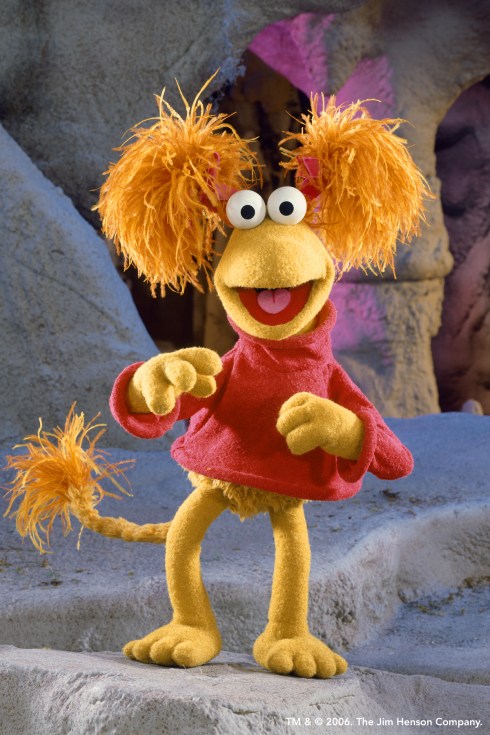
Red Fraggle is a Feminist Icon

13 Dec

It wasn’t until I learned that I was pregnant with Theo that I suddenly realized how very little I knew about, well, babies. I mean, in theory they’re great, but in practice they’re kind of terrifying. Like, I was going to be responsible for what now? I could barely even take care of myself, never mind another person, and one who was tiny, helpless and incontinent at that.

Being the book-o-phile that I am, my solution was to immediately run out and buy a ton of books about pregnancy, childbirth and parenting. I also went online and joined a bunch of mommy communities, which were, um, interesting. After sifting through all of the information available to us, Matt and I began to try to come up with the Best Plan Possible for raising our kid. Because, you know, that’s totally a thing that’s going to work out.

Babies just love plans, and are definitely going to turn out exactly the way you want them to.

Sorry, I’ll wait until your done laughing your fool head off before I continue.

One of the things that Matt and I decided was that we were going to follow the AAP’s guidelines and not expose our children to any television under the age of two. That wouldn’t be overly challenging, we figured; after all, we barely watched television ourselves, and surely it would be easy to watch what little we did after our bundle of joy went to bed. Anyway, we thought, what benefit was there in letting our children watch television? Especially when the world around them was so fascinating? Surely we would be happy to engage and entertain our children at all times. Surely we would never, ever want a short, say, half-hour break from them.

Of course, one of the first things you do when you become a parent is break all of your own rules. You quickly learn that there aren’t very many hard and fast rules, and the few that do exist weren’t created by you. Sure, it’s great to be consistent and back your words up with actions, but when you become a parent you learn how valuable flexibility can be. It’s easy to be an expert on childrearing when it’s all still theoretical; once you have an actual, physical, screaming baby, it’s often advantageous to revisit your policies and re-evaluate what your priorities are.

All of this is to say that we totally caved on the no TV thing.

When Theo was fourteen or fifteen months old, we started watching short YouTube clips of Fraggle Rock at bedtime. It was nice to spend 10 minutes every evening curled up together on our big bed, watching nostalgic television by lamplight. Afterwards, we would talk about what we’d just watched, and then I would nurse Theo to sleep. It was a pretty great way to end the day.

In the course of revisiting one of my favourite childhood shows, I realized something: Fraggle Rock was pretty fucking progressive with regards to gender roles.

I also realized that Red Fraggle was probably my first real feminist icon.

When it came to strong female role models, I was actually a pretty lucky kid. I had my mother, who was and continues to be a kick-ass inspiration, a woman who always worked outside the house, raised three kids on her own after my father left, and recently purchased her first home after spending year and years saving up for a downpayment. I had my grandmother, a women who also worked outside the home for her entire adult life, and who once took her employer to court because he wouldn’t allow women to wear pants in the workplace. I had my aunt, an Egyptologist who travelled to the Middle East for archeological digs. I had my great-aunt who, as a missionary to Niger in the 1960s, dedicated her life to educating girls. I definitely wasn’t lacking for real-life women to look up to and be inspired by.

But I wasn’t able to relate to those women and their accomplishments in the same way that I could relate to an adorable red-headed muppet who was about the same size I was and dealt with a lot of the same issues I did.

Red Fraggle is just awesome. She’s smart, funny, opinionated, competitive and likes to be in charge. She speaks her mind, like, frequently, and the other Fraggles almost always listen to what she has to say (even if they don’t ultimately agree with her). She’s adventurous, athletic and generally pretty fearless. She doesn’t wear pink (except for her hair ribbons). Oh, and she’s sarcastic. So delightfully sarcastic.

She also has some of the best lines spoken by a female character in a children’s show, like, ever. The following is from season one, episode fifteen, ‘I Don’t Care’:

Red: Hey Mokey! They gave me somebody else’s lines for this scene!

Mokey; Uh, let’s see, you say, I know my prince will come and rescue me.

Red: Who needs a prince? I can rescue me!

Mokey: And then you say, hark, I think I hear the hoofbeats of his fiery charger.

Red: Oh good grief.

[a brief interlude of dialogue between Mokey and Boober]

Red: But I don’t have to be rescued, Mokey! I can climb on this trellis! Better yet, I’ll swing on this vine. Why don’t we call it the Tale of the Triumphant Princess?

What’s great is that Red has no issue being a princess, she just wants to be a princess who can take care of herself. She’s totally fine with being feminine and girly, but she doesn’t want to have to rely on anyone else. Instead of waiting around to be rescued, she wants to take charge of her own destiny – a pretty admirable trait.

Red challenges traditional gender roles, both openly and tacitly. One of the best things about Fraggle Rock is that the other characters are totally fine with her behaviour. Sure, she can be abrasive and obnoxious at times, and yeah, she has a hard time admitting when she’s wrong, but these aren’t presented as being character flaws because she’s female; they’re presented as being negative traits because of the impact they have on herself and other people.

Oh, and in case you were wondering, Red is the best swimmer in Fraggle Rock. Better than any of the boys, even.

The neat thing about this show is that it’s not just Red who challenges gender roles; it’s Boober and Wembley too. It’s presented as being totally fine for Boober, a male Fraggle, to prefer to stay home all day washing socks and cooking. It’s also fine for Wembley to “wemble”, i.e. waiver with indecisiveness. That last one is especially interesting because a lot of Wembley’s “wembling” comes from a place of not wanting to pick sides when his friends argue and, ultimately, not wanting to hurt anyone’s feelings. It’s pretty rare for a male character to be shown as being so openly emotional. Rare, but awesome.

Mokey and Gobo, the two remaining Fraggles in the main cast of characters, are more typical of their genders: Mokey, a wispy poet who wears long flowing robes and speaks in a vague, dreamy voice is the sort of den mother of Fraggle Rock, and Gobo, bold, adventurous and a natural leader, spends his days exploring the rock and coming up with escapades for his friends. They participate in breaking down gender barriers, though, by letting their friends be who they are and encouraging them to do the things they love. They never ask Red, Boober or Wembley to behave in a certain way because of their gender; they only ask that each of them treats the others with respect.

Anyway, I guess it’s clear that we’ve totally, unapologetically broken our rules about television. We still don’t watch much of it; mostly just Fraggle Rock and Mister Dressup (okay, and sometimes Jay-Z videos, but only because Theo specifically asks for them). Children’s television, especially newer shows, are still pretty much a foreign country to me, one that I’m sure I will someday have to explore. Until then, I’m happy with my Fraggles and the lessons they’re teaching my son. For example, swimming before breakfast is great, music and dancing are a necessity, and boys and girls are totally, happily equal.

Sounds like utopia to me.

Red

“I’d Rather Risk Rape Than Quit Partying” – Rape Culture and The Good Men Project

11 Dec

I’m tired of blogging about rape culture.

No, honestly, I am. It gets exhausting after a while. It wears you down, you know? There’s just so much awfulness, so many rape apologists, and it takes a lot of energy to wade through it, dissect it, call it out and then deal with the backlash.

I’ve diagnosed myself with what Jezebel calls “rape fatigue“, a pretty accurate term for how I feel.

I wasn’t going to blog about anything serious this week. I was going to blog about cute things, funny things. I had a whole post planned out about how Red Fraggle is a feminist icon. It was going to be great, you guys.

And then The Good Men Project published a piece called “I’d Rather Risk Rape Than Quit Partying.”

And, well, here we are.

Let’s deconstruct this article, shall we?

We’ll start with the title:

I’d Rather Risk Rape Than Quit Partying

Let’s be clear: while the author does, later, admit that he would rather be raped than stop partying, that’s not what the bulk of this article is about. What he’s actually saying here is that he would rather risk raping someone than stop partying.

You might need a moment to digest that sentiment; I know I did.

Next, we have a caveat from the editors:

We at the Good Men Project do not endorse or support the author’s worldview, but it does speak to a very common experience that is often taken for granted and rarely talked about, except in vague and theoretical terms. We thank the author for being willing to speak openly about it, and share his struggle with his own experiences, though we want to make very clear that we do not agree with his conclusions.

You don’t agree with his conclusions, but you still published it, didn’t you? You’re still giving a voice to someone who is an admitted, unapologetic rapist. Whether or not you “agree with his conclusions”, you are still giving him your support by posting this to your site. You are adding another voice to rape culture.  You are normalizing rape. This is not okay.

Now on to the article itself:

When you party, when you move in party circles, you accept certain tradeoffs.

You accept that you’ll always be the bad guy in after-school specials and sitcoms about teenagers. You’re the bad kid who offers Buffy Summers a beer and gets her almost eaten by a snake demon. You accept that you won’t always be able to piece together everything that happened the next day. You’re forced to enjoy Katy Perry’s “Last Friday Night” not because you like Katy Perry but because you just plain recognize it.

You accept these tradeoffs because they come with amazing times. They come with glowing memories of an intensity entirely beyond the mundane, they come with crazy sex with amazing people, they come with living a few hours at a time in a world where anything, anything at all, can happen. I’ve moved from one party scene to another my whole adult life, because nobody wants to be that creepy old person or that inappropriately young person, but there are always plenty of people who won’t walk away from that incredible sense of liberation and possibility that you only find at the bottom of the bottle and a hot room full of crazy people.

Anonymous Writer is a hipper than me, has cooler friends, and goes to better parties. He’s a bad-ass who has lots of amazing sex and maintains a love-hate relationship with Katy Perry. He can only find “liberation and possibility” while drunk in a room full of strangers. Got it.

I swear to God, it is only after the fact that you start figuring out that one of the tradeoffs you’ve accepted is a certain amount of rape. The way crooked businesses accept paying fines for their infractions as the cost of doing business, you gradually, an inch at a time, realize that some of the stories you’ve heard, some of the stories you’ve lived, didn’t involve what they call good consent nowadays.

Yes, because rape is just a consequence of having a good time. Raping someone is just the price you have to pay in order to party hard like Anonymous Writer does.

And you know what? Lack of consent is lack of consent, no matter whether something happened twenty years ago or yesterday. I don’t care whether they didn’t call it “good consent” back in the dark ages; it’s still rape.

With what I’ve learned as an adult, I’m pretty sure I’m technically a rapist. Technically nothing. One woman told me herself.

Anonymous Writer is a rapist. Got it.

Our encounter was years before—I’d been in a drinking contest and she’d been drinking and flirting with me (yes, actually flirting) all evening.

She was actually flirting! You can take this rapist’s word for it!

As blurry and fucked-up as I was, I read her kiss of congratulation to me as a stronger signal than it was, and with friends hooting and cheering us on, I pressed her up against a wall and… well. Call it rape or call it a particularly harsh third base, I walked away with the impression that it had been consensual, if not really sensible. (She had a boyfriend at the time, but their boundaries were fuzzy.)

He was peer-pressured into pushing her up against a wall, either raping her or going to a “particularly harsh third base” (whatever that even means), but it’s fine because he thought it was consensual. Oh, and because her boundaries with her boyfriend were “fuzzy”. Got it.

Years later, she was in a recovery program—not for alcohol, ironically—and she got in touch with me during the part where she made peace with her past. She wanted to clarify that what had happened between us was without her consent, that it hurt her physically and emotionally, that it was, yes, rape.

Here is one story about a time she was drunk, which totally makes it ironic that she’s not in an alcohol recovery program. Also, being raped was probably her fault because she had substance abuse problems.

Oh, and by the way, she was raped. By Anonymous Writer.

We talk about who is and is not a rapist, like it’s an inextricable part of their identity. “I’m a Libra, a diabetic, and a rapist.” That doesn’t work, though. Evidently I walked around for years as a rapist, totally unaware. Nobody stuck that label on me, I certainly never applied it to myself, even now it only feels like it fits when I’m severely depressed. The label, the crime, simply coalesced for me one day, dragging years of backstory behind it.

Anonymous Writer isn’t a rapist, because he doesn’t feel like one.

I literally could not come up with a better way of summing up how rape culture works than that one, single sentence.

That is the damnable thing. We all cluck our tongues at those evil bastards who force themselves on girls—or guys—who are insensibly passed out. At the same time, we all acknowledge that a glass or two of wine helps pave the way for a lot of good times. And in the trackless, unmappable gray swamps in between, we cough and change the subject.

Consent is not trackless or unmappable. Consent is fucking consent. Deal with it.

In the real world, especially among experienced drinkers, being blackout drunk doesn’t necessarily look like being passed out on the floor, helpless prey for any passing predator. It can look like being drunk, but fully in control. It can look like being passionately excited. It can look like being a great dancer. It can look like being very sexually aggressive.

It’s not just booze, of course. Ecstasy makes everything incredibly tactile and you want to touch everyone. Weed makes some people insatiably horny. I had to fend off a young woman recently who was talking a mile a minute and sliding her hands inside my shirt, I was still together enough to tell she wasn’t all there, on what turned out to be a mixture of acid and cocaine. There is plenty of fun stuff out there, but mostly it’s booze. For the majority of people, it’s going to be drinking they have to watch out for.

If you’re not sure that someone can consent, don’t have sex with them. If someone is drunk and you’re not sure how drunk, don’t have sex with them. If someone is drunk, don’t have sex with them. There. I’ve made it easy for you.

A friend of mine once told me about a girl who he knew for a fact had only had two drinks. He didn’t know she was on prescription medication that amplified those two drinks beyond all measure. He thought she was just very horny when she wouldn’t leave him alone or take “Are you okay?” for an answer. It wasn’t until she kept calling him by the wrong name and couldn’t remember the right one that he realized she was not able to consent, and called a halt to things before they went any further. He says he had to dissuade her from pursuing things further, because she was really into it, apart from not knowing who he was or where she was.

“Can you imagine?” he tells me in horrified tones. “I was almost a rapist.”

How do I tell him that I was in a similar position and made a different call? How do I tell him that I am what he’s terrified he almost was?

Well, I guess Anonymous Writer doesn’t have to, because rape culture! He will never be prosecuted. He will never go to jail. He will never even have to admit under his own name that he’s a rapist.

Here’s the plain, awful fact: people can have more and better sex drunk than they can sober. Some of the best, most fulfilling relationships of my life have started out with joyously drunken sex. I’ve had amazing times, orgies sometimes, where it’s simultaneously true that everyone’s consenting and having fun, and that they wouldn’t be consenting and having fun if they were stone sober.

Here’s a plain, awful fact: Anonymous Writer is a rapist.

Here’s another plain, awful fact: you don’t have to have sex when you’re drunk, even if it feels really great. You don’t have to have orgies where you know that the participants would not be consenting if they were sober. You don’t have to rape, but you do. And then you make excuses for it.

Those aren’t the times that bother me. The ones that bother me are the ones where I got loaded, had some fun with a lady, and then she never wanted to contact me again. Messages go unanswered, social contact is dropped.

It doesn’t bother Anonymous Writer when he rapes someone, as long as they remain friends with him.

There are men, rape-apologist pieces of shit, who will tell you that women cry “rape” every time they have sex they later regret. I carry no brief for those assholes. What eats at me is that there’ve been cases, more than one and less than six, in my life where either explanation would seem plausible. If a woman had consensual sex with a guy because they were both drunk, and later she decided he was a loser and she regretted it, she might refuse to have further contact with him because, hey, awkward. But if a woman was raped by a man who thought she was still capable of consent when she was too far gone, she might refuse to have further contact with him because, hey, rapist.

Except, as far as we know, none of these women (other than the one mentioned above) have cried rape. So there was no need for that sentence. They either refused to answer Anonymous Writer’s calls because they regretted having sex with him, or because they felt violated. This has nothing to do with anyone crying rape.

And, by the way, Anonymous Writer, you did rape.

That’s not the worst part either.

Oh good.

It’s been pointed out to me that I’m using a lot of heteronormative language here, men/me as rapist, women as rape victims, and I honest to God don’t mean to do that. It’s just the linguistic habits I grew up with.

But there have been times I’ve cut off all contact with women after drunkenly fooling around with them, the same criterion that, in reverse, makes me suspect myself of rape.

There have been times of “I regret going to bed with her” and times of “I don’t recall going to bed with her.”

There’s been at least one time I was informed, days after the fact, by multiple eyewitnesses, that I’d had sex with a girl. This came as news to me, and explained a couple messages I’d gotten from her, a girl I generally had no interest in getting involved with.

It must be bad manners to admit to being a rapist and to also say one is a rape survivor, all in one article. I don’t know any set of social mores where that’s okay. I certainly don’t feel like a rape survivor, whatever that’s supposed to feel like. I just can’t quite find a workable standard where I’m one but not the other. I don’t say that as any kind of apology or justification for my actions or my mistakes. I’m just trying to state the facts nobody ever quite wants to state.

So the worst part isn’t that Anonymous Writer raped someone, it’s that he’s not sure whether or not he’s been raped, although he doesn’t feel as if he has been.

That’s the worst part here.

Some might think it’s monstrous of me to keep drinking, keep partying. But I have had so many good, positive, happy experiences because I took a chance and altered my state and connected with someone else sexually, it seems crazy to throw all that away. Do people who’ve been in car accidents give up driving?

Translation: I will continue to knowingly rape women, and here is a shitty metaphor about car accidents to explain why I’ve chosen to do this.

Translation: the conditions that lead to me raping women are too much fun to give up.

Translation: I live in a culture that will continue to forgive and excuse me for every rape I’ve committed.

When I sit down and think about it, it seems like I’ve accepted a certain amount of rape as the cost of doing business, and so have most of the people I know. And that seems like the most sick, fucked-up, broken solution to anything ever. And maybe finding it livable-with condemns us all to hell. I don’t know. I can’t even talk about it under my own name.

Fuck you.

* * *

I want to be thoughtful about this. I know that I should be. I should say that this man clearly has addiction issues and needs help. I should offer him my support, because he is also a rape victim. I should be kind, forgiving, generous. But I can’t. I can’t do any of those things to someone who is an unapologetic rapist, someone who is clear on the fact that he will rape again. Someone who views rape as a “trade-off” for having a good time.

Rape is not something inevitable that happens because you’re partying too hard, because you drink to excess, or because you’re having too much fun. Rape is a choice that this man makes. This man knows that his drinking and partying will lead to having sex with a partner who cannot consent, and yet continues to do so. This man is an unapologetic rapist.

I know that I talk a lot about rape culture, but you guys? This is rape culture right here. It’s articles like these that make men feel better about raping women. It’s articles like these that contribute to victim blaming (if a woman doesn’t want to be raped, she shouldn’t drink so much, right?) It’s articles like these that normalize rape, that make rape seem like a by-product of enjoying oneself, that make rape seem inevitable and uncontrollable.

This is rape culture. This is our culture.

tumblr_l1dvl9euhs1qbxsq7o1_500_large

National Day of Remembrance and Action on Violence Against Women

7 Dec

When I was a kid, my mother had a button that looked exactly like this:

399036_s

I couldn’t find a very large image of this button, but in case you’re wondering, around the edge it reads: “In commemoration of the 14 women killed in Montreal, December 6th, 1989 and all women who have suffered from violence.”

Every year, after my mother retired her Remembrance Day poppy sometime in mid-November, she would break out her rose button and pin it to the lapel of her coat. As a small child, I remember coveting the button, because I liked the picture on it. When I was older, it made me uncomfortable; I didn’t like that my mother wore a pin to commemorate a mass murder, and the look on her face and the tone in her voice when she explained the story behind it frightened me. Strangely, the story itself didn’t frighten me; it seemed too remote, totally removed from my day-to-day life. It was a freak accident; a tragedy, yes, but nothing that could ever happen to a person like me.

Later still, when I was a teenager and irritated by everything my mother did, I found the button obnoxious and sanctimonious. I’d grown up hearing my mother referring to herself as a feminist, a term that I refused to apply to myself. It seemed to me that most boys hated feminists and, when I was a lonely high school student with low self-esteem, the last thing I wanted was to do something that would cause the boys I knew to reject me even more. When they made jokes about women, jokes whose real punchlines were how stupid and pathetic women were, I laughed. Sometimes I joked back, making fun of the way girls dressed, of how many guys they slept with, how idiotic and shallow they were. Sure, I was a girl, but I was on their side – I wasn’t one of those girls. Never mind the fact that I probably would have given my eyeteeth to be cool enough to be one of those girls.

Back in those days, whenever late fall rolled around and my mother broke out her shabby, rusting rose button, I would roll my eyes. He was crazy, I would tell my mother. Like, mentally ill. It had nothing to do with women, he was just nuts. What if he’d killed only Dutch people? Would we have national day of remembrance and action on violence against Dutch people?

When I was a teenager, I thought that feminism was pointless at best, and a way of angering and alienating people at worst. It hadn’t yet occurred to me that sometimes angering and alienating people was a good thing; that there might be situations in which I wanted people to feel negatively about me and the things that I said. At the time, I couldn’t imagine not wanting to please every body, just like I couldn’t imagine anyone wanting to kill me simply because I was a girl.

Now I know differently.

I’m not saying that anyone’s out to get me specifically, because as far as I know, they’re not. It probably helps that I come off as fairly non-threatening – I’m a small, mousy white woman who doesn’t work in a male-dominated field. I’m a shy, quiet woman who pretty much totally followed the status quo – I finished high school, went to university, then married a nice guy and had a kid before I turned 30. Probably the most threatening thing I do is blog (extensively) about women’s reproductive rights, but that hasn’t generated any death threats or anything.

But there are still people who hate me because of my gender. I mean, maybe not openly, maybe not obviously, but they do. We live in a culture of casual misogyny. A culture where over 600 First Nations women are missing or have been murdered in Canada, only to have our government do nothing about it. A culture where female sex workers are treated as objects instead of people. A culture where women are told to be less angry when they talk about the events of December 6th. A culture where women are constantly being ridiculed, judged and set up in competition against each other. A culture where my sister, an avid World of Warcraft player, has been asked repeatedly to turn on her webcam and show other players her breasts in order to “prove” that she’s a woman.

When Marc Lépine went to the École Polytechnique 23 years ago today, he entered the school with the intention of killing feminists. Feminists, he said in his suicide note, had ruined his life. Lépine had applied to the École Polytechnique in both 1986 and 1989 but had been rejected both times because he lacked the CEGEP courses necessary for admission. In Lépine’s mind, however, he wasn’t admitted to the school because women had taken too many of the available spaces. Women, he thought, had taken everything important, and left nothing for him.

Lépine killed 14 women just because they were studying engineering. Lépine killed 14 women for daring to want careers in a male-dominated field. Lépine killed 14 women for being women.

I was seven years old when École Polytechnique Massacre happened. I want to think that the world has changed since then, but really, has it? Women are still the butt of the joke. Women are still lacking in positions of power. Women are still being told that they need to compete against each other. There is still a persistent bias against women in the worlds of math and science. If there’s anything that can be learned from the latest American election, it’s that there are still men who hate women. A lot of men. Powerful men.

I don’t know if my mother still has her rose button. Probably not – I haven’t seen it in several years, and the last time I did, it was looking pretty beat up. I wish she did, though, and I wish that she lend it to me. These days, I would wear it with pride.