Tag Archives: I like to rant

High School Reunions, Or The Time I Farted Publicly

15 Mar

My high school career started off, quite literally, with a bang.

A few weeks into ninth grade, I was lounging around in drama class, leaning nonchalantly on something or other, when (sorry, there’s no way to be delicate about this) I farted. Loudly.

To make matters even worse, I immediately sat up and said in the most prim-old-lady way possible,

“Oh my goodness, excuse me.”

To say that I was mortified would be like saying … actually, I don’t even know what it would be like saying. I can’t even think of anything clever enough to explain how I wanted to stab myself in the eyes every time I had to go to school.

Up until then, I suspect that I’d already been teetering on the edge of “uncool”, but that one little (actually not so little) fart sealed the deal. I was banished to High School Loser Hell forever. Although there had only been about fifteen people in the class, within a few hours the whole school seemed to know. For weeks afterwards, people would come up behind me in the hallway and make farting noises. My face turned a permanent shade of red.

Imagine being a fourteen year old girl and having to live your life as the girl who farted in class.

My dreams of ever being prom queen or joining student council or even of ever having a boyfriend were all dashed in that moment.

I mean, comedic hyperbole, etc., and I actually did have one or two high school boyfriends, but still. It felt like the end of the world.

I’ve written before about how high school wasn’t exactly great for me. Which, whatever, it’s over and I’m a grown up and I don’t care anymore because my life is awesome now. Right? I mean, right?

Except for how I apparently do care and ended up throwing a little tantrum on Facebook about how I don’t want to go to the upcoming 25th anniversary/reunion of the arts program that I was in.

(Incidentally, this is a really good example of why I shouldn’t be on Facebook, because I just use it to vomit my feelings all over the internet)

Look. It’s not like I didn’t have any friends in high school. It’s not like there were never any good times, ever. It’s just that a lot of factors combined to make me feel like an unlovable weirdo social pariah and I’ve spent the rest of my life trying to get over that.

It wasn’t just the farting (oh God, I cringe every time I type that word, STILL, EVEN NOW, 16 YEARS LATER). It was everything. It was the fact that I was already socially awkward to begin with, and I had no idea how to dress, use makeup or make myself attractive in any way shape or form. It was the fact that I was depressed, and none of the adults around me seemed to have any fucking clue how to handle that. It was the fact that we were poor and I couldn’t afford to do half the things my classmates could.

I wish I didn’t have to use the word poor, because that sounds so, I don’t know, dramatic or self-pitying or something. And the truth is that compared to a lot of people, I had it pretty easy. But it still sucked. Part of it was that I didn’t really have a lot of experience being poor; up until midway through grade eight, we’d lived in a nice area of town, I’d had decently nice clothes, and I’d never had to miss out on anything due to lack of funds.

Then, when I was thirteen, my dad suddenly left, and my mother, sisters and I moved into low-income housing where things were, well, interesting to say the least. Our next-door neighbours (who, by the way, had a ten year old son) spent Christmas day drinking God-knows-what and then taking turns going outside to vomit on their front lawn. We regularly heard gunshots going off in other parts of our complex. Once, when I was in grade thirteen, I saw a man naked and stoned out of his mind lying on the front doorstep of the townhouse across from ours. He was begging his brother to let him in. Instead, the brother called the police, who came and beat the naked man while he screamed, Oh God, please stop.

And honestly, I swear, I’m not telling any of this to you to make you feel sorry for me. It’s just that I felt like my friends, with their intact families living in their mid-century bungalows in their nice, tree-filled neighbourhoods, maybe didn’t really get where I was coming from. Or maybe they did. What the hell do I know?

Anyway, we didn’t have any money, which sucked for a variety of reasons. My clothes were ugly and didn’t fit properly. I couldn’t afford to go on a lot of the field trips my classmates did. I had to miss out on a bunch of stuff because I always had to babysit.

Oh, and I was awkward, which has nothing to do with money, but I just want to mention it again, in case you forgot. And ugly. I had acne like it was going out of style (hint: it was never in style).

All of this was somehow manageable, though, until grade eleven, when I was hit, hard, with my first major depressive episode. I cried all the time. I started cutting (which is another fact that makes me wince with embarrassment, but I figure that since I’ve already told you about the farting I may as well go whole-hog with the unflinching honesty). My grades plummeted. I tried antidepressant after antidepressant, but none of them really worked. I couldn’t sleep at night, so I started napping during class. I lost the ability to concentrate.

And you know what? Almost none* of my teachers seemed to give a shit, or even seemed to have any kind of clue what to do with me. None of them offered me any kind of help or sympathy. One of them, in fact, tried to have me kicked out of the arts package because I wasn’t putting enough effort into school and extracurricular activities. She even scheduled a big meeting with the administration and made my mother attend, which was pretty much the opposite of what I needed right then.

And like, I get it, you know? These teachers were all tired and overworked, and here I was, yet another teenager who wouldn’t do her homework and just wanted to mope around all the time. And they were so used to seeing their students fucked up on pot or acid or heroin (NO BUT FOR REALS, I AM NOT KIDDING, THERE WERE KIDS AT MY SCHOOL WHO DID HEROIN), that maybe seeing me strung out on Paxil and Prozac didn’t seem that different. I wasn’t especially close to most of my teachers, and probably I didn’t really make it worth their time to care.

But weren’t they supposed to care? I mean, wasn’t that their job?

Or maybe they did. Maybe I misread everything and misunderstood their advances and offers of help because I was just too wrapped up in my own misery. Maybe they wanted to be kind to me but eventually got tired of me pushing everyone away.

I was a fucking treat to be around in those days, let me tell you.

The real kicker came in grade thirteen, when I couldn’t even afford the twenty bucks for a student card. The thing was, without a student card you couldn’t collect participation points. And you needed those points to win a White E, which was the participation award that my school gave out every year. You had to do a ton of extracurricular stuff to get a White E, and I’d been only one of, like, three to win one in grade nine. I’d received one every year since, and I knew that if I got one in grade thirteen I would receive a Silver E which was, like, a Big Deal at my school.

But because the school wouldn’t let me collect those points, I had no hope of winning one. And while in retrospect this seems like an especially stupid thing for me to care about, at the same time it also seems incredibly petty of my school to not be willing to just waive the fee for me or whatever.

So anyway, then high school ended, and if I’d had any bridges to burn I would’ve burned them, but I didn’t, so I couldn’t. I just hightailed it the hell out of Ontario and decided to start a new life in Halifax as an Especially Cool Person Who Does Not Pass Gas In Public. And by and large, I succeeded.

Then I moved back to Ontario and joined Facebook and had to face all of my demons former classmates and mostly it was fine. I mean, actually it was all fine, and everyone is super nice and lovely now and no one has made fart noises within my hearing or anything like that. And some of the people I knew in high school are now my closest friends, and I don’t know what I would do without them. And I no longer dread visiting Kitchener because I’m afraid that I’ll run into someone I used to know only to have them point at me and say, “That was the girl we all laughed at in high school!”

But that still doesn’t mean that I’m able to look back fondly on my high school days, you know? And I definitely have a hard time celebrating the administration of a program that didn’t really want to lift a finger to help me when I was at my nadir. I get that lots of people found the program inspiring and life-changing and blah blah blah, but mostly it just made me feel like I was a talentless hack who was going nowhere in the arts world.

Mostly I’m just super jealous of everyone that had a good time in high school. Mostly I don’t want to go to this reunion because I don’t want to hear everyone else’s largely positive interpretations of events that were miserable and embarrassing for me. Mostly I’m just incredibly embarrassed that I’m fucking thirty and I’m still so insecure.

Fuck, you guys, I don’t know. High school fucking sucked, and the shitty part is that it sucked to a greater or lesser degree for everyone, so it’s not even like I get to be alone and special in my pain. I just happen to be the loudest about it, apparently.

Maybe we can just use this as an opportunity to wallow in our collective former misery together?

Maybe that’s the point of high school reunions, after all.
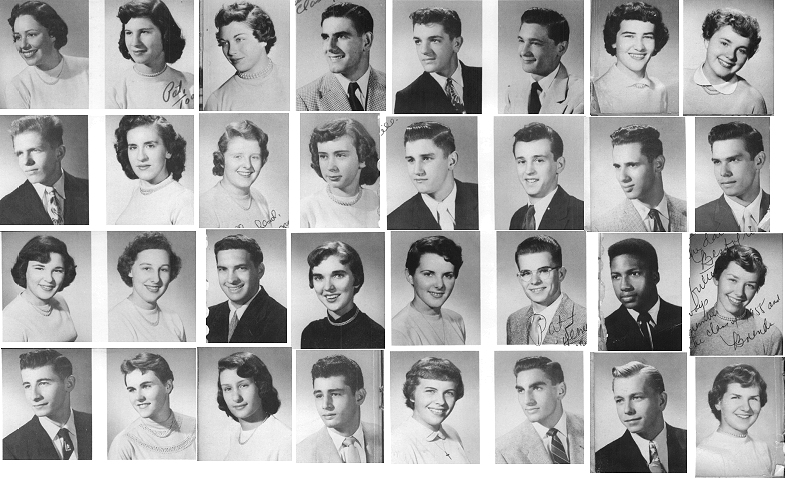
page1-55

*There were a few that cared. My grade ninth and tenth grade English teachers come to mind. In particular, my grade thirteen English teacher, gets my undying thanks for the kindness he showed me then and still shows me today. Apparently I did well, at least, with English teachers, hah.

On Race and Feminism

3 Mar

In the online fallout of The Onion’s vile tweet about Quvenzhané Wallis, one fact has become abundantly, dismayingly clear:

White feminists have a hard time talking about race.

And we have a hard time talking about the fact that we have a hard time talking about race.

Jessica Luther has a fantastic post up over on Shakesville about the lack of white feminists decrying what happened to Quvenzhané. And while I think that what she wrote is perfect and spot on and everyone should go read it right now, what I find truly fascinating is the weird backlash that she’s received from other white feminists.

It was the same backlash I saw on Twitter the other day when @graceishuman called out white feminists for not defending Quvenzhané.

That backlash? A whole bunch of white feminists explaining why they, personally, chose not to write about it. And I’m sure that they had some spectacularly good reasons (I’m not even being sarcastic), but that’s not what this about. Not by a long shot.

I have actually never seen so many people miss the point of something all at the same time.

What this is about is the lack of intersectionality in feminism. Specifically, it’s about the fact the women of colour do not feel that they are represented or heard within the feminist movement. As Kirsten West Savali wrote for Clutch, it can feel like the feminist movement encourages women of colour to,

” … shrug off our Blackness for the greater feminist good; the end result being a contemporary plantation tableau defined by Ole Miss and Mammie slaying the patriarchal dragon while the issues of racism and classism are hidden behind the veil of  “progress.”  And while this scenario is about as feel-good as The Help, expanding white privilege — feminist or otherwise — is not equality.”

So how the fuck did it ever get to this?

Is it because we (white feminists) feel that racism is an entirely separate issue from feminism? 

Most white feminists that I know would answer that no, of course it’s not, in the same way that homophobia, fatphobia and transphobia are not separate issues either. They would readily admit that women of colour experience misogyny in ways that white women do not. They would say that of course they care about racism.

But these same women, in their own writing, mainly stick to topics that specifically affect them or women like them. They very rarely address issues that are faced only (or mostly) by women of colour. They almost never talk about racism within the feminist movement. Which is funny, considering the racist history of our movement; shouldn’t this be something that we still talk about, all the time?

Is it because we worry that we’ll be co-opting women of colour when we speak out against something like what happened to Quvenzhané? Is it because we’re worried about making a misstep, about somehow accidentally being racist in our fight against racism? 

I would wager that the answer to this is yes, yes and yes. I’ve heard this same argument from several women as explanation of why they didn’t speak out against The Onion, or why they primarily focussed on the misogynist aspect of The Onion’s tweet and not the racist aspect. White feminists mentioned again and a again that they felt that women of colour should take the lead in this discussion, the rationalization being that white women speaking for others’ experiences was, in itself, a racist act.

And yeah, I guess if you’re a white feminist speaking for women of colour, that’s racist, but that doesn’t mean that you can’t call out racism when you see it. Like, fuck, I don’t want men speaking for me, but I sure as hell do want them to stand up against sexism. We complain so often about having to educate men with regards to feminism, and yet we (white feminists) do so little to educate ourselves when it comes to racial issues.

We make comments like, Well, I don’t even know what to call them, like do you say black or Black or women of colour or Women of Colour or minority or non-white or what? I don’t want to accidentally say the wrong thing.

We make comments like, They can write about the issues they face, and I can write about the issues I face. What’s wrong with that?

We make comments like, I thought we were all in this together.

For a group of people who are so hell-bent on (rightfully) pointing out male privilege, we sure as hell don’t like to be reminded of our white privilege, do we?

Which brings me to my next point …

Is it because we don’t want to admit that, as white women, while we do face a lot of overt and insidiously subtle misogyny in our day-to-day life, we face less barriers than women of colour do?

Privilege is comfortable. Privilege is easy. Privilege is invisible and difficult to quantify, facts that make us comfortable ignoring the fact that we benefit from it.

Privilege lead to write a post the other day that I felt was clever and insightful but, as others pointed out, was in several ways flawed and problematic.

I have a lot of privilege, white privilege, cis-privilege, thin-privilege, but it’s easier for me to talk about the privilege that I don’t have. I suspect that the same is true for many other women.

Being reminded of privilege makes people defensive – especially when those same people are complaining about the oppression that they face as women. There’s a tendency within feminism to want to gloss over racial issues and say, Well, first let’s fight against the problems that ALL women face, and THEN we can talk about racism, and I think that feels okay to a lot of us because in a fucked up way it feels like equality. In reality, though, it’s not equality at all – it’s asking women of colour to do work that will especially benefit white women, and then having those white women turn around and refuse to address the additional challenges faced by non-white women.

I think that another issue at play is that it can be hard to view yourself as both the oppressed and the oppressor. But the fact is that we do participate in the oppression of others, and our reluctance to examine that is pretty fucked up. Like, white feminists are perfectly articulate about how privilege works when they’re talking about male privilege, but they seem to plead ignorance pretty quickly when they’re reminded of the privilege that’s associated with their skin tone.

So what do we do about all of this?

Well, first of all, we fucking sit up and pay attention when women of colour tell us that they feel that we dropped the ball on this one. Because you know what?

A) They know what they’re talking about, and

B) They’re right

And then, after we admit that we fucked up, we talk about it. We talk about race until we’re blue in the face. Because pretending that this isn’t happening isn’t doing anyone any favours, and continuing to ignore the racial issues within the feminist movement is only going to serve to further divide us.

Finally, we need to change how things are structured in order to see real equality. We need to give more platforms to women of colour. We need to be more willing to listen to what they have to say. We need to be willing to be called out on our racism. Most of all, though, we need to let women of colour lead the way and let THEM tell us what they want and need in order to do that.

Because reaching down and giving a boost to someone who has less privilege than you do is what real fucking equality looks like.

And to those of you who aren’t interested in doing that, I would ask that you please stop using the word equality. You’re not interested in equality; you’re only interested in benefitting yourself.

I don’t want to just benefit myself. I want my actions to benefit everyone. And right now, I especially want my actions to benefit this kid:

Quvenzhane-wallis-beasts

It’s Okay To Feel Weird About Your Pregnant Body

23 Feb

Dear Fug Girls,

I like you. I like you a lot. I’ve been reading your site for, like, probably ten years now. I remember the days when Jessica wrote X-Files recaps for Television Without Pity (and those were some good days!). So, suffice to say I’m a pretty big fan.

And, as a fan, I want to tell you that what you wrote yesterday about Kim Kardashian wasn’t cool. Like, really not cool.

I get that hearing women talking about their weight can be stressful, maybe even triggering, and that one of the ways to deal with that is through humour, but I don’t think that it’s ever okay to make fun of a woman for being uncomfortable about her body. Because you know what? Everything in the freaking world is conspiring to make her feel uncomfortable about her body, and mocking her is not helping.

Look, pregnancy sucks. I mean, in some ways it’s kinda neat, but in a lot of ways it sucks big time. Your body, which has probably remained fairly static for most of your adult life, is suddenly taken over by a parasite and starts expanding in all kinds of weird ways. And suddenly, it’s not your body anymore. I mean, it is, but it’s totally unfamiliar to you, and also its housing a weird tiny thing that kicks and squirms a bunch. I spent a lot of my pregnancy feeling like the dude in Alien, to be honest, although thankfully I gave birth to an actual human being who was surgically removed from my abdomen rather than bursting out in a totally badass, metal way.

Anyway, what I’m trying to get at here is that even though I’m a thin woman, and even though my pregnancy weight looked perfectly fine on me, I still felt uncomfortable gaining weight. And I am not someone whose appearance is routinely picked apart by tabloids. I am not someone who felt obligated to prove that she’s “bikini ready” at six weeks postpartum. So if pregnancy made me feel weird about my body, I can only imagine how hard this must be for Kim Kardashian.

I’ll be honest: I don’t know a whole lot about Kim. I know that she’s with Kanye West, and I know that she’s done a bunch of reality shows, and I know that people love to hate her. I know that people like to make comments about how she’s famous for “nothing” (which is a hilarious criticism, because if anyone offered to let me be famous for nothing, I’d be like, “sign me up, bro” – who wouldn’t want to get tons of money for doing nothing?), although the number of times I see her out promoting stuff make me have a hard time believing that she really does nothing. I know that she’s a woman of colour who’s got hips and boobs, and I know that she’s already endured tons of criticism about her size from the media, long before she ever got pregnant. I know that she’s a woman, and as such she’s going to be scrutinized and mocked and ridiculed far more than her male counterparts.

At the end of the day, I’m just not really interested in shaming anyone for their feelings. Especially when those feelings have totally valid roots in the way our media and culture treat women. If Kim Kardashian wants to talk about how gaining weight while pregnant is upsetting, then more power to her. I’ll be happy to tell her a thousand times that she looks fantastic no matter what. Because there’s absolutely no good that can come from telling someone that their feelings are wrong, or bad, or stupid.

Anyway, that’s all I’ve got. I hope you guys will consider this the next time you post about someone’s weight gain. I mean, as much as I know that making fun of the way people dress is your gig (and usually it’s a pretty funny gig!), maybe you’ll be able to be a bit more empathetic the next time something like this comes up.

Sincerely,

Annabelle

p.s. The pants were pretty ugly, though, I’ll give you that

p.p.s. Say hi to the Mulder and Scully action figures for me! I hope they’re locked in an eternal embrace now that they’re retired from TWOP

p.p.p.s. I kinda hope these crazy kids make it, not gonna lie

kim-kardashian-kanye-west


ETA: Go Fug Yourself put an addendum on their post, which is pretty awesome:

** I may need to clarify that I am not trying to say that pregnant women can’t be thrown off by the changes in their bodies. But there is a difference between that and denial. To me, wearing those pants doesn’t say, “I am feeling awkward about my changing form.” Rather, that garment, to me, is a fingers-in-ears scream of, “LA LA LA NOTHING IS
CHANGING AT ALL.” My point was, don’t let denial get in the way of biological necessity — and also, those trousers are odious. But the former is dipping into armchair psychoanalysis, so I apologize if I overstepped…

I Am At Least Three Times As Ugly As Jessica Valenti

15 Jan

Today the website Return Of Kings (which I had never heard of, but I’m sure is super important and relevant) published their list of The 9 Ugliest Feminists in America.

My first thought was: What, they couldn’t find one more ugly feminist in order to round it out to an even ten?

My second thought was: I wonder which pictures of me they chose for their post?

Everyone knows that I am at least the third ugliest feminist in North America.

For example, I am way uglier than Jessica Valenti. Like, this is your ugly picture of her?

jessica-3

Bitch, please.

You want ugly? Let me show you ugly.

ugly

Hey, at least my kid is cute, right?

Science has proven that I am at least three times as ugly as Jessica Valenti. Here is a graph demonstrating our comparative ugliness:

flowchart


You know that there is some real fucking science involved when there is a GRAPH. Science is awesome.

Imagine my surprise and embarrassment, then, when I realized that I’d been overlooked for this, the definitive list of ugly feminists. Me. The one with the bad skin, hooked nose and squinty eyes. The one who was voted ugliest in class by a group of 12 year old girls. The one who is eternally on the receiving end of remarks like, well, at least you’re smart.

All right, all right, I know what you’re probably thinking.

“But Annabelle,” you might say, “These women are all famous feminists. Sure, you’ve had a few posts go viral, but you’re nowhere on the same level of recognition as, say, Hanna Rosin.”

And you know what? That would be a fair criticism to make if this was a list of the  nine ugliest famous feminists in America. But it’s not. It’s just a list of the nine ugliest feminists. And I am deeply, deeply hurt that I wasn’t included. Because, seriously, what is my point in life if I’m not grossing out the men’s rights activists with my Medusa-like face?

So, come on, Return of Kings, let me know what I can do to put myself in the running for next year’s list. Should I gain weight? You seem pretty fatphobic, so that could be a winning strategy. Should I lose weight? That might seem strange to some, but I think that if I could get to the point where men consider me “scary skinny” (as the tabloids say), I might have an advantage over more average-sized women. Should I wear more makeup and have you accuse me of looking like a whore? Or should I wear no makeup  and let you mock my face as-is? Should I dress badly so that you can make fun of my fashion sense? Or should I dress well so that you can laugh and laugh about how those silly feminists want to be taken seriously and look good?

Come on, guys, throw a girl a bone here!

In all seriousness, though, the funniest thing about your whole post isn’t your pathetic attempt at making “she’s-so-ugly” jokes – it’s the fact that you seem to think that any of these women care about whether you find them attractive or not. Sadly, most of them don’t even know you exist. They write off your comments and tweets and posts as trolling, and, honestly, don’t even give you a second thought. Sorry. I know the truth hurts. Someone has to say it, though, right?

But hey, I gotta thank you for helping me show that feminism is still relevant and necessary. Because as long as there are still douchebags like you out there publishing crap like this, it’s easy to prove why we still need to fight for women’s rights and equality. Your list has actually done more to help the feminist movement than hurt it. So please, keep on posting stuff like this and making my job easier.

Seriously, though, don’t forget me in 2014!!!

Idle No More

26 Dec

Last night, as we sat down to Christmas dinner, my mother’s dining room table practically groaning under the weight of all the food, I couldn’t help but think of Chief Theresa Spence, who is now on the 14th day of her hunger strike. As I piled my plate high with turkey, stuffing, potatoes and turnips, as the members of my family bowed their heads for grace and then raised their glasses in a toast, I thought of the woman who, only 100 miles away in Ottawa, was willing to die for her people.

Today, as others are rushing out to buy cheap goods in a glut of mass consumerism, I’m reminded of how very much so many of us already have, while others have so little.

Theresa Spence is the chief of the troubled Attawapiskat First Nation, a Cree community near James Bay, which drew media attention earlier this year due to its ongoing housing crisis. Residents in Attawapiskat, and many other First Nations communities, face a shortage of funding when it comes to, well, just about everything, but the situation is especially dire with regards to housing and education. Late 2011 found families in Attawapiskat, including young children, living in uninsulated tents; some of those who were lucky enough to have more adequate housing still lacked basic necessities like running water, and were using buckets for toilets. Although the crisis in Attawapiskat drew significant media attention, it seems that little there has changed over the course of the year.

Chief Spence’s hunger strike and the Idle No More movement it helped spark aren’t just about the subhuman living conditions in Attwapiskat and other reserves, though. It’s not just about the dire conditions found on so many First Nations reserves across the country. It’s not just about Bill C-45, which was passed earlier this year and both reduces the federal protection for Canadian waterways and also facilitates the government selling of reserve lands without consultation. Yes, it’s part of the fight against all those injustices, but it’s also about so much more.

It’s about the fact that our government has continued to ignore or downplay the rights and needs of this country’s Indigenous Peoples.

It’s about the fact that a small group of powerful, mostly white people still insist that they know what’s best for the diverse and culturally rich Canadian First Nations, even though history has proved time and time again that they don’t.

It’s about the fact that Prime Minister Stephen Harper publicly apologized in 2008 for the Canadian residential school system, which forced countless Indigenous children from their homes and into schools where they were beaten, sexually abused and grossly mistreated, and actually promised to help forge a “new relationship” with the First Nations based on “partnership” and “respect”, and yet refuses to meet with Chief Spence.

It’s about the fact that the next year, at the 2009 G20 summit, Harper said that Canada had “no history of colonialism.”

It’s about the fact that in the years since Harper promised to improve relations with First Nations peoples, he has instead cut aboriginal health funding, and his government sent body bags to a Manitoba reserve after its leaders requested federal assistance in dealing with an outbreak of swine flu.

It’s about the fact that over 600 Aboriginal women are missing, and no one seems to give a shit.

It’s about the fact that the Indian Act is so fucking oppressive that I don’t even know where to start. For one thing, a First Nation can only be “formed” and formally recognized by the crown if the Minister of Indian Affairs approves it, even if that nation and its people have existed since long before white settlers came to North America. For another, First Nations peoples have very little control over reserve land, and the Minister must approve any land sales or transfers. Not only that, but First Nations people need to seek government approval for selling or bartering any crops, livestock and other products grown, reared or cultivated on reserve lands; any First Nations person failing to do so will be guilty of an offence. Reserve lands, including roads, bridges and fences, must be maintained by the Band Council, and if the Minister decides that they’re not doing an adequate job, he can order them to make repairs, and any money for those repairs must come from the Band Council. Oh, and if you’re an Indigenous Person, you’d better hope that the government doesn’t declare you to be “mentally incompetent”, as that means that the Minister can force you to sell, lease or mortgage your land as he sees fit. Even a dead Indigenous person isn’t safe from the Minister; no wills drawn up on reserve lands are considered legally valid until the Minister approves them.

Like, what in the actual fuck? Other Canadians don’t have to live this way, and if they did, there would be a fucking revolution. Why are we okay with our government treating the First Nations this way? Even worse, why do people make remarks about Indigenous Peoples wanting special treatment, sneering at things like government-funded post-secondary education and exemption from paying certain taxes. To anyone privileged enough to make comments like that, I have only this to say: you fucking try living through a Northern Ontario winter in an uninsulated tent, shitting and pissing in a bucket and knowing that the government maintains control over nearly every aspect of your lives but pretty much refuses to lift a finger to help you, and then come talk to me about special treatment.

Chief Theresa Spence’s demands are simple: she wants to meet with the Prime Minister and the Governor General. She wants to sit down with them and discuss the plight of Canada’s Indigenous Peoples. She has said that, should Harper refuse her request, she will die for her people.

Harper won’t meet with Spence. Instead, as Spence starves herself in a teepee near the Parliament buildings in Ottawa, he’s enjoying Christmas with his family in Calgary, and composing hilarious tweets about bacon.

Rather than engaging Spence himself, Harper has deputized his Minister of Indian Affairs, John Duncan, to meet with her. Duncan, in turn, has publicly decried Spence for refusing to meet with him, and has urged her to end her hunger strike, out of “concern” for her health. As if it’s not offensive to Indigenous Canadians to say that our Prime Minister is so busy and important that he has to pawn them off to the ministry that has been specially created to deal with them. As if there’s nothing inappropriate about a white man to telling a First Nations woman how to behave or what to do with her body.

Look, I’m not a member of the First Nations. I’m a product of colonialism, descended from settlers who came here from France in 1645. I’m as white as they come. But that doesn’t mean that this isn’t my fight. This should be every Canadian’s fight. The treatment of the First Nations peoples should matter to everyone, no matter what the colour of their skin; this is a case of human rights, not just Aboriginal rights. We all need to take action on this issue.

At the end of the day, we all share the same country. And we need to make this a country that treats all of its citizens with dignity and respect, not just its white citizens, not just its privileged citizens. Other countries view Canada as a fair, peaceful nation where all people have the same rights and privileges – we as Canadians need to start living up to that reputation.

The Canadian First Nations have spent more than a century waiting for things to improve, waiting for better treatment at the hands of the government and hoping that every new promise made by each successive Prime Minister would prove to be more substantial than the empty talk of all the ones that came before. The time to wait is over; now it’s time to stand up and fight back.

Thank you, Chief Theresa Spence, for being so brave, braver than I could ever be. I stand in solidarity with you.

Attawapiskat Chief Theresa Spence

Attawapiskat Chief Theresa Spence

Dear NRA, The Answer Is Almost Never More Guns

21 Dec

By now, you’ve almost certainly heard about the NRA’s press conference earlier today regarding the Sandy Hook school shooting. After waiting a week and remaining “respectably” silent (do you think they meant “respectfully”?), they are now ready to tell us how to solve the problem of gun violence:

More guns.

I mean, naturally, the answer is always more guns, isn’t it?

It gets worse, though; the answer isn’t just more guns, it’s GUNS IN SCHOOLS.

That’s right, you read correctly: the answer is armed personnel in schools in order to protect innocent children.

Because, says the NRA, the real truth is,

…that our society is populated by an unknown number of genuine monsters. People that are so deranged, so evil, so possessed by voices and driven by demons, that no sane person can every possibly comprehend them. They walk among us every single day, and does anybody really believe that the next Adam Lanza isn’t planning his attack on a school, he’s already identified at this very moment?

Because it’s fear-mongering and exploitative when people rightfully point out how dangerous automatic and semi-automatic weapons are, and how lax gun control laws lead to tragedies like what happened at Sandy Hooks, but it’s totally not fear-mongering to say that society is populated by an unknown number of genuine monsters.

And because having men and women carrying guns in our schools is totally going to make children feel safe. Seeing an armed man or woman every day definitely isn’t going to make them feel as if being at school is a dangerous, life-threatening activity.

I mean, pardon my language, but Jesus fucking Christ, when does it end?

Is there ever going to be a time when more guns isn’t the answer?

Don’t worry, though; the NRA has another solution to gun violence.

They want a national registry of the mentally ill.

Yes, you heard that correctly: they don’t want a firearm registry, but they want the government to register every single person diagnosed with a mental illness. Because apparently what they’ve taken away from the whole “now is the time to talk about mental illness” discussion is that, rather than improve access to mental healthcare and work to reduce stigma, what we actually need to do is keep tabs on all the crazy people.

Never mind the fact that the mentally ill are four times more likely to be the victims of violence. Never mind the fact that “mental illness” is an incredibly broad category that includes an array of disorders ranging from anorexia nervosa to depression to schizophrenia. Never mind the fact that not all people with mental illness are violent, and not all violent people are mentally ill. Let’s just get on with this and start keeping tabs on the one in four Americans who have been or will be diagnosed with a mental illness at some point in their lifetime.

And fuck, I know that it doesn’t even bear saying, but how the hell do you think this will affect the stigma surrounding mental illness? Do you think that people will be more willing to go to their doctors and ask for help if they know that a diagnosis will land them on a national registry of people that the NRA believes to be deranged, evil monsters?

There is one thing, and one thing only that I agree with the NRA on: we live in a culture of violence. We live in a society that not only normalizes but celebrates violence. What I can’t wrap my head around is the fact that they don’t seem to understand that owning and using a gun contributes to that culture of violence.

I also don’t think that Grand Theft Auto makes anyone go on violent rampages, but hey, what do I know? Not as much as the NRA, apparently.

Look, I get it – guns don’t kill people, people kill people. But you know what? Adam Lanza would have been able to kill a fuck of a lot less people had he been carrying a knife, a club, or a crow bar. Saying that guns don’t kill people, etc., is like saying that polio doesn’t kill people, shitty immune systems do. But guess what? You still wouldn’t have died of polio had you not been fucking exposed to virus in the first place.

You guys, the way we view guns and violence is fucked up, and we need to fix it. I don’t know what the answer is; I can theorize, based on events that have happened in other countries, that stricter gun control is what’s needed, but it’s true that I can’t say for sure that that would fix everything. What I do know that is the answer is definitely not more guns. The answer is not a national registry of the mentally ill. And the answer is most definitely not armed personnel in schools.

gun-da-kop2p44

Violent Crimes and Mental Illness

16 Dec

In the wake of the shooting at Sandy Hook Elementary School, there’s been a lot of talk about mental health. Comments like, “Now is the time to talk about mental illness!” and “We need mental healthcare reform NOW before this happens again!” are littering my Facebook and Twitter feeds. Many people, people that I care about and whose opinion I respect, want to use this tragedy as an opportunity to talk about how America’s mental healthcare system needs to change.

But you know what? Now is not the time to talk about that.

Don’t get me wrong, I am hugely in favour of mental healthcare reform, both here in Canada and in America. We need better access to mental health professionals, and shorter wait times to see the ones that are available. We need to end the system of patient abuse that occurs in group homes across the country. We need to make therapy and expensive medications more accessible to people who may not have a steady income. We need to increase the monthly payments to those who are too ill to work, because what they receive now from the government is not enough to live on.  We need to give people with mental illnesses the tools they need to advocate for themselves, and we need to work towards ending the stigma that comes with the term “mental illness”.

I do believe that talking about our mental healthcare system is something that we need to do, and badly.

What we don’t need to do is conflate mental illness with shooting 20 small children.

See, the thing is, mental illness is a pretty broad umbrella term that covers all kinds of things. Depression is a mental illness. So are anxiety, anorexia nervosa, bulimia, PTSD, bipolar disorder, schizophrenia, obsessive compulsive disorder, and many, many other things. And yes, some symptoms caused by some of those illnesses can cause violence, but, given the fact that 1 in 4 Americans suffer from a diagnosable mental illness in any given year, I think that we can safely say that most people who are mentally ill are not prone to going on shooting sprees. In fact, studies have shown that people living with mental illness are four times as likely to be the victim of violence.

It has recently been reported that Adam Lanza was, according to his brother Ryan, suffering from both Asperger’s syndrome (which is on the autism spectrum) and a personality disorder. However, according to the same report, the brothers hadn’t been in contact since 2010, and it is currently unknown whether Adam Lanza had received further diagnoses since then. But the term “mentally ill” was being tossed around for a while before Ryan Lanza’s statements were made public, and, from what I can see, there is still a lot of assumption going on about what Adam might or might not have suffered from.

I know that most of the people who want to talk about mental illness right now are good people. Like the rest of us, they’re trying to figure out what just happened and why, so that we can make sure that we never have to live through a tragedy like this again. I’m sure that these people think that it’s kinder, more humane to say that Adam Lanza was mentally ill, rather than just calling him a monster. Unfortunately, what they’re actually doing is making mental illness the scapegoat here. What they’re doing is adding to the stigma that surrounds mental illness.

At the end of the day, saying things like, “Now is the time to talk about mental illness,” is not going to help anything. It’s not going to make an event like this less likely to happen again. In fact, if anything, by continuing to spin the narrative that the mentally ill are violent killers, you are probably making it less likely for those with mental health issues to seek treatment. By making mental illness out to be this big, scary thing, you are making it more likely that friends and family will ignore any signs of problems in their loved ones out of fear and denial. By simplifying the gun control debate to something like, “Well, mentally ill people just shouldn’t have guns,” you are contributing to the idea that people with mental illnesses are scary, dangerous and cannot be trusted.

And although I don’t feel like it should need to be said, let me reiterate: yes, I want to talk about our mental healthcare system. Yes, I want to talk about mental illness. But I don’t want to talk about it today, not when all anyone can think of are those 20 children whose lives were lost. I don’t want to talk about it when the term “mentally ill” conjures up images of a young man storming into a school, armed to the teeth and ready to open fire on innocent people. Because while there are people whose illnesses cause them to be violent, and those people certainly do need a better healthcare system, the vast, vast majority of people who desperately need to see mental healthcare reform will never harm anyone.

I guess that what I really want to say here is that this hits home for me. I’ve been pretty open on here about living with depression and anxiety; I received my first diagnosis when I was 16, which means that I’ve been grappling with these illnesses for nearly half my life. These disorders are a part of me, and I try hard not to be ashamed of them.

So please keep in mind that when you talk about mental illness, about the tragedies it causes and the lives it takes, you are also talking about me.

PhrenologyPix

“I’d Rather Risk Rape Than Quit Partying” – Rape Culture and The Good Men Project

11 Dec

I’m tired of blogging about rape culture.

No, honestly, I am. It gets exhausting after a while. It wears you down, you know? There’s just so much awfulness, so many rape apologists, and it takes a lot of energy to wade through it, dissect it, call it out and then deal with the backlash.

I’ve diagnosed myself with what Jezebel calls “rape fatigue“, a pretty accurate term for how I feel.

I wasn’t going to blog about anything serious this week. I was going to blog about cute things, funny things. I had a whole post planned out about how Red Fraggle is a feminist icon. It was going to be great, you guys.

And then The Good Men Project published a piece called “I’d Rather Risk Rape Than Quit Partying.”

And, well, here we are.

Let’s deconstruct this article, shall we?

We’ll start with the title:

I’d Rather Risk Rape Than Quit Partying

Let’s be clear: while the author does, later, admit that he would rather be raped than stop partying, that’s not what the bulk of this article is about. What he’s actually saying here is that he would rather risk raping someone than stop partying.

You might need a moment to digest that sentiment; I know I did.

Next, we have a caveat from the editors:

We at the Good Men Project do not endorse or support the author’s worldview, but it does speak to a very common experience that is often taken for granted and rarely talked about, except in vague and theoretical terms. We thank the author for being willing to speak openly about it, and share his struggle with his own experiences, though we want to make very clear that we do not agree with his conclusions.

You don’t agree with his conclusions, but you still published it, didn’t you? You’re still giving a voice to someone who is an admitted, unapologetic rapist. Whether or not you “agree with his conclusions”, you are still giving him your support by posting this to your site. You are adding another voice to rape culture.  You are normalizing rape. This is not okay.

Now on to the article itself:

When you party, when you move in party circles, you accept certain tradeoffs.

You accept that you’ll always be the bad guy in after-school specials and sitcoms about teenagers. You’re the bad kid who offers Buffy Summers a beer and gets her almost eaten by a snake demon. You accept that you won’t always be able to piece together everything that happened the next day. You’re forced to enjoy Katy Perry’s “Last Friday Night” not because you like Katy Perry but because you just plain recognize it.

You accept these tradeoffs because they come with amazing times. They come with glowing memories of an intensity entirely beyond the mundane, they come with crazy sex with amazing people, they come with living a few hours at a time in a world where anything, anything at all, can happen. I’ve moved from one party scene to another my whole adult life, because nobody wants to be that creepy old person or that inappropriately young person, but there are always plenty of people who won’t walk away from that incredible sense of liberation and possibility that you only find at the bottom of the bottle and a hot room full of crazy people.

Anonymous Writer is a hipper than me, has cooler friends, and goes to better parties. He’s a bad-ass who has lots of amazing sex and maintains a love-hate relationship with Katy Perry. He can only find “liberation and possibility” while drunk in a room full of strangers. Got it.

I swear to God, it is only after the fact that you start figuring out that one of the tradeoffs you’ve accepted is a certain amount of rape. The way crooked businesses accept paying fines for their infractions as the cost of doing business, you gradually, an inch at a time, realize that some of the stories you’ve heard, some of the stories you’ve lived, didn’t involve what they call good consent nowadays.

Yes, because rape is just a consequence of having a good time. Raping someone is just the price you have to pay in order to party hard like Anonymous Writer does.

And you know what? Lack of consent is lack of consent, no matter whether something happened twenty years ago or yesterday. I don’t care whether they didn’t call it “good consent” back in the dark ages; it’s still rape.

With what I’ve learned as an adult, I’m pretty sure I’m technically a rapist. Technically nothing. One woman told me herself.

Anonymous Writer is a rapist. Got it.

Our encounter was years before—I’d been in a drinking contest and she’d been drinking and flirting with me (yes, actually flirting) all evening.

She was actually flirting! You can take this rapist’s word for it!

As blurry and fucked-up as I was, I read her kiss of congratulation to me as a stronger signal than it was, and with friends hooting and cheering us on, I pressed her up against a wall and… well. Call it rape or call it a particularly harsh third base, I walked away with the impression that it had been consensual, if not really sensible. (She had a boyfriend at the time, but their boundaries were fuzzy.)

He was peer-pressured into pushing her up against a wall, either raping her or going to a “particularly harsh third base” (whatever that even means), but it’s fine because he thought it was consensual. Oh, and because her boundaries with her boyfriend were “fuzzy”. Got it.

Years later, she was in a recovery program—not for alcohol, ironically—and she got in touch with me during the part where she made peace with her past. She wanted to clarify that what had happened between us was without her consent, that it hurt her physically and emotionally, that it was, yes, rape.

Here is one story about a time she was drunk, which totally makes it ironic that she’s not in an alcohol recovery program. Also, being raped was probably her fault because she had substance abuse problems.

Oh, and by the way, she was raped. By Anonymous Writer.

We talk about who is and is not a rapist, like it’s an inextricable part of their identity. “I’m a Libra, a diabetic, and a rapist.” That doesn’t work, though. Evidently I walked around for years as a rapist, totally unaware. Nobody stuck that label on me, I certainly never applied it to myself, even now it only feels like it fits when I’m severely depressed. The label, the crime, simply coalesced for me one day, dragging years of backstory behind it.

Anonymous Writer isn’t a rapist, because he doesn’t feel like one.

I literally could not come up with a better way of summing up how rape culture works than that one, single sentence.

That is the damnable thing. We all cluck our tongues at those evil bastards who force themselves on girls—or guys—who are insensibly passed out. At the same time, we all acknowledge that a glass or two of wine helps pave the way for a lot of good times. And in the trackless, unmappable gray swamps in between, we cough and change the subject.

Consent is not trackless or unmappable. Consent is fucking consent. Deal with it.

In the real world, especially among experienced drinkers, being blackout drunk doesn’t necessarily look like being passed out on the floor, helpless prey for any passing predator. It can look like being drunk, but fully in control. It can look like being passionately excited. It can look like being a great dancer. It can look like being very sexually aggressive.

It’s not just booze, of course. Ecstasy makes everything incredibly tactile and you want to touch everyone. Weed makes some people insatiably horny. I had to fend off a young woman recently who was talking a mile a minute and sliding her hands inside my shirt, I was still together enough to tell she wasn’t all there, on what turned out to be a mixture of acid and cocaine. There is plenty of fun stuff out there, but mostly it’s booze. For the majority of people, it’s going to be drinking they have to watch out for.

If you’re not sure that someone can consent, don’t have sex with them. If someone is drunk and you’re not sure how drunk, don’t have sex with them. If someone is drunk, don’t have sex with them. There. I’ve made it easy for you.

A friend of mine once told me about a girl who he knew for a fact had only had two drinks. He didn’t know she was on prescription medication that amplified those two drinks beyond all measure. He thought she was just very horny when she wouldn’t leave him alone or take “Are you okay?” for an answer. It wasn’t until she kept calling him by the wrong name and couldn’t remember the right one that he realized she was not able to consent, and called a halt to things before they went any further. He says he had to dissuade her from pursuing things further, because she was really into it, apart from not knowing who he was or where she was.

“Can you imagine?” he tells me in horrified tones. “I was almost a rapist.”

How do I tell him that I was in a similar position and made a different call? How do I tell him that I am what he’s terrified he almost was?

Well, I guess Anonymous Writer doesn’t have to, because rape culture! He will never be prosecuted. He will never go to jail. He will never even have to admit under his own name that he’s a rapist.

Here’s the plain, awful fact: people can have more and better sex drunk than they can sober. Some of the best, most fulfilling relationships of my life have started out with joyously drunken sex. I’ve had amazing times, orgies sometimes, where it’s simultaneously true that everyone’s consenting and having fun, and that they wouldn’t be consenting and having fun if they were stone sober.

Here’s a plain, awful fact: Anonymous Writer is a rapist.

Here’s another plain, awful fact: you don’t have to have sex when you’re drunk, even if it feels really great. You don’t have to have orgies where you know that the participants would not be consenting if they were sober. You don’t have to rape, but you do. And then you make excuses for it.

Those aren’t the times that bother me. The ones that bother me are the ones where I got loaded, had some fun with a lady, and then she never wanted to contact me again. Messages go unanswered, social contact is dropped.

It doesn’t bother Anonymous Writer when he rapes someone, as long as they remain friends with him.

There are men, rape-apologist pieces of shit, who will tell you that women cry “rape” every time they have sex they later regret. I carry no brief for those assholes. What eats at me is that there’ve been cases, more than one and less than six, in my life where either explanation would seem plausible. If a woman had consensual sex with a guy because they were both drunk, and later she decided he was a loser and she regretted it, she might refuse to have further contact with him because, hey, awkward. But if a woman was raped by a man who thought she was still capable of consent when she was too far gone, she might refuse to have further contact with him because, hey, rapist.

Except, as far as we know, none of these women (other than the one mentioned above) have cried rape. So there was no need for that sentence. They either refused to answer Anonymous Writer’s calls because they regretted having sex with him, or because they felt violated. This has nothing to do with anyone crying rape.

And, by the way, Anonymous Writer, you did rape.

That’s not the worst part either.

Oh good.

It’s been pointed out to me that I’m using a lot of heteronormative language here, men/me as rapist, women as rape victims, and I honest to God don’t mean to do that. It’s just the linguistic habits I grew up with.

But there have been times I’ve cut off all contact with women after drunkenly fooling around with them, the same criterion that, in reverse, makes me suspect myself of rape.

There have been times of “I regret going to bed with her” and times of “I don’t recall going to bed with her.”

There’s been at least one time I was informed, days after the fact, by multiple eyewitnesses, that I’d had sex with a girl. This came as news to me, and explained a couple messages I’d gotten from her, a girl I generally had no interest in getting involved with.

It must be bad manners to admit to being a rapist and to also say one is a rape survivor, all in one article. I don’t know any set of social mores where that’s okay. I certainly don’t feel like a rape survivor, whatever that’s supposed to feel like. I just can’t quite find a workable standard where I’m one but not the other. I don’t say that as any kind of apology or justification for my actions or my mistakes. I’m just trying to state the facts nobody ever quite wants to state.

So the worst part isn’t that Anonymous Writer raped someone, it’s that he’s not sure whether or not he’s been raped, although he doesn’t feel as if he has been.

That’s the worst part here.

Some might think it’s monstrous of me to keep drinking, keep partying. But I have had so many good, positive, happy experiences because I took a chance and altered my state and connected with someone else sexually, it seems crazy to throw all that away. Do people who’ve been in car accidents give up driving?

Translation: I will continue to knowingly rape women, and here is a shitty metaphor about car accidents to explain why I’ve chosen to do this.

Translation: the conditions that lead to me raping women are too much fun to give up.

Translation: I live in a culture that will continue to forgive and excuse me for every rape I’ve committed.

When I sit down and think about it, it seems like I’ve accepted a certain amount of rape as the cost of doing business, and so have most of the people I know. And that seems like the most sick, fucked-up, broken solution to anything ever. And maybe finding it livable-with condemns us all to hell. I don’t know. I can’t even talk about it under my own name.

Fuck you.

* * *

I want to be thoughtful about this. I know that I should be. I should say that this man clearly has addiction issues and needs help. I should offer him my support, because he is also a rape victim. I should be kind, forgiving, generous. But I can’t. I can’t do any of those things to someone who is an unapologetic rapist, someone who is clear on the fact that he will rape again. Someone who views rape as a “trade-off” for having a good time.

Rape is not something inevitable that happens because you’re partying too hard, because you drink to excess, or because you’re having too much fun. Rape is a choice that this man makes. This man knows that his drinking and partying will lead to having sex with a partner who cannot consent, and yet continues to do so. This man is an unapologetic rapist.

I know that I talk a lot about rape culture, but you guys? This is rape culture right here. It’s articles like these that make men feel better about raping women. It’s articles like these that contribute to victim blaming (if a woman doesn’t want to be raped, she shouldn’t drink so much, right?) It’s articles like these that normalize rape, that make rape seem like a by-product of enjoying oneself, that make rape seem inevitable and uncontrollable.

This is rape culture. This is our culture.

tumblr_l1dvl9euhs1qbxsq7o1_500_large

National Day of Remembrance and Action on Violence Against Women

7 Dec

When I was a kid, my mother had a button that looked exactly like this:

399036_s

I couldn’t find a very large image of this button, but in case you’re wondering, around the edge it reads: “In commemoration of the 14 women killed in Montreal, December 6th, 1989 and all women who have suffered from violence.”

Every year, after my mother retired her Remembrance Day poppy sometime in mid-November, she would break out her rose button and pin it to the lapel of her coat. As a small child, I remember coveting the button, because I liked the picture on it. When I was older, it made me uncomfortable; I didn’t like that my mother wore a pin to commemorate a mass murder, and the look on her face and the tone in her voice when she explained the story behind it frightened me. Strangely, the story itself didn’t frighten me; it seemed too remote, totally removed from my day-to-day life. It was a freak accident; a tragedy, yes, but nothing that could ever happen to a person like me.

Later still, when I was a teenager and irritated by everything my mother did, I found the button obnoxious and sanctimonious. I’d grown up hearing my mother referring to herself as a feminist, a term that I refused to apply to myself. It seemed to me that most boys hated feminists and, when I was a lonely high school student with low self-esteem, the last thing I wanted was to do something that would cause the boys I knew to reject me even more. When they made jokes about women, jokes whose real punchlines were how stupid and pathetic women were, I laughed. Sometimes I joked back, making fun of the way girls dressed, of how many guys they slept with, how idiotic and shallow they were. Sure, I was a girl, but I was on their side – I wasn’t one of those girls. Never mind the fact that I probably would have given my eyeteeth to be cool enough to be one of those girls.

Back in those days, whenever late fall rolled around and my mother broke out her shabby, rusting rose button, I would roll my eyes. He was crazy, I would tell my mother. Like, mentally ill. It had nothing to do with women, he was just nuts. What if he’d killed only Dutch people? Would we have national day of remembrance and action on violence against Dutch people?

When I was a teenager, I thought that feminism was pointless at best, and a way of angering and alienating people at worst. It hadn’t yet occurred to me that sometimes angering and alienating people was a good thing; that there might be situations in which I wanted people to feel negatively about me and the things that I said. At the time, I couldn’t imagine not wanting to please every body, just like I couldn’t imagine anyone wanting to kill me simply because I was a girl.

Now I know differently.

I’m not saying that anyone’s out to get me specifically, because as far as I know, they’re not. It probably helps that I come off as fairly non-threatening – I’m a small, mousy white woman who doesn’t work in a male-dominated field. I’m a shy, quiet woman who pretty much totally followed the status quo – I finished high school, went to university, then married a nice guy and had a kid before I turned 30. Probably the most threatening thing I do is blog (extensively) about women’s reproductive rights, but that hasn’t generated any death threats or anything.

But there are still people who hate me because of my gender. I mean, maybe not openly, maybe not obviously, but they do. We live in a culture of casual misogyny. A culture where over 600 First Nations women are missing or have been murdered in Canada, only to have our government do nothing about it. A culture where female sex workers are treated as objects instead of people. A culture where women are told to be less angry when they talk about the events of December 6th. A culture where women are constantly being ridiculed, judged and set up in competition against each other. A culture where my sister, an avid World of Warcraft player, has been asked repeatedly to turn on her webcam and show other players her breasts in order to “prove” that she’s a woman.

When Marc Lépine went to the École Polytechnique 23 years ago today, he entered the school with the intention of killing feminists. Feminists, he said in his suicide note, had ruined his life. Lépine had applied to the École Polytechnique in both 1986 and 1989 but had been rejected both times because he lacked the CEGEP courses necessary for admission. In Lépine’s mind, however, he wasn’t admitted to the school because women had taken too many of the available spaces. Women, he thought, had taken everything important, and left nothing for him.

Lépine killed 14 women just because they were studying engineering. Lépine killed 14 women for daring to want careers in a male-dominated field. Lépine killed 14 women for being women.

I was seven years old when École Polytechnique Massacre happened. I want to think that the world has changed since then, but really, has it? Women are still the butt of the joke. Women are still lacking in positions of power. Women are still being told that they need to compete against each other. There is still a persistent bias against women in the worlds of math and science. If there’s anything that can be learned from the latest American election, it’s that there are still men who hate women. A lot of men. Powerful men.

I don’t know if my mother still has her rose button. Probably not – I haven’t seen it in several years, and the last time I did, it was looking pretty beat up. I wish she did, though, and I wish that she lend it to me. These days, I would wear it with pride.

Rape Jokes and The Oatmeal

5 Dec

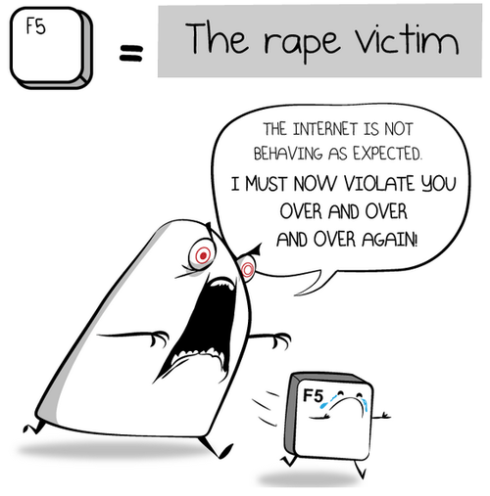
Yesterday, Matthew Inman from The Oatmeal wrote a comic about the “delicate relationship” that he has with his keyboard.  This was the final panel of the comic:

rape-f5rape

The comic in its entirety was about how he feels and behaves towards the various keys in his keyboard. This panel specifically was about trying to get a webpage to load when you have a slow connection, with the joke centering around Matt “raping” his F5 key in order to make the page load faster. Yes, it’s a rape joke. No, I’m not surprised. Yes, it’s supposed to be funny. No, no one would ever  actually “rape” a computer key. Yes, in spite of all that, I’m still grossed out. Now that all that is out of the way, can we talk about how terrible this is? Because it’s terrible. Really, really terrible.

The panel above is the type of joke that normalizes and trivializes rape. Instead of showing rape as an act of sexual violence that will haunt someone for the rest of their life, it’s hilariously portrayed as pushing your F5 key one too many times. What it tells readers is that rape is no big deal, that it’s just this thing that happens. It tells readers that rape is not a powerful word, but instead is a term you can use to describe any kind of forceful action. It tells readers that rape is normal, and even worse it tells rapists that rape is normal. The problem with jokes like this is that not only do they make rape victims deeply uncomfortable, they make rapists feel comfortable.

And I mean, you know what? As far as rape jokes go, this one isn’t that bad. I mean, not really. It’s not graphic, and it’s not even describing a plausible situation since, again, computer keys can’t be raped. If we didn’t live and participate in rape culture, this joke on its own wouldn’t be that big of a deal. But you know what? If we didn’t live in a culture where rape was constantly aided and abetted, a culture where rape is so normalized that we think nothing of making light of it, a culture where rape victims are frequently hushed up, dismissed or outright disbelieved, this comic would never have been made. This comic is a product of rape culture and it perpetuates rape culture. The message that this comment sent out to The Oatmeal’s nearly 800,000 Facebook fans (and the myriad other readers who follow the comic on Twitter or directly on The Oatmeal’s website) is that rape is no big deal.

It is a big deal, though. And when some readers of the Oatmeal told Matt Inman that rape jokes are a big deal, this was his response:

XekGY

I mean, first of all, it seems bizarre to blame Daniel Tosh for this backlash. Just because Daniel Tosh was called out for making a rape joke doesn’t mean that he was the first to do so, or that he invented rape culture. This joke wouldn’t have been funny before Daniel Tosh, and it sure as hell isn’t funny now.

Second of all, it’s really great that Matt Inman donated money to a battered women’s group. But that doesn’t give him license to say whatever he wants. It’s not like making a one-time donation gives him some kind of immunity to ever being called out on misogynistic shit that promotes rape culture. That’s not how it works.

Third of all, this isn’t censorship, and I hope that Matt Inman never lives in a place where true censorship exists. Freedom of speech means that you can say whatever you want, sure, but it also means that I get to call you out when you’re being a dick. You get to make jokes, and I get to tell you when they’re offensive. We are both afforded the privilege of freedom of speech. And you know what? I’m not even offended by this comic; I’m not going to give anyone that satisfaction. See, Matt Inman wants to believe that he’s done something so cool, so edgy, that regular, Family Circus-reading folk will be “offended”. Well, I’m not. I’m contemptuous of this comic, and I’m contemptuous of you, Matt Inman. Every time you make a joke like this, I think less and less of you. So no, you’re not being censored; you’re just hearing the reactions of people who aren’t on board with what you did.

I’m sure that there are people who will accuse me of being so wrapped up in feminism, so focussed on seeing misogyny wherever I look, that I’m just not able to recognize humour anymore. There are people who probably want to tell me that nothing is so sacred that you can’t joke about it, that “censoring” comics is the worst possible thing you can do, and that if I don’t “let” people make rape jokes then I’m some kind of fascist.

First of all, anyone who would think that should look up the definition of “fascist”.

Second of all, I don’t think that all rape jokes are bad. In fact, I even think that some of them are funny. The thing is, in order for a rape joke to be funny, it needs to do two things:

1. Not make rape victims the butt of the joke

2. Challenge the status quo, i.e. rape culture

Below is a video by Louis C.K. in which he makes a joke about rape that’s funny. If you are a comic, or aspire to be one, you might want to take notes:

See, what he’s doing in this joke is challenging the idea that rape is sexy or desirable. He’s challenging the idea that some men would leap at the chance to take a woman without her consent, while she is repeatedly telling them no, just because she’s giving out some kind of vibe. He’s challenging a culture that persistently insists that women don’t know what they want, that they play hard to get, that they lie and manipulate and shouldn’t be taken at their word.

That is a joke that challenges the way we think in a humourous way. That is what comedy should do.

Matt Inman did, thankfully, end up removing the rape joke panel, and tweeted the following earlier today:

It’s not the greatest apology, but at least it’s an apology, you know? I wish that he hadn’t included the “if”, because obviously people were upset, no ifs about it; it would have been better had he just flat-out apologized for the fact that people were hurt and upset. However, this apology is better than nothing, and it’s waaaay better than artists who continue to defend themselves after they’ve been called out for inappropriate behaviour. So I guess there’s that.

Sometimes stuff like this feels so relentless, like there’s no way to fight against it because you’ll just never win. Working to bring down rape culture feels overwhelming, because it’s literally everywhere. How do you fight nearly every movie you’ve ever seen, every book you’ve read, every casually misogynistic word that’s ever been spoken to you? Where do you even start?

Every once in a while, though, you do get someone who reconsiders what they’ve done and issues an apology, and that feels like it’s maybe the beginning of something. And like I said, maybe it’s not a great apology, but hopefully it will start people thinking. Maybe this will get fans of The Oatmeal really considering what that rape joke really meant, and why it wasn’t funny.

I think that if even one person who laughed at that comic sits back, thinks hard and changes his opinion, then this fight is worth it. If this post gets even one person to change their minds about how they view rape, and especially rape jokes, then I’ll be happy. Hell, even if this post does nothing more than get people who agree with me to start a conversation about this, then I’m good. The fact is that talking about this stuff, getting it out into the open and engaging people about it, is a huge first step to changing the status quo.

And I really, really want to change the status quo.