Tag Archives: happiness or something like it

Dispatches From My 20 Year Old Self

12 Jan

Sometimes when I am too lazy to write a proper entry, I start going through my old diaries and plagiarize myself.

Ever wonder what my world-weary 20 year old self thought about parties, theatre types and love? Well wonder no more! Now you can get the full scoop on what an adorable fledgling misanthrope I was. Oh, and I was pretentious. SO pretentious.

The following was all written during second half of 2002, with the exception of the last entry, which dates from early 2003. I was in my second year at Dalhousie and sharing an apartment with two friends.

On parties, pretentiousness and my dislike of people:

“There seem to be a million people in my apartment. Parties. The last refuge of our socially deprived population [don’t ask me what that means, because I don’t know either – probably I wanted people to have ice cream socials or something instead]. Mixing, flirting, drinking, smoking – a million inane comments, a thousand little gestures to draw attention to the breasts, the crotch.

I enjoy it for a while, the thrill of contact, the first glance of an unknown man. But it doesn’t take me long to become tired of the whole ordeal. I’m holed up in my room now. I think that I could stay right here for a while quite happily. I have my thoughts for company. I don’t need all those pressing bodies, the sweating palms, the desperate faces. Maybe I should be a man.

I told M that I wouldn’t date him. Why? Because I don’t feel that way about him. Because I can’t forget that time last year when he pointed out every ugly aspect of my flawed body. Because I know that I wouldn’t be happy. Not just with him. With anyone. Humanity gets on my nerves.

I can hear everyone outside my door laughing, mingling. They don’t notice my absence, which is just as well. Sometimes invisibility is a gift.”

On my Medieval Philosophy professor:

“Dr. Hankey apparently told Ron that I am ‘very intelligent and sincere’. Meanwhile, I thought that he had a very low opinion of me and possibly did not know my name.”

Randomly, in the middle of a page:

“Idealism is dead”

On being backstage at a one-act play festival:

“God, the entire room is full of bitchy, pretentious theatre types. One girl is holding forth about how she absolutely has to dance to get the ‘demons’ out of herself. Another is talking about a wonderful ‘dark comedy’ that she’s written, and how no one really understands it. A third is talking about African dance, using terms like ‘earthy’ and ‘sensual’. I can’t stand it.

Maybe this is why I can’t be in this profession; the lack of ego. But that isn’t true, I do have an ego. Somehow, underneath it all, I seem to think that I’ve above all of them, above all of this. I hold them all in contempt. Does that actually make me worse than them? It’s like I’m proud for being humble. 

I’m just stupid, that’s what I am.”

On falling in love:

“There we sat in my dimly-lit room, talking by the light of my little pink paper lantern, and I wanted to know everything, everything about him. He told me that he was afraid that he wasn’t even alive anymore because of the way he just ignored stress, it was like he didn’t even feel it. He said that he’d been through so much in the past few years that he barely even registered feeling anything anymore. 

‘What have you been through?’ I wanted to ask. I wanted him to confess it all to me. But it wasn’t right for me to ask. Not yet.

Then we talked about a million other things: post-apocalyptic visions of the world, the Tunguska event, volcanoes, mass extinctions, a room with walls made entirely of drawers, Atlantis, colonizing the moon, the perfect mattress. I can’t recall all of it now. 

What the world will be like when religion completely dies out and man worships himself, if you were a Greek god which one would you be (me=Artemis, him=Apollo), how America can justify bombing everyone, how we’re coming to the end of an era. D was telling me his theory that we’re due for something big soon: the fall of an empire, nuclear winter, a great natural disaster that would put everything into perspective. Because we’ve grown so complacent over the past 50 years that it feels like we’re not even living, like we’re automatons just going through the motions of living, but not really doing it. 

We’d never really talked properly before, and we had so much to say to each other. It was incredible. I finally let him fall asleep around 4:30, even though I could have talked all night. I knew he was tired, though, and had to get up early to drive home. But even though he slept, I still couldn’t seem to fall asleep. I filched the flashlight from the pantry and read Graham Greene under the covers, listening to D breathing softly and shifting in his sleep every once in a while. So here I was, with this boy that I might possibly be falling in love with asleep on my floor, unable to sleep myself but instead listening to him breathe. 

It was a nice night.”

diary

What It’s Like to Live Here

9 Jan

You feel like Miss Havisham, trailing around in your shredded, filthy wedding dress, pacing through the same rooms over and over, past the mouldering wedding cake and the long-dead flowers. And as much as you want to blame someone else, you know that you’ve only yourself to blame – not for the fact that he jilted you (although of course you wonder), but because you can’t seem to move past this one defining point in time. Your whole life will be the moment you realized that he was never coming.

When you cross the street, safely, at the crosswalk, you think about what it would be like if the cars didn’t stop. You wonder what would happen if you were hit, what that point of contact would feel like. You don’t take any risks, because you don’t want to get hurt, and you certainly don’t want to die, but still you wonder. And the wondering scares you.

You lie down to take a nap and spend an hour trying to find the cool spot on your pillow.

You start to think that reincarnation might exist, because you don’t understand how you could have done enough in just one lifetime – half a lifetime, really – to make your synapses misfire this badly. You decide that you must have been a terrible person in a past life.

You pick up the phone. You pick up the phone. You pick up the phone.

You don’t call anyone after all.

People ask how you’re feeling, and you try to explain it, but you can’t. Everything you say seems totally unrelated to you the moment it leaves your lips. You wrestle with words, trying to figure out how to describe this place to someone who’s never been there, but all the petty little nouns and adjectives you’ve collected over the course of a lifetime choose this exact moment to fail you. You feel so frustrated that you want to break something.

You pick up the phone and dial the doctor’s number but there’s no answer. It’s just as well, because you had no idea what you were going to say anyway.

You feel like you’re in limbo, somewhere between the ledge you just jumped off of and the place where you’ll hit rock bottom. You wonder if there’s anything you can do other than flail your arms helplessly, or if you should just try to enjoy the free-fall.

Friends offer help, but you feel too embarrassed to accept it. You realize how ironic it is that that embarrasses you, but vomiting your feelings all over the internet somehow doesn’t.

You finally get angry because none of this is fair, even though you know that fair has nothing to do with it. And somehow anger is easier than anything else you’ve been feeling lately.

Your anger quickly burns out, and then you’re right back to where you started.

You repeat all of the above, ad nauseam, for what seems like forever.

In case you were wondering, that’s what it’s like to live here.

butterfly 2

(I am getting help, I promise – it’s just taking some time)

Is This A Crisis?

3 Jan

This morning I misunderstood something my friend Audra said, and ended up saying something that I shouldn’t have.

She very gently pointed out what I’d done, and I apologized.

Over. And over. And over.

By the end, I wasn’t even apologizing for what I’d said; I was apologizing for annoying her, for always being wrong, and for just plain being myself. This, amid protestations from her that it was fine, that she wasn’t upset, that she hadn’t communicated clearly in the first place.

Finally, I said, “I’m just awful, and I’m overwhelmed, and I’m not doing enough to help myself because I don’t know how.”

All of that was true, even if I hadn’t meant for it to come out like that.

She asked if I wanted to go to the hospital. I balked and asked why. I didn’t see any reason to go to the hospital – I was fine, just having a bad day. Well, a string of bad days, really. Maybe a bad month. But certainly nothing more than that!

“I think it’s a perfectly reasonable thing to do in a crisis, love,” she said. “I feel like you’ve been in a crisis for a bit now.”

But how can I be in a crisis when I seem perfectly fine to everyone else? How can things be that bad if no one else has noticed?

What does a crisis even look like?

When I asked Audra, she said, “Like, I feel like you’ve got the brain equivalent to not being able to breathe, you know?”

Yes. That is exactly what it’s like right now.

Maybe a crisis looks like weeks and weeks or maybe even years of not sleeping.

Maybe a crisis looks like letting my son watch Fraggle Rock after dinner so that I can pass out on the couch behind him, because I can’t stay awake for one more second.

Maybe a crisis looks like waking up shaking and sweating at night and not knowing why.

Maybe a crisis looks like not being able to focus on any one task long enough to complete it.

Maybe a crisis looks like not allowing myself to eat, or have fun, or relax until I’ve finished my work as a pathetic attempt to motivate myself, and the beating myself up when I can’t get anything done.

Maybe a crisis looks like never being good enough, never being smart enough, never having enough hours in the day.

Maybe it looks like my hands shaking as I try to make a cup of tea.

Maybe it looks like crying alone at my desk for no discernible reason.

Maybe it looks like taking everything way too personally.

Maybe a crisis is all of these things taken together; maybe its more than the sum of its parts.

Maybe this is a crisis.

I don’t know how to get out of this. I’m trying all of solutions that I know, like medication, therapy and yoga, and none of them seem to be doing much good. I feel like I’m doing my best, but I’m not sure how to proceed if it turns out that my best isn’t good enough.

I’m scared.

To be honest, I’m not even sure why I’m writing about this publicly. Maybe because it’s easier than talking about it face to face with anyone; maybe I’m hoping someone else will tell me that they’ve been here, and that’ll make me feel less alone, or make me feel like I’ll be able to come out the other side mostly unscathed. Sometimes it feels like talking about my depression on here was like opening a Pandora’s Box, and now I just can’t stop. Often I worry that I’m being awful and attention-seeking. I tell myself that I’m helping combat stigma, but is that true? Or do I have other motives in place?

Is all this negative self-talk part and parcel of my depression? Or am I just being rationally critical of myself? After years of living like this, how do I untangle my actual self from the disease? Or is it just a part of me, part of my personality now?

It’s taking every ounce of my self-will not to apologize for writing this, for annoying you, for being a bad person. Even writing that is a sort of apology; it’s a compromise that I’ve made with myself, a way of showing you how bad I am without actually saying the words I’m sorry.

Is there even any point in getting help? Sometimes it seems like the hope that things will get better is even harder than the depression itself; not only do I feel rotten, but I also have to deal with the disappointment of each successive doctor, medication and therapy not working.

I don’t know what to do.

But I think that this might be a crisis.

IMG_2493

Winter

30 Dec

I am not a winter person. Given my choice of the seasons, I’ll pick summer every time. I love the heat, and I even love the humidity. I like it when stepping out my front door feels like walking into an oven. I like the sun, the warmth, and the long evenings that are perfect for picnicking or taking your kid to the park or drinking sangria on patios with friends. I love lying in the grass and reading for hours on end. I love summer.

Winter is a tough time for me. It’s not just the fact that it’s so cold that, after coming in from a long walk, I have to stand in a scalding hot shower for fifteen minutes until I feel warm. It’s not just the fact that my muscles ache because the cold makes me tense up, makes me walk around hunched over in a desperate effort not to freeze to death. It’s not even the fact that it’s already too cold for me, and I know that it’s going to get colder still. It’s more than that, and it’s subtler than that. It’s the light, both the dim, chilly quality it assumes this time of year, and its waning quantity, meaning that we only get to see the sun for a few paltry hours every day. Even though we’re past the solstice and, logically, I know that the days will be getting longer from now until midsummer, it still, somehow, feels as if the days are growing shorter and darker as we head into January.

These days I feel as if I’ve lost the capacity for joy. I’ll catch myself mid-laugh and realize that I’m faking it, and I’m faking it so well that I’ve nearly got myself convinced. In the same way that it’s sometimes hard for me to believe that spring will ever come again, it’s also hard to believe that anything will ever make me feel good or happy again. I have these thoughts, like, hey, maybe at the beginning of my life I was handed out a finite number of good experiences and now, in the winter of my 30th year, I’ve somehow managed to spend the last one.

Part of it might be the fact that everyone seems to be making their year-end posts, tallying up all their successes and bundling them together into one neat little blog post package. I thought about doing one of those, but I know that I won’t. Every new year always seems to me to be like a fresh, white sheet of notebook paper, but by December 31st it’s so marked up, so wrinkled and worn, so covered with revisions and smudges and holes where I rubbed the eraser too hard that I can’t make sense of it anymore.Rather than dig through my year to find material for a year-in-review post, I just want to throw the whole thing out, baby, bathwater and all. As 2013 approaches, 2012 is still too close to give me the perspective I would need, and all my hurts and failures feel too fresh for me to be able to dissect them. Even my successes seem slippery and hard to pinpoint. The other day, as I was watching the hundreds of comments going up on the article I wrote for the Good Men Project, I messaged my friend Audra and said, “Is this what success is supposed to feel like? Because I feel awful.”

Sometimes succeeding feels just as bad, just as anxiety-inducing, as failure does.

Mostly I just want everything to be over. I don’t mean that I want to die or anything like that, but just that I’m so tired of trying to guess what’s coming next. I’m so tired of trying to figure out what to do next, how to take my next step, or which direction I need to go. I want all of my experiences to be over and done with so that I can sift through them and sort them into boxes labelled “good things” and “bad things.” Then, once I’ve done that, I’ll be able to sit back, write a life-in-review post, and judge whether, when looking at the big picture, the scale tips more towards happy or sad.

I’m so tired. So goddamn tired. The worst part is that I can’t even begin to imagine when I won’t feel like this. Maybe next year? Or maybe when Theo’s in grade school? High school? When he moves out? I can’t help but feel like it’s partly my fault, or even mostly my fault, for not sleep-training him, for breastfeeding for so long, maybe even for choosing to have a kid in the first place. I love my son, but I don’t think I can function like this for much longer. Then again, what would not functioning even look like? Will my legs just give out one day, my knees buckling under my weight, and I’ll have to lie on the ground until I’m rested enough to get up again? How do these things work?

If you asked me what I needed in order to feel better, what it would take to make me feel happy, I wouldn’t even be able to tell you. That’s what’s hardest about all of this: feeling as if it’s whatever it is that’s going to save you is totally beyond your control. If there is something that can save you. If that something, should it exist, ever manages to find you.

Sometimes I think that all of the little things that happen throughout my day, the meals, the conversations, the rote interactions, are nothing more than activities designed to get me from one minute to the next until I can finally lie down in my bed at night and sleep (or not). When seen this way, a life is nothing more than a string of days, days made up of pointless experiences meant to propel you through time. I mean, of course my experiences aren’t meaningless. Or maybe they are. I’m not sure.

I’m trying to think of some kind of life lesson to put in here, some kind of moral to this story, but I’m coming up totally dry. Maybe you can try to find your own moral, because sifting back through this mess of feelings seems like so much work. Everything seems like so much work, to be honest. I feel as if I’ve been sucked totally dry of any and all will or ambition or desire.

The winter here is beautiful. The snow, and the quiet, and the bare trees are beautiful. There’s a hush this time of year that you never feel in the summer, and I know I would miss it if I never felt it again. I don’t hate winter, and I don’t even necessarily need for it to be over, like, right now. I don’t even think I would like to live somewhere that was hot and sunny all year long. I just need something to pin my hopes on, something to look forward to, something to hold out for. I need something to focus on when everything seems so dark and cold that I don’t think I can stand it for one minute longer.

I just need to know for certain that spring is going to come.

IMG_2478

Home for Christmas

24 Dec

By the time I finished high school, I couldn’t wait to get the hell out of Dodge Kitchener. Actually, that’s a lie – I’d been planning my escape since sometime in my early teens; it’s just that in my final semester of secondary school, my need to leave and branch out on my own was becoming dire. Part of it was that I just plain hated Kitchener (sorry, fellow Kitchenerites – I’ve since revised my opinion somewhat!); I was a pretentious kid who read French existentialists and smutty Leonard Cohen books, and I saw myself as being too big, too smart for my provincial hometown. Part of it was that I was sure that people only thought of me as a loser geek because they were accustomed to doing so; I thought that if I moved somewhere where no one knew me, my new peers would be sure to recognize me for the super smart intellectual with a killer fashion sense and razor sharp wit that I was. But probably the biggest reason for wanting to leave Kitchener was my family.

As the oldest child in a single parent family whose siblings were 6 and 11 years younger than her, things were, well, less than stellar. For one thing, I did a lot of free babysitting duty, which made it hard to get an after school job and earn a few dollars for myself. This, in turn, made it hard to keep up with classmates whose families were better off than mine; my clothes weren’t as nice as theirs, I didn’t always get to go along on class trips, and in my last year of school, I couldn’t afford the $20 student card, which meant that I didn’t qualify for any of the student awards. Because my mother only had a certain number of sick days per year, and because little kids tend to spend a lot of time getting sick, I was often the one to stay home with my sisters when they were running a fever or had the flu. Worst of all, or so it seemed to me, I was perpetually stuck in little-kid land. Our family television was occupied with an endless loop of Barney, The Lion King and (worst of all) Mary Kate and Ashley Olsen; I wasn’t allowed to watch any of the shows that I wanted, because they were all “inappropriate” (like, whatever, the X-Files is clearly fine for all age groups), and even just suggesting that we could turn the television off and enjoy some peace and quiet was met with a chorus of screams and protests.

I mean, sure, none of this seems that bad in retrospect, and some of it even makes me sound downright whiny, but when I was 16 all of this stuff felt like a Big Deal.

So when it came time to apply to universities, I pinned all of my hopes on one way out on the east coast, nearly 1,500 miles away from my mother’s house. I received an early offer of acceptance, which I jubilantly waved in my mother’s face. When my sisters asked if they could come visit me, I smiled and said, sure, but secretly I was thinking, so long suckers. Freedom was so close that I could taste it.

In September of that year, I packed a huge rubbermaid container full of clothing and books and set out on my 36 hour train trip to Halifax. As I hunkered down in my seat, staring at the Eastern Ontario woods and listening to Tori Amos on my discman, I thought about the fact that no one on that train knew who I was. I was finally free to be whoever I wanted to be.

University life, of course, wasn’t exactly the dreamland I’d pictured it to be. For one thing, it turned out that, even stripped of all my history and baggage, I was still a loser geek. After a few years in Halifax I would find a way to make that work for me, but that first semester was tough, sometimes bordering on downright awful. For one thing, while none of the people I met had any preconceived notions about my nerdiness, the flip side of that was that they didn’t have any positive associations with me, either. Determined to prove that I was just as cool as they were, I became unbearable, trying to show how smart I was by loudly talking over people, attempting to make “interesting” and “daring” fashion choices while actually making a fool of myself, using alcohol to get over my shyness and then spending the rest of the night throwing up in my dorm room sink. By the time late November rolled around, it was pretty clear to me that I was failing miserably at convincing everyone that I was witty and cool. Worst of all, I was surrounded by people who thought that I was a huge loser 24/7. I realized that there was something to be said for having a family who was obligated to love me unconditionally to come home to every night.

I distinctly remember the moment that I realized how homesick I was. I had a part-time job working in a clothing store, and one evening, as I was folding t-shirts, I started crying when Judy Garland’s version of Have Yourself A Merry Little Christmas came on the radio. Although I tried to be discreet about wiping away my tears, my boss noticed that I was a snotty, sniffling mess and asked me what was wrong. “I miss my mom,” I howled, running towards the stock room to hide my shameful, babyish sobs. What the hell had happened to the hopeful, confident girl who had left Kitchener just a few months ago? I honestly didn’t know; the only thing that I was certain of was that I wanted to go home.

The day after I finished exams, I flew into Toronto’s Pearson airport, then from there took a bus to Kitchener. When my mother and sisters met me at the downtown bus station, I hugged them all tightly. I could tell by their faces how excited they were to see me, and I wondered how I could have ever left people who loved me so damn much.

Of course, a few weeks at home reminded me of all the little, irritating things that had driven me away in the first place, but when the new year rolled around and I left once again for Halifax, I had a better appreciation of all the good things I was leaving behind along with the bad.

My relationship with my mother and sisters has greatly improved over the last decade. Now I love coming home to visit; it’s hard to put into words the comfort of being around people who have had the same experiences as you, who speak the same family shorthand, who understand all the in-jokes. Of course, that also means that they probably know all, or at least most, of your excruciatingly embarrassing moments, but the further I get from my teenage years, the more those memories seem funny instead of painful. And, anyway, I know enough of my sisters’ embarrassing moments to give back as good as I get, which all part of how nature intended the family eco-system to stay in balance: everyone has dirt on everyone else, and dredging up your sister’s awkward past means that your own becomes fair game. This means that my family’s golden rule is, don’t dish it out unless you’re sure you can take it, and by “take it”, I mean, laugh at yourself.

Being home this year has reminded me of just how true the old adage about it taking a village to raise a child is. We’re pretty isolated, family-wise, in Toronto; getting some time to ourselves means a lot of planning and orchestration. We’re lucky to have several fantastic babysitters for Theo, but, of course, their fantastic-ness means that they’re in high demand, and it can be tricky to book time with them. And, of course, having to pay for someone to watch Theo whenever we want to go out to see a movie makes date night thrice as expensive as it used to be, so sometimes Matt-and-Anne time just isn’t financially feasible. Here, though, we can hand off Theo to his Gran and Aunties just about anytime we want, and they, of course, are delighted by the chance to spend time with the grandson/nephew that they rarely get to see. And Theo, of course, is downright thrilled to be around my mother and sisters. He loves his babysitters, of course, but there’s really no substitute for a grandmother, is there?

After a tough few months during which Matt and I were both pulling a lot of hours at work, coming home for Christmas this year feels a lot like it did in my freshman year. I thought we were doing fine on our own, I thought that we were free and independent and grown up, but being at my mother’s house has made me realize just how much I’ve missed my family.

theo_tree

The Past Is A Foreign Country

2 Dec

In the beginning God created the heaven and the earth. And the earth was without form, and void; and darkness was upon the face of the deep, etc.

And then God created the Garden of Eden, and made a dude out of mud to be in charge of it. Then one day when this dude, Adam, was sleeping God took one of his ribs (ew) and from that rib magically made Adam a lady-friend, Eve. Then Adam and Eve lived in paradise for, like, three days, until Eve, the original third wave feminist (she embraces diversity, change and choice!), took some bad advice from a phallic symbol serpent and ruined everything.

And we’ve been nostalgic ever since.

Sometimes I think that nostalgia is the human condition. I mean, we’ve got a minimum of three major religions based on this yearning to get back to a past that none of us remember or even understand; the most we know about it is that Adam thought it was awesome. Then again, Adam also thought that wearing fig leaves was awesome, and was married to someone who was basically his clone (I mean, is that how it works? what with the rib and all? what’s the science here? anyone?). Anyway, what I’m trying to get at is that I’m not sure how reliable of a source he is.

I mean, here’s the thing: I am the queen of nostalgia. Ask anyone – I basically get nostalgic at the drop of a hat.

(Hey, remember that time you dropped a hat? How great that was? How much fun we had? Why don’t we ever have good times like that anymore?)

I don’t just moon over actual things that I’ve experienced either; I spent a good chunk of my childhood feeling nostalgic for just about any time in history, from the ancient world all the way up to The Great Depression (I blame a combination of having an aunt who is an egyptologist, reading excessive amounts of historical fiction, and watching Annie on VHS until the tape wore out). I used to drive my mother bananas by whining at her that I should have been born in the Victorian era (in response to which she would usually remind me of my fondness for indoor plumbing), and nearly every elementary school class photo shows me decked out in some kind of puffed-sleeve Anne of Green Gables floral-printed nightmare, grinning like a Cheshire Cat.

If there was a book at the public library with a picture of a girl in a laced-up bodice and peasant skirt, I’d read it. If there was a weirdo food mentioned in something I’d read (blanc mange, I am looking at you), I’d tried to find a recipe for it. After learning that people seriously believed in fairies until not that long ago, I began to (non-ironically) leave food in our backyard in case the fair folk were hungry for chocolate-covered graham crackers and milk. And you know what? To be honest, my adult self is not that different, although nowadays I would probably eat the cookies, fairies be damned.

What I’m trying to get at here is that I’m totally guilty of romanticizing the past. Totally! That being said, I don’t use that as an excuse to hate the present. I mean, I like flush toilets and computers and being able to vote and science-based medicine and all that good stuff. I am pretty down with modern life (although I am sad that I don’t get to wear bustles or hoop skirts). I guess what I am trying to say is that I am confused by people who think that living a middle-class existence in the western world is basically the worst, ever. I’ve heard women bemoaning the fact that feminism has ruined womanhood (is that even a word? my spellcheck thinks it’s a word), and the fact that women can now vote, own property and work after marriage is somehow preventing them from being stay-at-home mothers or housewives or whatever. I’ve heard people complaining about the “chemicals” in antibiotics, and saying that they only do homeopathic or herbal treatments – nothing “unnatural” or doctor-prescribed. I hear people talking wistfully about the days when science didn’t exist and everything was just natural and wholesome and wonderful.

People talk a lot about “authenticity” when it comes to objects and experiences. They don’t want Walmart to exist; they want everyone to buy things from farmer’s markets and local mom-and-pop pharmacies and department stores. They want to drive to Mennonite country to buy hand-made furniture and hand-dipped candles. They want to practice yoga at sunrise on a mountaintop with someone who has studied in India and can read their chakras. When they travel to South America, they don’t want to go on a guided tour; they want to see the unspoiled part of the rain forest, want to see the “real” locals who are unspoiled by contact with the west. We’re obsessed with our idea of what’s “real”; these days, people worship at the temple of the real.

Sometimes I think that our desire for authenticity has a lot to do with our love of nostalgia. We think that the people who came before us lived lives that were somehow more “real” than our own.

But you know what guys? The past is a foreign country, and so on, and so forth. We don’t know what it was like back then; all we can go by is what we’re told, or by deciphering what’s been left behind. We will never be able to understand how people felt or lived back then; their circumstances, though not totally alien to ours, are different enough that we will never fully be able to grasp their emotions, or beliefs, or the ins-and-outs of their daily lives. We just have to trust that yes, being a woman before feminism was a raw deal, and yes, modern medicine saves lives, and yes, science and modernity serve some kind of purpose. I’m not saying, let’s not be critical of society; what I’m saying is let’s keep pushing forward and trying to make things better instead of daydreaming about a past that we can never get back.

I’m not saying that Walmart is amazing, or that any of the things I mentioned up there are bad in and of themselves, just that it’s hard to have some kind of moral superiority about where you shop when there are kids who would probably starve if there weren’t discount stores where their parents could get a cheap meal. I’m also not saying that our society isn’t obsessed with consumerism, because we are; we’re consumerist as hell. But you know what? People in the past didn’t own less things because they were better than us; it was because they couldn’t afford them. If you want to live a life of simplicity where all you can afford is a mattress on the floor and one change of clothes, then by all means, please go ahead. However, don’t kid yourself that you’re being more “real” than the next person.

Sometimes I think that the appeal of history is that we know how all the stories end. We know who wins the Battle of Hastings, and whether or not Julius Caesar crosses the Rubicon, and whether or not the Titanic will ever reach New York (spoiler: it won’t). And yeah, a lot of history was scary and bloody and downright awful, but at least we know what happens. I mean, better the devil you know, right? Our modern lives terrify us because we don’t know how anything will end; sometimes it seems like we’re careening towards our own destruction, running full-tilt at things like global warming and nuclear war and widespread poverty and famine. I’ve got news for you, though: if these things terrify you, all the hand-dipped candles in the world aren’t going to save you. If you’re scared (and you probably should be), then get up and go do something, for God’s sake. Sitting at home wishing that you lived in Elizabethan England is going to accomplish exactly nothing.

I mean, except reminding you how awesome those giant ruffs were. Can we bring those back, please?

Bustles - the best, right? Baby got back, etc.

Bustles – the best, right? Baby got back, etc.

On Faith

20 Nov

A few years ago, when we still lived on the east coast, Matt and I drove to Prince Edward Island for a long weekend. We booked a room in what was maybe the coziest bed and breakfast of all time, and in spite of the raw, grey November weather we were ridiculously excited by the chance to explore and get lost in a city that wasn’t our own.

Matt was still a student back then, and I was making minimum wage working retail, so little getaways like this were few and far between. This meant that I’d planned for our three day mini-break with the same focus and attention to detail that others might apply to a two weeks tour of Europe. I bought a guide book and filled it with highlighter marks and post-it notes. I spent hours poring over travel websites, trying to plan our every little detail of our trip. I talked to (at?) Matt endlessly about the things I wanted to see, trying to convince him to use the highlighter and post-it notes with as much enthusiasm as I did. My excitement grew to such a level that I was basically banned from mentioning the words “Anne of Green Gables” or “Gilbert Blythe” in his presence.

One place that I knew I definitely wanted to visit was the All Souls’ Chapel, which is attached to Charlottetown’s St. Peter’s Cathedral. All Souls’ Chapel is designated National Historic Site and, I learned from my guidebook, a good example of the High Victorian Gothic style of architecture. I especially wanted to see the interior of the chapel, whose walls feature sixteen paintings by local artist Robert Harris. The only problem was that the chapel was only open during services, and the only service held in the chapel was evensong. We decided to sneak into the back and ogle the artwork during Saturday’s evening service before heading downtown for a romantic dinner.

Late Saturday afternoon, Matt and I fell asleep on our room’s giant, king-sized bed. We woke up to find that it was dark outside, and realized with a start that it was nearly time for evensong. We thought that if we hurried we might still be able to make it. We were wrong, a fact that we realized as soon as we stepped into the chapel’s entryway and heard someone chanting inside.

We peeked in through the door, and before us lay one of the loveliest, heart-in-your-throat sights I’ve ever seen. The room was lit by just a few candles, leaving most of the chapel still in darkness. The flames flickered and occasionally grew strangely, eerily tall in the close chapel air, throwing grotesque, menacing shadows on the painted walls. In the middle of this little cave of light stood an old priest, his long robes faded to a greenish-black and his collar slightly wilted. He was all alone, this priest; no one else had come to evensong. Still, though, he stood in front of the lectern and recited from the huge crumbling book that sat there, repeating the same words he must have said on a near-daily basis for years and years and years. They were nice words, too – the text of the Anglican evensong is strikingly, intricately beautiful, a sort of poetry, in a way.

I thought about this man who, in spite of his lack of parishioners, went on with his service and turned it into a private communion between himself and his god. I wondered what he thought of the words that he was sending out into the darkness, and what personal meaning they might hold for him. I watched this man, who, unaware that he was being watched, slowly wended his way through the service, speaking at length to a god who never seemed to answer him. I thought to myself, this is what faith looks like.

I grew up in a pretty secular household. My mother usually dragged us to the local United Church on Sundays, but that was more boring than it was religious. I spent my time there sprawling out on the shiny wooden pews, making up stories about pictures in the stained glass windows and harassing my mother with whispered demands to know when Sunday School would start. Sunday School meant a craft, a game, a snack, and little else. Oh sure, we would read Bible stories, but they didn’t seem to me to be much different from Grimm’s fairytales, or the stories found in my giant Hans Christian Andersen book. Meanwhile, my father, an avowed atheist, would stay home to sit in the basement and burn incense while listening to classical music on vinyl.

I went to a Catholic school, so I did receive some religious instruction there, but because I was Protestant, no one really thought that it was necessary to indoctrinate me. I was often left out of things, either because my teachers didn’t think it was appropriate that I be included, or because they thought I didn’t care. I was curious, though –  and to be fair, who wouldn’t be when your classmates’ religion means that the girls get to dress up in lacy white dresses and partake in a secret ceremony to which you are not invited? After my class did their first communion, they got to eat the strange, flat, holy bread and drink real wine – meanwhile, in the United Church, there was no special initiation ceremony, and our communion was nothing but regular bread and boring old grape juice. School made the Catholic religion seem mysterious, fascinating and a little dangerous, whereas my time at the United Church had taught me that that institution was the opposite of all those things.

Super secret confession time: I have a thing about churches – a dark, guilty, secular thing. I love churches, especially old ones, especially Catholic ones. The right kind of church makes me feel quiet and awed and sort of holy. Maybe it’s because I love history, or maybe it’s the antiquated architecture. Maybe it’s because I’m a sucker for symbolism and ritual, or maybe it’s my love of Latin. Maybe I’m a closet Catholic. Whatever it is, it made me drag Matt into church after church when we went to Paris; it made me stand in the middle of Sacré Coeur Basilica, eyes closed and totally blissed out, listening to a choir of nuns chanting, well, I’m not quite sure what, but whatever it was, it was beautiful.

If I were Catholic (which I’m not), I would basically be the worst Catholic ever. I’m pro-choice, I use birth control, I had sex before marriage, and I think men and women are equal. I hate the Catholic church’s backward stance on pretty much everything, and I can’t stand the Pope (although, much like Kate Beaton, I have a great deal of fondness for JPII):

You know what’s terrible, though? Even though I know that the Catholic church is awful, even though unspeakable things have been done in its name and its leaders have been complicit in terrible crimes, I still love a lot of things about it. I love the singing, and the smell of the incense. I love the big old stone churches with their colourful windows and dark, mildewy corners. I love the priest’s fancy outfits, and the slow procession down the aisle at the beginning and end of every mass. I love going into an empty church and lighting a candle for the sick, or sad, or deceased. I love the tacky religious statuary. I love communion, even though one of my grade school teachers told me that if a Protestant eats a host that’s been blessed by a priest, it will burn a hole in their tongue. I love the idea of midnight mass, of staying up with a group of strangers until way past my bedtime; there’s something so ancient and lovely about staying awake with a group of people, waiting together amidst wreaths and bows and candles and music to make sure that Christmas Day is, in fact, going to come.

The thing is, if I’m a bad Catholic, then I’m an even worse atheist. Even though I know, logically, that there’s nothing out there, that science and evolution explain life on this planet, not some faraway magical spirit with a beard and a white robe, I still sort of believe. Even though I know that religion is awful and whatever good there is in the world comes from people, not from some godly presence, I still sort of believe. I’ve tried really hard not to believe. I’ve dabbled in other religions; like most people, I had a pagan phase in high school which involved chanting nonsense in the woods and spelling magic with a k. My childhood best friend was Jewish, and I tried my hand at that, too. But I still, embarrassingly, kept coming back to the Catholic church.

Why is this? I mean, the fact is that I disagree with their stance on, well, just about everything. Public religious displays make me deeply uncomfortable, and people who try to preach at me annoy the crap out of me. Once, a few years ago, Matt and I went with his mother to a Good Friday service at the Catholic church in Keswick, and they did this bizarre thing where they brought out a giant crucifix and made everyone line up and take turns kissing it. People were looking at Jesus and sobbing, I kid you not. I wanted to yell out, SPOILER ALERT BUT GUESS WHAT YOU GUYS HE GETS RESURRECTED THREE DAYS LATER. It was ridiculous. But still, I sort of believe.

We had Theo baptized in the Catholic church, and my reasons for this were pretty lame. I wanted an excuse to dress him in a frilly white dress and throw a big party for our family; I guess we could have had a special Baby Transvestite celebration, but a baptism seemed like something my grandmother was more likely to understand. I also know that he will likely go to Catholic school, and I don’t want him to feel left out like I was. Another thing is that in a weird way I think that it’s important to raise a kid with religion, so that they have something big to question later on, when they go through their philosophical existentialist phase in high school. Also, I sort of believe, so there’s that, too.

Sometimes I think about Graham Greene’s The End of the Affair, and how Sarah, the unfaithful wife, becomes strangely, almost unwillingly religious. There’s this really beautiful passage near the end of the book, and I’d be lying if I didn’t admit that it really resonates with me:

I believe there’s a God— I believe the whole bag of tricks, there’s nothing I don’t believe, they could subdivide the Trinity into a dozen parts and I’d believe. They could dig up reasons that proved Christ had been invented by Pilate to get himself promoted and I’d believe just the same. I’ve caught belief like a disease. I’ve fallen into belief like I fell in love.

Mostly I just wish that I believed in something, anything as much as that Anglican priest on Prince Edward Island did.

Plus, you know, Theo looks really, really good in a dress.

How We Talk About Mental Illness

10 Nov

Jared Lee Loughner was sentenced yesterday. In August of this year, he pled guilty to 19 of 49 charges, including first degree murder, after going on a shooting rampage in Tucson, Arizona. His actions left six people dead and injured twelve others, including former Representative Gabrielle Giffords. Yesterday he was given a sentence of seven consecutive life terms in prison, with no chance of parole. Jared Loughner will spend the rest of his life in jail.

I remember this shooting vividly. It happened on January 8th, the day I was admitted to the hospital on bed rest at 34 weeks pregnant. I spent two weeks in the high risk antenatal unit, with only books and my computer to fill long hours spent in an uncomfortable hospital bed. Because I spent so much time online, I followed the shooting and its aftermath intently, metaphorically holding my breath as I, along with so many other people, waited to see if Gabrielle Giffords would live after taking a bullet to the head during the attempt on her life.

That’s what the shooting was, after all – an attempt to assassinate Giffords, whom Loughner hated for many reasons, chief among which was that she was a woman. In fact, he’d said repeatedly, both online and in person, that women should not hold positions of power. That was why he’d shown up there that day, why he’d brought a 9 mm Glock 19 semi-automatic pistol to a public meeting held in a supermarket parking lot  – because he couldn’t stand the idea of a female member of congress. The thought chilled me, as I’m sure it did many other women.

I’ve continued to keep up with Loughner’s legal proceedings, in part because of the mixture of fear, fascination and revulsion the shooting inspired in me, and partly because, in my mind, this event is somehow bound in the circumstances surrounding Theo’s birth. There was something so strange about sitting in a hospital, doing my best to ensure that a healthy new life came into this world, while someone else worked equally hard to take another life, or rather, several lives, out of it.

I’ve read a lot about the shooting.

I’ve read about Gabrielle’s amazing recovery, and her struggles to regain her mobility and independence.

I’ve read about Christina-Taylor Green, the nine year old who was among those killed.

I’ve read about the other victims, and how this tragedy has impacted their lives and the lives of their families.

Mostly, though, I’ve read about Loughner. How at first he was declared unfit to stand trial after a federal judge ruled that he was mentally incompetent, saying, “At the present time, Mr. Loughner does not have a rational understanding of these proceedings.” How he was given a diagnosis of schizophrenia, and was found to suffer from delusions and disorganized thinking. How, when he finally was deemed fit to stand trial, he was so drugged that he could barely talk. How he still resists being medicated, and has to undergo forcible treatment at the hands of prison officials. How he often doesn’t really seem to understand what happened that day, and has stated in court that he believes that his assassination attempt was successful, and that Gabrielle Giffords is now dead.

It’s pretty clear that Mr. Loughner is seriously ill.

I’ve been reading some of the victim impact statements today, and I’ve been surprised at how some of the victims talk about his illness. Take, for example, what Mark E. Kelly, Gabrielle Giffords’ husband, had to say:

“You tried to create for all of us a world as dark and evil as your own. But remember it always: You failed.”

I found this jarring, to be honest. Let’s be really clear here: I think that Loughner’s actions were, indeed, evil. I know that a mentally ill person’s “world” or mind or whatever term you want to use can certainly be called dark. However, it bothers me that Kelly would refer to the delusional world that Loughner lived in as evil. It also bothers me that Kelly seems to believe that Loughner had some kind of agency over his actions, as if he wasn’t driven by the illness that gripped him body and soul.

Another statement that I read said the following:

“We’ve been told about your demons, about the illness that skewed your thinking.

It’s a painful saga, a tale of missed opportunities and lack of support, of the appalling absence of attention to your behavior. Your parents, your schools, your community –- they all failed you.

That is all true, but it is not expiation. It is not enough. There are still those pesky facts.

You pointed a weapon at me… and shot me… three times.”

While the victim, Ashleigh Burroughs, acknowledges that Loughner was ill, she seems dismissive of his “demons”, demanding, instead, that he answer the “pesky facts” – as if he hadn’t already tried to answer them, only to come up with nonsense, jumbled facts and recollections of the day that are flat-out untrue.

I am not here to criticize Kelly or Burroughs, and I am certainly not here to diminish what they went through. They’ve seen and experienced things that I hope to never, ever encounter. I am not saying that how they are dealing with this is wrong, or that what they said is wrong. What I’m saying is that the way that we, as a culture, talk about mental illness is fucked up.

The things is, this hits close to home for me, because mental illness is something I’ve struggled with. Still do, in fact.

It’s not something I really talk about, ever. I’m deeply uncomfortable even as I type this out, but I want to share this with you, so that maybe you’ll understand where I’m coming from.

When I was in high school, things were tough. I felt sad and hopeless, frequently without any concrete reason. I cried, often, both at home and in public. I wonder, now, if my social isolation lead to this, or if my isolation was a product of how miserable I was. Chicken or egg, right? Certainly both lead to a sort of vicious circle of being alone, then being sad because I was alone, then having no one want to be around me because I was so annoyingly, unendingly down on myself and finally ending up, once again, alone.

When I was sixteen I told my mother about how I felt, and she took me to see our family doctor. He gave me a prescription for Paxil and referred me to a therapist. I hated therapy and stopped going after a few months; the medication didn’t seem to do much, so my doctor increased it, and then increased it again. I couldn’t sleep at night, and I was exhausted all day, sometimes napping on my desk during class. I couldn’t concentrate, and often left my homework unfinished because I was too tired or unfocussed. My grades started to slip, and my teachers grew frustrated with me. One even recommended that I be removed from the special arts program that I was part of. I went from being an A student to barely pulling Cs and Ds and the grownups in my life tsked, shook their heads and told me that I would have to work harder. I failed grade 11 math the first time, and then, the second time around, desperate to pass, I cheated on a test. I got caught. I was suspended. My doctor increased my medication. I didn’t feel any better.

In university, things were initially easier. I had lots of friends, and I was once more getting As and Bs. I forced myself to complete my assignments, working in the computer labs late into the night. My concentration improved, and I tried to be less of a perfectionist with my work – even if I thought something was badly done or incomplete, I submitted it. I turned in every single  assignment on time. I figured that what I’d been lacking in high school was gritty determination; I decided that I could push my way through anything. I thought that if I didn’t succeed at something, it was because I hadn’t tried hard enough.

Then, in third year, things got tough again. I had to leave school due to my financial situation, which was hopelessly snarled after three years of monetary incompetence and inattention. My mood grew worse and worse, and the university clinic doctor frantically tried medication after medication, hoping something, anything would work. Nothing did. I finally received an official diagnosis from him of dysthymia, a mood disorder marked by chronic depression. I started to feel like the future was endless and blank, and that I had no way of getting myself out of this hole. I talked about suicide. My doctor had me hospitalized.

I have literally never told that to anyone other than my mother and Matt until now.

Things got better after that, although I’m not sure why or how. My hospitalization was nearly ten years ago now and, although there have since been some serious dips in my mood, until I was hit with postpartum depression I’d managed to steer clear of that dark place. I even totally went off any kind of medication for seven years, encouraged by a hospital psychiatrist who told me that I wasn’t really depressed, that there was nothing chemical about it, I just had bad coping skills.

I stopped thinking of myself as someone who was living with depression; I told myself that I was just moody, or easily upset. If I had to put a name to what I was feeling, I called it anxiety, which seemed easier and more socially acceptable. Calling what I felt depression made me feel like I was making excuses for myself, and it made me feel like a freak. I refused to us the term mentally ill to describe myself. I went back to my philosophy of pushing myself hard, and then harder when things were difficult. For a while, it worked.

Then Theo was born, and everything went dark, and I couldn’t get out of it.

As part of the postpartum depression program I participated in at Women’s College Hospital, I had to have a monthly meeting with a psychiatrist. My family doctor had put me on Zoloft just before I joined the Women’s College program, and it was up to this psychiatrist to figure out whether or not I was on the correct medication, and what the right dosage was. I gave her as complete a medical history as I could, and then immediately asked how long I would have to be medicated.

“Well, let’s see,” she said, looking back through her notes. “It looks like you’ve had two, maybe three major depressive episodes in your life. You’ll need to be on the Zoloft for at least a year, but I would recommend that you stay on it for five.”

I was shocked. The medication was supposed to be temporary; I wasn’t sick, just fucked up on hormones. I’d thought that I would only be taking Zoloft for a few months, until this whole postpartum depression thing cleared up. That was how it was supposed to work, right? When I told her that, she just smiled.

“I think your old doctor’s original diagnosis of dysthymia was correct,” she said, “and, based on what you’ve told me, I think it’s likely you also have generalized anxiety disorder. This isn’t going to go away once your hormones settle down.”

So here I am, nearly two years after the birth of my son, still medicated and still struggling with my mood. I’ve more or less come to accept this, though. I am a person who is depressed. I am mentally ill.

This is hard to talk about, and what makes it harder is the way our society views mental illness. In the media it’s portrayed as frightening and dangerous, or else as funny and laughable, but rarely as something normal, rarely as something that so many people live with every day. We throw around words like crazy, insane, or psychotic when we’re talking about people whose actions we disagree with. In spite of strong evidence to the contrary, we view it as something made up, or an excuse not to get work done. We want people to pull themselves up by their own bootstraps, and we don’t believe them when they tell us that they can’t. We marginalize and mock the people who need us the most.

Mental illness is deeply stigmatized in our society, and will continue to be so until we do something about it.

When we believe that Loughner had agency over his own actions, rather than being controlled by a serious illness, we contribute to that stigma. When Mark E. Kelly refers to the world view of a schizophrenic as evil, he contributes to that stigma. Hell, the fact that we even use words like “evil” or “demons” to describe mental illness contributes to that stigma.

The tighter we hold this stigma, the longer we continue to have beliefs about mental illness that are untrue and have no basis in scientific fact, the harder it is to talk about it. And the harder it is to talk about it, the more people will go untreated. And the more people who go untreated, the higher the risk of something like this happening again.

Which is why I’m talking about this now.
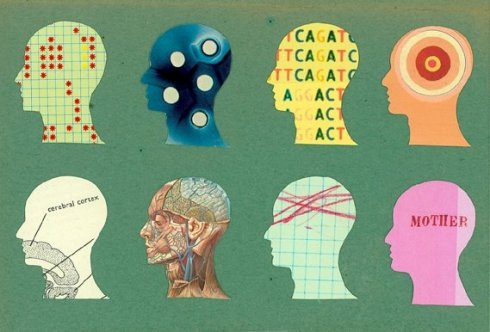
Edited to add: I certainly don’t mean to imply that all those who are mentally ill lack agency over their actions, or even that that those who do lack agency do so all of the time. I also don’t mean to say that someone who is gripped by mental illness will suffer from it forever. I don’t really know how to talk about this, and I acknowledge that I am probably missing a lot of information, and communicating badly. I apologize for that, and for any offence that anyone might take from this.

Grampy

4 Nov

Today is the anniversary of my grandfather’s death. Thirteen years ago today, my Grampy died.

I didn’t find out that he was dying until just a few days before it happened; he himself had only known for a few weeks. He’d gone in to the hospital to have his gallbladder removed, but when they opened him up they discovered that he was full of cancer. Riddled with the stuff, was how my father put it. I pictured the surgeons gasping as they peeled back his skin, and instinctively looking away, as if the sight might blind them. I pictured them gingerly sewing him back up, as if they were putting a ticking time bomb back together. There was too much in there, he was already too far gone; there was nothing else they could do.

I’d seen my grandfather that spring, when he and my grandmother had come from Nova Scotia to visit us. When my father told us about the cancer, I wondered if Grampy had already been sick in the spring, without anyone even knowing it. I thought of the secret things your body could do without you ever being aware until it was too late; I thought about how my body, in its darkest recesses, might at that very moment be doing something to betray me, and how there was absolutely nothing I could do about it.

I think that my mother and sisters called my grandfather shortly after they found out he was sick; I know that if they did, I didn’t talk to him. It’s not that I didn’t want to talk to him, it was just that I didn’t know what to say. I needed time to think about it, time to work up the courage. In the meantime, I decided that I should send him an email – that would buy me at least a week, I figured.

I didn’t get a week. He never even saw the email.

I flew to Nova Scotia for his funeral. My grandmother’s house was crowded with relatives, and she and I had to share a bed. At least, we would have shared a bed if she’d been able to sleep, but instead she stayed up all night, cleaning and baking. My main memory of the funeral is how crowded it was; the church was standing room only, with people spilling out onto the street. My grandmother had put three roses at the front of the church, to represent my sisters and I. When she told me this, I started to sob uncontrollably; when my grandmother saw me crying, she leaned across me and hissed to my father, for God’s sake, Frank, put your arm around your daughter.

Every evening that I was there, family and friends would crowd my grandparents’ living room, telling drinking and telling stories about my grandfather. I was underage, but a drink always seemed to find its way into my hand; I felt lucky to have it, because I didn’t have much to contribute to the conversation. For the first time, I realized how little I knew about my grandfather.

The main memories I had of him were filtered through the lens of a little kid watching her grandfather, but the problem was that I wasn’t a little kid anymore. I was seventeen, and more than old enough to start getting to know my family as individual people, rather than just the peripheral roles that the played in my life. Like most teenagers, though, I was totally self-absorbed, and had a hard time caring about things other than myself. I figured that my family was sort of obliged to love me; it didn’t cross my mind that I was getting to the point where I would have to work for that love, or reciprocate the kindness they showed me. The worst part is that on some level, I knew that I was pretty awful, but I figured that given enough time, I would come out the other side of that awfulness as a shiny, mature, newly-minted adult. What I didn’t realize was that not everyone in my life had enough time left to wait me out.

I started trying to figure out my grandfather after that, started trying to piece his life together like a puzzle. I knew that it was too late, but it seemed important. I asked my father to tell me about my Grampy; I started to write things down, tried to keep a record. When I moved to Halifax a few years after my grandfather’s death, I began to look for the places that I’d heard about in family stories – St. Mary’s Boy’s School (which now houses archdiocesan offices), and South Park Street, where I knew he’d lived for a few years while growing up. I bought a copy of A Funny Thing Happened On The Way To The Forum because I knew he’d loved it. I looked for his brother’s picture in the Dalhousie law building. At my aunt’s house I stared at old photographs of him, wondering what he would think of me.

My grandfather was a genius, with a photographic memory (traits that I sadly didn’t inherit). He was funny, too – witty, even, in the way that only really brilliant people can be. He was an atheist, but he loved talking about religion. He had a beautiful voice, and had even sung in the opera in Halifax. According to my father, Grampy had rules about drinking, rules which I still try to follow – don’t drink beer until you’re drunk, just until you feel buzzed; if you want to get smashed, drink hard liquor; wine should be consumed with food; always drink beer out of a glass.

I remember that he loved to teach me things, but at the same time loved to spin a good yarn. My grandparents house had giant glass jars of marbles in the dining room, and he told me that my grandmother had won them all off him. I remember that he expected more from me than most of the other adults in my life, but he was also more willing to respect my opinion and listen to what I had to say.

I wish I could say that his death taught me to cherish the people around me, and make more of an effort to show them daily how much I love them, but that’s probably not true. It did push me to make more of an effort to get to know my grandmother, which is something that I’m profoundly grateful for because she is just the best. But even though I would say that I’m pretty close to my grandmother, I’m the first to admit that I still don’t make as much of an effort to stay in touch with her as I should. I mean to email her more regularly; I know she loves to hear from me, especially when I include pictures of Theo. It’s just that I get busy, or else I procrastinate, or else it doesn’t occur to me to email her until it’s the middle of the night, and I’m comfortably in my bed. Let’s be honest – in a lot of ways, I probably haven’t changed much since I was seventeen.

I dreamed last night that I was in my grandparents’ old house in Mahone Bay. It was a beautiful old place, full of dark polished wood and immaculate turn-of-the-century furniture. My grandparents were antique dealers, and every inch of available space in their house was crowded with a wealth of fascinating curiosities. One of my favourite parts of their house was a “secret” staircase that led from the kitchen to a small upstairs room that adjoined the master bedroom. At one time, that would have been the maid’s room, and the staircase existed so that she could get to the kitchen early in the morning without waking anyone else up; as a child, I would spend hours climbing up and down the staircase, or hiding behind the door at the bottom, spying on whoever was in the kitchen.

I think it was my memory of that staircase that inspired my dream. In it, I was trying to find a secret attic room that I was sure existed. I’d played in that attic room as a child, and knew that it was full of wonderful things. I ran through the house, searching for some way, any way to get to this room, but I couldn’t find it. I just wanted to see the room one more time, but it was impossible. The way there had disappeared, and I knew that it was gone for good.

In a way, my grandfather is a lot like that room. I know that he existed, and I know that he was wonderful. I wish that I could find him again, wish that I had some way of telling him how much I love him, but I don’t. Like the secret room, my grandfather is lost to me forever.

I miss you, Grampy ❤

Grampy explaining something to me

Motherhood (or, a few things that I’m ashamed to admit)

3 Nov

Sometimes I wonder if I was meant to have kids.

Don’t get me wrong, I love Theo. I really, really love him. He is the greatest. I mostly can’t imagine what my life would be like without him. So let’s be really clear on all that stuff right now.

But sometimes I just wonder if I’m really cut out to be a mother. Like, I think I might just have the wrong personality for it?

It’s not that I think that I’m a bad mother; I think that I’m a loving, attentive parent. When Theo’s around, I spend my time interacting with him, reading and playing and doing puzzles. We sing songs and give each other high fives and plan our imaginary trip to France (or at least, Theo points out France on the globe and yells out Mimi! Mimi!, the name of the French teenager who used to babysit him, while I tell him how great the shopping and dining are). It’s fun, I guess, but I’m just not sure I really get enough joy out of all this. I mean, I am supposed to enjoy it, right? Not just endure it?

I do enjoy some of it, of course. But a lot of it is mind-numbingly boring. Are mothers supposed to find their kids boring? Jesus, I mean, I sound pretty awful here, don’t I?

In many ways, this age is a lot easier than when Theo was an infant. But when he was pre-verbal, I could at least pretend that we were interested in the same things. Lecturing him about feminist rhetoric or telling him long, complicated stories about my favourite historical figures would earn me the same look of wide-eyed interest as reading Goodnight, Moon or singing him the alphabet song. As long as I kept up that sing-song baby voice, or used funny accents, I was golden. The Second Sex, in case you were wondering, sounds great when you alternate between a crisp upper class British dialect and a slow southern drawl. Now that Theo is talking, though, he has definite opinions on what he does and doesn’t like. For instance, he’s really into tractors; unfortunately for me, he’s not so much into Henry VIII.

I tell myself that it will get better. It’ll be easier when he’s older, when I can really teach him about the things I love, like history and science and bad 80s sitcoms. I like that kind of thing; even now, I love taking him places where he can learn something new. For example, he’s probably the only 21-month-old who can point out the lute at the local museum. As soon as he sees it, his eyes light up and he starts shrieking, lute! lute! like a maniac. We talk about how the lute is a lot like Matt’s guitar, and how people used to use it to make music; he seems to understand, and my heart swells when I realize how many new things I help him learn on a daily basis. I think I’m good at that kind of thing, you know? I mean, lute-splaining in particular but also teaching things in general.

Much of the rest of parenting I just find to be grinding and dull, and I feel like I spend a lot of my time alternating between trying to find ways to keep Theo entertained and following him around saying, no, no, no, stop as he attempts to destroy my house. Mealtimes and diaper changes often turn into a power struggle, and by the time they’re over I nearly always feel like a total pushover, and then wonder whether or not my tendency to give in way to easily will result in my kid being a spoiled brat. When I’m home alone with Theo, more often than not I’m counting down the minutes until Matt walks through the door. On weekends, when my friends are making all kinds of fun plans, I’m envious of their freedom and spontaneity. When Monday rolls around, I’m thrilled to be able to pack him off to daycare, and I celebrate by having a quiet coffee all by myself.

One thing I hear a lot about mothers who have nannies for very young children, especially live-in nannies, is, why did she even have kids if she doesn’t want to raise them herself?

I wonder what they would say about me if they knew the truth.

I always thought that I wanted more than one kid, but now I’m not so sure. I’m not sure I ever want to be pregnant again, and I dread the possible recurrence of postpartum depression. And to be honest, I found having an infant really fucking hard all on its own; I honestly can’t imagine what it would be like to have an infant and a toddler. I get tired just thinking about it. I know friends who have done it, friends with two or even three young children, and they make it seem easy. When I look at them, though, I think, better you than me, buddy.

I guess I might just be too selfish to be a mother, or maybe too lazy. It’s possible that I value my quiet personal time way too highly; it’s possible that I flat out don’t have enough patience or endurance for this type of thing. Whatever it is, it’s something that’s wrong with me, not with Theo.

I love Theo with all of my heart. I love him so much, often more than I ever thought possible.

I just don’t always love how he’s changed my life.