Tag Archives: feminism!

A Few Meditations On Being a Feminist Parent

25 Sep

My kid has a tractor obsession. Like, he goes bananas any time he sees one of the damn things. This bit of information will, hopefully, help explain why I found myself at the International Plowing Match And Expo on Friday with Theo and my mother.

The plowing match was held not far from where I grew up in Kitchener, Ontario, and was filled with men who looked like this:
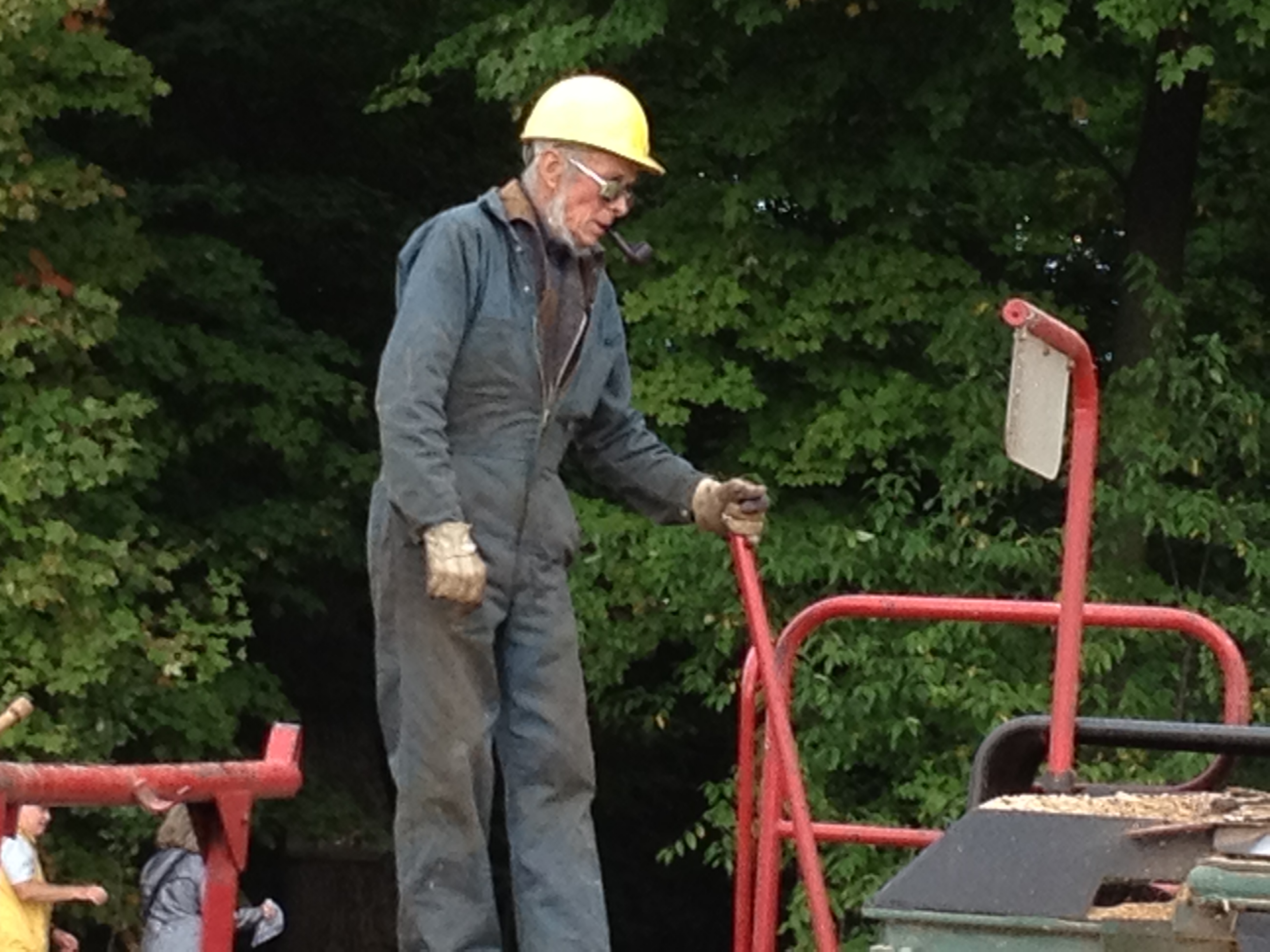
The pipe is my FAVOURITE PART

It was basically a whole day of mingling with old white farmer dudes, watching people use old-timey plows and admiring farming equipment. In a way, it was oddly comforting, or at least comfortingly familiar – I feel like a lot of my Kitchener childhood was spent around old white farmer dudes, so seeing their mutton chop beards and dingy overalls definitely gave me the warm glow of home.

Anyway, Theo basically had the time of his life. There were so many dang tractors at the show; there was even a tractor square dance. I kid you not. I bought Theo a toy tractor, which he promptly named Go and hasn’t put down since.

That night, after we got back to Toronto, I went over to my friend Caitlin’s place to help her pack for an upcoming move. Afterwards, I texted Matt to let him know that I was on my way home, and asked how Theo was doing.

The response I received was less than encouraging:

Bad. He just threw up.

Theo spent the rest of the night throwing up, and part of Saturday. Weirdly, he seemed totally fine in between bouts of vomiting – he would get ‘er done without much fuss, then run off and go about his business. He was fine all day Sunday, so we brought him to daycare this morning.

Unfortunately, Theo-the-puke-machine turned into Theo-the-poop-machine this afternoon. Which means that one of us has to stay home with him tomorrow.

So here’s where things get tricky: as Theo’s mother, and the person who has been his primary caregiver for, oh, pretty much his entire life, I feel like I should be the one to stay home. But I won’t be, because, as a person who has recently joined Elizabeth Wurtzel’s Club Of Serious Grown Ups And For-Real Feminists, I have to, you know, go to work. Matt’s job is in some ways more flexible than mine, and it was easier for him, in this particular instance, to take the time off.

This made me feel guilty. Because, really, doesn’t a sick baby need their mother most of all?

I’ve been feeling a lot of guilt lately. Granted, we’re only about two and half weeks into Theo’s daycare career, but I’m frustrated that I’m having so much trouble ironing out the bugs in our schedules. The hardest part is that I feel like I barely see him.

In a perfect world, I would only have to work two evenings a week, and would be able to pick him up mid-afternoon most days. In the real world, I’ve had to jump at a few subbing opportunities that have come my way (the first rule for new yoga teachers being Make Yourself Available), and I often find myself coming home before going to pick my kid up so that I can get a bit of housework done before Hurricane Theo returns.

I guess that what it boils down to is, what’s most important to me right now: being with my kid every moment that I’m not managing the studio, or trying to balance my Theo time with my building my career as a yoga teacher time? More and more often, I’m finding that building my career is winning out.

Why? Well, I spent the first nineteen months of Theo’s life devoting the vast majority of my time and energy to his well-being. I’m glad that I did, because that was what worked best for me and my family. But now that Theo is older, and really beginning to assert himself as his own person, daycare seems to be a really good fit for him. He’s excited to go, and he often talks about his friends there: Ella, Anand and Eliana have all come up recently in conversation. Oh, and my favourite, Jonah, which Theo pronounces “Gonad”.

It’s not that Theo and I didn’t have fun when we were home together, but I’ve realized something: this is a tough age for me. I don’t mean that Theo is difficult to be around, or that he’s throwing terrible tantrums (not yet, anyway), but I often find myself unsure of what he needs from me as a mother these days. When he was a tiny baby, it was easy to know what he wanted: me, and plenty of it. When he’s older, and we’re able to have proper conversations, I think I’ll find that easier, too. But this stage, this in-between I-need-you-but-don’t-need-you stage, is tough.

I have a hard time knowing when to inundate him with talking and singing and general in-your-faceness, and when to just let him play quietly. I feel like I spend so much of our time together chasing him away from things he’s not supposed to be touching, and trying to convince him to do whatever it is I want him to do. Maybe I’m kidding myself, but I think that being in daycare for a good chunk of the day makes him more eager to listen to me when he does get home. And instead of spending my time half-assing my way through housework while he desperately tries to get my attention (or dragging myself through it late at night, after he’s gone to bed), I can get it done quickly and easily while he’s not there.

And then there’s the whole work thing: these early days are important for networking, and I need to build a reputation as someone who is eager to work, and able to pick up classes on short notice. I’m creating a foundation for what will hopefully be a solid career. This is something that will, someday, benefit not just me, but Theo, and Matt, and any of our future kids too.

And, finally, it’s becoming increasingly important for Theo to learn that it’s not just mom who’s the solution to all of his problems. As Matt spends more and more time with him, Theo is learning that his father can be just as much of a source of tenderness and comfort as his mother can. He is learning that the world is much bigger than just one person and her boobs, and that people other than mama can be relied on to fulfill his wants and needs. The more time he spends apart from me, the better Theo is becoming at communicating just what those wants and needs are.

You guys, Theo is growing up.

I guess that what I ultimately want to say here is that being a feminist parent is about balance: learning to balance your kid’s needs with your own, and figuring out how that will shape your life. It’s about realizing that you, as a mother, do not need to be the be-all-end-all of your child’s life. You can learn to share the responsibility. You can figure out when to step back and say, I’m going to focus on myself for, like, five minutes and my kid will be just fine.

Most of all, it’s about accepting the fact that you have needs, too, and your kid does not always trump those needs, no matter what some magazine or parenting blog or conservative politician wants you to think.

Now, if only I could beef up Theo’s immune system and get him to stop bringing home these daycare bugs, I would be totally set.

How The Oatmeal Turned Me Into A Humourless Feminist

23 Sep

There’s this comic from the Oatmeal that’s been making the rounds on my Facebook feed. It’s called My dog: the paradox, and it’s basically a sequence of short vignettes about how stupid and crazy (but ultimately loveable) this dude’s dog is.

Most of it is funny and cute, but the seventh panel really rubs me the wrong way. The image is of a woman (wearing a tank top, short skirt and heels) being confronted by a furiously barking dog. Said dog is being restrained by his frustrated-looking owner. The text is as follows:

He’s hostile towards people that I’d like to get to know better.

Woman: Aw, what a cute dog. Can I pet hi-

Dog: I’LL KILL YOU! MAKE-UP SLATHERED HORSEBEAST STILLETOS AND PERFUME LYING HORSEBEAST SLAGBUCKET

Let’s be clear about a few things here:

1. I know that Matt from the Oatmeal is trying to be funny

2. I know that this is not his opinion on women

3. I don’t think that he was trying to be cruel or malicious

4. I know that most of you will say that I’m overreacting (and maybe I am)

I can’t help it, though. I read stuff like the words written above, and my heart starts to beat a little faster. I start to feel a little nervous, maybe even a little panicky. That kind of language, used against any woman in any context, makes my hands go clammy.

The thing is, even though I get that this is supposed to be a joke, I can’t find it funny. I can’t find it funny, because that line of thinking up there? Isn’t actually that uncommon.

I know, I know, it’s not real life, and the whole damn comic is supposed to be about how stupid the damn dog is, anyway. I mean, right? Only a stupid, crazy dog would think things like that about a woman. Certainly no nice, rational human being would ever say stuff like that.

Except that I’ve known nice, rational human beings who have said stuff like that. Maybe not in those exact words, and maybe not with such vitriol, but certainly the idea behind the words was the same.

She’s wearing too much makeup

She dresses like a slut

If she gets raped, it’s her own fault

All women lie

All women play games

All women are crazy

We live in a culture of casual misogyny, you guys.

We live in a culture of casual misogyny, and when Matt from the Oatmeal writes out words like the ones above, he is contributing to it, even if he doesn’t mean to. Every time someone laughs at what he’s written, and maybe thinks they find a tiny grain of truth in it, they’re contributing to it. Every time someone dismisses another person’s concern and tells them that they’re overreacting, or don’t understand the humour, or just plain need to get over it, they’re contributing to it.

What I want you to remember is this: whenever you use words like this, even as a joke, you are helping to normalize it. You are helping to perpetuate the idea that it is okay, or even funny to talk about women this way.

If you still don’t see why this bothers me, try looking at it this way: imagine that instead of being a woman, the character in the comic is Jewish, or a person of colour. Imagine that instead of saying lying horsebeast slagbucket, the dog is saying, greedy hook-nosed kike, or lazy nappy-haired n-word, or any other type of hateful speech. Would you still be fine with it?

I’m not angry, and I’m not offended. Mostly I’m disappointed, because I thought that The Oatmeal was smarter and better than this. Mostly I’m tired, because my kid was up puking all goddamn night and instead of going to bed, I decided to just start writing this post, and then I couldn’t stop. Mostly I’m sad, because I dunno, everything kind of makes me sad sometimes.

When I was a teenager, I used to get so irritated with my mother, because she would dissect everything I found funny and explain to me why it was offensive and gross. And now I get it. God help me, I get it. I’ve finally turned into the humourless feminist my mother always wanted me to be.

Don’t worry, though – I still think poop jokes are hilarious.

Shameless

23 Sep

On Thursday my piece about girl culture was featured as a guest post on Shameless Magazine’s website.

My response was as follows:

1. Stare blankly at computer screen, totally dumbstruck

2. Run around in circles, yipping excitedly

3. Run down to the store below my studio and tell the two dudes who are working

4. Try to explain to said dudes why I am so excited

5. Send my mother the following email:
MOM MOM LOOK I AM A REAL WRITER CHECK IT OUT
xoxo
Annabelle

6. Receive this in response:

Congratulations. Great Job! Of course you are a real writer. I always knew you were a writer. Love, Mom

7. Go home. Realize that I am really, truly happy. Decide not to do anything about being happy, but instead just sit there and experience it.

8. Put on a pretty dress

9. Pick up Theo from daycare and take him to the park

10. Try not to think about the future

When I say, try not to think about the future, what I mean is: I will try not to stress at this moment about what and where I will be published next. I will try not to worry about writing something amazing, about being The Best I Can Be. I will take this for what it is: pure and unadulterated awesomeness.

Image

Image

Image

This is good. This is good. This is good.

The Myth of the Woman-Child

20 Sep

My good friend Audra Williams challenged me to blog about this piece on Tavi Gevinson. Then she posted this ridiculous article from Jezebel on Facebook, and I thought I would address both of them at once. I am killing two birds with one stone! Two ugly, judgmental, anti-feminist birds!

Both articles are concerned with the girlification of today’s women. Katrina Onstad, author of the Tavi Gevinson piece, bemoans the rise of “girl culture”, complaining that the word “girl” is “wispy and feminine, destined for head-patting and glass ceilings“. Jezebel’s Deborah Schoeneman, on the other hand, uses the term “woman-child” to describe those of us she feels aren’t acting our age. The hallmarks of a woman-child are, according to Schoeneman, many and varied. She writes that, “from sporting sparkly nail polish to religiously reading every bestselling young adult novel, these women seem to be reliving their teenage years with real gusto.” 

First of all, I didn’t realize that there were rules on how to be an adult female. Maybe there’s a handbook I’m missing? The handbook that, according to Schoeneman, would tell me to watch What To Expect When You’re Expecting instead of The Hunger Games, and advise me against using nail art. Because as a lady I should want to watch movies about other lady-types having babies instead of movies about smart, strong teenage girls kicking ass and taking names, I guess. Also I should have really boring nails.

The funny thing is that Schoeneman is totally selling me on the idea of becoming a woman-child. The way that she describes the beliefs and behaviours she dislikes actually make them sound more appealing than appalling. For instance:

“[The woman-child] truly believes that women are in it together and is all about helping her friends start businesses, meet guys and pick out a cute outfit for a big event. Competiveness among females in the workplace is perceived as totally 80s.” 

I am really confused about what world Schoeneman is living in where the above would be considered a bad thing. I guess she’s maybe concerned that so-called “women-children” are naive about the way things really work? Do I need to point out that we can end competitiveness in the workplace among women if all of us would just flat-out refuse to compete?

Schoeneman is also pretty concerned about the lack of rings on ladies’ fingers and buns in their ovens. She writes that:

“The woman-child will likely get married later than the increasing national average. Advances in fertility treatments like egg freezing have also added to their confidence that they can reproduce older and potentially prolong their own girlhood.”

And this is where she (hopefully) totally lost everyone who identifies as a feminist. Because what she’s advocating here is the same old song the patriarchy keeps singing: marry young, have babies, fulfill your biological destiny, etc. It doesn’t seem to occur to her that women might want to delay (or totally avoid) marriage and children for reasons that have nothing to do with an extended adolescence. It seems like for Schoeneman, as with so many other people, a husband and child are still the ultimate goal.

Schoeneman’s article, while outwardly angrier and more condescending, is ultimately easier to dismiss. It reads like the frustrated rant of someone who has not found adulthood to be the land of fancy dinner parties and Cartier bracelets, the way she always thought it would be. It reads like she’s someone who doesn’t see herself or her style reflected in some of the current trends, and has therefore decided that the trends themselves are at fault. It reads as if she’s upset that her female friends and acquaintances have continued to be themselves, rather than morphing into SERIOUS GROWNUPS at the stroke of midnight on their 21st birthdays.

At the end of the day, Schoeneman is the one with the problem, not the so-called women-children. If the way that her friends behave is an issue for her, then she needs to find new ones. Maybe some married friends with kids?

Onstad’s article is trickier for me to dissect, in part because it talks a lot about the dangers of nostalgia, and I am a total nostalgia machine.

First off, Onstad begins by complaining about the use of the word girl to describe grown women, writing that “…a roaring, shag-cut “woman” is a powerful agent“, whereas “girl” is “the word before the drunken grope“, as if those four little letters are somehow responsible for what she perceives to be the diminishment of feminism. As if the very word girl is somehow responsible for the “drunken gropes” and everything else we’re subject to.

Onstad uses this opening to segue into a sort of review of Tavi Gevinson’s Rookie Yearbook One, a collection of pieces (and “girlie ephemera” like stickers and a 45) that mostly come from Rookie, Gevinson’s online magazine. 16 year old Gevinson is, Onstad assures us, an actual girl (and thus, I guess, allowed to call herself that), and her magazine is aimed at teenagers.

Onstad begins by praising the honesty and authenticity of Rookie Yearbook One, and then starts veering towards the but that you’ve been sensing since the beginning of the article. Rooke Yearbook One is great and all, Onstad tells us, BUT it is totally, totally nostalgic for the 90s. Ah, the wonderful 90s, described by Onstad as, “the time when “slut” was lipsticked across bellies and Donita Sparks of the band L7 threw her tampon into the audience“. Those were good times, right?

Onstad then draws the following conclusion:

Perhaps this, then, is why a surprising chunk of Rookie’s girl culture is about the former passions of 30- and 40-somethings. The promise of that tough, smart, sexually confident ’90s “girl” never died, but it’s never quite been realized either. For women of a certain age, it’s intoxicating – and possibly narcissistic – to revisit the pop trappings of girlhood, and attempt to make sense of what happened.

And, you know, this is where it gets tough for me, because revisiting the trappings of my girlhood in an attempt to make sense of what happened is, like, my favourite thing to do. So there’s a part of me that wants to call Onstad up and be like, okay, you got me, guilty as charged.

But then I think, hang on. Let’s hold the metaphorical phone, Joan. First of all, Tavi Gevinson was only a tiny kid in the 90s, which makes it pretty damn hard for her to feel nostalgic about them. Like many (most?) teenagers, she probably feels dissatisfied with the current state of teenager affairs, and perhaps thinks that things were better (or at least more riot grrrrrl-y) 20 years ago. I went through a phase like that, too, except it involved me wearing tie-dye and listening to bands from the 60s (much to my mother’s amusement/dismay). It wasn’t that I was nostalgic for that time – how could I have been? – it was that I was struggling to figure out where I fit in the particular pop culture landscape that I inhabited.

As for those of us who lived through the 90s, it’s hard not to look back and think that yeah, badass ladies were having a moment back then. I don’t think that this is so much nostalgia, though, as it is a desire to figure out how to bring about a similar moment for the badass ladies of this decade. It’s not wallowing in narcissism and the pop trappings of girlhood, it’s a need to sift through the past, to sort the bad from the good so that we can figure out what needs to be discarded and what we can keep.

And yeah, I’ll admit, the idea that there’s a smart, savvy generation of girls eager to take up the mantle of badassery and fight the good fight is pretty damn intoxicating.

Finally, let’s take a look at the term “man-child”, the male cultural counterpart to the “woman-child”. A “man-child” is typically described as someone who is emotionally immature, often refusing to own up to his responsibilities. A “man-child” often lacks any sort of motivation, and prefers to avoid many of the milestones of adulthood. Now, contrast that to the descriptions above of the “woman-child” as someone who reads YA books and wears sparkly nail polish. A man is a “man-child” because of his total lack of maturity; a woman is called a “woman-child” based on her likes and interests alone.

So, basically what I’m saying here is, fuck the patriarchy, and fuck this anti-woman bullshit. A woman can like whatever she wants, can wear whatever she wants, etc. By believing that they should avoid certain cultural phenomena just because it’s perceived as being young or girlish, Schoeneman and Onstad are missing out on a lot of good stuff. By telling us that we should avoid these things as well, they are attempting to create an even narrower definition of how we, as women, should behave. And believing that the way forward is to put limits on what a woman can like, say, or do is, like, the least feminist thing ever.

So there.

“Hi, it’s me, Tavi. I am way cooler than you. I mean, in case you were wondering.”

20 books that I hope Theo reads when he’s older, part II

17 Sep

If you liked the first post in this series, maybe you will like this one! Then again, maybe not. There are no guarantees in this life.

So, welcome to part two! Let’s check out the next five books. And again, keep in mind that these are books that I haven’t read in 20+ years, so what I’m giving you is the dominant impression they’ve left on me after all this time.

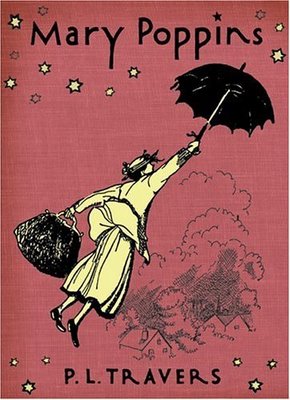
6. Mary Poppins by P.L. Travers, 1934

First of all, the Mary Poppins books (this one is actually the first in a series) are pretty different from the movie. For one thing, there are FOUR kids in the family, not two, and the book is set in the 1930s, not the early 1900s.

Another thing: Mary is a total badass bitch in the books. She isn’t kind or loving, or, you know, nannyish. She’s actually totally domineering and strict, and she’s, like, really, really full of herself. Like, she can’t pass a shop window without looking at her reflection and thinking about how great she is.

Needless to say, the kids adore her.

Of course, Mary Poppins has the same magical abilities in the books as she did in the movie. Unlike in the movie, she totally pretends that she doesn’t take the kids out on awesome adventures. Whenever the kids are all like, hey remember that time we did that cool thing, she’s all, I’M SURE I DON’T KNOW WHAT YOU’RE TALKING ABOUT. She’s ballsy, is what I’m trying to get at here.

There is one line in the book that basically sums Mary up perfectly:

There was something strange and extraordinary about her – something that was frightening and at the same time most exciting.”

And she is kind of scary in the books, which I love. I’m a firm believer in the idea that kids need to encounter frightening things (within safe contexts) in order to learn how to deal with fear. So high five, Scary Mary!

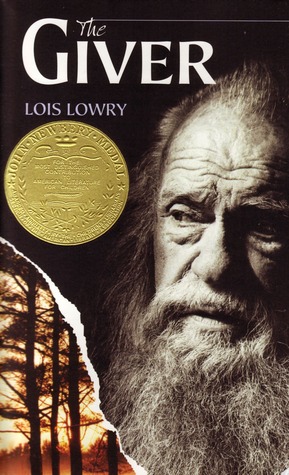
7. The Giver, by Lois Lowry

So! This is the first dystopian book that I ever read. I like to think that encountering this book in my younger and more impressionable years helped set me up for a lifetime of loving this genre.

This book is so creepy, you guys. So creepy. Okay, so it’s the future and the world is totally devoid of anything that might make life tricky, including but not limited to: religion, culture, war, colour, climate, socioeconomic circumstances, and any and all choice, including who your life partner is and what you do for a living.

Oh, and also there is no sex. Nobody has sex in the future. They take pills to repress their sexual urges, and babies are born from women who are assigned the role of “birth mothers”. I’m assuming that these women are artificially inseminated, but what do I know? Maybe there are some crazy, behind-the-scenes orgies happening.

Anyway, the interesting thing about this book is that there were a lot of things about the dystopian world that appealed to me. I mean, everybody seemed pretty happy, right? Pretty content with their lives. And, possibly because so much is provided by the state (food, clothing, etc.) and there is no socioeconomic gap, there doesn’t seem to be any bullying or cruelty between people. I mean, sure, we find out later that part of the reason for this is that if you’re too different, you get released (i.e. euthanized), but still.

Then there’s the whole being assigned your career at the age of 11. Okay, kind of crazy, but also kind of cool? I mean, who hasn’t felt overwhelmed by the fact of having to decide what you are going to do for the rest of your life? I know that when I was in my teens and trying to figure out what I wanted to take at university, and what high school courses I would need to get myself there, the choice seemed incredibly daunting. And in The Giver, it’s not like the career assignments are totally random – the kids are carefully observed by a committee for years before they’re assigned their job. Plus, free education and training!

But then, of course, you start realizing what these people have given up in order to have their safe, happy society. They’ve given up on everything that makes life really good. They’ve given up anything that gives life meaning. And they’ve totally, totally given up feelings, which, while that concept occasionally seems appealing to me, is basically what makes us human. Oh yeah, and there’s also that whole euthanizing-anyone-who-doesn’t-fit-in-and-also-old-people thing. I mean, that part also sucks.

Writing this whole thing out has made me realize that The Giver is kind of a Brave New World junior, which is amazing. It’s a great book to get kids thinking critically, and a good way to introduce them to the whole dystopian genre. What I really hope that Theo takes away from this is that being different is a good thing, feelings are scary but awesome, and the fact that getting rid of all the bad things in the world would likely mean giving up a lot of the good things, too.

Oh, and that killing people just because they’re old is a bad idea. I also hope he learns that.

8. The Little House Books, by Laura Ingalls Wilder

These books are the best. The best. I re-read them around the time that Theo was born, and they are just as compelling and entertaining as I remember them being when I was a kid. Possibly even more so now that I understand more about their historical and political context.

There is so much to love in these books. First of all, there’s Laura herself, a smart, adventurous, resourceful girl who often chafes at society’s narrow definition of what women should and shouldn’t do. She spends a lot of time in her younger years being compared unfavourably to her older sister Mary (Mary was blond-haired, blue-eyed and well-behaved, whereas Laura was something of a hellion and, in her own words, “dumpy as a French horse” – whatever that means), but Laura is clearly the cooler of the two.

Then there’s her family, and the description of their daily life from their early days of living in a cabin in the Wisconsin woods, to their eventual permanent home on the South Dakota prairies. I used to daydream about what it would be like to live like that, because when I was seven or eight it seemed super lovely and romantic.

In reality, it was a really fucking hard life. Imagine being stuck on the bleak prairies and seeing only your immediate family for months at a time. Imagine moving there with only a few supplies, having to build your own house and then trying to live off the land for long enough that the government will give it to you for free. Somehow, it doesn’t really hold the same appeal for me that it once did. I guess the Ingalls family liked, it though – they kept at it, and in the end they persevered.

And, somehow, Laura made a lot of it sound like fun.

Finally, there’s all kinds of neat, historical stuff in here. Some of it is totally random and weird – like, in the first book, when they butcher the pig (which is basically like Christmas for them), Pa Ingalls blows up the pig’s bladder like a balloon and gives it to Laura to play with. Some of it offers a historical perspective that I’d never considered before, like when Laura is terrified  to ride on a train because they’re so dangerous. Most of the stuff about their daily life is just downright fascinating.

It’s too bad that this series has been relegated to the land of “girls books”, because, other than the fact that the protagonist is a girl, there’s nothing especially girl-specific about them. I really hope that doesn’t stop Theo from reading and enjoying them.

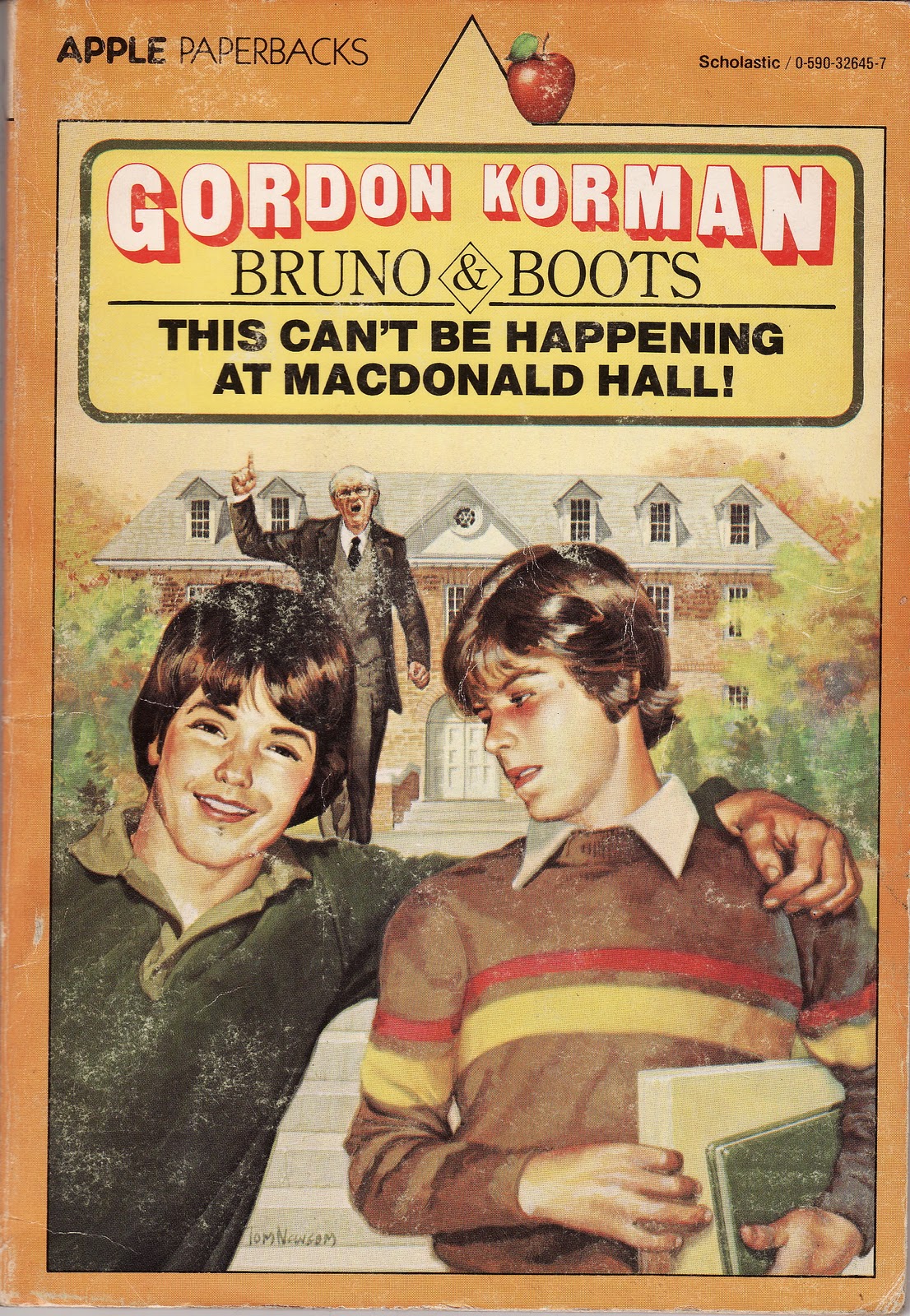
9. The Bruno and Boots books by Gordon Korman

This is a series about a bunch of boys at a private boarding school in southern Ontario. Specifically, it’s about Bruno Walton, his roommate Melvin “Boots” O’Neal and their many, many shenanigans.

I’m a sucker for boarding school stories, possibly because I spent several of my formative years reading any and all boarding school books by Enid Blyton. Except that while all of Blyton’s protagonists were boring and moral, the boys at McDonald Hall (and the girls Miss Scrimmage’s Finishing School for Young Ladies across the highway) are hilarious, awesome and always up to something.

Also, one of the books features a girl playing football on the boys’ team. So, you know, FEMINISM.

10. The Secret Garden, by Frances Hodgson Burnett

Let’s be honest: Mary Lennox is a spoiled, privileged bitch who doesn’t even know how to dress herself. But also she’s kind of awesome?

Mary has kind of a shitty childhood in India before her parents die. Sure, she gets just about anything she asks for, but she spends basically zero time with her parents, whose main goal in life is to pretend that they don’t have a kid. Anyway, then there’s a cholera epidemic (leading to a nightmare-inspiring scene in which Mary is the only person left alive in a house where people have become ill/left town so quickly that they’ve literally left their dinner on the table), Mary is orphaned and sent to live with her uncle in England.

Things are kind of terrible in England at first, but then Mary learns how to put her own damn clothes on, starts exploring the great outdoors and befriends her maid Martha’s brother Dickon. Mary discovers the so-called Secret Garden, which has been locked up since her aunt died, and discovers the magic of Growing Things. Oh and her bitchiness totally fixes her hypochondriac cousin and her depressed uncle. Score one for bitchy girls!

I dunno, you guys. This book is just so lovely. Like, check this out:

“One of the strange things about living in the world is that it is only now and then one is quite sure one is going to live forever and ever and ever. One knows it sometimes when one gets up at the tender solemn dawn-time and goes out and stands out and throws one’s head far back and looks up and up and watches the pale sky slowly changing and flushing and marvelous unknown things happening until the East almost makes one cry out and one’s heart stands still at the strange unchanging majesty of the rising of the sun–which has been happening every morning for thousands and thousands and thousands of years. One knows it then for a moment or so. And one knows it sometimes when one stands by oneself in a wood at sunset and the mysterious deep gold stillness slanting through and under the branches seems to be saying slowly again and again something one cannot quite hear, however much one tries. Then sometimes the immense quiet of the dark blue at night with the millions of stars waiting and watching makes one sure; and sometimes a sound of far-off music makes it true; and sometimes a look in someone’s eyes.”

Ugh. You guys. My heart. I am such a sucker for Victorian prose about nature.

This is another book that’s usually considered a girlish book, but you know what? For one thing, I don’t care about that stuff, and for another, TWO of the damn protagonists are boys. I hope Theo reads and loves this one as well.

Anyway, that’s all for now. Stay tuned for part 3 of 4! I’m sure I’ll get to it. Someday.

Lovely Blog Award

3 Sep

This is a fairly new blog, so it kind of came out of left field when my friend over at Playful Meanderings nominated me for a blog award. I’d never heard about these before, but it seems like a fantastic way to pay it forward to other bloggers you love.

And, of course, it’s the perfect opportunity for oversharing. My favourite!

Now for the rules:

1. Thank the person who nominated you.

Thank you! Oh, and the rest of you should go check out her blog, especially if you’re a book-lover. Her writing is wonderful and entertaining!

2. Add The One Lovely Blog Award to your post.

Done and done

3. Share 7 things about yourself.

(1) I have my cat Phantom’s ashes in my bedroom closet. He was the cat I had growing up, and he was just the best. I can’t even explain to you how great he was. One time he stole a whole pork chop off my sister’s plate! And he used to cuddle with me and try to groom me. Awww. I wish I could tell you SO MANY STORIES about him, but you’d probably get bored really fast.

I moved across the country to go to university when Phantom was 12 years old. He was already having health problems by then – arthritis and a heart murmur. He was supposed to be on a diet to lessen the pressure on his joints and his heart, but he was, like, a ninja master when it came to stealing food. One time he ate my sisters birthday cake (many of my stories about Phantom begin with “one time he ate”).

Every time I came home he would sleep in my bed, or, if I was home but out of the house, in my suitcase. As soon as I came through the door he forgot about the rest of my family and he went back to being a one-woman cat.

One day, in the spring of 2004, my phone rang. I picked up the receiver and heard my sister Catherine crying on the other end. Annie, she said, he’s gone.

I didn’t need to ask who, only when and how.

Tonight, she said, it was a heart attack. Annie, when it started he ran to your room. He ran under your bed. He was looking for you.

I never thought I would cry so hard over a cat.

That year, when I went home for Christmas, my mother asked me if I wanted Phantom’s ashes. No, I said, what would I do with his ashes? She told me if I didn’t take them, she’d throw them in the garbage.

On New Year’s eve, my train pulled into Halifax. Phantom’s ashes were tucked deep inside my suitcase, wrapped in a protective sweater.

They sit in my closet now. I don’t really know what to do with them; if I were to bury or sprinkle them, I would want to do it in a place he knew, but there are none of those close by to me. Besides, I’ve kind of gotten used to having him around. It’s weird, I know.

Sometimes, when I’m throwing a party, I’ll disappear into the bedroom after I’ve had a few drinks. When I come back out I’m clutching a little grey urn. You guys, you guys, I say, this is my cat Phantom. Want to hear about him?

I throw good parties. You should come to one sometime.

Phantom, in his livelier days

(2) When I was in second grade I faked being left-handed for a whole month because I thought it made me more interesting.

(3) I have an embroidered picture of Sylvia Plath hanging on my dining room wall. She’s so great! I like the way she glares at me while I eat breakfast.

Hey Annabelle, guess what? I eat men like air.

(4) Theo’s birthday is the day before my grandfather’s birthday. My grandfather was named Ernest Joseph, which are Theo’s middle names.

Grampy died of pancreatic cancer on November 3rd, 1999, at home. I flew to Nova Scotia for the funeral; the church pews were packed and people had to stand at the back.

The last fruit he ate was a pomegranate, shared with my Aunt Carolyn, which seems strangely symbolic somehow, I mean what with Persephone and Hades and all. Now, every year on November 3rd, I eat a pomegranate and think about him.

I still miss him, a lot.

Theo might look like his dad, but he obviously gets his snappy dresser genes from Grampy:

(5) My friend Jessica did this amazing sketch last night of me as a suffragette, beating up policemen.

(6) I eat Montreal bagels like they’re going out of style. I think anyone who eats New York bagels is wrong and gross. Kidding! Kidding. Sort of.

(7) I was almost picked up by the police in Halifax.

See, there was this really big snow storm (a snow bomb, they kept calling it). The city was totally shut down; trucks with food and supplies were even having a hard time getting in. I can’t even emphasize just how much snow there was. So the government decided that they would plow like crazy at night, and dump all of the snow into the harbour.

Of course, they didn’t want to, you know, accidentally kill anyone while plowing like crazy. So they instituted a curfew of 10 pm, and said that anyone out on the streets after that time would be subject to a $1,000 fine.

My friends and I decided to have a Fuck The Curfew party. The plan was that I would crash with my friend Kat, who was hosting the party, thus avoiding the whole, you know, fine thing. Naturally, after a few drinks I came to two conclusions: a) I really, really wanted to sleep in my own bed and b) I was invincible and would never be caught by the police.

I was most of the way through the Commons before a police car pulled up beside me. I started panicking when the door opened and a police officer stuck her head out.

You know you’re not supposed to be out, right?

Boy, did I know. Shit, what was I going to do? I did the only thing my plastered brain could come up with: I lied like a motherfucker.

Yeah, I know, I said. But, see, my boyfriend and I just had a fight. A really big one. He kicked me out. I just need to go home.

I started crying, partly out of mad acting skills, partly out of the realization that there was no fucking way I could afford that fine.

The officer sighed and told me to get in the car. She drove me home, and not a word was said about the fine. Thank God.

4. Pass the award on to 15 nominees.

I’m shortening this list to 10, because I really don’t know too many blogs yet.

Audra Williams – Audra is a superstar badass feminist who likes to kick ass and take names, but ALSO talk about feelings. She also wears awesome clothes. Those are the main reasons we’re friends.

The Yellow Blanket – a beautifully, anonymously-written blog about pregnancy loss and infertility. The post about the author’s mother’s death from alcoholism had me in tears.

Make Me A Sammich – more awesome, well-written feminist fun! Plus, her blog name is just the best.

Crates And Ribbons – and still MORE awesome feminist writing! I especially loved her post about Game Of Thrones.

101 Books – If you love books, you need to read this blog.

Toronto Nanny – L gives a fascinating perspective on the life of a nanny. If you have kids, you should check her out, because it’s pretty dang interesting! If you don’t have kids, you should also check her out because she’s a good writer.

Cristian Mihai – makes writing about writing truly interesting. I really love his blog. If you are a writer trying to get published, you should really check him out.

The Falco Project – a blog about a transexual man’s journey to pregnancy and parenthood. The best part is that he and his partner refer to their future offspring as Falco. Amazing! I feel like I’ve learned so much from this blog.

Mama To Bean – this is my sister-in-law’s sister-in-law, which makes her my sister-in-law-twice-removed? I dunno. She’s also my friend! She recently had an incredibly adorable baby, and I’m hoping that this will be a kick in the pants to her to start blogging again.

The Adventures of Trans Man – This is a hilarious and honest blog about a trans man (duh) and his family. I love reading it. I especially love the pictures of Keith Richards.

You should go check them out, they are all fantastic!

5. Include this set of rules.

Done

6. Inform your nominees by posting a comment on their blogs

Will do!

An open letter to Stephanie Fairyington (or, breastfeeding and feminism)

1 Sep

Dear Ms. Fairyington,

Before we start, can I just say that you have an awesome last name? Your last name is totally rad. It has the word fairy in it! I bet you hear that a lot. Anyway, just wanted to get that out before we move on to the more serious stuff.

So. This article that you wrote for the New York Observer, Time for Feminists to Stop Arguing About Breastfeeding and Fight for Better Formula – I just read it, and now I feel like I have a few things that I want to say to you.

First of all, I should probably give you some idea of where I’m coming from: I am a breastfeeding advocate, who is still nursing her 19 month old son, and I am a feminist. Oh, and I also run a yoga studio, which, as you pointed out in your article, would totally be a pumping-friendly environment if I was pumping. Which I’m not.

Second of all, I want to tell you how wholeheartedly I agree with the first part of your title. It is time for feminists to stop arguing about breastfeeding. Boy is it ever.

I’ll be totally honest with you – I do truly believe that breast milk is superior to formula. I would be thrilled if every woman chose to breastfeed, and was physically able to do so. I think breastfeeding is the best start in life that you can give a kid (well, that and a killer wardrobe), and I really wish that there was more in the way of education and resources dedicated to breastfeeding.

But I realize that some women are physically incapable of breastfeeding. Some women aren’t able to pump at work. Some women find the act of breastfeeding triggering due to past sexual assault. Sometimes formula is actually better for the baby’s health, in cases with severe health issues or allergies. And sometimes women just plain don’t want to.

As a feminist, I respect any choice that you make with regards to your body. If you want to terminate a pregnancy, I respect that. If you want to earn money as a sex worker, I respect that. If you don’t want to breastfeed, I respect that. Know why? Because I believe in bodily autonomy.

Which means that you should extend the same courtesy to me.

Which brings me to my second point, namely the fact that you believe that breastfeeding “stymies the progress of feminism“.

The first thing you mention in conjunction with this idea are some concerns you have with regards to the Latch On NYC initiative.

You begin by saying that,

Under the new rules, about two dozen hospitals will discourage new moms from formula-feeding by educating them on the benefits of breast milk … ”

This actually isn’t a new rule. According to this, it has been New York State law for the past three years that new mothers must be provided with accurate information regarding breastfeeding. So that actually has nothing to do with Latch On NYC, or Mayor Bloomberg.

You then go on to say,

” … [hospitals] will not provide formula unless medically indicated on the infant’s chart or requested by the mother. The rules will also prohibit formula freebies and ads in hospitals.”

I honestly fail to see how anyone could think this is a bad thing. Formula won’t be provided unless the mother asks for it – meaning that the staff can’t give the baby formula without the mother’s consent. Which does happen, believe it or not.

Furthermore, formula companies have no place advertising in hospitals or offering mothers free samples. Do you think that they do this out of the goodness of their heart, so that babies don’t starve? No, they’re looking for customers. I would think that you, as a future buyer of formula, would actually be happy that they will no longer be spending money on advertisements and freebies. Those “freebies” aren’t really free – they’re paid for by the company’s revenue, which comes from consumers like you.

Next, you say that,

The notion that “breast is best” simply because it’s natural sounds ringingly similar to the arguments made by pro-lifers and even contraception opponents, all of which begin with the same basic premise: women should be shackled to their corporeal destinies.”

There are many scientific studies proving that breast milk is nutritionally superior to and more biologically advantageous than formula. But that’s not the whole reason I decided to breastfeed.

I also decided to breastfeed because I’m cheap and lazy.

Breast milk is free and, living in Canada, I had a full year of maternity leave and thus was spared the cost of a breast pump. That being said, even a one-time investment in a breast pump is less expensive than buying can after can of formula.

And as much as I hate getting up in the middle of the night to nurse my son, I would hate even more having to get up and make him a bottle. Plus, I don’t have to do any of the sterilizing and cleaning of feeding supplies.

So please don’t think that all the pro-breastfeeding arguments boil down to “but it’s natural!”, because there’s so much more to it than that.

Next, you bring up the idea that breastfeeding is anti-feminist because,

A bottle positions men and women equally over the care of infants, while breastfeeding cements the notion that women are central to the process of nurturing children. Wasn’t feminism all about de-emphasizing our corporeality by arguing that our bodies should not define or limit our rights and responsibilities?”

No, my husband doesn’t breastfeed our son, but we do try to share our parenting duties equally. Yes, earlier on I was doing more work – all of the feedings were my responsibility of course (although we did decide that all of the diaper changes that happened when my husband was at home were his job). All of the gestating was also my job – shitty deal!

But, as my son grew older, my husband was able to take over more and more parenting duties. For example, he takes care of our entire nighttime routine – he’s usually the one to feed our son dinner, since I’m often working in the evening, and is always the one to give him his bath and put him to bed. It’s true that our roles in our son’s life remain somewhat different, but then “equal” does not mean “exactly the same”.

And, I’m sorry, but I thought that feminism was all about giving women choices – the choice to have children, or not to have children, the choice to breastfeed or formula feed, the choice to manage a yoga studio or be a children’s therapist who sees an exhausting number of clients. The point of feminism is that we work together to achieve equality, instead of tearing each other down over every little thing.

Finally, you complain that breastfeeding is holding women back because it reinforces women’s “parental centrality” and “undervalues fathers”. You say that this is holding women back in the work force. You also mention how difficult breastfeeding is because many workplaces aren’t equipped to deal with women who need to pump.

Wouldn’t a better idea be to work to change how society views motherhood, and to fight for better regulations regarding pumping at work? How is limiting women’s choices in any way, shape or form a feminist idea?

You write as if formula is somehow under attack when, in fact, it’s still the status quo. By 6 months of age, 52.8% of all infants are formula-fed. Trust me, you’re not a dying breed.

You write as if formula feeding doesn’t, in many ways, reinforce the patriarchy – for example, the idea that women shouldn’t expose themselves while feeding their child in public. Or how about the idea that a woman’s milk simply isn’t good enough or sufficient for a growing baby? In spite of the evidence to the contrary, this myth still persists. Or, my favourite, the fact that so many women and their partners want their breasts to remain exclusively sexual. If that’s not patriarchal conditioning, I don’t know what is.

And finally, I do agree with you that we should continue to work to improve formula, to try to make it more like breast milk. But I also think that we should continue to educate and encourage women when it comes to breastfeeding. Because, unlike you, many women go into parenthood wanting to breastfeed, and we should be offering them the support and resources they need to do that. I would hate to see a woman be forced to wean her child just because she lacked knowledge or support for her breastfeeding.

Anyway, I’m sure you’ll dismiss this whole letter as “nostalgia and conservative orthodoxy”, and that’s okay too. You can certainly believe whatever you want, just as you can do whatever you want with your own body. Just as I can do whatever I want with my body.

And that, Ms. Fairyington, is feminism.

Sincerely,

Annabelle

Multitasking!

Ugly Acceptance Part II

31 Aug

See, I knew I would come to regret writing and posting a giant rant at one o’clock in the morning. Because now, reading back, and reading your awesome comments, I realize that there are a few things that I want to add, or explain.

First of all, my main point is that appearance-based compliments and insults are our go-to when it comes to women. I remember going through a really tough time in my early twenties and, when I went to the doctor to tell him how sad and hopeless I felt, he said, but you’ve got everything going for you – you’re young, attractive, and you’ve got your whole life ahead of you.

Er, what? How was that even a response to the problems that I was trying to fix?

When we want to make a woman feel good, we often tell her how pretty she is, how nice her hair is, or how well she’s dressed. And I don’t think that these things are bad in and of themselves, but I do think that this is indicative of how our society continues to view women. We consider a woman’s appearance to be her most important asset, plain and simple.

My friend L over at Life In Pint-Sized Form also posted about Ugly Acceptance, and I think she made a lot of really wonderful and succinct points. My favourite is this one:

” … the Ugly Acceptance movement … isn’t about accepting that you, personally, are ugly. It’s about accepting that beauty doesn’t fit into glossy little boxes with bows on the top.”

Yes, exactly. I’m not trying to say that you are ugly, what I’m saying is that all women, even incredibly beautiful celebrities, feel ugly sometimes. No woman can ever fully achieve the incredibly high standards for beauty that our society sets. And the thing is, I am tired of feeling like that is something that I need to achieve.

To go back to my original story about my trip to the doctor, imagine that same story but with a depressed young man in place of a young woman. Would that doctor ever try to comfort a sad, hopeless man by telling him that he was beautiful? Not bloody likely.

The next time you want to give someone a little pick-me-up, want to say something that will make them feel better, try to stay away from compliments about their appearance. Or, if you do really want to remind them that they’re pretty, add that they are also smart, and funny, and valuable to you as a friend. Praise their accomplishments and positive personality traits instead of their looks. Admire the things about them that they have control over, that they have done for themselves, instead of resorting to the old standard, but you’re bee-yoo-tee-ful.

For once, try to look beneath the surface, and see straight into that person’s heart (use your x-ray goggles for this). Chances are it’s beautiful, too.

See? So pretty.

See? So pretty.

The Ugly Acceptance Movement (or, a term I sort of just made up right now)

31 Aug

My sister and I went to see The Dark Knight Rises last night, and it was fine and all (especially Christian Bale), but there was something about it that really irritated me. It’s something that bothers me just about any time I go to see a movie, or watch a television show, or whatever: there were no ugly women.

This was a movie full of many dudes, some of whom were extremely attractive (again, Christian Bale, I am looking at you) and some of whom were what I would describe as “not conventionally attractive”. There were two women in the movie. Both were thin and polished and beautiful. Of course.

I am so fucking sick of all of these movies where men are allowed to be schlubby, or hook-nosed, or Steve Buscemi and still end up with a smoking-hot girl at the end. I am so fucking sick of movies where a girl is ugly because she wears glasses, or has braces, or favours big baggy sweaters – and then she takes off her glasses and blammo, she’s Rachael Fucking Leigh Cook.

I just want to turn on my television and see someone who looks like me. Someone with bad skin and squinty eyes and a big nose. I want to be able to go outside without feeling like I have to put on a layer of makeup before I can pass as presentable. I want to not feel like a disgusting monster approximately 43% of the time.

There have been times in my life when I would have been willing to trade any and all of my many sterling qualities for a pretty face. That’s gross, and it makes me feel gross to type it out, but it’s true.

Have you ever noticed how many men think that the gravest insult they can sling at a girl is to call her ugly? Anytime they want to make it clear how great their distain is for a woman, her life, and her entire body of work, they call her ugly. Anytime they want to dismiss a woman, her thoughts and feelings and smarts, they call her ugly. When they want to mock or insult another man, they call the object of his affections ugly.

I am fucking sick of it, do you hear me? I am sick of ugly being this horrible, shameful thing to be called. I am sick of appearance-based insults being the very worst thing that people can think of.

I am not writing this because I want you to believe that everyone is beautiful, or because I’m fishing for compliments, or whatever. What I want you to realize is that ugly is normal. Ugly is what the majority of people look like without makeup or airbrushing or clever lighting. Ugly just means that you don’t conform with society’s rigid beauty standards.

So here’s my homework for you: go watch some Coronation Street. Check out how many ugly women are on that show. Notice that their lives really aren’t that different from their more attractive counterparts, and also note their hot boyfriends, and not-hot boyfriends. Notice that you are watching television and you are actually seeing people who maybe look like you. Oh, and if you need someone to catch you up on the last twenty years or so of the show, give my mom a call and I’m sure she’ll be happy to oblige.

I guess what I’m really saying here is, fuck society’s boring, homogeneous ideas of what beauty is. Maybe I’m ugly, and maybe it’s fine. So who’s going to help me write the Ugly Woman’s Manifesto?

Oh and the first person to leave a comment telling me that I’m pretty gets a knee to the groin.

Hollywood’s idea of “ugly” – quick, avert your eyes before Medusa here turns you to stone

Optimism is better than despair (or, What Would Jack Do?)

23 Aug

A year ago today the rest of Canada and I woke up to learn that Jack Layton had died. A man who had worked tirelessly to better our country, who had spent his life fighting for equality for all Canadians, was gone. I was in shock. I didn’t know what to do.

My friend Mandi and I had a coffee date that morning, so I packed Theo up in his stroller and set out for her place in the east end. Did you hear about Jack? I whispered to her, as if it was some kind of secret. As if saying it out loud would make it true.

She lived around the corner from his office, and we had to walk by it to get to the coffee shop. I want to get some flowers, I told her, to leave in front of his office. But there were no flower shops nearby – just a few East Chinatown convenience stores. The only plant we could find was a little pot of stunted bamboo shoots.

He’ll like it, I said to Mandi, after all, his wife is Chinese.

We started giggling and couldn’t stop. It was easier than crying, or at the very least more socially appropriate.

That week I watched in awe as Torontonians came together to share their love for Jack. Our famously cold, unfriendly city began to bare its soul in chalk messages written all over Nathan Phillips Square. When thunderstorms washed away the chalk, the people came back and filled the square with writing all over again. I have rarely seen something more beautiful than that.

I think that what Jack would have loved most of all was the unity among the people of Toronto that week. All of us, from all walks of life, keenly felt his absence. Although many of us might not have realized what we’d had while he was still living, we suddenly realized how much we’d lost after his death.

Tonight I went back to Nathan Phillips Square for Dear Jack: A Celebration. Much like last year, there were chalk messages written everywhere, and there was a large orange-bedecked crowd milling around. Most of the evening was lovely; I enjoyed the performances (especially Raffi!), and it broke my heart in just the right way to hear Olivia Chow speak about Jack. But I was frustrated that some people chose to use tonight as a platform for their political ideologies.

One woman wrote “Dear Jack, Toronto apologizes for Rob Ford. At least you missed that!” And I thought, how is this a response to someone who asked for love, hope and optimism? Or, as my friend Melissa said, we have 364 days a year to trash Rob Ford – couldn’t we use today as a time to get together to mourn, love, and look towards the future?

I’m glad I went, though. Theo enjoyed running around and playing with the chalk, and I loved running into various friends, exchanging hugs and murmurs of I can’t believe it’s been a year.

We miss you, Jack. I miss you. Thank you for everything you did. Most of all, thank you for inspiring us to continue to fight to build a better country, for helping us to believe in a more loving and just world. I think that your true legacy is the group of people who are using what you’ve built as a starting point, and are now running headlong towards the future, spreading love, hope and optimism along the way.

I won’t let anyone tell me it can’t be done. I will change the world.