Tag Archives: down with the patriarchy

On Miley Cyrus and Racism

26 Aug

So this happened last night:

… and the internet (predictably) exploded.

And just to be clear, I agree that what Miley did was frankly disgusting, but not for the reasons that you might think.

Most of the criticism of Miley’s VMA performance has focussed on her attire and dancing style, with people claiming that her dress (or rather, state of undress) and sexual movements were vulgar, degrading and slutty. Quite a few people mentioned that her parents must be ashamed; there was a lot of discussion about how sad it was that sweet, innocent Hannah Montana had come to this. I saw a lot of derisive remarks about how Miley wants attention at any cost; some even went so far to say that Miley is sick and that this behaviour was a cry for help.

Then, this morning, I watched a fuckton of white feminists totally ignore the racist aspects of what Miley did in their rush to defend her from slut-shaming.

Now, let’s be clear: there was definitely a lot of slut-shaming going on, and it was really fucking disgusting. But what was equally disgusting was white feminists’ silence over Miley’s minstrel show.

What Miley is doing is cultural appropriation. She, a wealthy white woman, is taking elements from black culture in order to achieve a specific image. Her status as a member of a traditionally oppressive race and class means that she is able to pick and choose what parts of black culture she wants to embrace without having to deal with the racism and racialization that black women live with every day. In short, she can imagine that she is being “ghetto” without having any concept of what living in a ghetto would really mean.

Miley is doing her best to promote herself as a part of rachet culture, which Jody Rosen describes as “the potent sexual symbolism of black female bodies,” while simultaneously treating the black women in her videos and performances as props. She is taking elements of black culture and using them to give her the patina of street cred that she wants so badly. She is playing at being black without even trying to understand what the lived experience of being black really is. She is appropriating cultural elements without taking any time to reflect on her position of privilege and how her use of the term “ratchet” or her twerking are contributing to the oppression of black people.

Even worse, in her performance last night Miley used black women as props – like, literal props – and barely anyone said anything. I saw very few people displaying any outrage over the fact that Miley was, at one point, slapping a faceless black woman on the ass as if she was nothing more than a thing for Miley to dominate and humiliate. I saw barely anyone discussing the fact that Miley’s sexual empowerment, or whatever you want to call it, should not come at the cost of degrading black women. I saw a whole lot of people giving Miley a pass for her behaviour because she’s young and naive and sheltered.

I saw many prominent white feminists use their sizeable platforms to defend Miley’s right to rub her ass on Robin Thicke while wearing flesh-coloured bra and panties.  I watched as those same people remained embarrassingly silent about Miley’s behaviour towards black women and black culture.

And I think that I get it? Sort of, maybe? I think that white feminists are worried that if they’re seen criticizing certain aspects of Miley’s performance, then that will somehow invalidate their defence of her right to express her sexuality however. It’s as if they’re worried that someone will jump in and say, aha so if you admit that there was something wrong with her performance, then you aren’t allowed to decry our criticism of her. That’s not how it works, though. Not by a long shot.

The thing is, it’s not an either-or type situation. We can and should be able to say both that Miley’s sexuality is her own and hers to use in whatever manner she chooses while at the same time acknowledge that Miley’s cultural appropriation and specifically her treatment of her backup dancers is frankly disgusting. We should be able to say that no woman should ever be shamed for how she dresses or expresses her sexuality while at the same time say that white people need to be really fucking careful about how and when they express their enthusiasm for black culture.

Above all, white feminists need to realize that calling out Miley for her racist performance is not somehow detrimental to the feminist cause. They need to wake up and realize that perhaps the black women that she objectified – you know, the women she literally treated as objects – deserve some of their attention, too. Above all, they need to start walking their own fucking talk and begin showing some of that intersectionality that everyone is so fond of discussing.

So yeah. What Miley did last night was gross, but not because it was raunchy or vulgar. It was gross because it was racist, and what’s grosser still is our tacit approval of her racism.

miley-cyrus-2013-vma-large-women-1024x560

Zits

26 Aug

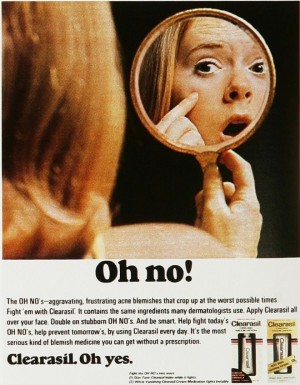
It started the summer that I turned twelve. It started on my face, just a few red bumps across the bridge of my nose. I poked at them and they sort of hurt. At first I wondered if the bumps were a sort of rash or allergic reaction, but after a week or so I realized what they were. Zits.

I wasn’t too bothered by them in the beginning, really. In fact, I was sort of excited, because they were yet another sign that I was almost a teenager. On my cousin they’d looked strangely tough and grown up, and I hope that they would give me the same air of hardboiled adolescence. Mostly I just thought that they were normal, and that I would eventually grow out of them.

As the summer progressed, though, the bumps spread across my face, down my neck and over my back and chest. Huge patches of skin were angry and red; whiteheads started to appear, and I was mortified by the fact that I had to walk around with what seemed like enormous pus-filled lumps on my face.

I was even more mortified when my father pulled me aside and said that he’d noticed that I had blemishes and offered to send me to the doctor about them. In retrospect, I know that this was because he’d been teased as a teenager about his own pimply skin, but at the time I just wanted the floor to open up and swallow me whole, then maybe regurgitate me in ten years’ time as a gorgeous twenty-something with a flawless complexion.

Our family doctor referred me to a dermatologist, whose treatments were the closest thing to torture that I’ve ever experienced. I would lie on a table under a magnifying glass with an enormous, burning light on it, and he would peer through the glass at my face. He had a funny metal instrument with a tiny sharp hoop at one end, and he would use that to pop my pimples. The light hurt my eyes, but closing them and having every fresh flash of pain come as a surprise was somehow worse. If I looked like I might start crying, he would tell me harshly that if I cried I would fill the open sores with bacteria.  So I would lie there, blood and pus running down my faces and my head aching from the bright light, trying desperately not to cry.

Once the doctor was finished shredding my skin, he would pour iodine over my face. The burning seemed unbearable, except that I had to sit there and bear it. As I waited for the stinging to subside, the doctor, his voice oozing condescension, would say,

“There now. That wasn’t so bad, was it?”

Afterwards they would put goggles on me stick me in a sort of tanning booth, because ultraviolet light was supposed to cure acne.

I only went to a handful of these treatments – five, maybe ten at the outside. Eventually I just refused to go back. I figured that being a social pariah was less painful than having my face cut open and doused with what felt like acid on a bi-weekly basis.

Just to be clear, I really was a social pariah that year. And the year after. And the year after that, right up until the end of high school. Some of the cruelty was fairly subtle – innocent-seeming questions about how often I washed my face, or wonderings aloud about how much chocolate I must eat, with pointed glances at my waist-band. Most of the jokes about my skin were openly mean, and the kids who made them faced few consequences. One girl said that it was no wonder that no one wanted to kiss me, because what if one my zits popped in the mouth of the boy unlucky enough to be making out with me? A boy in my class said that I was lucky because I didn’t have to spend money on whiteout; if I ever made a mistake I could just pop one of my zits and use the pus to correct what I’d written. Both of these remarks were made in front of teachers; in both cases the teachers just laughed along with everyone else.

I tried everything – creams that made my skin even more greasy, gels that burned when applied them, pills that made me feel queasy and light-headed for hours after I took them. I tried caking foundation an inch thick onto my skin, because it was easier to be teased for wearing too much makeup than for being Medusa’s twin sister. I tried lying for hours in the sun, suffering sunburn after sunburn, because I thought that there really might be something to that ultraviolet light idea.

Mostly I just tried pretending that it wasn’t happening.

When little kids would ask me what was wrong with my face and if I was contagious, I would just smile like they’d said something incredibly adorable. When people at school said mean things, I would laugh harder than everyone just to prove that I could take a joke. When adults gave me unasked-for advice, I would pretend that this didn’t translate in my head to, you are the ugliest person in the world.

Because that was what I felt like: the ugliest person in the world. When boys were nice to me or complimented me or wanted to date me, I wondered what the catch was. Did they want me to do their English homework or introduce them to my cute friend? Would they go back to their friends and laugh  about me later? Was someone recording our conversation, like on candid camera?

It never occurred to me that anyone might ever want to touch me; I didn’t even want to touch me.

Sometimes I’m still surprised that people can hug me or kiss me or place their hand on my face without recoiling in horror. Because, as much as my skin has cleared since I was a teenager, it’s still what is politely referred to as acne-prone. I still get those angry red bumps; I still wear more makeup than I probably should. It’s like a bad joke – I used to think that my acne would disappear once I was a grownup, but now I just get zits on my wrinkles.

Fuck. Me.

I guess the point that I want to drive home here is that I really feel like my skin will never be good, and that is fucked up. Why do we have to refer to acne as “problem skin” or “bad skin”? My skin isn’t bad or a problem; it’s just my skin, and I’m fucking tired of being made to feel like I should be ashamed of it. I’m sick of the fact that the only time I ever see someone in the media with acne, they’re there to tell me how not to have acne.

I can turn on my television and see people from all different kinds of ethnic backgrounds. I can find television shows with characters from all the major religions; I can find shows with characters of several different sexual orientations. There are television shows with trans characters. There are television shows with disabled characters.

There are never any people on my television or in magazines or even in cute, independent, deliberately not-Hollwood movies who look like me, with angry red skin and patches of whiteheads and that greasy sheen that you get because the Exxon Valdez has crashed on your face your oil glands are working overtime. I just want to see one person who doesn’t have beautiful, flawless skin because at thirty one I’m so fucking tired of hating my body. I just want to feel normal.

I just want to stop flinching every time someone leans in to hug me. I don’t really feel like that’s a lot to ask.

clearasil_vintage-e1347470643252

How To Talk To Your Son About His Body

14 Aug

I loved this post on how to talk to your daughter about her body, and I wanted to create something similar for parents of boys. My friend Nathan and I put this list together, and would love to hear your input.

How to talk to your son about his body, step one: talk to your son about his body. Give him the vocabulary that he needs to communicate how he feels about himself.

Teach him that it’s normal to think about his appearance.

Teach him that it’s fine to want to be handsome or pretty.

Teach him that being a boy doesn’t take away his right to have feelings about his body.

If your son tells you that he is unhappy because he is too fat or too skinny, don’t dismiss him. Don’t tell him that boys don’t have to worry about stuff like that. Don’t tell him that he’s lucky that he’s not a girl, because then it would really be a problem.

Listen to him – really listen – and keep your opinions about his appearance to yourself. Don’t tell him that you’ll help him lose weight. Don’t tell him that he’ll bulk up when he gets older. Just listen, and encourage him to explain how and why he feels that way.

If your son is older, talk to him about male bodies in the media. Ask him what he thinks of the storefronts for Hollister or Abercrombie and Fitch; ask him if he thinks that images represent how he thinks men should look. Talk about the fact that Photoshop is used to alter images of boys as well as those of girls.

Don’t make jokes about your son’s weight. In fact, don’t make any comments about his weight. Don’t talk about how funny it is that he was so skinny as a little kid and now he’s not. Don’t poke him in the side and tell him that his ribs stick out. Don’t sigh enviously over how thin he is.

Don’t assume that you can talk about your son’s body any differently than you talk about your daughter’s.

If you notice that your son is gaining or losing weight, remember that these can be signs of depression. Without asking leading questions or otherwise being obvious about it, try to get some insight into how your son is feeling. Be sensitive to the fact that if you’ve noticed a change in your son’s weight, chances are good that he’s very much aware of it and may feel ashamed or embarrassed.

If you notice that your son is rapidly losing weight, seems to be trying to limit what he eats, or is otherwise occupied with the idea that he is fat, remember that eating disorders are on the rise among teenage boys. If you suspect that your son might have an eating disorder, don’t try to “fix” him by telling him that his body is fine and he has nothing to worry about. Eating disorders are serious, and if you have are concerned that your son might have one, you should contact your pediatrician immediately.

Don’t comment on other men’s bodies – neither positively nor negatively. Don’t communicate an idealized version of masculine beauty, and don’t run other men down. And for the love of God don’t make jokes about hair loss, or say that you don’t find bald men attractive. Don’t make jokes about short men. Don’t make jokes about body hair. Don’t make jokes about penis size. Seriously. Those things aren’t funny.

Don’t make negative comments about your own body. Don’t let him overhear you calling yourself fat, or saying that you should go on a diet. He will learn to love and accept his body by watching how you treat yours. Always remember that he will take his cues on body acceptance from you.

Teach your son to be kind to himself.

Teach him to be kind to other people.

Teach your son that his body is good for all kinds of things – dancing, sports, digging in the dirt, yoga, gymnastics, figure skating, or even just sitting quietly and thinking.

Teach him to move his body in lots of different ways, from lifting big rocks to spinning pirouettes, because those things are fun and they feel good. Teach him to stretch and touch his toes because this will help keep his muscles flexible and elastic. Teach him to do cartwheels because there is no greater expression of joy. Teach him to lie in a patch of sunlight and dive into a good book.

Don’t teach your son about “good” foods and “bad” foods, because food shouldn’t be subject to moral judgment. Instead, teach him about foods that will fill him up and give him energy versus foods that will leave him feeling unsatisfied and cranky an hour later. Teach him that candy and desserts are great, but that they won’t give him the drive he needs to get through the day.

Teach your son to cook. Teach him to cook anything and everything – scrambled eggs, macaroni and cheese, tooth-achingly rich chocolate cake. Teach him how to sauté vegetables and whisk egg whites.

Prove to your son that he doesn’t need a woman to cook for him.

Prove to him that there is no such thing as a “girly” interest or hobby.

Teach your son that people come in all different shapes and sizes. Teach him that there is no one specific way that he, as a boy, should look or act – his appearance and his interests are perfect because he is perfect. But teach him, too, that there is nothing bad or shameful about feeling uncomfortable with his body. Teach him that there is nothing wrong with wanting to talk about his body, or wanting to find ways to feel happier in his body.

Teach him that you’re there to listen.

Teach him that he’s not alone.

4378158841_c247bd3a0d

What It’s Like To Be A Writer Who Is Also A Woman

12 Aug

You will always be a woman first and a writer second.

When people refer to you, they will call you a “woman writer,” or “feminist writer,” or some other variation on that theme. There will always be some kind of qualifier added.

When your works are published, they will be included in women’s anthologies, or perhaps taught in women’s studies classes, or shelved in the “chick lit” sections of bookstores. This will feel simultaneously empowering and isolating. You know that this fact will guarantee that large segments of the population will choose never to read your work based solely on these classifications.

It will be thought that only other women can relate to your writing. When discussed by literary critics, your books will be described as works that all women should read; no one will ever call them works that everyone should read.

When a man says flattering things about your writing, you will always be left wondering whether it is your work that interests him, or the fact that you are young, conventionally attractive and female. Most frequently it will be the former, but still, you can never shake off the fear that you are not so much talented as you are naïve and pretty. You often feel as if you are only valuable in so much as men desire to fuck you.

Speaking of men desiring to fuck you, you must be very careful when interacting with male readers of your work, especially if those men are also writers. If you are married or in a committed relationship, mention this up front. Watch every word you say and make certain that none of them could ever be misconstrued as flirtatious. Do not ever behave in a way that might lead you to be accused of leading a man on – especially in situations where the man is in a position to promote your work. Remember that all of your motives will always be suspect.

Speaking of men, the first attributes used when describing you will be your relationships or lack thereof.

If you are married and/or have children, these things will become the focal point of any brief biographical sketch made of your life. Any other accomplishments must take a back seat to the fact that you have managed to find someone to put a ring on it and then convinced them to procreate with you. Your name will always be preceded by something like wife-and-mother-of-two, as if those titles are more important than any other that you might earn in this life.

If you are unmarried, you will be pitied. If you don’t have children, you will be pitied. People will wonder aloud what is wrong with you; it will be thought that your devotion to your career has left you lonely and barren. Your appearance will be dissected, your life choices examined as if under a microscope; perhaps the idea of medical infertility might be discussed. Anyone and everyone will have a theory about why and how you failed to produce children.

If you write about yourself, about your life and your feelings, your writing will be called confessional. The word will be said with a sneer; it is not meant as a compliment.

If you write about issues larger than yourself, your work will always be touted as a feminist perspective or a woman’s perspective on the subject; you can never have a thought or opinion without it being viewed by the rest of the world as being coloured by your gender.

If you write about the discrimination and inequality that women face, and don’t immediately follow up with a list of double standards imposed on men, you will be accused of misandry. If you discuss violence against women without adding in that yes, sometimes women can be violent towards men, you will be accused of misrepresenting the facts. If you don’t qualify every discussion about women’s issues with the fact that, yes, men have issues specific to them, then you don’t believe in equality.

You will find yourself inhabiting a scarcity mindset. If another woman achieves fame or success by writing on the same subjects as you, you will assume that all praise and recognition have been used up. Having grown up fed on a media diet of cartoons, books, video games and sitcoms featuring only one or two token female characters, you will truly believe that there is room for only one woman at the top of any given field. This will lead to intense feelings of jealousy any time another woman succeeds; this will lead to the desire to tear other women and their work down, in order to make room for yourself. Should you experience any kind of success, you will find yourself the target of the same type of fear and envy. You will become the subject of take downs by other women who see you as an obstacle standing in their way.

You will quickly learn that being seen as someone who embraces the middle ground, someone who constantly qualifies all of their beliefs with statements like, but I can understand the other side of the argument, will be greatly beneficial to your popularity as a writer. Seeing issues as black and white will earn you the label of “extremist,” and cause others to distance themselves from your work. As a woman, you will constantly need to tone it down, bite your tongue, and above all else present yourself as being sweet and unthreatening. Otherwise you will not be taken seriously.

You will quickly learn that constantly equivocating will lead others, especially women, to dismiss you as wishy washy. You will be accused of backtracking. Men will tell you that they do not enjoy your writing because it is lacking in bombast and ego. You have to come across as firm, uncompromising, certain in your beliefs. You have to approach writing with a take-no-prisoners mentality. Otherwise you will not be taken seriously.

You will quickly learn that when you challenge the glaring inequalities in the old boys’ club of the literary world, you will be branded as angry. People will insinuate, or outright say, that any obstacles that you might face are evidence of your lack of talent and commitment, rather than a systemic and deeply ingrained misogyny. You will be called paranoid and crazy, accused of engaging in victimology; no one will want to acknowledge how very sad and frustrated it makes you that you have to work twice as hard to be considered half as good.

You will quickly learn that you cannot ever, ever win.

woman_typing_vintage

Not That Girl

30 Jul

No, no, please don’t apologize. It was a good joke. Really funny.

Liquid panty remover. Hah. That’s great. I’ve never heard that one before! Oh man, that’s hilarious.

Don’t worry about telling jokes like that to me – I love those kinds of jokes. I’m not really the type to get offended, you know?

I mean, I’m not that kind of girl.

Like, I think that some people are just looking for things to get worked up over. Don’t get me wrong, I don’t think that, like, rape jokes are funny or anything. Not that I think your joke was a rape joke, because your joke was definitely funny, but, you know, rape-rape jokes for sure aren’t cool. On the other hand, people need to chill out. Like, there are so many things that are so much more degrading to women – I mean, look at the way that women are treated in the Middle East! If you’re gonna be outraged about something, you should be outraged about that, not a stupid joke.

I mean, do you really think that anyone hears a Daniel Tosh joke and goes out and rapes someone? No. That’s just not how it works.

I just don’t get why some people have to suck the joy out of everything. Like, I’m sorry if you don’t like that Robin Thicke song, but that’s you. I’m not going to apologize for listening to a fun pop song just because someone else doesn’t like the lyrics. I don’t see what’s wrong with the lyrics, anyway – people read way too much into everything.

Don’t get me wrong, I think that feminism is great and everything. I took women’s studies in college and I’m thankful for, like, Gloria Steinem or whatever, but isn’t it time we got past all that? I mean, all that negativity and bitterness and victimology – how are those things doing women any good? They’re not. Like, we have to live in the world with men, and that’s something you just can’t get away from. I think it’s better if we all just learn to get along, you know? That’s why I don’t call myself a feminist; that word is just so divisive. I don’t really like labels, but if I had to pick something I would say that I’m really more of a humanist. Because we’re all part of the human race, and we need to start acting like it.

I guess I just don’t feel like feminism does anything for me. Like, I feel way more empowered as a woman without it. I would rather think about how strong I am and all the things I can accomplish instead of blaming men or whatever for holding me back. Women are never going to get ahead if they’re stuck hating half their own species, you know?

And, I mean, I have friends that are feminist. I get where they’re coming from. I just think that some of these radical feminists go too far.

Like, I have friends who were raped. I used to volunteer in a rape crisis centre. I really do believe that rape culture is a thing. But I don’t think you can just wear whatever you want and drink a lot and flirt with guys and not see that as taking a risk. Of course no one deserves to be raped, but, well, rapists are out there and you have to protect yourself. Like even if you’re a good driver, you still wear a seatbelt, right? That’s just common sense. Because even if you drive safely, you can’t guarantee that everyone else will. You have to take precautions – we live in a dangerous world.

Oh.

I mean, I guess.

Yeah, that makes sense. Maybe rape culture is the wrong way to put it.

You’re right, I can see how that was a logical fallacy. Thanks for pointing that out.

No, seriously, thanks. I mean it. I’m not touchy like some girls – I don’t mind if anyone, guy or girl, lets me know when I’m wrong. How else am I going to learn, right?

Yeah, I totally get why you might have thought that I was being sarcastic. Lots of girls would probably get pretty worked up over being called out like that. I mean, Jesus, girls are crazy. I’m not embarrassed to say that, because it’s true. Especially during that time of the month. God, if you think it’s bad being a guy and having to deal with us, try being a girl surrounded by other girls. I mean, I love my girlfriends, but sometimes I just can’t deal with the crazy anymore.

Like, girls are so fucking catty. We’re just really fucking mean to each other. We tear each other down way more often than men do. Maybe feminists should start fixing how women treat each other before they worry about how men see us. I mean, charity begins at home, right?

No, yeah, you’re right. Charity was the wrong word. God I’m so stupid tonight.

Thanks for being so patient with me.

I guess I just meant that we need to fix our own problems first. I really think that that’s what feminists or whoever should be devoting their energy to. But they won’t, because they don’t want to admit that maybe not all of our problems are because of men.

I mean, I love men. Like, this, right now? Sitting with you? This is really great. We should get another drink, I’m really having a lot of fun just sitting here talking with you. Just one of the guys, right?

Yeah, sure, you can order for me. Go ahead and pick whatever, I can handle it.

No, whiskey is great! I love whiskey. On the rocks. Isn’t that what they say? On the rocks?

Aren’t they always drinking whiskey on Mad Men? God, I love that show. I wish I could live back then, you know? I mean, other than the racism or whatever, it looks like it was pretty great.

I just – I don’t get girls who think that things are so much better these days. Like, I guess it’s good to have options, but sometimes I think we have too many options now. I think it would be so much easier just to have to look good and marry someone nice. Imagine how great it would be to be a housewife! And always have men opening doors for you and being polite to you. And oh god the clothes – I could wear the shit out of those clothes.

I mean, I get that it was bad back in the early 1900s when women couldn’t vote or own property, but, like, after that things were pretty good for women. Sometimes I think that women in the 1960s or whatever didn’t know how good they had it.

I don’t think women will ever know how good they have it. Like, I think we’re just hardwired to be dissatisfied. We all just want to have our cake and eat it too. It’s crazy. I mean, you never hear men talking about how they want to “have it all”, you know?

Sorry, you’re right, air quotes are really corny. I have to remember to stop doing that.

No, yeah, you’ve got a good point. This is a pretty heavy topic for a Friday night. We should talk about something else. Tell me another joke!

That first joke was really funny, tell me another one like that.

Make it as offensive as you want, it won’t bother me.

Because I’m not like that. I’m not that kind of girl.

Don’t you think I’m a different kind of girl?

1930sdallasymcagirlsbasketball

Is This Rape Culture?

24 Jun

rape_culture_shirt

I’d seen this image pop up a few times on my Facebook feed, but it wasn’t until the super-popular website PostSecret shared it on their page that I really sat up and took notice. Or rather, it wasn’t until someone commented saying that this shirt promoted rape culture, and a friend asked me if I agreed with that statement, that I really gave it much thought beyond the usual oh great, more “hilarious” misogyny.

But you know what? After taking some time to think about it, I realized that I agreed with the PostSecret commenter. This shirt is really pretty gross. This shirt promotes some very problematic ideas about women and how they relate to men. This shirt implies that male violence, both sexual and physical, is the societal norm.

This shirt is rape culture.

Now, I’m not saying that this shirt promotes rape, or is encouraging anyone to go out and commit sexual assault. In fact, at first glance, the shirt’s message is pretty benign, right? I mean, it’s all about a dad protecting his daughter, and even if that idea is badly executed, well, the sentiment behind it is still admirable, isn’t it?

Except that it’s not.

The problem is that the real, underlying sentiment here is that the daughter is a man’s possession, not a person. She’s either her father’s “princess” or her boyfriend’s “conquest.” It’s clear that the daughter’s wants and desires mean nothing to her father – he says that he will dislike anyone that she dates simply because they are dating his daughter. It doesn’t matter whether this boyfriend (since the shirt is operating off the assumption that the daughter is cisgender and heterosexual) is a nice guy, whether he treats the daughter well, or even whether the daughter loves him – the father will still dislike him, based on the simple fact that this teenage boy wants to be physically close to his daughter.

I know what you’re going to say – But he’s not being possessive, he’s just being protective of her! He doesn’t want her to get hurt! That’s a totally natural way to feel!

What do we mean, though, when we talk about the daughter being “hurt” by her boyfriend? Do we mean hurt feelings? That certainly doesn’t seem to be what other people get from this shirt, based on the comments left on PostSecret’s Facebook page:

“He’s just trying to protect his daughter! You must have no idea some of the terrible things that happen to women.”

“It sort of more implies that these people are minors and are under their parent’s care. And being that teenage boys tend to be these creepy-ass horndogs, this is a father’s reaction to that.”

“If you dislike this shirt, you are obviously not a father.”

“I have 2 daughters [and] I agree with Sabria.. as parents we are the first line of defense. Unfortunately we may teach our daughters how to defend themselves, my eldest does, and we may teach them that they are not objects but people, but the problem still exsists where not everyone cares enough about their kids to teach them the right way. So yes jokes like these are stupid but true at the same time. I told my daughter, after finding out a girl in her class was molested, that i would happily kill someone to protect her and her siblings. I am her first line of defense so yes if you hurt my child i will hurt you back with twice as much force. The sentiment in the joke is to protect your child, not to try and objectify them.”

“My dad has never viewed me as his property, but he says stuff like this all the time when my mom prompts him by bringing up the length of my skirt or likewise. I can see how people would take this as implying ownership, but it simply does not. It’s just a dad saying, she’s my baby girl and I will protect her no matter what.”

So it’s pretty obvious that what we’re talking about here isn’t emotional damage, but rather sexual violence. Which brings us to point number ten on the shirt – “Whatever you do to her, I will do to you.” In the light of the comments above and the way that most people seem to interpret this shirt, it’s pretty clear that item ten on this list is a rape joke. The father will rape the boyfriend if he sleeps with the daughter. And that’s where the fact that this shirt is participating in and furthering rape culture becomes especially apparent.

Rape culture is the normalization and trivialization of rape and sexual assault. It’s a culture in which sexual violence is made to be both invisible and inevitable. It’s a culture that teaches us that male sexual violence is both normal and desirable. It also teaches us that men are not able to control their actions when they are aroused.

And that’s what this shirt is really saying, isn’t it? That a teenage boy will, given the chance, commit some kind of sexual violence against his girlfriend, and that the only solution to that violence is more violence, this time on the part of the father. This shirt assumes that the rape (or attempted rape) of the daughter is inevitable, and the only solution is to remove the boyfriend from the scene. This shirt says that the blame (sidebar – why the need for blame?) for any sex had by the teenage couple will be put squarely on the shoulders of the male partner. Why? Because our culture teaches us that men want sex more than women, that they can’t help being physically aggressive when it comes to sex, and finally that all of these toxic messages are just sexual norms and there’s nothing that we can do to combat them beyond matching violence with violence.

Look, I’m sure that the person who created this shirt had some very good, humorous intentions. I’m sure that they didn’t think about the possibility of people interpreting their message as contributing to rape culture. And I’m especially sure that PostSecret shared this on their Facebook page in good faith, figuring that it was something that their readership would enjoy and hopefully get a laugh out of. But the fact that this shirt and its message are so seemingly innocent is really what makes them so dangerous – because that’s how these messages make their way most easily into our cultural consciousness, not through overtly offensive or misogynist material, but through the stuff that seems harmless at face value. If someone shares a terrible rape joke on Facebook, it’s easy to explain why that’s wrong, but something like this requires a somewhat more complex, carefully calibrated approach.

I guess that what I want people to get out of this post is that it’s important to listen when someone says that something is wrong, or offensive, or contributes to rape culture. You don’t ultimately have to agree with them, but it would mean a lot if you could reign in your knee-jerk reaction of it’s just a joke or stop being such a humourless bitch or some people just want to be offended by everything and actually took a moment to try to see what that other person is trying to get at. You might discover that they actually have a point, or you might learn to look at stuff like this from a new angle, but even if you don’t, at least that person will feel as if they’ve been heard. And if they feel that way, then they’re more likely to listen to you, and that’s how dialogue works. And out of dialogue comes change.

And change is good.

Disney’s Rape Problem

19 Jun

Disney.

Now there’s a word that’s bound to conjure up some kind of feeling in pretty much everyone in the western world. And, I mean, love ’em or hate ’em (and there are tons of people in both camps), you can’t ignore the fact that, as a brand, they’ve had an enormous cultural impact.

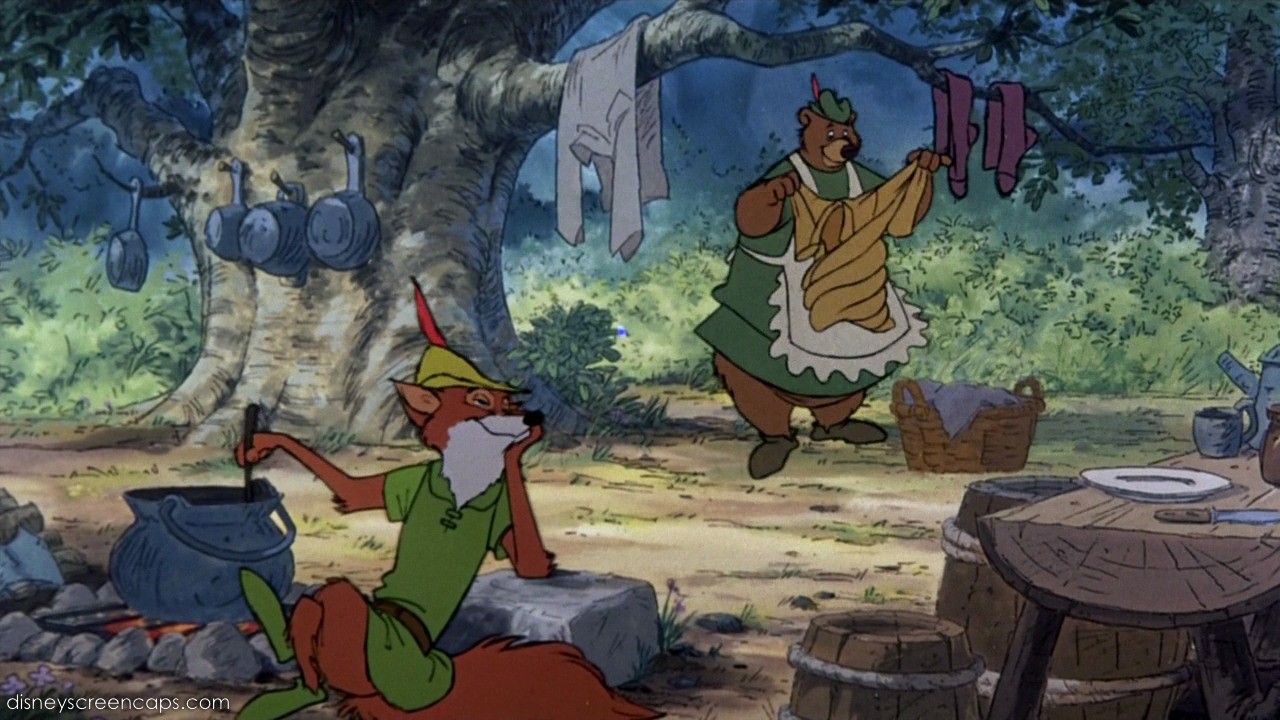
My own relationship with Disney is pretty ambivalent. I grew up watching the movies, and I would be lying if I said that there aren’t a few of them that I can still quote, verbatim, to this day – especially Disney’s Robin Hood. Man, I watched the shit out of that movie, and I still love it, even now. I like to joke that it was my introduction to the social justice movement; it was the first time that I’d ever realized that just because something was against the law didn’t mean that it couldn’t also be morally right, and it taught me that even just a few people standing up against powerful government forces could affect change. I also think that that movie was the beginning of my love for all things historical, especially the medieval period in Europe. And yeah, for sure, Disney didn’t come up with the story of Robin Hood, but they did present it in a way that was fun and relatable for children, and they added foxes. Man, I love foxes! In fact, I can’t help but wonder if Disney’s Robin Hood is responsible for that, too.
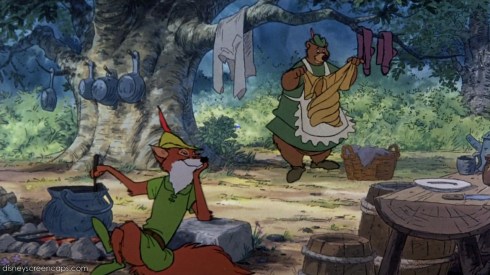
Disney's Robin Hood also taught me that men can cook and do their own laundry!

Disney’s Robin Hood also taught me that men can cook and do their own laundry!

As a teenager and young adult, I became pretty critical of Disney and all that it stood for. I became conscious of the toxicity of “princess culture,” and began to question why basically everyone in their movies was white. I became cynical of how aggressively Disney tried to breed brand loyalty among even the youngest of children, up to and including offering free Disney onesies to new babies in hospitals. On top of that, the more that I learned about Walt Disney and his business practices, especially the special deals that he brokered in Florida while building Disney World, the more weirded out I became.

Still, when my mother announced a family vacation to Disney World a few summers ago, I was game. I’d never been before, but my mother and sisters had done the Disney thing back in 2005, while I was still living in Halifax, and I knew that they’d had a blast. It wasn’t so much about the brand or even all the fun things to do, my family insisted, it was about how well the staff treated you, how special and important you felt. And when my family and I, my five-month-old son in tow, descended on Disney World in July of 2011, I discovered that they were right. And maybe it was because I was still in the middle of that funny culture shock that comes after you have a kid, those few months where you’re slowly and painfully discovering that the world is nowhere near as easy to navigate as you once thought it was, but I remember being so incredibly grateful for the fact that Disney World seemed to have thought of absolutely everything when it came to dealing with families with small children. Disney World was the first place that I’d ever taken Theo where I didn’t feel like my child’s needs were a burden or a hassle to the staff.

And let’s just get one thing straight here: Disney’s staff are excellent. Really, really excellent. They are people that the company should be incredibly thankful for. Instead, as I’ve recently learned, Disney doesn’t have much interest in caring for or protecting their staff. In fact, when it comes to the issue of sexual assault in the workplace, they’re pretty happy to throw their female employees to the wolves and wash their hands of any responsibility.

In fact, Disney is pretty firm on the idea that if you are an employee who was raped while drinking and socializing with employees of the opposite sex, then it’s all your fault.

Many of you have probably already read Dana Wierzbicki’s post on XOJane from Monday called “It Happened To Me: I Was Raped Disney World And Nobody Cared” – for those of you who haven’t, I’ll give you a  brief rundown:

Dana was an employee at Disney World while participating in the Disney College Program, a program that allows post-secondary students from all over the world to come live in Florida, work at Disney World, enjoy unlimited access to the parks all summer, and take a few courses in business management on the side. It should have been the best summer of Dana’s life, and it was, up until she was raped by a co-worker. She says,

He and I went to a party together, we went back to his apartment later, and I said “no,” but he wouldn’t stop.

For two months I kept everything that happened that night to myself. I told my roommates that things went fine and I had a good night.  I didn’t know how to feel about what happened. In the beginning, I told myself it was a misunderstanding; maybe he hadn’t heard me. I blamed myself; I should have yelled louder. I should have pushed harder. I should have punched him and ran out of the room.  I always thought that if I was ever raped I would beat the guy up. Does that mean I wasn’t raped?
After trying to handle the emotional and physical fallout of the rape on her own, Dana eventually decided to seek help from the counselling service that Disney provided. This decision, she writes, was triggered by the fact that she later saw her rapist flirting with other girls at a party, and realized that if she didn’t do something, anything, then he would almost certainly end up raping someone else.
Her experience with the counselling service was, unfortunately, pretty grim. At one point, the counsellor told her, “Well, now you know not to be hanging around boys in the middle of the night. You know what they want.”
When Dana told her about seeing her rapist flirting with girls at a party and expressed concern that he was likely to rape again, the counsellor took this to mean that she was jealous of the attention that these other girls were receiving. She advised Dana to show up at the next party looking “hot” and tried to reassure her by saying, “You’re a pretty girl. I’m sure you get all the boys.”
Dana then spent several days trying to figure out how she was supposed to properly report her rapist. She was passed from one department to another, and no one seemed to be entirely sure who or what was supposed to handle this type of stuff. Finally, she spoke to someone in Employee Relations who gave her more victim-blaming bullshit and told her that she should have gone to the police back when the rape had happened, but there was nothing that anyone could do now. The woman in Employee Relations told Dana that they would open an investigation, but likely nothing would come of it.
Dana flew home and tried to resume her normal life, but she did follow up with the Employee Relations office several times. She was eventually told that her case had been closed. She called a friend of hers who was still working at Disney World and was told that her rapist was still employed there, and had suffered no repercussions for what he’d done.
After reading Dana’s story, I was admittedly shocked by how terrible Disney’s response was. Surely they couldn’t actually care so little about their employees, could they? Dana’s experience must have been a fluke right? So I spoke to my friend Laura*, who had also participated in the Disney College Program, and asked her if any of Dana’s story meshed with what she’d seen during her own time at Disney World. She said that Dana’s experience unfortunately wasn’t uncommon, and that she’d realized from pretty much day one that Disney was not interested in dealing with sexual assault. She said,
In my first week I was in a room with about 250 Canadian kids learning the rules of the dorms and this big, corporate guy comes in and starts talking to us. He tells us – and I’m paraphrasing a little here – that this is a high crime area and there are sexual assaults regularly around the dorms. That if you are a girl, you should not go out after dark alone, or you might get assaulted. That you should not go to the bars, and definitely not alone, because ‘girls get drugged.’ That you should not make friends with strange men, not go into other people’s dorms alone and not dress provocatively, because girls get assaulted and go home all the time. And if you do get assaulted, don’t go to the housing department, call the police, because there is nothing that housing or Disney can do for you.
And, you know what, without even touching on any of the victim-blaming bullshit that Disney is spewing, can we talk about how fucking ridiculous this is when it comes to anti-rape advice? Like, you are bringing in hundreds of people in their teens and early 20s to work and live together, and you somehow think that it’s sensible to tell people not to associate with the opposite sex? Not to drink? Not to wear “provocative” clothes? Not to go to boys’ dorm rooms? Like, that’s what these kids are there for – I mean, yeah, they are there to work at Disney, but a lot of them are also there to have a good time, and that good time involves drinking and having sex. That is what a lot of people do, and just flat-out advising them not to do it is not going to change anything. But Disney, meanwhile, feels as if they’ve covered all of their bases, and if a girl ends up being the victim of a sexual assault, well, Disney doesn’t want to hear about it because it’s all her fault.
And before you jump in and say that Disney has no control over what their employees do within the comfort of their own apartments, and that the girl should have gone to the police instead of Disney, let’s be clear on something – these dorms and apartments are belong to Disney. Laura says,
[The apartments] are not in “Walt Disney World” itself, they are about 10 minutes away in Lake Buena Vista, FL. Which is fine. They are contracted out from Disney and run by a separate property company for maintenance and stuff, but they are gated residence complexes run exclusively for the Disney college program, the rent money is taken by Disney and Disney Housing arranges everything and has offices on the properties and as a member of the program you are not allowed to live anywhere else but these residences. So, while the rape wouldn’t have happened on “Disney property,” as in not in Walt Disney World proper, it did happen at Disney, in a residence run by Disney, where Disney was forcing it’s program participants to stay and collecting money for it.
With regards to the whole “she should have gone to the police” idea, the fact is that the majority of the people participating in the Disney College Program are not from Florida. In fact, many of them are not from the United States. So it makes sense that they would go to Disney, the employer that brought them there and was housing and educating them, for help after being raped. It’s also not uncommon for people to be intimidated or afraid of the police, and it’s totally logical for someone to feel that going to their traditionally helpful and caring employer when dealing with the fact that their co-worker has raped them.
Look, Disney, you are totally dropping the ball when it comes to handling sexual assault. Not only is your approach gross and victim-blaming, but you’re fucking up from a brand approach as well. So if you can’t bring yourself to change your policies with regards to employee rape and sexual assault out of sheer human decency (which, by the way, you should), then maybe you need to look at it this way: you are losing customers. Big time. The people who go to work at Disney World are some of your most brand-loyal consumers. They want to work at Disney because they love the company and the brand. When you can’t step up and do what’s right for your employees, you are losing their loyalty, and the loyalty of any children that they might have, and their friends’ loyalty, and their family’s loyalty.
You can do this, Disney, you really can. You can make these changes, and I guarantee that they will make Disney World a safer, better place for your employees. You can fix this, I promise. You need to start by providing better training for your counsellors, You need to reach out to organizations that fight against sexual assault, and get some tips on how to deal with rape without blaming the victim, You need to provide better training and education for your employees. This stuff might not be easy, but it’s necessary. Please, please make this effort – if you don’t, stories like Dana’s will continue to happen. And the outcry against you will grow. And you won’t be able to stop it.
I’ve started a petition here to try to convince Disney to put some of these changes in place.
*Not her real name
Cinderellas_Castle

Mother’s Day

12 May

I’m gonna be totally honest here: Mother’s Day makes me feel weird.

I think that part of it is that I have an automatic distrust of anything that’s gender-specific. Like, why is it Mother’s Day? Why not just Caregiver’s Day? Or Excellent Parental Unit Day? Or, as a friend of mine mentioned on Facebook, Gender-Diverse Parents’ Day? I mean, I get that it’s supposed to be about how hard mothers work, and how under-appreciated they are, but something about this sentiment seems … off to me. We spend most of the year crapping on moms, picking apart their parenting choices and publicly lambasting mothers that we disagree with, but suddenly we’re supposed to spend a day talking about how great they are? It sort of reminds me of the way that a good friend spoke about her ex – he was great at the big things (like buying her lavish gifts and taking her on fancy vacations), but not so much with the little day-to-day stuff. And really, it’s that day-to-day stuff that keeps the world turning, you know?

I guess that part of my ambivalence comes from the fact that Mother’s Day was never a big deal when I was growing up. We would make cards for my mother, and maybe bake her a cake or something, but it never went much beyond that. I mentioned once or twice that I might make my mother breakfast in bed, but she always vetoed that idea, saying that she would be the one left to clean up my mess (which was, to be fair, probably true). Even when my dad still lived at home, we never went out for brunch or anything fancy like that. I think I remember really wanting to make it a special day for her, because school and television and books made me feel like that that’s what I should be doing, but not being entirely certain of how to about that. I realize now that the best gift I could’ve given her would have been a kid-free afternoon or more help with household chores, but those things didn’t occur to me at the time. I wanted to either go big or go home (and I had no way of knowing just how “big” a few childless hours would have seemed to a single mother).

I guess that what I’m trying to say is that I didn’t really understand how HUGE Mother’s Day is for some people until I became a mother myself. Then, all of the sudden, people wanted to know what I was doing for Mother’s Day – they seemed especially interested in what, exactly, my husband was going to buy me. As my first Mother’s Day approached, I heard more and more about all the gifts I should be expecting. What do you think you’ll get for Mother’s Day? people kept asking, as if I had submitted a list of desired items months ago and had only to use my mad deductive skills to figure out which one my husband would pick. When I told them that we would likely go out for a nice family brunch and then go to the park, they seemed disappointed, as if I was somehow missing the whole point of the holiday.

The whole “Mother’s Day is too commercialized” thing has basically been done to death, but you guys? It’s pretty much true. It’s now more about picking out the perfect jewellery or the cutest card or the fanciest chocolates than it is about honouring the hard work your mother does. And to get back to that weird gender thing, why are we so obsessed with honouring how hard our mothers work? Or rather, why are we only interested in thinking about it only once a year, and why is our solution to throw sparkly things and candy at it, and then ignore the issue for the next 364 days?

I can’t help but notice the differences between how Mother’s Day and Father’s Day are marketed. Mother’s Day is all about honouring the sacrifices your mother made for you, showering her with pretty, mostly useless things as a sort of payback for all that she “gave up” in order to raise you. Father’s Day, on the other hand, seems to be about high-fiving your dad for being such an awesome friend, and maybe thanking him for somehow, occasionally having had a hand in how you turned out. Even these lists of suggested Mother’s Day and Father’s Day gifts are pretty telling – a whole lot of stuff to make Mom look and smell pretty (with a few gardening items thrown in), and then a bunch of fun, boozy, outdoor-adventure stuff for Dad. I mean, I’ll be honest – I would way rather read a book on my Kobo while sipping a glass of nice scotch than put on a stupid scarf and spritz myself with floral-scented chemicals. Not unexpectedly, all of the gifts for mothers are about her appearance, whereas all of the gifts for fathers are about going out and having a good time.

I guess that, at the end of the day, what really bothers me about Mother’s Day is this idea that sacrifice is somehow inherent in the idea of being a mother. And also that there’s something sacred about getting knocked up and then giving birth, as if that raises you on a pedestal above all other women. I feel particularly irritated by this image from Indigo’s website:

105468_MothersDayShop_03_mini

Because, you know, everyone doesn’t have the best mom in the world. The ability to be sperminated and pop out a kid doesn’t really mean anything; I definitely know enough people with awful mothers who pretty firmly disprove that rule.

Instead of celebrating how much women have to give up in order to have children, why don’t we look at ways that we can even the playing field? Instead of insisting that mothers have to be the nurturing caregivers, how about finding ways to help promote these behaviours in fathers? And instead of having Mother’s Day and Father’s Day, why not just a day that celebrates all of the people who help make our kids the way they are? Why not have a day that acknowledges the fact that some people owe more thanks to their aunts, uncles and grandparents than they do to their mothers or fathers?

But if we have to have a Mother’s Day, I would much rather celebrate Julia Ward Howe’s proposed Mother’s Day for Peace. I would rather honour the sentiments put forth in her Mother’s Day Proclamation than receive a bunch of flowers that will be dead in a week. Because you know what? This is a Mother’s Day that I can really get behind:

Arise, then, women of this day!

Arise, all women who have hearts, Whether our baptism be of water or of tears!

Say firmly: “We will not have great questions decided by irrelevant agencies, Our husbands will not come to us, reeking with carnage, for caresses and applause. Our sons shall not be taken from us to unlearn All that we have been able to teach them of charity, mercy and patience. We, the women of one country, will be too tender of those of another country To allow our sons to be trained to injure theirs.”

From the bosom of the devastated Earth a voice goes up with our own. It says: “Disarm! Disarm! The sword of murder is not the balance of justice.” Blood does not wipe out dishonor, nor violence indicate possession. As men have often forsaken the plough and the anvil at the summons of war, Let women now leave all that may be left of home for a great and earnest day of counsel.

Let them meet first, as women, to bewail and commemorate the dead. Let them solemnly take counsel with each other as to the means Whereby the great human family can live in peace, Each bearing after his own time the sacred impress, not of Caesar, But of God.

In the name of womanhood and humanity, I earnestly ask That a general congress of women without limit of nationality May be appointed and held at someplace deemed most convenient And at the earliest period consistent with its objects, To promote the alliance of the different nationalities, The amicable settlement of international questions,

The great and general interests of peace.

—Julia Ward Howe


To those of you who celebrate Mother’s Day, I hope that you have a wonderful day. To those of you for whom this day is painful, I hope that it passes quickly and peacefully for you. And if you’re someone looking to give a mother that you know a really amazing gift, consider finding a way of giving her some time to herself. I promise you that she’ll love that more than almost anything else.

And finally, to the amazing kid who came along two years ago and made me a mother: thank you. The same goes for Matt, who does more than his fair share of co-parenting. I’m super lucky to have these two dudes in my life. It’s been a hell of a ride, but I wouldn’t have wanted to do it with anyone else.

IMG_1776

Five Year Old Indian Girl Kidnapped, Sexually Assaulted and Left For Dead

26 Apr

Trigger warning for rape, sexual assault, abduction, torture and murder.

A reader from India asked me to blog about this at the end of last week. At the time, I told her that I was feeling burned out, but promised to write about it on Monday or Tuesday. I’ve been procrastinating, though. As much as I know that this is something that’s important to talk about, I’ve had a hard time bringing myself to read about it, let alone write about it.

But I promised that I would. And it’s important. So let’s do this.

In India, a five-year-old girl was kidnapped, raped, tortured and left for dead.

She was held captive for four days.

Her parents say that the police ignored their reports that their daughter was missing.

Her parents say that the police offered them money to keep quiet about their daughter’s rape.

She is now in critical condition in the hospital.

She’s five.

When I was five, my biggest upsets in life were that I couldn’t wear my party dresses to kindergarten and that I wasn’t allowed to have chocolate milk with every meal.

And, you know, here I sit in my privilege saying that I’m too burned out to read her story, that it’s too hard for me to write about.

Of course, for other people, other women, this type of story is the daily reality that they have to live with. They don’t have the ability to tune out and think about other things the way I do.

This girl, this five year old girl, is fighting for her life, in part because the police weren’t terribly interested in finding her. Because she’s just a girl. Because she’s disposable. Because she was born in a country where sex-selective abortion is so common that, in some provinces, 126 males are born for every 100 females.

This, on the heels of the brutal gang rape in India that happened back in December. In that case, the victim wasn’t so lucky – she died of her wounds several days after her attack. The most brutal of her rapists, who was sixteen years old, received a sentence of only three years in a “reform home” because of his status as a minor.

This, in conjunction with another breaking story about a five year old Indian girl who was raped and murdered.

And yet another breaking story about a thirteen year old Indian girl who was gang-raped.

And a story about a six year old Indian girl who was raped.

And a story about eleven and thirteen year old sisters who were raped by their mother’s boyfriend.

All of these rapes happened within a week’s span. All of this is in just one country. And these are just a few select stories I pulled – there are more, so many more. Not just in India, but everywhere.

There are people who want to dismiss this as a problem with the way that Indian culture treats women. There are people who say that, sure, this type of thing happens over there, but it would never happen here. Maybe India has a culture of rape, but here in the West we sure don’t.

But, of course, we do.

Rape culture knows no borders, and while it might be worse or more obvious in certain parts of the world, the truth is that it’s everywhere. We all live in it. We all participate in it.

In fact, just today, a university student in Arizona was photographed holding a sign that said, “You Deserve Rape.” This man, Dean Saxton, is well-known for delivering “inflammatory sermons” on the University of Arizona campus. Today’s sermon was about how women who dress like “whores” are responsible for being raped or assaulted.

It just seems so relentless. Every day there’s a new story of some kind of horrific sexual assault, every day I hear about police and politicians who don’t care, every day there are men and women spreading the message that rape is somehow the victims fault. It just feels like it never ends, and it’s sometimes so hard to keep fighting in the face of something that’s so unbelievably pervasive and overwhelming.

But we need to keep fighting. That much is obvious.

I want to share with you guys the message that my reader sent me, because her words are more powerful than anything that I can come up with right now:

The last time it happened, I signed petitions with friends for severe punishment to those rapists who raped a 23 year old, I wrote articles, protested, debated. But the second case, that happened just yesterday has shattered me so much I seem to have lost my voice In India, we all protest and then our voices just die down. No kind of internal pressure makes the government take strict decisions. Rather, in the December 2012 case, a religious leader came up with the hideous statement that had the girl begged for her life from the rapists and called them her brothers, they would have stopped and she would have survived. One of the leading female politicians said, “Women shouldn’t go out after 9 at night or dress provocatively.” We scream, we shout and the police bashes up innocent protesters and social workers and students. Our voices die down within the country and awareness is blindfolded by our own leaders.

I am writing to you to beg you to talk about these women just like you talk about those who are close to home. Perhaps international pressure and shouts for justice would reach the deaf ears of our religious and political leaders and the pathetic, perverse men who don’t think twice before doing this to us women. Why should we dress modestly? Clothes provoke them, no clothes provoke them, we get raped in a sari, in jeans, in skirts, in salwaar kammeez and even if only our face shows. We get raped in the morning and at nights. If they can’t control their desires after 9, shouldn’t the men be locked up after 9? A lot of people blame the victim back home and not the criminal. How is that fair? 

Indian women today are aware, enlightened and educated but far from safe. We are scared to go out and work and we’re scared to stay inside. Who knows what familiar face would be the Big Bad Wolf? And he strikes us at any age, at 23, at 45, at 5! 

So as a woman to another, this is a plea to support our protest because even though we may speak different tongues and belong to different nations, we suffer the same abuses. 

Please raise your voice. Help spread the word about this. Join us in this fight. Because together, we are much stronger. Together, we can beat this.

We have to.

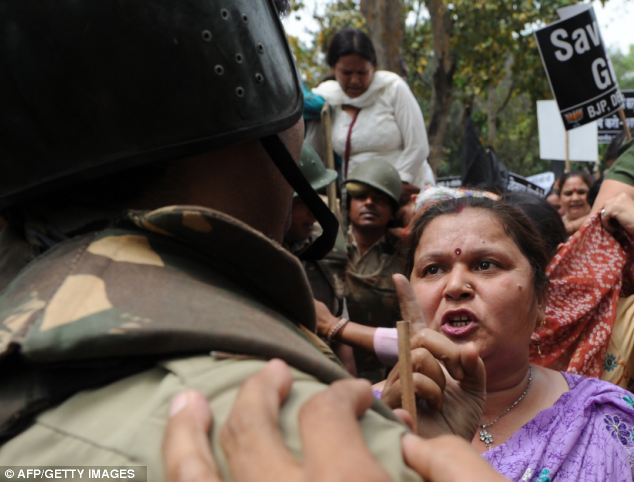
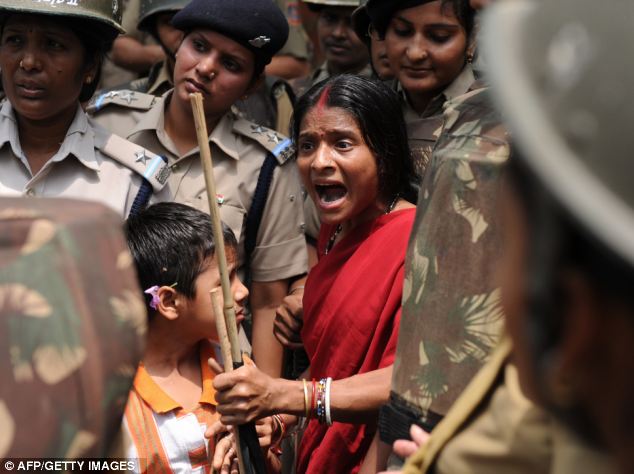
A few inspiring images from the protests in India:

article-2312536-196962B3000005DC-644_634x405

article-2312536-19696FC5000005DC-228_634x482

article-2312536-19694EB2000005DC-646_634x474

Dove Does Not Give A Shit About Whether Or Not You Feel Beautiful

22 Apr

Sometimes I feel like social media turns me into some kind of awful, gruesome caricature of a feminist. I spend waayyyy too much time jumping in on Facebook posts or tweets or blogs to explain why this specific thing, whatever it happens to be, is actually problematic. And I try not to do this, honest I do. I know that it’s annoying as fuck. I know that I come off like I’m Lisa Simpson except ten times worse and with more swears. I know that. I promise I do.

All of this is to explain why I have been so quiet and patient about Dove’s latest marketing campaign, Dove Real Beauty Sketches. I haven’t said anything about it. Nada. Zilch. Haven’t commented on anyone’s links, haven’t tweeted about it, haven’t even whispered darkly about it to myself when I’m alone at night and unlikely to offend anyone.

But then my friend Shannon wrote this brilliant piece about it, and after seeing the reactions to her post in the comments on her blog and from people on Facebook, I’ve realized that I have to say something. I’m not going to talk about how their recent campaign continues to perpetuate the idea that a woman’s most important asset is her appearance. I’m not going to tear apart their youtube video, with its beautiful sadly hopeful background music and its tear-jerking content. Other people have done that better than I ever could, and I’m not going to step on their toes.

I do want to tell you one thing, though:

Dove does not give a shit about whether or not you feel beautiful.

They don’t. At all. Full stop.

All that Dove wants is for women to buy their products. And they’ve discovered that the best way to manipulate women in the Western world is to tell them that they’re beautiful. And you know what? This is a really fucking effective advertising strategy. Part of this success is because it goes against just about every marketing rule out there. Traditional advertising wisdom says that we should tell people that they’re lacking in something in order to make them buy it. Tell women that they’ll be more attractive if they use your makeup or skin cream or expensive shampoo. As Margaret Atwood explains in her short story Hairball, advertising to women is simple:

“You bombard them with images of what they ought to be, and you make them feel grotty for being the way they are. You’re working with the gap between reality and perception. That’s why you have to hit them with something new, something they’ve never seen before, something they aren’t. Nothing sells like anxiety.”

This has been the way that advertising has worked, more or less, for at least the last sixty or so years.

And then Dove came and seemed to flip the whole thing on its head in a way that seemed to be totally new and brave and laudable. They’ve taken the formula described above and are using it backwards – for instance, they’re looking at the gap between perception and reality and saying that, in fact, the perception that you are an ugly, worthless person is wrong, so let’s bridge the gap back to reality where you are actually incredibly beautiful and worthy. Instead of bombarding women with images of what they ought to be, they’re bombarding them with images of how they feel that they already are – curvy, wrinkled, imperfect – and telling them that this is real beauty. Instead of hitting people with something new, they’re hitting them with the so-called truth about themselves, full of platitudes and love and golly-gee niceness.

And all of this has been incredibly, insanely effective. Women are now buying Dove products not because they feel that these products will improve them, but because they’re loyal to a brand that sees them as truly, uniquely beautiful.

All of which would be fine, I guess, if that was actually what Dove thought.

But Dove does not give a shit about how you feel about yourself. Dove just wants to manipulate you into buying their products.

How do I know this? Well, setting my general cynicism about large corporations aside, I know this because Dove is owned by Unilever. And while Unilever uses Dove to sell warm, fuzzy, watered-down feminism to Western women, it uses several of its other companies to do the exact opposite.

Unilever also owns Axe, which is well-known for creating advertising campaigns that are, well, the opposite of empowering to women. A typical example of their preferred style of advertising is the that one I’ve posted below, in which a young man spraying himself liberally with Axe is suddenly surrounded by a mob of thin, bikini-clad super models. These commercials are not only degrading to women (by putting forth the idea that men are only attracted one specific body type, and that for women to fail to attain that body type means to fail to be beautiful), but they’re also degrading to men (by perpetuating the stereotype that men are all sex-crazed beasts who just want to go to booty town with as many hot, sexy ladies as possible).

It is seriously such a fucking joke that Dove makes videos about how many unattainable images of beauty a young girl will be subjected to as she grows up and how this will warp her self-perception, while at the SAME FUCKING TIME Axe is creating those unattainable images of beauty.

Even worse, Unilever owns Indian brand Fair and Lovely, a skin-bleaching cream marketed especially to girls from lower-class families. This cream, which is part sunscreen, part moisturizer, and part skin-lightener, promises women with darker skin that they will be able to find better, higher-paying jobs by having fairer skin. It’s even marketed as being “empowering” to women because having lighter skin gives them more “choices” in life.

Yeah, that’s right. The same company that, in North America, tells you to own and love your body the way it is, tells Indian women that they need to be whiter in order to be successful.

Like I said, Unilever and, by extension, Dove do not give a shit about whether or not you feel beautiful. The only thing that they’re interested in doing is manipulating women into buying their products. For North American women, they do this by telling them that they are beautiful, no matter what they look like. For North American men, they do this by promising that their products will attract droves of hot babes. And for Indian women, they do this by telling them that if only they looked more like white people, they could achieve all of their dreams.

Dove described their Campaign for Real Beauty as “a global effort is intended to serve as a starting point for societal change and act as a catalyst for widening the definition and discussion of beauty.”

They’ve used the tagline, “Talk to your daughter before the beauty industry does.”

Their website is full of criticisms of the beauty industry, self-esteem builders, and gushing comments from loyal Dove users.

All of this is bullshit. 

And you know what? I feel really bad saying that because I know a lot of women who have been inspired by this campaign. I know women who feel that this campaign has helped remind them that they, too are beautiful. I know so many women who really, really love this campaign. And I don’t want to tell them that they’re wrong! I just want them to know that, at the end of the day, Dove doesn’t care.

Dove doesn’t care, but I do. And lots of other people do. There are even organizations out there, organizations that are not owned by giant corporations, that care. We think you’re beautiful, and we’re not standing to make any kind of profit off of that thought. More than that, we think you’re smart, capable, funny, kind, all-around great people. We love everything about you.

And you know what? When I tell you that, I am not making a fucking cent off of it.

IMG_5504-ed-blog

Here are a few videos of advertising campaigns from Dove, Axe and Fair and Lovely, in case you want to compare: