Tag Archives: depression

An Open Letter To My Son

4 Apr

You.

Sometimes I wonder about you.

I wonder, for instance, where you came from. I understand the dry facts, of course, the complex mechanics of ovulation and ejaculation. I understand how cells divide, and then divide again, their numbers growing exponentially as seconds tick by. I know a thing or two about gametes and zygotes and embryos.

What I don’t understand is how all of that made you.

The facts of your existence seem like they would be better explained by alchemy rather than biology. We made you out of nothing, or rather, we made you out of two randomly-selected bits of genetic code that we unintentionally sent slamming into each other deep in the darkest recesses of my body. And out of those tangled strands of DNA grew you, incredible, beautiful you, with your father’s blue eyes and my heart-shaped mouth.

It feels more like magic than science, really.

I don’t know that I believe in souls, but I do know that I have a hard time wrapping my head around the fact that there is now an entirely new, unique human being on this planet who has never been here before.

And I wonder how I managed to carry you for eight months inside of me without somehow fucking it up. I mean, this is me we’re talking about here – the person who is totally incompetent when it comes to the most mundane, run-of-the-mill tasks. I can’t swim or drive a car or even whistle properly, for God’s sake, but somehow I made an entire kid from scratch? How does that even work?

I’ve spent two years watching you unfold from a scrunched up, red-faced, newborn cipher into something that’s starting to bear a remarkable resemblance to a human being. You walk, you talk, you have feelings. You have preferences, even, very specific likes and dislikes that seem totally arbitrary to me. You have a sense of humour. You make jokes, on purpose, just to make me laugh.

You tell me that you love me and I wonder what you think that word means. At thirty, I’m still getting a handle on all of the possible interpretations of love, all of the implications and connotations that it might bring with it. I’ve learned to use the word cautiously, sparingly, oh-so-carefully, because those four innocent letters can be so incredibly loaded with meaning. But you, what do you know about meaning? You don’t know anything, or at least certainly not enough to overthink things the way I do; you just love me.

And oh God I love you so much. So fucking much.

And I wonder, how on earth do I protect you? How do I keep you safe?

Like some poor, naïve fairytale mother, I’m trying to help you navigate your way through a forest that’s by turns enchanted and haunted. The path is familiar, as if I walked it once years ago, but different, too; overgrown and seemingly impassable in some parts, and unexpectedly clear in others. And as we pick our way through the undergrowth, as we do our best not to trip on twisted roots and sharp stones, I try to remember the lessons I’ve learned from all folktales I used to know.

For example, I won’t make the mistake that Sleeping Beauty’s parents did when sending out invitations to her christening. Unlike them, I’ll be sure to invite the dark fairy godmothers as well as the good ones, because I know that they’ll come anyway, slipping in through back doors and lurking in corners where you least expect them. I’ll let them give you their murky gifts in broad daylight, so that I can look them in the eye while they do so. Then I’ll smile and thank them, recognizing that I have to let life give you the bad as well as the good.

And when I send you out into the world alone, as I know that I will someday have to, I’ll give you something more substantial than bread crumbs with which to find your way back home.

And I won’t make you go to your grandmother’s house alone until I can be sure that you can tell the difference between an old woman and a wolf in a nightgown.

I look at you and wonder what will happen once I’m not there to navigate this forest path with you. I wonder what trolls and goblins and clever tricksters you’ll have to face. Will your monsters look anything like mine?

I wonder what else I’ve passed on to you, along with the shape of my eyes, my love of books, and my brilliantly trenchant wit. What ticking little genetic time bombs lie dormant inside of you? My anxiety? My depression? The weird nail on my right big toe that turns black and falls off every winter?

If and when these things surface, what will I do?

Will I even be able to help you?

And how will I teach you about a world in which you, a white, middle class boy, will have more privilege than most?

And how do I teach you that it’s your job, among other things, to give a hand up to those less privileged than you, when everything else around you will seem to be telling you to grab whatever you can and run with it?

And how do I teach you that you’re allowed to cry, that you’re allowed to feel afraid or weak or inadequate?

How I do I help you decode all of the toxic messages that the world will try to shove down your throat?

What I want for you most of all is a place of safety. I want our home to be a place where you feel safe making mistakes, a place where you have a healthy respect for but never a fear of consequences. I want you to feel safe being yourself, whoever that is. And above all, when you’re out there, alone and afraid, I want you to know that you always have a safe place to come back to.

I will always love you, no matter what.
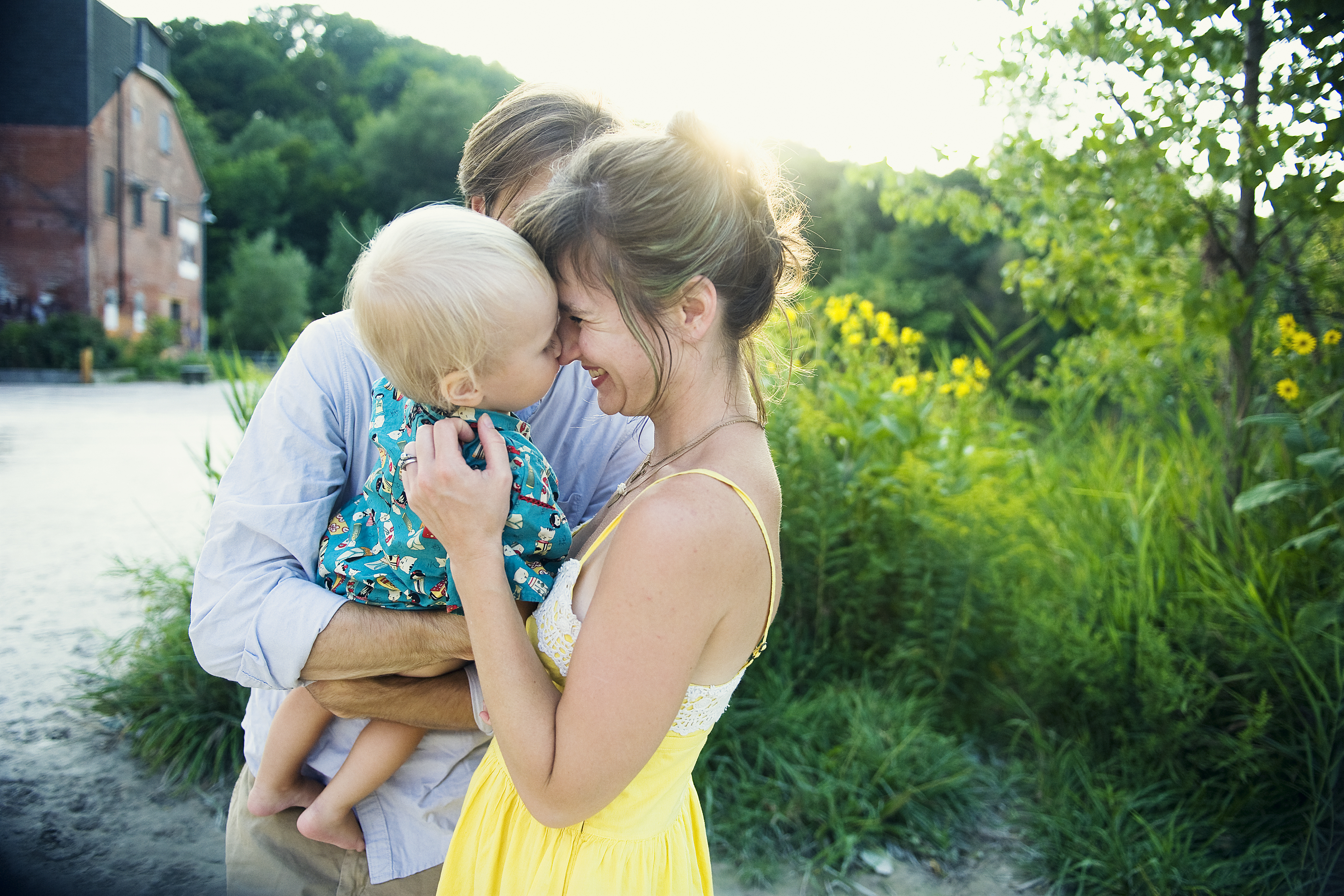
Photo by Diana Nazareth http://www.diananazareth.com

Photo by Diana Nazareth http://www.diananazareth.com

Nostalgia Machine: On Re-Watching Girl, Interrupted

1 Apr

Those of you who are fairly new to my blog may not know this, but on days when I’m not busy kicking the patriarchy square in the nuts or deconstructing inaccurate Facebook memes, I like to indulge in a little bit of nostalgia. Well, maybe a lot of nostalgia. Then I tweet extensively about my my indulgences, and sometimes end up writing about them here.

Which is all to say that I re-watched Girl, Interrupted the other night and now I want to talk about it.

I saw Girl, Interrupted in theatres, when it first came out, and it gave me a lot of Feelings. Actually, it gave me one main Feeling, namely that I basically was Winona Ryder’s character, if slightly less gamine and winsome. I mean, I was a depressed teenager who had a) frequently contemplated suicide, b) felt lonely and isolated, and c) wrote obsessively in serious-looking leather-bound journals. Of course I identified with the film version of Susanna Kaysen.

Every single scene, every thought, word, and action in that movie struck me as being perfectly, achingly true. Every time Winona Ryder looked at the camera with her wide, tearful eyes, every time her mouth trembled with emotion, every time she stared sadly off into the middle distance, I thought, yes. Yes, I get this.

Then, a few years ago, I bought Girl, Interrupted on DVD, fuelled by memories of how important it had been to me. But after watching it for less than an hour I had to turn it off. It was awful, unbearable even. The performances were overwrought, the dialogue ridiculously, almost comically, dramatic. I was embarrassed that I’d ever even liked this movie, let alone identified with the main character. I put the DVD back in its case, stuck it on the shelf and didn’t touch it again.

Or rather, I didn’t touch it until earlier this week, when Catherine, my sister and frequent accomplice in nostalgic endeavours, suggested that we watch it. Sure, I said, figuring that I could hate-watch it and then later make fun of it. Maybe we could even invent a drinking game, like, take a shot every time Susanna cries over how hard it is to be a white, middle-class American. Hilarious, right? I mean, right?

Except that on re-watching Girl, Interrupted, I discovered that it had, in the last five years, somehow gone past bad and straight back to good again.

At its core, this film isn’t really about mental health, or suicide, or Susannah Kaysen’s stay at the famed McLean Hospital. I mean, of course it is about all of those things, at least peripherally, but at its heart it’s about friendship. Specifically, it’s about a sort of intense, parasitic friendship that seems to exist only between young women, those deceptively bright, canny girls just on the cusp of entering the adult world.

And maybe this isn’t the type of friendship that every girl experiences. Maybe this is just me, projecting my own pathetic history onto the blank canvas of Winona’s smooth, perfect face. Maybe I’m the only one who sees this when I watch this movie. But I know that this is a type of friendship that I’ve engaged in not just once but over and over, and maybe I still do, to this day. It’s possible that it’s a pattern that will play out for the rest of my life, or at least until I grow up and finally get some sense knocked into me.

Can you believe that I’m thirty and still talking about growing up in the future tense?

The dynamics of this specific type of friendship are as follows: half of the friendship, let’s call her Girl One, is a strong, loud, brash character who doesn’t give a shit about what anyone thinks, says whatever’s on her mind and gives very little thought to the consequences of her actions. The other half is someone, call her Girl Two, who is almost the photographic negative of the first – quiet, reserved, terrified of how other people see her.

Think Peppermint Patty and Marcie from Peanuts, except amplified, grotesquely exaggerated.

When I say that this friendship is parasitic, maybe what I really mean is that it’s symbiotic. As a lifelong Girl Two, I’ve always thought that I needed Girl One more than she needed me, but I wonder, now, whether that’s true or now. Maybe we’ve needed each other in equal amounts. I’ve needed someone to act out all of the things that I would never, or could never, dare to do, someone whose own loud voice might give me permission to raise mine, someone who would never sugarcoat whatever they wanted to tell me. But perhaps my friends, in turn, needed someone to occasionally hold them back, someone to steady them, someone who would listen to them and not pass judgment.

The truth is that I don’t know why or how much these other girls loved or needed me, but I do know that I loved and needed them with an intensity that sometimes bordered on obsessive. Because these girls, these loud, strident girls, had both a popularity and notoriety (not that my teenage self could differentiate between the two) that I could only dream of. People either fiercely loved or passionately hated these girls; as for me, they didn’t even bother to notice that I existed.

But these girls noticed that I existed.

And the fact is that as much as I like to think that I’m the type to stand up for what I believe in, the type to shout down the misogynists, the racists, the homophobes, the transphobes, I still sometimes need someone to give me a push. I need someone to raise their voice first, show me how it’s done, teach me not to be afraid. Because for whatever reason, these gifts don’t exist inside of me, or if they do, they lie perpetually dormant, and need to be awakened again and again and again.

On my own, I am not good at challenging authority. Not really. I need other people, people like Angelina Jolie’s character Lisa, to egg me on. And, much like Winona Ryder’s Susanna, I’m not always good at figuring out when the Lisas in my life have gone too far. I put too much trust in them, and then end up places, sometimes frightening places, that I never intended to be. I let myself be blinded by love, or at least by longing and envy, and don’t notice that some of these Lisas are downright bad news. Or rather, I don’t notice until it’s too late.

So yeah, maybe at thirty years old I do still get Susanna. Maybe there are more layers to the similarities between us than I’d originally thought.

And all that absurd dialogue and overwrought acting? This time around, they seem to me to be a painfully realistic portrayal of how teenagers actually behave. When you’re in your teens, everything that you feel is so intense, so immediate, so overwhelming that you can speak only in terrible, laughable clichés. My mother has always said that teenagers are like toddlers with better language skills, and now, watching my son struggle to express frighteningly huge emotions with his sadly inadequate vocabulary, I’ve realized how right she is.

I’ve realized that when I watched Girl, Interrupted a few years ago, what embarrassed me the most was the idea that at one time I might have spoken or acted in any way that resembled Susanna. Surely, even as a teenager, I’d been too smart, too articulate to ever behave so pretentiously. But the truth is that I was ridiculously, probably amusingly, pretentious. I just didn’t recognize this trait because all of my peers were just as overwrought and dramatic as I was.

All of this is to say that I’m now back at a place in my life where I can like, maybe even love, this movie, if only because it seems like a neatly preserved time capsule of how I thought and felt half a lifetime ago. I remember what it was like to be where Susanna was. To suddenly find yourself at the end of high school faced with choices, choices, choices, and yet not to see any of them leading anywhere. When I was a teenager, I lived in terror of being “normal,” because I worried that choosing a normal path and ending up with a normal life would make me just as grey and miserable as all of the adults that surrounded me. There would come a time, of course, when having a normal life and a nuclear family and a nine-to-five job would seem wonderfully, almost exotically appealing to me, but that came much later. When I was in high school, I didn’t understand that opting out had its costs, some of which, it turned out, I wasn’t willing to pay.

And sometimes I miss my teenage self, because even if she lacked her own voice, she still somehow managed to be totally steadfast and uncompromising in her beliefs, even if those beliefs made her feel miserable and isolated. But mostly I’m just glad that I’ve learned how to trade off one thing for another, to give a piece of myself away in order to be able to keep a different part that is more necessary, more valuable. I’m grateful to the Lisas in my life who have taught me when to stand up mouth off and, somewhat by extension, when to sit down and shut up. I’m thankful for every time I’ve had to learn the lesson that it’s important not to trust the Lisas out there too implicitly, and that I need to learn how to think for myself. It’s a hard lesson, and one that it feels like I’ve had to learn often, but it’s a good one.

Mostly, though, I’m glad that I’ve found my way to where I am.

Girl--Interrupted-winona-ryder-154518_1000_667

On Writing Fiction

23 Mar

Let’s begin with the assumption that I am a fairly talented wordsmith.

Before I say anything especially important, I have a few small digressions to make:

Digression the first – why wordsmith? Why not wordwright, like playwright or shipwright? Wordsmith makes me think of blacksmiths hammering out cold, dead things like horseshoes and nails and old-fashioned hinges. Shipwrights make boats, the best of which have delicate wooden ribs, can slice through the cold saltwater like knives, and creak and groan like living things.

Maybe bookwright is the word I want. Think we could get that into the OED?

Digression the second – I say “assumption” because, of course, talent is subjective. For instance, reading Wally Lamb’s She’s Come Undone made me want to claw my own eyes out, but I know a lot of smart, well-read people who sincerely enjoyed it.

No, but seriously, that book is terrible. It was so bad that it went past good and then all the way back to bad again.

Digression the third – I also say “assumption” because even after all the positive attention, all the accolades and kind words, I still don’t really know that it’s fact. And yes, I Am Not Your Wife was reposted to the The Believer‘s tumblr, Thought Catalog, The Frisky, and Huffington Post, and yes, those things are huge, but I still don’t feel especially talented. Maybe the problem is that those things are too huge, and it’s overwhelming.

Like, fuck. The Believer. Are you fucking kidding me right now? Their contributor’s list is basically a list of ALL OF MY FAVOURITE LIVING AUTHORS EVER. Being published in The Believer is a writer’s wet dream. And I somehow managed to get on their tumblr without even trying?

And for sure there’s a part of me that thinks that all this recognition is fantastic, and it’s only going to lead to better things, and blah blah optimism blah, but there’s another part of me, and admittedly much larger part of me, that thinks that this is all a fluke. That I’ll never write anything as smart or interesting or touching as I Am Not Your Wife, and now, at the age of 30, I’ve reached my peak of greatness, and now I’ll begin my slow decline.

In the future everyone will be famous for fifteen minutes, etc.

But enough digressing. What I really want to talk about is my love-hate relationship with writing fiction.

So.

Let’s begin with the assumption that I am a fairly talented wordsmith.

I am also someone who likes to write fiction.

And I guess that for a long time I thought that talent was all it took to write a good short story, or poem, or novel. I didn’t really think about writing being something that you would have to study or practice or learn. I thought that you were either talented, or you weren’t, and that determined whether or not you were going to succeed.

Then, in the summer of 2007, I took a creative writing class at the Humber School for Writers with Miriam Toews and she was fucking amazing. She had so many nice things to say about my writing, and even recommended me to the Humber School for Writers’ in-house literary agent, and I left that program feeling like a fucking rockstar.

Anyway, on one of the last days of the program, Miriam and I were having a serious writer-to-writer talk (because I was sure that I was a serious, for-real, grown-up writer) and she told me to forget taking classes and workshops, forget trying to learn the craft of writing, and to just go home and write. And this seemed like excellent advice, because she’d never taken a creative writing class in her life and she’d won the Governor General’s Award for English Fiction. So clearly, she knew what she was talking about.

I took her advice, and I went home, and I wrote. I wrote like a motherfucker (digression the fourth: how does a motherfucker write?) and ended up producing a folder full of short stories and a novel.

And I couldn’t get a damn thing published. I mean, I came pretty close, but still. No cigar.

(Digression the fifth: when I was a kid my mother would always say “close, but no cigar.” This made me think that cigars were fantastic and wonderful and  possibly delicious, which, in turn, made me believe that if I could just get something right for a damn change, she would give me one and my life would be perfect)

After querying and re-querying every damn agent and publisher and literary magazine on the continent, I quit. I was done. I just couldn’t take the heartbreak anymore.

Now, when I say heartbreak, a lot of people think that I mean the pain of rejection – and that’s fair, because that’s part of what breaks my heart.

But the truth is that the bulk of my heartbreak comes from the thought that I’ve somehow failed my stories. Because it’s not the stories themselves that are the problem – in theory, they’re sound enough – it’s the wording, the structure, the believable setting and the fleshed out characters. In the hands of a better writer, these stories would have lived. But mine didn’t.

All my poor, innocent stories were all stillborn. I’d tried my damnedest to get them to live, but I couldn’t. I didn’t know how.

I fell in love with each one, and each time I had my stupid heart broken and my foolish hopes dashed.

And I get that it’s about practice. I get that you have to hone your craft, and that suffering for your art doesn’t mean starving somewhere in a cold garrett but instead the grim misery of grinding away at your craft day after day after day. I get that no one is successful right away.

But what happens to all of those stories that I wrote and loved? Are they just collateral damage in the fight to become a good writer? Do I forget about them? Pretend that they never existed? Delete from from my hard drive?

How can I keep giving my heart away, over and over again, to stories that will never see the light of day?

But I want to write fiction. And (perhaps more importantly) I feel happier when I’m writing fiction. So I’ve started that up again, and sometimes it feels amazing, and sometimes it feels terrifying, and mostly it feels like both things at once.

But the thought of trying to get my stuff published again, the thought of going through all that rejection again, scares me shitless.

It doesn’t help that I feel like I’m running out of time. Most of the people my age have Serious Grownup Careers that they’ve been building since their mid-20s, and meanwhile here I am without a single published (fictional) word to my name. How do I ever catch up?

And, I mean, never mind catching up, how on earth do I ever compete with everyone else, all the amazing writers and wannabe writers on the internet? What sets me apart from them? Most of the time, I think that the answer is “nothing” – I’m just another faceless, nameless word-o-phile floating in a sea of fellow literary junkies.

These past few years have been rough. I’ve had a few friends and acquaintances, all people my age, die within the last year or two. There was Artem, of course, who was only 27 when he died of cancer. Then, a few months ago, there was Ryan, who I’d gone to university with; he died in his sleep of unknown causes. Most recently there was a friend-of-a-friend who died of a massive heart attack at the age of 32.

I think I might be running out of time.

So with that in mind, I’m going to try to find a good writing class. I’m going to find someone who can help me iron out the plot and pacing issues that plague all of my writing. I’m going to grind away at this like I should’ve been doing all along. I’m going to do this. Because as much as I love Miriam and think that what she said was right for her, I’m not sure that it was right for me.

In light of that, if anyone has any recommendations for good creative writing programs, preferably in the GTA, but I’m willing to travel, I would love to hear about them.

And to anyone who writes fiction – I would love to hear about your experiences, be they failures, successes, or something in between. I would love your commiseration. I would love to hear how you keep yourself going.

Most of all, though, I want someone to tell me to keep going, that this is worth it, and that I’ll get somewhere eventually. Because right now it feels like I’m driving round and round in circles, and I’m in danger of running out of gas.

Anne Sexton, at her typewriter

Anne Sexton, at her typewriter

High School Reunions, Or The Time I Farted Publicly

15 Mar

My high school career started off, quite literally, with a bang.

A few weeks into ninth grade, I was lounging around in drama class, leaning nonchalantly on something or other, when (sorry, there’s no way to be delicate about this) I farted. Loudly.

To make matters even worse, I immediately sat up and said in the most prim-old-lady way possible,

“Oh my goodness, excuse me.”

To say that I was mortified would be like saying … actually, I don’t even know what it would be like saying. I can’t even think of anything clever enough to explain how I wanted to stab myself in the eyes every time I had to go to school.

Up until then, I suspect that I’d already been teetering on the edge of “uncool”, but that one little (actually not so little) fart sealed the deal. I was banished to High School Loser Hell forever. Although there had only been about fifteen people in the class, within a few hours the whole school seemed to know. For weeks afterwards, people would come up behind me in the hallway and make farting noises. My face turned a permanent shade of red.

Imagine being a fourteen year old girl and having to live your life as the girl who farted in class.

My dreams of ever being prom queen or joining student council or even of ever having a boyfriend were all dashed in that moment.

I mean, comedic hyperbole, etc., and I actually did have one or two high school boyfriends, but still. It felt like the end of the world.

I’ve written before about how high school wasn’t exactly great for me. Which, whatever, it’s over and I’m a grown up and I don’t care anymore because my life is awesome now. Right? I mean, right?

Except for how I apparently do care and ended up throwing a little tantrum on Facebook about how I don’t want to go to the upcoming 25th anniversary/reunion of the arts program that I was in.

(Incidentally, this is a really good example of why I shouldn’t be on Facebook, because I just use it to vomit my feelings all over the internet)

Look. It’s not like I didn’t have any friends in high school. It’s not like there were never any good times, ever. It’s just that a lot of factors combined to make me feel like an unlovable weirdo social pariah and I’ve spent the rest of my life trying to get over that.

It wasn’t just the farting (oh God, I cringe every time I type that word, STILL, EVEN NOW, 16 YEARS LATER). It was everything. It was the fact that I was already socially awkward to begin with, and I had no idea how to dress, use makeup or make myself attractive in any way shape or form. It was the fact that I was depressed, and none of the adults around me seemed to have any fucking clue how to handle that. It was the fact that we were poor and I couldn’t afford to do half the things my classmates could.

I wish I didn’t have to use the word poor, because that sounds so, I don’t know, dramatic or self-pitying or something. And the truth is that compared to a lot of people, I had it pretty easy. But it still sucked. Part of it was that I didn’t really have a lot of experience being poor; up until midway through grade eight, we’d lived in a nice area of town, I’d had decently nice clothes, and I’d never had to miss out on anything due to lack of funds.

Then, when I was thirteen, my dad suddenly left, and my mother, sisters and I moved into low-income housing where things were, well, interesting to say the least. Our next-door neighbours (who, by the way, had a ten year old son) spent Christmas day drinking God-knows-what and then taking turns going outside to vomit on their front lawn. We regularly heard gunshots going off in other parts of our complex. Once, when I was in grade thirteen, I saw a man naked and stoned out of his mind lying on the front doorstep of the townhouse across from ours. He was begging his brother to let him in. Instead, the brother called the police, who came and beat the naked man while he screamed, Oh God, please stop.

And honestly, I swear, I’m not telling any of this to you to make you feel sorry for me. It’s just that I felt like my friends, with their intact families living in their mid-century bungalows in their nice, tree-filled neighbourhoods, maybe didn’t really get where I was coming from. Or maybe they did. What the hell do I know?

Anyway, we didn’t have any money, which sucked for a variety of reasons. My clothes were ugly and didn’t fit properly. I couldn’t afford to go on a lot of the field trips my classmates did. I had to miss out on a bunch of stuff because I always had to babysit.

Oh, and I was awkward, which has nothing to do with money, but I just want to mention it again, in case you forgot. And ugly. I had acne like it was going out of style (hint: it was never in style).

All of this was somehow manageable, though, until grade eleven, when I was hit, hard, with my first major depressive episode. I cried all the time. I started cutting (which is another fact that makes me wince with embarrassment, but I figure that since I’ve already told you about the farting I may as well go whole-hog with the unflinching honesty). My grades plummeted. I tried antidepressant after antidepressant, but none of them really worked. I couldn’t sleep at night, so I started napping during class. I lost the ability to concentrate.

And you know what? Almost none* of my teachers seemed to give a shit, or even seemed to have any kind of clue what to do with me. None of them offered me any kind of help or sympathy. One of them, in fact, tried to have me kicked out of the arts package because I wasn’t putting enough effort into school and extracurricular activities. She even scheduled a big meeting with the administration and made my mother attend, which was pretty much the opposite of what I needed right then.

And like, I get it, you know? These teachers were all tired and overworked, and here I was, yet another teenager who wouldn’t do her homework and just wanted to mope around all the time. And they were so used to seeing their students fucked up on pot or acid or heroin (NO BUT FOR REALS, I AM NOT KIDDING, THERE WERE KIDS AT MY SCHOOL WHO DID HEROIN), that maybe seeing me strung out on Paxil and Prozac didn’t seem that different. I wasn’t especially close to most of my teachers, and probably I didn’t really make it worth their time to care.

But weren’t they supposed to care? I mean, wasn’t that their job?

Or maybe they did. Maybe I misread everything and misunderstood their advances and offers of help because I was just too wrapped up in my own misery. Maybe they wanted to be kind to me but eventually got tired of me pushing everyone away.

I was a fucking treat to be around in those days, let me tell you.

The real kicker came in grade thirteen, when I couldn’t even afford the twenty bucks for a student card. The thing was, without a student card you couldn’t collect participation points. And you needed those points to win a White E, which was the participation award that my school gave out every year. You had to do a ton of extracurricular stuff to get a White E, and I’d been only one of, like, three to win one in grade nine. I’d received one every year since, and I knew that if I got one in grade thirteen I would receive a Silver E which was, like, a Big Deal at my school.

But because the school wouldn’t let me collect those points, I had no hope of winning one. And while in retrospect this seems like an especially stupid thing for me to care about, at the same time it also seems incredibly petty of my school to not be willing to just waive the fee for me or whatever.

So anyway, then high school ended, and if I’d had any bridges to burn I would’ve burned them, but I didn’t, so I couldn’t. I just hightailed it the hell out of Ontario and decided to start a new life in Halifax as an Especially Cool Person Who Does Not Pass Gas In Public. And by and large, I succeeded.

Then I moved back to Ontario and joined Facebook and had to face all of my demons former classmates and mostly it was fine. I mean, actually it was all fine, and everyone is super nice and lovely now and no one has made fart noises within my hearing or anything like that. And some of the people I knew in high school are now my closest friends, and I don’t know what I would do without them. And I no longer dread visiting Kitchener because I’m afraid that I’ll run into someone I used to know only to have them point at me and say, “That was the girl we all laughed at in high school!”

But that still doesn’t mean that I’m able to look back fondly on my high school days, you know? And I definitely have a hard time celebrating the administration of a program that didn’t really want to lift a finger to help me when I was at my nadir. I get that lots of people found the program inspiring and life-changing and blah blah blah, but mostly it just made me feel like I was a talentless hack who was going nowhere in the arts world.

Mostly I’m just super jealous of everyone that had a good time in high school. Mostly I don’t want to go to this reunion because I don’t want to hear everyone else’s largely positive interpretations of events that were miserable and embarrassing for me. Mostly I’m just incredibly embarrassed that I’m fucking thirty and I’m still so insecure.

Fuck, you guys, I don’t know. High school fucking sucked, and the shitty part is that it sucked to a greater or lesser degree for everyone, so it’s not even like I get to be alone and special in my pain. I just happen to be the loudest about it, apparently.

Maybe we can just use this as an opportunity to wallow in our collective former misery together?

Maybe that’s the point of high school reunions, after all.

page1-55

*There were a few that cared. My grade ninth and tenth grade English teachers come to mind. In particular, my grade thirteen English teacher, gets my undying thanks for the kindness he showed me then and still shows me today. Apparently I did well, at least, with English teachers, hah.

Nostalgia Machine: On Re-reading Sandman

11 Mar

Matt and I have recently been re-reading Neil Gaiman’s Sandman series, something that I’ve been putting off doing for a few years now.

I’m not sure why we decided to dive back into those books now, exactly – I guess part of it might be because I recently started following Mr. Gaiman on twitter and suddenly remembered how amazing he is. It’s also probably due to the fact that we just recently found the last couple of volumes needed to complete our collection for cheap at a discount bookstore. Mostly, though, I think it came out of how much I’ve been thinking about my friend Annie lately.

The thing is, I’ve been missing her like crazy, and I can’t think about the Sandman books without being reminded of her, and vice versa.

Annie moved in with me in the spring of 2004, just at the tail end of my annus horribilis. She was a friend of a friend, someone I barely knew, but I desperately needed a roommate, and she desperately needed a room. Although I’d met her a handful of times, at parties and theatre department events, I’d only ever spoken to her once. At some get-together or other I somehow found myself standing next to her, and I figured that I should try to make conversation. I racked my brains for something to say, and wound up complimenting her on this pin on her bag that said, “Go Fascinate Someone Else.”

She looked at me as if I’d said the most mundane, meaningless thing possible, took a drag from her cigarette, and said in her smoky, vaguely European voice,

“Yeah. I like it too. Obviously. Or I wouldn’t be wearing it.”

What I want to make clear here is that Annie was a super badass who dressed all in black, smoked like a chimney and never refrained from speaking her mind, even when she knew it was going to get her into trouble. She was a brilliant actress with a mysterious Soviet past and a deadpan stare that could wither just about anyone. Half the city admired her, half the city was afraid of her, and half the city wanted to sleep with her. And no, I didn’t accidentally say “half” instead of “a third” – I just mean that there was a lot of overlap between all three categories.

I had no idea why she would ever want to be my roommate.

I would estimate that there are four people who have had an enormous influence on my outlook on music, clothing, art and life in general. The first was Emily, who I met at a performing arts camp when we were twelve and who introduced me to vintage clothing, the Kids in the Hall and, music-wise, everything from Ani DiFranco to Sonic Youth. The second was Kat, who had first hated then later befriended me in while we were at university, and who is responsible for introducing me to pot, Sylvia Plath and the joys of being loud and obnoxious in public. The most recent one was my friend Audra, who has helped shape my take on third-wave feminism, internet activism and dance movies. The fourth, of course, was Annie.

I’m not sure, exactly, how Annie and I became friends. I think that it happened slowly, by degrees, with me making tentative friendly overtures like buying her beer and lending her books. Then she invited me out to her birthday and I went, bravely talked to a few of her friends*, then left early. I’m not sure what time she came home at, but the next morning she was still drunk. When I got up, she was lying sprawled out on our couch, her tank top askew and her already-short skirt hiked up even higher, and she kept giggling over everything I said. I made us both breakfast, and then suddenly, magically, all of my awkwardness melted away and it was like we’d known each other forever.

Mostly it feels like Annie and I have the kind of friendship that twelve year old boys have. I mean, you know that part in Stand By Me when they’re sitting around the campfire talking about pez candies and Wagon Train and whether or not Goofy’s a dog? And then narrator-Gordie says, “We talked into the night. The kind of talk that seemed important until you discover girls.” That’s what our friendship felt like then, and still feels like now. And if you’re an aficionado of Stand By Me in the same way that Annie and I are, I probably don’t have to explain that she’s Chris Chambers, and I’m poor old Gordie Lachance with the leech on his balls.

Anyway, that summer, the summer of 2004, Annie introduced me to the Sandman series. And as I worked my way through them, she re-read them, and together we fed each others’ obsessions. We would sit out on our North End stoop as the late afternoon cooled into evening, drink whatever we had on hand, share Annie’s pack of cigarettes and try to pull apart the Sandman universe. We teased out each layer, or at least the layers that we could find, and laid each thread of plot bare to examine it. We researched everything, trying to figure out which characters were historical figures and which were just plain made up. I think at some point we even made a flowchart or graph to keep track of our discussions. It was perfect.

That summer was like gorging on everything wonderful in life all at once, and if I could bottle it up and sell it, I could be a millionaire, like, tomorrow.

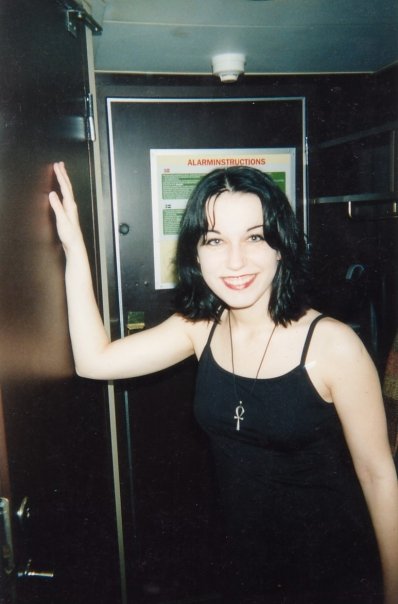
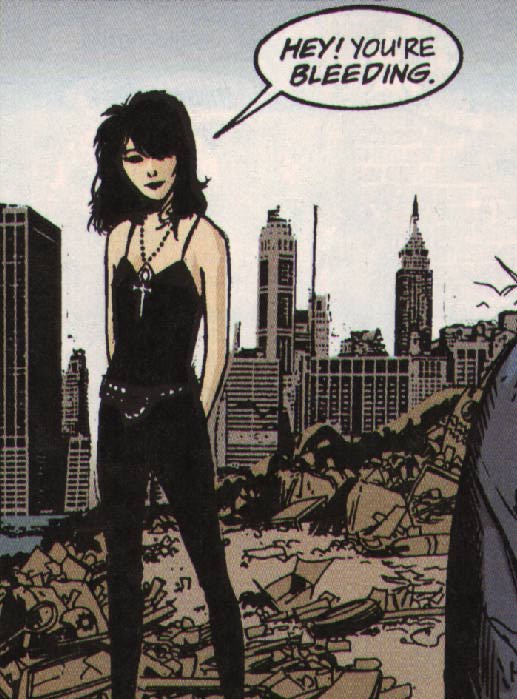
We eventually started casting ourselves and our friends as the Sandman characters. Annie, at the time, was a dead ringer for Death (PUN SO INTENDED):

annie_death

tumblr_m7op1mAbYW1qbgs7po1_1280

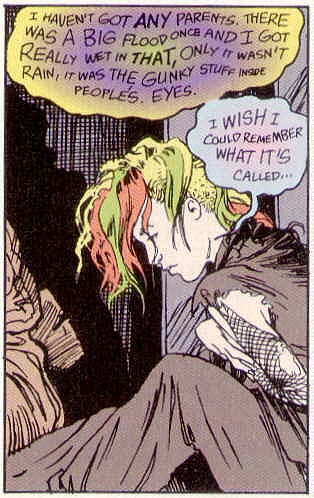
And I felt a weird kinship with Delirium:

gunky

I’m not including a picture of myself because I look nothing like Delirium, but when I first read those books, I felt like her. I understood the stuff she said, even when most other people, both fictional and real, seemed to have no clue.

I loved Delirium. Loved her. I think my adoration for her was part of the reason I put off reading the Sandman books again for so long – because, of course, it’s dangerous to revisit anything that you’ve known too well, loved too deeply, or somehow view as having helped shaped who you are. It’s dangerous to expect something to feel the same after years and years of memories and expectations. Sometimes, if you’re lucky, those old books, movies and places are able to stir enough nostalgia to allow you to overlook all of the failings you’re suddenly able to see, but mostly going back to the things that you view as influential and formative is nothing but a disappointment. First of all, they can never live up to the hype that’s built up in your mind for the last ten or fifteen or twenty years, and second of all they’re often just plain terrible and end up making you feel as if a huge chunk of your childhood or young adulthood is somehow tainted.

And, see, Delirium is a character who would be ripe for this kind of adult realization. I was worried that, as a 30 year old, I would find her character to be ridiculous, and my love of her incredibly pretentious. I was worried that re-reading Brief Lives, my favourite Sandman of all time, would leave me rolling my eyes SO HARD at my younger self and her habit of being overdramatic about, well, everything. I was worried that, this time around, I would hate Delirium, or at the very least no longer love her and know her the way I had. And somehow, that would feel like a huge loss.

But you guys? Sandman is still amazing. And Delirium is still amazing.

Maybe it’s because when Annie moved in with me, I was just coming out of a major depressive episode, and I’m in a not-dissimilar place in my life right now. Or maybe it’s because I haven’t changed as much in nine years as I’d thought. Whatever the reason, Delirium still kills me in all the best ways possible. She says things, and I think, ohhhh, I get that. I’ve felt that.

Like this:

“I feel like … I don’t know. Someplace nobody ever goes anymore.”

Or this:

“It all keeps moving and it won’t stop and I just want it to stop and then I think what if it gets worse? You know? What if it gets worse?”

Or this:

“I like airplanes. I like anywhere that isn’t a proper place. I like in-betweens.”

Or this:

“What’s the name of the word for the precise moment when you realize that you’ve actually forgotten how it felt to make love to somebody you really liked a long time ago.”

Or this:

“You’ve never apologized to me. You just act like you know stuff I don’t know that makes everything you do okay.”

Ahhhhhhh (that is a sigh of total satisfaction after having a fictional character explain what’s in my heart)

I’m not really sure how to end this, except to say that I find myself back in the same curious, dreamy state that Sandman put me in the first time. I mean, it’s probably not just the books – it’s probably also the fact that spring is so close that you can taste it, and that my house is clean for once, and I ate some really transcendentally great yogurt today. But whatever it is, I’ll take it. I like this feeling. I’ve missed this feeling. It makes me feel floaty and insubstantial and wondrous in a way that I haven’t felt in years.

I just wish Annie was here to share this all with me, instead of being half a continent away.

I wish we were back on our stoop, eating Rassy’s pizza and drinking Kahlua cocktails and watching the sparrows hopping around eating our crumbs.

I wish I knew what to do with this feeling, now that I finally have it back.

———————

*It was actually only one friend, the nicest guy imaginable who would deliberately seek out shy, awkward people and talk to them at social gatherings. Seriously. The nicest.

Fifteen Assumptions That Might Be Useful To Make

7 Mar

1. Assume that you are loved.

2. Assume that those who love you find some kind of value in you and the things you do.

3. Assume, however, that you don’t need to be valuable in order to be worthy of love.

4. Assume that there is no one out there keeping a tally of all of your failings, ready to throw it in your face when you’re either feeling too good or too awful about yourself.

5. Assume that if anyone actually is keeping a tally of all your failings, that act says more about them than it does about you.

6. Assume that you can’t make all of the people happy all of the time; maybe not even some of the people some of the time.

7. Assume that you will, over the course of your life, sometimes anger or disappoint the people you love.

8. Assume that when this happens, it isn’t the end of the world, even if that’s what it feels like.

9. Assume that there is never an end to learning, or growing, or discovering.

10. Assume that you will always find a way out, even when all the doors slam shut and everything feels impossible.

11. Assume that sometimes earnestness and optimism can trump irony and cynicism.

12. Assume that it’s possible to recapture the way you felt when you were young, how the perfect clockwork mechanism of the universe used to leave you breathless and giddy with wonder.

13. Assume that there will always be more stories to tell, or at the very least new ways of reinterpreting old fables.

14. Assume that nothing is permanent, that someday even the sun will disappear; remember that everything we see and touch and taste is made of stars that grew and pulsed and died long before this planet ever existed.

15. Assume that you are under some kind of obligation to make the world a better place.

earth_moon

On The Anticipation of Pleasure

5 Mar

On Saturday, we took Theo out to Leslieville to the little kid-friendly café where I used to run a French language baby group. It’s a great place; they have a large, fenced-off area for kids full of toys, activities and even a tree house. Meanwhile, they also have a sit-down area where they serve some pretty decent coffee and a few locally-made treats. Basically, it’s a win-win situation for everyone.

The only reason that Matt and I don’t take Theo there more than a couple of times a year is that it’s kind of out of the way (45 mins to an hour by public transit), and once you factor in meals and naps and all that good stuff, in can be hard to fit that kind of trip into a day. It’s probably a good thing that we don’t go there very often, though, because right next door is a Fancy Bakery that sells The Best Cupcakes in the World. And, naturally, because they are The Best Cupcakes in the World, they are pricey cupcakes. Which means that if we went to the above-mentioned cafe as often as we’d like to, I would basically be blowing my entire paycheque on cupcakes.

So anyway, we went, we saw, we conquered Leslieville, and came home happy and with a bag full of cupcakes. Except when we got off the train at St. Clair, I realized that I’d stupidly left the cupcakes on the goddamn Queen streetcar.

Strangely, though, I wasn’t that upset. Because I’d already had, like, two hours of looking forward to those cupcakes. And in some ways, that anticipation was almost better than the cupcakes themselves.

Sometimes, maybe even most times, I find anticipation more pleasurable than the actual thing I’m anticipating.

I’m slowly coming to realize that I have a fucked up relationship with pleasure and joy.

A few weeks ago, I posted Zadie Smith’s Joy on Facebook. It’s a good example of a certain type of essay that I stumble across every once in a while, the kind that leaves me nodding yes, yes, yes because everything it says seems to apply so perfectly to me.

What was interesting was that my friends who read it and commented were firmly divided into two camps: those who identified with and understood what Smith was saying, and those who found what she’d written to be unbearable, pretentious and difficult to read. Even more interesting was the realization that each of us identify and feel emotions differently, and things that I thought were universal were, in fact, deeply personal. It was like discovering that the colour you’ve called green your entire life actually looks to everyone else like the colour you call blue.

See, the crux of Smith’s essay was that there is a difference between pleasure and joy, and that joy is not simply an amplification of pleasure but is, instead, a “…strange admixture of terror, pain, and delight.”

I read that, and I thought, oh hell yes.

And I thought that everyone would understand what she meant, because I figured that everyone experienced joy in the same way that she and I did.

Because, for me at least, joy brings with it the knowledge that you are living this one, specific wonderful moment that you will never, ever get back, a moment that will certainly end, and maybe end very soon. Joy is a breathless, frighteningly intense feeling, and it’s good, but it’s also somehow painful, in a way that I can’t properly articulate.

For me, joy is not on the other side of the spectrum from pain; rather, in my experience, it’s right next to it, and it’s possible for one to bleed into the other to the point where they occasionally seem indistinguishable. In the same way, I don’t think that love is the opposite of hate – those emotions are, in my experience, much more closely linked than we like to believe. Love (and hate) instead find their true counter in apathy.

But while Smith seems to be uncomfortable with joy, she seems to be perfectly fine with everyday, run of the mill pleasure. And I think that this is where we differ.

Because as much as I agree with Smith that joy is uncomfortable (in a thrilling, all-consuming way), the fact is that I don’t fare very well with pleasure, either.

And I’ve come to realize that what I actually find most pleasurable is the anticipation of something, rather than the thing itself.

To this end, I find myself “saving” things because I don’t want to use all their pleasure up right away. I do this with food, with gift certificates, with events, with books. I do it with particularly good emails, ones that I want to read and re-read before I give in to the pleasure of answering them. I do it with phone calls that I have to return, with articles that I want to dissect, with reading and answering comments on my blog.

And I wonder, why do I save these things? Part of it, I think, stems from the idea that I want to wait for a “special occasion” when I will somehow be deserving of receiving that pleasure. But I think that an equal part of it is that I worry that there is a finite amount of pleasure available to me, and once I use it all up, it’ll be gone. I also think that there might be a dash of the old fable of the ant and the grasshopper thrown in there – when some kind of metaphorical winter comes, at least I’ll still have my gift certificate to Red Lobster to get me through those dark times, you know?

But the ridiculous part is that I will literally save these good things until they’re not good anymore. I have set aside delicious food and left it until it spoiled because there was just never the “right” time to eat it – and then I’ve scraped the mould off that spoiled food and eaten it anyway, and told myself that it was worth the wait. I’ve watched gift certificates expire, and told myself that if I hadn’t used them by now, then I didn’t deserve to use them anyway. I’ve put off watching the second half of particularly lovely movies until it comes to the point where I’ve forgotten what happened in the first half. I’ve left off answering emails and comments long past the point where my lack of response has become embarrassing and difficult to explain.

“Dear friend, I’m sorry that I haven’t answered you yet, it’s just that thinking about answering you was so lovely that I kept having to put it off.”

As if there will never be any more delicious food, nice emails or good movies ever again.

And, of course, the problem is that when you live this life of delayed gratification, whatever it is that you’re saving never lives up to the expectations that you’ve put on it. And so the anticipation itself begins to be what gives you pleasure, more pleasure than anything else. In a funny way, thinking about those cupcakes was even better than eating them – I didn’t have to deal with the sugar high and subsequent crash, didn’t have to feel the queasiness that I associate with too much cake and buttercream icing, didn’t have to worry about my teeth aching from the sweetness of it. In my thoughts, those cupcakes were perfect – much better than they could ever be in real life.

These are the things I tell myself, when I look around and see other people enjoying things much more or much better than I seem to be able to.

I am not very good at experiencing pleasure. I am not very good at living in the moment.

I am much better at parcelling things out, making them last, making them endure.

I am much, much, much better at thinking about the future, than I am at giving myself up to whatever joy or pleasure is at hand.

And that’s starting to feel really fucked up.

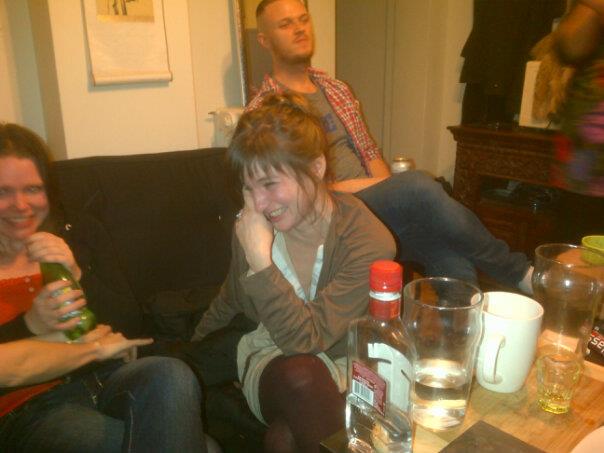
More than anything, I want to be this chick in the photo below, the one who throws caution to the wind, gets drunk on a school night, and laughs til she cries. Because she exists somewhere, I just haven’t figured out how to find her when I need her.

Me, laughing so hard that I'm crying

Me, laughing so hard that I’m crying

On Facebook and Validation

27 Feb

I deleted my Facebook account this morning.

Or rather, I deactivated it, because deleting is way more of a hassle and I’ll probably end up reactivating my account eventually. And can I just take a second to tell you how crazy hard it was to get myself off that motherfucker? It took me approximately ten years to find the “deactivate” section, and THEN they make you fill out this thing about why you’re leaving and blah blah blah, like, seriously, Zuckerberg? Everyone and their grandmothers are on Facebook. You can relax about the OCCASIONAL PERSON quitting your site.

But anyway. I digress.

I deactivated my account because I wasn’t really happy about how I was using Facebook. I felt like too often I was using it to seek attention or validation, and that felt really unhealthy. I feel like I have an OK relationship with Facebook when I’m in a good space mentally, but when I’m depressed I tend to make posts that are basically begging my friends to reassure me that they love me, that I’m a good person, that I’m doing a good job. And I don’t want to be that guy, you know?

But this is where it gets fucking tricky, because by posting this, aren’t I kind of, sort of being that guy? Aren’t I using this as a way of asking you for validation that I’m not constantly looking for validation? Or at least validation that this is just how we do it in the 21st century and everyone else (and their grandmothers) use Facebook for the same thing?

Let me tell you a little story.

One time, my ex-boyfriend and I were at the same Hallowe’en party, and then ended up going out to the same club. I was still in love with him and he knew it, but he went ahead and kissed me on the dance floor anyway. He was dressed as The Incredible Hulk and when he kissed me he got green paint on my face, and my best friend dragged me into the bathroom and yelled, WHAT THE FUCK IS HE DOING KISSING YOU AND GETTING GREEN PAINT ON YOUR FACE? THAT IS FUCKING UNACCEPTABLE.

So I tried to ask him why he’d kissed me, but instead he turned around and walked out of the bar. So I followed him, because I was angry, and hurt, and felt stupid and used. I chased him down the street, yelling his name and telling him to turn around and talk to me RIGHT NOW. And eventually he did, and we ended up sitting together on someone’s stoop in the middle of Halifax’s North End. It was midnight and really fucking cold outside, but I didn’t have a coat because I’d been in such a hurry to catch him and chew him out. So I sat there, trying to explain how hurt I was without actually admitting that I still wanted to be with him, and I was so cold that I started shivering. So he put his arms around me, and pulled me close, and I started crying.

We were both really drunk, and really young, and really serious. So we decided we were having this big adult conversation about ourselves and our relationship and our treatment of each other. Because, you know, that’s what you do when you’re sitting on some random North End stoop dressed as The Incredible Hulk and Jackie O on a freezing cold late-October night. That’s what grownups do. Right?

Anyway, at some point I said, “Tell me something that you know about me. Something true.”

And he looked at me and said, “Anne needs to stop relying on other people’s opinions of her.”

And I was actually shocked by how true and accurate that was. Like, even though he was a dick to me on the regular, he still knew me, somehow. And, weirdly, he still cared about me.

I guess I was also shocked because I’d thought that my need for other people’s validation was something that I’d managed to hide fairly well. But it became clear to me that if even my emotionally-stunted ex-boyfriend could see it, then everyone could see it.

And in that moment I felt exposed for the fraud I was: not the loud, brash, ass-kicking lady that I pretended to be, but a scared, lonely, kid with poor self-esteem.

I’ve worked hard in the year since then to have more faith in myself, to not let other people’s ideas shape who or what I am. I’ve tried to grow a thicker skin, tried not to care about what other people say, tried to learn how to stand my ground. And to some degree, I think I’ve been successful. I’ve at least become better at presenting myself as someone who is all of those things.

But when things get tough, I don’t feel like someone who has a strong core. I feel like someone who has layers and layers of gauze bandages wrapped around her midsection, and when you go to unwind them, it turns out that there’s nothing there, like, literally nothing. Just a giant, gaping hole that goes all the way through me. And then maybe all of my internal organs fall out and I get blood and guts on your nice new shoes and I’m crying for you to love me, please love me, and even though I can tell that you’re disgusted, I can’t stop.

So anyway, that’s what Facebook has been feeling like lately. Like I’m a big old vivisected loser who needs you to tell her over and over that she’s fine, she’s good, she’s lovely. And I don’t want to be that loser anymore. And I don’t want to drive you all away with my nonsense.

Thus: Facebook deactivation.

We can still interact here and on Twitter, and I’m happy to give you my email address so long as you promise that you’re not a creeper who wants to send me pictures of his dick. I’ll still be around. It’ll be fun, I promise!

Now if you excuse me, I have to go talk to my cats and make sure that they still think that I’m a worthy owner who feeds them on time and gives them enough cuddles.

IMG_2289

Checking In

20 Feb

I know that I haven’t written here in a while (SIX WHOLE DAYS, LIKE, YOU PROBABLY THOUGHT I’D QUIT BLOGGING OR SOMETHING), and I just wanted to check in and let you guys know that I’m doing all right.

More than all right, actually. I feel better. Frighteningly, miraculously, tentatively better. It’s so new and so strange that I’m a bit hesitant to write about it yet or even say it out loud – like I could jinx it or something. But I also want you to not worry about me, so I thought I should tell you: I feel better.

I don’t know if I would say that I was happy exactly, but then I’m not sure that “happy” is the opposite of “suicidal”. I’m coming to distrust the idea of being happy anyway – I hear the word thrown around too much, hear too many people talking about how they deserve happiness. But I’m not sure that anyone deserves happiness, you know? There’s a quote from Zadie Smith’s White Teeth that the cynic in me has always loved, and I feel like it might apply here:

You hear girls in the toilets of clubs saying, ‘Yeah, he fucked off and left me. He just couldn’t deal with love. He was too fucked up to know how to love me.’ Now how did that happen? What was it about this unlovable century that convinced us we were, despite everything, eminently lovable as a people, as a species? What made us think that anyone who fails to love us is damaged, lacking, malfunctioning in some way? And particularly if they replace us with a god, or a weeping madonna, or the face of Christ in a ciabatta roll—then we call them crazy. Deluded. Regressive. We are so convinced of the goodness of ourselves, and the goodness of our love, we cannot bear to believe that there might be something more worthy of love than us, more worthy of worship. Greeting cards routinely tell us everybody deserves love. No. Everybody deserves clean water. Not everybody deserves love all the time.

I’m starting to think that maybe not everyone deserves happiness all the time. Actually, I think I’m just getting tired of hearing people talk about deserving anything – I’m tired of people’s sense of entitlement, their willingness to trample over others in order to acquire something they feel that they deserve.

But anyway, I digress.

I’ve been trying to follow the hospital psychiatrist’s orders and prioritize things that make me happy, and I think that by and large I’ve been succeeding. I’ve started keeping a proper, paper journal again, and it’s actually wonderful to be able to write without thinking about having an audience (except that I basically always think about having an audience, but I’m figuring that no one will read my journals until I’m dead and thus don’t care). I’ve been taking time out of my day to go to hip cafés where I sit and scribble happily in my notebook while sipping a latte, feeling like everyone looking on must know that I am a For Real Serious Writer Lady.

I’ve been doing other things too – things like spending an hour or two at the art gallery, or wandering around Roncesvalles and checking out the cute shops. Today I went to a friend’s place and lay on her couch for three hours, sipping gin and tonics, dissecting Salinger books and watching Star Trek. It was nice – more than nice, really. And I felt like myself, for the first time in a long time. But I also felt guilty.

Let me see if I can explain the guilt. It’s like this: I constantly feel like I’m running out of time. I don’t just mean that there aren’t enough hours in the day to get things done (although I do feel that way) – I also mean in general, in my life. I feel like I spent too much time fucking off (read: being depressed) in my early 20s and now I’m 30 and all of my peers are ahead of me and I’m struggling to catch up. And I know it’s not a race, but it still feels like one, and I feel like I now have to work extra super hard just to prove that I should even be allowed on the track.

Anyway, what all this amounts to is that I have a hard time doing anything that I don’t view as useful or productive. Even spending time with Theo fits into this category, as I see parenting as a way of creating and shaping an awesome future adult. And yeah, being Theo’s mom is pretty rad, but sometimes that seems more like a pleasant side effect of parenting rather than the main point.

I also feel guilty because it’s like, who am I to get to do all these nice fun things? Like, why do I get to go out and see my friends and hang out in coffee shops while Matt has to stay home and parent? How is that fair? What if he starts to resent me?

Do I actually believe that being depressed gives me special privileges or something?

And then I think, if I were sick with anything else and the doctor’s orders were to take it easy, would I feel guilty?

No, probably not. But if I were sick with anything else, there would be blood drawn, tests run, and hopefully some kind of irrefutable scientific proof that I was sick. But with depression there is no proof, not really. You all have to take me at my word that some days, I feel like dying.

And what happens if you ever stop taking me at my word?

After years and years of talking about suicide but not actually dying, won’t I start to seem like the boy who cried wolf?

I don’t want to lose you guys. Because I love you. Because I’d be lost without you. Because your support has mostly been what’s kept me going these past few weeks.

Anyway, all of this is to say that you don’t have to worry about me, because I’m feeling better.

And that means that, at least for now, I don’t have to worry about losing you.

xoxo

Annabelle

P.S. On a lighter note, just in case you were wondering what a Shrevolution looks like:

shrevolution!

Sylvia

11 Feb

Today marks the 50th anniversary of Sylvia Plath’s death.

Is this something that people do? Celebrate the anniversary of someone’s death? Certainly celebrate is the wrong word – mark is probably better, or even observe.

Today I am observing the 50th anniversary of Sylvia Plath’s death.

It’s no secret that I love Sylvia. I mean, I named my blog after her only novel (actually, I named it after what I would have called my all-girl rock band if I’d had one, but the band was named after the novel, so really it all amounts to the same thing). I’ve read everything she’s ever written. I have a weird sort of embroidered picture of her hanging on my dining room wall.

I’ve even joked about being her reincarnation. I mean, there are a few similarities between us, right?

We’re both depressed, oversharing lady-writers, for one thing. We both come from families whose finances went into decline at some point during our childhoods. Her father died when she was eight; mine left when I was thirteen. Of course you can’t compare death to a divorce, but I think it would be fair to say that those events left us both dealing with what are colloquially referred to as “daddy issues.”

Oh, and my son shares a birthday with her son Nicholas. So there’s that, too.

Of course, this is basically where the similarities end. Sylvia worked hard throughout high school and ended up attending Smith College on a full scholarship. She then went on to receive a Fullbright Scholarship to Newnham College, Cambridge. Meanwhile, I burned out early in high school, too tired and sad and stupid to get my shit together, and went from being an honour roll student in grade nine to receiving mostly Cs and Ds in my final year. I did get into Dalhousie University (though just how I managed that, I’m still not sure), and while there had all As and Bs, but still, I was never the academic star that Sylvia was.

Sylvia published her first poem when she was eight, and went on to publish several poems and short stories before she finished university. One of her stories, Sunday At The Mintons, won her a coveted spot as a guest editor at Mademoiselle magazine in New York.

I published my first poems and short stories, well, never, and I can’t even properly edit my own stupid blog, let alone a whole magazine. I’ve also never been to New York, although I have watched a lot of Friends and Mad Men, which is basically the same thing, right?

I guess that, all in all, Sylvia and I aren’t much alike, at least not on the surface. But when I read her writing, I feel that, as The Bell Jar‘s Esther Greenwood says about her friend Doreen, everything she writes is like a secret voice speaking straight out of my own bones.

I get Sylvia Plath. I mean, I get her. I get her dark, sad, humour, and I get her anxieties, and I get her hopelessness. Up until now, I’ve used her as a sort of guide in the darkness, reading and re-reading my well-thumbed copies of her books, looking for passages that will get me through my fits of sadness. A paragraph here, a stanza there, a kind of spiritual sustenance to tide me over until things get better. For most of my adult life, I’ve looked up to her.

But then, for all of my life until now, she’s been older than me. Wiser, hopefully. Maybe even more mature.

What do I do now that I’m about to out-age her? She’ll be thirty years old forever, but I’ll only be thirty for a few more months.

How do I continue to look up to someone who will soon be younger than me? Will I still love her writing in 10 years’ time? In 20? Will I look back someday and, instead of finding inspiration in her words, discover that all along she’s been a boring, self-obsessed, talentless hack?

What happens when you outgrow the people you admire the most? Probably nothing. Probably it’s normal.

But in a strange way I feel that by letting go of Sylvia and moving on, I’ll be abandoning her. In a funny way, I feel that she needs me, as much as I need her.

I’ve been thinking a lot about her last few weeks alive. Not much is known about what was going through her mind, since Ted Hughes burned her last journal, but we do have a handful of poems dating from late January and early February and, of course, a few firsthand accounts.

We know that the quality of her poems changed in those last weeks, becoming less about the self, their mood more disembodied, alien. We know that her incandescent poetic rage, that rage that has made her so famous, had begun to fade in her works, replaced by a sort of resigned hopelessness. We know that she worked feverishly, producing poem after poem, trying to translate her tangled thoughts into perfectly-ordered words.

We know that Sylvia went to her doctor and told him that she felt as if she was heading for a breakdown. We know that she began taking antidepressants and sleeping pills. We know that she reached out to her friends, Jillian and Gerry Becker,  for help and a place to stay. We know that several days before she died, her doctor began trying (unsuccessfully) to find her a spot in the hospital.

Each night that she stayed with the Beckers, Sylvia would take her sleeping pills and recite a sort of monologue about all of the people who had wronged her, all the men, beginning with her father, who had deserted her, and how utterly miserable she was. She would go on and on, ignoring any questions that Jillian put to her, as if she was in a trance. Eventually she would pass out.

Having Sylvia stay with them began to be a strain on Jillian – she had to do everything for Sylvia and her children, cleaning, feeding and entertaining them. When Sylvia announced on Sunday, February 10th that she wanted to go home, Jillian didn’t press her to stay. There was supposed to be a nurse coming to help Sylvia the next morning, and besides, surely the doctor would find a hospital bed for her soon. And also, as Jillian said in the article I linked to above, pity tires the heart.

Gerry drove Sylvia home Sunday afternoon, and she wept the whole way there.

That night Sylvia left the window in her children’s room open, and shoved cloths and towels underneath their door. She also placed tape all around the door frame, to stop up the cracks. She then turned the gas taps in her oven on all the way and, placed a little folded cloth in the oven to act as a pillow, and laid down.

She was found the next morning by the nurse and a handyman working on the property who broke into her flat when no one answered the door.

By that point, she’d been dead for several hours.

Her children, though cold from having slept next to an open window in February, were fine.

And pity tires the heart.

I think that there’s a state that you sometimes get into when you’re deeply depressed. You feel as though you’re walking along a sort of knife’s edge between artistic inspiration and suicide. In an instant, all the dead, flat hopelessness you’ve been feeling gives way to an ecstatic misery. You suddenly feel as if you’ve been given a special insight into how the world really is, and you work like mad to get that insight down on paper or on canvas or whatever. And you know that you’re playing a dangerous game, but you also think that it’s worth it.

It’s worth it to go that close to the edge, if there are rare, exotic gifts to bring back.

It’s worth risking death, so that you can tell everyone else what it was like.

It’s worth almost everything, if it means that you’ll write something great.

It’s like circling round and round a black hole, getting a few inches closer each time. You’re discovering all kinds of amazing things that no one has ever known before, but you never imagining that you yourself might be drawn in.

It’s like standing at the edge of a lake of poison, and knowing that the poison, if taken in small enough quantities, will give you brilliance and genius that you’ve only ever dreamed of. The poison, if taken one spoonful at a time, will give you an enormous drive to create. And you want that. Oh, how badly you want that, want all of it.

But even though you know that the poison could kill you, you’re not overly wary of it. You’re that you’ll be able to set limits. You’re confident that you’ll be able to stop when you need to. But after taking one sip, you talk yourself into taking another, and then another. And you feel fine, not sick at all. You drink and drink and drink, and maybe even dive right in.

And it’s not until it’s too late that you realize what a mistake you’ve made.

And maybe there’s no one to save you. Because pity tires the heart.

I am trying so hard not to tire all of your hearts.

Sylvia, I am thinking of you today. I promise that you do not tire my heart.

sylvia_kids