Archive | Uncategorized RSS feed for this section

After (short story/fiction)

15 May

After the plague, everything went silent.

It didn’t happen all at once, of course, but over the span of weeks, even months. Television was the first thing to go, disintegrating from panicked news reports into non-stop Seinfeld reruns, followed by the soothing white noise of static, and then finally nothing. The internet was next; websites went dead one by one, until the frantic hours spent hunched over my laptop brought up nothing but error messages. Not long after that the phone lines were down, and then a few days later the lights flickered suddenly and went out, leaving those of us still alive in the dark.

It’s not as frightening as you’d think. Even now, more than a year after those bloody, terrifying days, the absence of shrieks and sirens and bright flashing lights is still a relief.

John died. He was one of the first, actually. He came home sick from work, and then two days later he was gone. The baby died the day after that. I knew she was going to; from the moment the telltale rash started creeping up her fat little legs, I knew it wouldn’t be long. After both of their bodies had been taken away, I waited impatiently for my turn. I just wanted to die, wanted to hurry up and get it over with already; I don’t think I’ve ever wanted anything so badly in my life. The rash was supposed to start on your feet, a network of fine red lines that traced their way up to the heart, and I must have taken my socks off a dozen times a day. I kept squinting and prodding at the space between my toes, looking for something, anything, but my skin stayed stubbornly clear.

About a week after the burial I had a fever and a cough and I thought, finally, but it turned out to be just a bad cold. A cold – can you believe it? The whole city is vomiting blood and pus around me, and I catch a cold.

John worked on Bay Street, which the media insisted on calling “Ground Zero”. The official story was that someone had come home sick from a business trip, then gone to work and infected everyone who walked by their cubicle. The disease spread quickly throughout the downtown core, jumping from building to building, pumping through the vents with the stale recycled air. For a while the news outlets were trying to figure out who this mystery businessman had been, as though having a scapegoat would solve the problem, but when everything really started going to shit they stopped caring.

It was lucky that John and the baby died so early, because in those days there were still government clean-up crews to take care of their bodies. The city had these big black vans, corpse-mobiles we called them, and they would cart off dozens of the dead at a time. My husband and daughter are numbers 37 and 38 respectively in Prep Fields East at Upper Canada College. The city bought the school’s grounds for an unheard of amount of money, and used its fields to dig a series of mass graves. You’d think that somebody would have complained, started some kind of campaign against it, but most of the people likely to do so had left Toronto by then. On the news they showed clips of the wealthy being flown out in chartered planes, their eyes darting and fearful, their mouths swaddled in those useless paper masks.

After John and the baby were buried, I didn’t see anyone for a long time. I stayed inside, eating, sleeping and reading. Hiding. Once everything edible was gone from my cupboards, even the barely digestible stuff like uncooked pasta and dried beans, I moved into the apartment next door, and then the next one. I drifted through my building, my body as light and intangible as smoke. John and the baby started to seem like something that had happened in another life. My sadness and emptiness began to change, mutating into a strange sense of calm.

I slipped inside the lives my neighours had shed, taking advantage of everything they’d left behind. I wore their clothes, ate their food, rifled through their personal belongings. I discovered that the man two doors down had had a passion for hunting and I spent an afternoon cleaning and oiling his rifle, lifting it to my shoulder and admiring my reflection in his mirror. I pulled on a pair of his threadbare jeans and lounged in his green tweed armchair, sipping stale beer and flipping through girlie magazines. I learned that the polite young man on the fourth floor had fancied himself an amateur artist, and I spent a few days painting still lifes of the toaster, the light fixture, the bowl of clementines mouldering on his table. After that was the apartment of the wealthy retiree on the floor below mine, where I lay for two dreamy weeks in a decadently wallpapered bedroom, wearing silk night-gowns and pearls, reading Jane Austen. I kept the heavy curtains drawn the entire time. Going outside seemed pointless, now that everyone else was dead.

That wasn’t true, of course. There were plenty of other survivors, and while I was squatting in my draughty old brick fortress, many of them were camping out at the university, in Trinity College, no less. Their little hive buzzed with activity as they organized committees and planned for the new society that would be born out of the ashes of the old one. Life would be better now, they told one another. We would finally be able to purge everything distasteful from our past and start completely fresh. The human spirit would triumph over adversity! The plague could be a blessing in disguise! They would go on like this, jollying themselves with proverbs and trite clichés, ad nauseam.

I have to admit that they were never short of ideas. One of their first was to have a group of people going door-to-door looking for other survivors, which is how they discovered me. They convinced me to come live in the “community” they were building, a word which I was to come to loathe. We slept in “community halls” and ate all of our “community meals” together, plus we had other “community activities”, such as the mandatory “building a bright future” lectures. The other people there were cheerful and outgoing, overwhelmingly so. They reminded me of camp counsellors that I’d known as a child, always wanting to engage you with a craft or a song. They would often stop me in the hallway or on the sidewalk and ask me how I was doing. How’s it going? they would ask bracingly, gripping my shoulder so tightly that it left an angry red mark.

I went to the community meetings and soon discovered that while they were good at coming up with ideas, they were less adept at acting on them. In fact, it seemed that canvassing for survivors was the only plan of theirs to actually get off the ground. The talk at the meetings was endless and detailed, rife with idealism. They were going to have elections, they said, start a new government, start a colony, grow gardens. They were going to found a university so that our new society could have doctors, lawyers, thinkers. They made sketches, wrote proposals, enthusiastically dreamed up ways to save themselves, but in the end they actually did very little.

I moved out just a few weeks after moving in. Being constantly surrounded by other people was really starting to grate on my nerves. On top of that, I’d been sleeping with Gabe, one of the community’s leaders, and then all of the sudden I wasn’t.

Gabe was among those giving talks in the evenings, and one night I was interested enough in what he was saying to go up to him afterwards and ask a question. He smiled sort of shyly for a moment, his eyes blinking thoughtfully behind his glasses, and then told me that he had a book in his room he believed might have an answer. As he led me out of the auditorium he accidentally brushed up against the back of my hand and I jerked back, as though a bolt of electricity had passed through me. I followed him down the dim, echoing hallways, shivering in spite of the oppressively humid summer night.

As soon as the door to his room closed, his mouth was on mine, and then on my neck, and then in the well between my breasts. My hands couldn’t decide where they needed to be first, so they went everywhere at once. The very act of touching him, feeling his warm resilient skin against mine, was like finding a tall glass of water and suddenly realizing how very, very thirsty you’ve been. Afterwards, I wanted to feel guilty, because of John, because it was so soon, but the only thing I felt was gratitude. Gratitude to Gabe, of course, but also, for the first time, gratitude in general for the fact that I wasn’t among the dead.

Gabe and I didn’t talk much. We met up every few days, spent an hour or two together, and then went our separate ways. We didn’t sit together during meals, and in fact barely acknowledged each other in public. Because of the talks he gave, I was able to watch him without being obvious. I memorized the way he tipped his head to one side and pursed his lips when someone asked him a particularly difficult question, and the nervous habit he had of taking off his glasses and cleaning them while speaking. I listened attentively and began to notice a trace of an accent, something different but undefinable. When, one night, he told me that he’d come to Canada from South Africa when he was young, I felt a funny rush of pride at having sensed that he wasn’t a native Torontonian. I played every minute of our time together over and over again in my head – the way he liked to run his fingers through my hair, the vulnerable, almost frightened look on his face when he came, the way his breathing altered as he slipped into sleep. I felt strangely, buoyantly happy.

And then, just as suddenly as it had begun, our relationship was over.

“The thing is,” Gabe said, obsessively polishing his glasses on his threadbare t-shirt, “the thing is that I don’t really feel as though I get through to you. I think you’ve put up a lot of walls around yourself, and you’re not really ready for this.”

“It’s okay,” he continued, cutting me off as I tried to say something, “I know it’s hard for you because you were married before and had a kid and all. I understand. And the thing is, I just think that I could help you a lot more if we weren’t, you know, so involved.”

This apparently heartfelt speech didn’t change the fact that he’d also been sleeping with a girl named Nadia, a yoga teacher who was convinced that she’d survived through the power of downward dog.

“People don’t know the healing power of yoga,” she would say, her face glowing with earnest zeal, “they don’t even know. If everyone practiced yoga, no one would ever have even gotten sick. I’m going to make sure that yoga has a really special place in our new community.”

Nadia was not very good at keeping secrets (or maybe she just thought it was bad karma to be discreet) and it wasn’t long before everyone knew out about her and Gabe. When I asked him about it, he looked embarrassed and then said stiffly that he and Nadia had a very deep connection. He said that she had done a lot of emotional work and meditation in order to be with him, and it was because of that kind of dedication that she was going to be an important part of the cultural rebuilding. That was the day I knew I had to get out.

It wasn’t long before they were gone, too. Another former member, Jessie, told me that the community had moved east after hearing a rumour that there were more survivors in Kingston, maybe, or Montreal. Gabe’s plan was to gather as many other people as they could and head north to Ottawa, where they would take over the parliament buildings and start a provisional government. The community left from Union Station, walking two by two along the railroad tracks, like Noah’s animals in search of the Ark. I ran into Jessie a few months later, and she said that no one had heard from them since.

Jessie and I weren’t the only ones who stayed in Toronto, but we were two of few. Those of us still here prefer to keep to ourselves, and I can go days now without seeing another person. This isn’t to say that the streets are empty – there are packs of dogs, formerly fat, contented pets gone feral. It’s not unusual to see them roaming around, or hear their howls as they suddenly catch the scent of their prey. There are cats, too, although I don’t see them as much. They prefer to skulk singly, their eyes luminous and huge in the dark. The rat population exploded after the plague, and the cats have all grown sleek and plump on their suddenly abundant food supply. The racoons and squirrels and chipmunks are more brazen than ever, and there’s an entire warren of rabbits populating the Eaton Centre. They’ve burrowed into piles of soft poly-cotton blends, shredding designer sweatshirts with their sharp little teeth, making nests for their young.

And then there are the horses. During the worst of the plague someone had the presence of mind to trek down to the CNE and throw open the gates of the Horse Palace, and they’ve been thriving ever since. They tend to stay around the parks and ravines, but I once had the surreal experience of seeing a herd of them out on the street. They were running at full tilt, weaving in and out of the abandoned, rusting cars, stamping, snorting, tossing their heads. The sun was low in the sky, and as they thundered past me one of them suddenly stopped short and reared up, lit from behind like some primeval god.

It’s clear that the city is taking its first few stumbling steps back to wilderness. Stately old stone buildings that once boasted a genteel tendril or two of ivy have been consumed with greenery. This past spring, there were flowers everywhere – not just on the ground, but growing out of the fare box of a marooned streetcar, spilling out of cracks in the sides of buildings. Since all its people have died, the city itself has become a living creature.

Gabe and his followers left in the autumn, and I spent the winter in one of the Rosedale mansions, huddled on a king-sized bed under a pile of hand-sewn quilts. I lived off of gourmet canned goods, crackers made from exotic grains and jars of locally-made preserves with labels declaring “Aunt Sarah’s Best Plum Jelly” in delicate, spider-like writing. I found jugs of filtered water in the basement, which I rationed until there was enough snow on the ground to melt for drinking. Burning antique furniture in the three enormous fireplaces kept the house warm until spring, and I found an unexpected satisfaction in taking an axe to the 19th century décor. When my substantial pantry began to look sparse, I started scavenging the neighbouring houses, stalking through the snow in a sumptuous fur coat. I liked its length and weight and also its smell, which was dark and warm and slightly musky. Sometimes I would spread it out across the bed and sleep on it, nestling into it the way a baby animal would curl up against its mother’s soft flank.

Now that it’s summer again I’m living in the Toronto Reference Library. The enormous windows let sunlight in long into the evening, and when I stand in front of the glass and look down Yonge Street, I feel like a sort of benevolent guardian spirit, sent to watch over this desolate city. I picture myself as a pensive old Notre Dame gargoyle, the one with the horns and the wings whose face is cupped in his hands. If I remember correctly, he’s sticking his tongue out. I imagine he feels much the way I do – thoughtful, foolish, not quite human.

I spend all of my free hours diving into the stacks, resurfacing for air only when necessary. At first I bounced from shelf to shelf, choosing books almost at random, gorging myself on the printed word. Lately I’ve been more selective. Last week I got on to this Chekhov kick and now I don’t want to read anything else. I’ve realized that The Cherry Orchard might be the most perfect play ever written, or at least the loveliest play about the inevitability of change and loss. I’ve read it three times already. Sometimes I feel guilty, as though I should be doing something productive, but other than making sure that I’m clothed and fed, I can’t think of anything else to be done.

I walked down to the shore yesterday, all the way to Queen’s Quay. I stood and looked at the boats left scattered in the harbour, rust slowly crackling and colouring their hulls. I looked out to the islands and thought how funny it was that even though they were so close, they were entirely unreachable. The air was grey and damp-tasting, and so still that I could hear myself breathing. Above me, the tall waterfront buildings creaked and groaned, settling themselves in for their long crumbling journey into decay.

I used to feel as though I was waiting for something to happen, as though I could be rescued at any moment. I pulled myself through my days, moving from activity to activity, determined to fill up my hours until normal life was miraculously restored. Now I carry on for the simple reason that I am used to carrying on, because I am better at living than I am at dying. If I can’t see the point of going on like this, then it’s equally difficult to see the point of ending it. I eat, sleep, read, write, watch and wait until the stars come out, until darkness impales itself on one of the needle-sharp skyscrapers and oozes through the streets and alleys, until every tiny bit of this city is consumed.

8099837751_09c5eab593_z

Photo credit

Mother’s Day

12 May

I’m gonna be totally honest here: Mother’s Day makes me feel weird.

I think that part of it is that I have an automatic distrust of anything that’s gender-specific. Like, why is it Mother’s Day? Why not just Caregiver’s Day? Or Excellent Parental Unit Day? Or, as a friend of mine mentioned on Facebook, Gender-Diverse Parents’ Day? I mean, I get that it’s supposed to be about how hard mothers work, and how under-appreciated they are, but something about this sentiment seems … off to me. We spend most of the year crapping on moms, picking apart their parenting choices and publicly lambasting mothers that we disagree with, but suddenly we’re supposed to spend a day talking about how great they are? It sort of reminds me of the way that a good friend spoke about her ex – he was great at the big things (like buying her lavish gifts and taking her on fancy vacations), but not so much with the little day-to-day stuff. And really, it’s that day-to-day stuff that keeps the world turning, you know?

I guess that part of my ambivalence comes from the fact that Mother’s Day was never a big deal when I was growing up. We would make cards for my mother, and maybe bake her a cake or something, but it never went much beyond that. I mentioned once or twice that I might make my mother breakfast in bed, but she always vetoed that idea, saying that she would be the one left to clean up my mess (which was, to be fair, probably true). Even when my dad still lived at home, we never went out for brunch or anything fancy like that. I think I remember really wanting to make it a special day for her, because school and television and books made me feel like that that’s what I should be doing, but not being entirely certain of how to about that. I realize now that the best gift I could’ve given her would have been a kid-free afternoon or more help with household chores, but those things didn’t occur to me at the time. I wanted to either go big or go home (and I had no way of knowing just how “big” a few childless hours would have seemed to a single mother).

I guess that what I’m trying to say is that I didn’t really understand how HUGE Mother’s Day is for some people until I became a mother myself. Then, all of the sudden, people wanted to know what I was doing for Mother’s Day – they seemed especially interested in what, exactly, my husband was going to buy me. As my first Mother’s Day approached, I heard more and more about all the gifts I should be expecting. What do you think you’ll get for Mother’s Day? people kept asking, as if I had submitted a list of desired items months ago and had only to use my mad deductive skills to figure out which one my husband would pick. When I told them that we would likely go out for a nice family brunch and then go to the park, they seemed disappointed, as if I was somehow missing the whole point of the holiday.

The whole “Mother’s Day is too commercialized” thing has basically been done to death, but you guys? It’s pretty much true. It’s now more about picking out the perfect jewellery or the cutest card or the fanciest chocolates than it is about honouring the hard work your mother does. And to get back to that weird gender thing, why are we so obsessed with honouring how hard our mothers work? Or rather, why are we only interested in thinking about it only once a year, and why is our solution to throw sparkly things and candy at it, and then ignore the issue for the next 364 days?

I can’t help but notice the differences between how Mother’s Day and Father’s Day are marketed. Mother’s Day is all about honouring the sacrifices your mother made for you, showering her with pretty, mostly useless things as a sort of payback for all that she “gave up” in order to raise you. Father’s Day, on the other hand, seems to be about high-fiving your dad for being such an awesome friend, and maybe thanking him for somehow, occasionally having had a hand in how you turned out. Even these lists of suggested Mother’s Day and Father’s Day gifts are pretty telling – a whole lot of stuff to make Mom look and smell pretty (with a few gardening items thrown in), and then a bunch of fun, boozy, outdoor-adventure stuff for Dad. I mean, I’ll be honest – I would way rather read a book on my Kobo while sipping a glass of nice scotch than put on a stupid scarf and spritz myself with floral-scented chemicals. Not unexpectedly, all of the gifts for mothers are about her appearance, whereas all of the gifts for fathers are about going out and having a good time.

I guess that, at the end of the day, what really bothers me about Mother’s Day is this idea that sacrifice is somehow inherent in the idea of being a mother. And also that there’s something sacred about getting knocked up and then giving birth, as if that raises you on a pedestal above all other women. I feel particularly irritated by this image from Indigo’s website:

105468_MothersDayShop_03_mini

Because, you know, everyone doesn’t have the best mom in the world. The ability to be sperminated and pop out a kid doesn’t really mean anything; I definitely know enough people with awful mothers who pretty firmly disprove that rule.

Instead of celebrating how much women have to give up in order to have children, why don’t we look at ways that we can even the playing field? Instead of insisting that mothers have to be the nurturing caregivers, how about finding ways to help promote these behaviours in fathers? And instead of having Mother’s Day and Father’s Day, why not just a day that celebrates all of the people who help make our kids the way they are? Why not have a day that acknowledges the fact that some people owe more thanks to their aunts, uncles and grandparents than they do to their mothers or fathers?

But if we have to have a Mother’s Day, I would much rather celebrate Julia Ward Howe’s proposed Mother’s Day for Peace. I would rather honour the sentiments put forth in her Mother’s Day Proclamation than receive a bunch of flowers that will be dead in a week. Because you know what? This is a Mother’s Day that I can really get behind:

Arise, then, women of this day!

Arise, all women who have hearts, Whether our baptism be of water or of tears!

Say firmly: “We will not have great questions decided by irrelevant agencies, Our husbands will not come to us, reeking with carnage, for caresses and applause. Our sons shall not be taken from us to unlearn All that we have been able to teach them of charity, mercy and patience. We, the women of one country, will be too tender of those of another country To allow our sons to be trained to injure theirs.”

From the bosom of the devastated Earth a voice goes up with our own. It says: “Disarm! Disarm! The sword of murder is not the balance of justice.” Blood does not wipe out dishonor, nor violence indicate possession. As men have often forsaken the plough and the anvil at the summons of war, Let women now leave all that may be left of home for a great and earnest day of counsel.

Let them meet first, as women, to bewail and commemorate the dead. Let them solemnly take counsel with each other as to the means Whereby the great human family can live in peace, Each bearing after his own time the sacred impress, not of Caesar, But of God.

In the name of womanhood and humanity, I earnestly ask That a general congress of women without limit of nationality May be appointed and held at someplace deemed most convenient And at the earliest period consistent with its objects, To promote the alliance of the different nationalities, The amicable settlement of international questions,

The great and general interests of peace.

—Julia Ward Howe


To those of you who celebrate Mother’s Day, I hope that you have a wonderful day. To those of you for whom this day is painful, I hope that it passes quickly and peacefully for you. And if you’re someone looking to give a mother that you know a really amazing gift, consider finding a way of giving her some time to herself. I promise you that she’ll love that more than almost anything else.

And finally, to the amazing kid who came along two years ago and made me a mother: thank you. The same goes for Matt, who does more than his fair share of co-parenting. I’m super lucky to have these two dudes in my life. It’s been a hell of a ride, but I wouldn’t have wanted to do it with anyone else.

IMG_1776

The Ten Dollar T-Shirt Is Not The Problem

6 May

In the wake of the April 24th Bangladesh factory collapse, which is now considered to be the most deadly accident in the history of the garment industry, I’ve been hearing a lot of people sharing some pretty uneducated and uninformed opinions.

I’ve heard stuff like, “Well, where did you think your ten dollar t-shirt came from?”

And, “Major clothing brands should refuse to do business with manufacturers in Bangladesh.”

And, “Why do we even make stuff overseas anyway? It’s all crap.”

There are a lot of problems with these types of statements. For one thing, the price of a piece of clothing is not at all indicative of the working conditions of its manufacturer. For another, implying (or outright saying) that there is something morally wrong with paying ten dollars for a t-shirt is incredibly classist. And finally, saying stuff like this shows a serious lack of understanding about how the garment industry works.

So let’s debunk a few of these myths, shall we?

1. Expensive, high end brands are ethically preferable

This is not at all true. Spending more money on an item of clothing doesn’t guarantee that the factory worker in Bangladesh who made it is earning a higher wage. It doesn’t even mean that the quality of the garment is any “better” than something you could buy for half the price. The truth is that when brand names charge higher prices for their items, that extra cash usually goes to two places: into the pockets of CEOs and other higher-ups, and into the company’s advertising budget.

Even buying clothing with a “Made in Italy” or “Made in the USA” label doesn’t guarantee that that piece of clothing was made by people working in decent conditions. In Italy, for example, labelling laws are extremely lax. A product can be almost totally manufactured elsewhere, but so long as it’s “finalized” in Italy (adding leather trim, for example, or sewing on buttons) it can be labelled as “Made in Italy.” As well, it should be noted that just because something is manufactured in Western Europe or North America doesn’t mean that the factory employees who made the item were paid a fare wage – illegal immigrants are often hired and paid under the table, meaning that employers can pay them whatever they like and the employees believe that they have no recourse for action. In Prato, Italy, Chinese immigrants were found to be working in garment factories for as little as €2 an hour.

But even when companies do pay their workers minimum wage, it’s often not enough. In many countries, minimum wage is not a living wage, especially if you live in a big city.

2. Our society’s desire for cheap clothing is exploitative and unsustainable. People should be willing to pay more money for their clothing.

First of all, let’s talk about how classist this assumption is. I mean, if you’re well off, then sure, you can probably afford to pay more than ten dollars for a t-shirt. But if you’re making minimum wage and living below the poverty line, then cheap clothing is the only type of clothing you can afford.

Take Toronto, for instance. Ontario’s minimum wage is $10.25 an hour, and the average cost to rent a bachelor apartment in Toronto is $840 per month (this figure most likely does not include utilities, phone/internet, or parking). If you’re making minimum wage, then you’re only bringing home $1,640 monthly before taxes. If you’re paying the bare minimum in income taxes (so, no union fees or anything like that), then you’ll be taxed $236.38 a month (according to this calculator on a government website), leaving you with $1,403.62. After paying rent, you’ll have $563.62. That $563.62 has to pay for everything other than rent – your phone, internet, food, transportation, utilities, clothing. And those are just the basics – what about entertainment? Things like going out to see a movie or having a few drinks with friends at a bar?

And all that is assuming that you’re single, childless and living in a bachelor apartment. Imagine how little would be left if you were the only breadwinner in a family with several dependents.

At that point, even a ten dollar t-shirt starts to seem astronomically expensive.

3. Major brands should just stop doing business with manufacturers in Bangladesh

And this would solve what, exactly? It certainly wouldn’t improve working conditions in Bangladesh factories. In fact, it would probably lead to a loss of employment opportunities in Bangladesh, meaning that the few companies that still hiring would be able to pay their employees even lower wages if they chose. People would be scrambling and competing for jobs, and would have to accept whatever came their way, no matter how badly it paid.

The other thing is that no matter what country those companies are manufacturing their goods in, so long as they are trying to keep their wholesale prices as low as they are, the manufacturers will have to cut corners, pay their workers substandard wages and skirt safety regulations in order to satisfy the companies’ demands.

Here’s what major brands actually should do: cut CEO salaries. Seriously. In the US, the average multiple of CEO compensation to rank-and-file employee is 204. Yes, you read that correctly. A CEO earns, on average, two hundred and four times what their retail employees earn. And let’s not even get into how much more a CEO earns when compared to one of the employees in their overseas factories.

How is that even a little bit ok?

Imagine how inexpensive clothing could be if we cut CEO wages. Imagine how much we could improve working conditions in countries like Bangladesh if CEO salaries were cut in half?

Companies also need to institute frequent, surprise inspections of the factories that manufacture their goods. They need to find ways to ensure that their goods are being made by employees who have fair wages and decent work environments. They need to actually take responsibility for how their business is being operated.

4. Why do we even make stuff overseas? Why not manufacture more stuff in North America/Europe/etc.?

The truth is that manufacturing clothing in North America and Europe is becoming more and more difficult. It’s less expensive to manufacture in Asia for a variety of reasons, and not just because labour is cheaper there. Another important cost factor is that many of the raw materials are now more readily available overseas than they are here. For example, China is the leading grower of cotton in the world, meaning that even if an item of clothing was sewn in Canada, the used would most likely come from overseas. Is there really a difference in how “ethical” your clothing is if the finished product is made here but the raw materials are harvested and processed by underpaid workers overseas? How ethical is it if the water used to grow those raw materials (cotton, for example, is a notoriously water-intensive crop) is partly responsible major water shortage in China? How can we ever make sure that every person who has somehow contributed to making our clothing is treated fairly?

Look. The garment industry is fucked up and major changes need to happen. Factories need to be unionized, workers need better conditions, and CEO pay needs to be cut. Here at home we need to increase minimum wage to a livable wage. We need to figure out a way to make sure that everyone who participates in the garment industry, whether they’re an employee in a retail store, a worker in a factory or a small child whose water supply is being used to water cotton crops, is getting a fair deal.

I don’t have all the answers. I’m not sure how we can make any of this happen, or what the world would look like if these changes were to take place. But what I do know is that the way that we live now is not sustainable, not by a long shot. I know that we need more accountability from the companies that make our clothing, and more tools like Good Guide to hep us figure out where to spend out money. We need to make more of an effort to educate ourselves about how and where our goods are made.

Most of all, though, I know that the ten dollar t-shirt is not the problem. It’s just a symptom of the problem.

images

May Day (M’Aidez)

3 May

I’ve read a lot of historical fiction in my time. Too much, probably. Especially during my formative years. As a kid I read a lot of Rosemary Sutcliff‘s books, the earliest of which are so very English and charming and achingly nostalgic that I spent far, far too much time daydreaming about what it would be like to live in Tudor London, wear a kirtle and spend my days working on a sampler.

It’s been a cold, grey, miserable spring so far but then yesterday, May Day, the weather suddenly smartened up. The trees have finally put forth quivering, fragile, little buds, so tiny and compact that it’s hard to believe that they’ll ever unfurl enough to provide any kind of shade. The magnolias are starting to open their pinky-purple blossoms, and the bluebells, crocuses and daffodils are everywhere.

All of this gives me a funny sort of heartache, like I’m missing out on something that I’ve never known, and never will know.

Oh, I know that it’s ridiculous, and I’m thirty, and when am I ever going to grow the hell up, but you guys? I wish that May Day was still a thing. I want to go out before dawn and bring in the May. I want to sing madrigals as the sun is coming up. I want maypoles and morris dancers and May Queens and all of that stupid shit. I want bonfires, and the moon, and the cold, starry sky. I mean, we don’t even get to have stars anymore. At least not in the city, anyway.

I guess what I really want is some kind of communal way to celebrate the coming of spring. I want to be able to mark the passage of the year, from the barrenness of winter through the promise of spring and the fullness of summer to the dead lands of autumn and then all the way back to winter again. I want some way of measuring my life other than stingy little increments of twenty four hours, each hour chopped up and neatly ticked out in precise little seconds. I’m so tired of days – Mondays, workdays, weekdays, holidays, day, days, days. They seem so cold, so clinical, so entirely devoid of meaning.

I taught a late class tonight, and as I walked home the air was warm and heavy with the scent of fresh earth and flowers. Through open windows I could hear soft laughter and the clink of dishes, sounds of happiness and comfort. The kids were all out tonight, smoking pot on park benches, their bored, drawling voices floating towards me on the breeze. Some of them were playing on the swings, their sneakers flashing as they swung in and out of the streetlights’ glow, always daring each other to further, faster, higher.

Everything is unbearably lovely, much more lovely than it should be. Nights like this make me feel as if something ought to be made out of them – a story, a song, a play. Otherwise, what purpose do they serve? Surely they don’t just exist for our enjoyment. Surely we’re meant to do something with them, meant to find a way to explain or celebrate their perfection.

I get so damn tired of feelings sometimes, the way they crash over you, threaten to drown you, and then slowly recede, leaving you wet and stinking and covered in seaweed. I think that in my next life I’m going to come back as a robot that’s incapable of feeling obligation or regret. I think that that would be nice.

Queen Guinevere's Maying by John Collier

Queen Guinevere’s Maying by John Collier

High School Redux

29 Apr

So a little while ago I blogged about how I absolutely, no-way, seriously was not going to my high school reunion.

I hated high school. Hated it. There was no fucking way that I was going to be talked into setting foot in that building again.

An old friend and I exchanged several emails coming up with long, detailed reasons for why we were going to miss the reunion.

Naturally, I ended up going.

A couple of notes about reunions:

1. If you blog about how you’re not going to your reunion, every one will spend all evening coming up to you and asking if you’re glad that you went after all. Not that I’m complaining about this – just mentioning, is all. You know, in case you were planning on emulating my life choices (note: I do not recommend this).

2. Everyone will tell you that you look exactly the same. This is meant as a compliment, although admittedly I didn’t initially take it as one. I mean, come on – the whole point of going to this reunion was to prove to people that I’m not the gross, ugly, greasy-skinned loser that I was in high school. But then I realized something – everyone is, in one way or another, an ugly loser in high school. I doubt that even the prettiest, most popular girls were immune from hating the way they looked. I also realized that, as hard as I was on myself back then, I didn’t look that bad.

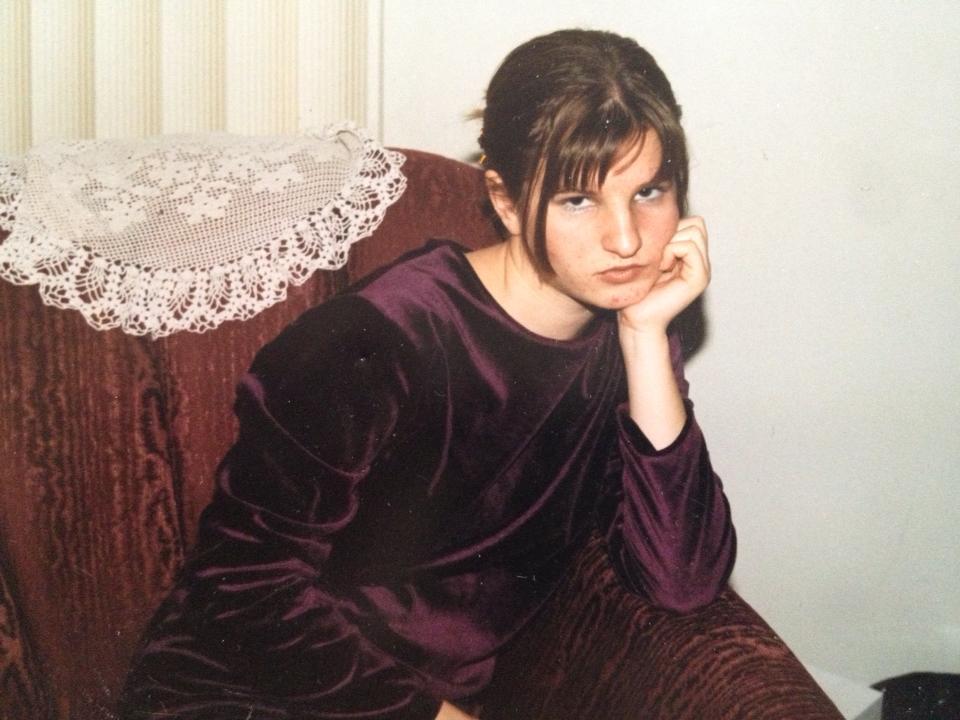
64416_10152759236850215_1357646103_n

I mean, sad, angry and consumed with ennui, sure. Wearing an ill-fitting velour shirt, yes. But not exactly the horrific, Medusa-like creature I’ve been picturing all these years.

Anyway, in response to everyone who is absolutely dying to know whether or not I’m glad I went: Yes. I am.

That’s not to say that it wasn’t overwhelming, because it was. The first part of the reunion, which took place at the school itself, was especially tough. I feel like I spent a good chunk of the afternoon wearing my I’m-so-emotional-right-now-but-I’m-trying-hard-to-smile grimace, so if we ran into each other and I seemed flustered and weirdly toothy, that’s why. It was just a lot of people, and a lot of energy, and a lot of complicated feelings all at once, you know? And by “complicated” I mean “run the whole spectrum of emotions from great to achingly terrible.

The “great” moments include running into friends that I haven’t seen for years and years and spending hours starting every sentence with, “Hey, remember when?” For example: hey, remember when John Winter told the drama teacher on her last day at the school that she had a beautiful body and he wanted to make love to her? Remember how our mascot was Johnny Rebel, the Confederate soldier, and we had a Confederate flag hanging in our foyer, and NO ONE THOUGHT THIS WAS A PROBLEM UNTIL 1999? Remember every fucking crazy thing that Jason Baker ever did?

I was also super happy to be able to see a bunch of my old teachers, including my two favourite English teachers of all-time (one of whom occasionally reads this blog, YEAH, YOU KNOW WHO YOU ARE). Some of my old teachers barely remembered me (or else didn’t remember me at all but faked it pretty convincingly), but most of them seemed glad to see me. One of them, a music teacher, took me aside later in the night and said that she was really, really happy to see that I was in a good place with my life, and that was kind of gratifying because it meant that at least one of my teachers had noticed how miserable I was back then.

Another high point was finding this extremely adorable (if I do say so myself) picture of me from when I was fourteen:

48038_10152780669790215_1756970793_n

This was from a writing “mystery tour” that happened in my first year of high school. It was a small group of students, and I was one of only three ninth graders invited along. They took us to various exotic locations around Waterloo Region (including the West Montrose Kissing Bridge and the boiler room of our high school), and at one point a photographer from the local newspaper showed up and took a picture of me sitting on a giant pile of tires behind Paleshi Motors in Elmira. The whole idea was that we were supposed to be inspired to write amazing things by all the places that we visited, and maybe that worked out for some people, but not me. Every word I wrote that day was terrible, and even as I was writing them, I knew they were terrible.

But you know what? My English teacher thought that I was a good writer, and that’s how I ended up being asked along on the trip. And now I look back at this picture and I think, Whoa, someone actually thought that I was a writer, and look, there’s me writing like a real gosh-darn writer lady.

Plus I am just super adorable. LOOK AT HOW SERIOUS MY FACE IS.

The less-than-great moments were watching the “documentary” that someone had made about the Integrated Arts Package and hearing people talk about how the program had absolutely, definitely, for-sure been a wonderful, life-altering experience. Because I guess the fact is that I’m jealous of those people, jealous in a gross, green-eyed-monster kind of way. I wanted to have been able to say that I, too, had come out of high school feeling brave and confident and talented. I wanted to be able to go on record saying that the Eastwood arts program was the best thing that had ever happened to me in my whole stupid life, but it wasn’t. The fact was that I couldn’t get my shit together, and not a whole lot of people there really seemed super interested in helping me get my shit together, and that was that. And, I mean, I did get my shit together later, and I have a great life now, and everything worked out fine, etc. It’s just that I feel sad that I missed out on this apparently amazing time that everyone else was having.

Except that not everyone else was having an amazing time – you just don’t find out until afterwards that pretty much everyone else was, in some way, miserable, too.

At one point on Saturday, while we were still at the school, I texted a friend and referred to Eastwood as the “pit of despair.” And like, I was kind of joking? But also kind of not?

I mean, I guess maybe that’s the thing – maybe high school is supposed to be a pit of despair, you know? Maybe that’s what these reunions are really about – reconnecting with people who went through this terrible, hormone-fuelled hell at the same time that you did. Maybe reunions are supposed to help you realize that everyone was so wrapped up in their own self-loathing that they had no time or energy to notice how much of a loser you were. Maybe you were fine all along and you just didn’t know it. Maybe.

Your high school classmates are like people that you lived with through a war, or a natural disaster, or some other awful event. You might not have a whole lot in common, and maybe they wouldn’t be the people that you’d pick as your friends if you were given a choice, but they understand something about you that not many other people do. Just the fact that you were able to push through and survive and make it out the other side with all of your faculties intact somehow binds you together, even if nothing else does.

I guess that one of the main things that I took away from the reunion was a realization that so many of these people would have been willing to be my friends, if only I’d let them. At the time I didn’t think that I was building walls and pushing people away from me, but of course I actually was. And I’m not saying oh God imagine what could have been, but still. I keep thinking about the part in A Tree Grows In Brooklyn, when Francie graduates from the eighth grade and discovers to her astonishment that all of her classmates, none of whom were her friends, suddenly want to write in her yearbook and know what her summer plans are and where she’ll be going to high school:

“They’re nice,” Francie thought. “I could have been friends with them all the time. I thought they didn’t want to be friends. It must have been me that was wrong.”

I mean, I guess that’s the thing about walls, emotional or otherwise – they make excellent defences, but they can be isolating, too. If you’re smart enough, you’ll let the good people in and keep the bad ones out, but Jesus, who’s that smart? Especially when they’re fifteen?

I guess what I really want to say is this: high school. It fucking sucked, and maybe it didn’t have to. But it did, and that suckiness got me to where I am now.  And my life now is pretty sweet, so there’s not much point in regretting any of it, or feeling bitter about it. I mean, okay, maybe I still regret some stuff, but on the whole I’m a lot more at peace with everything. And that’s pretty cool.

My only disappointment with the reunion was that they didn’t play this song:

Because you know what? I would have fucking nailed it.

Five Year Old Indian Girl Kidnapped, Sexually Assaulted and Left For Dead

26 Apr

Trigger warning for rape, sexual assault, abduction, torture and murder.

A reader from India asked me to blog about this at the end of last week. At the time, I told her that I was feeling burned out, but promised to write about it on Monday or Tuesday. I’ve been procrastinating, though. As much as I know that this is something that’s important to talk about, I’ve had a hard time bringing myself to read about it, let alone write about it.

But I promised that I would. And it’s important. So let’s do this.

In India, a five-year-old girl was kidnapped, raped, tortured and left for dead.

She was held captive for four days.

Her parents say that the police ignored their reports that their daughter was missing.

Her parents say that the police offered them money to keep quiet about their daughter’s rape.

She is now in critical condition in the hospital.

She’s five.

When I was five, my biggest upsets in life were that I couldn’t wear my party dresses to kindergarten and that I wasn’t allowed to have chocolate milk with every meal.

And, you know, here I sit in my privilege saying that I’m too burned out to read her story, that it’s too hard for me to write about.

Of course, for other people, other women, this type of story is the daily reality that they have to live with. They don’t have the ability to tune out and think about other things the way I do.

This girl, this five year old girl, is fighting for her life, in part because the police weren’t terribly interested in finding her. Because she’s just a girl. Because she’s disposable. Because she was born in a country where sex-selective abortion is so common that, in some provinces, 126 males are born for every 100 females.

This, on the heels of the brutal gang rape in India that happened back in December. In that case, the victim wasn’t so lucky – she died of her wounds several days after her attack. The most brutal of her rapists, who was sixteen years old, received a sentence of only three years in a “reform home” because of his status as a minor.

This, in conjunction with another breaking story about a five year old Indian girl who was raped and murdered.

And yet another breaking story about a thirteen year old Indian girl who was gang-raped.

And a story about a six year old Indian girl who was raped.

And a story about eleven and thirteen year old sisters who were raped by their mother’s boyfriend.

All of these rapes happened within a week’s span. All of this is in just one country. And these are just a few select stories I pulled – there are more, so many more. Not just in India, but everywhere.

There are people who want to dismiss this as a problem with the way that Indian culture treats women. There are people who say that, sure, this type of thing happens over there, but it would never happen here. Maybe India has a culture of rape, but here in the West we sure don’t.

But, of course, we do.

Rape culture knows no borders, and while it might be worse or more obvious in certain parts of the world, the truth is that it’s everywhere. We all live in it. We all participate in it.

In fact, just today, a university student in Arizona was photographed holding a sign that said, “You Deserve Rape.” This man, Dean Saxton, is well-known for delivering “inflammatory sermons” on the University of Arizona campus. Today’s sermon was about how women who dress like “whores” are responsible for being raped or assaulted.

It just seems so relentless. Every day there’s a new story of some kind of horrific sexual assault, every day I hear about police and politicians who don’t care, every day there are men and women spreading the message that rape is somehow the victims fault. It just feels like it never ends, and it’s sometimes so hard to keep fighting in the face of something that’s so unbelievably pervasive and overwhelming.

But we need to keep fighting. That much is obvious.

I want to share with you guys the message that my reader sent me, because her words are more powerful than anything that I can come up with right now:

The last time it happened, I signed petitions with friends for severe punishment to those rapists who raped a 23 year old, I wrote articles, protested, debated. But the second case, that happened just yesterday has shattered me so much I seem to have lost my voice In India, we all protest and then our voices just die down. No kind of internal pressure makes the government take strict decisions. Rather, in the December 2012 case, a religious leader came up with the hideous statement that had the girl begged for her life from the rapists and called them her brothers, they would have stopped and she would have survived. One of the leading female politicians said, “Women shouldn’t go out after 9 at night or dress provocatively.” We scream, we shout and the police bashes up innocent protesters and social workers and students. Our voices die down within the country and awareness is blindfolded by our own leaders.

I am writing to you to beg you to talk about these women just like you talk about those who are close to home. Perhaps international pressure and shouts for justice would reach the deaf ears of our religious and political leaders and the pathetic, perverse men who don’t think twice before doing this to us women. Why should we dress modestly? Clothes provoke them, no clothes provoke them, we get raped in a sari, in jeans, in skirts, in salwaar kammeez and even if only our face shows. We get raped in the morning and at nights. If they can’t control their desires after 9, shouldn’t the men be locked up after 9? A lot of people blame the victim back home and not the criminal. How is that fair? 

Indian women today are aware, enlightened and educated but far from safe. We are scared to go out and work and we’re scared to stay inside. Who knows what familiar face would be the Big Bad Wolf? And he strikes us at any age, at 23, at 45, at 5! 

So as a woman to another, this is a plea to support our protest because even though we may speak different tongues and belong to different nations, we suffer the same abuses. 

Please raise your voice. Help spread the word about this. Join us in this fight. Because together, we are much stronger. Together, we can beat this.

We have to.

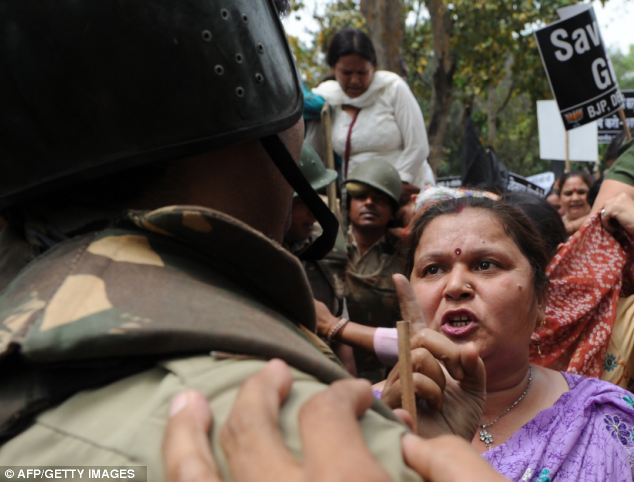
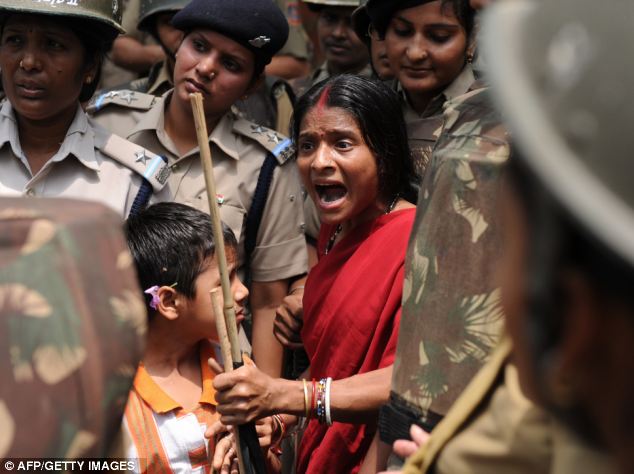
A few inspiring images from the protests in India:

article-2312536-196962B3000005DC-644_634x405

article-2312536-19696FC5000005DC-228_634x482

article-2312536-19694EB2000005DC-646_634x474

Dove Does Not Give A Shit About Whether Or Not You Feel Beautiful

22 Apr

Sometimes I feel like social media turns me into some kind of awful, gruesome caricature of a feminist. I spend waayyyy too much time jumping in on Facebook posts or tweets or blogs to explain why this specific thing, whatever it happens to be, is actually problematic. And I try not to do this, honest I do. I know that it’s annoying as fuck. I know that I come off like I’m Lisa Simpson except ten times worse and with more swears. I know that. I promise I do.

All of this is to explain why I have been so quiet and patient about Dove’s latest marketing campaign, Dove Real Beauty Sketches. I haven’t said anything about it. Nada. Zilch. Haven’t commented on anyone’s links, haven’t tweeted about it, haven’t even whispered darkly about it to myself when I’m alone at night and unlikely to offend anyone.

But then my friend Shannon wrote this brilliant piece about it, and after seeing the reactions to her post in the comments on her blog and from people on Facebook, I’ve realized that I have to say something. I’m not going to talk about how their recent campaign continues to perpetuate the idea that a woman’s most important asset is her appearance. I’m not going to tear apart their youtube video, with its beautiful sadly hopeful background music and its tear-jerking content. Other people have done that better than I ever could, and I’m not going to step on their toes.

I do want to tell you one thing, though:

Dove does not give a shit about whether or not you feel beautiful.

They don’t. At all. Full stop.

All that Dove wants is for women to buy their products. And they’ve discovered that the best way to manipulate women in the Western world is to tell them that they’re beautiful. And you know what? This is a really fucking effective advertising strategy. Part of this success is because it goes against just about every marketing rule out there. Traditional advertising wisdom says that we should tell people that they’re lacking in something in order to make them buy it. Tell women that they’ll be more attractive if they use your makeup or skin cream or expensive shampoo. As Margaret Atwood explains in her short story Hairball, advertising to women is simple:

“You bombard them with images of what they ought to be, and you make them feel grotty for being the way they are. You’re working with the gap between reality and perception. That’s why you have to hit them with something new, something they’ve never seen before, something they aren’t. Nothing sells like anxiety.”

This has been the way that advertising has worked, more or less, for at least the last sixty or so years.

And then Dove came and seemed to flip the whole thing on its head in a way that seemed to be totally new and brave and laudable. They’ve taken the formula described above and are using it backwards – for instance, they’re looking at the gap between perception and reality and saying that, in fact, the perception that you are an ugly, worthless person is wrong, so let’s bridge the gap back to reality where you are actually incredibly beautiful and worthy. Instead of bombarding women with images of what they ought to be, they’re bombarding them with images of how they feel that they already are – curvy, wrinkled, imperfect – and telling them that this is real beauty. Instead of hitting people with something new, they’re hitting them with the so-called truth about themselves, full of platitudes and love and golly-gee niceness.

And all of this has been incredibly, insanely effective. Women are now buying Dove products not because they feel that these products will improve them, but because they’re loyal to a brand that sees them as truly, uniquely beautiful.

All of which would be fine, I guess, if that was actually what Dove thought.

But Dove does not give a shit about how you feel about yourself. Dove just wants to manipulate you into buying their products.

How do I know this? Well, setting my general cynicism about large corporations aside, I know this because Dove is owned by Unilever. And while Unilever uses Dove to sell warm, fuzzy, watered-down feminism to Western women, it uses several of its other companies to do the exact opposite.

Unilever also owns Axe, which is well-known for creating advertising campaigns that are, well, the opposite of empowering to women. A typical example of their preferred style of advertising is the that one I’ve posted below, in which a young man spraying himself liberally with Axe is suddenly surrounded by a mob of thin, bikini-clad super models. These commercials are not only degrading to women (by putting forth the idea that men are only attracted one specific body type, and that for women to fail to attain that body type means to fail to be beautiful), but they’re also degrading to men (by perpetuating the stereotype that men are all sex-crazed beasts who just want to go to booty town with as many hot, sexy ladies as possible).

It is seriously such a fucking joke that Dove makes videos about how many unattainable images of beauty a young girl will be subjected to as she grows up and how this will warp her self-perception, while at the SAME FUCKING TIME Axe is creating those unattainable images of beauty.

Even worse, Unilever owns Indian brand Fair and Lovely, a skin-bleaching cream marketed especially to girls from lower-class families. This cream, which is part sunscreen, part moisturizer, and part skin-lightener, promises women with darker skin that they will be able to find better, higher-paying jobs by having fairer skin. It’s even marketed as being “empowering” to women because having lighter skin gives them more “choices” in life.

Yeah, that’s right. The same company that, in North America, tells you to own and love your body the way it is, tells Indian women that they need to be whiter in order to be successful.

Like I said, Unilever and, by extension, Dove do not give a shit about whether or not you feel beautiful. The only thing that they’re interested in doing is manipulating women into buying their products. For North American women, they do this by telling them that they are beautiful, no matter what they look like. For North American men, they do this by promising that their products will attract droves of hot babes. And for Indian women, they do this by telling them that if only they looked more like white people, they could achieve all of their dreams.

Dove described their Campaign for Real Beauty as “a global effort is intended to serve as a starting point for societal change and act as a catalyst for widening the definition and discussion of beauty.”

They’ve used the tagline, “Talk to your daughter before the beauty industry does.”

Their website is full of criticisms of the beauty industry, self-esteem builders, and gushing comments from loyal Dove users.

All of this is bullshit. 

And you know what? I feel really bad saying that because I know a lot of women who have been inspired by this campaign. I know women who feel that this campaign has helped remind them that they, too are beautiful. I know so many women who really, really love this campaign. And I don’t want to tell them that they’re wrong! I just want them to know that, at the end of the day, Dove doesn’t care.

Dove doesn’t care, but I do. And lots of other people do. There are even organizations out there, organizations that are not owned by giant corporations, that care. We think you’re beautiful, and we’re not standing to make any kind of profit off of that thought. More than that, we think you’re smart, capable, funny, kind, all-around great people. We love everything about you.

And you know what? When I tell you that, I am not making a fucking cent off of it.

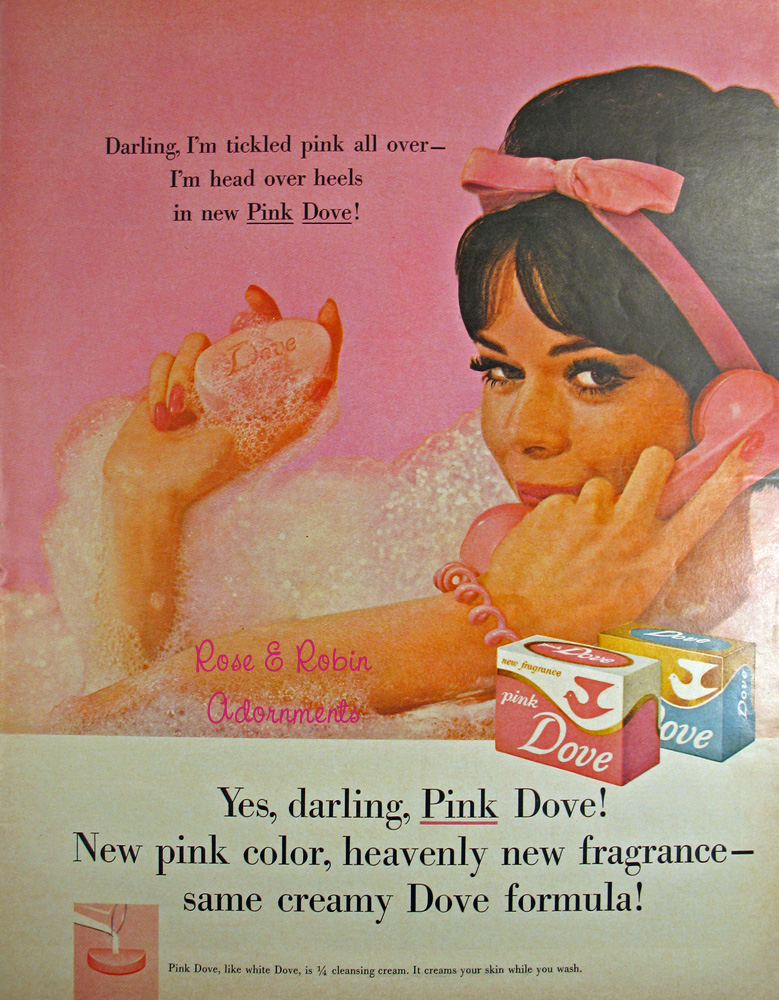
IMG_5504-ed-blog

Here are a few videos of advertising campaigns from Dove, Axe and Fair and Lovely, in case you want to compare:


On Wanting

22 Apr

I.

The problem is wanting.

Sometimes I think that the trick to living a happy life is to stop wanting things. If only you could not want anything, not even happiness, then you could be happy. But then you end up wanting to not-want, which is maybe one of the weirdest paradoxes ever. How does one achieve a state of not-wanting? I could probably ask one of the many pseudo-Buddhist white ladies that I know, but to be honest, I’m not sure that they’d have a good answer. They’d just tell me to maybe read the Bhagavad Gita and then meditate, but I’ve already done both of those things, and no dice.

The main problem with wanting is that sometimes you actually get what you want, and in some weird way that actually feels worse than not getting it. Like, what if you get what you want and then you’re still sad? What if you get what you want and it just doesn’t feel as good as you thought it would? Do you then A) start wanting something else or B) actually try confront your existential sadness crisis, since it seemingly cannot be solved by fame or love or material objects?

I guess that choosing option A is how capitalism works. You want and want and want but then nothing is ever enough so then you want some more, and then everybody makes money off of each other or whatever.

II.

I wanted a kid because I thought that having one would be like taking on a massive, life-long project. I liked the idea of being able to shape a person. I thought that if I just knew the right things to teach my kid, then he would end up being an artistic, scientific super-genius. Honestly, though, I don’t know why I believed that I was the type of person who knew all of the right things to teach my kid, but I thought that probably I could just learn from all the mistakes that I’ve made in trying to be a good human being. Then if I taught him to do all of the opposite things to what I did, probably he would turn out perfect.

It’s weird having a kid. Like, one day you’re just sitting in the hospital, minding your own business, when suddenly you’re handed this little bundle of raw potential. And you’re supposed teach this totally empty, blank little creature about how to live in the world, but the truth is that you don’t even know how to live in the world, so how can you act as a reliable compass for someone who can’t even hold up their own head?

How do I explain all of the arbitrary rules of life to him? Like, when I make dinner but he doesn’t want to eat his dinner because he’s still playing, what reasonable basis do I have for saying that my desire trumps his? Because I’m bigger? Because I earn the money that keeps him fed and clothed and housed? Because I can pick him up and carry him over to the table and force him to sit down in his chair?

I mean, the real reason is, of course, because his still-developing brain lacks the necessary critical thinking skills that he needs in order to competently make decisions for himself. If it were up to him, we would play with his train set all day, pausing only to eat cupcakes, and never go to bed. Which would be fine, if no one ever had to worry about going to work, or paying rent, or getting scurvy.

But I guess that what I really need to know is how I am supposed to train him to be a polite, conscientious, productive member of society without sucking all the joy out of him. He has all of these things that he thinks would be fun or good to do, things that seem perfectly natural to him, and here I am telling him to ignore all of his spontaneous wants.

Like, how do I teach him not to burp at the table or play with his food or splash in the bath without making him second-guess his every want or desire? On the other hand, I can’t send a kid to school who thinks that, for example, throwing toys or saying rude things are acceptable behaviour. And while, yes, all kids burp and fart and think that it’s hilarious, probably those aren’t things that future employers are looking for. But do I want to raise a kid who is exactly what future employers are looking for?

Where do you draw the line?

Maybe raising a kid is really just about teaching them to want the right things? But who gets to decide what’s “right”?

III.

Whenever I meet someone and they ask what I do for a living, I say that I’m a yoga teacher. Then I pause and say that I’m also a freelance writer (I think the word “freelance” makes it seem more legitimate, although to be honest most of what I do is blog about my stupid life).

Then, as soon as I say the word writer, I stop talking and gauge the other person’s reaction.

Because when I tell someone that I’m a writer, what I’m really doing is asking, Do you think that I’m a writer?

And then depending on how they respond, I think that they’ve either said yes or no.

I have no issues calling myself a yoga teacher, because I paid $5,000 and spent a year learning how to teach. I even have a certificate with my name on it that tells everyone that I’m a yoga teacher. I don’t have any certificates that tell people that I’m a writer. I don’t even know what the criteria for being a writer are. According to some people, it’s being published. According to others, it’s being paid to be published. And then some folks think that if you write, no matter whether you write for an audience or not, well, then, you’re a writer. But if you go by that logic, then isn’t everyone a writer? I mean, wouldn’t you consider anyone who’s ever made a grocery list or left a note for someone or sent a quick email to be a writer?

The problem is that I want so badly to be a writer.

IV.

How would you even live a life without wanting anything? How would you ever get up in the morning, or go to work, or write a blog post about want?

Why would you ever procreate if you didn’t want a hilarious, incontinent, miniature version of yourself?

How boring would it be to eat food just because it kept you alive and not because you loved the taste and smell and the satisfaction of filling your stomach? How awful would it be to get dressed just to protect your body from the elements and not because you love the colour, fabric, texture or cut of what you’re wearing? How sad would be it be to have a kid just because you feel as if you’re under some kind of obligation to perpetuate the human race, and not because you wanted a sweet, stinky little bundle of wriggly joy?

What kind of a life would you live if you did things only because you had to and not because you wanted to?

And if you were to get rid of that want, what would fill you up instead? How would you spend your days? Would the absence of want truly make you happy? Or would it just make you feel emptier?

I don’t really have any answers, so I apologize if you’ve made it this far and thought that you were going to have some kind of epiphany. I’m not very good at epiphanies, anyway. I don’t think I’ve had one since I was about eighteen, and even then, it was kind of a pitiful epiphany, to be honest.

I do think that it’s important to find the balance between wanting and not-wanting, and I think that it’s hard not to fall into any of the tricky traps that desire sets up for you, and I think that a lot of the times our wants set us up for misery.

I’m just not sure how to find that balance.

vintage-beautiful-womanhood-magazine

A Love Letter To Boston

20 Apr

Dear Boston,

I’ve never visited you.

I know that that’s a strange way to begin, and of course I don’t mean it as a slight against you. I’m just stating a fact: I’ve never visited you.

I’ve always wanted to, though, and that must count for something, right? I’ve heard great things about you. A bunch of people whose opinions I really respect have highly recommended you. I’ve planned a fantasy vacation (which my husband has nicknamed The Dead Author Tour of New England) that involves you.

I don’t really have any great reasons for not having visited you, to be honest. It just never seemed to be the right time, and our vacations often get eaten by visiting various family members, and travelling with a toddler isn’t exactly optimal.

But still, I’ve always meant to visit you.

The truth is, I think that you might be partially responsible for my existence on this earth. And as much as this life can sometimes be a rocky ride, I’m still grateful that I’m here. I’m the type of person who occasionally likes to consider of all the things that somehow coalesced so that I, this particular me, could happen to be born into this particular time on this particular planet, and the thing is, Boston, you play a small part in that story.

Let me explain.

My great-grandfather, William Cave, had what would be considered by most standards to be a pretty miserable childhood. He grew up poor in Halifax’s north end, living in a flat with his parents, his two sisters, and his grandmother. Things were tough but manageable until the cold, damp climate, inadequate nutrition and limited access to healthcare began to take their toll on his family. When my great-grandfather was nine, his sister Agnes Pearl, aged eleven, died of tuberculosis. The next year, his sister Annie Florence died, also of tuberculosis, at the age of sixteen. In 1915 his mother, Louisa, died, and in 1916 his grandmother, Mariah, died – both of tuberculosis.

My great-grandfather rarely spoke about his childhood. I’ve seen photographs of Agnes and Annie, and I’ve visited their graves, but beyond that, I don’t know much about them. In the picture of Agnes that my grandmother has, she’s very blond, her hair tied back in an enormous bow, and sits in a chair clutching a doll.  Annie is older in her picture, and is standing in front of a white fence wearing a long black coat; she has dark hair and eyes that slant upwards like mine.

In 1917, my great-grandfather was fourteen years old. On the morning of December 6th of that year he was getting ready to start his first day of work at a nearby newspaper plant. He happened to be running late. This fact would prove to be incredibly lucky.

Halifax, like many port towns, tends to profit during wartime, what with all the troops and ships and military big-wigs passing through. On the morning of December 6th, 1917, the harbour and the Bedford Basin were full of big boats, each one crowded with dozens, maybe even hundreds, of crewmen and soldiers on their way to the front. Halifax’s waterfront was packed with people, either working or hurrying to their school or job. Some were just out for a walk, enjoying the nice weather and taking in the excitement of all the ships’ comings and goings.

Every account I’ve ever read of that day has said that it was bright and sunny, the sky clear and the air sharp and bracing.

In order to get from Halifax Harbour into Bedford Basin, a ship has to pass through a strait called the Narrows. On the morning of December 17th, two ships, the Norwegian Imo, which was bringing relief supplies to Belgium, and the French Mont-Blanc, collided in the narrows. The Mont-Blanc caught fire.

What very few people knew was that the Mont-Blanc was a munitions ship carrying TNT, picric acid, benzol and guncotton. Once fire was added to that mix, she became a floating bomb. The captain ordered his crew to abandon ship, and they fled in lifeboats to the Dartmouth side of the harbour. The Mont-Blanc drifted towards Halifax and came to rest at Pier 6, which lay at the bottom of Richmond Street.

As black smoke filled the sky, even more people flocked down to the harbour to watch the ship burn. A few of the dock workers knew what kind of cargo the Mont-Blanc‘s was carrying, and tried to evacuate the waterfront, but they were unsuccessful.

One sailor made his way to the Richmond Railway Yards to tell men working there, Vince Coleman and William Lovett, about the coming explosion. Lovett fled, but Coleman realized that there was a train due in the station within minutes. He stayed behind to send a series of urgent telegraph messages to the train, saying,

“Hold up the train. Ammunition ship afire in harbor making for Pier 6 and will explode. Guess this will be my last message. Good-bye boys.”

At 9:04:35 am, the Mont-Blanc’s highly volatile cargo exploded. The ship disintegrated, and the blast travelled at more than 1,000 metres per second. A mushroom cloud rose into the air and hung over the city. Tremors from the blast were felt as far away as Cape Breton and Prince Edward Island. The harbour floor was briefly exposed, then a tsunami formed as water rushed to fill the void.

Halifax was devastated.

The north end was levelled, with huge brick factories reduced to little more than rubble and wooden houses flattened as if smashed by a giant’s hand. Fires raged everywhere, sometimes consuming entire city blocks. Hundreds were blinded by shards of glass as thousands of windows were shattered by the shockwave.

Fireman Billy Wells, who was thrown and stripped naked by the force of the explosion, described the immediate aftermath:

“The sight was awful, with people hanging out of windows dead. Some with their heads missing, and some thrown onto the overhead telegraph wires.”

That night there was a terrible snow storm, and many people who had survived but been left homeless by the blast had nowhere to go. A city of canvas tents was set up in the Halifax Commons, but the shelter they offered was meagre at best, and anyway, there weren’t enough to go around. People froze to death in the city that had, up until a few hours before, been on fire.

It’s estimated that two thousand people died in the Halifax Explosion and its immediate aftermath, and nine thousand people were injured, six thousand of them seriously. Nearly two thousand homes were completely destroyed, and twelve thousand homes were badly damaged. More Nova Scotian residents were killed in the Halifax Explosion than died in combat during World War I.

And my great-grandfather? Well, he was late for work, which meant that he was out in the middle of the street when the blast happened. As it turned out, this was the best place for him. The newspaper plant where he was supposed to be working was destroyed in the explosion, and his house was a pile of rubble. Had he been in either building, he likely would have died.

His aunt and uncle died, and so did all of their children. A few of his neighbours died. Many of his friends and family were badly injured. He couldn’t find his father after the blast, and had to wait until the next day to learn whether or not he was safe. Miraculously, his father didn’t have a scratch on him.

So what does any of this have to do with Boston?

Well, Boston was the first city to send relief to Halifax. The Boston Red Cross and the Massachusetts Public Safety Committee in particular collected money and supplies to send to Halifax. They didn’t care that the victims of the explosion weren’t Americans; they didn’t care that they were in the middle of a war and resources were tight. They did it anyway, because it was the right thing to do.

And when I imagine my great-grandfather in the aftermath the explosion, homeless and shivering in the sudden storm, alone and not knowing whether his only family member was still alive, I can’t help but think that Boston must have somehow helped him get through that long night. Boston must have been a part of what kept him going through the days and weeks that followed, as he and his father tried to put their life back together.

Boston, who clothed and fed and sheltered Halifax when they were in need.

Boston, who sent help without a second thought.

Boston, the city that now needs our help.

Halifax has a long memory. This is a trait that is, in my experience, both charming and irritating. It means that after you’ve lived in Halifax for a few years, everyone in the city knows your all your business and remembers every single stupid thing you’ve ever done. You can never live anything down in Halifax. If you stay there long enough, an act as simple as walking through its streets becomes tricky, because you feel like even the buildings and trees are passing judgment on you.

But sometimes Halifax’s long memory is lovely. Halifax doesn’t forget the awful things you’ve done, but it doesn’t forget the good ones, either. And Halifax has never forgotten that Boston was there to help first, before even the rest of Canada was able to respond. Halifax sends a Christmas tree to Boston every year, and that tree is lit on the Boston Common. Haligonians traditionally cheer for Boston sports teams. Halifax calls Boston its sister city.

And now, Nova Scotia, the province that can barely afford to feed its own residents, has pledged to donate $50,000 to the Boston Children’s Hospital. While announcing this, Nova Scotia premier Darryl Dexter said,

“When we were in need, Bostonians were there. There is a border and hundreds of miles between us, but Massachusetts is always close to the hearts of Nova Scotians. We will do everything we can to support our neighbours and friends in their time of need. Boston’s resilience and fighting spirit will persevere.”

And he’s exactly right. About everything.

So I guess, Boston, what I really want to say is thank you. Thank you for helping us when we were down. Thank you for saving my great-grandfather. Thank you for my life.

I’ve never met you, but I love you.

The days and weeks ahead of you will be really fucking tough, but I just want you to know that we’re up here, cheering you on. We’re here to help if you need it. We know that your spirit will only grow stronger in the face of this adversity. We know that you will fucking beat this.

And also, we haven’t forgotten.

Hope to see you someday soon!

Sincerely,

Annabelle

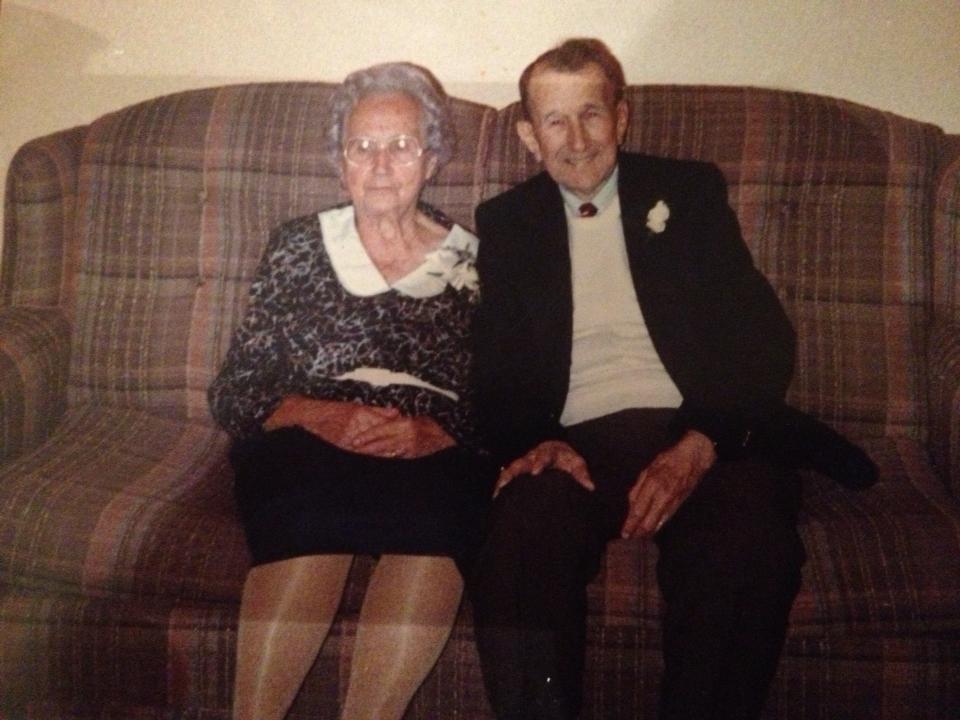
My great-grandparents on their 65th wedding anniversary

My great-grandparents on their 65th wedding anniversary

10 Concrete Ways To Help After A Disaster

16 Apr

I was sipping an overpriced americano in a small, aggressively hip coffee shop today when the news broke about the bombing at the Boston Marathon. I’d only meant to sit down for a few minutes, but ended spending over two hours there nursing my cold coffee and obsessively refreshing my Twitter feed.

Sitting there, I had the surreal experience of watching a disaster unfold in real time on social media. What made it even more strange was the fact that I was surrounded by people who had no idea what was happening. Two girls across from me discussed their upcoming Vipassana retreat and had a passive aggressive competition about their current meditation practices. A girl next to me was reading The Feminist Porn Book and occasionally making furious notes in her Moleskine. A young boy and his grandmother seated on my other side tried to figure out his math homework.

Everyone was totally oblivious to the fact that someone was apparently trying to blow Boston sky-high.

I wanted to lean over and poke the Feminist Porn girl and tell her what was happening, because I was suddenly desperate to have a real-life, non-internet conversation about this. It felt so lonely to be the only one in that coffee shop currently living in a world where people were detonating bombs at maybe the most famous marathon in America. But that seemed like it might be a weird thing to do, and anyway, she seemed really happy to be sitting there, alternately reading and scrawling. I didn’t want to be the one to ruin the Feminist Porn girl’s day, and anyway, she’d learn about Boston soon enough.

What happened today in that coffee shop was eerily similar to my experience on September 11th. I was in my first year at Dalhousie, and I’d gone to the Howe Hall student lounge between classes. There, on an oversized tv screen, a crowd of people were watching airplanes fly into buildings.

At first I thought it must be a movie, but then I realized that they were showing the same scene over and over.

“Is this a joke?” I wondered aloud. “It’s a joke, right?”

“No,” said the girl next to me. “Someone’s destroying America and it’s about fucking time.”

I didn’t know what to say to that, so I turned away and walked dazedly to my next class.

I figured out pretty quickly that no one there knew what was happening in New York. Everyone was laughing and chattering about their most recent drunken exploits, or their upcoming drunken exploits, or else how they were going to get money for more drunken exploits. It was as if I’d slipped into an alternate universe, one where no one was jumping out of skyscrapers because they knew they were going to die anyway and they didn’t want to wait until the fire made its way up to them.

I sidled up to one girl and whispered to her that someone had just flown a plane into the World Trade Centre. She just looked at me blankly, said, “Really?” then turned and started a new conversation with someone else.

The thing about me is that I like to do things. When stuff like this happens, I get all jittery and weird, like I need to be doing something concrete, something real, something right now to help whoever is hurt. It was, in fact, kind of lucky that I was in Halifax on September, because there was actually a ton of stuff, helpful stuff, that I was able to do in the wake of the disaster.

After the towers were hit, all of the overseas flights headed for the no-fly zone were diverted to Gander, Newfoundland, and Halifax. The tightly-knit community on our small peninsula suddenly swelled by 8,000 people. The city needed to set up adequate food and shelter, and fast.

Naturally, when trying to find a large, unpaid work force, Halifax immediately thought of its student population. Those of us in residence were recruited to help out in various ways, from collecting donations from local businesses to cooking, setting up house and otherwise caring for our unexpected guests.

Because my residence, Gerard Hall, was attached to the abandoned (read: terrifying and haunted) Old Halifax Infirmary, my friends and I were sent to retrieve the stacks and stacks of hospital mattresses that were left there. I would later revisit the Old Infirmary again with my friend Ali, who would break in so that she could skateboard up and down its smooth, ghostly halls.

Later we were taken by bus out to the Exhibition Ground, where we handed out toiletries, blankets and toys to people who spoke barely any English. Many of them had no idea where they were, and had never, in fact, heard of Halifax. Everyone was very subdued, very still – even the babies were quiet. No one was upset at having to sleep on the concrete floor of a building that normally housed horses; mostly everyone was just happy to be alive.

There was this sort of sense that we were all in this together, and that if we could just keep being nice to each other, we could stop bad things like this from happening ever again.

There was also this sense that if we could all just keep moving, if we could keep doing helpful, constructive things, we wouldn’t have to think about what all this violence and hatred meant.

In the wake of the bombing today, I’ve been trying to figure out ways to help. I want to be like those people I saw in the news footage who ran towards the destruction, not away from it. I want to do something, anything to stop me from feeling like a useless, voyeuristic bystander. So, with the input of a few friends, I’ve put together a list of things that we can all do, no matter where we are:

1. When you are sharing information about what’s happening in Boston, please take a minute to make sure that whatever you’re posting or re-tweeting is accurate and correct. I’ve already seen a few fake twitter accounts promising to donate money to disaster relief for every retweet. I’ve also seen people posting sensationalized stuff that just isn’t true. Before you hit “retweet,” make sure that you are being a reliable conduit of facts for your friends and family.

2. Let the emergency response workers and law enforcement do their thing.Give them the chance to tell you what they need. They will let you know how you can best offer help. If you were at the finish line at the marathon, the FBI requests that you share photos or videos with investigators. Call 1-800-CALL-FBI (1-800-225-5324), prompt #3.

3. Use social media to let others know you are okay or to offer help. Google has created a Person Finder site for the Boston Marathon to help people locate their loved ones. There is also a Google Doc to help stranded visitors find a place to stay or for Boston residents to offer a couch or bed in their own home.

4. Give blood. Or if you can, donate money to theAmerican Red Cross, which is the organization that handles most blood donations in the United States. If the blood bank is all booked up (the Red Cross noted yesterday they were not immediately in need of blood donors), make an appointment to make a donation in a few weeks’ time, when the huge supply they have from people initially responding to the disaster has run out.

5. Look for small but vital local organizations that serve members of the population who might not receive help from larger aid organizations. Look for shelters that need blankets and clothing, or food banks that need non-perishable items. Stuff like that.

6. Refrain from speculating on the race, ethnicity or religion of the perpetrator. Don’t make this political. Keep any remarks about Obama’s response, your thoughts on immigration policy, and the current state of homeland defence to yourself. There will be plentyt of time to dissect these things in the coming days; for now, remember that everyone around you, Obama included, is frightened and upset.

7. Hug the shit out of your friends and family. Remind everyone how much you love them until they’re tired of hearing it. Then remind them again.

8. Take care of yourself. If reading about the bombing or looking at pictures starts to become too much, give yourself permission to take a break and get off social media for a while. The world’s not going to end if you’re not on Twitter.

9. Give everyone else a break. They’re having a hard time too. Remember that everyone mourns or deals with stress in different ways.

10. Eat some chocolate. Read this article. Then read this. Remind yourself of how many legitimately good, caring people are out there. Remember the adversity that the human spirit is capable of overcoming, and remind yourself that, even after something like this, we will rebuild. We have to.

I love you guys.

BostonMap1722