Archive | Uncategorized RSS feed for this section

Virginity, Violence and Male Entitlement

31 May

I’ve seen a number of articles written this week by men – nice, well-intentioned, feminist men, I’m sure – about how they empathize with Elliot Rodgers.

Oh, of course they’re disgusted by his actions and of course they think he was a terrible excuse for a human being, but, well, on some level they get it. Because they know what it’s like to be a lonely dude who feels isolated and unloved. They know what it’s like to want female attention but not know how to get it. They know what it’s like to be embarrassed and ashamed at finding yourself still a virgin at the age of twenty two. So while they condemn his actions, they can’t help but somehow feel a little bit sorry for him.

I can find it in my heart to feel many things, but being sorry for Elliot Rodgers will never be one of them.

I feel sorry for his victims, whose lives ended because of a misogynistic asshole’s wet dream of “retribution.”

I feel sorry for the victims’ friends and families, who have to live with their loss every day.

I feel sorry for Elliot’s family, because of the guilt and shame and sorrow I’m sure they’re experiencing.

I feel sorry for the staff and students at UCSB, who will no doubt struggle to feel safe on their campus after this horrible event.

I feel sorry for all the women everywhere who are reminded on a daily basis how little value their lives have in the eyes of so many men.

I can even manage to feel sorry for the men who empathize with Elliot, because I’m sure that recognizing that part of yourself is difficult and frightening.

I cannot, however, feel sorry for Elliot himself. I don’t especially care how sad and lonely he was. I can’t find it in me to feel badly that women rejected him over and over. I definitely don’t have time for people who seem to think that all of this could have been prevented if only Elliot had gotten laid.

I was a virgin when I was twenty two, by which I mean I’d never had penetrative sex with a man (or any kind of sex with anyone, to be honest). And yes, I believe that virginity is a social construct and not an actual thing, but at the time it was very real to me. I was embarrassed and ashamed of my virginity, and I definitely felt unwanted, undesirable and unattractive. To make things even worse, there was (and continues to be) this persisten myth that any woman can have sex whenever she wants, because all men are animals and will fuck anything they can. But they didn’t want to fuck me.

And you know what? Literally at no time ever did I think, gee, I should go on a killing spree.

I never felt entitled to men’s bodies just because I wanted them.

I never blamed all men everywhere for my inability to get it on.

Never. Not once.

And while I understand that there is more social pressure for boys to be sexually active than there is for girls, that doesn’t mean that girls experience any kind of expectations surrounding their sexual initiation. To be honest, being a twenty two year old virgin made me feel like a freak – no one else I knew was as inexperienced as I was, and the older I got, the harder it became to admit to my peers that I’d never even seen a guy’s junk, much less done anything with it. By the time I got to university, whenever I told people that I’d never had sex, they gave me the once-over, like, what is wrong with you.  I worried that I had some kind of sell-by date, like there was an age that I would hit when no one would want to touch my virginal self with a ten foot pole. I just wanted to get the damn thing over with already so that I could get on with the rest of my life.

But I never considered blaming all men everywhere for my problems.

See, the difference is that I didn’t feel like sex was something that men owed me. I didn’t believe that other women, the women who dated the people with whom I was madly, hopelessly in love, were unfairly co-opting something that was rightfully mine. I didn’t think that being nice to men meant that I was entitled to date them. I was miserable and lonely, but I didn’t try to pin the blame for that loneliness on anyone else, let alone an entire gender.

The problem with all of the talk surrounding how nerdy and awkward Elliot was as a teenager and how he just didn’t have anyone to tell him that sex isn’t all that important or that things would get better is that these discussions minimize the role misogyny and male entitlement played in this tragedy. Elliot didn’t murder six people because he was too shy to strike up a conversation with a woman; he murdered them because he felt that he deserved unlimited access to women’s bodies and if he couldn’t have that then by god he was going to kill those women and the men who dated them. This is a man who had fantasies about putting all women in concentration camps and slowly starving them to death. This wasn’t about his virginity – although I’m sure that played a part in what happened – it was about his belief that women owed him sex just because he was a man.

Yes, the idea that being sexually active is directly tied to a man’s masculinity is toxic. Yes, this is a hard thing for men to live with. Yes, being a twenty two year old virgin (unless you’re doing so by choice) will impact your self-esteem. But Elliot Rodger didn’t go on a killing spree because he couldn’t get laid – he did so because he was infuriated that he wasn’t being given the attention and respect that he felt he deserved.

I know that we need to talk about toxic masculinity and the ways that it hurts men. That is something that I feel incredibly passionate about. But right now I’m not ready to have that discussion, or at least not framed around some kind of empathy with how desperate and lonely and confused Elliot Rodger was. Right now my priority is talking about all of the ways that women are dehumanized in our culture, and the ways that dehumanization affects us every day. I want to talk about how our culture teaches men to dominate women, and tells them that violence is the way to do this. I want to talk about the dangerous consequences that women are painfully aware of every time they tell a man no. And maybe this is all part of the same discussion, but right now I just don’t have room to consider how Elliot Rodger might have felt. Because, as weird as this might sound, this isn’t really about him or his story. This isn’t about rationalizing or empathizing or sympathizing with a man who believed that he needed to punish women for not wanting to sleep with him.

This is about how society views women, and how unbelievably frightening it is to live under that lens.
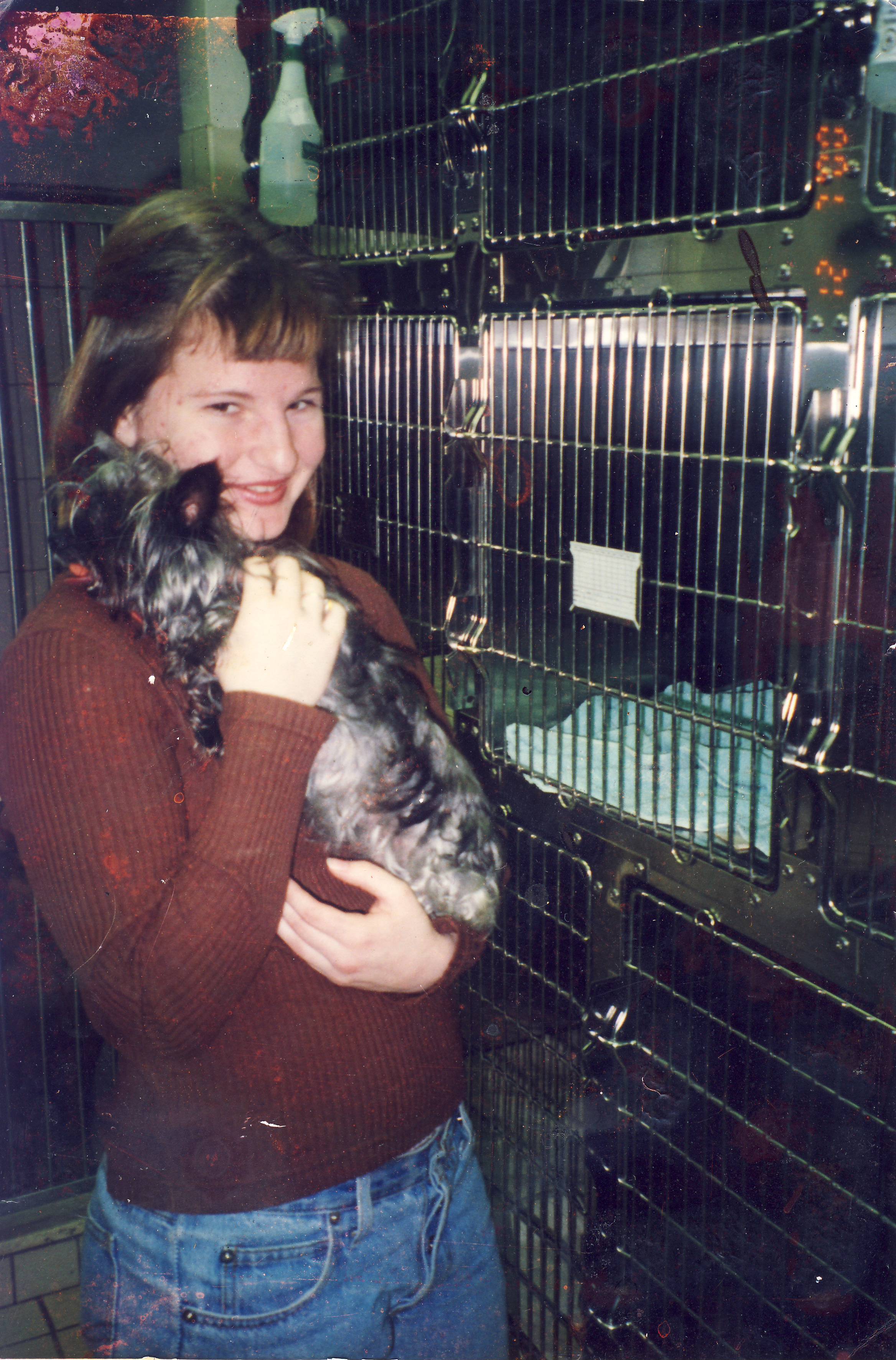
My virginal self at age 20, not thinking even a little about murdering all men

My virginal self at age 20, not thinking even a little about murdering all men


Fairy Tales Are Women’s Tales

28 May

Heyyyyy I have a post up on The Toast which is SUPER EXCITING for me because The Toast is pretty much my FAVOURITE THING EVER. ALL CAPS.

It’s about gender and fairytales, which are two things that I’m pretty stoked about. Also, unlike 100% of the posts on this blog, I actually bothered to edit it and I come off sounding pretty smart and not too ranty. I don’t even think there are any swear words. You should check it out!

Fairy Tales Are Women’s Tales

A brief excerpt:

“The Grimms’ deletion of all things sexy from the second edition could be taken as a sort of Teutonic prudery, but when we look at it in context with some of the other alterations, there begins to emerge a pattern of marginalization and disempowerment of women. Not only did they remove any mention of sex, the majority of it both consensual and premarital, but all sorts of other details defining and limiting the female characters were added in. With each successive edition, the Wilhelm Grimm added in more and more adjectives describing what they thought was the perfect Christian woman; female characters were suddenly “dutiful,” “tender-hearted,” “god-fearing” and “contrite,” where once they had simply been “beautiful” or “young.” Wilhelm also began to alter the structure of the tales, introducing moral judgments and motivations that previously hadn’t been there. Traditionally, fairy tales had seen luck and chance count for more than hard work and obedience, but Wilhelm put a stop to that – instead the sweet, well-behaved, godly women were rewarded, and those who deviated from that mold were punished. Finally, Wilhelm added in all sorts of hints about the domestic activity he felt women should occupy themselves with – for example, in an early draft of Snow White, the dwarves only ask that she cook their meals in exchange for shelter, but by the time the first edition of his book was published, their demands included that she keep house for them, do the cooking, make the beds, wash, sew, knit and keep everything neat and clean.”

fairy

Elliot Rodger And Men Who Hate Women

24 May

TW for violence against women, misogynistic language, violent language, talk of rape

Last night, a 22 year old man named Elliot Rodger killed six people and injured seven more in what most news outlets are describing as a “shooting rampage.” Rodger died later that night from a gunshot wound to his head, though it’s still unclear as to whether or not it was self-inflicted or from responding deputies shooting back after he opened fire on them.

Almost everything I’ve read about him has referred to him as a “madman” or “mentally ill.”

No. We have no evidence yet that he suffered from any kind of mental illness or was seeking any sort of treatment. Immediately claiming that with no proof to back that fact up leads to the further stigmatization of the mentally ill, and contributes to the (incorrect) assumption that mental illness equals violence, and vice versa.

We don’t know whether Elliot Rodger was mentally ill. What we do know is that he was a Men’s Rights Activist, or MRA.

He was an active member of the “PUAhate,” an online forum (which has been down since the shootings) dedicated to “revealing the scams, deception and misleading marketing techniques used by dating gurus and the seduction community to mislead men and profit from them.” And just to clarify, they’re not revealing these scams because of how vile and misogynistic they are, but rather because these men have tried these techniques and still failed to trick women into sleeping with them. These are men who both feel entitled to have sex with women and also blame all women everywhere for not fucking them. See, they want to have sex with a woman because that’s what they deserve just for being dudes, but they also hate women for withholding what they view as rightfully theirs. And I mean, boy do they ever hate women. The PUAhate forum has, according to an article on The Hairpin, threads with titles like “Are ugly women completely useless to society?” and “Have any hot women ever committed suicide?”

Rodger also subscribed to several YouTube channels on how to be a ‘pick up artist,’ including The Player Supreme Show and RSDfreetour as well as multiple MRA channels.

Last night, shortly before going on his killing spree, Rodger posted a video on YouTube to serve as his manifesto. In it, he declares that he’s a 22 year old virgin, and then goes on to say:

‘College is the time when everyone experiences those things such as sex and fun and pleasure. But in those years I’ve had to rot in loneliness. It’s not fair. You girls have never been attracted to me. I don’t know why you girls aren’t attracted to me. But I will punish you all for it,’ he says in the video, which runs to almost seven minutes.
>‘I’m going to enter the hottest sorority house of UCSB and I will slaughter every single spoilt, stuck-up, blonde slut that I see inside there. All those girls that I’ve desired so much, they would’ve all rejected me and looked down on me as an inferior man if I ever made a sexual advance towards them,’ 

‘I’ll take great pleasure in slaughtering all of you. You will finally see that I am, in truth, the superior one. The true alpha male …’

This is what the Men’s Rights Movement teaches its members. Especially vulnerable, lonely young men who have a hard time relating to women. It teaches them that women, and especially feminist women, are to blame for their unhappiness. It teaches them that women lie, and that women are naturally predisposed to cheat, trick and manipulate. It teaches them that men as a social class are dominant over women and that they are entitled to women’s bodies. It teaches them that women who won’t give them what they want deserve some kind of punishment.

We need to talk about this. The media, especially, needs to address this. We live in a culture that constantly devalues women in a million little different ways, and that culture has evolved to include a vast online community of men who take that devaluation to its natural conclusion: brutal, violent hatred of women. And I don’t mean that all these men have been physically violent towards women, but rather that they use violent, degrading, dehumanizing language when discussing women. Whose bodies, just as a reminder, they feel completely entitled to.

Another reminder: this isn’t an isolated incident. Not by a long shot. No, most men don’t go out in a blaze of glory after shooting up in a sorority house, but there are so many examples of men becoming violent towards women after being rejected. Like the kid last month who stabbed a girl to death because she wouldn’t go to the prom with him. The threat of violence is the main reason why many women feel unable to leave an abusive relationship – because after leaving is when they are at their most vulnerable. When you look the statistics on violence against women, Elliot Rodger’s act doesn’t seem so much like a one-off incident. He was participating, albeit in a grandiose public way, in the time-honoured tradition of controlling women with violence and punishing them when they don’t behave as desired.

We don’t know if Elliot Rodger was mentally ill. We don’t know if he was a “madman.” We do know that he was desperately lonely and unhappy, and that the Men’s Rights Movement convinced him that his loneliness and unhappiness was intentionally caused by women. Because this is what the Men’s Rights Movement does: it spreads misogyny, it spreads violence, and most of all it spreads a sense of entitlement towards women’s bodies. Pretending that this is the a rare act perpetrated by a “crazy” person is disingenuous and also does nothing to address the threat of violence that women face every day. We can’t just write this one off – we need to talk about all of the fucked up parts of our culture, especially the movements that teach men that they have the right to dominate and intimidate and violate women, and we need to change things. Because if we don’t, I guarantee that this will happen again. And again. And again.

‘”Why do men feel threatened by women?” I asked a male friend of mine. So this male friend of mine, who does by the way exist, conveniently entered into the following dialogue. “I mean,” I said, “men are bigger, most of the time, they can run faster, strangle better, and they have on the average a lot more money and power.” “They’re afraid women will laugh at them,” he said. “Undercut their world view.” Then I asked some women students in a quickie poetry seminar I was giving, “Why do women feel threatened by men?” “They’re afraid of being killed,” they said.’

Margaret Atwood, Writing the Male Character (1982)

ETA: A few people have been commenting to tell me that I’m wrong about Elliot not having a mental illness, as his family members have reported to the media that he had Asperger syndrome. Asperger syndrome is not a mental illness – it is a neurological condition, and it does not predispose people to violence. Correlating Asperger’s with violence is wrong and uninformed and you are doing more harm than good by saying that.

article-2638049-1E2B3CF600000578-738_634x424

Life Goes On And Other Garbage

18 May

The main problem with life is that it goes on. And on. And on.

People say that like it’s supposed to comfort you. Like, if you don’t get the job you wanted or your dog dies or the guy you’re so smitten with just out of the blue stops calling, your mom or your friend or your boss will inevitably say, oh, well, life goes on. As if i’s supposed to make you feel better, somehow, knowing that not only do you have to deal with this stupid bleeding heartache, but even while you gingerly nurse that hurt you still have to keep making your stumbling way through this magnificent/godawful old world.

Life goes on even after you’ve poisoned every good thing that’s ever come your way. Life goes on after you’ve single-handedly destroyed every relationship that was important to you, as if you were on some kind of mission to prove just how unloveable a person can be. Life goes on after you’ve fucked around so much at work, knowing all the while that you’re fucking around and hating yourself for it, that you face the very real risk of being fired. Life goes on, and you’re left standing amid all the sad wreckage of your little self. Life goes on even on the days when you can’t get out of bed. Life goes on especially on those days.

Life goes on after the good stuff, too. Like that walk home from the bar with your lover, when both of you were tipsy enough to find everything perfect and funny, even the things that were neither perfect nor funny. It was summer then, a real big city summer where daytime heat smashes you hard against the pavement, but  that night was a sort of reprieve. The baking stillness of the day was gone, and there was a delicious breeze coming from somewhere, maybe the lake. The leaves on the trees were broad and green and made a soft shushing sound above you. The streetlights hazy, and the world smelled like fresh cut grass. You knew that when you got home you would fuck and eat junk food and watch cartoons and then fall asleep in a tangled pile like a pair of puppies.

It was the kind of moment that you feel nostalgic for even as you’re living through it – you catch yourself mid-laugh and realize how happy you are, and then you instantly feel the sharp pang of longing for the thing you’re still in the middle of experiencing.

But life goes on.

You don’t get to hit pause or take a break from living. Even if you stay perfectly still and will everything around you to do the same, life still steamrollers over you. There’s no chance to sit back and appraise the situation, no time to collect your wits or figure out what you’re going to do next. You have to stay on your toes, you have to keep running, or else life will crush you. But even once you’re crushed, life goes on.

I have such a deep ambivalence about living. Things are either painfully, frantically wonderful or else they’re bitterly terrible. I love this world, but I love it with a suffocating zeal that can’t possibly be maintained. I rarely ever seem to hit that balance of peaceful contentedness that other people seem to manage – I’m always running headlong into something, trying to create some feeling that would otherwise be lacking. And if I do somehow manage to hit that point of effortless happiness, I always manage to sabotage myself. I’m like Shiva, the destroyer of worlds, except that I’m Anne, the destroyer of boring, petty human lives.

Which isn’t easy.

I mean, you really have to work hard to be this consistently vicious and miserable all of the time.

It’s not that I want to be unhappy, it’s just that my brain is an expert at leading me on these circuitous little journeys that always start out so promisingly but end with me stabbing myself in the back. I’m an ouroboros of anguish, both the giver and receiver of all my own pain. I’m hell-bent on being the wrecking ball that smashes through the wall of my own house. I’m all-the-other-semi-accurate-and-very-dramatic metaphors you can think of.

And, I mean, we could delve into all the reasons why I act this way, but frankly the story is long and unoriginal. Suffice to say that shit happened, some of it was my own fault, and now I’m here. The rest I’ll save for my therapist.

Because life goes on and I’ll have another therapy session this Wednesday and then I’ll come home and crash into my bed and try to sleep but probably I won’t be able to.

And then I’ll get up and putter around the house and maybe wash the dishes or start dinner since life, of course, goes on.

I wish that I could wrap this post up on a hopeful note, maybe with a line of trite wisdom that you might find on a greeting card or in a particularly terrible self-help book. I want to be able to tell you that everything’s going to be fine, that sure, life goes on, but it’s all in what we make of it and we have to take the good with the bad and there are other fish in the sea. I wish I could tell you that I wasn’t sitting here in a seething fury of fear and self-hatred, but that wouldn’t be true. I wish I could tell you that I wasn’t a self-indulgent, oversharing little brat, but. Well. Here we are.

The most that I can do is offer all of this up to you. Maybe you’ll see some of yourself reflected here. Maybe a sentence or two will strike you as being quite true, in a way that you were never able to articulate before. Or maybe this will help you be more compassionate or some junk like that.

You, the people reading this, are the only thing that make these garbage essays about my garbage feelings worthwhile. Because you always seem to glean some kind of meaning from them, even when all I can see is a morass of bad prose. You’re the way that I manage to justify bleeding this way all over the internet. You somehow make that bleeding important.

Against all odds, you give me hope.

tumblr_m39ax2vO401rpx9bqo1_500

Shaving Your Legs Is Not Feminist (But You Can Still Be A Feminist And Shave)

14 May

969389_540986612676573_2588641270520256902_n

I posted this picture (by Natalya Lobanova) on my Facebook page yesterday and received a bunch of varying responses to it. Some people loved it. A bunch of people shared it. But some also found it insulting and judgmental, and took it as a criticism of women who shave their body hair. A few took exception to the word “mutilating,” which, though modified by “slightly,” they thought was going too far. As with anything that sparks a discussion, I was interested in how people were reacting and why. The truth is that I really liked this image, and was surprised that people took offence to it. I think that talking about the fucked up things we do in order to be beautiful is super important, even if it’s sometimes uncomfortable.

Full disclosure, you guys: I shave my legs. I also shave my underarms, my bikini line, and this weird trail of dark had that goes from my belly button all the way down to my pubic hair. I had my ears pierced when I was eight years old because I was dying to wear for-real earrings. I wear makeup pretty much whenever I leave the house. And you know what? I like doing all of these things, because they make me feel pretty and more comfortable in my skin. But I also acknowledge that I grew up in a culture that taught me from day one to associate all of these arbitrary little changes that I make to myself with the concept of prettiness.

I’ve heard a few people say that the point of feminism is choice, and that the whole idea is that women should be able to make choices about their lives. For the record, I totally agree with that sentiment. But I also think it’s important to talk about the fact that choices don’t happen in a vacuum, and also that some choices aren’t feminist. Shaving your legs, for example, is not a particularly feminist choice. And I’m not saying that you can’t shave your legs and still be a feminist, but I do think we need to talk about stuff like this without immediately jumping to, “well, feminism is about choice and I made my choice and that’s that.”

For one thing, I’m not sure that a lot of women do actually feel like they have a choice about removing body hair. I mean, yes, technically, they do get to choose what happens to their body, but it’s pretty hard to feel like you’re actually making a fair, unbiased “choice” when your options are a) removing your body hair and enjoying the approval of our society or b) not removing your body hair and being on the receiving end of stupid jokes, insults and even harassment because of this. It’s pretty hard to frame it as a “choice” when society overwhelmingly approves of one option and punishes the other. So let’s not pretend that we’re not playing with loaded dice here.

The truth is that I play into patriarchal beauty standards every day. I wear cute dresses and I smear goop on my face to highlight my “features” and make my skin tone look more “even.” I wear shoes with heels on them because they make me taller and make my legs look longer. I push thin metal rods through holes that have been punched in my earlobes because I think that decorating my ears looks good. I carefully remove any body hair that might be visible when I’m wearing a bra and panties. And all of that is fine and none of it makes me not a feminist, but also those are all objectively anti-feminist choices. Because those choices don’t happen in a vacuum. They don’t happen because I woke up one day and thought, “hmmm, I’d really like to take a razor and remove the hair from some of the most sensitive skin on my body and endure painful, itchy razor burn for the next few days because that sounds like fun.” They don’t happen because just happened to be experimenting with painting interesting colours on my lips and decided that red and pink were my favourites. They happen because I grew up in a toxic culture that taught me that in order to be beautiful I had to alter my body, and every time I play into those ideas of beauty, I am reinforcing and validating that toxic culture. Every time I wear a cute skirt and heels, I am making it harder for women who want to break out of this fucked up ideal we’re forced into. And as much as I don’t want to, I need to own that fact.

It is fucked up that women are expected to change their natural appearance in order to be considered beautiful, or even just acceptable. We have body hair – growing it is a thing that naturally happens during puberty. Literally everyone has it. So why is it considered to be disgusting? Why are mannequins in underwear or bathing suits just fine, but these American Apparel models are thought to be hilariously obscene?

BeMrtR0IQAAuoIO

Like, that is literally what I look like when I don’t shave. Possibly I am even hairier than that. This is what my body looks like. Why is that so gross to so many people?

We all make choices about our appearance, and none of those choices are going to make the feminist police come take our feminist cards away. But sometimes those choices reinforce the status quo and therefore contribute to the difficulty other women experience when their appearance varies from the strict norms that society dictates. And that doesn’t mean that we shouldn’t ever wear dresses or makeup or jewellery, but rather that we need to talk about why we do these things. And we need to stop pretending that such-and-such is a feminist choice because feminism is about choice and if I’m a feminist then everything I do is automatically feminist. No. That’s not how it works.

Wear dresses if you want to. Wear cute shoes and earrings and bright red lipstick. Shave off every hair on your body if that’s what feels right. But please recognize that you don’t do any of those things because you just happen to like doing them. Please acknowledge that you made a choice that was heavily informed by the fucked up misogynistic culture we live in. Accept that sometimes your choices are anti-feminist, not because you’re a bad feminist but because that’s the world we live in right now. And once you’ve done all that, let’s try to figure out a way to change things so that girls no longer have to feel like their bodies aren’t good enough just the way they are.


The Sexualization of Willow Smith

8 May

We need to talk for a hot second about the sexualization of young girls.

Specifically, we need to talk about the sexualization of Willow Smith by the media.

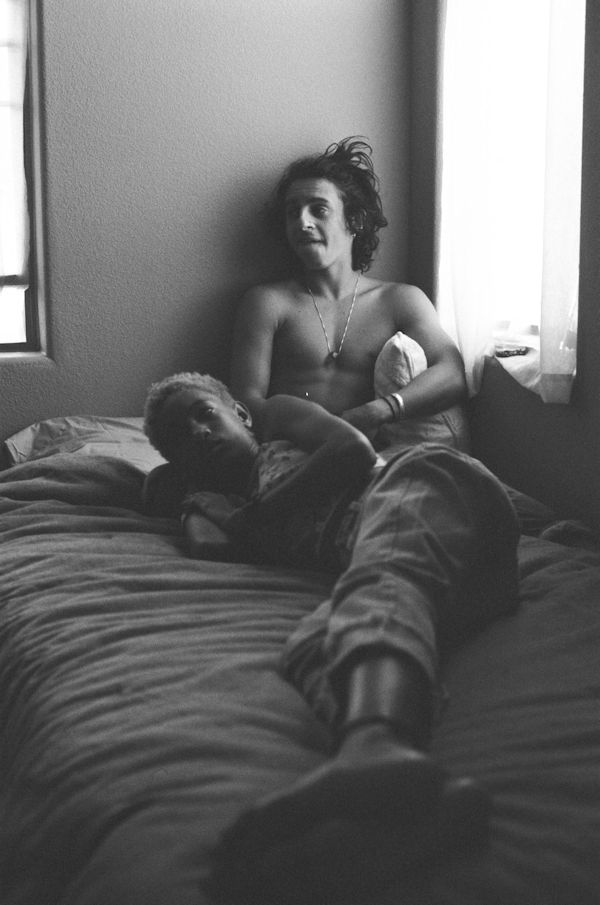
In case you’ve somehow missed the whole hullaballoo, the picture below of thirteen year old Willow and twenty year old actor Moises Arias was recently posted on Instagram, and the internet subsequently exploded.

Willow-Smith-and-Moises-Arias-2


Everyone immediately leapt to the conclusion that the photograph was somehow sexual. Hollywood Life referred to it as “compromising.” Complex Magazine said that it was “creepy.” Folks on twitter said that it was “disgusting on so many levels,” and promised that the picture would “seriously gross you out.” Even Sesali Bowen, coming to Willow’s defence in an article on Feministing, wrote, “The photo itself is sexy. I can’t deny that.” The general consensus seemed to be that, whether you thought (or cared) that the photograph was inappropriate, it was undeniably sexual in nature and indicative of some kind of romantic relationship between Willow and Moises.

And that is incredibly fucked up.

It is fucked up that people are creating this narrative about a sexual relationship between two people based on one picture in which they are not doing anything sexual. It is fucked up that news outlets are throwing a thirteen year old to the dogs in order to get page hits and retweets. And it is unbelievably fucked up how quickly and easily we sexualize young women (especially women of colour), to the point where their every look and gesture is dissected and somehow turned vulgar. Jada Pinkett Smith gets it exactly right when she calls the media “covert pedophiles.” That is exactly how they are behaving, and the fact that they are peddling this so-called “compromising” picture for their own profit is appalling.

It is an enormous leap to go from seeing a candid photograph of two people – one of them sitting, the other lying down, one of them shirtless, the other fully clothed, their bodies barely touching – to assuming that something inappropriate is going on. It says a lot about how we view girls, and especially how we view black girls, that this captured moment was immediately sexualized. As bell hooks wrote in her review of Beasts of the Southern Wild (which she uses to criticize the eroticization of the film’s protagonist and of black girls in general), “black children no matter their age are always seen as miniature adults.” The reaction to this photograph is certainly proof of that. If it had been a white girl, would we have had this reaction? If it had been a thirteen-year-old Elle Fanning or Hailee Steinfeld or Kiernan Shipka, would we have been as quick to leap to the conclusion that there was something untoward going on? Maybe, but probably not.

Had this been a picture of a young white girl with a man a few years older than her, it most likely would have been written off as totally innocent. If there had been a media narrative at all, it would have contained the facts that a) the two of them were not alone; they were hanging with Willow’s older brother Jaden and b) Moises is a family friend and particularly a close friend of Jaden’s and c) the three of them were attending Coachella (where, as is my understanding, going shirtless is pretty standard). But those details are all missing from most articles about this picture – instead, it’s presented as an intimate moment between two lovers.

Black women are so consistently devalued and dehumanized by the media that most people barely even notice it anymore. Young black girls are sexualized from the moment they hit puberty (and often even before that). Black girls are barely allowed to have a childhood before they become the object of the male gaze – especially the white male gaze. And when we share and judge and comment on pictures like this, we are contributing to that problem.

I mean, Jesus, she’s just a little kid – even if you do look at this picture and see something sexual, why would you think it was fine to attack and humiliate a kid like this? Think back to when you were thirteen, and then imagine that the entire world was passing around a humiliating picture of you and calling you all kinds of horrible names. I don’t know about you, but I would pretty much have died of shame. So why would you do that to someone else? And don’t say that as a celebrity she’s asking for it – she’s thirteen. She hasn’t asked for anything. You are the adult here, so start behaving like it.

Female bodies – especially black female bodies – do not exist purely for our voyeuristic enjoyment. We need to actively push back whenever stories like this are created by the media, and we need to work hard to protect the privacy and autonomy of young women. Most of all, we need to stop ascribing sexual intentions and desires to young girls, because doing so is dangerous and damaging. Treating a picture like this in this way says far more about us, and what we project onto black girls, than it does about anything else.


To All Of The Girls Accused Of Just Wanting Attention

6 May

TW for talk of suicide

Also a note to mention that I recognize that it’s not only women who are accused of being attention-seeking – however, it does seem to be a highly gendered thing

The first thing I need you to know is that there is nothing wrong with wanting attention. Asking people to notice you does not make you needy or pathetic or anything of the other things people have called you when you’ve somehow been too honest about your want. Wanting attention is human nature – we’re social creatures, and it’s perfectly natural to want some kind of social regard from other people.

The second thing that I need you to know is that your feelings – whatever they might be – are valid. If you want attention because you are lonely or sad or scared, you shouldn’t be ashamed of that fact. Those are very good reasons to ask for attention. Try not to let people discredit your feelings because your emotions make them uncomfortable. That is their issue, not yours.

There are so many good reasons for wanting attention. You might want to be complimented, or comforted, or distracted. You might need reassurance that the people around you love you and value your presence in their lives. You might just need that little boost to get you through the rest of the day. There is no wrong reason to want attention. Attention is not a bad thing. In fact, attention is necessary to our survival – we need attention in order to grow and thrive and develop as people. As mammals, we need other members of our species to love and care for us from the moment we’re born. That’s what sets us apart from other animals.

The third thing that I need you to know is that the best way to get what you want is to ask for it. You’ve been taught your whole life not to ask for things, to sit passively and sweetly until they come to you, but try to fight that urge. Be as clear as possible about what kind of support you want – it’s unfair to expect people to guess. If you want a compliment, then say so. If you want cute pictures of animals or funny gifs, then ask for those. If you want a shoulder to cry on or space to vent, then be honest about it. It’s hard for people to give you what you need if all they have to go on are vague suggestions.

The fourth thing that I need you to know is that you have been socialized from a very young age to compete for attention. You’ve been taught that other women are the enemy and men are the prize. You’ve been told in a thousand subtle ways that what’s most important is that you are pretty, charming, and sweet. You’ve learned to cut other girls down in order to make yourself look better. But it doesn’t have to be this way. I need you to know that you can ask for attention in a way that is not at another girl’s expense.

I also need you to know that accusing another girl of just wanting for attention is another way of cutting them down.

The fifth thing that I need you to know is that you are worth so much more than how you look. There’s nothing wrong with wanting compliments on your appearance, but you should know that your value does not depend on how pretty you are. I know that you’ve been taught since day one that beauty trumps everything else, but please, please try your hardest to unlearn that lesson. You are a smart and talented and creative and interesting creature. Seriously, I cannot stress this enough: you are so much more than your looks.

The sixth thing that I need you to know is that not all attention is created equal, and what might feel affirming in the moment might create damaging patterns in the long term. If you cannot feel pretty without having other people confirm your prettiness, asking over and over for that validation will not change your self-perception. And maybe that’s not your goal – maybe you don’t want to change. You’re allowed to not want to change. But you should know that it is dangerous to base any part of your self-esteem on the opinion of other people.

Finally, for anyone who might roll their eyes at someone who just wants attention, I need you to know that sometimes that attention – even if it’s just a hug or a phone call or a quick text message – can make an enormous difference. Sometimes it can even mean the difference between life and death. Studies show that suicide is an impulsive act, and, contrary to popular belief, if someone intervenes most often the survivor will not immediately go find some other way of killing themselves. Your text could be that intervention – you have no way of knowing what type of mental state anyone else is in, and if you sense that they need some kind of help, you should offer them whatever you can.

girl-tumblr-indie-girl-tumblr-we-heart-it-mt9cqewb

White People Are The Worst – Hockey Edition

2 May

Trigger warning for racist and violent language and images

Last night, Montreal Canadiens player P. K. Subban scored the winning goal against the Boston Bruins in Game 1 of the Eastern Conference Semifinal.

Predictably, Boston fans were outraged. In this case, though, with Subban as one of the few black players in the league, their anger took a sickeningly racist turn.

It was so bad that the n-word was briefly trending on Twitter in Boston. Seriously. Think about that for a minute. Think about how many people must have been tweeting one of the vilest, most degrading racist slurs in our language in order for it to be trending in a city the size of Boston. That is not just a few racist fans making everyone look bad – that is a whole fucking lot of people trying their hardest to make Subban (and all people of colour) aware of just how unwelcome they are among white people.

Don’t believe me? Here’s a sampling of some of the tweets:

That stupid n—-r doesn’t belong in hockey #whitesonly.”

F*** YOU N***** SUBBAN YOU BELONG IN A F****** HOLE NOT AN ICE RINK”

Someone needs to smack PK subban across his big n***** lips. #scumbag”

F*** PK Subban. F****** n*****. Wish he got sold”

Even worse, one fan tweeted this image (the account has since been deleted):

cafef2b0-d21c-11e3-9fdf-a7466a2ebd37_BmozgFiIUAAeFo8

This is not a fluke. This isn’t even the first time Subban has experienced a slew of racist tweets – the same thing happened while he was playing for Canada’s Olympic hockey team. This is not a little blip in an otherwise decent system. This is white people telling you what they really think of people of colour. Seriously, you don’t have to scratch too deeply to find the violent, still-beating heart of racism in most white folks. All it takes is your favourite sports team losing a playoff game, and out it comes.

You know what the real kicker is? I bet the majority of the people tweeting these things would say that they’re not racist. They would tell you that they have black friends. That the n-word is just a word, and anyway how come black people can use it and they can’t? They would tell you that it was just a joke. It was all just a stupid joke. Stop being so sensitive, jeez.

I can’t believe that this needs to be spelled out for some people, but: white people using the n-word is not a joke. Making references to slavery is not a joke. And Jesus Christ tweeting a picture of a noose at a black person is not a fucking joke.

The spectre of white violence is something that black people face every day. They live in a world where knocking on a white person’s door to ask for help after a car accident can result in them being shot in the face. They live in a world where defending yourself against an attacker can result in imprisonment, but meanwhile if they are murdered, unarmed and vulnerable, their killers can get off scot-free. They live in a world where a man can shoot and kill a black teenager because their music is too loud, and then not have the jury find enough evidence to convict him of first degree murder. They live in a world where deep-seated systematic oppression hounds them at every turn. To top it all off, they live in a world where white people are taught from birth to fear everything about them.

The Boston fans tweeting slurs at P. K. Subban aren’t an isolated minority. Donald Sterling, the racist owner of the Los Angeles Clippers, isn’t just a throwback to an earlier age where racism was acceptable. This is the racist landscape that we live in, and to which all white people, on some level or another, contribute. We need to acknowledge that every time we downplay events like this, every time we tell someone not to be so “sensitive,” every time we write stuff like this off as something other white people do, we are just making matters worse. Before any real change can take place, we, as white people, need to accept that fact that we all participate in and benefit from a system that privileges our interests above all others. And we need to understand that this same system makes life not just difficult but frightening and dangerous for people of colour.

Boston Bruins president Cam Neely issued a statement this morning, saying, “These classless, ignorant views are in no way a reflection of anyone associated with the Bruins organization.” Unfortunately, the truth is that they are a reflection of people associated with the Bruins organization –  perhaps not people employed by it, but certainly people who publicly cheer for the team and therefore contribute to how people outside of Boston perceive the Bruins. This statement is a start, but there needs to be more. We need more people calling out racism in sports – and everywhere – in order to affect change.

We need to show Subban and all other people of colour that we’ve got their back.

p.s. GO HABS GO

subban

When Getting Better Is No Longer An Option

27 Apr

Trigger warning for talk of suicide

I used to think that I would outgrow it.

I used to think it was just hormones. The same hormones that caused the constellation of angry red pimples on my face and back. The same hormones responsible for the dark, wiry hair between my legs and nearly unnoticeable A-cup-sized swell of my chest. I thought that once the hormones settled down, I would feel better. Normal. But even once I grew used to my new body, even once I hit my twenties and everything was supposed to level out, I still felt it. The same howling misery, the same blind, raging creature whose claws and teeth were sunk somewhere too deep to find, was still there.

I did not outgrow it.

I used to think that I would get better, if by getting better I meant being cured. I used to think that I would find the right combination of drugs and therapy and life choices to make this thing, whatever it was, go away. Or maybe I would just wake up one morning and it would be gone, instantly and inexplicably, the same way it had come. I thought that it might recede like the tide going out, and then, like a bare beach scattered with seaweed and shells, I would go back to being the person I’d been before, only with a few small relics left over from what I’d been through.

I did not get better.

I might never get better.

These past few months have been hard ones. Really hard. And I don’t know how to talk about this, except that I think I should. For the last weeks of March and the first few weeks of April I was suicidal. Suicide was all I could think about. I didn’t want to die, exactly, but I didn’t want to be alive, either, and I couldn’t think of any other option. I couldn’t sleep. I couldn’t read. I’d injured my hamstring, so I couldn’t really do yoga. I couldn’t string two thoughts together. I couldn’t even follow a conversation. All that I could do was get up in the morning and drag myself to work, and then drag myself home and cry. On weekends Matt would take over childcare, because I couldn’t get out of bed. Everything seemed awful, without any understanding of why it was awful. I felt like I’d come up against a brick wall, and all I could do was scratch at it until my nails broke and my fingers bled. I couldn’t imagine what the future would look like, other than more of the same but worse.

None of these are especially good reasons for being suicidal. But the thing about being suicidal is that you don’t need a good reason. You just are, and you don’t know how to get out of it. What makes it even worse is that you can’t talk about it – suicide is too big, too scary to bring up with your friends and family. And if you mention it to a health professional, well, I mean, forget it. All they want to do is lock you up so that you can’t do it (and rightly so), but they don’t seem to want to talk to you about the whys and hows of the way that you feel. Which means not only is everything awful, but on top of that you don’t have any kind of outlet. Because you don’t want the worry or the pity or the fear of the people around you.

So you just don’t talk about it.

Things are slowly improving now, but I know it will come back. That’s the funny thing – when I’m well, I’m constantly aware of it waiting for me, biding its time, sidling around me like a constant threat, and yet when I’m in the middle of a breakdown I can’t imagine that I’ll ever be ok again. When things are bad, the only thing that exists is the pain I feel. That is my only reality. While some part of me logically knows that it’s a cycle and eventually I have to come out of it, there is just no way to make myself believe that fact. The only fact I can trust in is how terrible everything is in that moment.

I’m learning to live with the fact that I am not going to get better, if by not getting better I mean that I am probably going to live with depression for the rest of my life. This thing, this goddamn soul-sucking thing, is not something that I can cut out, or drown, or poison. I can’t look at a CT scan and point out where it is. I can’t even really know anything about it, except that it lives inside of me and feeds off of me and leaves me aching and exhausted and so sad that sad isn’t even the right word for it. I don’t know what the right word is; maybe there isn’t one.

I’m also learning to live with the fact that I am never going to be the person I was before all of this started. I’m not even sure that it makes sense to want to be her anymore – she’s an absurdly hopeful little thirteen year old girl with no life experience and little understanding of how the world works. She’s the last memory I have of what I was like before this dark creature began nesting inside of me, and for a while I clung to her image as something that I could maybe someday achieve again, but I need to recognize that she’s gone. She’s gone and she is never, ever coming back.

Mental illness destroyed who I was. And I’m at a place now where I’m trying to recognize that that’s not a bad thing. I mean, I don’t think that it’s a good thing either. It’s just a thing. A fact. A truth. My family and I have had to adjust to this reality; we’ve had to mourn the loss of who I was and who I might have been, while at the same time accepting the person who was left behind. It’s a funny sort of thing, a weird feeling that I’ve somehow lived two lives – like a building gutted by a fire whose façade stays the same but whose interior, once restored, is entirely different.

I don’t know how to explain it any better than that.

So I’m learning to live like this. I’m learning to ask for concrete things – help with housework, help with childcare, help with routine daily tasks. I’m getting used to the idea of talking to my employer about my mental health, and negotiating the possibility of time off when I need it. I’m trying to be better about accepting the fact that sometimes I just need to lie in bed and do nothing. I’m trying to be better about accepting all of this, because fighting it tooth and nail has gotten me nowhere.

I’m trying to tell myself that I am not weak. I am strong, and I will get stronger. The person that I was might be gone, but this version of me, the one that exists now, is just as good as she was – mentally ill, yes, but kind, compassionate, smart, funny, and with so many people who care deeply for her. She, too, is worthy of love.

If you are depressed, experiencing suicidal thoughts or otherwise need someone to talk to, please call 1-800-273-8255

For international readers, here’s a database of crisis centres listed by continent

1926769_10154076149725215_518988513332983215_n

An Open Apology To All The Girls I’ve Been Mean To

22 Apr

I’m sorry for all of the times that I’ve said that I’m not like other girls, implying that there was something defective or inferior about being a girl. I’m sorry for how hard I’ve tried to be “different,” not because being different felt authentic but because I was afraid that I would never measure up to you.

I’m sorry for all of the times that I’ve made fun of traditionally feminine things, like make-up and pretty clothing. I’m sorry that I derided these things as stupid and frivolous – the fact that I did that says more about my own insecurities than it does about anything else.

I’m sorry that I called you a slut. What I meant was that I was jealous that boys wanted to sleep with you. What I meant was that I was jealous of how comfortable you seemed to be in your body, how easily you wore those short skirts and low-cut tops. I could never imagine what it must feel like to be as happy or as beautiful as you, and it seemed like your pleasure was somehow my loss.

I’m sorry for how often I’ve talked about you behind your back. I’m sorry for how meanly glad it made me to strip you down and bare all your petty little faults over coffee with a mutual friend.

I’m sorry for all the times that I’ve told myself that talking about you behind your back was fine because I was doing it from a place of love and concern.

I’m sorry for all of the ways I sneakily took out my anger on you, saying sly little things to cut you down or else aiming a thousand cruel barbs straight at your heart. I was too afraid to confront you over what you’d done, so instead I tried to hurt you as badly as you’d hurt me.

I’m sorry for all of times that I failed to back you up when you were right just because I wanted the approval of the men sitting at the table. I’m sorry for all of the anti-woman garbage that I’ve laughed at and pretended to agree with just because I wanted to be a chill girl. I’m sorry that I was afraid to stand up for what I believe in.

I’m sorry for all of the ways that I’ve undervalued our friendship, or left you feeling unappreciated. I’m sorry for how often I’ve taken you for granted.

I’m sorry for all of the times that I’ve prioritized my relationships with men – all men and any men, not just the ones that I’ve dated – over my relationship with you. I’m sorry for how often I’ve ditched you to hang out with the boys and assumed that you’d be cool with it because, hey, boys. I’m sorry for how frequently I’ve made you feel that you are lesser than. I’m sorry that I’ve treated you as if you were lesser-than.

I’m sorry for all of the times that I made you feel as if we were secret competitors for titles like The Smart Girl, or The Funny Girl, or The Writer Girl. I’m sorry that I bought into the idea that there could only be one of each, and that one of us would have to fail in order for the other to succeed.

I’m sorry for all of the times that your successes made me so sick with jealousy that I could barely stretch my mouth into a smile. I should have celebrated them, but instead I thought about how much of a failure I was compared to you.

I’m sorry for all of the little tricks that I pulled to make you feel unwelcome. I’m sorry for the cliques, for the obvious laughter at your expense, for the notes that you weren’t-supposed-to-see-but-yes-of-course-you-were-supposed-to-see. I’m sorry that I’ve allowed these tactics to bleed into my adult life, into workplaces and friendly get-togethers and social media.

I’m sorry that I encouraged you to confide in me, and then treated your secrets like a sort of currency that could buy me higher social standing or else five minutes of some boy’s of attention. It didn’t do me any good anyway – all it did was teach other people that they couldn’t trust me.

I’m sorry for all of this and more. I’m sorry for the ways that I’ve been a bad feminist and a bad friend. I can’t change what I’ve done – all that I can do is apologize and promise to do better.

I’m so sorry.

And I will do better.

bd7682b93b209fb7b8db34ccf92a276d