Tag Archives: women

The Past Is A Foreign Country

2 Dec

In the beginning God created the heaven and the earth. And the earth was without form, and void; and darkness was upon the face of the deep, etc.

And then God created the Garden of Eden, and made a dude out of mud to be in charge of it. Then one day when this dude, Adam, was sleeping God took one of his ribs (ew) and from that rib magically made Adam a lady-friend, Eve. Then Adam and Eve lived in paradise for, like, three days, until Eve, the original third wave feminist (she embraces diversity, change and choice!), took some bad advice from a phallic symbol serpent and ruined everything.

And we’ve been nostalgic ever since.

Sometimes I think that nostalgia is the human condition. I mean, we’ve got a minimum of three major religions based on this yearning to get back to a past that none of us remember or even understand; the most we know about it is that Adam thought it was awesome. Then again, Adam also thought that wearing fig leaves was awesome, and was married to someone who was basically his clone (I mean, is that how it works? what with the rib and all? what’s the science here? anyone?). Anyway, what I’m trying to get at is that I’m not sure how reliable of a source he is.

I mean, here’s the thing: I am the queen of nostalgia. Ask anyone – I basically get nostalgic at the drop of a hat.

(Hey, remember that time you dropped a hat? How great that was? How much fun we had? Why don’t we ever have good times like that anymore?)

I don’t just moon over actual things that I’ve experienced either; I spent a good chunk of my childhood feeling nostalgic for just about any time in history, from the ancient world all the way up to The Great Depression (I blame a combination of having an aunt who is an egyptologist, reading excessive amounts of historical fiction, and watching Annie on VHS until the tape wore out). I used to drive my mother bananas by whining at her that I should have been born in the Victorian era (in response to which she would usually remind me of my fondness for indoor plumbing), and nearly every elementary school class photo shows me decked out in some kind of puffed-sleeve Anne of Green Gables floral-printed nightmare, grinning like a Cheshire Cat.

If there was a book at the public library with a picture of a girl in a laced-up bodice and peasant skirt, I’d read it. If there was a weirdo food mentioned in something I’d read (blanc mange, I am looking at you), I’d tried to find a recipe for it. After learning that people seriously believed in fairies until not that long ago, I began to (non-ironically) leave food in our backyard in case the fair folk were hungry for chocolate-covered graham crackers and milk. And you know what? To be honest, my adult self is not that different, although nowadays I would probably eat the cookies, fairies be damned.

What I’m trying to get at here is that I’m totally guilty of romanticizing the past. Totally! That being said, I don’t use that as an excuse to hate the present. I mean, I like flush toilets and computers and being able to vote and science-based medicine and all that good stuff. I am pretty down with modern life (although I am sad that I don’t get to wear bustles or hoop skirts). I guess what I am trying to say is that I am confused by people who think that living a middle-class existence in the western world is basically the worst, ever. I’ve heard women bemoaning the fact that feminism has ruined womanhood (is that even a word? my spellcheck thinks it’s a word), and the fact that women can now vote, own property and work after marriage is somehow preventing them from being stay-at-home mothers or housewives or whatever. I’ve heard people complaining about the “chemicals” in antibiotics, and saying that they only do homeopathic or herbal treatments – nothing “unnatural” or doctor-prescribed. I hear people talking wistfully about the days when science didn’t exist and everything was just natural and wholesome and wonderful.

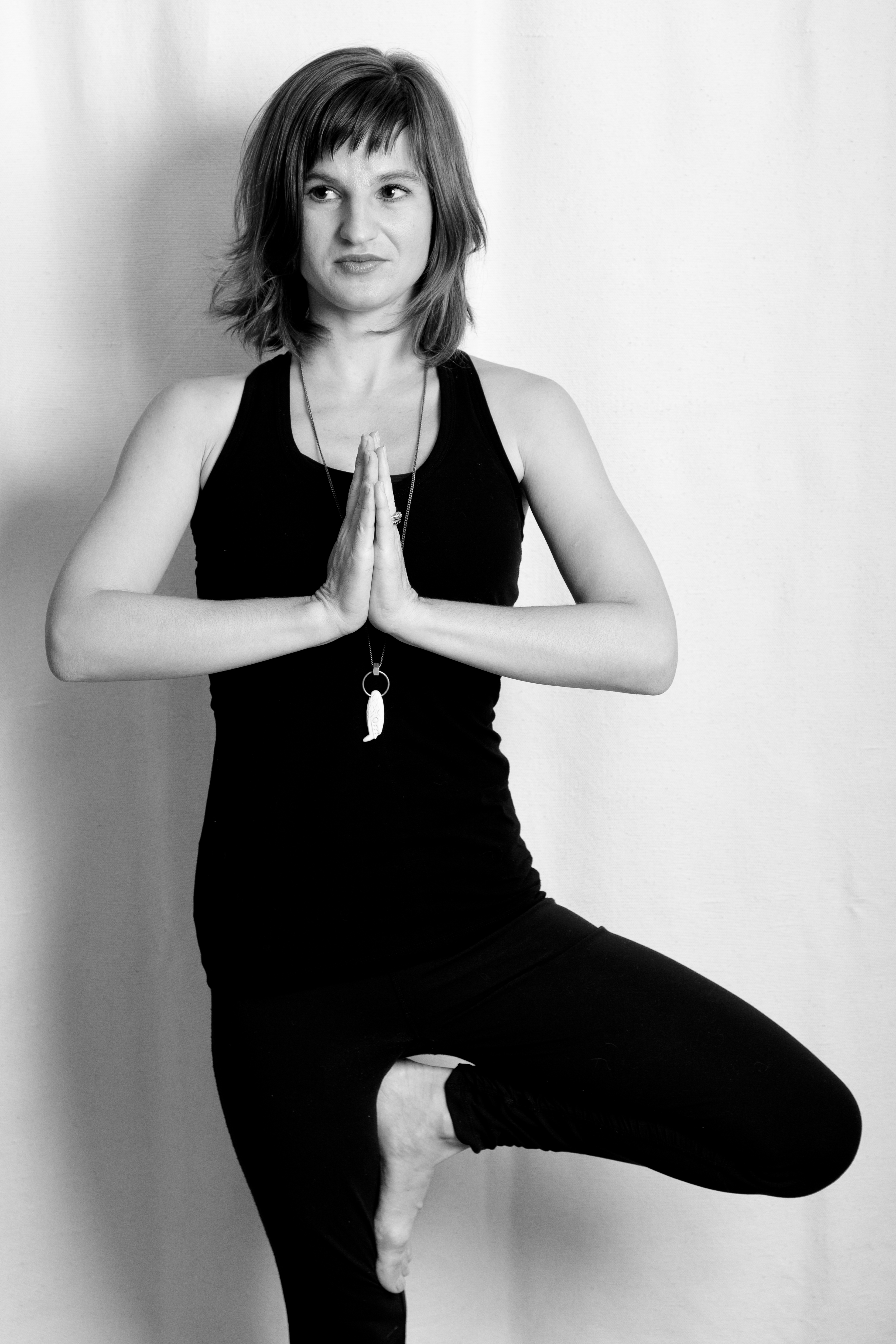
People talk a lot about “authenticity” when it comes to objects and experiences. They don’t want Walmart to exist; they want everyone to buy things from farmer’s markets and local mom-and-pop pharmacies and department stores. They want to drive to Mennonite country to buy hand-made furniture and hand-dipped candles. They want to practice yoga at sunrise on a mountaintop with someone who has studied in India and can read their chakras. When they travel to South America, they don’t want to go on a guided tour; they want to see the unspoiled part of the rain forest, want to see the “real” locals who are unspoiled by contact with the west. We’re obsessed with our idea of what’s “real”; these days, people worship at the temple of the real.

Sometimes I think that our desire for authenticity has a lot to do with our love of nostalgia. We think that the people who came before us lived lives that were somehow more “real” than our own.

But you know what guys? The past is a foreign country, and so on, and so forth. We don’t know what it was like back then; all we can go by is what we’re told, or by deciphering what’s been left behind. We will never be able to understand how people felt or lived back then; their circumstances, though not totally alien to ours, are different enough that we will never fully be able to grasp their emotions, or beliefs, or the ins-and-outs of their daily lives. We just have to trust that yes, being a woman before feminism was a raw deal, and yes, modern medicine saves lives, and yes, science and modernity serve some kind of purpose. I’m not saying, let’s not be critical of society; what I’m saying is let’s keep pushing forward and trying to make things better instead of daydreaming about a past that we can never get back.

I’m not saying that Walmart is amazing, or that any of the things I mentioned up there are bad in and of themselves, just that it’s hard to have some kind of moral superiority about where you shop when there are kids who would probably starve if there weren’t discount stores where their parents could get a cheap meal. I’m also not saying that our society isn’t obsessed with consumerism, because we are; we’re consumerist as hell. But you know what? People in the past didn’t own less things because they were better than us; it was because they couldn’t afford them. If you want to live a life of simplicity where all you can afford is a mattress on the floor and one change of clothes, then by all means, please go ahead. However, don’t kid yourself that you’re being more “real” than the next person.

Sometimes I think that the appeal of history is that we know how all the stories end. We know who wins the Battle of Hastings, and whether or not Julius Caesar crosses the Rubicon, and whether or not the Titanic will ever reach New York (spoiler: it won’t). And yeah, a lot of history was scary and bloody and downright awful, but at least we know what happens. I mean, better the devil you know, right? Our modern lives terrify us because we don’t know how anything will end; sometimes it seems like we’re careening towards our own destruction, running full-tilt at things like global warming and nuclear war and widespread poverty and famine. I’ve got news for you, though: if these things terrify you, all the hand-dipped candles in the world aren’t going to save you. If you’re scared (and you probably should be), then get up and go do something, for God’s sake. Sitting at home wishing that you lived in Elizabethan England is going to accomplish exactly nothing.

I mean, except reminding you how awesome those giant ruffs were. Can we bring those back, please?

Bustles - the best, right? Baby got back, etc.

Bustles – the best, right? Baby got back, etc.
Odds and Ends

28 Nov

Just a few quick things:

1. I have another post up on Shameless Magazine’s website. It’s called Rape Culture in Popular Culture and includes hot pictures of Joseph Gordon-Levitt. Something for everyone!

2. I am now a regular contributor to Shameless Magazine’s blog, rather than just a guest poster. YUS. WRITER CRED.

3. In the wake of Savita Halappanavar’s death, many people have been wondering if there’s anything they can do to help other women who might be in her position. The Abortion Support Network helps women travel from Ireland to the UK in order to get abortions. They provide financial support, emotional support and accommodation for Irish women seeking abortions, and are a pretty awesome organization.

4. I love, love, love this article from Vice, You’re a Pussy if You Think There’s a War on MenEspecially this part:

“Yeah, no shit men are “pissed off” about “competing” with women. It’s pretty simple—decades ago, lazy men didn’t have to worry about talented women taking their jobs because they were largely relegated to being housewives or teachers or nurses. Now that women can dictate the terms of relationships and don’t need to latch onto a man as soon as possible, they aren’t willing to start pumping out babies and taking care of a household the way some guys would like. Boo-fucking-hoo. Cry me a river.”

Haaaaaaah.

5. I actually cannot stop listening to this song right now. Frig, I hate winter.

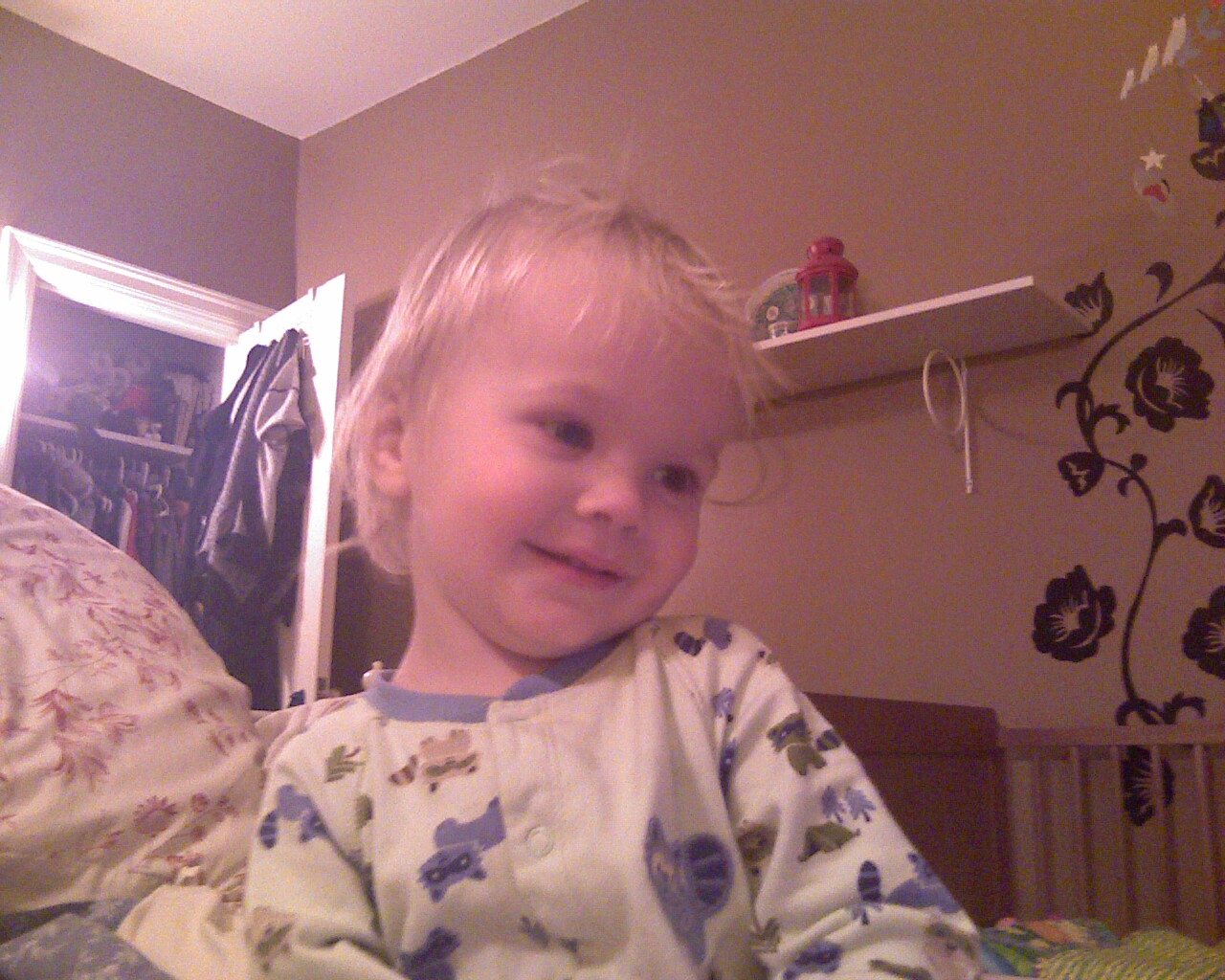
6. My kid is hella cute:

I can’t do yoga (and other lies people tell me)

21 Nov

I honestly can’t tell you how many times I’ve had this conversation:

Person I Just Met: So, what do you do?

Me: I’m a yoga teacher.

Person I Just Met: Oh, neat! Where do you teach?

Me: Right now I’m mostly just subbing, but I teach a regular weekly class at [local studio]. You should come!

Person I Just Met: Oh, um, yeah, maybe. We’ll see!

Me: It’s pay-what-you-can and all levels. I would love to have you!

Person I Just Met:  I can’t do yoga. I’m just really not flexible. Sorry!

Here’s the thing: anyone can do yoga. I honestly believe that. I have taught a yoga class to a room full of octogenarians who stayed seated in comfy chairs the entire time – if they can do yoga, then so can you. It doesn’t matter how flexible your body is – any and all poses can be modified to meet you where you are. And really, if you want to try yoga but lack of flexibility is your excuse, how will you ever improve your range of motion without first taking up something like a regular yoga practice? Everyone has to start somewhere – why not start now, today, whatever shape your body is in?

Having said all that, I know there are a ton of reasons why people shy away from yoga, and most of them have nothing to do with flexibility. Part of the problem is that the yoga culture in the west is kind of fucked up.

Yoga is an ancient Indian discipline dating back several thousand years. The first definitive text on yoga, Patanjali’s Yoga Sutras, is estimated to be about 2,000 years old, and the practice itself is even older than that. Yoga is one of the six astika, or orthodox, schools of Hindu philosophy, and in its original form was mainly a mental and spiritual practice with some physical elements.

The second sutra in Patanjali’s book pretty clearly outlines what was, at the time, understood to be the main goal of yoga. This sutra reads, yogah citta vrtti nirodhah, which is typically translated to mean something like, “yoga is the cessation of the movements of the consciousness”. In short, yoga is all about getting your brain to shut the hell up so that you can enjoy a little peace and quiet, for once. Yoga is also about moving past the busy, restless, endlessly nattering part of the brain, the one that Buddhists often refer to as the “monkey mind”, and towards the purusa, which I will loosely define here as a sort of universal consciousness. Yoga is meant to help you see clearly, and one of the things yoga philosophy tells us we need to learn to see is that all beings and all parts of nature are interconnected. We are all part of the same larger pattern, and we are all part of each other. Realizing that is the original, ultimate goal of yoga.

Here in the west, though, we view yoga mainly as a form of physical exercise. Although we chant OM at the beginning and end of every class, and although as part of our practice we often perform surya namaskara (sun salutations), movements whose original intent was to honour the Hindu solar deity Surya, the way we view yoga is pretty much totally secular. Oh sure, some people will tell you that it makes them feel “spiritual”, but most don’t think about the religious aspects of what they’re doing. There’s a lot of cultural appropriation that goes on in western yoga, a lot of white people wearing mala beads and chanting in sanskrit without really understanding what any of it means. In my time in the western yoga world, I’ve seen so many examples of people exoticizing Hinduism and Indian culture, but not many attempts to learn more about what all these words and symbols mean.

I could go on and on about cultural appropriation in yoga, and maybe someday I will. Right now, though, it’s mainly the above-mentioned white people that I want to talk about. See, yoga in the west has, for the most part, become the domain of young, skinny, upper-middle-class, heterosexual white women. I’m not sure how this came about, as, up until just a few generations ago women were forbidden from practicing yoga, but, well, here we are. And I, a young, skinny, white, middle class, heterosexual white woman want to tell you that this is a problem.

The main issue is that people feel intimidated not necessarily by yoga itself, but by the other students in the room. In a worst case scenario, people might feel unwelcome, even unwanted. The message that the yoga community often sends out is that students have to look a certain way, wear certain clothes, have a certain body type and a certain sexual orientation in order to practice yoga. There’s a lot of privilege going on in the western yoga world, and not a lot of yogis who are willing to acknowledge it. And you know what? That’s not cool, because yoga should be for everyone. Yoga is for everyone. Rather than ignoring or dismissing the problem, we in the yoga community need to sit up, take notice, and ask ourselves how do we solve this?

One way to help solve this is to create safer spaces for different types of students. For example, I love Kula Yoga’s Positive Spaces Initiatives, which include classes like “brown girls yoga”, and “queer yoga”. I think that we need more classes like this, more safe spaces catering to the needs of different groups. We already know that some people prefer specialized classes – prenatal yoga, for example, or yoga for seniors – so why not expand this idea? How about yoga for fat chicks, or yoga for trans folk? After all, yoga should be for everybody, not just a select few.

We also need more pay-what-you-can classes, which most studios call “karma” or “community” classes. The average cost for a yoga class in Toronto is between $16 and $20 – paying that amount even just once a week is not manageable for some people. We need to find a way to make sure that yoga is affordable to everyone, not just those with a steady income.

Mostly, what I really think we need is for people to realize that yoga isn’t about how you look, both in terms of poses and clothing, and is really about how you feel. As my (very wise) friend/teacher Charlene recently said, “Yoga isn’t the series of poses and movements that you do during class. Yoga is how you feel after the class.”

The thing is, I honestly believe that yoga has changed my life for the better; that’s why I teach it, so that I can hopefully share that experience with other people. I’m not saying that everyone has to do yoga, or that it’s going to have the same effect on other people as it’s had on me, but I do honestly believe that everyone should have the opportunity to have a regular practice if they want one.

After all, as yoga teaches us, we are all equal and all part of the same greater system.

The Senseless Death of Savita Halappanavar

15 Nov

In the early hours of Sunday, October 28th, Savita Halappanavar died a death that was, most likely, totally preventable. She died because the hospital where she was a patient denied her a lifesaving procedure, one that she requested, a procedure that she would have likely been granted nearly anywhere else in the western world.

Savita’s death, which many believe was brought about because of her doctor’s refusal to terminate her pregnancy, has sparked worldwide outrage. Ireland and India in particular, the former being the country where she died and the latter being the country of her birth, have seen massive vigils, memorials and protests in the wake of her death. What happened to Savita, and the role that her doctors’ decisions may or may not have played in her death, are currently under official investigation. Ireland’s Minister for Health, James Reilly, has confirmed that the findings of that investigation will be part of an “abortion report” brought before the Irish Cabinet, although experts estimate that it will be 2013 before their government takes any kind of official stance on the issue.

There has been a lot of talk, and much conjecture, about what happened to Savita Halappanavar in the last days of her life. Here are the bare facts:

Savita, who was 17 weeks pregnant, was admitted to University Hospital Galway in western Ireland on October 21st. She presented with severe back pain, and it was quickly determined that she was actively miscarrying. Although doctors were still able to find a fetal heartbeat, Savita’s cervix was fully dilated, and she was leaking amniotic fluid. She was told that there was nothing they could do to prevent a miscarriage or save her child; she was still 7 weeks away from viability, the point at which a fetus could, with serious medical intervention, live outside of its mother, although the survival rate for babies born at that gestational age is only 50%.

After enduring over 24 hours of debilitating pain, Savita asked to have her pregnancy terminated. Although it was a wanted pregnancy, she had been assured repeatedly that the baby would not survive, and she was in too much pain to continue miscarrying naturally. She was denied a termination of pregnancy, however, and told that as long as there was a fetal heartbeat, the hospital would do nothing to help end her pregnancy. Savita was told that because Ireland was a Catholic country, doctors could not terminate her pregnancy; although she explained that she was neither Irish nor Catholic, her requests continued to be rebuffed and ignored.

On Wednesday, October 24th, the fetus died. Savita, who had been growing increasingly ill, spiking a high fever and vomiting until she collapsed in a washroom, was rushed into surgery in order to have the fetus removed. That night, her condition worsened and she was moved to intensive care. She remained sedated and critical but stable until Saturday, October 27th, when her heart, liver and kidneys began to fail. She died early the next morning, with septicaemia given as her cause of death. She was 31.

Abortion is illegal in the Republic of Ireland. Termination of a pregnancy is permitted in cases where it’s necessary to save the life of the mother, but what happened to Savita demonstrates that this idea isn’t always practiced. And anyway, how does a doctor determine if a woman’s life is endangered by her pregnancy? What fool-proof test does he perform? None, because there isn’t one that exists. The doctor has to base his decision on his own, faulty, human judgment, and when a life hangs in the balance, that just isn’t enough.

Another part of the issues surrounding abortion legislation is that there seems to be a lot of magical thinking about how women’s bodies work; people think that pregnancy does not happen in cases of “legitimate” rape, or that, in cases of miscarriage, the body will complete the task naturally and on its own, without the need of any kind of intervention. Maybe there are men who truly believe that the female body has superpowers, or maybe we’re all just so disposable and interchangeable to them that it doesn’t matter if we die during pregnancy or childbirth, because there will always be other women to take our places. Sometimes that’s how it feels, anyway.

To any of you out there who are anti-abortion, I honestly want to ask you: what good do these Irish laws do? They certainly don’t prevent abortions; in 2001, 7,000 Irish women travelled abroad in order to obtain safe, legal abortions. Not included in that number are the women who went to back-alley abortionists, the women who were exposed to unsafe situations and unclean medical instruments, the women who put their lives at risk in order to exercise their reproductive rights. Anti-abortion activists tell me that these laws are in place to protect unborn babies, that they are meant to save lives. These laws do not save lives. They end them.

I’ve been thinking a lot about what Savita’s last days must have been like – first, having to learn that her child, who was both loved and wanted, would not be born living. Then, devastated by the knowledge that her baby would die, being forced to continue her pregnancy while in agonizing pain. Savita was forced to listen to the heartbeat of her dying baby several times a day. She was forced to wait until that soft, speedy pulse faded away into nothing before something, anything would be done to save her life. She was forced to lie in a hospital bed and have her own bodily autonomy denied again and again. Savita died in a country that was not her own, for laws that were not her own, because of a religion that was not her own. She died frightened and despairing and in crippling pain, and for what? For nothing.

We talk a lot about how important safe, legal abortions mean for women, and rightfully so; what we rarely discuss is what safe, legal abortions mean for men. Savita’s husband, Praveen Halappanavar, lost both his wife and his child in the same week. The last time that Praveen spoke to his wife was shortly after the surgery to remove their dead child from her womb; her condition deteriorated so quickly afterwards that the hospital was forced to sedate her before they contacted him. She spent the rest of her short life sedated; he was never able to hear her voice again, or tell her that he loved her, or that he would miss her.

Reproductive rights are not just a women’s issue – they are everyone’s issue. What happened to Savita was not an accident. Her doctors did not do everything in their power to save her life. Her doctors did not respect her wishes with regards to her own body. What happened to Savita is tantamount to murder, slow, painful, terrifying murder.

Given the right set of laws, given the right government, Savita’s death is something that could happen to any woman, any family.

Please don’t let Savita’s death be meaningless; please fight for your rights, and for the rights of the women you love. Please help make sure that this never happens again, to any woman, for any reason. Please.

Savita Halappanavar

Motherhood (or, a few things that I’m ashamed to admit)

3 Nov

Sometimes I wonder if I was meant to have kids.

Don’t get me wrong, I love Theo. I really, really love him. He is the greatest. I mostly can’t imagine what my life would be like without him. So let’s be really clear on all that stuff right now.

But sometimes I just wonder if I’m really cut out to be a mother. Like, I think I might just have the wrong personality for it?

It’s not that I think that I’m a bad mother; I think that I’m a loving, attentive parent. When Theo’s around, I spend my time interacting with him, reading and playing and doing puzzles. We sing songs and give each other high fives and plan our imaginary trip to France (or at least, Theo points out France on the globe and yells out Mimi! Mimi!, the name of the French teenager who used to babysit him, while I tell him how great the shopping and dining are). It’s fun, I guess, but I’m just not sure I really get enough joy out of all this. I mean, I am supposed to enjoy it, right? Not just endure it?

I do enjoy some of it, of course. But a lot of it is mind-numbingly boring. Are mothers supposed to find their kids boring? Jesus, I mean, I sound pretty awful here, don’t I?

In many ways, this age is a lot easier than when Theo was an infant. But when he was pre-verbal, I could at least pretend that we were interested in the same things. Lecturing him about feminist rhetoric or telling him long, complicated stories about my favourite historical figures would earn me the same look of wide-eyed interest as reading Goodnight, Moon or singing him the alphabet song. As long as I kept up that sing-song baby voice, or used funny accents, I was golden. The Second Sex, in case you were wondering, sounds great when you alternate between a crisp upper class British dialect and a slow southern drawl. Now that Theo is talking, though, he has definite opinions on what he does and doesn’t like. For instance, he’s really into tractors; unfortunately for me, he’s not so much into Henry VIII.

I tell myself that it will get better. It’ll be easier when he’s older, when I can really teach him about the things I love, like history and science and bad 80s sitcoms. I like that kind of thing; even now, I love taking him places where he can learn something new. For example, he’s probably the only 21-month-old who can point out the lute at the local museum. As soon as he sees it, his eyes light up and he starts shrieking, lute! lute! like a maniac. We talk about how the lute is a lot like Matt’s guitar, and how people used to use it to make music; he seems to understand, and my heart swells when I realize how many new things I help him learn on a daily basis. I think I’m good at that kind of thing, you know? I mean, lute-splaining in particular but also teaching things in general.

Much of the rest of parenting I just find to be grinding and dull, and I feel like I spend a lot of my time alternating between trying to find ways to keep Theo entertained and following him around saying, no, no, no, stop as he attempts to destroy my house. Mealtimes and diaper changes often turn into a power struggle, and by the time they’re over I nearly always feel like a total pushover, and then wonder whether or not my tendency to give in way to easily will result in my kid being a spoiled brat. When I’m home alone with Theo, more often than not I’m counting down the minutes until Matt walks through the door. On weekends, when my friends are making all kinds of fun plans, I’m envious of their freedom and spontaneity. When Monday rolls around, I’m thrilled to be able to pack him off to daycare, and I celebrate by having a quiet coffee all by myself.

One thing I hear a lot about mothers who have nannies for very young children, especially live-in nannies, is, why did she even have kids if she doesn’t want to raise them herself?

I wonder what they would say about me if they knew the truth.

I always thought that I wanted more than one kid, but now I’m not so sure. I’m not sure I ever want to be pregnant again, and I dread the possible recurrence of postpartum depression. And to be honest, I found having an infant really fucking hard all on its own; I honestly can’t imagine what it would be like to have an infant and a toddler. I get tired just thinking about it. I know friends who have done it, friends with two or even three young children, and they make it seem easy. When I look at them, though, I think, better you than me, buddy.

I guess I might just be too selfish to be a mother, or maybe too lazy. It’s possible that I value my quiet personal time way too highly; it’s possible that I flat out don’t have enough patience or endurance for this type of thing. Whatever it is, it’s something that’s wrong with me, not with Theo.

I love Theo with all of my heart. I love him so much, often more than I ever thought possible.

I just don’t always love how he’s changed my life.

Why Feminism Is Still Important (or, why I hate the word “equalist”)

1 Nov

Last night I was flipping through Margaret Atwood’s Wilderness Tips (which, by the way, is probably her best book of short stories). In the middle of Uncles, I came across a brief exchange between two characters, one of whom is trying to convince the other to write a guest piece on feminism for his newspaper:

“This would be a different angle.” There was a pause; she imagined him polishing his glasses. “It would be – now that the women’s movement has accomplished its goals, isn’t it time to talk about men, and the ways they’ve been hurt by it?”

“Percy,” she said carefully, “where do you get the idea that the women’s movement has accomplished its goals?”

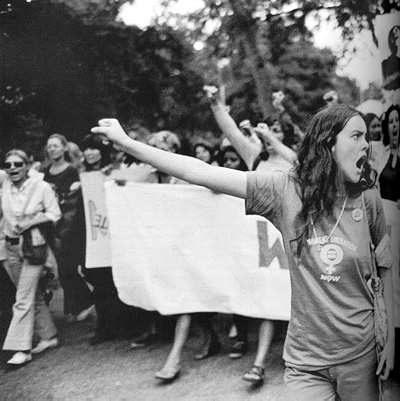
I feel like this is a conversation that I’ve been having for most of my adult life. For someone who came of age in the 90s and early 2000s, it can be hard to explain to other people why feminism is still necessary. Many of our bigger, more obvious goals – voting rights for women, the ability to own land, equal education for girls, and more control over our own reproductive systems – have, in the western world, largely been achieved. The landscape of third-wave feminism, which began in the early 90s and continues today, is often confusing and tricky to navigate. Some third-wavers question whether “feminism”, a term that might be limiting and can seem as if it’s promoting oppressive gender roles, should even be used. On top of that, it often feels like the current incarnation of the feminist movement has devolved into petty bickering about whether or not mothers should stay at home, or how a “real” woman is supposed to give birth.

So why even call yourself a feminist anymore?

I know a lot of women – smart, strong, progressive women, women that previously self-identified as feminists – who no longer use that label. People want to distance themselves from the negative connotations that surround the term “feminism”, or else they don’t want to seem as if they’re only interested in women’s rights. I can’t tell you how many times people have told me that they’d prefer to be called a “humanist” instead; in fact, this past weekend, a good friend said wistfully to me, “I wish society was at a place where I could call myself an equalist instead of a feminist, but I guess we’re not there yet, huh?”

On the surface, these arguments seem to make sense. I mean, you catch more flies with honey, etc. If using different terminology means that more people are willing to work towards equality, then that must be a good thing, right? I mean, let’s be honest – the term feminist conjures up images of angry women burning their bras, or intimidating women stomping around in army boots telling men what’s what. Feminism is often equated with hating men, or with the idea that women are the superiorsex. In contemporary mythology, stereotypical feminists only make up for their lack of a sense of humour with their surfeit of untamed body hair.

Here’s the thing, though: calling yourself an “equalist” slides you right back into all those traditional gender roles that society wants you to be in. Being an “equalist” ensures that you won’t intimidate anybody, that people won’t see you as someone who goes against the grain. It turns you into a smiling, apologetic woman who says things like, “but I just want everyone to have equality – men and women.” It makes you totally non-offensive, and as such, takes away a lot of your power. Women who describe themselves as equalists strike me as people who are afraid of conflict and who, above all, want to be liked; men who call themselves that strike me as people who want to deny all the challenges that women still face.

When we talk about equality, in a lot of cases men are already hold the standard that women are trying to achieve. It was only last year that women working for Canada Post won the right to equal pay – and this, by the way, stemmed from a case that was filed in 1983. The New York Times recently reported that a a heavy and persistent bias against women still exists in the scientific community; most troublingly, this bias is upheld and perpetuated by just as many women as men, which goes to show you how deeply misogyny is ingrained in our culture. Women still have to be afraid when walking alone at night; hell, we have to be afraid when out at a bar with a friend, or out on a date, or in almost any situation when we encounter a man alone. We live in a culture where women have to fear for our safety in ways that I don’t think men will ever understand.

And, of course, our reproductive rights are always, always in jeopardy.

All of that is only the stuff that’s happening here at home – what about the challenges facing women in other parts of the world? Countries where women have to fight for the right to drive, or work outside the home, or walk around in public with their hair uncovered? Countries where terrorist organizations shoot little girls in the head just because they want to go to school? There are places where just being a woman is treated as if it’s a crime.

This isn’t to say that there are no issues facing men – to the contrary, gender stereotyping certainly affects men as well as women. But when we start talking about equality for men, it often comes to dominate the conversation, derailing any attempts to discuss the ongoing inequalities faced by women. We need our own space to talk about what’s happening to women today; we need our own conversation about issues that are unique to us. We need feminism.

Look, I’ll be honest: I wish we lived in a world where just talking about concepts like equality meant promoting the rights of women everywhere. I wish that we didn’t have to use labels like feminist or pro-choice; I wish that we could just trust people to be sensible human beings and look out for each other. We don’t live in that world, though. Not even close. In spite of the progress we’ve seen over the last few generations, the feminist movement still has a long way to go before it achieves its goals.

Maybe someday we will live in a world where half the world’s the population doesn’t have to suffer simply because they’re women – I mean, I guess anything’s possible, right? That’s what we’re fighting for, right? Until that time, though, I plan on being an intimidating, humourless (though admittedly body-hair-free) feminist.

On Childbirth And Bodily Autonomy

29 Oct

A friend of mine recently gave birth. She’d planned on have a natural, drug-free childbirth, but instead wound up having an emergency c-section. After 30 hours of labour, her son’s head still wouldn’t (or couldn’t) engage, and his heart rate started to plummet frighteningly low. After a few minutes of discussing their options with her midwife and the on-call OB, they decided that a caesarean was her best option.

Her son was born not long after that, a whopping 9 pounds 5 ounces, with a full head of dark hair. He was beautiful and healthy, but instead of feeling as if she’d made a decision that could potentially have saved his life, she felt as though it had been her fault that she’d had to have a c-section. She thought that if she’d just somehow tried harder, or prepared better, she could have had the birth she’d wanted.

I talked to her a few days after her son’s birth, and, of course, asked how she was feeling. “I feel like I failed,” she said, sounding as if she was about to cry. “My son is only a few days old and I’ve already failed him.”

I knew what she meant, because I’d been there. When I’d found out that I would have to have a caesarean, I also, irrationally, had felt as if it was my fault, as if I was already failing my son. I still feel weird about my son’s birth, even now, nearly two years later, or rather I feel like other people are weird about it. I can’t tell you how many times I’ve had someone ask about my childbirth experience, only to shut down the whole conversation when I tell them I had a planned c-section. I often get the sense that other people think that I haven’t really given birth, or that I’ve taken the easy way out.

If you don’t have kids and/or haven’t spent a billion hours on the internet debating all things baby, you might be wondering why natural childbirth is such a big deal. Why does anyone even care?

For starters, giving birth without drugs or interventions means that you and your child will not have to experience the side effects of sedation or the potential harm from invasive procedures. Babies born naturally are more alert, which will make bonding and breastfeeding easier. Plus, not having an epidural means that you can get up and walk around during labour, or find the position that works best for you when it’s time to push. Without drugs, the mother’s recovery will be faster, and she can often leave the hospital the same day, if she wants to. And, of course, there’s the persistent idea that childbirth is more of a “real” experience if you are able to feel every sensation associated with it.

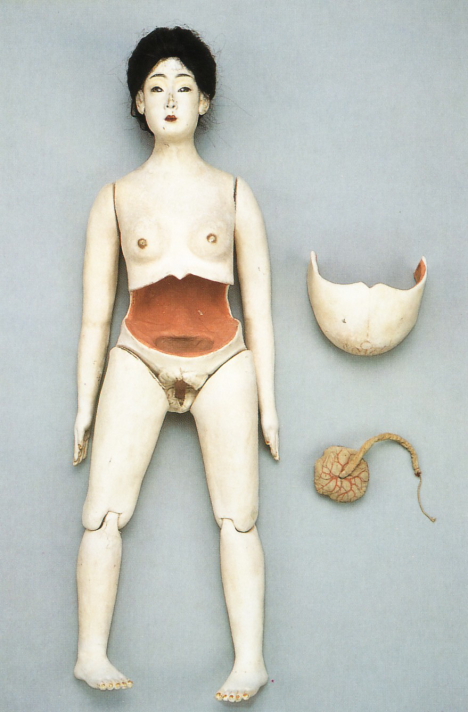
Many people advocate for natural births these days; even the nurse who taught our prenatal class was pretty anti-epidural. Part of this comes as a backlash against the medical model of childbirth, which, not that long ago, saw women in labour being put into a Twilight Sleep, a drug-induced state in which women were conscious but not lucid, and, though these women still experienced pain, were not able to remember it afterwards. In many ways, natural childbirth is an attempt to reassert control over our own bodies; to tell the doctors (most of whom were and are still men) that pregnancy is not a disease, and should not be pathologized. Another part of  the desire for drug-free childbirth comes from the assumption that “natural” is better, or from the idea that our bodies are designed to give birth without the aid of drugs or interventions.

Unfortunately, it’s hard to have a natural birth, and I don’t just mean the physical pain and exertion associated with drug-free childbirth. Hospitals make many people anxious, and trying to give birth while surrounded by beeping machines and scary-looking medical equipment is challenging, to put it mildly. On top of that, you have a regular rotation of people coming in and out of your room, wanting to check how far you’ve dilated, what your heart rate is, what the baby’s heart rate is, and a whole laundry list of other stuff. So giving birth in a hospital setting isn’t exactly conducive to that whole Mother Earth Goddess ideal that many of us hold.

So why not give birth at home? Good question. The answers range from being worried about not making it to the hospital in time if there are complications to not want to have to be bothered cleaning up the mess afterwards, and everything in between. One response that I hear very frequently form Ontario women is that they weren’t able to find a midwife; this was my experience as well.

When I had my first prenatal visit with my family doctor, I was eight weeks pregnant. She asked if I’d thought about how I wanted to give birth, and I told her that I wanted a midwife rather than an OB. She looked at me like I was crazy, and said that there was no way I would be able to find a midwife this far into my pregnancy. But I’m only eight weeks! I said. Technically I’ve only been pregnant for six weeks, if you take into account the fact that the first two weeks of  a 40 week pregnancy happen before a woman ovulates.

My doctor just shrugged and said that there weren’t enough midwives in Ontario, then asked what hospital I wanted to deliver at. When I told her, she frowned and said, Oh, I don’t know if we’ll be able to get you into Mount Sinai this far into your pregnancy. I honestly thought that she was exaggerating, but it took three referrals before we were able to find an OB at Mount Sinai who was still taking patients for my due date.

That was how I learned how insanely competitive giving birth is in Toronto.

There are 540 registered midwives in Ontario, serving a total population of 12,851,821. 1 in 10 births in this province are attended by midwives; 4 out of 10 pregnant women in Ontario would like a midwife but can’t get one. That obviously makes having a midwife-assisted birth in general, and a home birth in particular, pretty challenging. Which, as I said above, can make having a natural birth difficult or even impossible.

That being said, you would think that the natural birth community would be pretty understanding of the fact that most women still end up using the medical model of childbirth. While I would say that the majority of us are pretty chill no matter how your kid comes into the world, there seem to be a lot of people passing judgment on how women give birth.

It’s bad enough that some proponents of natural childbirth make women feel as if they’ve “failed” if they end up having unplanned interventions, but that’s nothing compared to their treatment of women who know ahead of time that they want an epidural, or those who choose to have a planned c-section. The funny thing is that these are often the same women who are very pro-choice and will throw around the phrase “my body, my choice”.

Well, is it our choice, or isn’t it?

It’s different, they’ll argue, when there’s a wanted child involved. It’s not your body anymore. You need to act in the child’s best interests. They’ll send you scary news articles, like this one, which references a study showing that children born before 37 weeks are 5 times as likely to have autism. That particular article is one that someone sent me when they found out I was going to have a planned c-section at 36 weeks; when I told her that the article had upset me, she said that she wasn’t trying to be mean, just giving me the “facts”.

Here are the facts: if I had had a natural childbirth, my son could have died. If my pregnancy had progressed past 36 weeks, my doctor felt that there was a good chance that my water would break, which could have lead to an umbilical cord prolapse, which would have meant death or brain damage to my son.

The thing is, no matter whether or not you are carrying a child, it’s still your body. You still have bodily autonomy. I’m not saying pregnant women should go out and do lines of coke chased by vodka shots, but I do think that we need to allow women to make choices regarding childbirth without judging them.

The argument that I hear most from people decrying women who choose the medical model of childbirth is that they’re selfish. They want an epidural because it’s easier for them. They want a c-section because they don’t want to have to go through labour. They’re planning to be induced at 39 weeks because they want to skip out on the last week of pregnancy. If these are thoughts that you enjoy thinking, here’s something I really, really want you to keep in mind: you do not know the whole story.

You don’t know why someone wants an epidural, I mean, not really. You don’t know why they might want a c-section. Sure, they might give you a reason, but what they tell you may not necessarily be the whole truth. They might have a medical condition that indicates a c-section, or they might be a survivor of sexual abuse and feel triggered by the idea of a vaginal birth. Or they might just not want to have a natural birth, and that’s okay too. Know why? Because bodily autonomy, that’s why.

The thing that frustrates me the most about this judgmental behaviour is how purely anti-woman it is. It stems from the idea that most women aren’t capable of making decisions regarding how they want to give birth. It assumes that a woman who chooses to have a planned c-section hasn’t done her research, has been brainwashed by the medical establishment, or is uneducated when it comes to birth options. It plays into the idea that women are irrational, thoughtless and downright selfish. It promotes the idea that, being left to our own devices, we will make choices that are harmful to us and our children.

These are the same ideas that lead to the body policing that many pregnant women have to endure. We’re told to eat more, but not gain too much weight. We’re cautioned not to exercise too hard, but also to stay fit and healthy. We have people watching every bite we eat, and I even know someone who was denied service at Starbucks because the barista didn’t think that she should have caffeine. When are we going to let women be responsible for their own bodies?

Look, I’m all for natural childbirth. That was what I wanted when I was pregnant with Theo, and if I ever have another child, I would like to try for an unmedicated VBAC. But that’s my choice, based on research that I’ve done and what I’ve heard from friends. If another woman makes a different choice, then I’m sure as hell not going to tell her she’s wrong. Your child’s birth is one of the most important days in your life (I mean, probably, right?), so why would you want to make someone feel bad about how theirs went down? Shouldn’t we be celebrating the fact that we all went through hell, in one way or another, to bring our children into this world?

I think a big part of the problem is that we still haven’t really figured this childbirth stuff out. We still don’t know what works best for us, both as individuals and as a society. The medical model of childbirth has seen the infant mortality rate decline 90% in the last hundred years, and the maternal mortality rate has declined by 99% in that time. On the other hand, within that medical model women still feel as if they are being bullied into interventions and procedures that they don’t want, and often come out of childbirth feeling as if they were coerced into accepting “help” that they felt they didn’t need.

I don’t know what the answer is, I really don’t. More midwives, for a start. Better education about birth options and the possible complications of interventions would also be good. Above all, though, I think we need to put more trust in women. I think we need to allow women to make more of their own choices, and we need to believe that they are capable of making the right choices, not just for themselves, but for their children.

How To Have A Good C-Section (or, how I learned to stop worrying and love major surgery)

26 Oct

I woke up the morning of January 8th, 2011, and lay in bed, waiting for Theo to kick me good morning. I was 34 weeks pregnant, and this was our wake-up ritual: he would wriggle around like a maniac, and I would spend a few minutes lying on my side, rubbing the outline of his body and telling him what we were going to do that day. Sometimes he would stick his feet in my ribs, and I would tickle his toes. Sometimes he would take a big stretch and I would try to map out how he was sitting inside of me.

That morning, though, I didn’t feel anything.

No big deal, I figured; he was probably asleep. Surely it wouldn’t be long before he was awake and kicking up a storm.

I had a bagel and coffee for breakfast and then lay on the couch with Matt, waiting for the caffeine to pass through the placenta and jolt Theo awake. We were watching a movie, but I couldn’t concentrate on it; all I could think about was the absence of movement inside of me.

I tried everything I could think of to get Theo to move – I drank ice water and lay on my side, poked and prodded him until I worried that I might be bruising my baby in utero, had Matt put his mouth up against my belly and talk to his son. Nothing worked.

We decided that we should go to the hospital.

When we got to the labour and delivery ward, I had to sit and wait for a bed to become available. Then we discovered that I hadn’t properly registered, so Matt had to go back down and re-do the paperwork. I was becoming increasingly anxious, and I was frustrated that the nurses didn’t seem to share my sense of urgency. Finally, they got me into an examining room and asked me where my OB usually found the baby’s heartbeat. I said it was loudest on the left side of my belly, so they put the doppler there.

Silence.

I started to cry. Matt tried to say something to calm me down, but he had tears in his eyes, too. The nurse frowned and moved the doppler around while the continuing silence made me sob harder and harder. This must have only gone on for a few seconds, but it seemed like hours. I was sure that Theo was dead; I pictured having to call my mom to tell her that her grandchild wouldn’t be born alive. I pictured myself having to be induced and delivering a cold, white baby.

Finally, way over on my right side, the nurse found a faint but steady heartbeat. The nurse smiled and said that she’d known all along that he was fine. I still couldn’t stop crying.

The nurse brought in a portable ultrasound machine, since I still wasn’t feeling Theo move. As she moved the probe over my belly, she asked me if I knew that he was breech. No, he’s not, I said, he’s been head down since 26 weeks. In fact, I had seen my OB three days earlier, and he had confirmed that the baby was head down. Not anymore he’s not, said the nurse.

They brought in the on-call doctor who confirmed that no only was Theo breech, he was footling breech, one of the rarest fetal positions and the most dangerous to the baby. On top of that, his umbilical cord was hanging down by his feet, which meant that, if my water were to break, he would be at high risk for a cord prolapse.

They hooked me up to a contraction monitor and told me that I was having strong contractions (none of which I could feel, by the way). They checked my cervix and I was 2 cm dilated and 100% effaced. Not a big deal, they said – some women dilate early. Two hours later I was 5 cm dilated.

At 34 weeks pregnant, I was in labour with a baby who wanted to meet the world feet first.

They wanted to do a caesarean that night. They would have, too, except that two emergency c-sections came in, tying up all the operating rooms. While we waited for an OR to open up, I sat in my bed and tried to use Jedi mind-tricks to stop my labour. Think calm thoughts, I told myself. I stared at the printout on the contraction monitor and willed the jagged lines to smooth themselves out. I stared at my belly and willed Theo to stay put.

Whatever I did must have worked, because by the time they checked my cervix again, I was still 5 cm dilated. My contractions continued, but were definitely less frequent than before. I made a deal with the on-call OB – if they would agree to delay my c-section, I would stay on bed rest in the hospital until I was full-term and/or my cervix started dilating again. She wasn’t thrilled with the idea, but she agreed to admit me for the night and check with my doctor. Luckily, he was a super cool dude, and when he came to see me on Monday morning he said he thought I’d made a good suggestion, and was totally fine with me hanging around the hospital until whenever.

This gave me some time to figure out what I was going to do. Up until this point, I’d planned on having a natural birth; I’d read books like Ina May Gaskin’s Guide to Childbirth , Martha Sears’ Birth Book and Henci Goer’s The Thinking Woman’s Guide To A Better Birth. I’d looked forward to giving birth, imagining that I would have some kind of mystical earth goddess experience; I’d been weirdly excited to know what real contractions felt like. I’d spent months participating in online pregnancy forums, decrying the medicalization of childbirth and the deplorable c-section rate in the western world. I hadn’t even read anything about c-sections, because there was no way that I was going to have one.

Except now I was.

I started to look for online resources for moms who were having caesareans but still wanted the whole touchy-feely earth goddess experience. I discovered, to my chagrin, that there weren’t many. Most people seem to think that a good birth and c-sections are diametrically opposed. Many people in the natural birth community are very, very anti-caesarean (one woman even went so far as to send me a video of a midwife delivering a footling breech birth, like, hey, thanks for your support), and many of those who support the medical model of childbirth tend to see birth as something that you just endure and get through, rather than a positive experience. I think that it’s totally possible to have a c-section and still have a good birth.

I’ve put together a list of things that worked well for us and resources that I found helpful:

If You Are Having A Planned Caesarean:

1. Educate yourself. This one is huge. Read as much as you can about c-sections, both about the procedure itself and what recovery will be like. Talk to other women who have had c-sections, and ask your OB for a run-down of how the procedure typically happens at your hospital. It’s also a good idea to read about the possible emotional effects of a c-section.

2. If you plan on breastfeeding, consider contacting a lactation consultant (the nice thing about being in the hospital was that the lactation consultant came to me), or else join the La Leche League and talk to women who have had similar experiences. Find out what kind of resources your hospital offers breastfeeding mothers – for example, mine held a breastfeeding class twice a day and had a lactation clinic. Make sure you get yourself a nursing pillow, because I promise you that you will be SO THANKFUL for it. Also,there are some good resources online here and here and here.

3. If you plan on breastfeeding, do so as soon as possible after surgery. I was able to breastfeed in the recovery room, less than half an hour after my son’s birth.

4. Make a birth plan of what you would ideally like to happen. You can ask for things like playing your own music during the surgery, doing skin-to-skin in the OR, and delaying (or even forgoing) the application of the eye gel. Remember that it doesn’t have to be the mother who does skin-to-skin – your partner also has some important bonding to do.

5. Eat really well at your last meal before your surgery (this will typically be 8 hours earlier). Make sure you get a lot of protein and that whatever you have is really filling, because they won’t let you eat afterwards until you fart (not kidding).

6. If you are having a c-section because your baby is breech, consider trying an external cephalic version. I wasn’t able to do this because I continued having contractions right up until my c-section (and we discovered during my surgery that I have a heart-shaped uterus, so it wouldn’t have worked anyway), but it’s definitely worth trying.

If You Are Planning On Having A Vaginal Birth

1. Educate yourself about c-sections anyway! It won’t hurt, and you’ll be prepared in case you do need one.

2. Include a “Caesarean Contingency Plan” as part of your birth plan. Sure, chances are that you won’t have a c-section, but if something goes wrong, it’ll probably go wrong pretty quickly, which means that it would be better to have what you want written out ahead of time.

3. Make sure that your partner is clear on what you want if you need a c-section – in the craziness of the OR, you’re going to need them as an advocate more than ever.

For Everyone

1. Allow yourself the time to mourn the birth you didn’t have. Some women feel that they’ve “failed” if they end up having a c-section; some feel that they haven’t really given birth. Talk about your feelings with your partner, and remind yourself that your experience was just as important and valid as anyone who had a vaginal birth.

2. Keep in mind that women who have c-sections are at a higher risk for postpartum depression. Make sure to watch yourself carefully for any of the signs and talk to a healthcare professional immediately if you think you might be showing some of the symptoms.

3. Take all of your medication on time. Trust me, you will feel way worse if you delay or skip a dose. The vast majority of medications are safe for breastfeeding; if you’re not sure, ask your doctor, nurse, pharmacist or La Leche League leader.

4. Hold a pillow against your incision whenever you cough, sneeze or laugh. I don’t know why, but this helps.

5. Take a shower as soon as you are feeling up to it. It will be the best shower of your whole life.

6. Accept help. If you have someone willing to do everything for you, let them.

Theo’s birth wasn’t what I had planned for, and it wasn’t the birth I would have chosen, but it was still good. I sometimes think that this was my first real lesson in parenting: the idea that not everything would happen on my own terms, that there would be times when I was not in control of the situation, but could still try to make the best of things.

So no, Theo’s birth wasn’t ideal, but I do think that it was the best birth that it could have been. And I’m thankful for that.

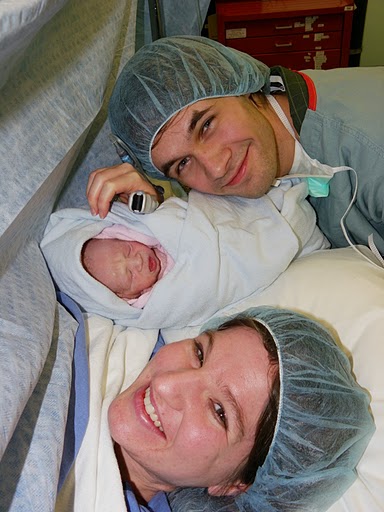
If you follow the simple steps that I have outlined above, then you, too, can look this happy while having a giant gash cut in their abdomen.

If you have any other suggestions, please feel free to add them in the comments!

Frida

22 Oct

On Friday night, Matt and I went on a For Real Date to see the Frida & Diego exhibit at the Art Gallery of Ontario. Frida Kahlo is probably my all-time favourite painter; I have literally been counting down the days until this show opened.

I have friends who know a lot more about galleries and exhibiting art than I do. They make intelligent remarks like, I wasn’t thrilled with how this collection was curated, or, I thought the lighting in the third room really brought an interesting tone to the whole show. I hope you’re not here to read anything like that, because I honestly know very little about how galleries should or shouldn’t display art. On top of that, I’ve been waiting at least ten years to see Frida’s works in person, so the AGO could probably have held the show in a dank basement room lit by a single 60-watt bulb and I would still have been thrilled.

The Frida & Diego exhibit is an assortment of Kahlo and Rivera’s works, often juxtaposed in interesting ways. The first room is filled with paintings from Rivera’s days as an art student in Madrid and Paris; they’re neat because you can clearly see the time he spent dabbling in Realism, Cubism and Post-Impressionism. That being said, although his early paintings are clearly technically very good, for the most part they aren’t terribly interesting or different.

Three of Rivera’s earlier works

The second room is more still more Rivera, and includes a reproduction of one his most famous murals, The Arsenal, starring Frida as a communist bad-ass distributing weapons to the people.

Finally, in the third room, we begin seeing some of Kahlo’s work. I dragged Matt from painting to painting, drinking in the familiar scenes and pointing out details that I was noticing for the first time. I began to look at the dates of the paintings, trying to slot them into the narrative of her life, and in doing so  I was struck me was how young she was. I mean, I’d always known that she’d died young, but for the first time I realized that she’d been painting masterpieces when she was younger than me.

Frida was born in 1907 (although she often gave her birthdate as 1910 in order to coincide with the beginning of the Mexican Revolution), and was the third of four daughters born to Guillermo and Mathilde Kahlo. Frida’s father came from a German-Jewish background, and her mother was of Spanish and Indigenous descent; Frida was fascinated by her parents’ history, and her own mixed heritage would come to play an important part in her art. In 1927, at the age of 20, she already considered herself to be a professional painter. She married Diego Rivera in 1929.

Her seminal painting Henry Ford Hospital, which depicts a bed-ridden Kahlo shortly after a traumatic miscarriage, dates from 1932. I kept looking at it and thinking, she was only 25 when she went through that. She was only 25 when she painted that.

Henry Ford Hospital, 1932

Kahlo’s 1932 miscarriage (which was the second of three that she suffered) was by no means the first time she’d experienced pain or hardship in her life. At the age of six she was stricken with polio and, although she made a near-full recovery, for the rest of life her left leg remained smaller and weaker than the right. Then, at the age of 18,  she was riding a bus that collided with a tram car. She suffered massive injuries, including three breaks in her spinal column, a shattered pelvis and multiple other broken bones. She was also skewered by a steel handrail, which pierced her abdomen and came out her vagina. She later told her family that the handrail took her virginity (totally untrue, by the way).

Her boyfriend at the time, Alejandro Arias, described the scene of accident to Kahlo biographer Hayden Herrera in gory but also hauntingly beautiful terms:

Something strange had happened. Frida was totally nude. The collision had unfastened her clothes. Someone on the bus, probably a house painter, had been carrying a packet of powdered gold. This package broke, and the gold fell all over the bleeding body of Frida. When people saw her they cried, ‘La bailarina, la bailarina!‘ With the gold on her red, bloody body, they thought she was a dancer.” – Hayden Herrera, Frida: A Biography of Frida Kahlo

Frida suffered from the effects of that accident for the rest of her life. She underwent 35 separate surgeries in an attempt to repair the damage. The handrail had gone through her uterus, leaving her unable to carry a baby to term; this was especially heartbreaking, as Frida wanted almost more than anything to have a child with Diego.

Part of the reason that Kahlo wanted to have Rivera’s child is that she thought it would bind them together in a way that marriage on its own couldn’t. Diego was a known womanizer, and continued to sleep with other women even after he married Frida. Deeply hurt by Diego’s infidelity, as well as her own inability to carry a child (which would have been Rivera’s fifth, as he had four others by past wives and mistresses), Frida began to have her own affairs with both men and women. Throughout the rest of her life Frida had dozens of lovers, including, purportedly, Josephine Baker and Leon Trotsky.

The fact that both Frida and Diego had numerous love affairs over the course of their marriage (which lasted from 1929 until 1939, then resumed in 1940 and lasted until Frida’s death in 1954), and the fact that both of them slept with women, makes the AGO’s juxtaposition of the two portraits of Natasha Gelman, one each by Kahlo and Rivera, all the more interesting.

Kahlo’s portrait of Gelman, 1943

Rivera’s portrait of Gelman, 1943

In Kahlo’s portrait, Gelman is unsmiling, even stern, while Rivera’s version of Gelman is languorous and sensual, a small smile playing on her lips. Kahlo’s Gelman seems matriarchal, perhaps even a bit masculine, with a square jaw and intently serious gaze. Rivera’s Gelman, on the other hand, takes on a more traditionally feminine appearance, both in the softness of her face and the curve of her hip and leg. Simply put, Kahlo’s version of Gelman looks like a fucking awesome boss lady, and Rivera’s looks like someone he would want to sleep with.

I’m no expert, but I feel like these two pictures say a lot about how Kahlo and Rivera view women, both in general and as prospective partners.

It was also fascinating to see a selection of works by Kahlo that were inspired by her miscarriages hung alongside a series of paintings by Rivera depicting mothers of young children. I can’t imagine how heartbreakingly difficult it must have been for Frida to know that Diego had children with other women; how at times she must have felt inferior and defective because she could bring another “Little Diego” into the world.

Frida Kahlo – Frida Y El Aborto

Diego Rivera – Maternidad

One of my favourite parts of the exhibit was the room that contained media by other people of Frida and Diego. There were photographs on the walls, and a black and white video of the couple was playing on the large screen. Of all the photographs that were included in this show, my favourites by far were those taken by Nickolas Muray, Frida’s former-lover-turned-good-friend.

Nickolas Muray – Frida In The Dining Area Coyoacan With Cigarette

Nickolas Muray – Frida Kahlo on White Bench

In many of Muray’s pictures, Frida is looking straight into the camera. Her gaze is intimate, disarming; her eyes bore into you, and it seems like she’s just about to speak. In some of the pictures, her mouth is quirked into a half-smile, as if she and the viewer share some kind of inside joke. No one else really understands, her expression tells you, no one but you and I, that is. You feel complicit in something, but you’re not sure what.

The video was just as wonderfully intimate as Muray’s photographs. In it, Frida and Diego are shown at home, in the courtyard of Casa Azul. In their every movement, their every look and touch, their tenderness for each other is evident. At one point Frida reaches out to take Diego’s hand and place it on her cheek; her expression when she feels his palm against her face is like that of a cat sleeping in a puddle of sunlight.

On the whole, the show is wonderful. My only issue with it (aside from the fact that several of my favourite Kahlo pieces are missing) is the subtitle, Passion, Politics and Painting. The advertising done for the show, which includes the slogan, “He painted for the people. She painted to survive.” makes it seem as though the politics were all Diego’s and the passion all Frida’s. Even within the exhibit, there is much attention given to Diego’s political activities, and only a few brief mentions of Frida’s membership in Mexico’s communist party.

To say that Frida wasn’t political is a mistake; she was deeply political, and on a very personal level. The way she dressed was political, as was the way she behaved, not to mention her art. In a time when the Western culture and its concept of beauty was beginning to take over Mexico’s cultural landscape, Frida, in many ways, turned her back on it and embraced her Mexican of her heritage. She traded the European clothing of her childhood for traditional Spanish and Indigenous garb. She refused to alter her unibrow, and, in fact, accentuated it and her mustache in her self-portraits. She was known to be unfaithful to her (equally if not moreso unfaithful) husband, and took women as lovers. Perhaps most importantly, she painted and talked about things that no one had ever publicly discussed before: things like miscarriage, infertility, sexuality, violence against women and infidelity.

In many ways, she started conversations that we’re still having today.

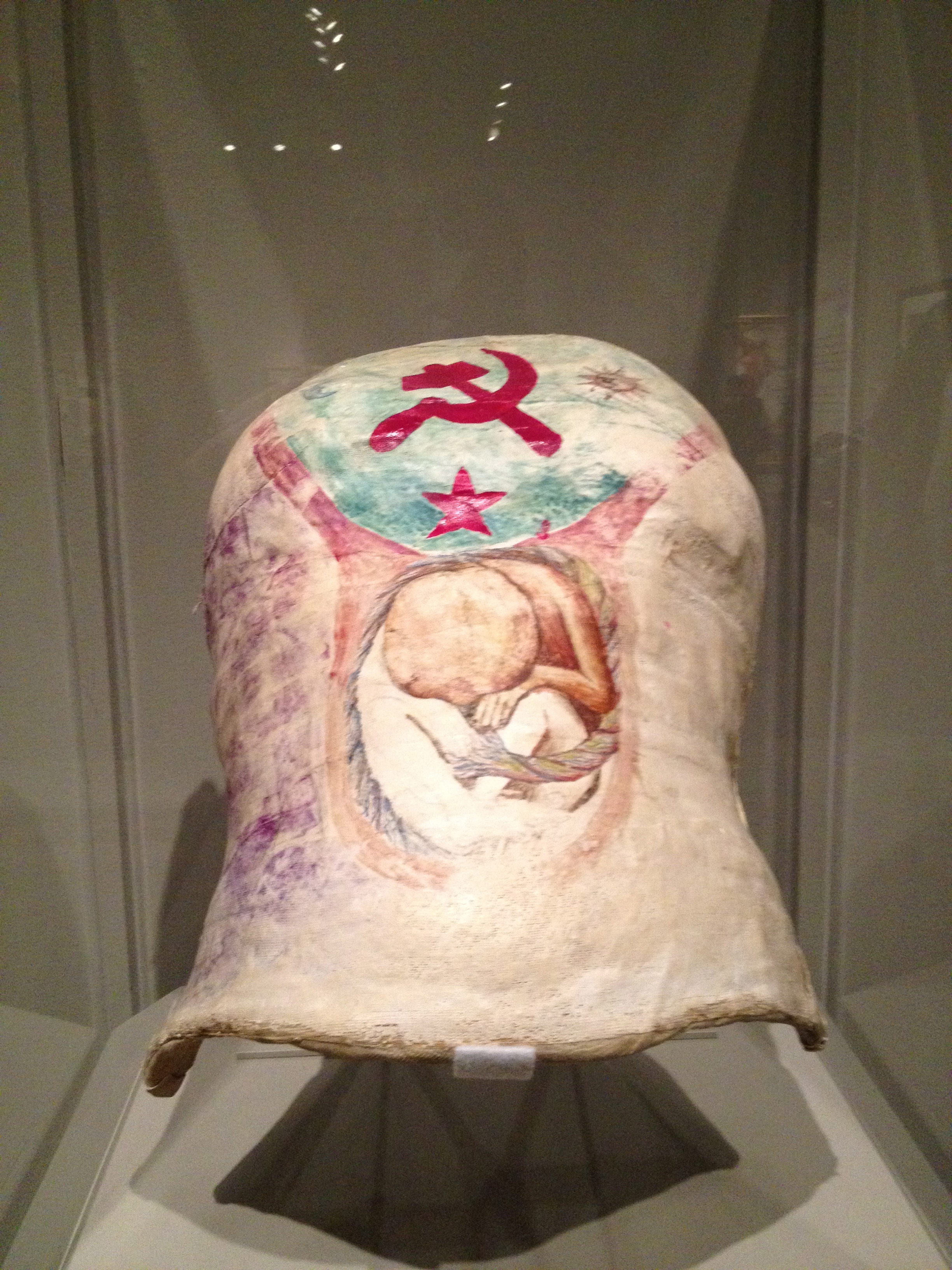
Plus, how can you think someone is not political when they paint this on their own body cast?

Kahlo’s Body Cast with Hammer & Sickle and Fetus

I wish I could explain to you how and why I love Frida so much. I keep starting sentences and then deleting them; all the words I pick seem fumbling and wrong, the emotion either overwrought and clumsy or woefully lacking. Even the things that I’ve already written here seem stilted and lifeless, which is the opposite of what writing about Kahlo’s life should be.

I guess that the best thing that I could say would be this: Frida had a really hard fucking life, but instead of backing down, she took all of her pain and heartache and turned it into something beautiful. She lived and she worked and she loved and she challenged and she pushed and in the end, I think, she won.

***

Frida died of a pulmonary embolism in 1954, at the age of 47. I mean, 47. Fuck. She was so heartbreakingly young. Shortly before her death, she wrote the following in her diary:

I hope the exit is joyful — and I hope never to return — Frida”

I hope that wherever you are now, Frida, you are joyful. I hope that you’re finally free from pain. Most of all, I hope that Diego is there with you.*

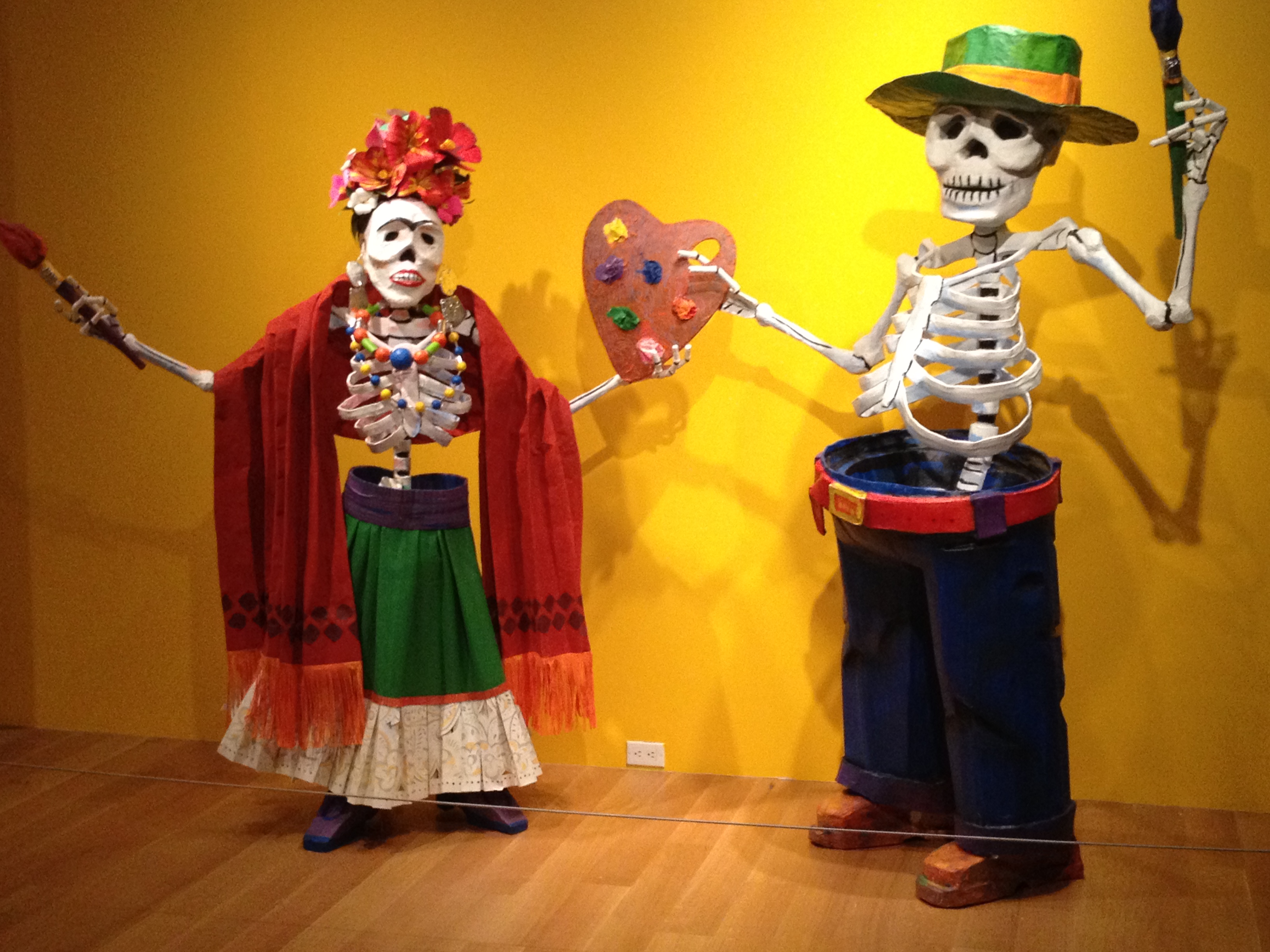
Frida and Diego ofrendas

The exhibit closes with a pair of ofrenda depicting Frida and Diego. An ofrenda is a type of Mexican home altar, most often built for el Dia de los Muertos (The Day of the Dead). An ofrenda typically represents a dead family member, and is honoured by the living with traditional offerings of food and flowers. On October 24th, Mexican artist Carlomagno Pedro Martinez will construct an ofrenda in the gallery space; visitors on that day will be given art supplies and encouraged to contribute drawings and words to Martinez’s work. The installation (along with the entire exhibit) will be on display until January 20th, 2013.

*And that he’s, like, hanging out with you and not busy macking on angels or whatever (I am JUST SAYING, okay?)

p.s. In case you weren’t sure how I felt about Frida Kahlo in general, and this exhibit in particular, here is a visual aid for you:

Rape Culture (or, Roman Polanski, I can’t even)

11 Oct

There are few things in life that make as incredibly, blindly, need-to-punch-a-wall-right-now angry as Roman Polanski. Any mention of him makes my blood boil; even just having someone tell me about one of his movies leads to me shouting obscenities for a significant length of time. So imagine how I felt when I saw the following headline on Yahoo News:

Former teen who had sex with Polanski writing book

The article then goes on to say that,

Polanski … fled the country in 1978 on the eve of being sentenced for unlawful sexual intercourse with Geimer, 13 at the time

Let me just sit here a moment while your head explodes a little.

Let’s get a few things straight: Roman Polanski did not have “unlawful sexual intercourse” with a 13 year old girl – he raped her. The victim, Samantha Geimer, testified that the sex was not consensual; in fact, according to her testimony, she explicitly told him no. And you know what? Even if she hadn’t told him no, it would still have been rape. Even if Polanski hadn’t given her alcohol it would have been rape; even if he hadn’t drugged her it would have been rape; even if  she had said yes it would have been rape.

Know why? Because she, a vulnerable 13 year old girl faced with a millionaire film director in his 40s, was subject to an extreme imbalance of power. As Geimer said in her testimony,

We were alone and I didn’t know what else would happen if I made a scene. So I was just scared, and after giving some resistance, I figured well, I guess I’ll get to come home after this

She didn’t fucking know what else would happen if she made a scene. Here was a girl, who had been given champagne and qaaludes, who was faced with unwanted sexual advances from a man more than three times her age, a man who wouldn’t take no for an answer. She was afraid for her life.

What Polanski did was rape. I don’t care that he was later offered a plea bargain (because Geimer’s lawyer did not want her to have to endure a trial) that lessened his charges from rape by use of drugs, perversion, sodomy, lewd and lascivious act upon a child under 14, and furnishing a controlled substance to a minor to the much shorter and nicer-sounding unlawful sexual intercourse. I don’t care that the only thing Polanski plead guilty to was said charge of unlawful sexual intercourse. I just don’t care.

Let’s be really clear on one thing here:

Roman Polanski drugged and raped a 13 year old girl.

Roman Polanski raped a 13 year old, plead guilty to “unlawful sexual intercourse” and, when he realized that he was facing jail time, fled the country. He continued to make movies, continued to receive the financial backing and participation of major studios and A-list movie stars, married a woman 33 years his junior, and had two children. He has suffered basically zero consequences because of what he did.

This is what rape culture looks like.

Rape culture means that we refer to children who were raped by celebrities as “former teens” (what the fuck does that even mean?), and use terms like “unlawful sexual intercourse” instead of “rape” when describing what happened to them.

Rape culture means that Johnny Depp, Adrien Brody, Ewan McGregor, Pierce Brosnan, Kim Catrall, Jodie Foster, Kate Winslet, Helen Bonham Carter Walter Matthau, Harrison Ford, Kristin Scott Thomas, Sigourney Weaver and Ben Kingsley are, by appearing in and promoting Polanski’s films, all tacitly saying that they are just fine with the fact that he raped a 13 year old girl.

Rape culture means that a lengthy list of celebrities, many of whom I used to admire, have publicly defended Polanski.

Rape culture means that Whoopi Goldberg has gone on record saying that what happened wasn’t rape rape.

Rape culture means that so many people are willing to ignore what Polanski did because they just want to sit back and enjoy his movies without having to feel guilty.

Rape culture means that a young girl’s life was destroyed, while her rapist went on to win Oscars for his movies.

Rape culture means that we live in a world where celebrities, the media, and even our friends and family normalize, excuse and condone rape to the point where a rapist can continue to live a happy, normal life with very limited consequences.

Look, I’m not normally the type of person who can’t dissociate an artist from their art; I still love Picasso, even though he treated women terribly. Ditto for Ernest Hemingway. Truman Capote was pretty awful, especially to my girl Harper Lee, but I can still read Breakfast At Tiffany’s and love every word of it. I recognize that the art and beauty a person creates are separate from who they are.

But I will never, ever see a Polanski film. I will not in any way, shape, or form give my tacit support for what he did.

I will not knowingly participate in rape culture.

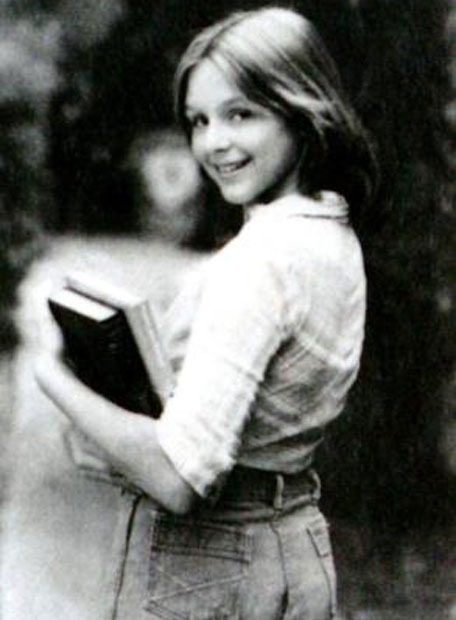
Samantha Geimer in 1977

Edited to add: A few people have brought up the 1969 murder of Polanski’s pregnant wife, Sharon Tate, and the fact that he is a Holocaust survivor.

A bit of clarification – I am aware of both those facts. I do not like the fact that people use them as an excuse for what he did. I am certain that Polanski was deeply, irreparably damaged by these events. That being said, he made a CHOICE to rape Samantha Geimer. He was conscious of his actions; he even underwent a court-ordered psychiatric evaluation after his arrest. I do not think his past can be used as an excuse or justification.