Tag Archives: women

The Incarceration of Avery Edison

11 Feb

Here in Canada, we tend to think of ourselves as claiming a sort of moral high ground when it comes to social justice issues. We think of ourselves as liberated, fair, and anti-oppression; we look down on other countries for their medieval legislature, patting ourselves on the back for being so good, so forward-thinking, so tolerant. And then, every once in a while, an event occurs that proves just how awful and backwards we really are.

On Monday morning, 25 year old British comedian Avery Edison tried to enter Canada through Toronto’s Pearson International Airport, hoping to visit her partner and pick up a few of the possessions she had left behind after moving home to England. Knowing that she had previously overstayed her student visa, she travelled on a non-refundable return ticket and brought with her a copy of her London lease – unfortunately, this was not good enough. She was denied entry and detained by Canadian immigration officials, a fact which she admitted was her own fault:

It was while she was being interviewed by an Immigrations Canada officer that things started to go from being unfortunately inconvenient to nightmarish. Edison, who is trans* and whose passport lists her gender as female, noticed that the officer kept switching between masculine and feminine pronouns when discussing her over the phone. She then overheard him say that he had “one male for pickup” [emphasis my own]. She was told that she would be placed in a solitary cell due to her status as a pre-operative male-to-female, a fact that didn’t exactly thrill her but which she found unsurprising.

She asked if she could go home to England, but was told that was not a possibility.

She then had to submit to an examination by a nurse to determine where she would be sent. It was decided that because of her male genitalia, she would have to go to Maplehurst Correctional Complex, an all-male facility. This, in spite of the fact that her passport lists her as female. This, in spite of the fact that there is a trans* unit at the nearby Vanier Centre for Women. This, in spite of the fact of the high rate of violence against trans* folks in the general population, let alone the prison population.

Fuck.

And this is where I lose it. I mean, really lose it. I lose everything – my mind, my temper, my faith in humanity. What the fuck kind of government do we have in this country? How can a so-called progressive population stand the fact that we still have people in charge who think that you can tell someone’s gender based on a physical examination? How can anyone, anyone think that it’s all right to put a person in such a potentially harmful, violent situation? How is this happening in Canada, in this day and age, with all of our so-called tolerant and liberal values?

Before you start to roll your eyes at all of this, before you make any proclamations that start out with, “well, of course I’m sympathetic, but -,” imagine how humiliating it would be to be constantly questioned about your professed gender, even though you have official government documentation to back you up. Imagine how horrific it would be to be asked to submit to a physical exam to have your gender, which you have already disclosed and which is written on your passport, determined. Imagine how frightening it would be to be sent to a facility where you stand a high chance of suffering physical, emotional, verbal and, of course, sexual abuse.

Now imagine if that fear was something that you lived with, on one level or another, every day of your life. You would have to live your life always walking on a knife’s edge, never sure just how much information you can relay to any given person – information that cisgender people would give out without thinking twice. You would spend your days hoping that people can view you as who you are, but are never surprised when they call you by the wrong name or the wrong pronoun. You would have to answer all of the same questions, personal, prying, awful questions, over and over and over, because people just don’t want to get it. All of this because you committed the great and horrible crime of having a gender that does not align with the genitalia you were given.

Edison is currently being held at Maplehurst, and will be there until at least Monday. Her partner, Romy Sugden, has been able to visit her, and reports that the guards have continued to misgender her. According to Sugden, one staff member, after being corrected repeatedly on Edison’s gender, said, “I don’t care, she’s a man to me.” A friend of Edison’s took a picture of this staff member in order to file a report, but was forced to delete the picture.

You would think that all of this would be illegal here in progressive Canada, but it’s not. According to the Ontario Human Rights Commission,

Transgendered people may be placed with those of the sex with which they do not identify.

Take a moment to re-read that, and really let it sink it. Transgender [not transgendered – the law doesn’t even bother to get the term right] people may be placed with those of the sex with which they do not identify. This is government-speak for we do not give a shit about your professed gender, our only interest is in punishing you whatever way possible. This is very, very fucked up.

This has to change. Action has to be taken, not just for Avery Edison’s sake, but for the sake of all trans* prisoners and detainees. The personal indignity is too high and the threat of violence is too great for us to be able to look the other way. This is something that has to happen now.

If you are in Toronto, there will be a rally held here on Saturday, February 15th. You can find the details here.

Other things you can do:

– You can call Goran Vragovic, the Canadian Border Services Agency Director General, at 905 803 5590 and request Avery Edison’s release

– You can send support to NDP members, including NDP MPs Randall Garrison and Peggy Nash, who are working to help Edison in particular and to change the discriminatory laws in general.

– You can check out the #freeavery hashtag on twitter

– You can share this post, or any other post about Avery Edison, and let everyone know what’s happening

– You can do anything within your power to make this a more visible issue

Because this issue is really, really important.

You can find all of Edison’s and her partner’s tweets here about everything that has happened so far.

avery.edison

UPDATE: Edison’s partner just announced that she will be transferred to a women’s prison, either tonight or tomorrow:

However, the hearing is set for tomorrow and Edison is still in need of a lawyer:

Sources are now confirming that Edison was moved to the Vanier Centre for Women.

I will keep you updated on the situation, and let you know how and where donations can be made.

UPDATE II:

Avery is going home!

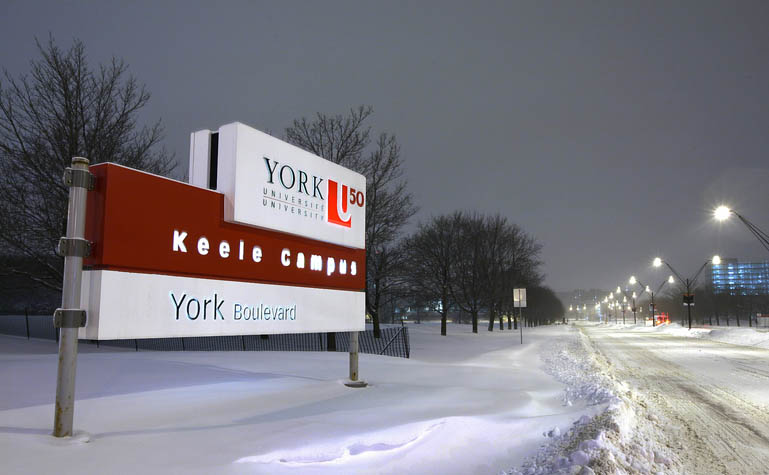
On Women, Religion and York University

10 Jan

When I first heard about the student at York University who asked to be excused from a group project for religious reasons, I wasn’t quite sure what to make of it. I’m still not, to be perfectly honest.

The student, whose name is being withheld for privacy reasons, enrolled in an online sociology course. After learning that he would have to participate in an in-person student-run focus group as part of the course, he sent the following email to his professor, J Paul Grayson:

“One of the main reasons that I have chosen internet courses to complete my BA is due to my firm religious beliefs. It will not be possible for me to meet in public with a group of women (the majority of my group) to complete some of these tasks.”

Grayson forwarded the email to his faculty’s dean and the director of the school’s Centre for Human Rights, expecting that the student (who the university is referring to as Mr. X when speaking with the media) would have his request denied. Grayson was shocked when the student’s request was permitted, with the reasoning being that students who studied abroad were given the same accommodation when it came to in-person meetings.

Grayson’s response was as follows:

“York is a secular university. It is not a Protestant, Catholic, Jewish, or Moslem university. In our policy documents and (hopefully) in our classes we cling to the secular idea that all should be treated equally, independent of, for example, their religion or sex or race.

Treating Mr. X equally would mean that, like other students, he is expected to interact with female students in his group.”

Although the the dean ruled that an exception should be made in the case of Mr. X, Grayson and the other professors in his department passed a motion refusing any student accommodations if they marginalize another student, a faculty member or a teaching assistant.

The student, whose religion has not been disclosed, did end up participating in the group project, and writing Professor Grayson that,

“I cannot expect that everything will perfectly suit what I would consider an ideal situation. I will respect the final decision, and do my best to accommodate it. I thank you for the way you have handled this request, and I look forward to continuing in this course.”

In spite of this fact, Grayson may wind up facing disciplinary action for disregarding the dean’s ruling and creating a new departmental policy.

Now.

Before I get into the meat of this issue, I have to admit that there are a few things about the story that strike me as being odd.

First of all, I honestly can’t think of a major religion that forbids men from meeting in public with a group of women. Even the most orthodox sects of Christianity, Judaism and Islam that I am aware of do not have such restrictions. And seriously, if this restriction existed, how would you even function in the world? How would you go to the grocery store or the bank or even leave your house if you cannot share a public space with women? And while I understand that it would be possible to set up a religious community where total public avoidance of women would, technically, be possible, it seems odd that someone from such a community would seek an education at a secular university.

It also seems strange that someone with such strict religious beliefs would be so quick to set them aside and participate in the group project once they realized that they were not going to get their way. Surely if your religious sect was so adamant about you not meeting publicly with women, you would fight even just a little bit harder to avoid that?

A third point that seems worth mentioning is that most organized religions (especially Judeo-Christian religions) do not restrict the activities of men; rather, they tend to marginalize and even oppress women. This isn’t to say that all religions everywhere are anti-woman, but rather that in most major religions the interests of men are typically elevated above those of women.

Maybe I’m much too cynical, but I honestly can’t help wondering if Mr. X, a student enrolled in a sociology course at a secular university, decided to organize his own sociological experiment – both to see how far he could push student accommodations made for religious reasons, and to stir up the media. It’s pretty easy to put the feminist blogosphere into a frenzy (and this is said by someone who participates heavily in the feminist blogosphere), and I could definitely see someone getting their kicks that way. If that’s the case, then Mr. X has wasted York University’s time and money, as well as putting a professor’s career in jeopardy.

But let’s assume that this isn’t some sort of hoax. Let’s assume that a student is making a legitimate, religious-based request to not have to work with women. Let’s assume that Mr. X’s religion, whatever religion that might be, actually does forbid him from meeting women in public.

Actually, you know what? Regardless of whether the student’s request is legitimate, let’s talk about the fact that certain people quite high up in the university’s food chain were willing to grant the accommodation that the student was seeking. Even if this was some kind of covert sociological study, let’s talk about how quickly York University was willing to throw Mr. X’s female classmates under the bus in order to make life easier for him. A secular university – I seriously cannot stress that point enough – was more than willing to make an exception based on a religious belief that women were ultimately so different from men that the two genders could not interact in public.

I wonder how differently the university would have reacted had Mr. X’s email read something like this:

“One of the main reasons that I have chosen internet courses to complete my BA is due to my firm religious beliefs. It will not be possible for me to meet in public with a group of homosexuals (the majority of my group) to complete some of these tasks.”

Or this:

“One of the main reasons that I have chosen internet courses to complete my BA is due to my firm religious beliefs. It will not be possible for me to meet in public with a group of Muslims (the majority of my group) to complete some of these tasks.”

Would they have been so quick to accommodate the student and cite religious freedom in either of those cases? I’m going to wager that they probably wouldn’t. So why is it any different where women are concerned?

Let’s consider, too, what the end result of such requests could be. One potential outcome could be the creation of male-only academic spaces – as if the dearth of women in academics isn’t already a problem. Another could be the physical separation of men and women in the classroom, perhaps divided by a curtain the way it’s done in certain orthodox synagogues. Whatever we can imagine, it would certainly be a step backwards for our nominally secular country.

Objectively, it will be fascinating to see how this plays out, both in the long and short terms. I’m interested to learn what, if any, consequences Grayson will face for his actions. I’m also interested to see what other religious accommodations will be requested after this incident, and which of those will be granted. Most of all, I’m interested in seeing what impact this will have in the long run on women in academics. Because I can’t imagine that this case bodes well for the rights of women in higher learning.

PJT-YorkStrike-6.jpg

Virginity Is A Social Construct

19 Dec

Jezebel published a piece today with the title “Nearly 1% Of Women Claim They Were Virgins When They Gave Birth,” and, because this is Jezebel we’re talking about here, they used this as an opportunity to shame and belittle the women who say that they became pregnant while still virgins. And just so we all understand what author Erin Gloria Ryan means by virgins, she writes that they are women who,

“… were unpenetrated by the peen of a man when they became pregnant.”

She further explains,

“This doesn’t include women who became pregnant via in vitro fertilization or artificial insemination; these are women who gave birth the old fashioned way and were like *shrug! SERIOUSLY GUYS I DON’T EVEN KNOW HOW THIS HAPPENED!”

Then (incorrectly) asserts,

“Getting pregnant without sex is virtually scientifically impossible, yet dozens of women in the study (who were teens when the research began) swear up and down that their babies happened sans man. This is the biological equivalent of claiming that your glass of drinking water spontaneously began boiling itself without the presence of heat. I mean, maybe it’s Unsolved Mysteries-possible, but it’s highly doubtful that 0.8% of all glasses of water boil themselves. Come on.”

Also, just so that we’re really super clear on how Jezebel views these women, the article was posted to their Facebook page with the following header:

Nearly 1% of women insist they were virgins when they gave birth, which means that nearly 1% of women are delusional.

Oh, Jezebel. Jezebel. I know all the cool kids have already said it, but damn. You sure do suck at feminism.

First of all, it is definitely scientifically possible to become pregnant without having penetrative vaginal sex. It’s unlikely to happen, but it’s possible – all you need is for a someone to ejaculate on or in close proximity to the vagina, or else have some other thing with sperm on it – a finger, say, or a sex toy – penetrate the vagina. Yes, these are unlikely ways in which to become pregnant, but they’re not within the same realm as water spontaneously boiling.

Second of all, can we not have this discussion without calling women stupid or crazy or just flat out accuse them of lying?

Third of all, can we please stop talking about virginity as if it is a real, measurable thing?

Virginity is not a thing. Not really. It is a social construct meant to make people, especially women, feel badly about their sexuality and sexual experience. It is a way of policing other people’s bodies and passing judgment on how they use them. It is, at its very core, a way of controlling and subjugating women.

One problem with the idea of virginity is that there’s no hard and fast way of deciding who’s a virgin and who isn’t. Many people would define loss of virginity in a very heteronormative sense – a sexual act where the penis penetrates the vagina. But does that mean, then, that a queer woman who has only ever been with other women is a virgin? Is a gay man, who has only ever had anal sex, a virgin? Most people, when pressed, would agree that no, those folks aren’t really virgins, even if they’ve never had penis-in-vagina-style intercourse. The flip side of this is that many rape victims don’t feel as if they have lost their virginity even if they’ve had penetrative intercourse forced on them. They consider themselves to be virgins because they don’t consider what happened to them to be sex. So taking all of that into consideration, how do we then define virginity?

Some people have said that performing any sexual act constitutes losing one’s virginity, but that seems like much too broad of a definition. Kids start experimenting with sexual play and experimentation at a fairly young age, so does it then follow that anyone who’s kissed someone of the opposite sex or shown them their genitals has de facto lost their virginity? I’m not sure that this idea makes any more sense than saying that virginity can only be lost through one very specific sexual act.

Another problem is that there is literally no way of knowing if someone is a virgin or not. Oh, people will tell you that you can check if a woman’s hymen is broken, but that’s not a reliable indicator at all. A hymen can be broken without any kind of sexual intercourse, through sports or through some kind of injury. Not all women are born with hymens. Not all hymens tear during penetrative sex. And yet we’ve all been sold this idea of torn flesh and blood on sheets as some kind of definite rite of passage for women. This idea – that you can somehow tell if a woman has been sexually active – has contributed to the oppression and subjugation of women for pretty much all of recorded history. It’s given men a way to control women, to make them ashamed of their bodies their sexuality. It’s led to a double standard where it’s fine – even encouraged – for boys to gain sexual experience, but women who are sexually active before marriage or have sex with too many people are considered to be slutty or damaged goods.

Finally, why is virginity so damn important to us? We don’t have nouns for who or what we were before we hit any other life milestones – there’s no term to refer to a person before they can walk or talk or read and write – all of which I would argue are more important achievements than getting laid – and yet it’s the sex that we focus on. Why do we put so much more weight on this one small facet of human life than we do on any of the others? Why are we still making a big deal out of who is a virgin and who isn’t?

This is the discussion that we should be having – not about whether women are lying or delusional about their virginity, but about why we still use this damaging term. We need to talk about why the idea of virginity continues to hold such sway over our cultural consciousness, and why so-called feminist websites a perpetuating the thought that virginity is a tangible, definable thing. Most of all, we need to figure out a better way to talk to kids about their bodies and their sexuality, because the way that we’re doing it now clearly isn’t working.

Even Mary agrees - virginity is bullshit

Even Mary agrees – virginity is bullshit

The Consolidated List of Stuff That Isn’t Feminist

9 Dec

As Charlotte Raven helpfully pointed out in the Feminist Times this morning, wearing high heels is not feminist. Nor, apparenty, is staying in an abusive relationship. After reading her piece, I hope that both shoe aficionados and domestic violence victims see how badly they’ve been fucking up and either shape up or ship out, because the feminist movement isn’t interested in the likes of them. I would also like to thank Ms. Raven for being brave enough to say what no one else was women to say – namely, that women who like fancy footwear and who just sit there and let their partners abuse them are failing all women everywhere and just need to find another way to get their kicks other than Louboutins and men who make them fear for their lives.

If I have one criticism of Raven’s piece, it’s just she didn’t go far enough. Sure, high heels are anti-feminist, but so are a lot of things! What we really need is a handy-dandy guide put together by a privileged white woman telling us exactly how to be as feminist as possible. Since Raven has failed us in this regard, it’s obviously necessary for someone to step in and correct this failing. Please allow me, a privileged and lily-white member of the feminist tribe, to be of service.

Feminists Do Not:

1. Wear makeup

2. Wear short skirts. Or any skirts. Or leggings. Or tights. Or tight jeans. Or a bra (note: bandeaus and cute lacy camisoles are fine).

3. Wear saucy shirts that reveal any of the following: cleavage, midriff, shoulders, elbows, collarbone, neck, wrists

4. Shave any part of their body (eyebrow maintenance is, however, strongly encouraged)

5. Get married, even if it’s to another woman. Seriously. Take a close look at the tradition of marriage and tell me WHICH part of that, exactly, is feminist? Is it the part where your father gives you away as if you’re a piece of property, or the part where you promise to love, honour and obey your husband? And don’t tell me that your marriage is different – it’s still promoting an institution that has been and continues to be oppressive to women. Be in a “committed” relationship all you want, but leave marriage out of it unless you want your feminist card revoked.

6. Take their partner’s name – this is basically like stamping “I am my husband’s property” on your forehead. I don’t care that it’s tradition, or that you think it’s nice, or you’re doing it for the kids – it doesn’t matter what argument you come up with, it’s still patriarchal bullshit.

7. Watch network television, except to criticize it (self-explanatory)

8. Let men hold doors, give compliments or pay for dinner. If a man you know tries this, offer him a swift kick in the groin.

9. Have children, unless they have access to a hospital-grade breast pump and a staff of round-the-clock nannies and nurses so that they don’t have to miss more than a few days of work at their high-power jobs.

10. Stay home with their children. Who ends up paying for your cushy suburban life of trips to the library and ice cream cones in the park? A man, that’s who. Feminists are self-reliant – if you think that a man funding your stay-at-home mommy life is empowering to women, you need to sit in the corner, read the Feminine Mystique, and think about what you’ve done.

11. Make jokes, laugh, or otherwise display a sense of humour. Duh.

12. Watch sports. They’re nothing but a masturbatory homage to heteronormative patriarchal ideals. Do you think it’s a coincidence that most sports feature BALLS of some sort? Well, think again. And let’s not even get into the phallic imagery of baseball bats, hockey sticks and golf clubs.

13. Watch ballet. You think high heels classify as self-harm? Check out the damage toe shoes do to feet.

14. Listen to Beyoncé, try to emulate Beyoncé, or even think about Beyoncé. And while we’re on the subject, let’s just be clear about one thing – Beyoncé is categorically not a feminist. How is this even up for discussion? She’s broken basically every rule on this list so far. SHE CALLED HER LAST TOUR THE MRS. CARTER WORLD SHOW TOUR. When the revolution happens, Beyoncé albums will be the first to be burned.

15. Let women of colour speak, unless it’s to toe the same old white feminist line that fails to address many of their most pressing problems. Real feminists know that intersectionality can only be addressed once all white women everywhere are equal.

16. Treat their children in any way that reinforces the gender binary. In the future, the terms “girl” and “boy” will be done away with and everyone will wear sexless onesies with snaps at the crotch. FEMINIST UTOPIA.

17. Diet, or otherwise try to lose weight. If you feel uncomfortable in your body, it’s your own damn fault for buying into patriarchal ideas about how women should look.

18. Smile, unless you’re smiling in anticipation while scheduling your next abortion.

19. Watch or enjoy anything even remotely problematic. See: everything in mainstream culture so far. I don’t care that the Gilmore Girls was your favourite show when you were a kid and you and your mother watched it together when she was dying and it gives you nothing but good feelings – that shit is PROBLEMATIC.

20. Experience any emotion other than rage. There is so much to be outraged about that I cannot fathom how you could feel anything else, unless it’s joy over the aforementioned abortion.

Real talk, though: a lot of the stuff on this list genuinely does not fall within the parameters of what would be considered feminist or egalitarian in a perfect world. In that world, I wouldn’t feel that in order to be attractive and respected I had to slather makeup on my face, shave my armpits, or dress a certain way. In a perfect world women wouldn’t find it romantic to ditch their own last name in favour of a man’s. In a perfect world we would all hold doors for each other, and acts of politeness would not have sexist undertones. But you know what? We do not live in that world.

Yes, we do things that buy into or even promote patriarchal beauty standards. Yes, we sometimes uphold traditions that have been oppressive to women. Yes, we sometimes enjoy stuff that could and maybe should be considered problematic. We’re only human, after all, and we all grew up being brainwashed by the same ideas about how women should look, dress and act. If I hadn’t grown up in a world that told me that removing all of my body hair was considered sexy, would I reach that conclusion on my own? If I didn’t live in a culture that prized a traditionally misogynist ceremony of lifelong commitment as super romantic and de rigueur for all women everywhere, would I have gotten married? The answer to both of those questions is: probably not! But nothing exists in a vacuum, not even feminism. Especially not feminism. And it’s not that we shouldn’t talk about these things – things like why we might get married or take our partner’s name or want our body to look a certain way. We definitely should talk about these things – and we should also talk about why we choose to do them.

We all do things that could be considered anti-feminist. We all compromise sometimes. We give in on some things, and fight tooth and nail on others. We pick our battles and learn to hold two opposing truths at the same time. We let ourselves feel pretty in high heels and makeup while still remembering that this is mainly because men have made us believe that these things make us pretty. We enjoy movies and books that don’t pass the Bechdel test and maybe say some not-so-great things about women, while acknowledging that media representation of women needs to be so much better than it is. We call our children “girl” or “boy” even while accepting that gender is a social construct. We do these things, and it doesn’t mean that we can’t call ourselves feminists.

If I were to make a real list of things that feminists don’t do, there would only be one item on that list: tell people how to be feminists. Because when an individual begins dictating what a movement looks like, then it stops being about what’s in the best interests of women everywhere (spoiler alert: very few things are in the best interests of all women everywhere) and becomes about that person’s biases and opinions. And that? Is pretty unfeminist.

Definitely Not A Feminist

Definitely Not A Feminist

On Learning To Love My Nose

2 Nov

I’ve been thinking a lot about this interview with Lisa Kudrow about the nose job she got when she was in high school.

My first thought is that I want to go back in time and hug teenaged Lisa Kudrow. I want to tell her that it sounds like she made the best choice possible given the options she had. But I also want to tell her that it sucks big time that society presented her with so few options, that it’s unbelievably shitty for a young girl to think that her only chance not to feel hideous is to surgically alter her face.

Most of all, I want to tell her that I get it, because I’ve been there. And if surgery had seemed like a viable option when I was fifteen, I probably would have jumped at the chance. But it wasn’t, so I just had to live with how my nose looked, and eventually I learned to like it. I’m not entirely sure, though, that telling a fifteen year old to suck it up and wait it out until they feel loveable is the best way to go.

I hated my nose for a long time. A long, long time. It’s large and pointy, and, as my friend Steve once helpfully remarked, it’s hooked, like an eagle’s beak. It’s what, on a man, would be called “strong” or “aquiline” – on a petite woman, it looks out of place, or so I thought. My sister once told me that my squinty eyes and prominent nose gave me a rat-like appearance. A friend once avoided the question of whether I had an ugly nose by telling me that I have a nice personality. The first time I saw Cyrano de Bergerac I cried, because I thought I would have to spend the rest of my life composing eloquent love letters for friends who wanted to date the dudes that I liked. I hated my nose.

For a really long time, I would only let people take pictures of me from head-on; I avoided shots of my profile at all costs. I looked up makeup techniques that would somehow minimize the appearance of my nose. I kept my hair long so that I could tilt my head and let my hair fall forward, covering my face. I thought about getting a nose job. My grandmother once told me to get a nose job. Or rather, she said, “Annie, you only live once, and you only get one body. If surgery will make you feel happier living in the body you’ve been given, then more power to you.”

Not long after that conversation, my cousin, whose nose resembled mine, really did get a nose job. I worried that when I saw her I would feel envious, but I didn’t. I just felt sad.

Mostly I feel sad that we live in a world where there is such a narrow definition of beauty for women. I feel sad that I scrutinize every photograph of me that goes online, because I don’t want people to think that I’m “ugly.” I feel sad that when I put on makeup it seems more like painting on a mask, one that will hide or at least distract people from my actual face. I feel sad that I’ve spent most of my adult life feeling so goddamn unattractive.

I have, somewhat pathetically, tried to remedy this situation by getting outside validation for my appearance, but that’s a double-edge sword, isn’t it? Relying on people other than myself to make me feel attractive is foolish and misguided at best. First of all, doing that puts a lot of pressure on my friends and family to constantly reassure me that yes, I am pretty, and no, I’m not ugly. I mean, it’s fine to like compliments and everything, but requiring them as some sort of clause in our friendship contract isn’t cool. Second of all, feeling that I need an outside source to provide me with self-esteem just isn’t sustainable. Third of all, when I feel bad about my appearance, it doesn’t matter how many compliments you lob at me, I’m just not going to believe them.

Part of the problem is the format in which I tend to look for validation; usually it’s by posting pictures of myself on Facebook or Twitter. But it’s well within my power to make sure that those pictures don’t necessarily contain what I think is the truth. That doesn’t mean that I edit or doctor these photographs in any way, but I do tend to do things like take pictures in full sunlight, so that my face is completely washed out, or hold the camera above my head, so that it’s a more “flattering” angle. I’ll also often take twenty or more pictures of myself in a row and then delete most of them for being too ugly. And if most of my selfies are ugly, if the vast majority of pictures of myself make me cringe, then doesn’t that mean that the select few that make it to a public platform are really lies? So even the pictures where I think I look good somehow end up making me feel bad.

Look at it this way: yes, I can take photographs and look at these images that I’ve created and recognize that the subject is, in fact, attractive in a mostly conventional way. But that doesn’t mean that I can recognize that I, myself, am attractive in a mostly conventional way; it only means that I know how to use things like angles and lighting and sneaky makeup tricks in order to produce a static version of myself that I find palatable. And then I can take these photographs and post them to social media sites and receive positive feedback on them, but again, that doesn’t so much make me feel attractive as it makes me feel like a liar and a manipulator.

I always worry when meeting someone offline for the first time about how they will react to my appearance. I worry that they will think that I’ve misrepresented myself, made myself seem prettier, my skin smoother, my nose less prominent.

I always worry that when friends who know me in real life see the pictures that I post online, they just roll their eyes at how unlike me these photographs are.

I always worry that I’m never, ever going to learn to love how I look.

I am learning, though, albeit slowly. Over the past year or two my nose has gone from being this huge blemish on my face to being something about myself that I like a lot. It’s different, and it makes my face more interesting. It gives me character, makes me appear somehow both dignified and a bit oddball. It just plain looks kinda good.

I wish it hadn’t taken me twenty some-odd years to learn to love my nose, though. Nobody should have to feel that badly about themselves for that long. And though it would be easy to blame the kids who teased me or grownups who rolled their eyes and told me to get over it, the problem is so much bigger than that. The problem is that we only ever see women who fit one specific model of beauty in the media. The problem is that we put way too much emphasis on women’s appearance, and not enough on their thoughts or character or actions. The problem is that we criticize people for posting selfies “for attention,” but don’t ever talk about why those people might want, maybe even need, positive attention paid to their looks. The problem is that there are so many problems and I don’t even know how to start solving them.

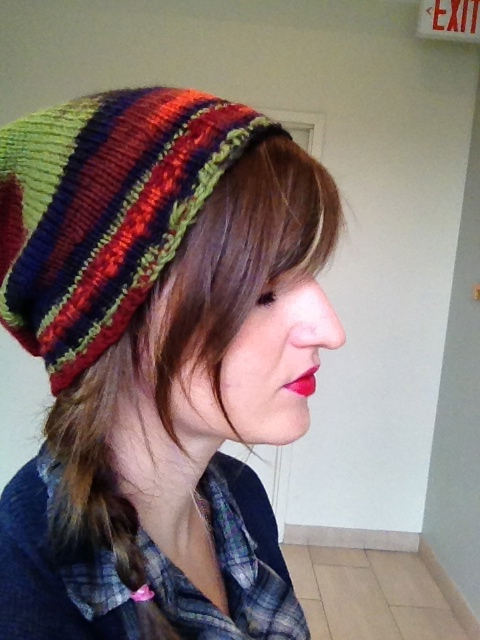
Here’s my first, faltering step at trying to find some kind of solution. A picture of my nose, in all of its enormous, pointy glory:

IMG_4180

Miraculously enough for me, I don’t hate it.

Gilmour Girls: A Reading List for David Gilmour

7 Oct

This list is not as diverse as I wish it could be. It’s still very white, and there isn’t a super great representation of queer and trans* folk. It sort of ended up being both a reading list for David Gilmour and a list of my favourite books by women. Writing this has been a great exercise for me, and has illustrated pretty clearly that I need to expand my own reading repertoire – I do love women writers, but I still tend to favour white, cis-gender women. Helloooooo to my own cultural bias.

I didn’t include any Alice Munro or Virginia Woolf because Gilmour says that he likes both of those authors, and I don’t have multiple books by the same author. Those were some rules that I arbitrarily made up for myself.

Please feel free to add to this list or to fangirl with me over how much you love some of these books. Fangirling is the best!

1. Half of a Yellow Sun by Chimamanda Ngozi Adichie

Ohhhh, books about Ordinary People set against the backdrop of Serious Historical Events, you get me EVERY. DAMN. TIME.

2. Cat’s Eye by Margaret Atwood

The best book that I’ve ever read about the nearly-invisible cruelties that little girls practice on each other, and the lifelong fallout of that sneaky, subtle bullying.

3. Sense and Sensibility by Jane Austen

One of the best depictions of depression and suicidal ideation in classical literature.

4. Fun Home by Alison Bechdel

My friend Jesse said it best: Alison Bechdel’s memoirs are like magic. You read them, and they’re technically about her, but somehow you end up learning about yourself?

5. The Mists of Avalon by Marion Zimmer Bradley

Shut up, I don’t even care, I fucking love this book. DO NOT LOOK AT ME LIKE THAT. 

FEMINIST KING ARTHUR, Y’ALL

6. Villette by Charlotte Brontë

I don’t care if Jane Eyre is your favourite book of all time, I swear to you that this book is better.

7. Rubyfruit Jungle by Rita Mae Brown

I have four words for you: Lesbian. Coming. Of. Age.

In the south.

With cheerleaders.

And bourbon.

8. Parable of the Sower by Octavia Butler

Oh good lord I am such a sucker for dystopian fiction it is not even funny.

9. My Ántonia by Willa Cather

Sort of like Little House On The Prairie for grownups. Except for the fact that Little House On The Prairie is totally for grownups too.

10. Chéri by Colette

In which a young, beautiful man (who loves silk robes and pearls) is kept and petted and spoiled by a woman twice his age, and then has to deal with her departure when he gets engaged to a much younger woman. Maybe one of the best role reversals in literature? Anyway I love Colette so much.

11. Rebecca by Daphne Du Maurier

Like Jane Eyre except better, spookier and more accurate in terms of how creepy and skin-crawly the Mister Rochester character is. You guys, MISTER ROCHESTER IS AWFUL. 

12. Geek Love by Katherine Dunn

Probably the weirdest book I’ve ever read and that’s saying something.

13. Stone Butch Blues by Leslie Feinberg

I think this is my favourite novel about transgender experience?

14. The Butterfly Ward by Margaret Gibson

This weird little book of short stories found its way into my hands on my birthday about ten years ago. I’ve never read anything else by this author – never even seen anything else by her – but some of the stories in this book haunt me still.

15. The Talented Mr. Ripley by Patricia Highsmith

I don’t even care if you liked the movie. Suck it up and read the book.

16. Their Eyes Were Watching God by Zora Neale Hurston

The book that made me realize that I needed to cultivate better, stronger friendships with women. Friendships where I felt empowered instead of competitive.

17. The Woman Warrior: Memoirs Of A Girlhood Among Ghosts by Maxine Hong Kingston

I don’t even know how you could see this book’s title and not immediately need to read it

18. The Namesake by Jumpha Lahiri

If you read this book while you are pregnant you will suddenly begin obsessively stock-piling baby names as if there might be some kind of baby name shortage.

19. The Wizard of Earthsea by Ursula K. Le Guin

I read this as a very impressionable teenager and was hooked.

20. Small Island by Andrea Levy

Race and class in post-war London how does that sentence fragment not make you tingle with excitement even a little?

21. Fall On Your Knees by Ann Marie MacDonald

I have read this book so many times and it is so painfully near to my heart that I don’t even know what to say about it. Frances Piper is one of my favourite fictional characters of all time ever.

22. Wolf Hall by Hilary Mantel

Thomas. Cromwell. THOMAS CROMWELL. MARRY ME THOMAS CROMWELL.

As a post-script, I think that, as David Foster Wallace would say, this was Hilary Mantel’s way of imposing her phallus on the consciousness of the world seriously thought what does that even mean.

23. The Group by Mary McCarthy

A lovely, weirdly prescient little midcentury gem about a group of friends and how their lives diverge after college. A lot of discussion about how fucking hard it is for women to have it “all” – if that’s even possible.

24. The Bluest Eye by Toni Morrison

If this book doesn’t give you Feelings I am pretty sure that means that you don’t have a soul.

25. The Street by Ann Petry

A single mother living on her own 1940s Harlem. Do I have your attention yet?

26. The Bell Jar by Sylvia Plath

As if this was not going to be on this list. Have you even met my blog.

27. Clay Walls by Kim Ronyoung

Faye, a second generation Korean-American, says at one point that reading is, “just a way for me to see how other people live. I haven’t found a book yet written about the people I know.” And then Kim Ronyoung wrote that book.

28. The God Of Small Things by Arundhati Roy

This one took me two reads to love, but love it I do.

29. The Sparrow by Mary Doria Russell

Speculative fiction gives me a total boner.

30. Push by Sapphire

Ohhh this book made me break out into a sick sweat. Maybe one of the best reminders of my privilege that I’ve ever had?

31. Memoirs Of An Ex-Prom Queen by Alix Kates Schulman

Another one that took me a while to love – I felt like the main character was so privileged and whiny. And then I realized that that was kind of the point, and also that those things didn’t take away from her experiences.

32. Caucasia by Danzy Senna

Probably the first book to really make me think about race – definitely the first time I ever questioned the idea of being colour-blind, and my first encounter with the idea of passing privilege.

33. Prep by Curtis Sittenfeld

The most painfully accurate description of what it’s like to be a white, lower-middle-class girl.

34. A Tree Grow in Brooklyn by Betty Smith

I don’t even care if this is a YA book, it’s balls to the wall one of my favourite books. BALLS TO THE WALL.

35. White Teeth by Zadie Smith

One of those epic books that spans several generations and several families, except this one explores race and class in 1980s England. And it’s so unbelievably good.

36. Eagle of the Ninth by Rosemary Sutcliff

I don’t even care that this book is super dated, it is the book that made me fall in love with historical fiction and also bromance.

37. Angel by Elizabeth Taylor (no, not that Elizabeth Taylor)

Probably the most selfishly awful, incredibly unlikeable protagonist I’ve ever encountered (and that’s including Holden Caulfield), but. 

38. A Complicated Kindness by Miriam Toews

Heartbreaking and darkly funny and also Miriam Toews is one of the best human beings on this planet maybe.

39. The Age of Innocence by Edith Wharton

Spoiler alert: it wasn’t so innocent. Also you will want to punch Newland Archer a bunch. But it’s good, I promise.

40. Oranges Are Not The Only Fruit by Jeanette Winterson

Scary Evangelical Christian Lesbian Coming Of Age. No but seriously.

book-porn

An Open Letter to David Gilmour

25 Sep

Dear David Gilmour,

As a woman writer I’d like to say thank you.

No, honestly, thank you.

Thank you for being privileged enough, culturally tone-deaf enough, and even just plain stupid enough to say that you don’t love women writers enough to teach their works in your class. Thank you for saying what so many other male professors think but are afraid to admit. Thank you for opening up this huge fucking can of worms that most people are happy enough to pretend doesn’t even exist.

Seriously, thank you for reminding me that, as a writer who happens to be female, I will always be a woman first and a writer second.

Oh and thank you especially for throwing in that little racial comment about how you also don’t love Chinese writers, because you might as well shit all the beds while you’re at it, right?

But thank you. Thank you for proving how very unequal the world is when it comes to female writers and queer writers and trans writers and any writer whose skin isn’t lily-fucking-white. Thank you for pulling back the curtain and showing the dark, misogynist, racist underbelly of academia. Because when people like you pull shit like this, everyone is finally forced to pull their collective heads out of the sand and accept how very biased the academic world is.

Look, I’m not here to tell you what literature you should love or not love. None of us can help which writers resonate with us while others, though we can admit that they are technically proficient, brilliant with language, and certainly not without talent, fail to move us. We like who we like. I get that.

What I don’t get is how very little self-reflection there seems to be in your discussion of which writers you love and why. Have you ever wondered why you might possess such a bias against female writers, Canadian writers, and (apparently) Chinese writers? Have you considered what influence your own professors and their prejudices have had on you and how they have warped your perspective and taste? Have you thought about the fact that your own relative privilege means that without serious thought and introspection it’s going to be a real fucking challenge for you to understand the context and nuance of writers who don’t fit the mold of cis-gender white male?

And maybe what I really want to know is if you were ever up for that particular challenge, and if the answer to that question is yes, then I need to know when the fuck you got so literarily lazy that you could no longer stretch yourself enough to inhabit a skin that didn’t resemble your own. Because that’s what the best literature does, right? It takes us completely outside of ourselves and forces us to view the world from a completely different perspective. If done well enough, that experience changes us. Hopefully it makes us better people. I don’t understand how you could ever become a better person if you only ever read books with protagonists whose take on the world is, ultimately, not so very unlike your own.

I also want to tell you that as a professor, your first responsibility is to your students, not yourself. Like a good book, a good professor should change a student. The best teachers that I’ve had in my life have been the ones who’ve taken me out of myself and made me see the world in an entirely different way. Passion for what you teach is, of course, incredibly important and can’t be discounted, but so, too, is the ability to extend yourself beyond your own petty likes and dislikes in order to give your students a well-rounded view of literature. How can you possibly be doing that when every year you devote all of your time to re-hashing all of your favourite books? How can you open someone else’s eyes when you refuse to do anything but perpetuate your own biases? And honestly, if you can’t challenge yourself when it comes to how and what you read, how can you ever challenge anyone else?

Finally, I want to ask you how, as someone who is a writer who also happens to be female, I am supposed to process this. When you say that you “teach only the best,” what should I take away from that? Am I supposed to just sadly shake my head and assume that my vagina* prevents me from ever writing anything interesting or good? Am I supposed to laugh in a world-weary way and say, “well, that’s just one man’s opinion,” as if your opinion isn’t symptomatic of a much larger problem within academia? Or am I supposed to think that you are somehow trying to throw down the gauntlet, as if you could maybe bully women into writing something that you love?

Because the thing is, I’ve got my own fucking gauntlet to throw down.

I’ve got a dare for you, David Gilmour. I dare you – I fucking dare you – to spend six months reading nothing but writers who aren’t white cis males. Read female writers. Read Chinese writers. Read queer and trans and disabled writers. Read something that’s difficult for you to love, then take a deep breath and try harder to love it. Immerse yourself in worlds and thoughts and perspectives that are incredibly different from your own. Find a book that can change you and then let yourself be changed.

I’ll even put together a top-notch reading list, if you like.

In return, I will let you teach me to love one of the books on your curriculum. I live in Toronto; I can easily audit one of your classes. Prove to me that you’re a decent professor, and that the books that you teach will, in fact, change me the way that the best literature can and should.

I’m totally up for this if you are.

Sincerely,

Anne Thériault

Photo on 2013-09-25 at 4.18 PM

*Not all female writers have vaginas, and not all people with vaginas are female. However, since in my case my sex aligns with my societally-expected gender, and because I love the word vagina, I’m gonna run with this.

The First Lesson Is: Don’t Be Afraid Of Falling

16 Sep

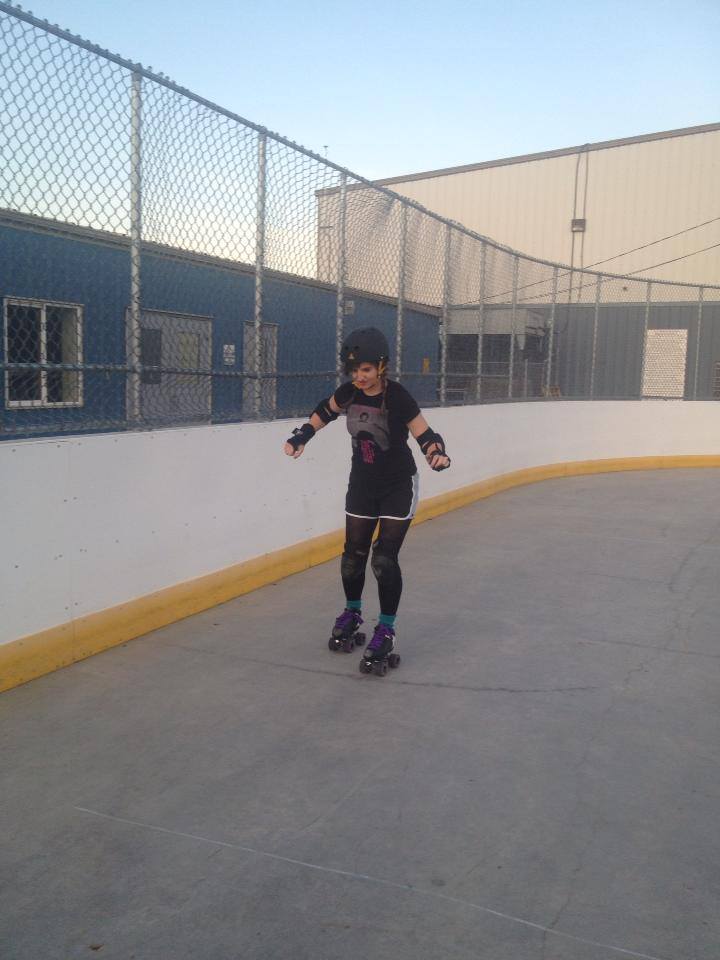
My sister-in-law brought me along to her roller derby practice last night. She’s been doing the derby thing since March of this year, and I have been hella jealous. If there was ever anyone who was meant to be a bad-ass lady who roller skates, wears short skirts, body-checks other women and has a hilariously punny name. I mean, COME ON. That sounds like heaven to me.

Given all of that, why have I never tried to join a derby league in Toronto? Oh, I don’t know, because of Reasons I guess. I work a lot of evenings and didn’t want to have yet another night away from my family. I wasn’t sure how to find a good league, and was kind of freaked out at the thought of starting a new activity by myself with people that I don’t know. I’m not sure that I’m cut out for team sports; the idea of being yelled at by a coach makes me want to cry.

Most of all, though, I was afraid.

I wasn’t even sure that I could roller skate, for one thing – the last time that I’d tried was something like fifteen years ago at the now-defunct Forum Roller Rink in Cambridge, Ontario. I was there to celebrate the birthday of this dude that I had a huge crush on, by the way, and let’s just say that my roller-skate-skills did not exactly win me a place in his heart. As I recall, I fell. A lot. Embarrassing, sprawling falls, the type that cause people to point and laugh. Eventually I just sat off on the side, nursed a Dr. Pepper and tried not to cry. Story of my life, am I right?

Another problem was that I typically don’t enjoy participating in activities that I am not already good at, especially activities that involve me failing publicly. I have a very low threshold for embarrassment. I’m also a perfectionist, and I get frustrated with myself very quickly if I don’t master a new skill, like, immediately. Given all of this, it’s kind of amazing that I ever try anything new at all, although if I really think about it I can see that all of the new activities that I’ve tried over the past few years have mostly been things that I knew that I was sort of predisposed to be good at. For example, I had a feeling that I would be awesome at yoga because I’ve always been really flexible. Blogging didn’t intimidate me because, all modesty aside, I knew that I was a half-decent writer. I knew that I would be good at drinking scotch because it’s no secret that I’m a pretentious, snobby asshole.

I am not really good at any of the skills necessary for roller derby, other than a love of short skirts and the fact that I’m a hilariously scrappy fighter.

All kitted out - sadly no skirt, though

All kitted out – sadly no skirt, though. And yes, my shirt says, “The Bell Jar” on it.

Finally, the biggest fear holding me back was that I was afraid of falling. I was afraid of falling because of my bad knee. I was afraid of falling and being run over by other, faster, better skaters. Mostly, though, I was afraid of falling and looking stupid.

Imagine my surprise when my sister-in-law told me that the first lesson was going to be learning how to fall. Because, she said, I was going to fall whether I liked it or not, and learning how to do it properly would help prevent injury. Being a good skater wasn’t so much avoiding falling as knowing how to do it in a safe and controlled way.

So after wobbling pathetically around the rink a few times on my borrowed roller skates, I let her teach me how to fall. I learned how to fall on one knee. I learned how to fall on two knees. I learned how to do a four-point fall on my knees and forearms. I learned how to get up safely and quickly after each type of fall. Amazingly, after a good solid half hour of falling, I suddenly felt much more comfortable on my skates.

I had a sort of epiphany last night, skating around and around that open-air arena under the darkening Alberta sky. I realized how very much I need to learn how to fall in basically every area of my life. I need to learn that it’s possible to make mistakes and even fail and then get back up again and keep going. Right now, the thought of making mistakes in just about any arena – work, being a parent, my interpersonal relationships – makes me want to throw up. I feel like making a mistake is the end of the line, that there’s no going back, that whatever I’ve done will colour that relationship or work environment forever. The funny thing is that it’s almost never other people who make me feel that way; I make myself feel that way. If I inadvertently say something hurtful, or if I forget to do something or get something wrong, I have a really hard time forgiving myself and getting past it. To me, making mistakes feels like the world is ending.

But you can’t live like that, you know? You can’t just not make mistakes – that’s an impossible goal. Even if you are living the safest, most risk-free life ever, you’re still going to make mistakes. And anyway I don’t want to live that life – I want to take risks, I want to try new things, I want to push myself. So I think that I have to learn how to make mistakes, by which I mean how to react in an emotionally appropriate manner to my mistakes, and also how to work to quickly fix them instead of diving under the covers and crying for three days. I want to learn how to have arguments or even fights that don’t end with me apologizing profusely (or sobbing incoherently) because any kind of conflict makes me feel sick.

Most of all, I need to realize that if I want to succeed at something – anything – I might have to fail first.

There’s a theory by mid-century child pediatrician and child psychoanalyst Donald Winnicott that says that one of the many reasons why play is important for children is because it’s a safe place for children to make mistakes. In play, children are able to explore the world and themselves without fear; they are able to try new things and make mistakes without serious consequences. Winnicott says, “It is playing and only in playing that the individual child is able to be creative and to use the whole personality, and it is only in being creative that the individual discovers the self.”

I think that maybe I need to re-learn how to play. I need more spaces in my life that feel safe enough to fall and fail in. I need to find activities that help me feel more comfortable taking risks in the rest of my life. Maybe roller derby is the perfect place to start.

Still a bit wobbly

Still a bit wobbly

And for the record, the rest of the practice was fantastic. I learned how to skate on one foot, how to stop and start, how to turn corners. My sister-in-law taught me how to “get a whip,” which involves skating up behind someone, grabbing them by the hips and pulling yourself forward and past them. I got to watch the more experienced derby ladies skate up to thirty times around the track in five minutes. I got to watch the “benched” players practice skating formations, jamming and taking hits. I watched people fall over and over again, only to get right back up and keep going.

It was amazingly great.

SKATING LIKE A BADASS

SKATING LIKE A BOSS

Intersectionality and Art

10 Sep

My friend Audra asked the following question on her Facebook a little over a week ago:

“Which do you think is worse: intentionally only ever buying art* made by women, or accidentally only ever buying art made by men?”

Now, just to clarify, I don’t think that either is worse, because I don’t think that either of those things are bad or wrong, necessarily. But I do think that it’s super important to look at how and why we consume media. I also think it’s necessary every once in a while to take a long hard look at the media choices we’re making, and ask ourselves whether or not we are making conscious decisions about the type of artists that we are supporting and promoting.

This point was driven home today as I took a short break from the enormous tome that is David Foster Wallace’s Infinite Jest (because what better time to tackle this beast than on a 60-hour train trip across Canada?) to read Dave Egger’s introduction to the book. In this brief five-page preface, Eggers manages to name-check the fourteen following artists:

Thomas Pynchon

Elmore Leonard

Jonathan Franzen

William Gaddis

Saul Bellow

William S. Burroughs

Fred Exley

Marcel Proust

Stephin Merritt

Howard Finster

Sufjan Stevens

Jack Kerouac

William T. Vollmann

Michael Apted

You’ll note two uniting features about everyone mentioned this list – they are all white, and they are all men.

Now, I don’t think that Dave Eggers only reads books by white dudes. In fact, I happen to know that Eggers both reads and promotes books by all kinds of non-white-dude writers. But I can’t help noticing that when he’s talking about the crème de la crème, when he’s mentioning the artists to whom he’s comparing a book that he claims will, ultimately, leave you a better person, they are all. white. men. Every single last one of them.

And I don’t think that the exclusivity of this list is intentional; I don’t think that Eggers really thinks that men are better writers than women, or that white folks are better writers than people of colour. But what I do think is that it’s really, really easy to fall into the trap of only consuming art made by white men. I mean, it’s the status quo, right? You go into a bookstore and almost all the featured books are by men (although, being in Canada, I have to admit that they pretty much always include at least one Atwood because it’s the law or whatever). Only four women have ever been nominated for an Academy Award for Best Director; only one has ever won. If you’ve ever been in a comic book store, you know how hard you often have to dig to find something by a woman, let alone a woman of colour.

And it’s like, sometimes I just feel invisible, you know? I mean, I’m really just starting out and I haven’t even published my first book and in spite of that I have a fairly decent online following and I am super grateful for that and I’m luckier than a whole lot of people, but. BUT. I feel like I’m always going to be excluded when it comes to these types of lists. I’m never going to be allowed into the Old Boys’ Club (because then it wouldn’t be a boys’ club, duh), or if I am permitted to join in every once in a blue moon, I’ll be treated as a pet, a sweet little thing, a curiosity, and never, ever as a serious writer. And this exclusion won’t be malicious, and it won’t be intentional; it’ll just be because my name (or any other woman’s name) will never be the first (or even fourteenth) to spring to mind when a man is coming up with a list of his all-time favourite, greatest, most influential writers.

And that sucks.

So let’s take a moment to share our favourite not-white-dude artists, and maybe (hopefully) we’ll all come away with some new and exciting books, movies, paintings, sculptures, songs, television shows, etc, to check out.

Here’s my list:

Persepolis by Marjane Satrapi

persepolis-1

Haim:

Margaux Williamson, Teenager Hamlet

margauxwilliamson_TEENAGERHAMLET_600g

The Romance Reader by Pearl Abraham

n337594

Ginger & Rosa, written and directed by Sally Potter

* Any form of art or media, be it literature, visual art, film, music, television, etc.

What It’s Like To Be A Writer Who Is Also A Woman

12 Aug

You will always be a woman first and a writer second.

When people refer to you, they will call you a “woman writer,” or “feminist writer,” or some other variation on that theme. There will always be some kind of qualifier added.

When your works are published, they will be included in women’s anthologies, or perhaps taught in women’s studies classes, or shelved in the “chick lit” sections of bookstores. This will feel simultaneously empowering and isolating. You know that this fact will guarantee that large segments of the population will choose never to read your work based solely on these classifications.

It will be thought that only other women can relate to your writing. When discussed by literary critics, your books will be described as works that all women should read; no one will ever call them works that everyone should read.

When a man says flattering things about your writing, you will always be left wondering whether it is your work that interests him, or the fact that you are young, conventionally attractive and female. Most frequently it will be the former, but still, you can never shake off the fear that you are not so much talented as you are naïve and pretty. You often feel as if you are only valuable in so much as men desire to fuck you.

Speaking of men desiring to fuck you, you must be very careful when interacting with male readers of your work, especially if those men are also writers. If you are married or in a committed relationship, mention this up front. Watch every word you say and make certain that none of them could ever be misconstrued as flirtatious. Do not ever behave in a way that might lead you to be accused of leading a man on – especially in situations where the man is in a position to promote your work. Remember that all of your motives will always be suspect.

Speaking of men, the first attributes used when describing you will be your relationships or lack thereof.

If you are married and/or have children, these things will become the focal point of any brief biographical sketch made of your life. Any other accomplishments must take a back seat to the fact that you have managed to find someone to put a ring on it and then convinced them to procreate with you. Your name will always be preceded by something like wife-and-mother-of-two, as if those titles are more important than any other that you might earn in this life.

If you are unmarried, you will be pitied. If you don’t have children, you will be pitied. People will wonder aloud what is wrong with you; it will be thought that your devotion to your career has left you lonely and barren. Your appearance will be dissected, your life choices examined as if under a microscope; perhaps the idea of medical infertility might be discussed. Anyone and everyone will have a theory about why and how you failed to produce children.

If you write about yourself, about your life and your feelings, your writing will be called confessional. The word will be said with a sneer; it is not meant as a compliment.

If you write about issues larger than yourself, your work will always be touted as a feminist perspective or a woman’s perspective on the subject; you can never have a thought or opinion without it being viewed by the rest of the world as being coloured by your gender.

If you write about the discrimination and inequality that women face, and don’t immediately follow up with a list of double standards imposed on men, you will be accused of misandry. If you discuss violence against women without adding in that yes, sometimes women can be violent towards men, you will be accused of misrepresenting the facts. If you don’t qualify every discussion about women’s issues with the fact that, yes, men have issues specific to them, then you don’t believe in equality.

You will find yourself inhabiting a scarcity mindset. If another woman achieves fame or success by writing on the same subjects as you, you will assume that all praise and recognition have been used up. Having grown up fed on a media diet of cartoons, books, video games and sitcoms featuring only one or two token female characters, you will truly believe that there is room for only one woman at the top of any given field. This will lead to intense feelings of jealousy any time another woman succeeds; this will lead to the desire to tear other women and their work down, in order to make room for yourself. Should you experience any kind of success, you will find yourself the target of the same type of fear and envy. You will become the subject of take downs by other women who see you as an obstacle standing in their way.

You will quickly learn that being seen as someone who embraces the middle ground, someone who constantly qualifies all of their beliefs with statements like, but I can understand the other side of the argument, will be greatly beneficial to your popularity as a writer. Seeing issues as black and white will earn you the label of “extremist,” and cause others to distance themselves from your work. As a woman, you will constantly need to tone it down, bite your tongue, and above all else present yourself as being sweet and unthreatening. Otherwise you will not be taken seriously.

You will quickly learn that constantly equivocating will lead others, especially women, to dismiss you as wishy washy. You will be accused of backtracking. Men will tell you that they do not enjoy your writing because it is lacking in bombast and ego. You have to come across as firm, uncompromising, certain in your beliefs. You have to approach writing with a take-no-prisoners mentality. Otherwise you will not be taken seriously.

You will quickly learn that when you challenge the glaring inequalities in the old boys’ club of the literary world, you will be branded as angry. People will insinuate, or outright say, that any obstacles that you might face are evidence of your lack of talent and commitment, rather than a systemic and deeply ingrained misogyny. You will be called paranoid and crazy, accused of engaging in victimology; no one will want to acknowledge how very sad and frustrated it makes you that you have to work twice as hard to be considered half as good.

You will quickly learn that you cannot ever, ever win.

woman_typing_vintage