Tag Archives: scary shit

This Is Not My Canada

23 Oct

The Conservative government wants you to believe that they’re not interested in re-opening the abortion debate. They want women to think that they have no intention of infringing on their reproductive rights. The carefully-worded Motion 312 assures you that they aren’t looking to criminalize abortion, they just want find “medical evidence” to determine when a fetus becomes a person.

Most of us realize that changing the abortion legislation in Canada is, in fact, on the agenda of most members of the Conservative Party. However, they are usually able to twist facts and words in such a way that it becomes difficult to argue with them.

Which is why I would like to thank Saskatchewan Conservative MP Maurice Vellacott for being so openly against women’s rights. Thank you, Mr. Vellacott, for showing us the true face of the Conservative Party of Canada.

You see, Mr. Vellacott recently awarded one of the Queen Elizabeth II Diamond Jubilee medals to Mary Wagner. These medals are meant to “honour significant contributions and achievements by Canadians“; 60,000 of them will be awarded over the course of this year. Every Canadian MP was given the chance to nominate 30 people for the medal. The medals are, according to the medal’s website, supposed to go to people who, “have made a significant contribution to a particular province, territory, region or community within Canada, or an achievement abroad that brings credit to Canada.”

Maurice Vellacott chose to give one of his medals to Ms. Wagner, to honour her activities as an anti-abortion activist.

Mary Wagner, who has repeatedly been charged with mischief and violating court orders at abortion clinics, is currently incarcerated at a women’s correctional facility in Milton, awaiting her next court appearance on charges of violating her probation. Her most recent arrest was in August of this year, when she was apprehended at a Toronto abortion clinic. She was also arrested at an abortion clinic in November of 2011 with charges of mischief and breaching probation.

So what do all these charges mean? What, exactly, has Mary done?

Mary goes to abortion clinics and harasses the patients there. She hands out roses and anti-abortion propaganda to patients and tries to convince them not to terminate their pregnancies. Mary preys on women when they are at their most vulnerable; she targets those who have likely already struggled with guilt and fear before deciding that abortion was the best option, and causes them to experience even more grief and pain. Instead of going through official channels to try to have abortion legislation changed, Mary prefers to attack and manipulate individual women.

Along with Mary, fellow anti-abortion activist Linda Gibbons also received a Diamond Jubilee medal from Vellacott. Although Linda is not currently incarcerated she has, in the past, spent a total of nearly ten years in prison for harassing women and abortion clinic employees.

And what does Vellacott have to say about Mary Wagner and Linda Gibbons? He likens them to Martin Luther King and “other human rights activists”. He refers to their activities as “civil disobedience”.

Canadians, this is your government.

I am so angry about this. My hands are actually shaking as I type this out. I am angry, and also afraid. It’s scary to live in a country that rewards people for infringing on the rights of others. The thought that these medals, which are being distributed in honour of one of the longest-ruling female monarchs, are being given out to people who are so decidedly anti-woman makes me feel sick.

I’m glad, though, that Vellacott did this. I’m glad that he’s shown the true face of the Conservative Party to the public. I’m glad that he’s done something so appallingly misogynist that people will have to sit up and take notice.

Please do something about this; this is something tangible that we can fight. You can share this post and bring awareness to what Vellacott has done. You can contact your MP, the Governor General or Stephen Harper. There is even specific contact information for the Diamond Jubilee Medals. I have included all the details below.

If this is something that you care about, please say something. If this isn’t the Canada you want to live in, for the love of all that’s holy please take a stand on this. If enough of us make a stink, then at the very least the public will become aware of what their government really stands for.

You can find your MP and their contact information here.

You can email Governor General David Johnston at info@gg.ca

You can email Stephen Harper at  pm@pm.gc.ca

You can contact the Diamond Jubilee Medal program directly at diamondjubilee@gg.ca or by calling 613-998-6790 or 1-800-465-6890.

Not sure how to word your letter? Here is a sample that you are welcome to use:

Dear [MP, Prime Minister, Governor General, etc],

I am writing regarding Conservative MP Maurice Vellacott’s decision to award the Queen Elizabeth II Diamond Jubilee medal to incarcerated anti-abortion activists Mary Wagner and Linda Gibbons. Wagner and Gibbons have been arrested multiple times on charges of mischief at abortion clinics; they have also been arrested for breaching her probation. 

Mary and Linda have repeatedly broken the law, and a member of the Conservative government is rewarding them for it. Mary and Linda are harassing women and attacking their rights, and our government is giving them medals for it. The Governor General’s website describes these medals as being intended to honour people who “have made a significant contribution to a particular province, territory, region or community within Canada, or an achievement abroad that brings credit to Canada”. Is this really how our government views a “significant contribution” to our country? Is this truly something that the Conservatives believe brings credit to Canada?

I urge you to take action on this issue, in whatever way possible. Please keep me up to date on the actions you plan to take, and the outcomes of these actions.

Kind regards,

[Your name here]

Mary Wagner (right) with fellow pro-life activist and jubilee medal recipient Linda Gibbons

Deconstructing Racism And Privilege

18 Oct

Before we start, let me be really upfront about a few things.

First of all, I am not an expert on racism; I haven’t studied it extensively, and what I’m about to write here is mostly based on a few smart books/articles, conversations with friends, and stuff that I’ve read online. Oh, and feelings. I have a lot of feelings about racism.

Second of all, I’m white. I mean, like, really white. I have the complexion of an anemic Swede. So obviously I don’t fully understand racism and its impact because I will never personally experience it directed towards me. Everything that I’m writing here is offered as the perspective of someone who lives in the land of white privilege.

So with that baseline in place, I want to talk a bit about racism in general and some of the fallout from The Gap’s Manifest Destiny debacle in particular (sidebar: isn’t debacle a great word? let’s all agree to use it more often). I’ve been reading some of the comments left on my blog, on my Facebook page, on BlogHer and on this piece in The Guardian, and many of them are, well, troubling. To put it mildly.

Here’s a small sampling of some of the comments:

“Oh for pity’s sake, must everything be offensive? Political Correctness gone wild.”

“WHAT aboriginal community in the U.S. ? This belief in the U.S. is dead. The only complainers are the very few who were conquered. Conquering is not new to any culture. If the Native Americans weren’t so busy trying to conquer each other, they might have been able to keep more of their land. It seems every culture grew from conquering over a culture for whatever reasons they had. The system is world wide. Just because we finally gave it a name doesn’t mean we alone own it.”

“OMG, and the shirt is black too, with white text. We must read everything into this!”

What I find truly annoying it that creating a fuss over this sort of trivial nonsense only makes it that much harder to battle genuine racism … Instead of fighting actual racists, they find it easier to make normal people, without racists tendencies, to tread on eggshells around minorities.

I think this is absolutely ridiculous that natives feel entitled to stick their nose into everyone’s business because it ‘hurts their feelings’.

We get it, we took your land and you feel a deep entitlement to free education, no taxes and who knows what else. But you know what… throughout history people have been stealing land from other people. You need to stop drawing pity to your people and move forward like the rest of the world.

You are just a bunch of entitled greedy leeches that like to cry out and draw attention to yourselves.”

I think that a lot of these responses are knee-jerk reactions that come from a place of fear. We see something like the Manifest Destiny tee, and we don’t see a problem with it. Then someone tells us that it’s racist, and our reaction falls into one of the following categories:

1. We accept that it’s racist, and work to understand the how and why of it

2. We deny that it’s racist, and then defend that denial

I think that a lot of people choose the latter because accepting that the t-shirt is racist, and knowing that they didn’t initially understand why, means that they are racist. And they’re not racist! They have friends who are people of colour! They would never do/say/think anything racist! So, logically, if they are not racist, then the shirt must not be, either.

For those of you who are afraid of being racist, I’m going to tell you something that will maybe sort of let you off the hook:

If you are white, you are racist.

To be clear, for the purposes of this post I’m defining racism as prejudice plus power. In the western world, in this specific time in history, only white people can be racist. People of colour can certainly be prejudiced against those of other ethnicities, but they can’t be racist because they don’t have the societal power to enforce those prejudices.

Look, it’s not your fault that you’re racist; you’re probably a really nice person and yes, I do believe you when you tell me that you have friends of many different ethnicities. You grew up in a world where you were immersed in white privilege, and that privilege was constantly being reinforced by your education, the media and society in general. You didn’t ask for that privilege; it was handed to you whether you wanted it or not. Given these circumstances, you can’t help being racist.

But believe me when I tell you that you are racist. I am racist. We need to acknowledge and accept this before we move forward.

That fact being established, I want to be really clear on something: it is not for white people to say what is and isn’t racist. It’s not our place to roll our eyes and say, Really, do I have to be offended by everything now?

I’m not saying that there is never any overreaction when it comes to racial issues. What I am saying is, if a person of colour tells you that something is racist, give them the benefit of the doubt. If you don’t understand why it’s racist, ask them to help you understand. If the explanation makes you uncomfortable, ask yourself why it makes you uncomfortable.

And for the record, I would rather overreact to something than under-react to it. I would prefer to be labeled hysterical than labeled an apologist. I would rather be hated for being outspoken than look back on a a terrible event and feel like I could have done something if only I’d had the courage to open my mouth.

So remember earlier, when I told you that I was sort of letting you off the hook? Well, here’s the part where it turns out that I’m not letting you off the hook at all. Yes, you are a good person. No, you can’t help being racist. What matters now is what you do with this information; what matters is whether or not you remain blind to the fact that you are subject to prejudices against people of colour, or whether you accept it and say, okay, what do I do now?

To say stuff like, “… creating a fuss over this sort of trivial nonsense only makes it that much harder to battle genuine racism”, is to remain wilfully blind to your own racism. It’s to see racism as a series of overtly cruel acts perpetrated by other people, and not as an inherent part of the invisible systems we all participate in that benefit white people.

To make comments to the effect that what was done to the Aboriginal peoples in North America is ancient history, and that “conquering” is just a normal part of civilization, is to remain wilfully ignorant to the truth of what happened, and how it’s still happening today.

To say that we live in a society where political correctness has gone overboard and to dismiss the cries of racism from people of colour as a gross overreaction is to assert that it is, in fact, up to white people to decide what is and isn’t racist. It’s saying that people of colour aren’t smart enough to know what true racism is, or that all they want is our pity or our land or our money. It’s perpetuating the idea that only white people know what is best, and it’s insinuating that it would be wrong or even dangerous to have people of colour in positions of power where their poor judgment and conniving ways could have a disastrous effect on everyone.

Okay. What do we do now?

I’m going to say something that might seem really scary, but here it is:

Let people of colour have a voice. Seriously listen to what they have to say. When what they say frightens and confuses you, don’t shut them out. Keep listening. Be willing to work with them; be willing to have them tell you that you’re wrong. Spend every moment of every day fighting against your prejudices. When you want to leave a comment like the ones above on an online article, take a moment before you hit the reply button and think, what am I really saying here?

It’s hard, I know. Many (most?) of us grew up in an era where overt racism was very much frowned upon, but the underlying racist structure of society was never talked about. We grew up with books and television shows and movies that were racist, although we didn’t know that at the time, and it can be difficult to cherish the memories of those things while at the same time admitting that they were problematic. We grew up knowing that racism was so wrong, which means admitting that we’re racist makes us feel like monsters.

The hardest thing of all is accepting that society has to change, because why would we want to change things when everything is set up to benefit us? What motivation is there to have anything be different from the way it is?

Well, for one thing, I want Theo to grow up in a better world than I did; I don’t want him to have to have the same prejudices I do. I want to stop feeling guilty just because my skin is white. I want to look at someone and see who they are, instead of first noticing their race.

Most of all, I want to live in a world where everyone is equal. Yes, I know that people will always be born into different socioeconomic circumstances; yes, I understand that some people will always have to struggle more than others just to achieve the same thing. But that struggle should never, ever be tied to a person’s skin colour. A person should not be set up to fail from the very beginning just because they’re not white.

And if you don’t understand that, then I don’t know what to say.

A Few Small Things

16 Oct

Hey y’all, here are a few things I wanted to share with you today:

1. Here is a post about women in geek culture that I wrote for Shameless Magazine’s blog. I am really proud of it! I am also super stoked that I had the chance to write it, and want to give Shameless Magazine a thousand smooches for publishing my stuff. If you want to read about misogyny, racism, and the lack of representation of queer and trans folks in geek culture, you should check it out. If you want to read about my love for Wil Wheaton, you should DOUBLE check it out.

OMGGGGGG IMAGINE IF WIL WHEATON EVER READ IT, I WOULD DIIIIIEEEEEE.

Hi, Wil Wheaton, call me, okay?

2. It looks like The Gap has pulled the Manifest Destiny shirt, and offered this lukewarm non-apology:

They tweeted something very similar yesterday, but it looks like the tweet has been removed.

I would really love for them to handle this the way Paul Frank handled the recent outcry over their racist and offensive fashion show, and I’m still hopeful that they might, but it’s looking less and less likely.

One of my favourite parts of Paul Frank’s response is that they said they like to collaborate with an Aboriginal artist on future designs and that the profits from that collaboration would be donated to an Aboriginal cause. How amazing would it be if The Gap could follow their lead?

3. My Manifest Destiny post was featured on BlogHer! It’s on the front page of the site, and it feels bananas to load the page and see something I wrote front and centre. I feel super flattered that they featured it!

4. You should really check out my friend L’s response to Gap’s Manifest Destiny debacle over at her blog, Life In Pint-Sized Form. Her grandfather is a full-blood Chippewa, and she brings a fantastic perspective to this issue. Reading what she wrote literally gave me chills.

5. Artist Gregg Deal, who is Aboriginal and a member of the Pyramid Lake Paiute Tribe, created this image in response to Manifest Destiny shirt:

I love these designs because they show so clearly the subtext behind the term Manifest Destiny, a subtext that many people seem hesitant to acknowledge. Let’s call a spade a spade, shall we? I also love that he used humour to address the racism of Gap’s design, because I think that humour can be a super important weapon against all forms of intolerance.

5. October 15th was Pregnancy and Infant Loss Awareness Day. Two of my friends wrote very movingly about their experiences with miscarriage and stillbirth, and I wanted to share their posts with you. The first is from my friend Jodi, who blogs over at Mama To Bean and whose son Joel was stillborn last year – you can read her reflections on what this day means to her here.

The second post comes from The Yellow Blanket, which is written anonymously by a woman who has suffered multiple unexplained pregnancy losses. She writes incredibly movingly about her losses, and what her pregnancies have meant to her.

If you plan on reading these posts, I would suggest that you break out the kleenex.

6. A lot of the stuff in this post has been pretty heavy. If you need something to lift your spirits after all this profound grief/righteous indignation/sadness that you are not, in fact, married to Wil Wheaton, then I highly recommend The Hairpin’s Texts From Little Women. I was reading this in the yoga studio while there was a class going on, and I was trying SO HARD to stifle my laughter because, well, Jo March. God I love Jo March.

Here’s a sample – the italicized text is Jo March, and the plain text is Meg March:

I hope you realize you’re breaking up the family 

I really wish you wouldn’t see things that way

a broken home 
that’s what I come from now 
a broken home

that’s not what they call it when your sister gets married

then why does it feel broken, Meg
why does it feel broken
this is the worst thing 
that has ever happened 
to anyone 
since Father died 

Father didn’t die, Jo!
he’s only been wounded!

oh 
didn’t he? 
for some reason I thought he’d died 

no
he’ll be home in a few weeks
Ah

do you suppose he’s going to want his old greatcoat 
and riding boots 
and shaving things 
and top hat
when he gets back? 

I expect that he will

HANG EVERYTHING” 

Hang everything indeed.

Mark McNairy, I Can’t Even

15 Oct

Mark McNairy, the man who designed the Manifest Destiny shirt for The Gap, tweeted the following on Saturday evening:

(He has since deleted the tweet, but fortunately a few people were able to get screen grabs)

When I saw this, I turned to Matt and said, He must not know what Manifest Destiny means.

I mean, he can’t know, right? There is no way that I can live in a world where a white American dude just posted publicly on the internet that the systematic oppression, destruction and abuse of North American Aboriginal peoples happened because white people are the FITTEST. I can’t possibly live in that world.

See, this is where my own wilful ignorance kicks in. When writing about issues like this, I try really, really hard to be fair and objective. I try to give everyone the benefit of the doubt, and do my best to offer an unbiased, balanced perspective on issues that trigger big emotions in me. I tend to assume that everyone has good intentions, but they just get bogged down by misuse of language, or lack of information. When someone says something as glaringly racist and offensive as the above, my brain just can’t process the fact that they might be serious.

What does he even mean by fittest, anyway? Is he referring to the Aboriginal peoples’ lack of immunity to diseases such as smallpox that were endemic in most European populations? Does he mean the fact that said members of the European population had guns when they arrived in North America while the indigenous peoples didn’t? Does he think that by swaggering onto this continent and declaring everything they saw as theirs, our colonial ancestors are somehow more fit? Does he think that the North American Aboriginal peoples are where they are today because they just haven’t worked hard enough?

If that last one is the case, I would like to paraphrase the first sentence of this article: If wealth and being  was the inevitable result of hard work and enterprise, the members of the First Nations populations would be millionaires.

What I want to do right now is call this McNairy fellow up and ask him if he’s aware of what he’s saying, and if he’s thought about what the fallout from his careless remarks might be. I want to point out that he owns his own (eponymous) business, and, as an ambassador for this brand, he needs to be aware that everything he says will have an impact on his business’ success. I want to reach through the phone, grab him by the shoulders and yell, What the hell were you thinking?

Of course, the questions that I really want to ask are the ones whose answers I’m not sure I can handle

What I need to know the most is whether Mark McNairy cares about how hurtful his remarks were. I need to know if he’s thought about what it would be like to grow up in the grinding poverty and inhumane living conditions of many of the First Nations’ reserves, only to be told by a white man that you are there, on that reserve, because of survival of the fittest. I need to know if he’s thought about what it would be like to see the name of the philosophy that led to the attempted genocide of your people splashed across a t-shirt, and then see the man responsible for that  shirt taking to Twitter to defend it. I need to know if he’s ever thought about anything outside of his existence as a privileged white man.

I am afraid to know what McNairy’s responses would be to these questions. Afraid, yes, but still brave enough to hear them. Because I will never be able to overcome my own wilful ignorance, my smiling, apologetic naïveté until I am forced to look at the naked truth.

I can’t possibly live in a world where people say things like this, except that I do.

Rape Culture (or, Roman Polanski, I can’t even)

11 Oct

There are few things in life that make as incredibly, blindly, need-to-punch-a-wall-right-now angry as Roman Polanski. Any mention of him makes my blood boil; even just having someone tell me about one of his movies leads to me shouting obscenities for a significant length of time. So imagine how I felt when I saw the following headline on Yahoo News:

Former teen who had sex with Polanski writing book

The article then goes on to say that,

Polanski … fled the country in 1978 on the eve of being sentenced for unlawful sexual intercourse with Geimer, 13 at the time

Let me just sit here a moment while your head explodes a little.

Let’s get a few things straight: Roman Polanski did not have “unlawful sexual intercourse” with a 13 year old girl – he raped her. The victim, Samantha Geimer, testified that the sex was not consensual; in fact, according to her testimony, she explicitly told him no. And you know what? Even if she hadn’t told him no, it would still have been rape. Even if Polanski hadn’t given her alcohol it would have been rape; even if he hadn’t drugged her it would have been rape; even if  she had said yes it would have been rape.

Know why? Because she, a vulnerable 13 year old girl faced with a millionaire film director in his 40s, was subject to an extreme imbalance of power. As Geimer said in her testimony,

We were alone and I didn’t know what else would happen if I made a scene. So I was just scared, and after giving some resistance, I figured well, I guess I’ll get to come home after this

She didn’t fucking know what else would happen if she made a scene. Here was a girl, who had been given champagne and qaaludes, who was faced with unwanted sexual advances from a man more than three times her age, a man who wouldn’t take no for an answer. She was afraid for her life.

What Polanski did was rape. I don’t care that he was later offered a plea bargain (because Geimer’s lawyer did not want her to have to endure a trial) that lessened his charges from rape by use of drugs, perversion, sodomy, lewd and lascivious act upon a child under 14, and furnishing a controlled substance to a minor to the much shorter and nicer-sounding unlawful sexual intercourse. I don’t care that the only thing Polanski plead guilty to was said charge of unlawful sexual intercourse. I just don’t care.

Let’s be really clear on one thing here:

Roman Polanski drugged and raped a 13 year old girl.

Roman Polanski raped a 13 year old, plead guilty to “unlawful sexual intercourse” and, when he realized that he was facing jail time, fled the country. He continued to make movies, continued to receive the financial backing and participation of major studios and A-list movie stars, married a woman 33 years his junior, and had two children. He has suffered basically zero consequences because of what he did.

This is what rape culture looks like.

Rape culture means that we refer to children who were raped by celebrities as “former teens” (what the fuck does that even mean?), and use terms like “unlawful sexual intercourse” instead of “rape” when describing what happened to them.

Rape culture means that Johnny Depp, Adrien Brody, Ewan McGregor, Pierce Brosnan, Kim Catrall, Jodie Foster, Kate Winslet, Helen Bonham Carter Walter Matthau, Harrison Ford, Kristin Scott Thomas, Sigourney Weaver and Ben Kingsley are, by appearing in and promoting Polanski’s films, all tacitly saying that they are just fine with the fact that he raped a 13 year old girl.

Rape culture means that a lengthy list of celebrities, many of whom I used to admire, have publicly defended Polanski.

Rape culture means that Whoopi Goldberg has gone on record saying that what happened wasn’t rape rape.

Rape culture means that so many people are willing to ignore what Polanski did because they just want to sit back and enjoy his movies without having to feel guilty.

Rape culture means that a young girl’s life was destroyed, while her rapist went on to win Oscars for his movies.

Rape culture means that we live in a world where celebrities, the media, and even our friends and family normalize, excuse and condone rape to the point where a rapist can continue to live a happy, normal life with very limited consequences.

Look, I’m not normally the type of person who can’t dissociate an artist from their art; I still love Picasso, even though he treated women terribly. Ditto for Ernest Hemingway. Truman Capote was pretty awful, especially to my girl Harper Lee, but I can still read Breakfast At Tiffany’s and love every word of it. I recognize that the art and beauty a person creates are separate from who they are.

But I will never, ever see a Polanski film. I will not in any way, shape, or form give my tacit support for what he did.

I will not knowingly participate in rape culture.

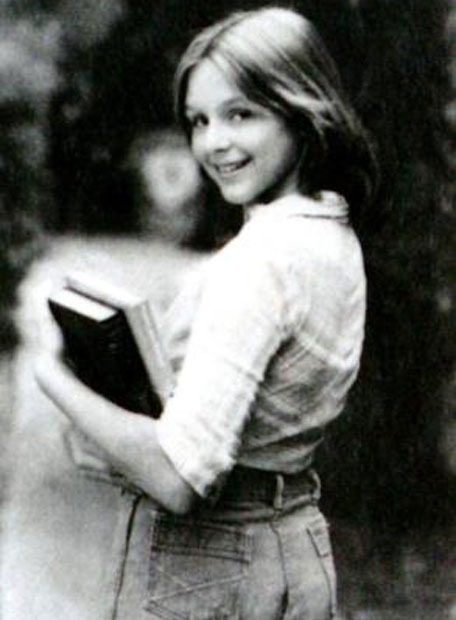
Samantha Geimer in 1977

Edited to add: A few people have brought up the 1969 murder of Polanski’s pregnant wife, Sharon Tate, and the fact that he is a Holocaust survivor.

A bit of clarification – I am aware of both those facts. I do not like the fact that people use them as an excuse for what he did. I am certain that Polanski was deeply, irreparably damaged by these events. That being said, he made a CHOICE to rape Samantha Geimer. He was conscious of his actions; he even underwent a court-ordered psychiatric evaluation after his arrest. I do not think his past can be used as an excuse or justification.

Bullying Part III (or, all hail Margaret Atwood)

10 Oct

This will be the final instalment of my totally unplanned Bullying Trilogy (seriously, it started out with me just wanting to talk about clothes).

After I made my last post talking about how I was bullied in my teens, my friend Audra asked if I’d read this 2011 article from New York Times, Bullying As True Drama. In fact, I had read it when it first came out and hadn’t really given it much thought. Re-reading it, though, I found myself nodding and muttering, yes, yes, yes under my breath.

So much of this article hits home for me. This part, for instance:

Many teenagers who are bullied can’t emotionally afford to identify as victims, and young people who bully others rarely see themselves as perpetrators. For a teenager to recognize herself or himself in the adult language of bullying carries social and psychological costs. It requires acknowledging oneself as either powerless or abusive.

Or this:

While teenagers denounced bullying, they — especially girls — would describe a host of interpersonal conflicts playing out in their lives as “drama.”

At first, we thought drama was simply an umbrella term, referring to varying forms of bullying, joking around, minor skirmishes between friends, breakups and makeups, and gossip. We thought teenagers viewed bullying as a form of drama. But we realized the two are quite distinct. Drama was not a show for us, but rather a protective mechanism for them.

And especially this:

“Teenagers want to see themselves as in control of their own lives; their reputations are important. Admitting that they’re being bullied, or worse, that they are bullies, slots them into a narrative that’s disempowering and makes them feel weak and childish.”

Like I said in my last post, bullies can smell a victim. The minute that you admit to yourself or to others that you’re being victimized, then I guarantee you that, barring serious intervention, the bullying will get worse. To make matters even more difficult, many kids (and adults) don’t realize that they’re bullies; this behaviour is so ingrained in our culture that it seems downright normal. I’m certain that most of the kids inflicting “drama” on others have, at some point, been on the receiving end of “drama”. To them, it’s an unpleasant but ultimately unavoidable part of life.

We also need to realize that the ways in which bullying happens have changed; it often occurs online, or through texting; it’s not always public. This, then, is where I think David Dickson, chairman of the Bullying Prevention Initiative of California, really misses the mark with definition of bullying as happening, “typically in a social setting in front of other people“. That definition certainly doesn’t hold true today; in fact, I’m not sure that it’s ever been accurate.

One of the best literary instances of bullying that I can think of is the torment that Elaine Risley goes through at the hands of her so-called “best friends” in Margaret Atwood’s Cat’s Eye. Though all three of her friends are party to the bullying, few outside of that group know what’s happening. In fact, Elaine is pretty clear about the fact, were she to tell anyone about being bullied, she would feel as though she were breaking some kind of sacred code:

“Whatever is going on is going on in secret, among the four of us only. Secrecy is important… to violate it would be the greatest, the irreparable sin.”

A few adults in Elaine’s life seem to have some inclination as to what’s going on; she hears the mother of one of her friends saying that she deserves to be bullied because she’s a “heathen”, and, several years after the bullying occurs, Elaine’s mother makes a vague reference to the girls giving Elaine a “bad time”. Those instances aside, none of the grown-ups seem to know or understand the severity of what’s happening. The three girls are at Elaine’s school, and one of them is even in her class, but none of the teachers seem to notice that anything is amiss with their relationship; even her peers see only a group of “best friends” and nothing more.

Based on all the above, I wouldn’t say that Elaine’s bullying is public; in fact, her tormentors are very careful to maintain the façade of friendship that they’ve built up. Does that mean that it’s not bullying?  Elaine is certainly emotionally, mentally and physically scarred by what she’s going through; not only are her self-confidence and happiness eroded to the point of non-existence, she also begins experiencing symptoms of severe anxiety such as fevers, stomach aches and tendencies of self-harm (among other things, she begins biting her fingers, and pulling patches of skin off her lips and the soles of her feet).

Another important thing to note is that, much like the girls mentioned in the Times article, neither Elaine, her friends, nor the adults in her life ever use the term bullying. Instead, they use euphemisms like giving her a hard time. At one point Elaine’s mother even tells her not to let the other girls push her around, and not to be spineless, as if that’s any kind of helpful advice. So the message that Elaine receives both from her “friends” and the adults in her life is that the way she’s being treated is her own fault.

This, then, helps explain why, when the balance of power shifts between Elaine and her “friend” Cordelia,  Elaine begins to bully her back. While Cordelia spent most of grade school bullying Elaine, Elaine turns around and spends much of high school treating Cordelia equally terribly. In her mind, though, she’s not a bully; she can’t be, because, in Elaine’s eyes and the eyes of the world, her “friends” from elementary school weren’t bullies either.

At one point, when things are at their worst, Elaine’s mother says to her,

I wish I knew what to do.

And that, that right there, is often the hardest pill for both adults and teenagers to swallow – the fact that when bullying or “drama” occurs, the adults involved often just don’t know what to do.

I’m going to go out on a limb here and guess that part of the reason teens started using the term “drama” to sort of re-brand bullying was the realization that, possibly for the first time in their lives, the adults around them had no clue how to stop them from hurting. So the term “drama” isn’t just a protective mechanism for the kids themselves; it’s also their way of protecting their parents and teachers, a way of reassuring them that it’s okay that they have no idea how to help because it’s nothing, just drama, and their help isn’t needed.

Matt and I were both bullied when we were younger, and because of that we’ve talked extensively about what we would do if Theo was ever bullied. I would like to say that we’ve come up with an awesome plan but, really, we haven’t. If things were ever to get really bad and Theo were to express a desire to change schools, Matt would prefer to go ahead and do that, whereas I would rather that he learn to work things through with his peers rather than running away. Of course, Matt doesn’t know what he would do if things were equally bad at Theo’s new school, and I have no idea how Theo is supposed to learn to rationally work things through with a bunch of hormonally-crazed teenagers.

I think, though, that at the end of the day that Times article has it right; instead of focussing on the “negative framing” of bullying, we need to work towards teaching our kids what healthy peer relationships look like and how to be good digital citizens. We need to teach our kids empathy and the ability to recognize when “drama” has gone too far. We need to find ways to empower our kids instead of making them feel weak or victimized.

I know, I know, this is a lot of talk without a lot of substance to back it up, but hey – I’ve hopefully got a few more years to figure it out. And while I’m teaching Theo how to be a smart, confident, independent person, I’ve got him to teach me how to be a thoughtful, wise and effective parent. So far, I think we’re both doing a pretty okay job.

Failure Is Easy (And Sometimes Success Fucking Sucks)

4 Oct

I did a teaching demo today for the owners of a local yoga studio. It was an amazing opportunity – their space is beautiful, they have a ton of teachers that I love and respect on their schedule, and it’s walking distance from my house. I’ve known the two owners for nearly a year, and they’re wonderful women – both are amazing instructors who have a quiet, gentle presence that would put anyone at ease.

Needless to say, I was fucking petrified.

I started out by nervously giggling my way through a short interview, and then spent a few minutes fumbling around with the audio system, trying to get my music to play and hoping that the trembling in my hands wasn’t obvious. I’d planned and reviewed the sequence that I was going to teach, so fortunately I didn’t forget it or anything, but my voice had gone strangely squeaky, and I could tell that my breathing was shallow. After a few minutes, though, I hit my stride and started to feel more confident. After all, I teach several times a week, right? I know how to do this.

Right?

Afterwards, they smiled at me, and told me what a lovely teaching voice and style I had, mentioned that I’d given excellent cues and had clearly been well-trained, and finally said that I had a beautiful practice.

Even a three-year-old could have heard this but coming a mile away.

But, one of them said gently, we noticed that you didn’t look at us. Do you ever walk around the room while you teach? Do you ever offer adjustments?

I do, I do, I stammered, I mean, maybe not as many adjustments as some other teachers, but I can do them. I mean, we learned how to. And I can walk around the room while I teach. We did focus on that in our training. Walking, that is, around the room, and not just demonstrating the poses to the students. It was something my teachers talked a lot about.

It must have been hard to teach to us, said the other, it was probably overwhelming to teach to the two owners of the studio.

I was totally nervous, I said. Didn’t you hear my voice shaking?

It was the sort of thing I knew I shouldn’t have said even before I said it, but then it came out anyway.

They talked to me a bit longer about the importance of connecting with your students, of having a relationship with them, and of maintaining an awareness of what’s happening in the room at all times. I said a few thing that probably sounded like feeble excuses. They thanked me for coming in, said that they had no immediate spots available on the schedule, but would keep me in mind for the future. I thanked them a little too profusely for having me in to demo for them (because it’s an honour to even be asked, right?) and then rushed out the door.

I don’t know which reaction to criticism is worse: to tell yourself that what other people see is wrong, that they just don’t understand what you’re trying to do, that they’re the ones with the ones with the problem, not you, or to do what I did, which was to tell myself that I’d flat out failed.

The thing is, they were right. I didn’t look at them while I was teaching. I probably don’t connect with and engage with my students enough. I do need to get up off the mat and walk around the room more often.

I could have said to myself that I would work harder, that I would take workshops on how to give adjustments, that I would get better and be the best teacher possible. The problem with that line of thought is that it seemed overwhelming and exhausting. I was tired just thinking about it.

It was easier to tell myself that I’d failed, that I was a bad teacher, that I should just give up and move on. It was easier to blame myself for not being prepared enough, for not thinking to look at them often enough, or even for scheduling a demo like this before I felt fully confident in my skills.

Failure is easy. Failure means that I get to give up, relax, not be so hard on myself. Failure means that I get to spend more time at home with my husband and son, and less time improving myself. Failure, somehow, means less anxiety.

Success, on the other hand, can be totally scary. With every success comes the idea that you need to build on it, keep the momentum going, continue to grow bigger and better every day. And success, of course, makes every little failure seem all the more bitter.

Every time I write something on here that elicits a reaction from people, that ends up being passed around on Facebook, or generates a lot of comments, I feel like my next post has to be even better. And then if I go a few days without posting anything that gets a big response, I feel like I’ve lost it, whatever it is: the ability to write, maybe, or to communicate effectively, to touch people.

A few things, though:

1. Every post I write doesn’t have to win the Nobel Fucking Prize for Bloggers

2. I am still just getting started as a writer who is writing things for other people, and not just scrawling messy feelings in my diary.

3. I am still a novice teacher; I just graduated in June for Pete’s sake

4. Who the hell is Pete, anyway? Is it Peter like the apostle Peter, the one who became the first Pope?

5. I really hate that dude.

I am a good teacher; I am also a good writer. I have innate talent in both of those areas (I mean, if I do say so myself). BUT (did you see that but coming?), innate talent will only get you so far. The rest of the way to success is hard fucking work. It’s hard work, and the road is never smooth – every time I succeed, it will likely be followed by a few failures, and it will be a while before I get to the point where I feel like everything is settling down and working out the way I want to. Maybe I never will. See? Fucking scary.

People like to say that failure is not an option, except that it totally is. I could totally pack up my yoga mat and go home. And I could justify that decision a million ways: teaching was wearing me out (true!), I felt like I wasn’t seeing my family enough (also true!), I wasn’t sure how to improve or move forward (double true!). Failing would be easy.

But I don’t want to fail.

I don’t want that to be the lesson that I teach Theo.

I don’t want that to be the lesson that I teach myself.

So if you’ll excuse me, I will take my lovely voice, my excellent cues and my beautiful practice and go work on learning how to properly walk around the room. It’s going to suck at first, and I’ll probably screw it up the first few times I try it, but I’ll ride that out and see it through until I get better. And I will get better, because I am a smart lady who can figure this shit out.

My child, even though I am a stupid misogynist and it’s totally my fault women can’t be priests, I will pray for you.

What It’s Like To Write

27 Sep

Writing here is sometimes like standing in the middle of a crowded auditorium, peeling off layer after layer of clothing, asking, Do you like me yet? How about now? Or now?

It’s sitting in a confessional and whispering my secrets into the gloom, inhaling the church fug of old incense, furniture polish and a thousand rainy days and exhaling all of my sins.

It’s feeling like a grubby-faced kid writing a note to their crush, trying desperately to play it cool but ending  up with a barely articulate mess of feelings.

It’s sometimes like being pregnant and giving birth to a kitten, while all along I thought I was carrying a baby. And it’s not that I don’t like, maybe even love, the kitten, it’s just not what I set out to make in the first place.

It’s slogging through the morass of possible words, digging in the muck to find the perfect turn of phrase.

It’s realizing that nothing I write will ever be perfect, no matter how obsessively I revise and revise and then revise some more.

It’s hearing Audra say, Perfect is the enemy of good.

It’s wondering if anything I write will ever be good, or even good enough.

***

My friend Meredith posted this poem on Facebook and it’s so exactly right. Every word is like a knife straight through me.

My party piece:
I strike, then from the moment when the matchstick
conjures up its light, to when the brightness moves
beyond its means, and dies, I say the story
of my life

dates and places, torches I carried,
a cast of names and faces, those
who showed me love, or came close,
the changes I made, the lessons I learnt

then somehow still find time to stall and blush
before I’m bitten by the flame, and burnt.

A warning, though, to anyone nursing
an ounce of sadness, anyone alone:
don’t try this on your own; it’s dangerous,
madness.

Simon Armitage, 1993

The Oatmeal Is Actually Pretty Gross, You Guys

26 Sep

When I was a kid, I loved watermelon. Loved it. I couldn’t get enough of that shit.

Then one day, when I was five or six, I ate a bunch of that delicious summertime fruit, caught some kind of stomach bug, and ended up puking violent pink puke all night. Ever since then, I haven’t been able to stand the taste or smell of watermelon.

This is pretty much how I’m feeling about The Oatmeal right now.

A few days ago I wrote a post about The Oatmeal’s recent comic, My dog the paradox. I had some concerns regarding the misogynistic language he used in it, but I was pretty nice about it. I’m a pretty nice person, you guys.

I don’t feel so nice right now.

See, in my post about the dog comic, I was all, I’m disappointed, because I thought that The Oatmeal was smarter and better than this. I’ve since learned that apparently The Oatmeal is not better than this.

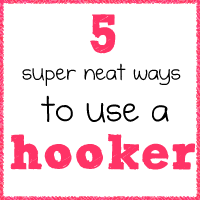
Apparently, not only did Matt from The Oatmeal write a comic about his dog, he also wrote an extremely hilarious comic called 5 Super Neat Ways To Use A Hooker. I know! So funny! I bet you’re laughing already, without even having clicked on the link!

Basically it’s a comic about how sex workers are objects, and you could use them in a variety of ways, such as to prop up couch forts, or act as bird feeders.

The whole thing is pretty fucking gross. The drawings, which show garishly made up women with blank stares and bodies hanging out of their clothing, make it even worse.

Don’t worry, though. Matt from The Oatmeal already knows that you’re angry. He knows that you’re offended. He just doesn’t care, because the problem isn’t him, it’s you.

In his contact section, he’s pretty open about the fact that he doesn’t give a shit about what you think. Not only that, but he definitely doesn’t want to hear anything negative from you about his comics:

Do not expect diplomacy. The Oatmeal is a one man operation, and this gives me the right to say horrible things to you if it pleases me. You may even have a valid point or fantastic insight, but this won’t stop me from calling you horrible names and claiming to have spent an evening or two with your mother. [hahaha, a YOUR MOM joke – those things are always hilarious!]

Do not email me because you are offended by: my hooker comic, eating horses, abortion, how Twilight works, or my usage of the word retard.

Do remember that this site is for fun, and to not take it too seriously. If you don’t understand satire don’t email me.

Um, Oatmeal Dude? I think you might be the one who doesn’t understand satire. Let’s have a look-see at how Merriam-Webster defines it, shall we?

1: a literary work holding up human vices and follies to ridicule or scorn

2: trenchant wit, irony, or sarcasm used to expose and discredit vice or folly

In what way is 5 Super Neat Ways To Use A Hooker holding up human vice and folly to ridicule or scorn? I’ve got news for you, buddy: it’s not. What it is doing is reinforcing the idea that sex workers aren’t people.

We live in a world where being a sex worker is the most dangerous occupation in North America, at least in terms the homicide rate. According to one statistic, the homicide rate for sex workers was estimated to be 204 per 100,000. Compare that to the next highest rate, which is for female liquor store employees and is 4 per 100,000 or the highest rate for men, which is 29 per 100,000 for male taxi drivers.

We live in a world where Robert Pickton confessed to murdering 49 women, most of them sex workers. A world where he disposed of their bodies in a variety of disgusting, inhuman ways, and then had the balls to initially plead not guilty.

We live in a world where, in a recent study done in San Francisco, 82% of the sex workers interviewed had been physically assaulted, 83% had been threatened with a weapon and 68% had been raped while employed as sex workers.

A huge part of this violence is because sex workers are viewed by society as things rather than people. Things to be used. Things that exist solely to fulfill men’s needs. Things to be mocked in an online comic.

But, you know, Matt from The Oatmeal is being totally satirical when he compares them to objects or animals, or when he draws their blank, expressionless faces and their sagging, doughy bodies.

I used to think The Oatmeal was smart and funny. I mean, it has a lot of comics about cats, and I am a total sucker for comics about cats! I also enjoyed the way it dissected pop culture, and some of the stuff it had to say about religion. I thought the dude who wrote it was pretty hilarious and cool.

Now, though, every time I think of The Oatmeal, I get that pukey watermelon feeling. I can’t ever look at it the same way, and it’s going to be hard not to yell THIS GUY HATES WOMEN when people try to share his comics with me.

You know what pisses me off the most? The fact that I was willing to give him the benefit of the doubt. The fact that I was all, well, I’m sure he didn’t mean to be a misogynist. Even if I’d just seen his hooker comic, I might have been able to continue to believe that he didn’t know any better, or that he didn’t understand. But no, his contact section clears that right up for me – he knows that what he’s saying is terrible, he just doesn’t give a fuck. He doesn’t give a fuck because it’s satire.

I’m so angry and disappointed. I’m so fucking tired of smart, funny things that are basically men-only spaces. I’m tired of feeling like I’m a persona non grata just because I have a vagina.

Man, misogyny. THIS IS WHY WE CAN’T HAVE NICE THINGS.

On fear and change

8 Sep

A few years ago, I had a somewhat serious cycling accident. I mean, not super serious; I didn’t die, wind up in a coma, or sustain a massive head injury. Still, it was bad enough that it caused a major disruption in my life.

I had just started the ASL Interpreter program at George Brown College, and, on my fourth day of classes, I was running late. I am normally an insanely wary cyclist, especially when it comes to streetcar tracks, but that day all I could focus on was getting to school on time.

It happened at Church and Adelaide. I was preparing to make a left, and, in the process of moving into the turning lane, was looking back over my shoulder to make sure that there were no cars behind me. Suddenly, I felt the sickening sensation of my front tire leaving the pavement and sliding over the metal of the streetcar tracks.

I tried to correct myself before my wheel went into the groove, but I couldn’t, and I felt a shuddering thunk as my front tire fell into the track. I tried to stop, but I had too much speed and momentum. My back wheel slid out to the right, and I felt my bike jackknife beneath me.

I am going to fall, I realized. In the middle of traffic. I might die.

There was absolutely nothing that I could do.

Weirdly, my memory is a total blank from from the time I realized that I was going to fall until the moment when I was suddenly sitting on the hot, late-summer pavement, watching my bike’s wheels spin impotently in the air. I didn’t lose consciousness or anything like that; I guess my mind just kind of shut down, unable to process what was happening.

By the time I came back to myself, a crowd had started to gather. Two people convinced me to get out of the middle of the road (for some reason I actually needed to be talked into this), and helped me over to the curb, while another called an ambulance. A third wheeled my bike to a side street and locked it there, leaving me with a map of where to find it once I was able to come get it. Two women waited with me until the paramedics came.

At the hospital I found out that I’d fractured my tibial plateau (part of the knee joint), and needed both a bone graft and a metal plate. Because I wasn’t technically emergency surgery, I had to wait until a slot opened up for me, which took three days. During that time I wasn’t allowed food or water from midnight until 8 am, just in case an operating room became available. I had to share a hospital room with three other people; I had to listen to a doctor and a group of interns tell a woman that she was going to die. They closed the curtains around my bed for that, but that did little to shut out the sound.

Recovering from surgery was hell (although I did quickly develop a fondness for strong painkillers). I couldn’t bear weight on my leg  for two months, and then when I could, I had to have physiotherapy to re-learn how to walk. I was in constant pain, and so, so tired; everything seemed like such an enormous effort. Getting dressed and leaving the house was too much for me some days. I mostly couldn’t do anything except lie on the couch, read trashy books and pop pills. School was out of the question, so I dropped out. The whole life that I’d mapped out for myself, the one that was supposed to rescue me from the drudgery of working retail, crumbled.

But, somehow, none of that was as bad as that one, single moment on my bike when I’d realized that I was definitely, for sure, not kidding going to fall. The scariest part of that was not the idea that I might die, but the fact that I had no idea what was going to happen.

Often change, especially change that comes about as a result of a decision that I’ve made, brings me back to that same panicky fear. To extend the metaphor, I am that same careful cyclist in my life, always trying to make the best choices – obeying stop signs, signalling when I change lanes, trying to stay aware of the traffic around me. But really, any choice could result in a terrible fall – I could be doing everything right, and still end up lying in the road, unable to walk.

How can I ever be sure of not falling? How can I be sure that going back to work is the right choice for our family? What if I can’t succeed as a yoga teacher? What if daycare ends up being totally wrong for Theo? When I try to answer any of these questions, I come back to that same terrifying response: I have no idea what’s going to happen. Sure, I can make assumptions, based on research that I’ve done or past experiences, based one what I know about myself and other people. But I can’t know for sure, and that is fucking scary.

On bad days, even little decisions can seem overwhelming – whether or not to publish a blog post, what to have for lunch, what to do in the evening after Theo goes to bed. Each one carries with it the potential of regret – what if I hurt or offend someone with my writing? Or what if it’s no good, or not ready to post? What if I take one bite of my food and realize that it’s not what I really wanted? What if I’m spending too much time online, and not enough with Matt?

Some days it seems like everything has the potential for disaster, or at least disappointment.

So what’s the answer? Try to plan out my life to the point where I feel like I have little or no need to make choices? Hide in my house and try to mitigate the likelihood of fear and disappointment? Tell myself to just get over it and stop caring so much already?

I guess that the best that I can do is continue to take measured, studied leaps and do my best not to fall. To try to take risks when necessary, and even sometimes when not necessary. And most of all, to remember that falling is not the end of the world, and that everyone falls sometimes.

At the end of the day, I just have to hope that every fall is as lucky as the one I had that day at the corner of Church and Adelaide. I have to hope that I am always so fortunate as to have a crowd to help me to safety, and then a team of people to put me back together. I also have to realize that even if there is no one there to help me, I am capable of helping myself.

Tonight is a rough night. My mind is all snarled up with fear and uncertainty and self-doubt. These past few weeks have been one, long preparation to leap, and, having now jumped, I’m still not sure if I can see the place where I’m supposed to land.

I promise I’ll let you know if and when I get to the other side.

Yes, this is actually me.