Tag Archives: relationships

Motherhood (or, a few things that I’m ashamed to admit)

3 Nov

Sometimes I wonder if I was meant to have kids.

Don’t get me wrong, I love Theo. I really, really love him. He is the greatest. I mostly can’t imagine what my life would be like without him. So let’s be really clear on all that stuff right now.

But sometimes I just wonder if I’m really cut out to be a mother. Like, I think I might just have the wrong personality for it?

It’s not that I think that I’m a bad mother; I think that I’m a loving, attentive parent. When Theo’s around, I spend my time interacting with him, reading and playing and doing puzzles. We sing songs and give each other high fives and plan our imaginary trip to France (or at least, Theo points out France on the globe and yells out Mimi! Mimi!, the name of the French teenager who used to babysit him, while I tell him how great the shopping and dining are). It’s fun, I guess, but I’m just not sure I really get enough joy out of all this. I mean, I am supposed to enjoy it, right? Not just endure it?

I do enjoy some of it, of course. But a lot of it is mind-numbingly boring. Are mothers supposed to find their kids boring? Jesus, I mean, I sound pretty awful here, don’t I?

In many ways, this age is a lot easier than when Theo was an infant. But when he was pre-verbal, I could at least pretend that we were interested in the same things. Lecturing him about feminist rhetoric or telling him long, complicated stories about my favourite historical figures would earn me the same look of wide-eyed interest as reading Goodnight, Moon or singing him the alphabet song. As long as I kept up that sing-song baby voice, or used funny accents, I was golden. The Second Sex, in case you were wondering, sounds great when you alternate between a crisp upper class British dialect and a slow southern drawl. Now that Theo is talking, though, he has definite opinions on what he does and doesn’t like. For instance, he’s really into tractors; unfortunately for me, he’s not so much into Henry VIII.

I tell myself that it will get better. It’ll be easier when he’s older, when I can really teach him about the things I love, like history and science and bad 80s sitcoms. I like that kind of thing; even now, I love taking him places where he can learn something new. For example, he’s probably the only 21-month-old who can point out the lute at the local museum. As soon as he sees it, his eyes light up and he starts shrieking, lute! lute! like a maniac. We talk about how the lute is a lot like Matt’s guitar, and how people used to use it to make music; he seems to understand, and my heart swells when I realize how many new things I help him learn on a daily basis. I think I’m good at that kind of thing, you know? I mean, lute-splaining in particular but also teaching things in general.

Much of the rest of parenting I just find to be grinding and dull, and I feel like I spend a lot of my time alternating between trying to find ways to keep Theo entertained and following him around saying, no, no, no, stop as he attempts to destroy my house. Mealtimes and diaper changes often turn into a power struggle, and by the time they’re over I nearly always feel like a total pushover, and then wonder whether or not my tendency to give in way to easily will result in my kid being a spoiled brat. When I’m home alone with Theo, more often than not I’m counting down the minutes until Matt walks through the door. On weekends, when my friends are making all kinds of fun plans, I’m envious of their freedom and spontaneity. When Monday rolls around, I’m thrilled to be able to pack him off to daycare, and I celebrate by having a quiet coffee all by myself.

One thing I hear a lot about mothers who have nannies for very young children, especially live-in nannies, is, why did she even have kids if she doesn’t want to raise them herself?

I wonder what they would say about me if they knew the truth.

I always thought that I wanted more than one kid, but now I’m not so sure. I’m not sure I ever want to be pregnant again, and I dread the possible recurrence of postpartum depression. And to be honest, I found having an infant really fucking hard all on its own; I honestly can’t imagine what it would be like to have an infant and a toddler. I get tired just thinking about it. I know friends who have done it, friends with two or even three young children, and they make it seem easy. When I look at them, though, I think, better you than me, buddy.

I guess I might just be too selfish to be a mother, or maybe too lazy. It’s possible that I value my quiet personal time way too highly; it’s possible that I flat out don’t have enough patience or endurance for this type of thing. Whatever it is, it’s something that’s wrong with me, not with Theo.

I love Theo with all of my heart. I love him so much, often more than I ever thought possible.

I just don’t always love how he’s changed my life.

On Childbirth And Bodily Autonomy

29 Oct

A friend of mine recently gave birth. She’d planned on have a natural, drug-free childbirth, but instead wound up having an emergency c-section. After 30 hours of labour, her son’s head still wouldn’t (or couldn’t) engage, and his heart rate started to plummet frighteningly low. After a few minutes of discussing their options with her midwife and the on-call OB, they decided that a caesarean was her best option.

Her son was born not long after that, a whopping 9 pounds 5 ounces, with a full head of dark hair. He was beautiful and healthy, but instead of feeling as if she’d made a decision that could potentially have saved his life, she felt as though it had been her fault that she’d had to have a c-section. She thought that if she’d just somehow tried harder, or prepared better, she could have had the birth she’d wanted.

I talked to her a few days after her son’s birth, and, of course, asked how she was feeling. “I feel like I failed,” she said, sounding as if she was about to cry. “My son is only a few days old and I’ve already failed him.”

I knew what she meant, because I’d been there. When I’d found out that I would have to have a caesarean, I also, irrationally, had felt as if it was my fault, as if I was already failing my son. I still feel weird about my son’s birth, even now, nearly two years later, or rather I feel like other people are weird about it. I can’t tell you how many times I’ve had someone ask about my childbirth experience, only to shut down the whole conversation when I tell them I had a planned c-section. I often get the sense that other people think that I haven’t really given birth, or that I’ve taken the easy way out.

If you don’t have kids and/or haven’t spent a billion hours on the internet debating all things baby, you might be wondering why natural childbirth is such a big deal. Why does anyone even care?

For starters, giving birth without drugs or interventions means that you and your child will not have to experience the side effects of sedation or the potential harm from invasive procedures. Babies born naturally are more alert, which will make bonding and breastfeeding easier. Plus, not having an epidural means that you can get up and walk around during labour, or find the position that works best for you when it’s time to push. Without drugs, the mother’s recovery will be faster, and she can often leave the hospital the same day, if she wants to. And, of course, there’s the persistent idea that childbirth is more of a “real” experience if you are able to feel every sensation associated with it.

Many people advocate for natural births these days; even the nurse who taught our prenatal class was pretty anti-epidural. Part of this comes as a backlash against the medical model of childbirth, which, not that long ago, saw women in labour being put into a Twilight Sleep, a drug-induced state in which women were conscious but not lucid, and, though these women still experienced pain, were not able to remember it afterwards. In many ways, natural childbirth is an attempt to reassert control over our own bodies; to tell the doctors (most of whom were and are still men) that pregnancy is not a disease, and should not be pathologized. Another part of  the desire for drug-free childbirth comes from the assumption that “natural” is better, or from the idea that our bodies are designed to give birth without the aid of drugs or interventions.

Unfortunately, it’s hard to have a natural birth, and I don’t just mean the physical pain and exertion associated with drug-free childbirth. Hospitals make many people anxious, and trying to give birth while surrounded by beeping machines and scary-looking medical equipment is challenging, to put it mildly. On top of that, you have a regular rotation of people coming in and out of your room, wanting to check how far you’ve dilated, what your heart rate is, what the baby’s heart rate is, and a whole laundry list of other stuff. So giving birth in a hospital setting isn’t exactly conducive to that whole Mother Earth Goddess ideal that many of us hold.

So why not give birth at home? Good question. The answers range from being worried about not making it to the hospital in time if there are complications to not want to have to be bothered cleaning up the mess afterwards, and everything in between. One response that I hear very frequently form Ontario women is that they weren’t able to find a midwife; this was my experience as well.

When I had my first prenatal visit with my family doctor, I was eight weeks pregnant. She asked if I’d thought about how I wanted to give birth, and I told her that I wanted a midwife rather than an OB. She looked at me like I was crazy, and said that there was no way I would be able to find a midwife this far into my pregnancy. But I’m only eight weeks! I said. Technically I’ve only been pregnant for six weeks, if you take into account the fact that the first two weeks of  a 40 week pregnancy happen before a woman ovulates.

My doctor just shrugged and said that there weren’t enough midwives in Ontario, then asked what hospital I wanted to deliver at. When I told her, she frowned and said, Oh, I don’t know if we’ll be able to get you into Mount Sinai this far into your pregnancy. I honestly thought that she was exaggerating, but it took three referrals before we were able to find an OB at Mount Sinai who was still taking patients for my due date.

That was how I learned how insanely competitive giving birth is in Toronto.

There are 540 registered midwives in Ontario, serving a total population of 12,851,821. 1 in 10 births in this province are attended by midwives; 4 out of 10 pregnant women in Ontario would like a midwife but can’t get one. That obviously makes having a midwife-assisted birth in general, and a home birth in particular, pretty challenging. Which, as I said above, can make having a natural birth difficult or even impossible.

That being said, you would think that the natural birth community would be pretty understanding of the fact that most women still end up using the medical model of childbirth. While I would say that the majority of us are pretty chill no matter how your kid comes into the world, there seem to be a lot of people passing judgment on how women give birth.

It’s bad enough that some proponents of natural childbirth make women feel as if they’ve “failed” if they end up having unplanned interventions, but that’s nothing compared to their treatment of women who know ahead of time that they want an epidural, or those who choose to have a planned c-section. The funny thing is that these are often the same women who are very pro-choice and will throw around the phrase “my body, my choice”.

Well, is it our choice, or isn’t it?

It’s different, they’ll argue, when there’s a wanted child involved. It’s not your body anymore. You need to act in the child’s best interests. They’ll send you scary news articles, like this one, which references a study showing that children born before 37 weeks are 5 times as likely to have autism. That particular article is one that someone sent me when they found out I was going to have a planned c-section at 36 weeks; when I told her that the article had upset me, she said that she wasn’t trying to be mean, just giving me the “facts”.

Here are the facts: if I had had a natural childbirth, my son could have died. If my pregnancy had progressed past 36 weeks, my doctor felt that there was a good chance that my water would break, which could have lead to an umbilical cord prolapse, which would have meant death or brain damage to my son.

The thing is, no matter whether or not you are carrying a child, it’s still your body. You still have bodily autonomy. I’m not saying pregnant women should go out and do lines of coke chased by vodka shots, but I do think that we need to allow women to make choices regarding childbirth without judging them.

The argument that I hear most from people decrying women who choose the medical model of childbirth is that they’re selfish. They want an epidural because it’s easier for them. They want a c-section because they don’t want to have to go through labour. They’re planning to be induced at 39 weeks because they want to skip out on the last week of pregnancy. If these are thoughts that you enjoy thinking, here’s something I really, really want you to keep in mind: you do not know the whole story.

You don’t know why someone wants an epidural, I mean, not really. You don’t know why they might want a c-section. Sure, they might give you a reason, but what they tell you may not necessarily be the whole truth. They might have a medical condition that indicates a c-section, or they might be a survivor of sexual abuse and feel triggered by the idea of a vaginal birth. Or they might just not want to have a natural birth, and that’s okay too. Know why? Because bodily autonomy, that’s why.

The thing that frustrates me the most about this judgmental behaviour is how purely anti-woman it is. It stems from the idea that most women aren’t capable of making decisions regarding how they want to give birth. It assumes that a woman who chooses to have a planned c-section hasn’t done her research, has been brainwashed by the medical establishment, or is uneducated when it comes to birth options. It plays into the idea that women are irrational, thoughtless and downright selfish. It promotes the idea that, being left to our own devices, we will make choices that are harmful to us and our children.

These are the same ideas that lead to the body policing that many pregnant women have to endure. We’re told to eat more, but not gain too much weight. We’re cautioned not to exercise too hard, but also to stay fit and healthy. We have people watching every bite we eat, and I even know someone who was denied service at Starbucks because the barista didn’t think that she should have caffeine. When are we going to let women be responsible for their own bodies?

Look, I’m all for natural childbirth. That was what I wanted when I was pregnant with Theo, and if I ever have another child, I would like to try for an unmedicated VBAC. But that’s my choice, based on research that I’ve done and what I’ve heard from friends. If another woman makes a different choice, then I’m sure as hell not going to tell her she’s wrong. Your child’s birth is one of the most important days in your life (I mean, probably, right?), so why would you want to make someone feel bad about how theirs went down? Shouldn’t we be celebrating the fact that we all went through hell, in one way or another, to bring our children into this world?

I think a big part of the problem is that we still haven’t really figured this childbirth stuff out. We still don’t know what works best for us, both as individuals and as a society. The medical model of childbirth has seen the infant mortality rate decline 90% in the last hundred years, and the maternal mortality rate has declined by 99% in that time. On the other hand, within that medical model women still feel as if they are being bullied into interventions and procedures that they don’t want, and often come out of childbirth feeling as if they were coerced into accepting “help” that they felt they didn’t need.

I don’t know what the answer is, I really don’t. More midwives, for a start. Better education about birth options and the possible complications of interventions would also be good. Above all, though, I think we need to put more trust in women. I think we need to allow women to make more of their own choices, and we need to believe that they are capable of making the right choices, not just for themselves, but for their children.

Frida

22 Oct

On Friday night, Matt and I went on a For Real Date to see the Frida & Diego exhibit at the Art Gallery of Ontario. Frida Kahlo is probably my all-time favourite painter; I have literally been counting down the days until this show opened.

I have friends who know a lot more about galleries and exhibiting art than I do. They make intelligent remarks like, I wasn’t thrilled with how this collection was curated, or, I thought the lighting in the third room really brought an interesting tone to the whole show. I hope you’re not here to read anything like that, because I honestly know very little about how galleries should or shouldn’t display art. On top of that, I’ve been waiting at least ten years to see Frida’s works in person, so the AGO could probably have held the show in a dank basement room lit by a single 60-watt bulb and I would still have been thrilled.

The Frida & Diego exhibit is an assortment of Kahlo and Rivera’s works, often juxtaposed in interesting ways. The first room is filled with paintings from Rivera’s days as an art student in Madrid and Paris; they’re neat because you can clearly see the time he spent dabbling in Realism, Cubism and Post-Impressionism. That being said, although his early paintings are clearly technically very good, for the most part they aren’t terribly interesting or different.
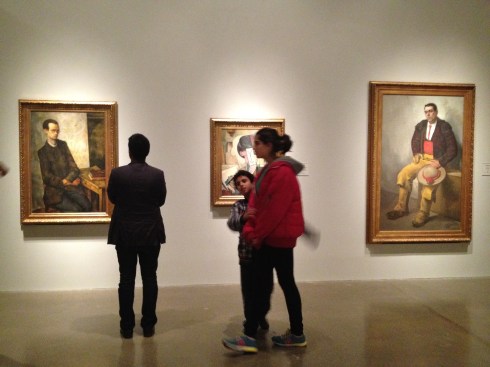
Three of Rivera’s earlier works

The second room is more still more Rivera, and includes a reproduction of one his most famous murals, The Arsenal, starring Frida as a communist bad-ass distributing weapons to the people.

Finally, in the third room, we begin seeing some of Kahlo’s work. I dragged Matt from painting to painting, drinking in the familiar scenes and pointing out details that I was noticing for the first time. I began to look at the dates of the paintings, trying to slot them into the narrative of her life, and in doing so  I was struck me was how young she was. I mean, I’d always known that she’d died young, but for the first time I realized that she’d been painting masterpieces when she was younger than me.

Frida was born in 1907 (although she often gave her birthdate as 1910 in order to coincide with the beginning of the Mexican Revolution), and was the third of four daughters born to Guillermo and Mathilde Kahlo. Frida’s father came from a German-Jewish background, and her mother was of Spanish and Indigenous descent; Frida was fascinated by her parents’ history, and her own mixed heritage would come to play an important part in her art. In 1927, at the age of 20, she already considered herself to be a professional painter. She married Diego Rivera in 1929.

Her seminal painting Henry Ford Hospital, which depicts a bed-ridden Kahlo shortly after a traumatic miscarriage, dates from 1932. I kept looking at it and thinking, she was only 25 when she went through that. She was only 25 when she painted that.

Henry Ford Hospital, 1932

Kahlo’s 1932 miscarriage (which was the second of three that she suffered) was by no means the first time she’d experienced pain or hardship in her life. At the age of six she was stricken with polio and, although she made a near-full recovery, for the rest of life her left leg remained smaller and weaker than the right. Then, at the age of 18,  she was riding a bus that collided with a tram car. She suffered massive injuries, including three breaks in her spinal column, a shattered pelvis and multiple other broken bones. She was also skewered by a steel handrail, which pierced her abdomen and came out her vagina. She later told her family that the handrail took her virginity (totally untrue, by the way).

Her boyfriend at the time, Alejandro Arias, described the scene of accident to Kahlo biographer Hayden Herrera in gory but also hauntingly beautiful terms:

Something strange had happened. Frida was totally nude. The collision had unfastened her clothes. Someone on the bus, probably a house painter, had been carrying a packet of powdered gold. This package broke, and the gold fell all over the bleeding body of Frida. When people saw her they cried, ‘La bailarina, la bailarina!‘ With the gold on her red, bloody body, they thought she was a dancer.” – Hayden Herrera, Frida: A Biography of Frida Kahlo

Frida suffered from the effects of that accident for the rest of her life. She underwent 35 separate surgeries in an attempt to repair the damage. The handrail had gone through her uterus, leaving her unable to carry a baby to term; this was especially heartbreaking, as Frida wanted almost more than anything to have a child with Diego.

Part of the reason that Kahlo wanted to have Rivera’s child is that she thought it would bind them together in a way that marriage on its own couldn’t. Diego was a known womanizer, and continued to sleep with other women even after he married Frida. Deeply hurt by Diego’s infidelity, as well as her own inability to carry a child (which would have been Rivera’s fifth, as he had four others by past wives and mistresses), Frida began to have her own affairs with both men and women. Throughout the rest of her life Frida had dozens of lovers, including, purportedly, Josephine Baker and Leon Trotsky.

The fact that both Frida and Diego had numerous love affairs over the course of their marriage (which lasted from 1929 until 1939, then resumed in 1940 and lasted until Frida’s death in 1954), and the fact that both of them slept with women, makes the AGO’s juxtaposition of the two portraits of Natasha Gelman, one each by Kahlo and Rivera, all the more interesting.

Kahlo’s portrait of Gelman, 1943

Rivera’s portrait of Gelman, 1943

In Kahlo’s portrait, Gelman is unsmiling, even stern, while Rivera’s version of Gelman is languorous and sensual, a small smile playing on her lips. Kahlo’s Gelman seems matriarchal, perhaps even a bit masculine, with a square jaw and intently serious gaze. Rivera’s Gelman, on the other hand, takes on a more traditionally feminine appearance, both in the softness of her face and the curve of her hip and leg. Simply put, Kahlo’s version of Gelman looks like a fucking awesome boss lady, and Rivera’s looks like someone he would want to sleep with.

I’m no expert, but I feel like these two pictures say a lot about how Kahlo and Rivera view women, both in general and as prospective partners.

It was also fascinating to see a selection of works by Kahlo that were inspired by her miscarriages hung alongside a series of paintings by Rivera depicting mothers of young children. I can’t imagine how heartbreakingly difficult it must have been for Frida to know that Diego had children with other women; how at times she must have felt inferior and defective because she could bring another “Little Diego” into the world.
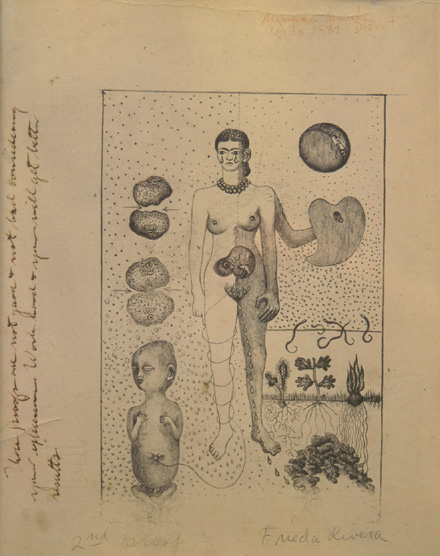
Frida Kahlo – Frida Y El Aborto

Diego Rivera – Maternidad

One of my favourite parts of the exhibit was the room that contained media by other people of Frida and Diego. There were photographs on the walls, and a black and white video of the couple was playing on the large screen. Of all the photographs that were included in this show, my favourites by far were those taken by Nickolas Muray, Frida’s former-lover-turned-good-friend.
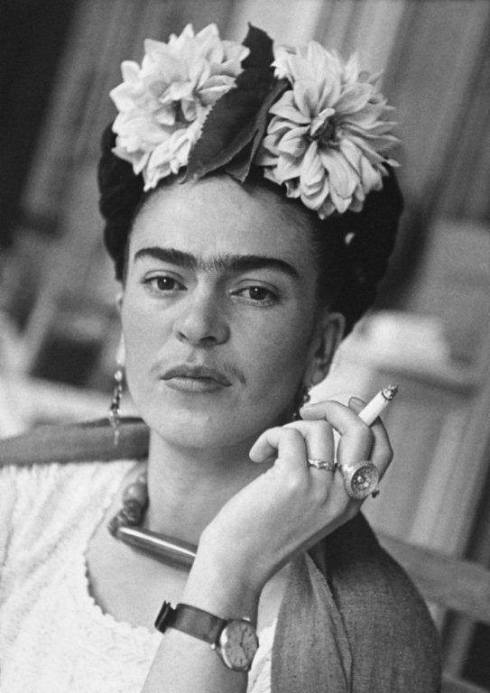
Nickolas Muray – Frida In The Dining Area Coyoacan With Cigarette

Nickolas Muray – Frida Kahlo on White Bench

In many of Muray’s pictures, Frida is looking straight into the camera. Her gaze is intimate, disarming; her eyes bore into you, and it seems like she’s just about to speak. In some of the pictures, her mouth is quirked into a half-smile, as if she and the viewer share some kind of inside joke. No one else really understands, her expression tells you, no one but you and I, that is. You feel complicit in something, but you’re not sure what.

The video was just as wonderfully intimate as Muray’s photographs. In it, Frida and Diego are shown at home, in the courtyard of Casa Azul. In their every movement, their every look and touch, their tenderness for each other is evident. At one point Frida reaches out to take Diego’s hand and place it on her cheek; her expression when she feels his palm against her face is like that of a cat sleeping in a puddle of sunlight.

On the whole, the show is wonderful. My only issue with it (aside from the fact that several of my favourite Kahlo pieces are missing) is the subtitle, Passion, Politics and Painting. The advertising done for the show, which includes the slogan, “He painted for the people. She painted to survive.” makes it seem as though the politics were all Diego’s and the passion all Frida’s. Even within the exhibit, there is much attention given to Diego’s political activities, and only a few brief mentions of Frida’s membership in Mexico’s communist party.

To say that Frida wasn’t political is a mistake; she was deeply political, and on a very personal level. The way she dressed was political, as was the way she behaved, not to mention her art. In a time when the Western culture and its concept of beauty was beginning to take over Mexico’s cultural landscape, Frida, in many ways, turned her back on it and embraced her Mexican of her heritage. She traded the European clothing of her childhood for traditional Spanish and Indigenous garb. She refused to alter her unibrow, and, in fact, accentuated it and her mustache in her self-portraits. She was known to be unfaithful to her (equally if not moreso unfaithful) husband, and took women as lovers. Perhaps most importantly, she painted and talked about things that no one had ever publicly discussed before: things like miscarriage, infertility, sexuality, violence against women and infidelity.

In many ways, she started conversations that we’re still having today.

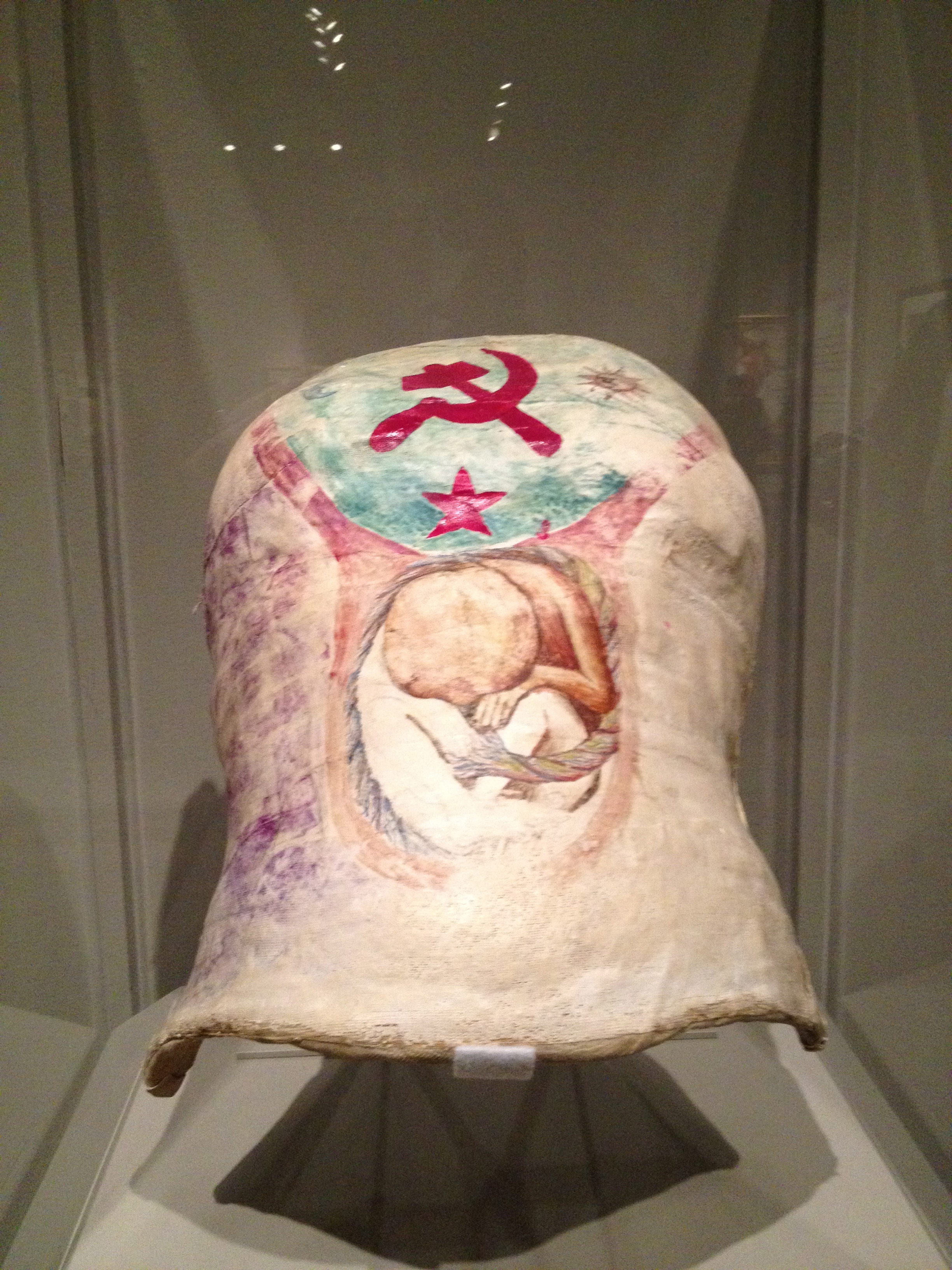
Plus, how can you think someone is not political when they paint this on their own body cast?

Kahlo’s Body Cast with Hammer & Sickle and Fetus

I wish I could explain to you how and why I love Frida so much. I keep starting sentences and then deleting them; all the words I pick seem fumbling and wrong, the emotion either overwrought and clumsy or woefully lacking. Even the things that I’ve already written here seem stilted and lifeless, which is the opposite of what writing about Kahlo’s life should be.

I guess that the best thing that I could say would be this: Frida had a really hard fucking life, but instead of backing down, she took all of her pain and heartache and turned it into something beautiful. She lived and she worked and she loved and she challenged and she pushed and in the end, I think, she won.

***

Frida died of a pulmonary embolism in 1954, at the age of 47. I mean, 47. Fuck. She was so heartbreakingly young. Shortly before her death, she wrote the following in her diary:

I hope the exit is joyful — and I hope never to return — Frida”

I hope that wherever you are now, Frida, you are joyful. I hope that you’re finally free from pain. Most of all, I hope that Diego is there with you.*
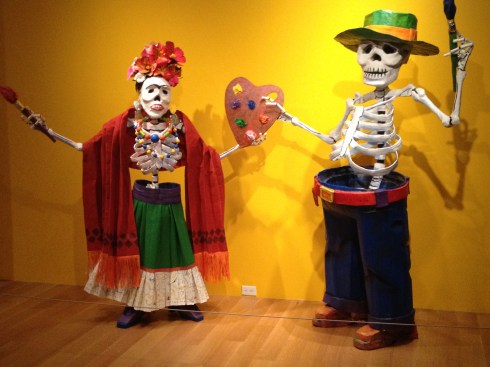
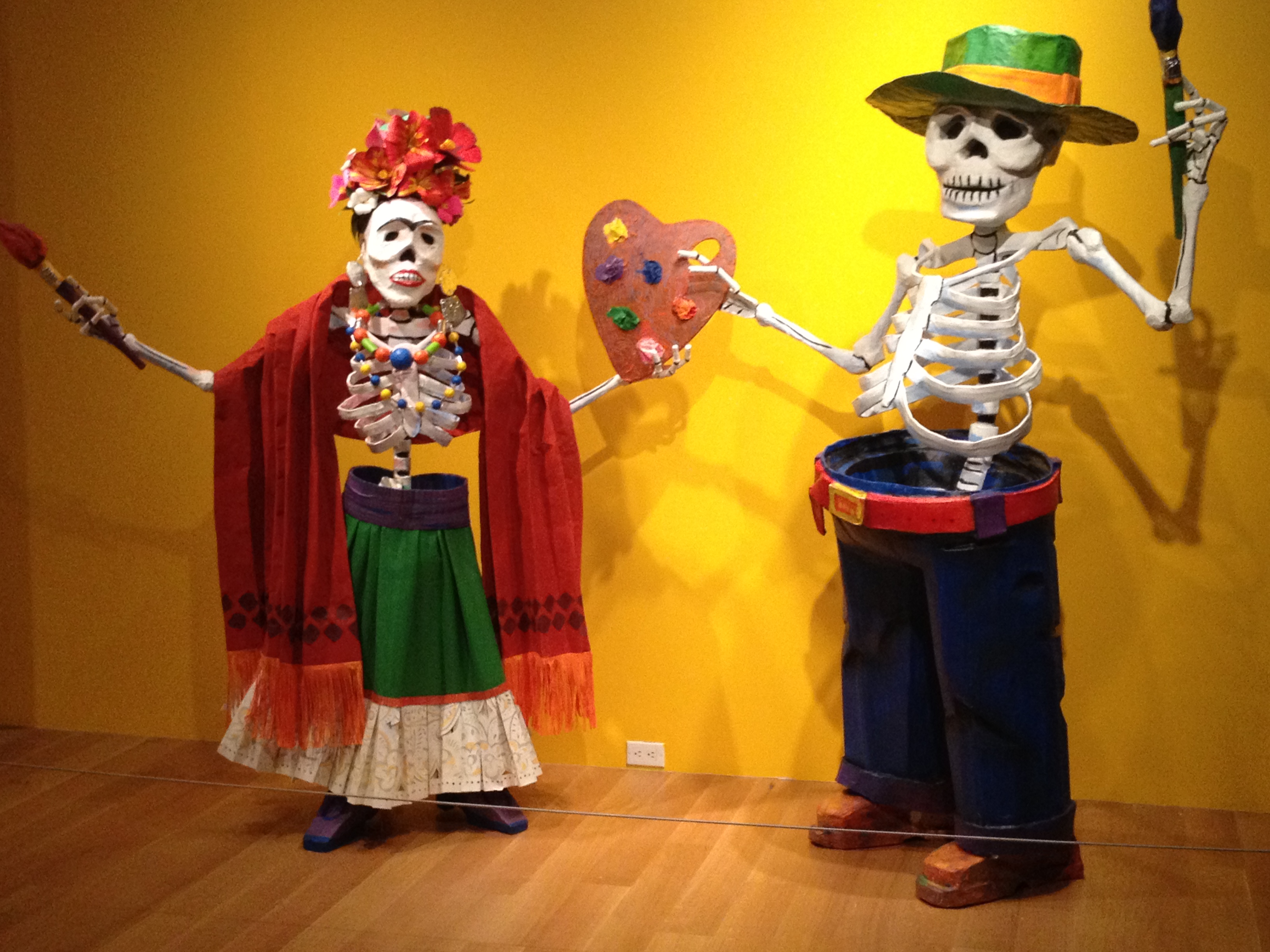
Frida and Diego ofrendas

The exhibit closes with a pair of ofrenda depicting Frida and Diego. An ofrenda is a type of Mexican home altar, most often built for el Dia de los Muertos (The Day of the Dead). An ofrenda typically represents a dead family member, and is honoured by the living with traditional offerings of food and flowers. On October 24th, Mexican artist Carlomagno Pedro Martinez will construct an ofrenda in the gallery space; visitors on that day will be given art supplies and encouraged to contribute drawings and words to Martinez’s work. The installation (along with the entire exhibit) will be on display until January 20th, 2013.

*And that he’s, like, hanging out with you and not busy macking on angels or whatever (I am JUST SAYING, okay?)

p.s. In case you weren’t sure how I felt about Frida Kahlo in general, and this exhibit in particular, here is a visual aid for you:

Bullying Part III (or, all hail Margaret Atwood)

10 Oct

This will be the final instalment of my totally unplanned Bullying Trilogy (seriously, it started out with me just wanting to talk about clothes).

After I made my last post talking about how I was bullied in my teens, my friend Audra asked if I’d read this 2011 article from New York Times, Bullying As True Drama. In fact, I had read it when it first came out and hadn’t really given it much thought. Re-reading it, though, I found myself nodding and muttering, yes, yes, yes under my breath.

So much of this article hits home for me. This part, for instance:

Many teenagers who are bullied can’t emotionally afford to identify as victims, and young people who bully others rarely see themselves as perpetrators. For a teenager to recognize herself or himself in the adult language of bullying carries social and psychological costs. It requires acknowledging oneself as either powerless or abusive.

Or this:

While teenagers denounced bullying, they — especially girls — would describe a host of interpersonal conflicts playing out in their lives as “drama.”

At first, we thought drama was simply an umbrella term, referring to varying forms of bullying, joking around, minor skirmishes between friends, breakups and makeups, and gossip. We thought teenagers viewed bullying as a form of drama. But we realized the two are quite distinct. Drama was not a show for us, but rather a protective mechanism for them.

And especially this:

“Teenagers want to see themselves as in control of their own lives; their reputations are important. Admitting that they’re being bullied, or worse, that they are bullies, slots them into a narrative that’s disempowering and makes them feel weak and childish.”

Like I said in my last post, bullies can smell a victim. The minute that you admit to yourself or to others that you’re being victimized, then I guarantee you that, barring serious intervention, the bullying will get worse. To make matters even more difficult, many kids (and adults) don’t realize that they’re bullies; this behaviour is so ingrained in our culture that it seems downright normal. I’m certain that most of the kids inflicting “drama” on others have, at some point, been on the receiving end of “drama”. To them, it’s an unpleasant but ultimately unavoidable part of life.

We also need to realize that the ways in which bullying happens have changed; it often occurs online, or through texting; it’s not always public. This, then, is where I think David Dickson, chairman of the Bullying Prevention Initiative of California, really misses the mark with definition of bullying as happening, “typically in a social setting in front of other people“. That definition certainly doesn’t hold true today; in fact, I’m not sure that it’s ever been accurate.

One of the best literary instances of bullying that I can think of is the torment that Elaine Risley goes through at the hands of her so-called “best friends” in Margaret Atwood’s Cat’s Eye. Though all three of her friends are party to the bullying, few outside of that group know what’s happening. In fact, Elaine is pretty clear about the fact, were she to tell anyone about being bullied, she would feel as though she were breaking some kind of sacred code:

“Whatever is going on is going on in secret, among the four of us only. Secrecy is important… to violate it would be the greatest, the irreparable sin.”

A few adults in Elaine’s life seem to have some inclination as to what’s going on; she hears the mother of one of her friends saying that she deserves to be bullied because she’s a “heathen”, and, several years after the bullying occurs, Elaine’s mother makes a vague reference to the girls giving Elaine a “bad time”. Those instances aside, none of the grown-ups seem to know or understand the severity of what’s happening. The three girls are at Elaine’s school, and one of them is even in her class, but none of the teachers seem to notice that anything is amiss with their relationship; even her peers see only a group of “best friends” and nothing more.

Based on all the above, I wouldn’t say that Elaine’s bullying is public; in fact, her tormentors are very careful to maintain the façade of friendship that they’ve built up. Does that mean that it’s not bullying?  Elaine is certainly emotionally, mentally and physically scarred by what she’s going through; not only are her self-confidence and happiness eroded to the point of non-existence, she also begins experiencing symptoms of severe anxiety such as fevers, stomach aches and tendencies of self-harm (among other things, she begins biting her fingers, and pulling patches of skin off her lips and the soles of her feet).

Another important thing to note is that, much like the girls mentioned in the Times article, neither Elaine, her friends, nor the adults in her life ever use the term bullying. Instead, they use euphemisms like giving her a hard time. At one point Elaine’s mother even tells her not to let the other girls push her around, and not to be spineless, as if that’s any kind of helpful advice. So the message that Elaine receives both from her “friends” and the adults in her life is that the way she’s being treated is her own fault.

This, then, helps explain why, when the balance of power shifts between Elaine and her “friend” Cordelia,  Elaine begins to bully her back. While Cordelia spent most of grade school bullying Elaine, Elaine turns around and spends much of high school treating Cordelia equally terribly. In her mind, though, she’s not a bully; she can’t be, because, in Elaine’s eyes and the eyes of the world, her “friends” from elementary school weren’t bullies either.

At one point, when things are at their worst, Elaine’s mother says to her,

I wish I knew what to do.

And that, that right there, is often the hardest pill for both adults and teenagers to swallow – the fact that when bullying or “drama” occurs, the adults involved often just don’t know what to do.

I’m going to go out on a limb here and guess that part of the reason teens started using the term “drama” to sort of re-brand bullying was the realization that, possibly for the first time in their lives, the adults around them had no clue how to stop them from hurting. So the term “drama” isn’t just a protective mechanism for the kids themselves; it’s also their way of protecting their parents and teachers, a way of reassuring them that it’s okay that they have no idea how to help because it’s nothing, just drama, and their help isn’t needed.

Matt and I were both bullied when we were younger, and because of that we’ve talked extensively about what we would do if Theo was ever bullied. I would like to say that we’ve come up with an awesome plan but, really, we haven’t. If things were ever to get really bad and Theo were to express a desire to change schools, Matt would prefer to go ahead and do that, whereas I would rather that he learn to work things through with his peers rather than running away. Of course, Matt doesn’t know what he would do if things were equally bad at Theo’s new school, and I have no idea how Theo is supposed to learn to rationally work things through with a bunch of hormonally-crazed teenagers.

I think, though, that at the end of the day that Times article has it right; instead of focussing on the “negative framing” of bullying, we need to work towards teaching our kids what healthy peer relationships look like and how to be good digital citizens. We need to teach our kids empathy and the ability to recognize when “drama” has gone too far. We need to find ways to empower our kids instead of making them feel weak or victimized.

I know, I know, this is a lot of talk without a lot of substance to back it up, but hey – I’ve hopefully got a few more years to figure it out. And while I’m teaching Theo how to be a smart, confident, independent person, I’ve got him to teach me how to be a thoughtful, wise and effective parent. So far, I think we’re both doing a pretty okay job.

Bullying (or, nolite te bastardes etc.)

7 Oct

I’ve written on here about some of the less-than fun stuff I went through as a teenager, but I think that last night was the first time that I’ve ever publicly referred to it as bullying. And now I kind of want to talk about it?

A little bit of background:

I’d had the same group of friends throughout most of elementary school. The five of us had been pretty tight, spending every recess and lunch hour together, pairing up for science projects and book reports. On the weekends we would force our parents to shuttle us around the city for various playdates and sleepovers.  I’d known them for so long that I couldn’t imagine ever not being friends with them.

Then, one mid-day recess in seventh grade, my friends told me they had to talk to me.

We sat in a circle on the schoolyard pavement, near the edge of where the grassy field began. It must have been October or November, because I remember that the sky was grey and there was a chill in the air. My friends started out by saying that they’d been talking about me, and had realized that they collectively found me annoying. They told me that they’d come to the decision that they didn’t want to hang around with me anymore, and asked me to stop joining them at lunch and recess. I tried to argue with them, then tried to bargain, but it was pointless; their collective mind was made up.

Basically, they broke up with me.

What had already been a difficult year went from tough-but-manageable to downright miserable. Even before I was de-friended, I was already being picked on by my classmates for my bad skin, the way I dressed, and the nerdy things I liked. Now, not only was that all still happening, but I suddenly had no one to protect me, and no one to tell me that I wasn’t an ugly pathetic loser.

As the year went on, the kids who made fun of me became braver, making more and more publicly humiliating comments about me. One kid said that I didn’t need to use whiteout, because I could just use the pus from my pimples – the teacher laughed at that along with everyone else. Another kid wondered aloud why my clothes were so terrible, since my father was a lawyer and could almost certainly afford something better than ill-fitting sweatshirts and track pants. Boys from my class prank-called me in the evenings, pretending to ask me out – then repeating everything I’d said on the phone the next day to the rest of my class.

I didn’t tell my parents what was happening because I was embarrassed, although they must have noticed that I wasn’t being invited to my friends’ houses anymore. I didn’t want them to know how much of an outcast I’d become at school, because it seemed like it was mostly my own fault for being unlikeable. Anyway, I reasoned, even if they did know, what could they do?

When I started high school, I chose a school that almost none of my classmates were going to. The only person from my class who was coming with me was the girl I’d become close with in 8th grade, so that was fine. I figured that this was the perfect chance to start over. No one at this huge new school knew me, or knew my past; I would walk through those front doors in September as whoever I wanted to be.

I didn’t get to start over, though. Does anyone ever really get a fresh start? I still had all the problems that had led to being teased in the first place: bad skin, the wrong clothes, and geeky interests. Even worse, the last two years had left me with zero self-confidence, which meant that I was constantly second-guessing myself. Because of this I had a hard time making friends, and when I did I was clingy and jealous. I was even more of a mess when it came to boys. Boy, was I ever.

Bullies can smell a victim, and I was soon back to being the butt of the joke. I went to an arts high school where I majored in dance, and the girls in my dance class were saccharine sweet to my face (most of the time), but made fun of me as soon as my back was turned. By the end of the year I was so tired of it that I transferred out of dance class and instead majored in visual art, where I was surrounded by pretentious art school kids, stoners and comic book nerds – on the whole, a much nicer group.

I don’t mean to make it sound like I was totally friendless. I mean, yeah, I had people that I hung out with – a pretty big group of friends, actually. But even within that group I was teased. Early high school was pretty much just as shitty as late grade school.

My later high school years were better, and the same goes for university. I moved out east for school, made some great friends, and became the stunningly self-confident adult you see before you today. Things are mostly totally fine now. I am mostly fine now.

What’s strange is that now I’m friends on Facebook with a lot of the people who made me miserable (maybe some of you are reading this now – hi guys! kind of awkward! sorry!). We’ve never talked about or even acknowledged what happened; after half a lifetime of not knowing these people, we mostly just “like” each others’ statuses and comment on photos of each others’ kids. Initially, I felt awkward having them back in my life, mostly because I worried that they were still judging me and still finding me wanting, but now we’ve settled into a sort of comfortable camaraderie, reminiscing about our collective school days as if we’ve been friends all along.

Maybe they’ve forgotten what happened, or maybe it just never seemed like a big deal. Maybe they feel bad.  Maybe I’m the one with the problem. Maybe they were right, and I am a pathetic loser. Maybe they were dealing with their own stuff at the time and didn’t realize how much it sucked for me. Most likely it’s a combination of most of the above.

I find that when I talk about what happened, I use a lot of euphemisms; I’ll say that I went through a tough time when I was younger, or else that I had a bad year the year I turned 12, or any other number of variations on the same thing. I’ve been hesitant to use the word “bullying” when talking about my own circumstances, for a couple of reasons:

1. Was I even bullied? I mean, yes, I was teased, but does that count as bullying? When does it cross the line from normal kid behaviour to bullying? Or is bullying so pervasive in our culture that it now seems normal?

2. Weirdly, I feel anxious about what the people who are my friends now will think of the fact that I was such a loser. There’s a part of me that thinks that they’ll start to reconsider our friendship, start to notice all of the less-than-stellar components of my personality.

3. Saying that I was bullied is admitting that I also became a bully later in high school. I made fun of people, talked behind their backs, told secrets. I was even party to making a girl cry in 11th grade chemistry class. I was mean, and I liked being mean.

I do think that it’s important to start a dialogue about this, especially in reference to the first point. In the wake of Jennifer Livingston’s on-air response to an email criticizing her weight, in which she refers to the man who sent her the email as a bully, there has been a lot of discussion about what qualifies as bullying, and whether or not it was the appropriate word to use in that instance. David Dickson, chairman of the Bullying Prevention Initiative of California, says“Bullying, normally, is what someone, in a very mean spirited way, continually and on a repeated basis, does to another person, typically in a social setting in front of other people…It was a stupid letter he wrote, but he commented privately.” 

Now, I’m not an expert on bullying, and none of the definitions that I’ve found online have really been satisfactory, but it seems wrong to ignore this entire discussion just because what happened doesn’t fit Dickson’s fairly narrow definition of what bullying is. Whether or not the letter sent to Livingston was public, it was certainly hurtful and unnecessary, especially considering that she’s likely spent a lifetime of facing comments like that. Also, it sucks to have a so-called bullying expert be so condescending and dismissive, especially when bullying in our culture is so often dismissed as kids just being kids (or, in this case, fat ladies just being too sensitive).

Maybe Dickson wouldn’t consider what I went through to be bullying. I mean, sure, it was public, and it was often mean-spirited, but maybe it wasn’t very mean-spirited, or maybe it wasn’t repeated or continual enough. Maybe it was just teenagers being dicks to each other, and I’m just an oversensitive lady-type. Usually writing things out here makes them clearer (and hey, it’s cheaper than therapy), but this time it just makes them seem murkier and more confused. Was I the one with the problem? Were they the ones with the problem? Was I undeserving of friends? Am I still?

What I do know is this: I’m tired of pretending that nothing happened, and I’m tired of feeling like I did something wrong and have something to hide. I’m tired of waiting for all of my friends to discover that once-upon-a-time I wasn’t cool, and then to high-tail it out of my life – so take that, brain, a pre-emptive admission of uncoolness. Most of all, I wouldn’t want any other kid to feel as shitty as I did.

So yeah. Can we talk about this?

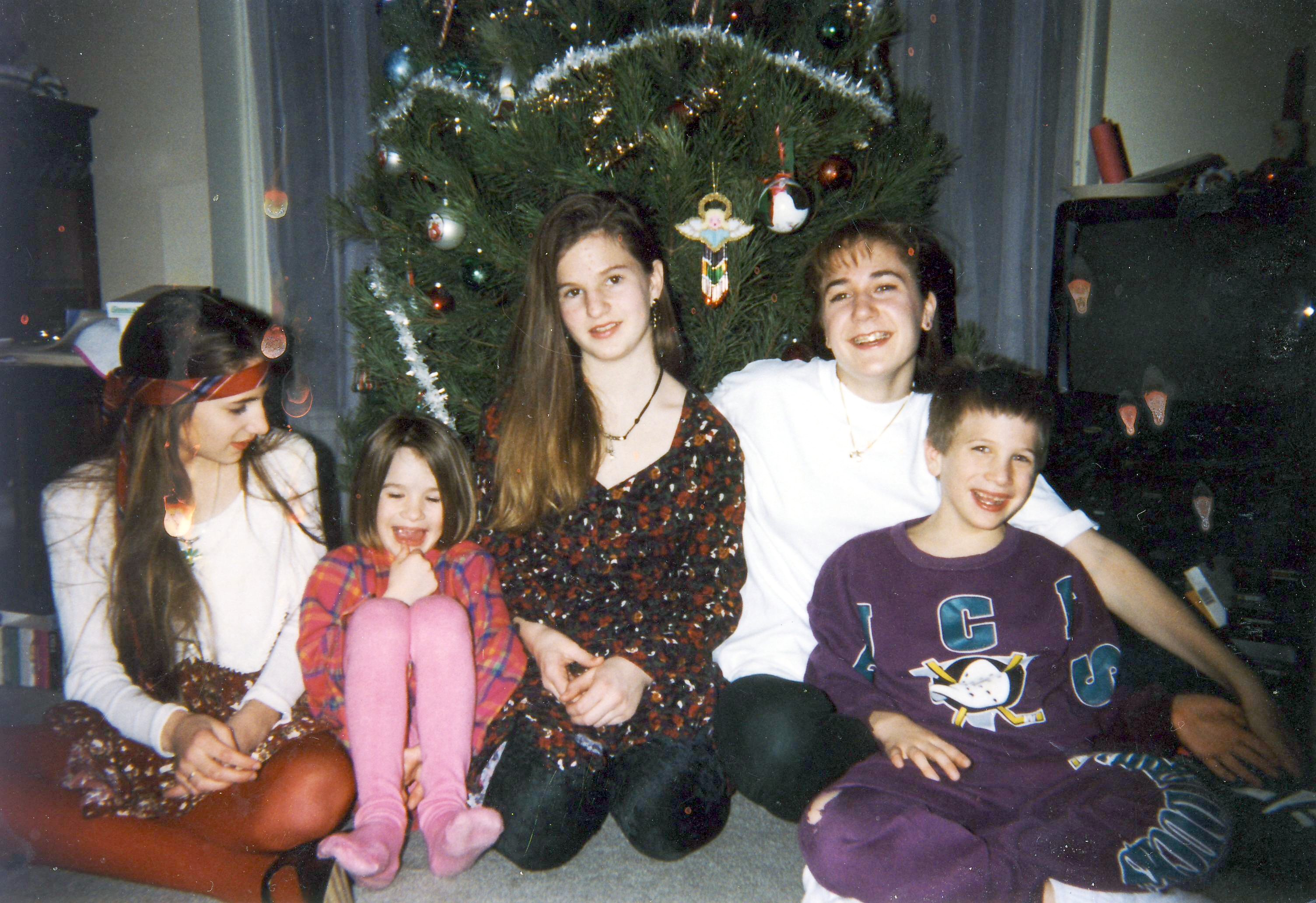
Me at age thirteen, centre, with my cousins and sister.

A Few Meditations On Being a Feminist Parent

25 Sep

My kid has a tractor obsession. Like, he goes bananas any time he sees one of the damn things. This bit of information will, hopefully, help explain why I found myself at the International Plowing Match And Expo on Friday with Theo and my mother.

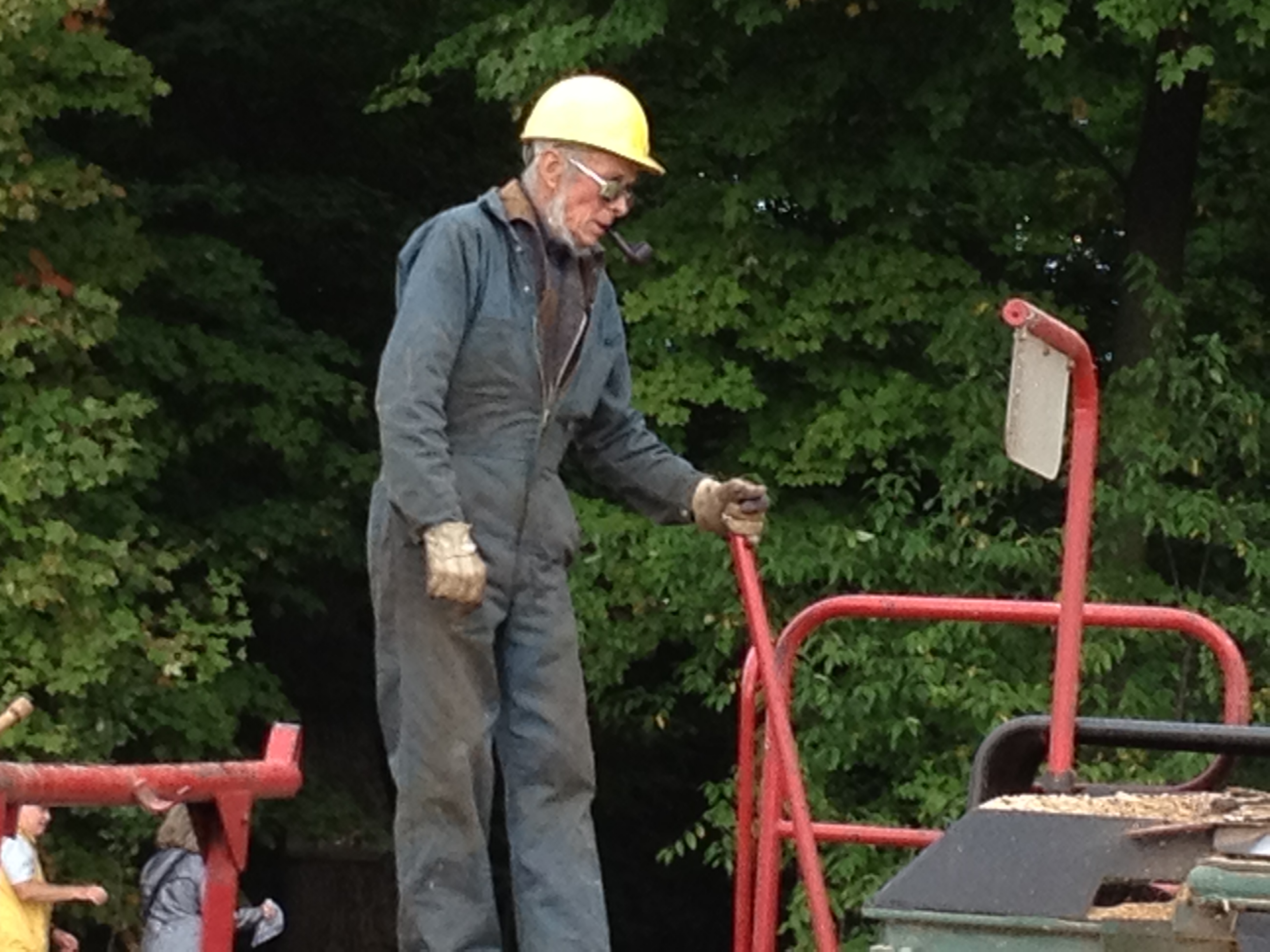
The plowing match was held not far from where I grew up in Kitchener, Ontario, and was filled with men who looked like this:

The pipe is my FAVOURITE PART

It was basically a whole day of mingling with old white farmer dudes, watching people use old-timey plows and admiring farming equipment. In a way, it was oddly comforting, or at least comfortingly familiar – I feel like a lot of my Kitchener childhood was spent around old white farmer dudes, so seeing their mutton chop beards and dingy overalls definitely gave me the warm glow of home.

Anyway, Theo basically had the time of his life. There were so many dang tractors at the show; there was even a tractor square dance. I kid you not. I bought Theo a toy tractor, which he promptly named Go and hasn’t put down since.

That night, after we got back to Toronto, I went over to my friend Caitlin’s place to help her pack for an upcoming move. Afterwards, I texted Matt to let him know that I was on my way home, and asked how Theo was doing.

The response I received was less than encouraging:

Bad. He just threw up.

Theo spent the rest of the night throwing up, and part of Saturday. Weirdly, he seemed totally fine in between bouts of vomiting – he would get ‘er done without much fuss, then run off and go about his business. He was fine all day Sunday, so we brought him to daycare this morning.

Unfortunately, Theo-the-puke-machine turned into Theo-the-poop-machine this afternoon. Which means that one of us has to stay home with him tomorrow.

So here’s where things get tricky: as Theo’s mother, and the person who has been his primary caregiver for, oh, pretty much his entire life, I feel like I should be the one to stay home. But I won’t be, because, as a person who has recently joined Elizabeth Wurtzel’s Club Of Serious Grown Ups And For-Real Feminists, I have to, you know, go to work. Matt’s job is in some ways more flexible than mine, and it was easier for him, in this particular instance, to take the time off.

This made me feel guilty. Because, really, doesn’t a sick baby need their mother most of all?

I’ve been feeling a lot of guilt lately. Granted, we’re only about two and half weeks into Theo’s daycare career, but I’m frustrated that I’m having so much trouble ironing out the bugs in our schedules. The hardest part is that I feel like I barely see him.

In a perfect world, I would only have to work two evenings a week, and would be able to pick him up mid-afternoon most days. In the real world, I’ve had to jump at a few subbing opportunities that have come my way (the first rule for new yoga teachers being Make Yourself Available), and I often find myself coming home before going to pick my kid up so that I can get a bit of housework done before Hurricane Theo returns.

I guess that what it boils down to is, what’s most important to me right now: being with my kid every moment that I’m not managing the studio, or trying to balance my Theo time with my building my career as a yoga teacher time? More and more often, I’m finding that building my career is winning out.

Why? Well, I spent the first nineteen months of Theo’s life devoting the vast majority of my time and energy to his well-being. I’m glad that I did, because that was what worked best for me and my family. But now that Theo is older, and really beginning to assert himself as his own person, daycare seems to be a really good fit for him. He’s excited to go, and he often talks about his friends there: Ella, Anand and Eliana have all come up recently in conversation. Oh, and my favourite, Jonah, which Theo pronounces “Gonad”.

It’s not that Theo and I didn’t have fun when we were home together, but I’ve realized something: this is a tough age for me. I don’t mean that Theo is difficult to be around, or that he’s throwing terrible tantrums (not yet, anyway), but I often find myself unsure of what he needs from me as a mother these days. When he was a tiny baby, it was easy to know what he wanted: me, and plenty of it. When he’s older, and we’re able to have proper conversations, I think I’ll find that easier, too. But this stage, this in-between I-need-you-but-don’t-need-you stage, is tough.

I have a hard time knowing when to inundate him with talking and singing and general in-your-faceness, and when to just let him play quietly. I feel like I spend so much of our time together chasing him away from things he’s not supposed to be touching, and trying to convince him to do whatever it is I want him to do. Maybe I’m kidding myself, but I think that being in daycare for a good chunk of the day makes him more eager to listen to me when he does get home. And instead of spending my time half-assing my way through housework while he desperately tries to get my attention (or dragging myself through it late at night, after he’s gone to bed), I can get it done quickly and easily while he’s not there.

And then there’s the whole work thing: these early days are important for networking, and I need to build a reputation as someone who is eager to work, and able to pick up classes on short notice. I’m creating a foundation for what will hopefully be a solid career. This is something that will, someday, benefit not just me, but Theo, and Matt, and any of our future kids too.

And, finally, it’s becoming increasingly important for Theo to learn that it’s not just mom who’s the solution to all of his problems. As Matt spends more and more time with him, Theo is learning that his father can be just as much of a source of tenderness and comfort as his mother can. He is learning that the world is much bigger than just one person and her boobs, and that people other than mama can be relied on to fulfill his wants and needs. The more time he spends apart from me, the better Theo is becoming at communicating just what those wants and needs are.

You guys, Theo is growing up.

I guess that what I ultimately want to say here is that being a feminist parent is about balance: learning to balance your kid’s needs with your own, and figuring out how that will shape your life. It’s about realizing that you, as a mother, do not need to be the be-all-end-all of your child’s life. You can learn to share the responsibility. You can figure out when to step back and say, I’m going to focus on myself for, like, five minutes and my kid will be just fine.

Most of all, it’s about accepting the fact that you have needs, too, and your kid does not always trump those needs, no matter what some magazine or parenting blog or conservative politician wants you to think.

Now, if only I could beef up Theo’s immune system and get him to stop bringing home these daycare bugs, I would be totally set.

An Open Letter to Nicola Kraus (or, another day, another angry-making article)

18 Sep

Dear Nicola Kraus,

So! I understand that you have discovered the one single method of parenting that works for everyone and you are proselytizing this fact via the Huffington Post. Well, that is good news! Please, tell me more!

No, but seriously: I find articles like yours incredibly difficult to read. Not only is the tone rude and condescending, but the content is full of assumptions and misinformation.

First of all, let’s talk about a few personal pet peeves that I have with regards discussions surrounding attachment parenting:

1. Dr. Sears did not come up with attachment theory. John Bowlby did. Doctor Sears may have popularized the idea and coined the phrase attachment parenting, but it’s a concept that’s been around since the 50s.

2. I bet that you actually practice attachment parenting, even if you don’t want to call it that. In fact, I guarantee it.

The basis of attachment theory is this, which comes from Bowlby’s seminal 1951 work, Maternal Care and Mental Health:

… the infant and young child should experience a warm, intimate, and continuous relationship with his mother (or permanent mother substitute) in which both find satisfaction and enjoyment.

Keep in mind that in the first half of the 20th century, women were getting a lot of not-so-great advice form doctors. They were told to put their babies on a schedule as soon as possible, feeding them only every three or four hours instead of whenever the baby was hungry. They were advised not to pick up their crying babies for fear of spoiling them, and there was also a pervasive belief that crying strengthened the lungs. I have a friend whose grandmother was instructed to wheel her infant son out into the garden every day and let him cry for half an hour. While her baby cried, she would sit at the table and weep because she hated it so much. But she still did it, because her doctor had told her to.

Attachment parenting, by contrast, suggests that you respond to your baby’s needs in an appropriate and timely fashion. Which, I am guessing, is probably something that you do.

Breastfeeding, cosleeping, babywearing, etc. are not necessary for attachment parenting. They’re tools that can help form a bond between parent and child, but they aren’t by any means required. Your friend Dr. Sears says the following:

AP is an approach, rather than a strict set of rules. It’s actually the style that many parents use instinctively. Parenting is too individual and baby too complex for there to be only one way. The important point is to get connected to your baby, and the baby B’s [his term for the set of tools mentioned above] of attachment parenting help. Once connected, stick with what is working and modify what is not. You will ultimately develop your own parenting style that helps parent and baby find a way to fit – the little word that so economically describes the relationship between parent and baby.

So even Doctor Sears says that you need to go with what’s best for you and your family.

I guess that what I really want to say with you is this: I’m happy that your kid is a great sleeper. I’m happy that you found a method that works for you. But what you should realize is: every child and every family is different.

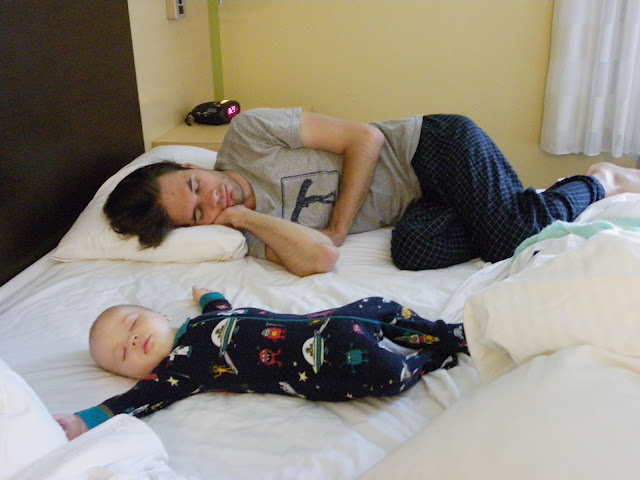
For instance, my kid? My kid is 19 months and still sleeps in my bed, which I’m fine with. He didn’t end up there because I had romantic ideas about forming a bond with him. We have a crib for him. He hated it.

From just about day one, my son point-blank refused to sleep in his crib. He would fall asleep after nursing, I would swaddle him back up and gently (so gently) lie him down in his crib. Within ten minutes he would be screaming. I tried everything – waiting until he was deeply, deeply asleep to move him, putting him down when he was drowsy but still awake, keeping his spot in the crib warm with a heating pad – nothing worked.

On top of that, I was struggling with postpartum depression in the early months of his life, which was made much, much worse by my lack of sleep. Even if I had been comfortable with the idea of letting him cry it out (which I wasn’t), it would have meant several days of even less sleep. The idea of that would have made me cry, except that I already spent most of my time crying.

Once my son started sleeping in my bed, I found that it actually helped with my anxiety. For one thing, it was easy for me to check on him during the night to make sure that he was still breathing. It also made nighttime feeds easier – they were no longer this big production of getting him out of the crib, getting the nursing pillow in place, feeding him, then getting him back to sleep, putting him back in the crib, etc. Once he was in my bed I literally just had to roll over to nurse him and then roll back over once he was done.

The way that my husband and I parent isn’t for everyone. I get that. I try to be respectful of the way other people raise their children, and I think that by and large I’m pretty successful. As long as your kid is healthy, happy and well-fed, I think you’re doing a bang-up job. I would really appreciate it if you could extend me the same respect.

Oh, and by the way? When you let a 12-week-old cry it out, you are not teaching them to self-soothe, you’re teaching them that no one is coming to comfort them (and, by the way, there’s a world of difference between those two concepts). Science is behind me on this one. Science is awesome!

I totally agree with you on one thing, though – parenting is really fucking hard. The hardest part is that you have no idea what you’re doing, and you have to make important decisions on the fly while operating on little or no sleep. But the thing is, everyone is trying to do their best working with whatever they’re given. So why are you making people feel badly about the way they parent, when you already know that they’re doing their damnedest? How is your judgment and condescension helpful in any way? Just a few things you might want to think about.

Anyway, for the record, I don’t think that attachment parenting has made my kid clingy, or, you know, overly attached. In fact, I think the opposite is true: he’s so confident in our bond, so certain that I’ll be there to help him when he needs it, that he feels totally comfortable running off and doing his own thing. He’s happy to take off without looking back, because he just assumes that my husband or I will be close behind him. Because we always have been.

Sincerely,

Annabelle

p.s. You should maybe advise all of your sex-deprived friends to try getting it on in rooms other than the bedroom. The living room couch or the shower are two good suggestions. Tell them to be creative! If they really want to fuck, I’m sure they’ll find a way.

Theo, trying to claim the whole bed for himself