Tag Archives: literary pretentions

My Life As A Tree

14 Jan

Have you ever seen a kudzu vine? They’re all over the south, their bright green leaves waving gently in the hot, humid air. At first you’ll think that they’re kind of pretty, but once you realize that they’re capable of, you’ll never look at them the same way again.

They’re an invasive species, the kudzu vines; native to Japan and China, they were introduced to America to help prevent roadside erosion. They spread quickly – statistics show that they’re taking over the American South East at a rate of 150,000 acres annually. Kudzu will grow nearly anywhere, on anything, and its advance seems impossible to stop.

Once kudzu starts to take over a field or a forest, it slowly but surely replaces all existing vegetation. It starves the trees and undergrowth by cutting them off from sunlight; once the kudzu has done its work, all that remains is a swath of green, leafy vines, still in the shape of the things they have killed.
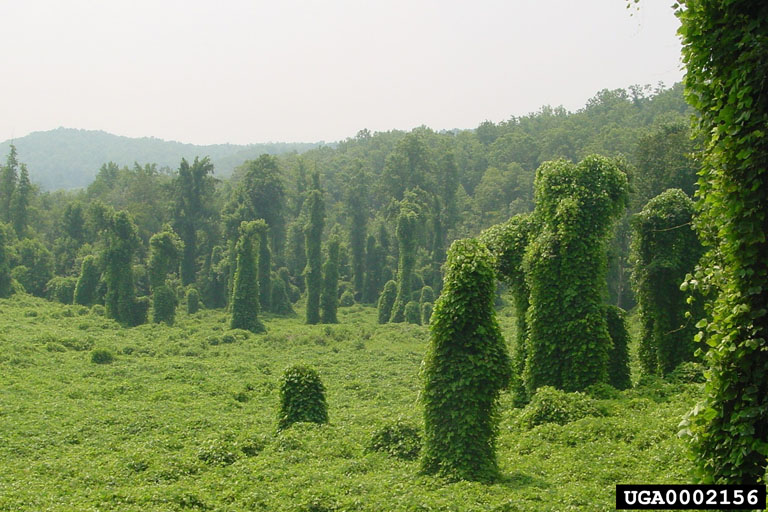
kudzu

Sometimes I think that kudzu is the most accurate metaphor for depression that I can come up with. Not just because, at times, it feels like I’m overwhelmed with depression, suffocated and blinded  by it, but also because sometimes I wonder how much of my actual self has been choked off, starved to death. I wonder how much of the me under there is already dead.

Like a tree that’s been covered by kudzu, I don’t look very different from the person I was. I maintain the same shape, the same colour. Outwardly, I’m indistinguishable from someone who isn’t living with depression. And if there are subtle signs that something is wrong – a funny look in my eyes, or a slump to my shoulders – well, those things are easily written off or ignored. With enough effort, I can pass as a person who doesn’t long to spend her days sprawled out on the couch watching re-runs of M*A*S*H, eating chocolate and sobbing.

I am a person who used to be happy. I am a person who used to look forward to things. I am a person who used to laugh, frequently.

It’s not hard to see how much being depressed has altered my life.

What I really wonder, though, is how much of the self I used to be is still intact. When depression first claimed me, I thought that it would be a matter of a few pills and then I would be back to my old self. Now, after years of fighting what Winston Churchill referred to as his “black dog”, years of thinking of it a disease, a medical condition, something that I could recover from, I wonder if it’s possible that the depression is me.

Certainly my life, my choices and my very self have been warped and shaped by depression. At this point, it seems impossible to separate who I really am from all the grinding misery, sadness and negative self-talk that my brain has put me through. When I think about the bad decisions that I’ve made, the not-so-great life choices and the hurtful things that I’ve said, I wonder who or what I’m supposed to blame for them. It seems ridiculous to say that depression didn’t play a part in the fact that I chose to lie in bed, crying and reading trashy novels, instead of doing any homework for basically all of 11th and 12th grade. But it seems just as ridiculous to say that I, myself, the non-depressed, rationally-thinking person who lives somewhere inside of me had absolutely no control over the situation. Surely, at some point, that part must have lacked the will-power or the desire to do what it knew was right.

On especially bad days I begin to believe that I let myself become depressed. I believe that I didn’t fight hard enough or long enough or well enough and, through laziness or lack of discipline, allowed depression to consume me.

Blaming yourself for feeling bad is a slippery slope that never leads anywhere good.

I often think about getting well. Most days it’s the only thing I think about. The truth is, though, that I don’t even know what well is, or what it looks like, let alone how to get there. If I’m being honest with myself, the way that I’m living now feels normal, because it’s the same way that I’ve been living for over half my life. I don’t remember who I was before all this started, and I don’t remember what it was like not to feel like this. I don’t remember what it’s like to get up in the morning and not dread every single thing that has to happen to me before I can finally make it back to bed again.

Someone said to me recently, accusingly, that my problem is that I don’t want to put the necessary work into getting better. The funny thing is, they’re right. I don’t. I’m too tired to do any kind of work. It’s bad enough that I have to get up every day and drag myself through yoga and parenting and writing; I don’t want to have to do any extra work on top of that. Thinking about having to work in order to get well makes me feel exhausted before I’ve even started. Of course I want to get better, but maybe the truth is that I don’t have the energy to do that right now.

It doesn’t help that I don’t really know what people mean by work. Do they mean endless doctor’s appointments? If so, check. Therapy? Check. Medication? Check. Buying self-help books that I’ll never read? Double-check. And, I mean, it’s not like these things are totally useless (except maybe the books), but they’re not really fixing anything, either; mostly they just keep me afloat until the real help arrives. Except that I’m not sure what the real help is, or if it even exists.

The other night, as I was reading through decade-old journal entries, I was struck by how little I’ve changed. I mean, my circumstances have changed, certainly, but the sadness and fear and naked self-loathing I found scrawled on those pages haven’t. Not really. I might be better at hiding those things, better at handling myself in social situations, but truth is that I’m still just as miserable now as I was when I was twenty.

Ten years is a long time to be that miserable.

I also found a quote that I’d copied from Margaret Atwood’s short story, The Sin Eater, which seems just as fitting now as it did then. It’s part of a conversation between the narrator and her therapist, discussing coping skills for her emotional problems:

‘Think of it as a desert island,’ he said. ‘You’re stuck on it, now you have to decide how best to cope.’

‘Until rescued?’ I said.

‘Forget about the rescue,’ he said.

‘I can’t,’ I said.

I can’t forget about the rescue, either.

Because it’s not a nice desert island that I’m stuck on, not one of those tropical ones where you befriend the wild animals and make bras out of coconuts. My desert island is some craggy mass in the North Atlantic, maybe off the coast of Nova Scotia. It’s grey and miserable and wet here, and everything edible tastes like cardboard. It’s always cold, even in the middle of summer. The wild animals are mean, ugly and prone to biting.

The worst part, though, is that the mainland is so close that I can see everyone I used to know going about their daily business. I can even hear them as they talk about all the things that I used to care about. And I’ve tried to get back there. I’ve built boats, dozens of them, to try to cross that narrow strip of water; you can see them there, lined up on the shore of my island, with names like Zoloft and Psychiatry and Therapy painted on their prows.

Nobody ever taught me how to build a boat, though. My crafts are hopeful, but never seaworthy.

Can somebody please send me instructions on how to build a boat?

Dispatches From My 20 Year Old Self

12 Jan

Sometimes when I am too lazy to write a proper entry, I start going through my old diaries and plagiarize myself.

Ever wonder what my world-weary 20 year old self thought about parties, theatre types and love? Well wonder no more! Now you can get the full scoop on what an adorable fledgling misanthrope I was. Oh, and I was pretentious. SO pretentious.

The following was all written during second half of 2002, with the exception of the last entry, which dates from early 2003. I was in my second year at Dalhousie and sharing an apartment with two friends.

On parties, pretentiousness and my dislike of people:

“There seem to be a million people in my apartment. Parties. The last refuge of our socially deprived population [don’t ask me what that means, because I don’t know either – probably I wanted people to have ice cream socials or something instead]. Mixing, flirting, drinking, smoking – a million inane comments, a thousand little gestures to draw attention to the breasts, the crotch.

I enjoy it for a while, the thrill of contact, the first glance of an unknown man. But it doesn’t take me long to become tired of the whole ordeal. I’m holed up in my room now. I think that I could stay right here for a while quite happily. I have my thoughts for company. I don’t need all those pressing bodies, the sweating palms, the desperate faces. Maybe I should be a man.

I told M that I wouldn’t date him. Why? Because I don’t feel that way about him. Because I can’t forget that time last year when he pointed out every ugly aspect of my flawed body. Because I know that I wouldn’t be happy. Not just with him. With anyone. Humanity gets on my nerves.

I can hear everyone outside my door laughing, mingling. They don’t notice my absence, which is just as well. Sometimes invisibility is a gift.”

On my Medieval Philosophy professor:

“Dr. Hankey apparently told Ron that I am ‘very intelligent and sincere’. Meanwhile, I thought that he had a very low opinion of me and possibly did not know my name.”

Randomly, in the middle of a page:

“Idealism is dead”

On being backstage at a one-act play festival:

“God, the entire room is full of bitchy, pretentious theatre types. One girl is holding forth about how she absolutely has to dance to get the ‘demons’ out of herself. Another is talking about a wonderful ‘dark comedy’ that she’s written, and how no one really understands it. A third is talking about African dance, using terms like ‘earthy’ and ‘sensual’. I can’t stand it.

Maybe this is why I can’t be in this profession; the lack of ego. But that isn’t true, I do have an ego. Somehow, underneath it all, I seem to think that I’ve above all of them, above all of this. I hold them all in contempt. Does that actually make me worse than them? It’s like I’m proud for being humble. 

I’m just stupid, that’s what I am.”

On falling in love:

“There we sat in my dimly-lit room, talking by the light of my little pink paper lantern, and I wanted to know everything, everything about him. He told me that he was afraid that he wasn’t even alive anymore because of the way he just ignored stress, it was like he didn’t even feel it. He said that he’d been through so much in the past few years that he barely even registered feeling anything anymore. 

‘What have you been through?’ I wanted to ask. I wanted him to confess it all to me. But it wasn’t right for me to ask. Not yet.

Then we talked about a million other things: post-apocalyptic visions of the world, the Tunguska event, volcanoes, mass extinctions, a room with walls made entirely of drawers, Atlantis, colonizing the moon, the perfect mattress. I can’t recall all of it now. 

What the world will be like when religion completely dies out and man worships himself, if you were a Greek god which one would you be (me=Artemis, him=Apollo), how America can justify bombing everyone, how we’re coming to the end of an era. D was telling me his theory that we’re due for something big soon: the fall of an empire, nuclear winter, a great natural disaster that would put everything into perspective. Because we’ve grown so complacent over the past 50 years that it feels like we’re not even living, like we’re automatons just going through the motions of living, but not really doing it. 

We’d never really talked properly before, and we had so much to say to each other. It was incredible. I finally let him fall asleep around 4:30, even though I could have talked all night. I knew he was tired, though, and had to get up early to drive home. But even though he slept, I still couldn’t seem to fall asleep. I filched the flashlight from the pantry and read Graham Greene under the covers, listening to D breathing softly and shifting in his sleep every once in a while. So here I was, with this boy that I might possibly be falling in love with asleep on my floor, unable to sleep myself but instead listening to him breathe. 

It was a nice night.”

diary

What It’s Like to Live Here

9 Jan

You feel like Miss Havisham, trailing around in your shredded, filthy wedding dress, pacing through the same rooms over and over, past the mouldering wedding cake and the long-dead flowers. And as much as you want to blame someone else, you know that you’ve only yourself to blame – not for the fact that he jilted you (although of course you wonder), but because you can’t seem to move past this one defining point in time. Your whole life will be the moment you realized that he was never coming.

When you cross the street, safely, at the crosswalk, you think about what it would be like if the cars didn’t stop. You wonder what would happen if you were hit, what that point of contact would feel like. You don’t take any risks, because you don’t want to get hurt, and you certainly don’t want to die, but still you wonder. And the wondering scares you.

You lie down to take a nap and spend an hour trying to find the cool spot on your pillow.

You start to think that reincarnation might exist, because you don’t understand how you could have done enough in just one lifetime – half a lifetime, really – to make your synapses misfire this badly. You decide that you must have been a terrible person in a past life.

You pick up the phone. You pick up the phone. You pick up the phone.

You don’t call anyone after all.

People ask how you’re feeling, and you try to explain it, but you can’t. Everything you say seems totally unrelated to you the moment it leaves your lips. You wrestle with words, trying to figure out how to describe this place to someone who’s never been there, but all the petty little nouns and adjectives you’ve collected over the course of a lifetime choose this exact moment to fail you. You feel so frustrated that you want to break something.

You pick up the phone and dial the doctor’s number but there’s no answer. It’s just as well, because you had no idea what you were going to say anyway.

You feel like you’re in limbo, somewhere between the ledge you just jumped off of and the place where you’ll hit rock bottom. You wonder if there’s anything you can do other than flail your arms helplessly, or if you should just try to enjoy the free-fall.

Friends offer help, but you feel too embarrassed to accept it. You realize how ironic it is that that embarrasses you, but vomiting your feelings all over the internet somehow doesn’t.

You finally get angry because none of this is fair, even though you know that fair has nothing to do with it. And somehow anger is easier than anything else you’ve been feeling lately.

Your anger quickly burns out, and then you’re right back to where you started.

You repeat all of the above, ad nauseam, for what seems like forever.

In case you were wondering, that’s what it’s like to live here.

butterfly 2

(I am getting help, I promise – it’s just taking some time)

Odds and Ends

28 Nov

Just a few quick things:

1. I have another post up on Shameless Magazine’s website. It’s called Rape Culture in Popular Culture and includes hot pictures of Joseph Gordon-Levitt. Something for everyone!

2. I am now a regular contributor to Shameless Magazine’s blog, rather than just a guest poster. YUS. WRITER CRED.

3. In the wake of Savita Halappanavar’s death, many people have been wondering if there’s anything they can do to help other women who might be in her position. The Abortion Support Network helps women travel from Ireland to the UK in order to get abortions. They provide financial support, emotional support and accommodation for Irish women seeking abortions, and are a pretty awesome organization.

4. I love, love, love this article from Vice, You’re a Pussy if You Think There’s a War on MenEspecially this part:

“Yeah, no shit men are “pissed off” about “competing” with women. It’s pretty simple—decades ago, lazy men didn’t have to worry about talented women taking their jobs because they were largely relegated to being housewives or teachers or nurses. Now that women can dictate the terms of relationships and don’t need to latch onto a man as soon as possible, they aren’t willing to start pumping out babies and taking care of a household the way some guys would like. Boo-fucking-hoo. Cry me a river.”

Haaaaaaah.

5. I actually cannot stop listening to this song right now. Frig, I hate winter.

6. My kid is hella cute:

Burnout

6 Nov

I’ve been thinking a lot about this blog, and why I have it, and what I want to get out of it.

A lot of what I’ve written here has been political. Much of it has been my own small attempt at affecting change, and there have been times that I’ve felt pretty positive about what I’ve done. Like the whole Gap Manifest Destiny debacle – I’m fairly certain that I helped mobilize the effort to have that t-shirt pulled. I feel like I did something good there, you know?

That sort of thing is what the internet is amazing for – it can help coalesce individuals into movements, or bring together like-minded people to fight for causes that they care about. It can be crucial for organizing protests, keeping people engaged, and giving minute-by-minute updates on what’s happening. The internet can be really fucking amazing. It can also be pretty terrible. There are times when interacting with people online feels like swimming in a giant sea of negativity. No matter what you have to say, no matter how nicely you say it, there are always fifty people ready to shout you down; there are always people who are more than happy to tell you how wrong (and ugly) you are. For the most part, those are people who are legitimately engaged in the discussion; don’t even get me started on the disgusting crap put out there by the trolls.

And yeah, before you say it, I know that I need to grow a thicker skin. I know that I need to just learn to ignore them, hold my head high and carry on about my business. And I’m trying, trust me, I’m really trying. You know what, though? It wears on you, it really does.

Part of my problem is that I’m a people-pleaser. I say yes way too often. I smile and nod a lot. I want to make sure that everyone is happy, all of the time. I have a hard time standing up for myself, and when I’m challenged on something I’ll often back down, concede defeat, or, most shamefully, burst into tears. I just want everybody to love me all of the time, even though I know that’s impossible, and even though I’m not willing to extend the same courtesy to everyone else.

I’m trying to be less of a doormat. I’m working on it, seriously. I want to be someone who stands up and fights for what’s right; I thought that having this blog would help me in that.

I wonder, though, if this is the right way to go about it. I mean, I’ve used this blog as a platform to be pretty damn vocal about what I believe in, and it seemed like that would be to the greater good. It seemed like I would be getting into the trenches, fighting the good fight. Really, though, what am I doing here?

Let’s be honest: most of the time I’m preaching to the choir. While I might occasionally educate some of you about some random fact, for the most part I’ve been trying to convince you guys of stuff that you already believe in. That’s not to say that there aren’t people who disagree with me – there are, for sure. But let’s be honest here: I’m not likely to change their minds, in the same way that people who are anti-abortion, or anti-caesarian, or prefer “equalist” to “feminist” are unlikely to change mine. And some of those who disagree with me are my friends and family; some of those are people I love.

Sometimes it feels like what I’m really doing here is alienating people that I care about, just because they believe in different things than I do.

Lately I feel really bogged down by everything. It seems like there’s so much going on in my life, and I can’t figure out how to get a handle on any of it. I feel like for every one thing that I accomplish, there are ten more things still left to be done. I feel like the things I write here are half-baked, badly considered and not well thought out; my only excuse for that is how little time I have to devote to researching and writing my posts. I wish I could say so much more, go so much more in-depth, but I just don’t have time. I’m doing what I can with what I’ve got, though. In fact, it seems like my motto these days is, I’m doing the best I can. I say it to the people I work with, I say it to Matt, and, above all, I say it to myself. I say it as if it will somehow get me off the hook for all the things I’ve left undone, all the things I’ve half-assed or bailed on or otherwise not given my all.

You know what, though? That’s just a bad excuse for not doing all the things that I’m supposed to do. It’s really no one else’s problem that I’m doing the best that I can, and it’s definitely no one’s problem but mine that my best just isn’t cutting it. Either I get my shit done, or I don’t. Either I succeed, or I fail. Or, to quote Yoda, “Do, or do not. There is no try.” Black and white, here, people.

I’m trying to come up with some kind of brilliant ending to this post, or a beautifully constructed sentence that will wrap everything up in a perfect cohesive bow, but I’m drawing a total blank. I don’t even know why I’m posting this – is it in the name of honesty? Or do I want you all to pat me on the back and tell me I’m doing a good job? I don’t really have the energy to try to untangle what my motives are. If I’m being honest, I would probably say that it’s a combination of the two, with a good dash of wanting to know that it’s possible to create some kind of change in the world.

I guess I just really need to know that I’m not running myself ragged for nothing. When I say that, I’m talking about more than just this blog – I’m talking about working and teaching and trying to keep my apartment somewhat clean and, most of all, being the mother that Theo needs. I need to know that all this shit I’m doing is going to be worth something someday, you know?

I’m just so burned out right now that I can’t see how anything I do could ever be worth anything.

Abandoned Halifax Infirmary – photo by Angela Carlsen

Goodbye, Old Store

31 Oct

I woke up this morning and logged into Facebook, thinking that I would take a few minutes before work to check and make sure that all of my friends had survived Superstorm Sandy. Instead, I was distracted by the news that the Roots store on Queen West had burned down overnight.

People in neighbouring buildings felt an explosion around 12:30 am, and the force of the blast broke the front windows of the store and forced the back door open. Roots merchandise spilled out onto the streets and, according to witnesses, there were looters grabbing whatever they could get, in spite of the flames pouring out of the second storey windows. Sandy’s winds meant that the fire fighters (over 80 of them) had a hard time controlling the blaze, but by the early hours of the morning they had managed to put the fire out and save the adjacent buildings. Unfortunately, this was all that was left of 369 Queen West:

(c) Torontoist, Ink Truck Media

This Roots store was the site of my first job in Toronto. I’d worked for Roots in Halifax, and when we moved here they offered to transfer me to local store. This Queen street location (there had previously been another one a block down the street) opened not long after I arrived in the city; I loved the Queen West neighbourhood, lived only a short subway ride away, and thought working at a brand new store would be exciting. It seemed like a perfect fit.

I was there to help set up the store, piling sweatshirts on tables and artfully arranging leather bags on shelves that smelled of fresh wood. I was there day they opened, too, a sunny but cold day in the spring of 2007. I worked there for over a year, until, in the summer of 2008, I transferred to the Rosedale store so that I could also work at the Roots Yoga Studio. I’ve been back to visit the old store once or twice, but honestly I haven’t thought about it that much. All day today, though, I’ve been using my spare moments to collect and sift through memories of my time there. It’s almost as if I used to rely on the building itself to hold onto all the things that happened, but now that it’s gone I have to be the one to safeguard my own experiences.

I thought about my old co-workers – there was Kari, the manager and the person I worked with most often, who kept us all entertained and worked her ass off to make sure that things ran smoothly. Elise, an art school student who took amazing photographs. Georgea, the stand-up comedian who taught me how to draw unicorns (the first time I tried I put the horn at the end of the nose, and she explained that it went between the eyes – when I groaned about how stupid I was, she said, well, it’s not really fair because I have a unicorn at home). Lindsay, the smarty-pants U of T student who is now doing her MA in Cinema Studies.

There was Rachel, who became one of my closest friends and played the cello at my wedding. Adam, our token straight male and the dude who explained the “drink and dance” diet to me (hit: it involves drinking a lot of beer and then dancing a lot, and apparently results in losing weight). Sasha, who is now a superstar makeup artist. Alexei, the high school student who had his first real hangover on my watch (he swore that he would never drink again, but pictures on his Facebook prove that he’s a liar). Emily, who was only 16 and was like everyone’s little sister, and now inspires me with her feminist rhetoric and general bad-assery.

I remembered how we used to make candy store runs when summer afternoons dragged on too long, running a block west to Tutti Frutti and returning with giant bags of various gelatine-based sweets for everyone to share. The rickety stairs leading down into the horror movie of a basement. The funny pictures and signs we put up in the staff areas, some of which were still there long after the people who made them had moved on to new jobs:

I remembered staff outings and movie dates, pot lucks and parties. The time we all went to the Ex together and Kari and I ate a million Tiny Tom donuts. The time we went to watch the fireworks down at the Princes Gates and sat in the grass trying to stealthily drink our beer. How we used to hang out in the alley behind the store, sometimes with staff from the Silver Snail next door, soaking up some sunshine on our breaks.

I remembered the time a pipe burst in the basement bathroom, covering the floor with inch-thick black sludge. We had to call a plumber, a little old Asian man who explained that what looked like mud and mulched leaves was actually hundred-year-old poop that had been sitting in the pipe for a century or more. When Kari and I yelled “EW!“, the plumber exclaimed, “No, no, that’s my gold! That’s how I make my money!

I remembered the tiny baby tree that grew through the crack in the wall of the staff room. I remembered the giant centipedes that lived in the basement, terrifying creatures who liked to hide under the boxes we stored down there (RIP giant centipedes).  I thought about how we used to hang bells inside the drawers where we kept the leather bags in an attempt to prevent shoplifting.

I remembered doing good-cop-bad-cop interviews when we were hiring new staff (one potential employee asked to use our microwave at the end of the interview – that’s weird, right?).

I remembered eating a thousand Swiss Chalet meals with Kari, who swore that she would have her wedding dinner there.

I remembered the time Elise got a giant tattoo of geese (or was it ducks?) on her side. The time Emily’s hair turned pink and she had to make an emergency appointment to fix it. The time the owner of the building wanted to sell it and hired a building inspector who showed me the knob and tube wiring in the basement. The day there was a giant snowstorm and we took Kari to see the Nutcracker ballet and Matt fell asleep.

I remembered the time Samantha Bee came into our store, and Kari and I tried SO HARD to be funny but she didn’t even laugh once. When Audra came in, before we were even really friends, and I was like, hey, I think I know you from the internet, and then sold her a red purse. I thought about the many times Emily broke up with (and inevitably got back together with) her boyfriend, each instance a mini drama requiring ice cream and an in-depth analysis of their relationship.

What happens when a building is destroyed or torn down or otherwise ceases to be? What occupies the space where it used to exist, other than open air and the occasional bird passing through? It’s strange to look at that giant hole two storeys in the air and think about how that used to be a place where people lived. A place where they slept, and cooked, and laughed, and made love, and cried, and did all the other little things that make up our lives. What happens to all of those experiences once their physical remainders, all the scuff marks and scratched paint and cracked plaster, literally go up in smoke?

I’ve been wondering why this fire has affected me so much. Am I going to get this nostalgic over every former workplace? I mean, yeah, I’m great at being nostalgic, but this seemed a bit much, even for me. Then I realized that my time at that store has had a huge impact on the shape my life in Toronto has taken. The people I worked with helped me learn to navigate the city, and introduced me to places and events that I might not have discovered on my own. Some of the friends I made there are still a part of my life, and have certainly helped influence choices that I’ve made. Perhaps most importantly of all, working at this store indirectly lead to me becoming a yoga teacher. See, the Roots Yoga Studio offers free classes to all of its employees. If I hadn’t been able to take free classes, I doubt that I would have started a regular practice; knowing me, I would have given up early on due to laziness or being a cheapskate. But the fact that they were free, and that I’d shaped my work schedule around the classes I took, meant that I didn’t have much of an excuse to quit. So I persevered, and I grew to love yoga and, well, here I am.

I haven’t been in the Queen West store in years. Mostly I’m just not hip enough to spend much time in that part of town anymore, and when I am there I prefer to go to stores that I can’t find anywhere else in the city. I haven’t seen many of my former coworkers in a long time either; after we stopped working together, our paths diverged, and now most of us are in totally different places in our lives. We keep up with each other on Facebook, and promise to get together soon, but never do.

I miss them, though. And I know I’ll miss the store, too. Just not the centipedes.

A Few Small Things

16 Oct

Hey y’all, here are a few things I wanted to share with you today:

1. Here is a post about women in geek culture that I wrote for Shameless Magazine’s blog. I am really proud of it! I am also super stoked that I had the chance to write it, and want to give Shameless Magazine a thousand smooches for publishing my stuff. If you want to read about misogyny, racism, and the lack of representation of queer and trans folks in geek culture, you should check it out. If you want to read about my love for Wil Wheaton, you should DOUBLE check it out.

OMGGGGGG IMAGINE IF WIL WHEATON EVER READ IT, I WOULD DIIIIIEEEEEE.

Hi, Wil Wheaton, call me, okay?

2. It looks like The Gap has pulled the Manifest Destiny shirt, and offered this lukewarm non-apology:

They tweeted something very similar yesterday, but it looks like the tweet has been removed.

I would really love for them to handle this the way Paul Frank handled the recent outcry over their racist and offensive fashion show, and I’m still hopeful that they might, but it’s looking less and less likely.

One of my favourite parts of Paul Frank’s response is that they said they like to collaborate with an Aboriginal artist on future designs and that the profits from that collaboration would be donated to an Aboriginal cause. How amazing would it be if The Gap could follow their lead?

3. My Manifest Destiny post was featured on BlogHer! It’s on the front page of the site, and it feels bananas to load the page and see something I wrote front and centre. I feel super flattered that they featured it!

4. You should really check out my friend L’s response to Gap’s Manifest Destiny debacle over at her blog, Life In Pint-Sized Form. Her grandfather is a full-blood Chippewa, and she brings a fantastic perspective to this issue. Reading what she wrote literally gave me chills.

5. Artist Gregg Deal, who is Aboriginal and a member of the Pyramid Lake Paiute Tribe, created this image in response to Manifest Destiny shirt:

I love these designs because they show so clearly the subtext behind the term Manifest Destiny, a subtext that many people seem hesitant to acknowledge. Let’s call a spade a spade, shall we? I also love that he used humour to address the racism of Gap’s design, because I think that humour can be a super important weapon against all forms of intolerance.

5. October 15th was Pregnancy and Infant Loss Awareness Day. Two of my friends wrote very movingly about their experiences with miscarriage and stillbirth, and I wanted to share their posts with you. The first is from my friend Jodi, who blogs over at Mama To Bean and whose son Joel was stillborn last year – you can read her reflections on what this day means to her here.

The second post comes from The Yellow Blanket, which is written anonymously by a woman who has suffered multiple unexplained pregnancy losses. She writes incredibly movingly about her losses, and what her pregnancies have meant to her.

If you plan on reading these posts, I would suggest that you break out the kleenex.

6. A lot of the stuff in this post has been pretty heavy. If you need something to lift your spirits after all this profound grief/righteous indignation/sadness that you are not, in fact, married to Wil Wheaton, then I highly recommend The Hairpin’s Texts From Little Women. I was reading this in the yoga studio while there was a class going on, and I was trying SO HARD to stifle my laughter because, well, Jo March. God I love Jo March.

Here’s a sample – the italicized text is Jo March, and the plain text is Meg March:

I hope you realize you’re breaking up the family 

I really wish you wouldn’t see things that way

a broken home 
that’s what I come from now 
a broken home

that’s not what they call it when your sister gets married

then why does it feel broken, Meg
why does it feel broken
this is the worst thing 
that has ever happened 
to anyone 
since Father died 

Father didn’t die, Jo!
he’s only been wounded!

oh 
didn’t he? 
for some reason I thought he’d died 

no
he’ll be home in a few weeks
Ah

do you suppose he’s going to want his old greatcoat 
and riding boots 
and shaving things 
and top hat
when he gets back? 

I expect that he will

HANG EVERYTHING” 

Hang everything indeed.

Bullying Part III (or, all hail Margaret Atwood)

10 Oct

This will be the final instalment of my totally unplanned Bullying Trilogy (seriously, it started out with me just wanting to talk about clothes).

After I made my last post talking about how I was bullied in my teens, my friend Audra asked if I’d read this 2011 article from New York Times, Bullying As True Drama. In fact, I had read it when it first came out and hadn’t really given it much thought. Re-reading it, though, I found myself nodding and muttering, yes, yes, yes under my breath.

So much of this article hits home for me. This part, for instance:

Many teenagers who are bullied can’t emotionally afford to identify as victims, and young people who bully others rarely see themselves as perpetrators. For a teenager to recognize herself or himself in the adult language of bullying carries social and psychological costs. It requires acknowledging oneself as either powerless or abusive.

Or this:

While teenagers denounced bullying, they — especially girls — would describe a host of interpersonal conflicts playing out in their lives as “drama.”

At first, we thought drama was simply an umbrella term, referring to varying forms of bullying, joking around, minor skirmishes between friends, breakups and makeups, and gossip. We thought teenagers viewed bullying as a form of drama. But we realized the two are quite distinct. Drama was not a show for us, but rather a protective mechanism for them.

And especially this:

“Teenagers want to see themselves as in control of their own lives; their reputations are important. Admitting that they’re being bullied, or worse, that they are bullies, slots them into a narrative that’s disempowering and makes them feel weak and childish.”

Like I said in my last post, bullies can smell a victim. The minute that you admit to yourself or to others that you’re being victimized, then I guarantee you that, barring serious intervention, the bullying will get worse. To make matters even more difficult, many kids (and adults) don’t realize that they’re bullies; this behaviour is so ingrained in our culture that it seems downright normal. I’m certain that most of the kids inflicting “drama” on others have, at some point, been on the receiving end of “drama”. To them, it’s an unpleasant but ultimately unavoidable part of life.

We also need to realize that the ways in which bullying happens have changed; it often occurs online, or through texting; it’s not always public. This, then, is where I think David Dickson, chairman of the Bullying Prevention Initiative of California, really misses the mark with definition of bullying as happening, “typically in a social setting in front of other people“. That definition certainly doesn’t hold true today; in fact, I’m not sure that it’s ever been accurate.

One of the best literary instances of bullying that I can think of is the torment that Elaine Risley goes through at the hands of her so-called “best friends” in Margaret Atwood’s Cat’s Eye. Though all three of her friends are party to the bullying, few outside of that group know what’s happening. In fact, Elaine is pretty clear about the fact, were she to tell anyone about being bullied, she would feel as though she were breaking some kind of sacred code:

“Whatever is going on is going on in secret, among the four of us only. Secrecy is important… to violate it would be the greatest, the irreparable sin.”

A few adults in Elaine’s life seem to have some inclination as to what’s going on; she hears the mother of one of her friends saying that she deserves to be bullied because she’s a “heathen”, and, several years after the bullying occurs, Elaine’s mother makes a vague reference to the girls giving Elaine a “bad time”. Those instances aside, none of the grown-ups seem to know or understand the severity of what’s happening. The three girls are at Elaine’s school, and one of them is even in her class, but none of the teachers seem to notice that anything is amiss with their relationship; even her peers see only a group of “best friends” and nothing more.

Based on all the above, I wouldn’t say that Elaine’s bullying is public; in fact, her tormentors are very careful to maintain the façade of friendship that they’ve built up. Does that mean that it’s not bullying?  Elaine is certainly emotionally, mentally and physically scarred by what she’s going through; not only are her self-confidence and happiness eroded to the point of non-existence, she also begins experiencing symptoms of severe anxiety such as fevers, stomach aches and tendencies of self-harm (among other things, she begins biting her fingers, and pulling patches of skin off her lips and the soles of her feet).

Another important thing to note is that, much like the girls mentioned in the Times article, neither Elaine, her friends, nor the adults in her life ever use the term bullying. Instead, they use euphemisms like giving her a hard time. At one point Elaine’s mother even tells her not to let the other girls push her around, and not to be spineless, as if that’s any kind of helpful advice. So the message that Elaine receives both from her “friends” and the adults in her life is that the way she’s being treated is her own fault.

This, then, helps explain why, when the balance of power shifts between Elaine and her “friend” Cordelia,  Elaine begins to bully her back. While Cordelia spent most of grade school bullying Elaine, Elaine turns around and spends much of high school treating Cordelia equally terribly. In her mind, though, she’s not a bully; she can’t be, because, in Elaine’s eyes and the eyes of the world, her “friends” from elementary school weren’t bullies either.

At one point, when things are at their worst, Elaine’s mother says to her,

I wish I knew what to do.

And that, that right there, is often the hardest pill for both adults and teenagers to swallow – the fact that when bullying or “drama” occurs, the adults involved often just don’t know what to do.

I’m going to go out on a limb here and guess that part of the reason teens started using the term “drama” to sort of re-brand bullying was the realization that, possibly for the first time in their lives, the adults around them had no clue how to stop them from hurting. So the term “drama” isn’t just a protective mechanism for the kids themselves; it’s also their way of protecting their parents and teachers, a way of reassuring them that it’s okay that they have no idea how to help because it’s nothing, just drama, and their help isn’t needed.

Matt and I were both bullied when we were younger, and because of that we’ve talked extensively about what we would do if Theo was ever bullied. I would like to say that we’ve come up with an awesome plan but, really, we haven’t. If things were ever to get really bad and Theo were to express a desire to change schools, Matt would prefer to go ahead and do that, whereas I would rather that he learn to work things through with his peers rather than running away. Of course, Matt doesn’t know what he would do if things were equally bad at Theo’s new school, and I have no idea how Theo is supposed to learn to rationally work things through with a bunch of hormonally-crazed teenagers.

I think, though, that at the end of the day that Times article has it right; instead of focussing on the “negative framing” of bullying, we need to work towards teaching our kids what healthy peer relationships look like and how to be good digital citizens. We need to teach our kids empathy and the ability to recognize when “drama” has gone too far. We need to find ways to empower our kids instead of making them feel weak or victimized.

I know, I know, this is a lot of talk without a lot of substance to back it up, but hey – I’ve hopefully got a few more years to figure it out. And while I’m teaching Theo how to be a smart, confident, independent person, I’ve got him to teach me how to be a thoughtful, wise and effective parent. So far, I think we’re both doing a pretty okay job.

Writing, Yoga and Doing What You Love

1 Oct

When you first start writing, chances are you’re not doing it for anyone other than yourself. You might begin by keeping a journal, or producing badly illustrated, yarn-bound books about anthropomorphic cats named Stubby, or else writing raw, angst-written teenage poetry by moonlight while the rest of your family (who, by the way, don’t understand you) are asleep. I mean, maybe. It’s not like I’m drawing examples from my personal life here or anything.

It might be that writing for yourself is all you want to do, and that’s great. That means that you can write whatever you want, edit as much (or as little) as you want, and basically be able to not give a fuck about, well, anything. JD Salinger (the king of giving no fucks) said,

There is a marvelous peace in not publishing. … It’s peaceful. Still. Publishing is a terrible invasion of my privacy. I like to write. I live to write. But I write just for myself and my own pleasure. … I don’t necessarily intend to publish posthumously, but I do like to write for myself. … I pay for this kind of attitude. I’m known as a strange, aloof kind of man. But all I’m doing is trying to protect myself and my work.

If you want any kind of commercial success, though, you need to start thinking about other people. In a best case scenario, you could write exactly what you want to write, and, due to some crazy alignment of the stars or a perfect moment of cultural zeitgeist, it would make the New York Times bestseller list. For example, you could write smutty Twilight fan fiction, change a few names, and have it become a wildly successful work of erotica. However, if that business model isn’t working for you (and don’t worry, you’re not alone), you need to figure out who your audience is and what the hell they want to read.

I feel like this is kind of where I am right now, not just with writing but also with yoga.

When I first started practicing yoga, it was (obviously) something I only did for myself. I remember my first class vividly; I struggled through it, but afterwards I was so relaxed that I felt high. It was love at first downward dog.

In the beginning it was just a physical practice, but later it became something more. I’m hesitant to describe it as “spiritual”, but the way I practice now certainly goes deeper than just my body. There have been times when yoga has triggered unexpected emotions in me; I laughed the first time I went into urdhva dhanurasana (full wheel), and kicking up into handstand still makes me insanely happy. There have been poses that have made me feel irrationally angry, and, much to my embarrassment, I’ve cried in class once or twice. Luckily, the lights were dim, and I was able to slink out the door without anyone noticing that something was amiss.

The feeling that I associate the most with yoga, though, is what I like to refer to as the “bell jar” feeling. I call it that because of the way Sylvia Plath describes feeling after her first shock treatment:

All the heat and fear had purged itself. I felt surprisingly at peace. The bell jar hung, suspended, a few feet above my head. I was open to the circulating air.

The bell jar, of course, is the metaphor she uses to describe her depression:

If Mrs. Guinea had given me a ticket to Europe, or a round-the-world cruise, it wouldn’t have made one scrap of difference to me, because wherever I sat – on the deck of a ship or at a street café in Paris or Bangkok – I would be sitting under the same glass bell jar, stewing in my own sour air.

I mean, let’s face it, we all have bell jars of one sort or another, though some may be lighter and clearer than others. For me, yoga, both the physical practice and the philosophy, was the best way of lifting mine for a little while.

Then I started teaching yoga, and it went from being this beautiful, deeply personal thing to being, well, a business. When you’re teaching, you can’t just do whatever you want. You can’t just teach your favourite poses over and over, or have a 20 minute savasana. I mean, sure, if you’re some kind of yoga superstar and you’re having to turn people away from your overcrowded classes, then maybe. But I’m still working my way up the ladder, and for now I have to figure out what the people want and how to give it to them.

It’s been a tough lesson to learn, especially since people in the yoga world aren’t always exactly, well, yogic. They can get angry if a class isn’t exactly what they wanted, or if they think you’ve made a mistake, or if you go five minutes too long or too short. You, the teacher, are providing a service, and the student, your customer, is always right. Or, rather, they are if you want them to ever come back to your class. Which, by the way, you probably do.

And then there’s the fact that you, as a teacher, should maintain a personal practice. It’s hard, though, to convince myself to roll out my mat when I get home from a day that’s been nothing but yoga: teaching yoga, doing yoga studio admin, writing emails about yoga. By the time I make it back to my apartment, all I want to do is snuggle Theo, hang out with Matt, and write.

So yeah, I’m feeling a little burned out on yoga these days. And then I feel guilty for feeling burned out, because it seems unfair to my students that their teacher is kind of tired of yoga. And then I think about how everyone always tells you to try to find work doing what you love, and I wonder if the natural consequence of doing what you love is that instead of loving your job, you end up feeling resentful about something that used to bring you so much joy.

Today, though, I cracked Patanjali’s Yoga Sutras for the first time in months. Reading through the second sutra, I caught myself thinking, oh yes, I do love this. Later, when I went to teach my class, I ended by talking a little bit about what I’d read in the sutras that day, and that felt good. Afterwards one of my students came up to me and told me how much she’d enjoyed the class, especially the bit at the end. And that felt really good.

I guess that what I’ve realized is that there has to be balance between what you love and what you give out to other people. Yes, you need to offer something that people want, at least if you want to make any money doing whatever it is you’re doing, but you need to inject some of yourself into your work as well. Being yourself when you teach or when you write is what makes your work authentic, and people can sense that. Have you ever read a book that was written specifically to appeal to a certain demographic? Usually they’re pretty terrible. By the same token, a book that’s just the author nattering on and on about whatever their pet subject is can often be just as bad.

So if you can find that perfect sweet spot of sharing what you love and giving what people need, then you’re probably golden. If you can find a way of separating thing-that-I-love-doing from thing-that-I-get-paid-for while at the same time acknowledging that, to a certain degree, they are the same thing, then you’re probably way ahead of the curve. And if you can find a way to admit that it’s okay to feel burned out on the places, people and leisure activities in your life, and that you can come back to them when you feel ready, then you get a thousand high fives.

And that, my friend, is a lot of high fives.

Check out all the fucks I’m giving. Oh wait, there are none.

That Time I Wrote A Book And Couldn’t Get It Published (or, you’re all silently judging me right now, aren’t you?)

29 Sep

Did you know that I wrote a book? A novel, even?

Probably not. I haven’t told many people. I’m actually kind of embarrassed about it.

I wrote it back in 2008. One night, Matt and I went to see a Toronto Consort performance of medieval labyrinth music (I guess this is a thing) at Trinity St. Paul’s. It was February, or maybe March, and there was still snow on the ground. Inside the church was warm, cozy even, and the lighting and music were both conducive to drowsy daydreams. By the end of the concert I had the whole plot mapped out in my head, and spent the walk home explaining it to Matt, expanding and solidifying my ideas as I said them out loud.

It took about six months to write, and when I finished, I thought, Phew, the hard part is over.

I’d met a literary agent the year before who had read one of my short stories and liked it so much that she asked me to contact her if I ever wrote a novel. I foolishly thought I was totally set. I finished my first draft in August of 2008, and I was supposed to be going back to school that September, so I gave my little book a quick once over (too quick, I realize now) and sent her off the day before my classes started.

Of course, I ended up having a cycling accident a few days into classes, which effectively ended my educational plans for the next several months.

I decided to devote my suddenly copious amounts of spare time to getting my book published. I started contacting agents and publishers, and actually heard back from a few. A woman at a major Canadian literary agency asked me to send in the first few pages, and then wrote back and asked me to send the rest. A small publisher asked me to send the full manuscript. A few other agents asked for the first chapter, or writing samples.

In early 2009, I heard back from the small publisher. Unbelievably, they were interested in my book. I was so happy. So ecstatically, incredibly, terrified-of-the-other-shoe-dropping happy. Matt and I went out for dinner. I started telling people about my book. Matt’s parents sent him money to buy me flowers. When I met new people, I started introducing myself as a writer.

The publisher asked me to do a second, and then a third draft. They didn’t provide much direction, beyond some vague show-instead-of-tell type of instructions. I felt like I wasn’t doing a great job at editing, but figured if I just pushed through, everything would be fine.

I sent the publisher my third draft, and then in May emailed to follow up with them. They wrote back to say that they weren’t sure if they wanted to publish my book, but that they would let me know for sure in two weeks’ time. In the meantime, they said, I should continue to do rewrites and focus on showing instead of telling.

Three months later, in mid-September, the day after I returned from my honeymoon, I received the following email:

Hi Annabelle,

Sorry for the long stretch between emails. Your manuscript is being sent back to you with a bunch of edits. We can not accept it at this time but we hope that you will read over what we have done and try a new draft. I will be sending you a list of comments made by our editors and hopefully you will be able to put them to use. Thank you for your patience and hopefully we will hear from you again in the future.

The week after that, I received an email back from the original agent I’d contacted, the one who’d liked my short story so much, saying,

[This manuscript] has many of the elements needed for a successful piece of commercial fiction: an authentic-feeling setting—due here, in part, to the author’s attention to period dress and historic cooking; an intriguing premise; and a likeable heroine. However, what [this manuscript] lacks is strong, forward momentum in its narrative.  

Another rejection.

I felt like I was at a total loss. I didn’t know what to do. The hardest part was realizing that this whole thing was my own damn fault – I’d rushed to get it out before it was properly edited, because I just couldn’t be bothered to do it properly. Surely, I told myself, if it shows so much promise, if the characters are likeable and the setting feels authentic, there must be some way to fix momentum of the narrative?

Not only did I have to live with the fact that I’d sabotaged my own success, but I also had to deal with everyone that I’d told about my book. How’s the novel? they asked. When will it be published? Who’s the publisher? 

Embarrassed, I would stutter out that there was a delay, that I wouldn’t be going with the original publisher, that I was still shopping around.

Oh, they said, in a way that was totally loaded with meaning.

Even my mother, who knew the whole story, kept asking and asking about my book. Finally, I had to make her promise to never mention the damn book again until I was the one who brought it up.

It wasn’t just about the book itself; this novel was supposed to Show People. It was supposed to be a giant fuck you to all of the people who had looked down on me, or made fun of me, or just plain wouldn’t give me the time of day. I’d convinced myself that once my book was published, all of the people who didn’t invite me to their high school parties would be kicking themselves for not realizing earlier how awesome I was.

Now, it seemed I’d proven them right. I wasn’t awesome enough to come to their parties, and I definitely wasn’t awesome enough to publish a book. Double whammy!

I stopped writing after that. I felt weirdly guilty devoting my energy to new writing, when here was my poor old book, still waiting to be published. Starting something new seemed tantamount to cheating on her, even though I knew I should put her aside for a while and focus on something else.

I sent out a few more query letters, and a small publisher in Brooklyn asked me to send in my manuscript. So I sent her off again, and waited and waited and waited to hear back. I wasn’t worried, because waiting a billion years is basically standard in the publishing industry. Then, sometime last year, my book, in the same wrapping I’d sent her out in, came back to me.

They hadn’t even bothered to pick her up from the post office.

I often think of the writing process as being like pregnancy, except that you’re gestating a book instead of a baby. But what happens when you’re unable to give birth? What happens to all the time, thought and energy you’ve devoted to making your novel live? What is it that you’ve created, exactly? I mean, other than a stack of paper in a battered brown package that sits on your bookshelf and serves as a reminder of what a failure you are.

I don’t know what to do now. I’m not even sure if my book is any good. I avoid those files on my computer like the plague, and every time I accidentally catch site of one of them, I feel sad and ashamed.

I miss her, though. I think about her a lot. On good days, I tell myself that with a bit of effort, a bit of good old-fashioned elbow grease and some stick-to-itiveness on my part, I could get her out there. On bad days, seeing the name of one of my characters in a newspaper or hearing it in a movie makes me want to cry.

I’m sorry, little book. It’s my fault you’re languishing in my apartment instead of sitting pretty on a shelf at Indigo.

Starting this blog has been an attempt to get myself writing again. By and large it’s been a really positive experience. One of the things that I hated about writing my novel was that it was such a solitary activity – I sat in my dark bedroom and wrote, and the only one who ever read it was Matt. I was dying for feedback, but I felt bad about asking my friends to proofread for me. On top of that, I was terrified that they would hate it.

With blogging, on the other hand, I get instant feedback, most of it insanely great. People read what I write, and for that I’m incredibly grateful. But sometimes I wonder what I’m doing here; I wonder what good it does to write these posts.

And then I wonder if everything I do has to do something or be worth something, and then I wonder why I write at all, and then I kind of get caught up in this endless cycle of self-deprecating wondering.

I guess what I really want to say is:

I failed at something, and I’m not ashamed (much).

I wrote a novel, I poured my heart and soul into it, and it wasn’t good enough (but maybe it could be, someday).

I don’t know what to do now, but maybe someday I will figure it out (I hope).

And maybe someday my little book will find her spot on the shelf at a bookstore, or, even better, the shelf of someone I don’t even know.

Oh and by the way, in case you were wondering, this is what a manuscript looks like after it’s spent a year gathering dust in a Brooklyn post office: