Tag Archives: I like to rant

On Judgment And Breastfeeding

4 Dec

If you know me at all, even a little bit, then you know that I am a person who loves breastfeeding. I think breastfeeding is great, and will talk about it until you are super bored and/or uncomfortable. Half of the population of Toronto has probably seen my breasts by now, and not just because of my preference for low-cut tops. Most of the time I’m pretty sure my kid loves me, but there are days when I wonder if he loves my boobs more. If you ask me for breastfeeding advice, I will inundate you with more facts than you could ever possibly need. In short, I breastfeed, I’m proud of it, and I am a huge advocate for breastfeeding.

I think that one of the reasons I’m so into breastfeeding is that Theo and I struggled with it at first. He had a bad latch, jaundice made him too sleepy to stay awake for an entire feeding, and I just plain had no idea what I was doing. In retrospect, I know I got off pretty easy as far as breastfeeding issues go, but at the time it seemed like the end of the world. My son was only 5 lbs 4 oz at birth, and by the time we came home from the hospital he was only 4 lbs 12 oz. Every nursing session was a fight, and I started to dread feeding time. I also dreaded weighing him, because I was terrified of seeing the needle dip even lower on the scale. Here I was, blessed with an abundant supply of milk, and I couldn’t even manage do that simplest, most basic thing: feed my child.

I worked hard to be able to breastfeed Theo. While I was still in the hospital, I attended daily breastfeeding classes and would would call the nurses to come help me get Theo latched on every time he woke up. After we went home, I schlepped Theo back and forth to our family doctor and the hospital lactation clinic on a near-daily basis.  In those cold, sterile offices I would watch as other people weighed him, then I would let strangers manhandle my boobs and stare intently at my chest as I tried again and again to feed my son.

I pumped. I did “suck training” with a tiny tube attached to my finger. I cup-fed him. I bottle-fed him. Finally, I tried a nipple shield, which (hallelujah!) worked. With the nipple shield, Theo was at last able to fill his tiny belly with my milk and start gaining the weight he needed so badly. My kid has been a boob-addict ever since.

Now, the thing is, I know that a lot of my successful breastfeeding relationship is due to good old-fashioned hard work. I wanted to breastfeed, and I fought for it and, in the end, I succeeded. It was really hard at times, like, total-meltdown-cry-until-I-made-myself-sick hard, but even though I sometimes felt like giving up, I didn’t. And I’m proud that I didn’t quit, and I also have to give myself credit for sticking with it even when things felt impossible.

But you know what? Hard work only gets you so far, and I know that I wouldn’t still be breastfeeding today if I hadn’t had an amazing support system. I was lucky that my hospital offered such great resources to breastfeeding moms, I was lucky that our family doctor had breastfed both her children and knew what she was talking about, I was lucky to have a mother-in-law who was a former La Leche League leader (and a sister-in-law who knew a whole heck of a lot about breastfeeding), and I was lucky to have a family who gave me nothing but encouragement and love. If I hadn’t had these things, there’s a good chance that Theo would have been formula-fed, and I know that. So yeah, while hard work has played a big part in our success, I also realize that I’ve been able to breastfeed because I was just plain lucky.

Knowing that I was lucky to have such great support means that I want to offer that kind of support to other people. I cheer people on when they’re struggling to breastfeed, and I offer advice (usually only when asked) to new moms. I upload a ton of pictures of me nursing Theo to my Facebook page, partly because I just think they’re really nice pictures, but also because I think posting breastfeeding pictures publicly help normalize breastfeeding. Basically, if you want to breastfeed, I want to do whatever I can to help you! If you don’t want to breastfeed, though, that’s cool too.

Sadly, a lot of the breastfeeding community doesn’t feel the same way I do. I belong to a few online groups, and while a lot of the posts are asking for advice, or sharing cute, funny stories about breastfeeding, there’s an awful lot of judgment going on against women who don’t breastfeed. Mostly I’m used to it and I just kind of shut it out, because I still see a lot of benefit and good in the lactivist movement. Today, though, really took the cake. Today I couldn’t ignore this judgmental crap anymore.

See, there’s a story that’s been in the news lately about an Alberta mother who can’t afford the prescription formula that her infant son needs to live. Her son, Isaac, was born prematurely and subsequently developed necrotizing entercolitis (NEC), an intestinal disease that means that he has an inability to digest many foods, including dairy products, and can lead to internal bleeding. At four months old Isaac has already had two week-long stretches in the hospital, and continues to be at risk for bleeding and other problems.

Isaac’s mother, Lisa Caskenette, initially tried to breastfeed her son. Unfortunately, he had severe reactions to her milk, and, given the scope of his allergies (dairy products, whey, soy and whey protein, to name a few), she wasn’t sure that she could find an elimination diet that would work for her. As well, during Isaac’s two hospital stays he was allowed nothing by mouth, and although Caskenette pumped during that time, her supply dwindled. After consulting over a dozen experts, Caskenette decided to give her son Neocate, an amino acid-based, hypoallergenic formula which costs her $1,200 a month. $1,200 a month that Caskenette’s family cannot afford.

You’d think that this would be the kind of story that breastfeeding advocates would rally around, wouldn’t you? Unfortunately, what I witnessed today on a Facebook breastfeeding group was the opposite of that. Here’s a small sample of the comments people made after the group’s moderator posted a link to a story about Caskenette and her son:

She should breastfeed. That’s free and better.

She should be breastfeeding! That won’t cost a dime,the Insurance wont need to pay a dime and the baby would be a lot healthier!!!

Yes, she should be breastfeeding…formula use has been shown to increase the chance of NEC [this from the page’s owner/moderator]

Sometimes I wonder if people just don’t feel like sacrificing their own diet to make it acceptable for an allergic baby.

I think the cost is outrageous and I certainly would not be able to afford that, however I breastfed my kids. Or donor breast milk, we have 3 Milk Banks in Canada which you need a prescription for and she would have no problem getting a script for it. I would have pumped and pumped. However, she may not may not have tried that. I feel for the family, but she never mentioned anything about trying to nurse, pump or re-lactate. I do think the cost should be shared though. We have a public health care system and we pay for it by way of taxes etc and if her baby needs it then it shouldn’t have to cost $1200 a month, but I wish someone in her circle would mention she could try to breastfeed if she hasn’t. Her baby would be eating for free.

For the government to start subsidizing an industry that harms the health of its citizens is not the best idea. They should offer to fund the baby’s use of breastmilk from a milk bank if the mom is unable to breastfeed.

I looked up this condition and one of the reasons it occurs is improper mixing of formula, yet another reason breast would been best!

I find it hard to believe with all the support in Canada that NO-One would have given her the information she needed to do best for her baby! And yes the only thing that would stop me from giving my baby breastmilk is death!

Can’t breastfeed…not really. You could do an elimination of your diet. You could breastfeed. You opted not to. You don’t want judgment. You just want everyone to agree with you. Should the formula me covered? I actually think yes but the rest is just crap.

I wonder if she ever saw/spoke with an IBCLC to get support to breast feed? This baby needs human milk not formula to heal his gut. Perhaps she should look into eats on feets or similar organization to find mothers willing to donate their extra breastmilk. So sad that all this baby needs is breastmilk ;(

There are a few comments supporting and sympathizing with Caskenette, but most of them are just repeating over and over, ad nauseam, that she should give him breast milk. Most of the commenters agree that she should either relactate (which is a long and difficult process, and also doesn’t solve the issues she was having with the elimination diet), or else she should get donor milk (which wouldn’t work at all, because she has no way of knowing the diet of the women who donated the milk). Most of the comments were judgmental and hurtful; nearly every single one of the commenters felt that Caskenette was a selfish mother who just couldn’t be bothered to do what was best for her son.

Here is the one thing that I really want all of you to know: when you comment on something like this on a public page, you are writing actual words that will be read by actual people that can cause actual hurt. Is it really so difficult to try to be a kind, empathetic human being? Like, really? Can everyone just stop being dicks for like FIVE MINUTES?

It's kind of true, though

It’s kind of true, though

The other thing is that stuff like this does a total disservice to the breastfeeding advocacy movement. When you make comments like this, you’re making us all look like the crazy, narrow-minded, intolerant people all the stereotypes make us out to be. Comments like these are the reason people end up switching to formula, because they’re afraid of the judgment that will be thrown at them if they ask for help. You are not forwarding your cause, you’re hindering it. I don’t understand how you can’t see that.

I mean, in a perfect world, do I think that every biological mother would breastfeed? Hell yeah, I do! In a world where babies don’t get life-threatening illnesses, and women don’t go back to work after 6 weeks, and sexual assault victims don’t find nursing to be triggering, and no mothers need to take any medication that is contraindicated for breastfeeding, and there aren’t fucking booby traps everywhere you turn, and all healthcare professionals are well-educated about breastfeeding, and no mother had supply issues, and shitty formula marketing schemes don’t exist I think everyone could breastfeed. But I don’t live in that world and neither do you.

If you want to be a good breastfeeding advocate, here’s what you need to do: support and listen. Support the person wherever they are in their breastfeeding journey (even if they’re formula feeding), and listen to what they have to say. Maybe they won’t breastfeed this particular child, but maybe your love, support and advice will make them more willing to try to breastfeed the next one. Or maybe it won’t, and that’s fine too. All you can do is offer your help; you can’t make people take it. And what’s the sense in getting riled up over the fact that someone doesn’t breastfeed? Is that worth ending a friendship or hurting someone over?

If you want to help out Lisa Caskenette and her family, there are a number of ways that you can do that. First of all, you can find her on Facebook, and she does accept private donations to help her family with the cost of the formula. You can also advocate for her by writing to the Alberta Blue Cross (which should be covering the cost of the formula), or to Alison Redford, the current Alberta premier. Or you can just send Caskenette positive messages on Facebook, letting her know that you’re thinking about her and her family.

Anything, really, other than telling her that she’s a bad mother.
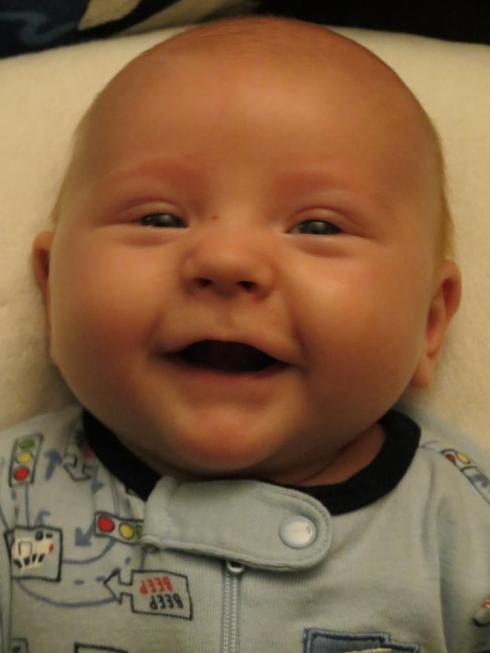
Baby Isaac

Baby Isaac

Female Feticide Is Not A Thing

29 Nov

I’ve been hearing a lot of talk about “female feticide” lately.

First of all, there was this Toronto Star article, published back in April, about the six GTA hospitals (all in areas with large South Asian populations) that won’t reveal the baby’s gender to parents because of fears of “female feticide”.

Then, there was Conservative MP Mark Marawa’s Motion 408, which reads as follows: “That the House condemn discrimination against females occurring through sex-selective pregnancy termination.” 

Most recently, I had the following image pop up on my Facebook feed:


Female feticide, or sex-selective pregnancy termination, is typically defined as an elective abortion performed after a pregnant woman has learned that her fetus is female. In cultures where males have higher status than females, and male children have more value than female children, it is becoming more and more common for women to terminate pregnancies based on the fetus’ gender. Two countries where this practice is especially prevalent are India and China; it’s estimated that the gender ratio in India for children under the age of six is currently 109.4 males to 100 females, and in China is around 106 males to 100 females (although in some provinces it goes as high as 130 to 100).

The fact that these abortions happen because girls have so little value in some cultures is abhorrent to me. The fact that a woman would terminate a pregnancy just because of the gender of the fetus both horrifies and sickens me. But you know what? Female feticide is not the problem, it’s just a symptom. The treatment of girls and women in certain cultures, and the underlying beliefs that lead to this treatment, are the problem.

There are so many things about the discourse surrounding female feticide that bother me; I even find the name itself problematic. I mean, first of all, let’s be super clear on one thing: FETICIDE IS NOT A THING. This is not a word people should use, unless they want to be seen as part of the pro-life movement. It doesn’t matter that it’s female fetuses being aborted; it’s still not called feticide. If a woman chooses to abort her fetus because prenatal testing has shown that is has some form of disability, do we call that “disabled feticide”? If a woman terminates her pregnancy because she can’t afford another child, do we call it “penurious feticide”? No. No we don’t. Why female feticide, then? Why do we target this one type of abortion as being so much more heinous than others?

All of which brings me to my next point:

There is no hierarchy of abortions. There is not one type of abortion that’s fine and another that isn’t. You can’t say that it’s all right for a woman to terminate her pregnancy because it’s just not the right time in her life to have a child, or because it’s her first abortion and she was using birth control and it’s totally not her fault, but then turn around and say that a woman can’t choose to abort based on the gender of her fetus. You are either pro-choice or you aren’t. It’s as simple as that. Sure, you can feel uncomfortable about the reasons why another woman might terminate a pregnancy, but guess what? You don’t get to say shit about it, because it’s her choice.

See, that’s really the crux of the matter here: choice. Choice, and bodily autonomy, and agency. When you don’t give a woman all of the information available regarding her pregnancy because you are afraid that she will make the wrong choice with that information, then you are removing her agency. Ultimately, don’t we want to be empowering women and girls in these cultures that give their lives so little value? How is removing a woman’s agency empowering her at all?

I know exactly what you’re going to say. But what if she’s pressured into the decision to abort? What if she asks for an abortion because her husband is forcing her to get one? 

For one thing, there is no foolproof way to tell if a woman is being forced or manipulated into something. None. We can’t just go around operating on the assumption that any given woman out there is being controlled by a man; I think we have to assume that they are acting under their own power until proven otherwise. For another, what is a woman going to learn if she goes from a partner who is trying to control the outcome of her pregnancy to a doctor who is also trying to control the outcome of her pregnancy? The main thing that she is learning is that she has no agency over her own body. Finally, maybe a better solution would be to provide safer spaces for women who doctors feel are at a higher risk for being in abusive relationships; we should give them the chance to speak their own mind and present them with information and resources, rather than just refusing to reveal their fetus’ gender.

Another issue that I have with the term female feticide and the ways that we talk about it are that it’s hard not to feel like this is an effort by the pro-life groups to try to get feminists and liberal left-wingers on board with the idea that abortions are wrong. It kind of happens in baby steps, you know? First we say that one type of abortion is wrong and should be made illegal, and then another, until finally the procedure is outlawed altogether. I mean, it seems very telling that Motion 408 was put forth by a Conservative Party MP, you know? Looking at that graphic above, I can’t help but imagine it without the text at the bottom – just a fetus with the text, I want to live, Maa. Seen that way, it bears a striking resemblance to a lot of the pro-life rhetoric.

I guess that at the end of the day, I just don’t see how limiting a pregnant woman’s knowledge about her fetus, or not allowing her the choice to terminate her pregnancy, is going to empower women. All that will happen is that she will give birth to a daughter that she (or her husband) doesn’t want, who might end up being neglected, hurt, or even killed; if that daughter somehow makes it to adulthood, she will likely marry, get pregnant, and continue the cycle. What we really need to do is find ways to change these pervasive and damaging beliefs that males are more valuable than females. We need ways to to alter all the big and little cultural practices and ideologies that elevate one sex over the other. We need to attack the root of the problem  if we ever truly want to solve this.

Ultimately, what we really need to do is to find a way to make the world safer and better for all women, so that female children are no longer viewed as a curse. Because they’re not a curse; they, like male children, are a gift.

An Open Letter to Margaret Wente (please stop perpetuating gender stereotypes)

23 Nov

Margaret Wente wants me to know that I don’t care about my son.

Well, not my son, specifically; she thinks that I don’t care about any boys. Or, at least, any “real boys”, whatever that might mean.

See, Ms. Wente recently wrote this lovely and super-balanced article for the Globe and Mail about the gender gap in education. For this piece, she interviewed the principal of Upper Canada College (one of our country’s most prestigious boys’s schools), two of his colleagues, and the executive director of the International Boys’ School Coalition (a not-for-profit coalition of schools that promote the “education and development of boys world-wide”) – so, all people who have a vested, financial interest in promoting the idea that boys need to be educated separately or differently from girls. She did not interview anyone who does not make money from boys-only education. See what I mean? Balanced.

It’s a fairly well-known fact that, percentage-wise, less boys are entering university than girls, and that more boys are dropping out of high school. Margaret Wente, and others like her, argue that this is because Canadian education today favours the learning styles of girls over that of boys. However, I find it interesting to note that the percentage of males obtaining a university degree has, in fact, increased by 5% since 1991 (though admittedly the percentage of females has increased by twice that amount), and the high school drop out rate for both males and females has been steadily declining for the past 20 years. Also interesting to note is that the gender gap is much smaller for those enrolled in college – there is only a 2% difference between the number of male and female college students. So what, exactly, am I trying to prove with all these numbers? That things maybe aren’t so dire as Margaret Wente makes them out to be, because according to her the situation is pretty dire. See, Margaret Wente thinks that we’ve reached some kind of boy-ocalypse that will certainly end with the extinction of males in academia.

Ms. Wente wants us to believe that women have “stormed the gates of medicine and law” (which may or may not be true – it’s hard to say, because she provides absolutely no sources for any of her claims), but interestingly she neglects to mention that a heavy and persistent bias against women in science still exists, or that most law firms are little more than old boys’ clubs. Ms. Wente wants us to know that,”In the most prestigious programs at some of our leading universities, the gender ratio has reached 70:30″, although she totally neglects to tell us what those prestigious programs are, and which leading universities offer them. It’s kind of hard to argue with someone who provides you with no reference for her “facts”, but I will say that my department at university (Classics) was overwhelmingly male. It’s possible that my program just wasn’t prestigious enough, or that Ms. Wente doesn’t consider Dalhousie to be a “leading” university. Who can say? I mean, other than Ms. Wente, that is.

Anyway, after a whole bunch of hyperbole, Margaret Wente finally gets down to brass tacks and explains what, exactly, she’s trying to get at: she feels that our school are not addressing boys’ needs in the classroom. Fair enough! So, what, according to Ms. Wente, are those needs?

Let’s take look, shall we?

“Boys’ existential issues are different from girls’. For a boy, the two most important life questions are: Will I find work that’s significant? And will I be worthy of my parents?”

Huh. That’s funny, because those things are both really important to me, too! Ms. Wente neglects to mention what the two most important “life questions” are for girls, but I have a sneaking suspicion that she believes they have something to do with marriage and babies.

“When boys themselves are asked what they need, they say: I need purpose. I need to make a difference. I need to know I measure up. I need challenge. Above all, I need a meaningful vocation.”

Well, that makes sense, because those are all things that are definitely not very important to girls. I mean, except for the fact that I would say that most of these are the driving forces in my life.

‘Boys also need to imagine themselves in heroic situations. When girls are asked about Vimy Ridge, they say, “Whew, it must have been horrific.” When boys are asked, they imagine what they would have done if they’d been there. “Our most powerful assembly is on Remembrance Day,” says Mr. Power. “Every boy is thinking to himself: How would I have measured up?”’

Well, I’m sure that that has nothing to do with the fact that we live in a culture that glorifies violence and war, right? Also, and this might just be my vagina talking, I tend to think that “horrific” is a pretty accurate description of Vimy Ridge.

Boys love rituals, trophies and tradition. Those also make them feel part of something bigger than themselves.

None of those are things that girls like. Ever. Girls hate working to achieve something, and if they do somehow manage to stumble upon an achievement, they definitely don’t want a trophy for it.

So far, I’m kind of having a hard time seeing what Ms. Wente is getting at, but then she decides to really lay it out for us. The problem with boys and education is that we’re not allowing them to be manly enough.

Many commentators – men as well as women – blame male culture itself for the problems with boys. In their view, what we need to do is destroy the death star of masculinity and all the evil that goes with it. What we need to do is put boys in touch with their emotions and teach them to behave more like girls.

This argument might make some sense – if you’re someone who believes that masculinity is nothing but a social construct. But people who care about real boys know that’s not true.

See? I told you that Margaret Wente doesn’t think that I care about real boys!

Time to get real, you guys. I’ve been pretty flippant up until now, but I have to tell you, it makes me pretty fucking angry that Margaret Wente likens understanding and acknowledging your feelings to behaving like a girl. First of all, I don’t think that there is any way to behave “like a girl”. Second of all, I think being “in touch” with your emotions is an excellent idea for anybody, regardless of their gender. Third of all, I am so fucking sick of people equating breaking down gender barriers with making boys “behave more like girls”. How about we just stop insisting that people fit into narrowly-defined gender roles?

The funny thing is, it’s those gender roles that are responsible for so many of the issues that Margaret Wente is complaining about.

Here are some examples:

The dominant narrative around difficult boys – at least in the public school system – is that they’re unteachable, unreachable, disruptive and threatening.”

But why doesn’t she question the fact that we live in a culture that puts value in boys behaving in a threatening way? Why doesn’t she wonder how, in our fucked-up view of masculinity, we equate violence with power?

[Women have] all but taken over pharmacy and veterinary work.

Gee, do you think that’s maybe because those career paths have come to be seen as more typically feminine? Do you think that there’s a chance that less boys are entering those fields because they’re afraid of compromising the masculinity that Ms. Wente praises so much?

Before the Industrial Revolution, boys spent their time with fathers and uncles, often engaged in strenuous physical activity. Now they spend their time in the world of women, sitting behind desks. If schools threw out the desks, they’d probably be a lot happier.

It’s interesting to note here that Ms. Wente fails to mention that before the Industrial Revolution it was only boys who permitted to attend school. And guess what? Schools back then included desks as well. In fact, I would argue that, in the past, formal education involved far more sitting at a desk than it does today. And you know what? If we’ve come to equate the idea of school as being part of “the world of women”, then that gender stereotype is likely one of the reasons boys aren’t thrilled with being in school.

Look, I’m not here to argue with the idea that boys are lagging behind in our educational system. I’m not here to say that things don’t need to be changed, or that I don’t believe that boys develop differently from girls; having watched my son and his peers I know that, for example, girls tend to have an easier time with language, whereas boys excel at spatial awareness. I’m not even against the idea of educating boys and girls separately (although I would be lying if I said I didn’t have concerns about the equality of the education they would receive). What I am saying is that I don’t think that re-inforcing gender stereotypes is what is going to fix this. In fact, I think that those gender stereotype are what got us into this mess.

What if, instead of having this be a battle of boys vs. girls, we use this as an opportunity to find a way to meet each student where they are. Can’t we engage our students as individuals, rather than saying that the whole curriculum has to be rejiggered to benefit one or the other? Is there any way to find a curriculum that will be the perfect middle ground? Or will we constantly be going back and forth between uh oh now the girls are doing better, no wait now it’s the boys, no wait the girls without ever finding a balanced way to address the subject?

I hope that when Theo starts school, his strengths and weaknesses aren’t treated as being boys’ strengths or boys’ weaknesses; I hope that they are treated as his own individual issues, his own successes and failures, and that his teachers are able to see past his gender and appreciate him for himself.

That’s what we all want, isn’t it?

I can’t do yoga (and other lies people tell me)

21 Nov

I honestly can’t tell you how many times I’ve had this conversation:

Person I Just Met: So, what do you do?

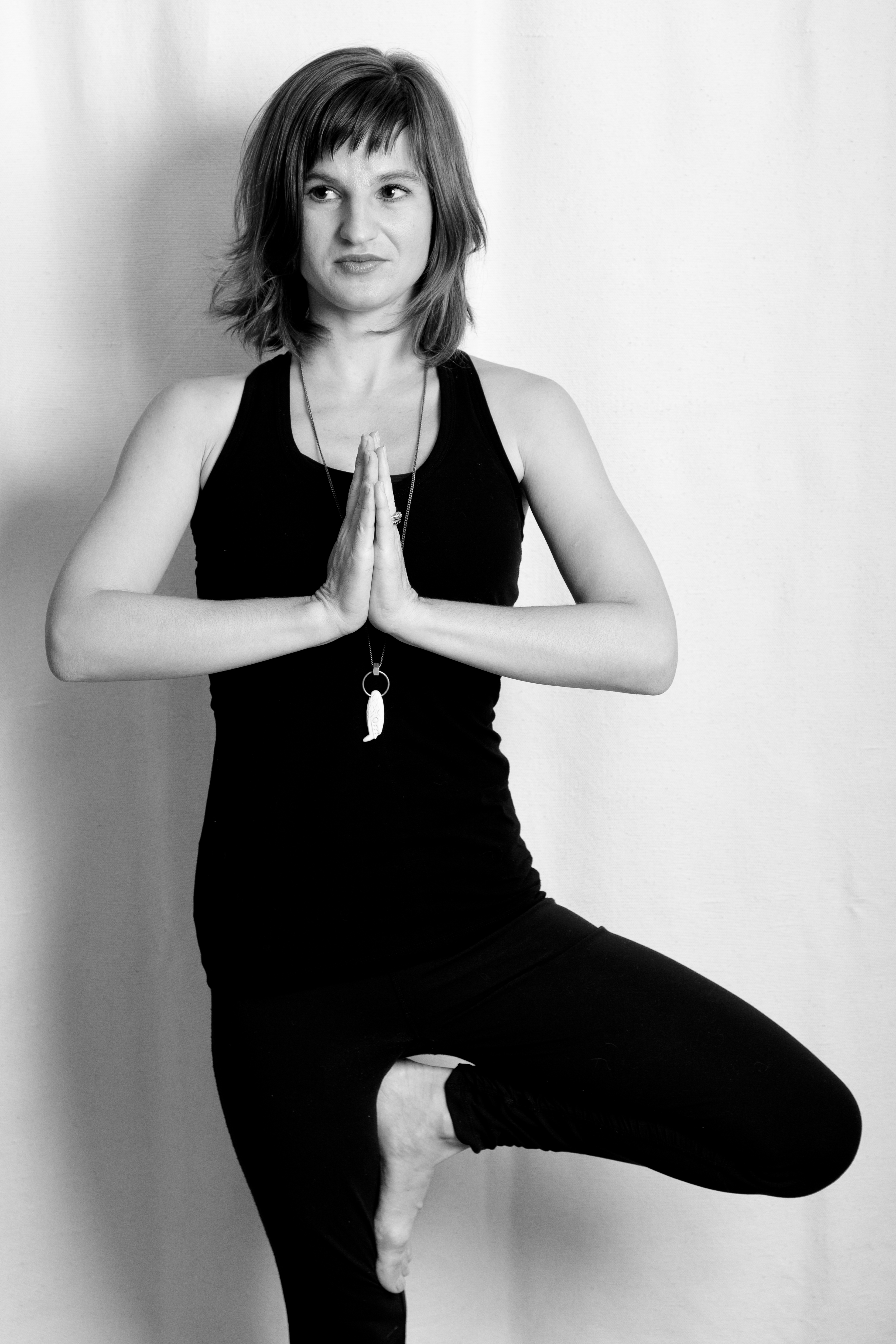
Me: I’m a yoga teacher.

Person I Just Met: Oh, neat! Where do you teach?

Me: Right now I’m mostly just subbing, but I teach a regular weekly class at [local studio]. You should come!

Person I Just Met: Oh, um, yeah, maybe. We’ll see!

Me: It’s pay-what-you-can and all levels. I would love to have you!

Person I Just Met:  I can’t do yoga. I’m just really not flexible. Sorry!

Here’s the thing: anyone can do yoga. I honestly believe that. I have taught a yoga class to a room full of octogenarians who stayed seated in comfy chairs the entire time – if they can do yoga, then so can you. It doesn’t matter how flexible your body is – any and all poses can be modified to meet you where you are. And really, if you want to try yoga but lack of flexibility is your excuse, how will you ever improve your range of motion without first taking up something like a regular yoga practice? Everyone has to start somewhere – why not start now, today, whatever shape your body is in?

Having said all that, I know there are a ton of reasons why people shy away from yoga, and most of them have nothing to do with flexibility. Part of the problem is that the yoga culture in the west is kind of fucked up.

Yoga is an ancient Indian discipline dating back several thousand years. The first definitive text on yoga, Patanjali’s Yoga Sutras, is estimated to be about 2,000 years old, and the practice itself is even older than that. Yoga is one of the six astika, or orthodox, schools of Hindu philosophy, and in its original form was mainly a mental and spiritual practice with some physical elements.

The second sutra in Patanjali’s book pretty clearly outlines what was, at the time, understood to be the main goal of yoga. This sutra reads, yogah citta vrtti nirodhah, which is typically translated to mean something like, “yoga is the cessation of the movements of the consciousness”. In short, yoga is all about getting your brain to shut the hell up so that you can enjoy a little peace and quiet, for once. Yoga is also about moving past the busy, restless, endlessly nattering part of the brain, the one that Buddhists often refer to as the “monkey mind”, and towards the purusa, which I will loosely define here as a sort of universal consciousness. Yoga is meant to help you see clearly, and one of the things yoga philosophy tells us we need to learn to see is that all beings and all parts of nature are interconnected. We are all part of the same larger pattern, and we are all part of each other. Realizing that is the original, ultimate goal of yoga.

Here in the west, though, we view yoga mainly as a form of physical exercise. Although we chant OM at the beginning and end of every class, and although as part of our practice we often perform surya namaskara (sun salutations), movements whose original intent was to honour the Hindu solar deity Surya, the way we view yoga is pretty much totally secular. Oh sure, some people will tell you that it makes them feel “spiritual”, but most don’t think about the religious aspects of what they’re doing. There’s a lot of cultural appropriation that goes on in western yoga, a lot of white people wearing mala beads and chanting in sanskrit without really understanding what any of it means. In my time in the western yoga world, I’ve seen so many examples of people exoticizing Hinduism and Indian culture, but not many attempts to learn more about what all these words and symbols mean.

I could go on and on about cultural appropriation in yoga, and maybe someday I will. Right now, though, it’s mainly the above-mentioned white people that I want to talk about. See, yoga in the west has, for the most part, become the domain of young, skinny, upper-middle-class, heterosexual white women. I’m not sure how this came about, as, up until just a few generations ago women were forbidden from practicing yoga, but, well, here we are. And I, a young, skinny, white, middle class, heterosexual white woman want to tell you that this is a problem.

The main issue is that people feel intimidated not necessarily by yoga itself, but by the other students in the room. In a worst case scenario, people might feel unwelcome, even unwanted. The message that the yoga community often sends out is that students have to look a certain way, wear certain clothes, have a certain body type and a certain sexual orientation in order to practice yoga. There’s a lot of privilege going on in the western yoga world, and not a lot of yogis who are willing to acknowledge it. And you know what? That’s not cool, because yoga should be for everyone. Yoga is for everyone. Rather than ignoring or dismissing the problem, we in the yoga community need to sit up, take notice, and ask ourselves how do we solve this?

One way to help solve this is to create safer spaces for different types of students. For example, I love Kula Yoga’s Positive Spaces Initiatives, which include classes like “brown girls yoga”, and “queer yoga”. I think that we need more classes like this, more safe spaces catering to the needs of different groups. We already know that some people prefer specialized classes – prenatal yoga, for example, or yoga for seniors – so why not expand this idea? How about yoga for fat chicks, or yoga for trans folk? After all, yoga should be for everybody, not just a select few.

We also need more pay-what-you-can classes, which most studios call “karma” or “community” classes. The average cost for a yoga class in Toronto is between $16 and $20 – paying that amount even just once a week is not manageable for some people. We need to find a way to make sure that yoga is affordable to everyone, not just those with a steady income.

Mostly, what I really think we need is for people to realize that yoga isn’t about how you look, both in terms of poses and clothing, and is really about how you feel. As my (very wise) friend/teacher Charlene recently said, “Yoga isn’t the series of poses and movements that you do during class. Yoga is how you feel after the class.”

The thing is, I honestly believe that yoga has changed my life for the better; that’s why I teach it, so that I can hopefully share that experience with other people. I’m not saying that everyone has to do yoga, or that it’s going to have the same effect on other people as it’s had on me, but I do honestly believe that everyone should have the opportunity to have a regular practice if they want one.

After all, as yoga teaches us, we are all equal and all part of the same greater system.

Abortions Are Just Like Hot Air Balloons: Your Tax Dollars At Work

13 Nov

My old friend Stephen Woodworth, master architect of Motion 312, is feeling a little concerned. See, he’s worried that you, dear Canadian, don’t understand what M-312, which deals with fetal personhood, has to do with abortion. Woodworth, his brow furrowed by deep thought, has been wondering and wondering why his motion didn’t pass. Finally, he realized that his brilliant idea was just too complex for people to understand. Thankfully, man of the people that he is, he’s come up with an allegory to help explain it to us.

I’ve copied it below for your reading pleasure:

Part I: Motion 312, Fixed-Wing Technology and Ballooning -An Allegory
 
Note:  The following account is intended to be entirely fictional.  Resemblance to any persons, living or dead, is entirely coincidental.
 
In the early days of air flight, a Canadian aviation engineer was well-known for his opposition to ballooning (which was the established method of air flight in those days).  He actively spoke and wrote against ballooning, penning letters to the editor and articles in professional journals to express this opposition to ballooning.
 
After years of being stonewalled by an aviation establishment entirely enamoured with ballooning and which was completely unwilling to consider alternatives, he fell into deep thought.
 
“Perhaps I could find some other issue to pursue on which a majority of Canadians could agree,” he wondered to himself “Could I find some aviation principles on which we might find a consensus?”
 
After serious analysis, he came up with some aviation principles he felt might be acceptable to everyone.  He suggested a process to study the principles of fixed-wing aircraft to determine whether or not they should be pursued.  He suggested that the study consider whether or not existing legal prohibitions against fixed wing aviation were consistent with early 20th century aviation science and understanding.  He pointed out that Canada was one of only a few advanced nations to completely protect ballooning against fixed wing development.
 
An honest man, the aviation engineer acknowledged the relationship between fixed wing technology development and ballooning, and even admitted that the development of fixed wing technology might mean fewer people would engage in ballooning.
 
You can imagine that the ballooning industry rose immediately to the challenge.  Their first attack was to indignantly accuse the aviation engineer of being a ballooning-hater whose only motive was to destroy the ballooning industry.  “He says he just wants to improve aviation, but his real interest must be to simply destroy the ballooning industry since he must know that fixed wing aviation will mean fewer people will pursue ballooning”, they said.
 
The engineer protested that ballooning and fixed-wing aviation were not necessarily inconsistent with each other, but the balloonists ignored him.
 
He pointed out that something wasn’t right if balloonists felt they needed to pretend that fixed-wing technology didn’t exist.  They still ignored him.
 
The balloonists lobbied against his proposed study on the basis that their minds were made up that ballooning was better than fixed-wing aviation, they knew they were right, and so dialogue and review of modern aviation science would be a waste of time.  They argued that ballooning was simply better as it existed, period, discussion over.
 
Finally, the balloonists pointed out that existing Establishment views supporting the ballooning industry had only been established after long and difficult public debate, and that “re-opening” that debate should be avoided since it would provoke passionate or even divisive comment.  The engineer’s reminder that the right to study fixed wing aviation had been explicitly preserved and allowed for when protection of ballooning first became popular with the Establishment, was ignored.  The engineer knew that these existing differences between fixed-wing technology and ballooning would actually be brought to resolution by his proposal for dialogue and study, but he was ignored.
 
Many balloonists took to social media, publishing vile and insulting slanders against the engineer and misrepresenting his proposal.  He was not deterred.
 
Members of Parliament who spoke against the engineer’s proposal focused entirely on the necessity of protecting ballooning.  Not one even mentioned the subject of fixed wing aviation.  Not one questioned the aviation principles proposed by the engineer.  They expressed a single-minded preoccupation with ballooning to the exclusion of any consideration of wider aviation principles.  A number of professional aviation associations, filled with balloonists, were told that the engineer’s proposed study was about ending all ballooning and were in that way induced to pass resolutions condemning him and his proposal.
 
In the end Parliament defeated the engineer’s proposal, setting back the cause of fixed-wing technology in Canada for a time.  Clear-thinking people were amazed that a modern democracy could accept such a result, turning its back on modern aviation principles.
 
Now do you understand the relationship between Motion 312 and abortion?

All right, all right, I know what you’re thinking – your small lady-brain can’t quite grasp this. I know. Shhhh, it’s okay, I know. Normally I would be right there with you. Fortunately, I’ve given myself a few injections of testosterone this evening in order to help explain this all to you.

Okay so first of all, ballooning is abortion – which is, I guess, our established method of dealing with unwanted pregnancy? Much like ballooning is the established method of air flight in this story? That’s sort of what he’s saying? He also apparently believes that we’re totally enamoured with abortion; I guess he’s one of those men who think that women totally have abortions for funsies, like it’s a fucking trip to the spa or something. I just love the foot massage they give you after they remove your unwanted fetus.

Anyway, the protagonist of this allegory, an engineer who is both a gentleman and a scholar, hates ballooning, and starts a nasty anti-ballooning campaign. Sadly for him, everyone else loves ballooning and/or no one gives a shit about his letters to the editor and/or this guy really needs a hobby, so his plan is going nowhere fast. In a moment of brilliance, he thinks to himself, “Perhaps I could find some other issue to pursue on which a majority of Canadians could agree“. Obviously he is talking about fetal personhood fixed wing aviation.

Here’s where shit starts to get nonsensical. See, he wants the Canadian government to “study the principles” of fetal personhood fixed wing aviation, which all seems fine and normal and reality-based, but then he goes on to suggest that the government, “consider whether or not existing legal prohibitions against fixed wing aviation were consistent with early 20th century aviation science and understanding“. Er, what? So he wants us to examine the legal prohibitions against personhood? Which don’t actually exist? Like, no one is saying that he can’t call his own fetuses “persons”, just that he can’t start assigning personhood to all fetuses ever.

Next comes one of my favourite lines in his whole allegory:

[He] even admitted that the development of fixed wing technology might mean fewer people would engage in ballooning.”

No shit, dude. If you are trying to pass personhood laws in order to enact abortion legislature, then for sure less people will fucking “engage in ballooning”. I mean, except for the people who go to those back-alley balloon enthusiasts in order to balloon in secret.

Fuck, you guys, I just have to take a minute here to tell you how gross it is that he is comparing abortion to a RECREATIONAL SPORT. Like, terminating a pregnancy  is totally comparable to something you do for fun at the fucking county fair. Look, I’m not saying that everyone who’s had an abortion absolutely agonizes over the choice, but I really don’t think that anyone is ever like, gee, I’ve got nothing better to do this afternoon, may as well terminate my pregnancy then go eat some funnel cakes and ride the ferris wheel. It’s still a medical procedure, for God’s sake.

Ugh.

Anyway, so the allegorical abortion ballooning industry gets all up in arms, thinking that Mr. Fixed Wing Aviation is out to destroy them, because of course that’s what this is really all about. The abortion industry. The secret abortion lobby that controls Canada. The board of shadowy abortion-loving figures. It’s not about women having the right to control their own body. It’s not about bodily autonomy. Women obviously only have abortions because the abortion industry manipulates them into believing that abortions are better than cake and pie combined.

Also, I’m so sure that abortion, especially abortion in a country with socialized medicine, is so profitable. Like, I’m sure Scrooge McDuck is sitting in a cash-filled room somewhere, rubbing his hands and cackling over how awesome killing babies is. Okay, now that is a Disney movie I’d watch.

The rest of the allegory is basically a giant whine-fest about how everyone is so mean to Stephen Woodworth the fictitious engineer and how he was slandered (vilely and insultingly!) in social media. The engineer is shocked and appalled that the Canadian government wouldn’t even consider his proposal, and apparently men “clear thinking people” everywhere were “amazed” that Canada could be so behind the times.

Now do you understand the relationship between Motion 312 and abortion?

Uuuuggghhhh you guys, this is actually the worst allegory ever. I mean, I totally and fundamentally disagree with Stephen Woodworth, and I could still write a better anti-abortion allegory than this. First of all, it’s so gross and offensive to compare abortion to an activity that people do for fun. Second of all, it’s full of ridiculous half-truths and rife with misinformation. Finally, it ends with the assertion that all modern democracies are enacting personhood laws, which is just untrue, unless by “all modern democracies”, he means, “America”.

Anyway, Stephen, I guess I give your allegory an E for effort. Thanks for coming out, and don’t quit your day job. I mean, please do quit your actual day job of being an MP, but, you know, don’t give it up just to become a man of letters. Unless becoming a writer would mean that you would write allegories about how underfunded the arts are in Canada, in which case: have at ‘er, buddy.

Why Feminism Is Still Important (or, why I hate the word “equalist”)

1 Nov

Last night I was flipping through Margaret Atwood’s Wilderness Tips (which, by the way, is probably her best book of short stories). In the middle of Uncles, I came across a brief exchange between two characters, one of whom is trying to convince the other to write a guest piece on feminism for his newspaper:

“This would be a different angle.” There was a pause; she imagined him polishing his glasses. “It would be – now that the women’s movement has accomplished its goals, isn’t it time to talk about men, and the ways they’ve been hurt by it?”

“Percy,” she said carefully, “where do you get the idea that the women’s movement has accomplished its goals?”

I feel like this is a conversation that I’ve been having for most of my adult life. For someone who came of age in the 90s and early 2000s, it can be hard to explain to other people why feminism is still necessary. Many of our bigger, more obvious goals – voting rights for women, the ability to own land, equal education for girls, and more control over our own reproductive systems – have, in the western world, largely been achieved. The landscape of third-wave feminism, which began in the early 90s and continues today, is often confusing and tricky to navigate. Some third-wavers question whether “feminism”, a term that might be limiting and can seem as if it’s promoting oppressive gender roles, should even be used. On top of that, it often feels like the current incarnation of the feminist movement has devolved into petty bickering about whether or not mothers should stay at home, or how a “real” woman is supposed to give birth.

So why even call yourself a feminist anymore?

I know a lot of women – smart, strong, progressive women, women that previously self-identified as feminists – who no longer use that label. People want to distance themselves from the negative connotations that surround the term “feminism”, or else they don’t want to seem as if they’re only interested in women’s rights. I can’t tell you how many times people have told me that they’d prefer to be called a “humanist” instead; in fact, this past weekend, a good friend said wistfully to me, “I wish society was at a place where I could call myself an equalist instead of a feminist, but I guess we’re not there yet, huh?”

On the surface, these arguments seem to make sense. I mean, you catch more flies with honey, etc. If using different terminology means that more people are willing to work towards equality, then that must be a good thing, right? I mean, let’s be honest – the term feminist conjures up images of angry women burning their bras, or intimidating women stomping around in army boots telling men what’s what. Feminism is often equated with hating men, or with the idea that women are the superiorsex. In contemporary mythology, stereotypical feminists only make up for their lack of a sense of humour with their surfeit of untamed body hair.

Here’s the thing, though: calling yourself an “equalist” slides you right back into all those traditional gender roles that society wants you to be in. Being an “equalist” ensures that you won’t intimidate anybody, that people won’t see you as someone who goes against the grain. It turns you into a smiling, apologetic woman who says things like, “but I just want everyone to have equality – men and women.” It makes you totally non-offensive, and as such, takes away a lot of your power. Women who describe themselves as equalists strike me as people who are afraid of conflict and who, above all, want to be liked; men who call themselves that strike me as people who want to deny all the challenges that women still face.

When we talk about equality, in a lot of cases men are already hold the standard that women are trying to achieve. It was only last year that women working for Canada Post won the right to equal pay – and this, by the way, stemmed from a case that was filed in 1983. The New York Times recently reported that a a heavy and persistent bias against women still exists in the scientific community; most troublingly, this bias is upheld and perpetuated by just as many women as men, which goes to show you how deeply misogyny is ingrained in our culture. Women still have to be afraid when walking alone at night; hell, we have to be afraid when out at a bar with a friend, or out on a date, or in almost any situation when we encounter a man alone. We live in a culture where women have to fear for our safety in ways that I don’t think men will ever understand.

And, of course, our reproductive rights are always, always in jeopardy.

All of that is only the stuff that’s happening here at home – what about the challenges facing women in other parts of the world? Countries where women have to fight for the right to drive, or work outside the home, or walk around in public with their hair uncovered? Countries where terrorist organizations shoot little girls in the head just because they want to go to school? There are places where just being a woman is treated as if it’s a crime.

This isn’t to say that there are no issues facing men – to the contrary, gender stereotyping certainly affects men as well as women. But when we start talking about equality for men, it often comes to dominate the conversation, derailing any attempts to discuss the ongoing inequalities faced by women. We need our own space to talk about what’s happening to women today; we need our own conversation about issues that are unique to us. We need feminism.

Look, I’ll be honest: I wish we lived in a world where just talking about concepts like equality meant promoting the rights of women everywhere. I wish that we didn’t have to use labels like feminist or pro-choice; I wish that we could just trust people to be sensible human beings and look out for each other. We don’t live in that world, though. Not even close. In spite of the progress we’ve seen over the last few generations, the feminist movement still has a long way to go before it achieves its goals.

Maybe someday we will live in a world where half the world’s the population doesn’t have to suffer simply because they’re women – I mean, I guess anything’s possible, right? That’s what we’re fighting for, right? Until that time, though, I plan on being an intimidating, humourless (though admittedly body-hair-free) feminist.

On Childbirth And Bodily Autonomy

29 Oct

A friend of mine recently gave birth. She’d planned on have a natural, drug-free childbirth, but instead wound up having an emergency c-section. After 30 hours of labour, her son’s head still wouldn’t (or couldn’t) engage, and his heart rate started to plummet frighteningly low. After a few minutes of discussing their options with her midwife and the on-call OB, they decided that a caesarean was her best option.

Her son was born not long after that, a whopping 9 pounds 5 ounces, with a full head of dark hair. He was beautiful and healthy, but instead of feeling as if she’d made a decision that could potentially have saved his life, she felt as though it had been her fault that she’d had to have a c-section. She thought that if she’d just somehow tried harder, or prepared better, she could have had the birth she’d wanted.

I talked to her a few days after her son’s birth, and, of course, asked how she was feeling. “I feel like I failed,” she said, sounding as if she was about to cry. “My son is only a few days old and I’ve already failed him.”

I knew what she meant, because I’d been there. When I’d found out that I would have to have a caesarean, I also, irrationally, had felt as if it was my fault, as if I was already failing my son. I still feel weird about my son’s birth, even now, nearly two years later, or rather I feel like other people are weird about it. I can’t tell you how many times I’ve had someone ask about my childbirth experience, only to shut down the whole conversation when I tell them I had a planned c-section. I often get the sense that other people think that I haven’t really given birth, or that I’ve taken the easy way out.

If you don’t have kids and/or haven’t spent a billion hours on the internet debating all things baby, you might be wondering why natural childbirth is such a big deal. Why does anyone even care?

For starters, giving birth without drugs or interventions means that you and your child will not have to experience the side effects of sedation or the potential harm from invasive procedures. Babies born naturally are more alert, which will make bonding and breastfeeding easier. Plus, not having an epidural means that you can get up and walk around during labour, or find the position that works best for you when it’s time to push. Without drugs, the mother’s recovery will be faster, and she can often leave the hospital the same day, if she wants to. And, of course, there’s the persistent idea that childbirth is more of a “real” experience if you are able to feel every sensation associated with it.

Many people advocate for natural births these days; even the nurse who taught our prenatal class was pretty anti-epidural. Part of this comes as a backlash against the medical model of childbirth, which, not that long ago, saw women in labour being put into a Twilight Sleep, a drug-induced state in which women were conscious but not lucid, and, though these women still experienced pain, were not able to remember it afterwards. In many ways, natural childbirth is an attempt to reassert control over our own bodies; to tell the doctors (most of whom were and are still men) that pregnancy is not a disease, and should not be pathologized. Another part of  the desire for drug-free childbirth comes from the assumption that “natural” is better, or from the idea that our bodies are designed to give birth without the aid of drugs or interventions.

Unfortunately, it’s hard to have a natural birth, and I don’t just mean the physical pain and exertion associated with drug-free childbirth. Hospitals make many people anxious, and trying to give birth while surrounded by beeping machines and scary-looking medical equipment is challenging, to put it mildly. On top of that, you have a regular rotation of people coming in and out of your room, wanting to check how far you’ve dilated, what your heart rate is, what the baby’s heart rate is, and a whole laundry list of other stuff. So giving birth in a hospital setting isn’t exactly conducive to that whole Mother Earth Goddess ideal that many of us hold.

So why not give birth at home? Good question. The answers range from being worried about not making it to the hospital in time if there are complications to not want to have to be bothered cleaning up the mess afterwards, and everything in between. One response that I hear very frequently form Ontario women is that they weren’t able to find a midwife; this was my experience as well.

When I had my first prenatal visit with my family doctor, I was eight weeks pregnant. She asked if I’d thought about how I wanted to give birth, and I told her that I wanted a midwife rather than an OB. She looked at me like I was crazy, and said that there was no way I would be able to find a midwife this far into my pregnancy. But I’m only eight weeks! I said. Technically I’ve only been pregnant for six weeks, if you take into account the fact that the first two weeks of  a 40 week pregnancy happen before a woman ovulates.

My doctor just shrugged and said that there weren’t enough midwives in Ontario, then asked what hospital I wanted to deliver at. When I told her, she frowned and said, Oh, I don’t know if we’ll be able to get you into Mount Sinai this far into your pregnancy. I honestly thought that she was exaggerating, but it took three referrals before we were able to find an OB at Mount Sinai who was still taking patients for my due date.

That was how I learned how insanely competitive giving birth is in Toronto.

There are 540 registered midwives in Ontario, serving a total population of 12,851,821. 1 in 10 births in this province are attended by midwives; 4 out of 10 pregnant women in Ontario would like a midwife but can’t get one. That obviously makes having a midwife-assisted birth in general, and a home birth in particular, pretty challenging. Which, as I said above, can make having a natural birth difficult or even impossible.

That being said, you would think that the natural birth community would be pretty understanding of the fact that most women still end up using the medical model of childbirth. While I would say that the majority of us are pretty chill no matter how your kid comes into the world, there seem to be a lot of people passing judgment on how women give birth.

It’s bad enough that some proponents of natural childbirth make women feel as if they’ve “failed” if they end up having unplanned interventions, but that’s nothing compared to their treatment of women who know ahead of time that they want an epidural, or those who choose to have a planned c-section. The funny thing is that these are often the same women who are very pro-choice and will throw around the phrase “my body, my choice”.

Well, is it our choice, or isn’t it?

It’s different, they’ll argue, when there’s a wanted child involved. It’s not your body anymore. You need to act in the child’s best interests. They’ll send you scary news articles, like this one, which references a study showing that children born before 37 weeks are 5 times as likely to have autism. That particular article is one that someone sent me when they found out I was going to have a planned c-section at 36 weeks; when I told her that the article had upset me, she said that she wasn’t trying to be mean, just giving me the “facts”.

Here are the facts: if I had had a natural childbirth, my son could have died. If my pregnancy had progressed past 36 weeks, my doctor felt that there was a good chance that my water would break, which could have lead to an umbilical cord prolapse, which would have meant death or brain damage to my son.

The thing is, no matter whether or not you are carrying a child, it’s still your body. You still have bodily autonomy. I’m not saying pregnant women should go out and do lines of coke chased by vodka shots, but I do think that we need to allow women to make choices regarding childbirth without judging them.

The argument that I hear most from people decrying women who choose the medical model of childbirth is that they’re selfish. They want an epidural because it’s easier for them. They want a c-section because they don’t want to have to go through labour. They’re planning to be induced at 39 weeks because they want to skip out on the last week of pregnancy. If these are thoughts that you enjoy thinking, here’s something I really, really want you to keep in mind: you do not know the whole story.

You don’t know why someone wants an epidural, I mean, not really. You don’t know why they might want a c-section. Sure, they might give you a reason, but what they tell you may not necessarily be the whole truth. They might have a medical condition that indicates a c-section, or they might be a survivor of sexual abuse and feel triggered by the idea of a vaginal birth. Or they might just not want to have a natural birth, and that’s okay too. Know why? Because bodily autonomy, that’s why.

The thing that frustrates me the most about this judgmental behaviour is how purely anti-woman it is. It stems from the idea that most women aren’t capable of making decisions regarding how they want to give birth. It assumes that a woman who chooses to have a planned c-section hasn’t done her research, has been brainwashed by the medical establishment, or is uneducated when it comes to birth options. It plays into the idea that women are irrational, thoughtless and downright selfish. It promotes the idea that, being left to our own devices, we will make choices that are harmful to us and our children.

These are the same ideas that lead to the body policing that many pregnant women have to endure. We’re told to eat more, but not gain too much weight. We’re cautioned not to exercise too hard, but also to stay fit and healthy. We have people watching every bite we eat, and I even know someone who was denied service at Starbucks because the barista didn’t think that she should have caffeine. When are we going to let women be responsible for their own bodies?

Look, I’m all for natural childbirth. That was what I wanted when I was pregnant with Theo, and if I ever have another child, I would like to try for an unmedicated VBAC. But that’s my choice, based on research that I’ve done and what I’ve heard from friends. If another woman makes a different choice, then I’m sure as hell not going to tell her she’s wrong. Your child’s birth is one of the most important days in your life (I mean, probably, right?), so why would you want to make someone feel bad about how theirs went down? Shouldn’t we be celebrating the fact that we all went through hell, in one way or another, to bring our children into this world?

I think a big part of the problem is that we still haven’t really figured this childbirth stuff out. We still don’t know what works best for us, both as individuals and as a society. The medical model of childbirth has seen the infant mortality rate decline 90% in the last hundred years, and the maternal mortality rate has declined by 99% in that time. On the other hand, within that medical model women still feel as if they are being bullied into interventions and procedures that they don’t want, and often come out of childbirth feeling as if they were coerced into accepting “help” that they felt they didn’t need.

I don’t know what the answer is, I really don’t. More midwives, for a start. Better education about birth options and the possible complications of interventions would also be good. Above all, though, I think we need to put more trust in women. I think we need to allow women to make more of their own choices, and we need to believe that they are capable of making the right choices, not just for themselves, but for their children.

This Is Not My Canada

23 Oct

The Conservative government wants you to believe that they’re not interested in re-opening the abortion debate. They want women to think that they have no intention of infringing on their reproductive rights. The carefully-worded Motion 312 assures you that they aren’t looking to criminalize abortion, they just want find “medical evidence” to determine when a fetus becomes a person.

Most of us realize that changing the abortion legislation in Canada is, in fact, on the agenda of most members of the Conservative Party. However, they are usually able to twist facts and words in such a way that it becomes difficult to argue with them.

Which is why I would like to thank Saskatchewan Conservative MP Maurice Vellacott for being so openly against women’s rights. Thank you, Mr. Vellacott, for showing us the true face of the Conservative Party of Canada.

You see, Mr. Vellacott recently awarded one of the Queen Elizabeth II Diamond Jubilee medals to Mary Wagner. These medals are meant to “honour significant contributions and achievements by Canadians“; 60,000 of them will be awarded over the course of this year. Every Canadian MP was given the chance to nominate 30 people for the medal. The medals are, according to the medal’s website, supposed to go to people who, “have made a significant contribution to a particular province, territory, region or community within Canada, or an achievement abroad that brings credit to Canada.”

Maurice Vellacott chose to give one of his medals to Ms. Wagner, to honour her activities as an anti-abortion activist.

Mary Wagner, who has repeatedly been charged with mischief and violating court orders at abortion clinics, is currently incarcerated at a women’s correctional facility in Milton, awaiting her next court appearance on charges of violating her probation. Her most recent arrest was in August of this year, when she was apprehended at a Toronto abortion clinic. She was also arrested at an abortion clinic in November of 2011 with charges of mischief and breaching probation.

So what do all these charges mean? What, exactly, has Mary done?

Mary goes to abortion clinics and harasses the patients there. She hands out roses and anti-abortion propaganda to patients and tries to convince them not to terminate their pregnancies. Mary preys on women when they are at their most vulnerable; she targets those who have likely already struggled with guilt and fear before deciding that abortion was the best option, and causes them to experience even more grief and pain. Instead of going through official channels to try to have abortion legislation changed, Mary prefers to attack and manipulate individual women.

Along with Mary, fellow anti-abortion activist Linda Gibbons also received a Diamond Jubilee medal from Vellacott. Although Linda is not currently incarcerated she has, in the past, spent a total of nearly ten years in prison for harassing women and abortion clinic employees.

And what does Vellacott have to say about Mary Wagner and Linda Gibbons? He likens them to Martin Luther King and “other human rights activists”. He refers to their activities as “civil disobedience”.

Canadians, this is your government.

I am so angry about this. My hands are actually shaking as I type this out. I am angry, and also afraid. It’s scary to live in a country that rewards people for infringing on the rights of others. The thought that these medals, which are being distributed in honour of one of the longest-ruling female monarchs, are being given out to people who are so decidedly anti-woman makes me feel sick.

I’m glad, though, that Vellacott did this. I’m glad that he’s shown the true face of the Conservative Party to the public. I’m glad that he’s done something so appallingly misogynist that people will have to sit up and take notice.

Please do something about this; this is something tangible that we can fight. You can share this post and bring awareness to what Vellacott has done. You can contact your MP, the Governor General or Stephen Harper. There is even specific contact information for the Diamond Jubilee Medals. I have included all the details below.

If this is something that you care about, please say something. If this isn’t the Canada you want to live in, for the love of all that’s holy please take a stand on this. If enough of us make a stink, then at the very least the public will become aware of what their government really stands for.

You can find your MP and their contact information here.

You can email Governor General David Johnston at info@gg.ca

You can email Stephen Harper at  pm@pm.gc.ca

You can contact the Diamond Jubilee Medal program directly at diamondjubilee@gg.ca or by calling 613-998-6790 or 1-800-465-6890.

Not sure how to word your letter? Here is a sample that you are welcome to use:

Dear [MP, Prime Minister, Governor General, etc],

I am writing regarding Conservative MP Maurice Vellacott’s decision to award the Queen Elizabeth II Diamond Jubilee medal to incarcerated anti-abortion activists Mary Wagner and Linda Gibbons. Wagner and Gibbons have been arrested multiple times on charges of mischief at abortion clinics; they have also been arrested for breaching her probation. 

Mary and Linda have repeatedly broken the law, and a member of the Conservative government is rewarding them for it. Mary and Linda are harassing women and attacking their rights, and our government is giving them medals for it. The Governor General’s website describes these medals as being intended to honour people who “have made a significant contribution to a particular province, territory, region or community within Canada, or an achievement abroad that brings credit to Canada”. Is this really how our government views a “significant contribution” to our country? Is this truly something that the Conservatives believe brings credit to Canada?

I urge you to take action on this issue, in whatever way possible. Please keep me up to date on the actions you plan to take, and the outcomes of these actions.

Kind regards,

[Your name here]

Mary Wagner (right) with fellow pro-life activist and jubilee medal recipient Linda Gibbons

Deconstructing Racism And Privilege

18 Oct

Before we start, let me be really upfront about a few things.

First of all, I am not an expert on racism; I haven’t studied it extensively, and what I’m about to write here is mostly based on a few smart books/articles, conversations with friends, and stuff that I’ve read online. Oh, and feelings. I have a lot of feelings about racism.

Second of all, I’m white. I mean, like, really white. I have the complexion of an anemic Swede. So obviously I don’t fully understand racism and its impact because I will never personally experience it directed towards me. Everything that I’m writing here is offered as the perspective of someone who lives in the land of white privilege.

So with that baseline in place, I want to talk a bit about racism in general and some of the fallout from The Gap’s Manifest Destiny debacle in particular (sidebar: isn’t debacle a great word? let’s all agree to use it more often). I’ve been reading some of the comments left on my blog, on my Facebook page, on BlogHer and on this piece in The Guardian, and many of them are, well, troubling. To put it mildly.

Here’s a small sampling of some of the comments:

“Oh for pity’s sake, must everything be offensive? Political Correctness gone wild.”

“WHAT aboriginal community in the U.S. ? This belief in the U.S. is dead. The only complainers are the very few who were conquered. Conquering is not new to any culture. If the Native Americans weren’t so busy trying to conquer each other, they might have been able to keep more of their land. It seems every culture grew from conquering over a culture for whatever reasons they had. The system is world wide. Just because we finally gave it a name doesn’t mean we alone own it.”

“OMG, and the shirt is black too, with white text. We must read everything into this!”

What I find truly annoying it that creating a fuss over this sort of trivial nonsense only makes it that much harder to battle genuine racism … Instead of fighting actual racists, they find it easier to make normal people, without racists tendencies, to tread on eggshells around minorities.

I think this is absolutely ridiculous that natives feel entitled to stick their nose into everyone’s business because it ‘hurts their feelings’.

We get it, we took your land and you feel a deep entitlement to free education, no taxes and who knows what else. But you know what… throughout history people have been stealing land from other people. You need to stop drawing pity to your people and move forward like the rest of the world.

You are just a bunch of entitled greedy leeches that like to cry out and draw attention to yourselves.”

I think that a lot of these responses are knee-jerk reactions that come from a place of fear. We see something like the Manifest Destiny tee, and we don’t see a problem with it. Then someone tells us that it’s racist, and our reaction falls into one of the following categories:

1. We accept that it’s racist, and work to understand the how and why of it

2. We deny that it’s racist, and then defend that denial

I think that a lot of people choose the latter because accepting that the t-shirt is racist, and knowing that they didn’t initially understand why, means that they are racist. And they’re not racist! They have friends who are people of colour! They would never do/say/think anything racist! So, logically, if they are not racist, then the shirt must not be, either.

For those of you who are afraid of being racist, I’m going to tell you something that will maybe sort of let you off the hook:

If you are white, you are racist.

To be clear, for the purposes of this post I’m defining racism as prejudice plus power. In the western world, in this specific time in history, only white people can be racist. People of colour can certainly be prejudiced against those of other ethnicities, but they can’t be racist because they don’t have the societal power to enforce those prejudices.

Look, it’s not your fault that you’re racist; you’re probably a really nice person and yes, I do believe you when you tell me that you have friends of many different ethnicities. You grew up in a world where you were immersed in white privilege, and that privilege was constantly being reinforced by your education, the media and society in general. You didn’t ask for that privilege; it was handed to you whether you wanted it or not. Given these circumstances, you can’t help being racist.

But believe me when I tell you that you are racist. I am racist. We need to acknowledge and accept this before we move forward.

That fact being established, I want to be really clear on something: it is not for white people to say what is and isn’t racist. It’s not our place to roll our eyes and say, Really, do I have to be offended by everything now?

I’m not saying that there is never any overreaction when it comes to racial issues. What I am saying is, if a person of colour tells you that something is racist, give them the benefit of the doubt. If you don’t understand why it’s racist, ask them to help you understand. If the explanation makes you uncomfortable, ask yourself why it makes you uncomfortable.

And for the record, I would rather overreact to something than under-react to it. I would prefer to be labeled hysterical than labeled an apologist. I would rather be hated for being outspoken than look back on a a terrible event and feel like I could have done something if only I’d had the courage to open my mouth.

So remember earlier, when I told you that I was sort of letting you off the hook? Well, here’s the part where it turns out that I’m not letting you off the hook at all. Yes, you are a good person. No, you can’t help being racist. What matters now is what you do with this information; what matters is whether or not you remain blind to the fact that you are subject to prejudices against people of colour, or whether you accept it and say, okay, what do I do now?

To say stuff like, “… creating a fuss over this sort of trivial nonsense only makes it that much harder to battle genuine racism”, is to remain wilfully blind to your own racism. It’s to see racism as a series of overtly cruel acts perpetrated by other people, and not as an inherent part of the invisible systems we all participate in that benefit white people.

To make comments to the effect that what was done to the Aboriginal peoples in North America is ancient history, and that “conquering” is just a normal part of civilization, is to remain wilfully ignorant to the truth of what happened, and how it’s still happening today.

To say that we live in a society where political correctness has gone overboard and to dismiss the cries of racism from people of colour as a gross overreaction is to assert that it is, in fact, up to white people to decide what is and isn’t racist. It’s saying that people of colour aren’t smart enough to know what true racism is, or that all they want is our pity or our land or our money. It’s perpetuating the idea that only white people know what is best, and it’s insinuating that it would be wrong or even dangerous to have people of colour in positions of power where their poor judgment and conniving ways could have a disastrous effect on everyone.

Okay. What do we do now?

I’m going to say something that might seem really scary, but here it is:

Let people of colour have a voice. Seriously listen to what they have to say. When what they say frightens and confuses you, don’t shut them out. Keep listening. Be willing to work with them; be willing to have them tell you that you’re wrong. Spend every moment of every day fighting against your prejudices. When you want to leave a comment like the ones above on an online article, take a moment before you hit the reply button and think, what am I really saying here?

It’s hard, I know. Many (most?) of us grew up in an era where overt racism was very much frowned upon, but the underlying racist structure of society was never talked about. We grew up with books and television shows and movies that were racist, although we didn’t know that at the time, and it can be difficult to cherish the memories of those things while at the same time admitting that they were problematic. We grew up knowing that racism was so wrong, which means admitting that we’re racist makes us feel like monsters.

The hardest thing of all is accepting that society has to change, because why would we want to change things when everything is set up to benefit us? What motivation is there to have anything be different from the way it is?

Well, for one thing, I want Theo to grow up in a better world than I did; I don’t want him to have to have the same prejudices I do. I want to stop feeling guilty just because my skin is white. I want to look at someone and see who they are, instead of first noticing their race.

Most of all, I want to live in a world where everyone is equal. Yes, I know that people will always be born into different socioeconomic circumstances; yes, I understand that some people will always have to struggle more than others just to achieve the same thing. But that struggle should never, ever be tied to a person’s skin colour. A person should not be set up to fail from the very beginning just because they’re not white.

And if you don’t understand that, then I don’t know what to say.

A Few Small Things

16 Oct

Hey y’all, here are a few things I wanted to share with you today:

1. Here is a post about women in geek culture that I wrote for Shameless Magazine’s blog. I am really proud of it! I am also super stoked that I had the chance to write it, and want to give Shameless Magazine a thousand smooches for publishing my stuff. If you want to read about misogyny, racism, and the lack of representation of queer and trans folks in geek culture, you should check it out. If you want to read about my love for Wil Wheaton, you should DOUBLE check it out.

OMGGGGGG IMAGINE IF WIL WHEATON EVER READ IT, I WOULD DIIIIIEEEEEE.

Hi, Wil Wheaton, call me, okay?

2. It looks like The Gap has pulled the Manifest Destiny shirt, and offered this lukewarm non-apology:

They tweeted something very similar yesterday, but it looks like the tweet has been removed.

I would really love for them to handle this the way Paul Frank handled the recent outcry over their racist and offensive fashion show, and I’m still hopeful that they might, but it’s looking less and less likely.

One of my favourite parts of Paul Frank’s response is that they said they like to collaborate with an Aboriginal artist on future designs and that the profits from that collaboration would be donated to an Aboriginal cause. How amazing would it be if The Gap could follow their lead?

3. My Manifest Destiny post was featured on BlogHer! It’s on the front page of the site, and it feels bananas to load the page and see something I wrote front and centre. I feel super flattered that they featured it!

4. You should really check out my friend L’s response to Gap’s Manifest Destiny debacle over at her blog, Life In Pint-Sized Form. Her grandfather is a full-blood Chippewa, and she brings a fantastic perspective to this issue. Reading what she wrote literally gave me chills.

5. Artist Gregg Deal, who is Aboriginal and a member of the Pyramid Lake Paiute Tribe, created this image in response to Manifest Destiny shirt:

I love these designs because they show so clearly the subtext behind the term Manifest Destiny, a subtext that many people seem hesitant to acknowledge. Let’s call a spade a spade, shall we? I also love that he used humour to address the racism of Gap’s design, because I think that humour can be a super important weapon against all forms of intolerance.

5. October 15th was Pregnancy and Infant Loss Awareness Day. Two of my friends wrote very movingly about their experiences with miscarriage and stillbirth, and I wanted to share their posts with you. The first is from my friend Jodi, who blogs over at Mama To Bean and whose son Joel was stillborn last year – you can read her reflections on what this day means to her here.

The second post comes from The Yellow Blanket, which is written anonymously by a woman who has suffered multiple unexplained pregnancy losses. She writes incredibly movingly about her losses, and what her pregnancies have meant to her.

If you plan on reading these posts, I would suggest that you break out the kleenex.

6. A lot of the stuff in this post has been pretty heavy. If you need something to lift your spirits after all this profound grief/righteous indignation/sadness that you are not, in fact, married to Wil Wheaton, then I highly recommend The Hairpin’s Texts From Little Women. I was reading this in the yoga studio while there was a class going on, and I was trying SO HARD to stifle my laughter because, well, Jo March. God I love Jo March.

Here’s a sample – the italicized text is Jo March, and the plain text is Meg March:

I hope you realize you’re breaking up the family 

I really wish you wouldn’t see things that way

a broken home 
that’s what I come from now 
a broken home

that’s not what they call it when your sister gets married

then why does it feel broken, Meg
why does it feel broken
this is the worst thing 
that has ever happened 
to anyone 
since Father died 

Father didn’t die, Jo!
he’s only been wounded!

oh 
didn’t he? 
for some reason I thought he’d died 

no
he’ll be home in a few weeks
Ah

do you suppose he’s going to want his old greatcoat 
and riding boots 
and shaving things 
and top hat
when he gets back? 

I expect that he will

HANG EVERYTHING” 

Hang everything indeed.