Tag Archives: happiness or something like it

On The Anticipation of Pleasure

5 Mar

On Saturday, we took Theo out to Leslieville to the little kid-friendly café where I used to run a French language baby group. It’s a great place; they have a large, fenced-off area for kids full of toys, activities and even a tree house. Meanwhile, they also have a sit-down area where they serve some pretty decent coffee and a few locally-made treats. Basically, it’s a win-win situation for everyone.

The only reason that Matt and I don’t take Theo there more than a couple of times a year is that it’s kind of out of the way (45 mins to an hour by public transit), and once you factor in meals and naps and all that good stuff, in can be hard to fit that kind of trip into a day. It’s probably a good thing that we don’t go there very often, though, because right next door is a Fancy Bakery that sells The Best Cupcakes in the World. And, naturally, because they are The Best Cupcakes in the World, they are pricey cupcakes. Which means that if we went to the above-mentioned cafe as often as we’d like to, I would basically be blowing my entire paycheque on cupcakes.

So anyway, we went, we saw, we conquered Leslieville, and came home happy and with a bag full of cupcakes. Except when we got off the train at St. Clair, I realized that I’d stupidly left the cupcakes on the goddamn Queen streetcar.

Strangely, though, I wasn’t that upset. Because I’d already had, like, two hours of looking forward to those cupcakes. And in some ways, that anticipation was almost better than the cupcakes themselves.

Sometimes, maybe even most times, I find anticipation more pleasurable than the actual thing I’m anticipating.

I’m slowly coming to realize that I have a fucked up relationship with pleasure and joy.

A few weeks ago, I posted Zadie Smith’s Joy on Facebook. It’s a good example of a certain type of essay that I stumble across every once in a while, the kind that leaves me nodding yes, yes, yes because everything it says seems to apply so perfectly to me.

What was interesting was that my friends who read it and commented were firmly divided into two camps: those who identified with and understood what Smith was saying, and those who found what she’d written to be unbearable, pretentious and difficult to read. Even more interesting was the realization that each of us identify and feel emotions differently, and things that I thought were universal were, in fact, deeply personal. It was like discovering that the colour you’ve called green your entire life actually looks to everyone else like the colour you call blue.

See, the crux of Smith’s essay was that there is a difference between pleasure and joy, and that joy is not simply an amplification of pleasure but is, instead, a “…strange admixture of terror, pain, and delight.”

I read that, and I thought, oh hell yes.

And I thought that everyone would understand what she meant, because I figured that everyone experienced joy in the same way that she and I did.

Because, for me at least, joy brings with it the knowledge that you are living this one, specific wonderful moment that you will never, ever get back, a moment that will certainly end, and maybe end very soon. Joy is a breathless, frighteningly intense feeling, and it’s good, but it’s also somehow painful, in a way that I can’t properly articulate.

For me, joy is not on the other side of the spectrum from pain; rather, in my experience, it’s right next to it, and it’s possible for one to bleed into the other to the point where they occasionally seem indistinguishable. In the same way, I don’t think that love is the opposite of hate – those emotions are, in my experience, much more closely linked than we like to believe. Love (and hate) instead find their true counter in apathy.

But while Smith seems to be uncomfortable with joy, she seems to be perfectly fine with everyday, run of the mill pleasure. And I think that this is where we differ.

Because as much as I agree with Smith that joy is uncomfortable (in a thrilling, all-consuming way), the fact is that I don’t fare very well with pleasure, either.

And I’ve come to realize that what I actually find most pleasurable is the anticipation of something, rather than the thing itself.

To this end, I find myself “saving” things because I don’t want to use all their pleasure up right away. I do this with food, with gift certificates, with events, with books. I do it with particularly good emails, ones that I want to read and re-read before I give in to the pleasure of answering them. I do it with phone calls that I have to return, with articles that I want to dissect, with reading and answering comments on my blog.

And I wonder, why do I save these things? Part of it, I think, stems from the idea that I want to wait for a “special occasion” when I will somehow be deserving of receiving that pleasure. But I think that an equal part of it is that I worry that there is a finite amount of pleasure available to me, and once I use it all up, it’ll be gone. I also think that there might be a dash of the old fable of the ant and the grasshopper thrown in there – when some kind of metaphorical winter comes, at least I’ll still have my gift certificate to Red Lobster to get me through those dark times, you know?

But the ridiculous part is that I will literally save these good things until they’re not good anymore. I have set aside delicious food and left it until it spoiled because there was just never the “right” time to eat it – and then I’ve scraped the mould off that spoiled food and eaten it anyway, and told myself that it was worth the wait. I’ve watched gift certificates expire, and told myself that if I hadn’t used them by now, then I didn’t deserve to use them anyway. I’ve put off watching the second half of particularly lovely movies until it comes to the point where I’ve forgotten what happened in the first half. I’ve left off answering emails and comments long past the point where my lack of response has become embarrassing and difficult to explain.

“Dear friend, I’m sorry that I haven’t answered you yet, it’s just that thinking about answering you was so lovely that I kept having to put it off.”

As if there will never be any more delicious food, nice emails or good movies ever again.

And, of course, the problem is that when you live this life of delayed gratification, whatever it is that you’re saving never lives up to the expectations that you’ve put on it. And so the anticipation itself begins to be what gives you pleasure, more pleasure than anything else. In a funny way, thinking about those cupcakes was even better than eating them – I didn’t have to deal with the sugar high and subsequent crash, didn’t have to feel the queasiness that I associate with too much cake and buttercream icing, didn’t have to worry about my teeth aching from the sweetness of it. In my thoughts, those cupcakes were perfect – much better than they could ever be in real life.

These are the things I tell myself, when I look around and see other people enjoying things much more or much better than I seem to be able to.

I am not very good at experiencing pleasure. I am not very good at living in the moment.

I am much better at parcelling things out, making them last, making them endure.

I am much, much, much better at thinking about the future, than I am at giving myself up to whatever joy or pleasure is at hand.

And that’s starting to feel really fucked up.

More than anything, I want to be this chick in the photo below, the one who throws caution to the wind, gets drunk on a school night, and laughs til she cries. Because she exists somewhere, I just haven’t figured out how to find her when I need her.
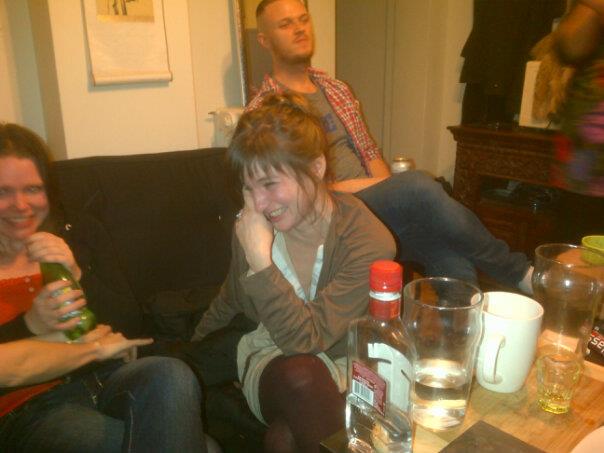
Me, laughing so hard that I'm crying

Me, laughing so hard that I’m crying

Checking In

20 Feb

I know that I haven’t written here in a while (SIX WHOLE DAYS, LIKE, YOU PROBABLY THOUGHT I’D QUIT BLOGGING OR SOMETHING), and I just wanted to check in and let you guys know that I’m doing all right.

More than all right, actually. I feel better. Frighteningly, miraculously, tentatively better. It’s so new and so strange that I’m a bit hesitant to write about it yet or even say it out loud – like I could jinx it or something. But I also want you to not worry about me, so I thought I should tell you: I feel better.

I don’t know if I would say that I was happy exactly, but then I’m not sure that “happy” is the opposite of “suicidal”. I’m coming to distrust the idea of being happy anyway – I hear the word thrown around too much, hear too many people talking about how they deserve happiness. But I’m not sure that anyone deserves happiness, you know? There’s a quote from Zadie Smith’s White Teeth that the cynic in me has always loved, and I feel like it might apply here:

You hear girls in the toilets of clubs saying, ‘Yeah, he fucked off and left me. He just couldn’t deal with love. He was too fucked up to know how to love me.’ Now how did that happen? What was it about this unlovable century that convinced us we were, despite everything, eminently lovable as a people, as a species? What made us think that anyone who fails to love us is damaged, lacking, malfunctioning in some way? And particularly if they replace us with a god, or a weeping madonna, or the face of Christ in a ciabatta roll—then we call them crazy. Deluded. Regressive. We are so convinced of the goodness of ourselves, and the goodness of our love, we cannot bear to believe that there might be something more worthy of love than us, more worthy of worship. Greeting cards routinely tell us everybody deserves love. No. Everybody deserves clean water. Not everybody deserves love all the time.

I’m starting to think that maybe not everyone deserves happiness all the time. Actually, I think I’m just getting tired of hearing people talk about deserving anything – I’m tired of people’s sense of entitlement, their willingness to trample over others in order to acquire something they feel that they deserve.

But anyway, I digress.

I’ve been trying to follow the hospital psychiatrist’s orders and prioritize things that make me happy, and I think that by and large I’ve been succeeding. I’ve started keeping a proper, paper journal again, and it’s actually wonderful to be able to write without thinking about having an audience (except that I basically always think about having an audience, but I’m figuring that no one will read my journals until I’m dead and thus don’t care). I’ve been taking time out of my day to go to hip cafés where I sit and scribble happily in my notebook while sipping a latte, feeling like everyone looking on must know that I am a For Real Serious Writer Lady.

I’ve been doing other things too – things like spending an hour or two at the art gallery, or wandering around Roncesvalles and checking out the cute shops. Today I went to a friend’s place and lay on her couch for three hours, sipping gin and tonics, dissecting Salinger books and watching Star Trek. It was nice – more than nice, really. And I felt like myself, for the first time in a long time. But I also felt guilty.

Let me see if I can explain the guilt. It’s like this: I constantly feel like I’m running out of time. I don’t just mean that there aren’t enough hours in the day to get things done (although I do feel that way) – I also mean in general, in my life. I feel like I spent too much time fucking off (read: being depressed) in my early 20s and now I’m 30 and all of my peers are ahead of me and I’m struggling to catch up. And I know it’s not a race, but it still feels like one, and I feel like I now have to work extra super hard just to prove that I should even be allowed on the track.

Anyway, what all this amounts to is that I have a hard time doing anything that I don’t view as useful or productive. Even spending time with Theo fits into this category, as I see parenting as a way of creating and shaping an awesome future adult. And yeah, being Theo’s mom is pretty rad, but sometimes that seems more like a pleasant side effect of parenting rather than the main point.

I also feel guilty because it’s like, who am I to get to do all these nice fun things? Like, why do I get to go out and see my friends and hang out in coffee shops while Matt has to stay home and parent? How is that fair? What if he starts to resent me?

Do I actually believe that being depressed gives me special privileges or something?

And then I think, if I were sick with anything else and the doctor’s orders were to take it easy, would I feel guilty?

No, probably not. But if I were sick with anything else, there would be blood drawn, tests run, and hopefully some kind of irrefutable scientific proof that I was sick. But with depression there is no proof, not really. You all have to take me at my word that some days, I feel like dying.

And what happens if you ever stop taking me at my word?

After years and years of talking about suicide but not actually dying, won’t I start to seem like the boy who cried wolf?

I don’t want to lose you guys. Because I love you. Because I’d be lost without you. Because your support has mostly been what’s kept me going these past few weeks.

Anyway, all of this is to say that you don’t have to worry about me, because I’m feeling better.

And that means that, at least for now, I don’t have to worry about losing you.

xoxo

Annabelle

P.S. On a lighter note, just in case you were wondering what a Shrevolution looks like:

shrevolution!

Sylvia

11 Feb

Today marks the 50th anniversary of Sylvia Plath’s death.

Is this something that people do? Celebrate the anniversary of someone’s death? Certainly celebrate is the wrong word – mark is probably better, or even observe.

Today I am observing the 50th anniversary of Sylvia Plath’s death.

It’s no secret that I love Sylvia. I mean, I named my blog after her only novel (actually, I named it after what I would have called my all-girl rock band if I’d had one, but the band was named after the novel, so really it all amounts to the same thing). I’ve read everything she’s ever written. I have a weird sort of embroidered picture of her hanging on my dining room wall.

I’ve even joked about being her reincarnation. I mean, there are a few similarities between us, right?

We’re both depressed, oversharing lady-writers, for one thing. We both come from families whose finances went into decline at some point during our childhoods. Her father died when she was eight; mine left when I was thirteen. Of course you can’t compare death to a divorce, but I think it would be fair to say that those events left us both dealing with what are colloquially referred to as “daddy issues.”

Oh, and my son shares a birthday with her son Nicholas. So there’s that, too.

Of course, this is basically where the similarities end. Sylvia worked hard throughout high school and ended up attending Smith College on a full scholarship. She then went on to receive a Fullbright Scholarship to Newnham College, Cambridge. Meanwhile, I burned out early in high school, too tired and sad and stupid to get my shit together, and went from being an honour roll student in grade nine to receiving mostly Cs and Ds in my final year. I did get into Dalhousie University (though just how I managed that, I’m still not sure), and while there had all As and Bs, but still, I was never the academic star that Sylvia was.

Sylvia published her first poem when she was eight, and went on to publish several poems and short stories before she finished university. One of her stories, Sunday At The Mintons, won her a coveted spot as a guest editor at Mademoiselle magazine in New York.

I published my first poems and short stories, well, never, and I can’t even properly edit my own stupid blog, let alone a whole magazine. I’ve also never been to New York, although I have watched a lot of Friends and Mad Men, which is basically the same thing, right?

I guess that, all in all, Sylvia and I aren’t much alike, at least not on the surface. But when I read her writing, I feel that, as The Bell Jar‘s Esther Greenwood says about her friend Doreen, everything she writes is like a secret voice speaking straight out of my own bones.

I get Sylvia Plath. I mean, I get her. I get her dark, sad, humour, and I get her anxieties, and I get her hopelessness. Up until now, I’ve used her as a sort of guide in the darkness, reading and re-reading my well-thumbed copies of her books, looking for passages that will get me through my fits of sadness. A paragraph here, a stanza there, a kind of spiritual sustenance to tide me over until things get better. For most of my adult life, I’ve looked up to her.

But then, for all of my life until now, she’s been older than me. Wiser, hopefully. Maybe even more mature.

What do I do now that I’m about to out-age her? She’ll be thirty years old forever, but I’ll only be thirty for a few more months.

How do I continue to look up to someone who will soon be younger than me? Will I still love her writing in 10 years’ time? In 20? Will I look back someday and, instead of finding inspiration in her words, discover that all along she’s been a boring, self-obsessed, talentless hack?

What happens when you outgrow the people you admire the most? Probably nothing. Probably it’s normal.

But in a strange way I feel that by letting go of Sylvia and moving on, I’ll be abandoning her. In a funny way, I feel that she needs me, as much as I need her.

I’ve been thinking a lot about her last few weeks alive. Not much is known about what was going through her mind, since Ted Hughes burned her last journal, but we do have a handful of poems dating from late January and early February and, of course, a few firsthand accounts.

We know that the quality of her poems changed in those last weeks, becoming less about the self, their mood more disembodied, alien. We know that her incandescent poetic rage, that rage that has made her so famous, had begun to fade in her works, replaced by a sort of resigned hopelessness. We know that she worked feverishly, producing poem after poem, trying to translate her tangled thoughts into perfectly-ordered words.

We know that Sylvia went to her doctor and told him that she felt as if she was heading for a breakdown. We know that she began taking antidepressants and sleeping pills. We know that she reached out to her friends, Jillian and Gerry Becker,  for help and a place to stay. We know that several days before she died, her doctor began trying (unsuccessfully) to find her a spot in the hospital.

Each night that she stayed with the Beckers, Sylvia would take her sleeping pills and recite a sort of monologue about all of the people who had wronged her, all the men, beginning with her father, who had deserted her, and how utterly miserable she was. She would go on and on, ignoring any questions that Jillian put to her, as if she was in a trance. Eventually she would pass out.

Having Sylvia stay with them began to be a strain on Jillian – she had to do everything for Sylvia and her children, cleaning, feeding and entertaining them. When Sylvia announced on Sunday, February 10th that she wanted to go home, Jillian didn’t press her to stay. There was supposed to be a nurse coming to help Sylvia the next morning, and besides, surely the doctor would find a hospital bed for her soon. And also, as Jillian said in the article I linked to above, pity tires the heart.

Gerry drove Sylvia home Sunday afternoon, and she wept the whole way there.

That night Sylvia left the window in her children’s room open, and shoved cloths and towels underneath their door. She also placed tape all around the door frame, to stop up the cracks. She then turned the gas taps in her oven on all the way and, placed a little folded cloth in the oven to act as a pillow, and laid down.

She was found the next morning by the nurse and a handyman working on the property who broke into her flat when no one answered the door.

By that point, she’d been dead for several hours.

Her children, though cold from having slept next to an open window in February, were fine.

And pity tires the heart.

I think that there’s a state that you sometimes get into when you’re deeply depressed. You feel as though you’re walking along a sort of knife’s edge between artistic inspiration and suicide. In an instant, all the dead, flat hopelessness you’ve been feeling gives way to an ecstatic misery. You suddenly feel as if you’ve been given a special insight into how the world really is, and you work like mad to get that insight down on paper or on canvas or whatever. And you know that you’re playing a dangerous game, but you also think that it’s worth it.

It’s worth it to go that close to the edge, if there are rare, exotic gifts to bring back.

It’s worth risking death, so that you can tell everyone else what it was like.

It’s worth almost everything, if it means that you’ll write something great.

It’s like circling round and round a black hole, getting a few inches closer each time. You’re discovering all kinds of amazing things that no one has ever known before, but you never imagining that you yourself might be drawn in.

It’s like standing at the edge of a lake of poison, and knowing that the poison, if taken in small enough quantities, will give you brilliance and genius that you’ve only ever dreamed of. The poison, if taken one spoonful at a time, will give you an enormous drive to create. And you want that. Oh, how badly you want that, want all of it.

But even though you know that the poison could kill you, you’re not overly wary of it. You’re that you’ll be able to set limits. You’re confident that you’ll be able to stop when you need to. But after taking one sip, you talk yourself into taking another, and then another. And you feel fine, not sick at all. You drink and drink and drink, and maybe even dive right in.

And it’s not until it’s too late that you realize what a mistake you’ve made.

And maybe there’s no one to save you. Because pity tires the heart.

I am trying so hard not to tire all of your hearts.

Sylvia, I am thinking of you today. I promise that you do not tire my heart.

sylvia_kids

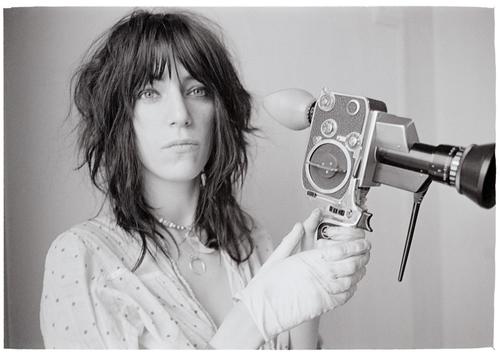
Patti Smith – Camera Solo

6 Feb

When the Art Gallery of Ontario announced that they would be doing a major exhibition of Patti Smith’s photographs, I can’t say that I was overly excited. We’re members there, so I figured that I’d see it eventually, but I wasn’t going to make a special trip for it or anything.

I have to admit that before today, I didn’t know much of Smith beyond her status as the godmother of punk and her seminal 1975 album Horses. Part of my disinterest in her show probably stemmed from the fact that I often don’t trust artists who dabble in other forms of art – actors who put out an album, say, or musicians who try to be novelists. I guess that part of my curmudgeonry is because they don’t have any obligation to be talented in fields other than their own – some label will release David Hasselhoff’s album because he’s David Hasselhoff, not because he’s good. I figured that Patti Smith and her photography had a similar story.

Then today, I scheduled myself two hours of do-something-pleasant time (which is a thing I’m trying to do lately) between 11 and 1. I decided to go down to the AGO, wander through the galleries, and maybe park myself in the members’ lounge (actually several shabby-chic rooms in a Victorian mansion that’s attached to the gallery) and write in my journal. But when I got to the AGO and showed off me membership card and ID to the woman working at the desk, she asked if I’d come to see the members-only preview of Patti Smith’s show. I told her no. She asked me if I wanted to see it. I shrugged and said sure, because I’d already seen just about everything else in the gallery.

Smith’s show was a revelation. After making a tour of the main room, I sat down in one of the comfortable old wooden chairs provided (tastefully arranged on an oriental rug) and started scribbling in my notebook. The first words that I wrote were, “miniature & melancholy & perfect,” which seem like an accurate way of summing up how I felt.

The exhibition is made up of approximately 70 photographs taken with Smith’s vintage Polaroid camera, presented there as gelatin prints, as well as a handful of personal objects, and Equation Daumal, a film Smith directed which was shot on 16mm using Super 8 film.

The room is bare and white, with the rug and chairs occupying the floor space along with a large piece of artwork constructed by Smith. The photographs that line the walls are tiny (as you imagine vintage Polaroids would be) and are displayed in groups of four or five, sometimes with cases full of related objects underneath.

Some of the photographs are self-portraits. Some are of Smith’s children. Most of them, though, can be summed up by this quote by Smith, which is posted on one of the walls:

I have a strong relationship with the dead, even a happy one. I get pleasure out of having their things and sometimes photographing them.

Some of the dead are people she knew – Robert Mapplethorpe, for example, the well-known photographer and her one-time partner who died of AIDS in the late 1980s. Most of the photographs, however, are of people who inspired her and the various objects they owned.

There’s Herman Hesse’s typewriter. The river Ouse where Virginia Woolfe drowned herself, her pockets full of stones. A stuffed bear belonging to Tolstoy that served to hold calling cards in its outstretched hands. A funeral wreath. William Blake’s grave. Nureyev’s ballet slippers. Virginia Woolfe’s bed. Victor Hugo’s bed. Frida Kahlo’s bed. So many photographs of beds belonging to dead, famous people.

Why beds? I wondered, then realized all the various uses we put them to.

Beds are places where we sleep, yes, and also dream. We fuck in beds. We eat, read, maybe write in bed. Beds are places where we fight with the people we love the most; beds are places where we make up those fights, with whispered reconciliations, skin brushing against soft skin. Sick days are spent in bed, sleeping, Facebooking or watching old movies. Nearly all of us are born in a bed; many of us will die in one, too. Beds are equally places of pleasure and pain, but even more than that, they’re places of transition. Beds are where we make our way in and out of this world, making them a sort symbolic doorway or portal.

There are objects in Smith’s collection, too. Her father’s chipped white bone china mug, a cross that belonged to Mapplethorpe, and a sort of totem Smith made for Brian Jones. There’s a pair of slippers belonging to Pope Benedict XV, the man who canonized Joan of Arc. There’s a stone from the river Ouse.

There’s an entire section devoted to Arthur Rimbaud, photographs of his bed, the path near his house, his grave. There are drawings that Smith has done of Rimbaud, black lines with a few dabs of colour. The large object in the middle of the room is a reconstruction she’s done of the litter Rimbaud designed to carry him 100 miles across Ethiopia, to a place where he could seek medical treatment after falling ill in the jungle.

As I walked around the room, I thought, yes. Yes. I live here. Here, in this grainy black and white land between living and death. I know the holiness that surrounds the grave of a painter or poet that you love. I know the happiness of holding an object that someone I love once cupped in their hands. I know this place. I live here.

The whole exhibit was a sort of communion with the dead. It was about the ways we connect with those we’ve loved and lost, through sight, through touch. It was a reminder that love still exists, even after death. And what do you do with all that leftover love, the heart-searing shit that’s left behind when you lose someone you care about? What do you do with the love you have for a poet or painter or musician who has greatly inspired you but died long before you were born?

You channel it into something, even someone else, I suppose. You put it into your own art, or your work, whatever it is, or into your children or your lovers or your friends. Or else maybe you waste it, let it drain out of you, use it to feed your loneliness.

I’ve been thinking all afternoon of the things that I have that once belonged to people who are now dead. My names, for a start – Annie, after my great-grandfather’s sister who died of tuberculosis when she was 16, and Rebecca, from my mother’s beloved Nana Kelley. I have a scarf that belonged to my Grampy, an old wool plaid affair that’s looking rather moth-eaten these days. I have my grandmother’s father’s Latin grammar book. I have a photograph of my Poppa in his RCAF uniform from when he served in WWII. I have a letter that my father’s grandmother sent to my mother when she was pregnant with me, a note that has my great-grandmother’s name, the date and “Halifax City” written neatly in the upper right-hand corner.

I have things that belonged to people I’ve never known, too . A blue vintage dress printed with purple and orange flowers. An American 1st edition of Camus’ The Outsider. My antique engagement ring. I have all the words of the dead that line the walls of my living room, shelf upon shelf of well-loved books. I am surrounded by the dead.

I still feel breathless, almost light-headed, even several hours after seeing the exhibit. I wish that I had sufficient words to explain how it affected me, but every sentence in this post, though carefully and meticulously constructed, somehow seems flat and emotionless.

I can tell you this: it was lovely. You should see it. And then you should sit down, and think of your beloved dead.

Patti+Smith+beautiful+with+camera

Sometimes I’m Tired Of Being A Mom

4 Feb

“Sleep when the baby sleeps!”

I started hearing it the day Theo was born. Actually, I probably started hearing it way before then, but it’s likely that I didn’t pay much attention. I just filed it under “obvious advice is obvious,” and thought nothing more of it. Of course I was going to sleep when the baby slept. Just like of course I was going to have a natural birth, breastfeed like a champ and have a kid who slept through the night at six weeks. Because, unlike all the other moms in the world, I’d read all the right books, bought all the right products, and participated in a million online discussions about how not to fuck up your kid. I was so set.

I was sure that motherhood was going to be so fulfilling. I mean, yeah, I knew it would be hard, but hard in a being-super-brave-through-tough-times-like-Florence-Nightingale sort of way, not hard in a grinding, miserable, I-hate-my-life way. Surely I would come out of those long, desperate, sleepless nights glowing with motherly love, just happy to have been able to offer my screaming child even a modicum of comfort. Surely I would be happy to sacrifice any and everything for my kid.

Surely I would never, ever resent him.

After Theo was born, people kept reminding me to sleep when he slept. But I didn’t want to; I wanted to stay awake and just stare and stare at this amazingly tiny new human I’d just created. I’d just made an entire new person that had never existed before – how could I be expected to sleep after doing that? Besides, I remember thinking, I’ll sleep later. Because, up until that moment in my life, there had always been a later. Whenever I’d had a long week at work, I’d been able to plan to sleep in on the weekend. I’d been able to look forward to vacations when Matt and I could grab catnaps together between fun activities. I’d always, always been been able to think ahead to a time when I would be able to catch up on my sleep, maybe even take some kind of sleeping aid to ensure maximum restfulness.

When you become a parent, there never seems to be a later when it comes to sleep. You either grab it when you can, or you go without. Not long after Theo was born, I learned the hard way that I couldn’t do the former – when Theo slept, I was too anxious to rest, and when I did finally manage to fall asleep, I was awakened by every. single. tiny. noise he made. I don’t know if it was because I was so fucked up on hormones, or if it was the postpartum depression beginning to rear its ugly head, but no matter how hard I tried, I couldn’t sleep when he slept.

And you know what’s the worst? Not being able to sleep when you are bone-fucking-tired and you know that your kid is going to wake up screaming soon and then you won’t get to sit down for the next five hours.

At some point towards the end of that hazy first week of motherhood, I remember thinking, “When is someone coming to take this baby away so that I can go back to my real life?”

And then I realized that this baby was mine, and no one was going to take him away, and this was my real life now.

With that thought came a bizarre mixture of guilt over wanting to go back to my non-baby life, and blind panic of the “holy shit I have a kid, what the fuck have I just done?” variety.

In all the months I’d spent preparing to have a kid, I’d never fully realized what it would be like to have a kid.

Sometimes having a kid sucks. A lot. I love him, and I love being his mom, but sometimes I’m so tired of being a mom, anyone’s mom. Sometimes I just want to be myself. I want to go back to my old life, the life where I slept in on weekends, watched TV whenever I wanted to, and sometimes spent all day having sex with my husband. It doesn’t help that my life now bears a striking surface resemblance to my old life; I live in the same apartment, wear many of the same clothes, eat the same foods. I even look pretty much the same, except that I’m a cup size bigger than I was (thanks, breastfeeding!). I’m surrounded by reminders of the way I used to live.

It also doesn’t help that most of my friends still, in some ways, live in my old life, staying out late, drinking too much, and going to the bathroom without having a toddler follow them to watch them pee. And I promise that I’m not trying to be all, having a kid is so hard and my non-mom friends don’t get it, but let’s be honest: most of them don’t, really, in the same way that I didn’t get it, either. And I’m jealous that they don’t get it, jealous that they don’t have to watch what they eat or drink or smoke because they’re afraid of contaminating their breast milk, jealous that they can go to bed and not have a whimpering toddler wake them up five times a night, jealous that when they go home at the end of the day, their work is done, while mine lasts forever and ever and ever.

Sometimes I’m so tired of being a mom.

Sometimes I’m so fucking tired. Period.

And you know what sucks the most? Knowing that all of this is my fault. I don’t mean so much in the sense that I chose to have a kid (although that is true), but more that I haven’t done any sleep-training, haven’t tried too hard to night-wean and, at 24 months old, still can’t really imagine being away from him overnight. Know why? Because I’m a wuss, that’s why. Every time I think about sleep-training Theo, I think of all the crying that will be involved, and I wince. I’m not the crying-it-out-will-ruin-your-kid-forever type, but you know what? I just can’t. I’m sorry, but I can’t. Hearing him cry makes me feel like every nerve in my body is on fire. And it’s one thing to hear my kid cry because I won’t let him splash his hands in the toilet; it’s another when he’s crying because he just wants to be held, or sung to, or breastfed.

And that’s why my 24-month-old still sleeps in my room and still breastfeeds pretty much whenever he wants at night. Because I am too tired and too wussy to do anything about it.

I’m tired and you guys?

Sometimes I still miss my old life. A lot.

And that makes me feel really awful.

anne_theo

Dispatches From The Dark Side

1 Feb

Trigger warning for talk of suicide

If I was writing about almost any other health issue, I wouldn’t hesitate to post this.

If I had diabetes, or cancer, or liver failure, you wouldn’t feel strange reading this.

If I started out by saying, “I went to the hospital last night because I had the flu,” no one would think twice about this. No one would call it oversharing. I wouldn’t feel ashamed or embarrassed.

But I didn’t go to the hospital because I had the flu.

I went to the hospital last night because I wanted to die.

I mean, I say that, and that’s how I felt, but the truth is that I didn’t really want to die, did I? If that had really been my intention, I would have just done it. I wouldn’t have talked about it, wouldn’t have told anyone, and certainly wouldn’t agreed to go to the hospital.

Intention is tricky, though, slippery, even, all tangled up with impulse, drive and desire; I don’t think I’ll ever understand what it is that I actually want. It’s like peeling an onion, folding back layers and layers of truths and semi truths, never able to really get to the core of how or why I feel these things.

I’m not writing this because I want your pity, or comfort, or advice (although you can offer them if you want to).

I’m writing this because I want to be honest. I want to be like someone who paints their self-portrait and doesn’t spare any details; I want to show you my pimples, the dark smudges under my eyes, the crease that bisects my forehead, evidence of a lifetime of squinting because I didn’t want to wear my glasses.

I’m writing this because I don’t want to be embarrassed or ashamed anymore, and for some reason saying these things publicly makes them easier to bear. It’s like racing to tell all of your darkest secrets before your ex-best friend can betray your trust; you get to keep some kind of control over the situation. Sort of.

I’m writing this because I want to talk about it, and this is the only way that I know how. I’ve developed this online voice, this sort of character that’s both me and at the same time an amplification of me, a louder, brasher, more combative version of myself. It’s easier for me to write about this in this character; I would never be able to look you in the eyes and say these things.

I promise that we don’t have talk about this in person. The next time we meet, we don’t have to refer to what’s written here.

But right now I do want to talk about wanting to die. If you’re not up for that, I totally give you permission to stop reading right now.

I wish I could tell you why I want to die, but I can’t. The truth is that I have a good life, maybe even the best. I’m married to someone that I love a whole lot, someone who loves me in return. My son is amazing; I’m not even sure that there are words to describe how great he is. I enjoy my work. I like where I live.

On paper, I should be very happy.

But still, I want to die.

I can’t tell you why, but I can tell you what it feels like.

It feels like all of the days ahead of me are grey and blank and empty. Not empty in the sense of possibility, but empty in the sense of being hopeless.

It feels like wearing a shirt that’s rough, scratchy, uncomfortable, and that shirt is my skin and I can’t take it off.

It feels like discovering that all of my favourite foods suddenly taste like cardboard, but I eat and eat and eat anyway because I need something to fill all that empty space.

It feels like standing in direct sunlight, feeling in on my back, my shoulders, my head, but never having my brain think sun. All it can think is heat. Like there’s this distinction, this appreciation that I can’t make anymore; everything is broken down to its most basic elements. Nothing is good or beautiful – everything is awful and dull in its own way.

It feels like the life-support system in my brain failed, and no one bothered to install a back-up. So now the ship is going down and the lights are flickering and we’re running out of oxygen and everyone is panicking.

It feels like being tired all of the time, like never being able to get enough sleep. I just want to sleep.

I do things. I go out, and I spend money on things that I used to enjoy, in my former life, the life that, on the surface at least, is nearly indistinguishable from the one I live now. I don’t enjoy anything anymore, though, and spending money that on things that don’t make me feel better only adds another layer of shame and guilt onto what I’m already feeling.

At home, at night, I feel trapped. The lights are too bright, the air too dry. I can’t sleep. I can’t read. I can’t watch TV. I can’t write. I can’t talk. I pace and pace and pace, trying to get rid of the prickly, irritable energy that’s building up in my veins, in my bones. I think that I could feel better if the apartment was clean, if the dishes were done and the bathroom sink scrubbed, but I don’t know where to begin, so I pace some more.

I just don’t want to feel anything anymore. I don’t even want to feel the good things. I just want to go to a place that’s beyond feeling.

And I know that suicide is selfish. But I also know that if I was dead, I wouldn’t care about anything anymore. I wouldn’t have to feel guilty about the people that I’ve left behind.

But I can’t help imagining Theo, what it would be like for him if I were to die. How he would cry and cry for me. How he would never be able to understand that I wasn’t coming, not ever. I think about how I would break his heart, think about the fault lines that I would trace along that tiny, powerful muscle, cracks that would break over and over for the rest of his life and never, ever heal.

I don’t really want to die.

I just want to sleep and sleep and sleep forever.

But it sort of amounts to the same thing, really, which is why I went to the hospital last night. Because I love Theo and don’t want to leave him. Because even if I couldn’t feel anything anymore, I would still find some way to miss him.

I live in a big city, so there’s a special hospital just for head cases like me. It even has two sites, one downtown and one in the west end. I went to the one downtown.

They lock you into the ER waiting room. There is a sign on the door that says AWOL Flight Risk. I wanted to take a picture, but I didn’t think they would like that.

There was a woman screaming in a room at the end of the hall.

There was a young man in a suit brought in by two police officers.

There was an unconscious woman brought in on a gurney. Her feet were bare.

There was a girl on the bench next to me, lying with her head on her mother’s lap. Her father was there, too. He said,

“You said that at the last minute something told you not to jump. What was it?”

But she didn’t answer.

While I was there, two code whites were called, which means that there’s a violent patient somewhere in the hospital. One of them, according to the man on the intercom, had a weapon. Both calls sent the ER staff into a flurry, running for doors and phones and elevators.

And I thought, I don’t belong here. I am not having an emergency. These people are having emergencies. I am someone who is fine, only a little sad sometimes. I am coping. I get up every day, go to work, take care of Theo. I am fine. I just have to be stronger, better, less self-indulgent.

And I wanted to leave, but I didn’t.

Finally it was my turn to see the doctor. She was young, kind. Her outfit wouldn’t have looked out of place in my closet, and I coveted her glasses.

She listened to me, took a few notes. Recommended a few things. She said that her main prescription was to try to prioritize things that make me happy.

I’m not sure how easy that will be to execute, but I like it anyway. I’m strangely pleased that instead of having me try another pill, a different pill, she handed me a piece of paper telling me to prioritize my own happiness. It seems like something that would happen in a book, or a movie, and I’ve always wanted to live in a book or a movie.

So how do I feel now?

Raw, I guess.

The same, I guess.

Maybe a little more hopeful, so that’s a start.

I still can’t stop reading Anne Sexton’s Wanting To Die.

I still can’t stop reading Ted Hughes’ book Birthday Letters, or poem his Last Letter.

But maybe I’ve read them a few times less today than I did yesterday.

I am trying to find some happy way to end this post, but I can’t think of any. I want to offer you some kind of hope. Then again, if I had cancer, or diabetes, would I feel that same urge to comfort you, to take care of you? Maybe. I don’t know.

I will leave you with this, one of my favourite quotes from the Bell Jar. It’s as true for me now as it was for Sylvia Plath when she wrote it more than 50 years ago.

“Don’t you want to get up today?”

“No.” I huddled down more deeply in the bed and pulled the sheet up over my head. Then I lifted a corner of the sheet and peered out. The nurse was shaking down the thermometer she had just removed from my mouth.

“You see, it’s normal.” I had looked at the thermometer before she came to collect it, the way I always did. “You see, it’s normal, what do you keep taking it for?”

I wanted to tell her that if only something were wrong with my body it would be fine, I would rather have anything wrong with my body than something wrong with my head, but the idea seemed so involved and wearisome that I didn’t say anything. I only burrowed down further in the bed.

I would rather have anything wrong with my body than something wrong with my head.

But since I do have something wrong with my head, I’m glad I’ve got all of you to listen.

For anyone who is in a state of mental health crisis, here is a link to the Mental Health Crisis line. You can also call Telehealth, if you’re in Ontario. If you are experiencing any kind of depression or are having suicidal thoughts, please, please call one of the numbers above, or else contact your doctor or local mental health crisis line.

art-bell-jar-butterfly-drawing-illustration-Favim.com-134637

What It’s Like To Live Here, Part II

25 Jan

You start to think about hitting rock bottom, what that means, what it would feel like.

You picture it like this:

You’re walking through the woods, along the same path you’ve taken a thousand times before, and suddenly the forest floor gives way beneath you. You fall, for what seems like ages, until you hit the ground. You look around and discover that you’re in some kind of underground cavern. The walls are smooth, the hole you fell through far out of reach. There’s no way you could ever get out on your own.

It’s awful at first, but soon, surprisingly soon, you get used to it. You sleep a lot. You tell yourself stories. You sing, or talk, or shout, just to hear the sound of your own voice. For a few hours each day the sun climbs high enough for you to see it, its rays filtering through the grasses and leafy undergrowth on the surface, throwing strange patterns on the floor.

Sometimes your friends come by. They call to you, but you can’t make out what they’re saying, because they’re too far away. They bring you things: food, books, a blanket. Useful things. Things that would have mattered to you in your old life, in the world above. They don’t seem so necessary anymore, though. You’re not cold anymore. You’re not hungry. You don’t read. That’s not your life anymore, you’re beyond wants, beyond needs. You just lie there, sleeping and singing.

Depression is easy in many ways, often easier than happiness. It doesn’t require much of you, doesn’t ask much of you. All that it wants is for you to suffer, but after a while that suffering feels familiar, comforting almost. Depression is the place you come always back to, and though its landscape is ugly, the colours muddied and muted, it feels strangely like home. Though its’ terrain is bare and uninviting, you know every inch of it, and you derive a sort of satisfaction from that fact. After a while, depression starts to feel normal.

Happiness, by contrast, begins to seem garish, the colours offensively bright, the people too loud, too smiling. While depression saps your energy gently, quietly, happiness is exhausting in a different way.

The other problem with happiness is that it never seems like a real place. You know from experience how quickly the landscape can change around you, melting and shifting like objects in a Dali painting, slowly but surely transforming itself back into that place you know best.

Happiness can’t be trusted; it’s tricky, elusive, and undependable. Depression, whatever else you might say about it, is as regular and predictable as a Swiss clock. Depression, whatever else you might say about it, is honest. It tells you how awful the world is; it doesn’t spare you any gory details.

People tell you not to listen to depression. People want you to think that depression lies.

“Who are you going to trust?” asks your depression, “Some stranger on the internet, or me, the thing you’ve known for almost your entire life? Come on now, be reasonable.”

You want so desperately to be reasonable.

You tell your therapist that you think you need to develop some coping skills. This is the kind of terminology they use, right? Coping skills? You hope that by saying this, you sound like someone who actively wants to get better, someone who’s trying her hardest.

Your therapist tells you that she thinks you already have them, those magical coping skills. You leave her office thinking, what the fuck does she know?

Then you remember what life was like before you felt any kind of ability to cope. You remember crying, publicly, humiliatingly, your sobs coming in huge, heaving gasps that left you unable to breathe. You remember being unable to get out of bed. You remember the world ending, over and over again, all day, every day.

You thank whatever god is out there that you’ve developed coping skills.

Then you get angry, because even though you’re coping, everything still really fucking sucks.

You call your mother and tell her that you’re having a tough time.

“Think of one thing that you’re grateful for everyday,” she tells you. “Write it down.”

After you thank her, politely, and say goodbye, and tell her that you love her, after you’ve hung up the phone, you think, fuck gratitude.

What has gratitude ever gotten you?

Probably lots of things, maybe everything, but you don’t care. You don’t feel like considering that right now.

You don’t feel like considering anything, or anyone. You just want to be left alone, forever. Seeing people makes you feel as if you have some kind of obligation to get well, but you don’t want to have any obligations anymore.

You imagine that at rock bottom there are no obligations.

You start to avoid people, your friends, your family, the strangers who smile at you on the street. You tell yourself that you don’t need human interaction. You tell yourself that you don’t want it.

Then one day you’re crossing the road, and there’s a policeman directing traffic. He motions to you to wait halfway while he lets a car go by, then puts his mittened hand on your back, in the space between your shoulder blades, and says kindly, “Go ahead now, honey, it’s your turn.”

For some reason that one small act is so nice that you think you might cry.

It’s winter, always winter, and you know that this year, spring is never going to come. Fuck logic. Fuck science. Where you live, those things don’t apply. You know that there won’t be a spring in the same way that birds know to fly south in the fall, the same way that spiders know how to build a web. You know it more surely than anything you’ve ever known. You know it in your very bones.

You haven’t hit rock bottom. Not yet. If you did, that would be the real emergency. People would be called. Help would come. You feel guilty about how badly you want help to come. You feel guilty about how appealing rock bottom seems, sometimes. You feel guilty about just about everything.

You fall. And you fall. And you fall. And sometimes you snag a passing tree branch or a rock jutting out into space, and sometimes you even start to pull yourself back up, just a little. But the branch always breaks, and the rock always crumbles. And then you go back to falling.

You wonder how long and far a person can fall.

article-0-135CF5ED000005DC-870_964x451

The Saddest Songs

22 Jan

Here is a list of the saddest songs in the history of ever, according to my Facebook friends. I am recording it here for posterity and also as a handy reference for the next time I need to listen to sad music and cry forever (so, tomorrow, then).

So! Here we go, in no particular order. Well, in the order they appeared on my Facebook. That’s a type of order, I GUESS.

1. Wilco – Venus Stop The Train

2. Tori Amos – Icicle

3. Tori Amos – Northern Lad

4. Nine Inch Nails – 30 Ghosts

5. Godspell Cast – By My Side

6. Goo Goo Dolls – Iris

7. Elliott Smith – Waltz #2

8. Coldplay – The Scientist

9.  Ben Folds – Fred Jones

10. Jump Little Children – Cathedrals

11. Jeff Buckley – Hallelujah

12. Most things by Nick Cave

13. This Mortal Coil – You And Your Sister

14. Holly Golightly –  Tell Me Now So I Know

15. Samuel Barber – Adagio For Strings

16. Most things by Blue Rodeo

17. Ben Folds – Red Is Blue

18. Michael Jackson – Little Susie

19. Most things by Dashboard Confessional

20. Counting Crows – Long December

21. Nine Inch Nails – Hurt

22. Nine Inch Nails – The Downward Spiral

23. Johnny Cash – Hurt

24. Pat Benatar – Hell Is For Children

25. Ugly Kid Joe – Cats In The Cradle

26. Moby – Wait For Me

27. Moby – Pale Horses

28. Holly Cole – Take Me Home

29. Holly Cole – Cry If You Want To

30. Holly Cole – I Don’t Wanna Grow Up

31. Any version of Gloomy Sunday

32. Big Star – Give Me Another Chance

33. Bright Eyes – Shell Games

34. Lisa Germano – Wood Floors

35. Ani DiFranco – Both Hands

36. The National – Exile, Vilify

37. Johnny Mandel – Suicide Is Painless

38. Ani DiFranco – School Night

39. Maria Mena – Sorry

40. The Spill Canvas – All Hail The Heartbreaker

41. Leonard Cohen – Hallelujah

42. Joel Plaskett – Cry Together

43. Joel Plaskett – Blinding Light

44. Eric Clapton – Tears In Heaven

45. The Good Life – Album Of The Year

46. The Weepies – World Spins Madly On

47. Weezer – Only In Dreams

48. Death Cab For Cutie – I’ll Follow You Into The Dark

49. The Weakerthans – Reconstruction Site

50. Hayden – Damn This Feelings

51. The White Stripes – We Are Going To Be Friends

52. The Beatles – I’ll Follow The Sun

53. Bill Withers – Better Off Dead

54. John Lennon – Mother

55. Kanye West – Runaway

56. Kanye West – Blame Game

57. El-P – The Overly Dramatic Truth

58. Tori Amos – Spark

59. Tori Amos – Playboy Mommy

60. Kimya Dawson – Walk Like Thunder

61. Homeboy Sandman – Angels With Dirty Faces

62. Kanye West & Jay-Z – Murder To Excellence

63. Kanye West & Jay-Z – To The Future

64. Ceschi – Shame

65. Ceschi – Half Mast

66. El Perro Del Mar – Party

67. Naughty By Nature – Ghetto Bastard (radio version: Everything’s Going To Be Alright

68. Robyn – Call Your Girlfriend

69. Lana Del Rey – Dark Paradise

70. Lana Del Rey – This Is What Makes Us Girls

71. Common Grackle – The Great Depression

72. Mary Cobham – Fire Song

73. The Kills – The Last Goodbye

74. Ani DiFranco – You Had Time

75. Pearl Jam – Last Kiss

76. Suzanne Vega – Luka

77. Tracy Chapman – Behind The Wall

78. Jewel – Adrian

79. Mariah Carey feat. Boyz II Men  – One Sweet Day (added sheepishly, it should probably be noted)

80. The entire album Lady In Satin by Billie Holiday

81. Blur – No Distance Left To Run

82. Rose Cousins – Go First

83. Amanda Palmer – The Bed Song

84. Amanda Palmer – Trout Heart Replica

85. Kathleen Edwards – House Full Of Empty Rooms

86. The Jane Austen Argument – Song For A Siren

87. Dan Mangan – Leaves, Trees, Forest

88. Tori Amos – Winter

89. Sage Francis – Bridle

90. Sage Francis – Crack Pipes

91. Tori Amos – Precious Things

92. Tori Amos – Crucify

93. Tori Amos – Putting The Damage On

94. Tori Amos – China

95. Tori Amos – Hey Jupiter

96. Tori Amos – Sugar

97. Tori Amos – Honey

98. Tori Amos – Jackie’s Strength

99. Hey Rosetta – Yer Fall

100. Sage Francis – It Was The Best Of Times, It Was The End Of Times

101. Sage Francis – Little Houdini

102. Israel Kamakawiwo’ole – Somewhere Over The Rainbow

103. James  – Out To Get You

104. Ben Folds Five – Brick

105. Bonnie Raitt – I Can’t Make You Love Me

106. Hawksley Workman – Oh You Delicate Heart

107. Hawksley Workman – Prettier Face

108. Harry Chapin – The Shortest Story

109. The Mountain Goats – Old College Try

110. Man Man – Whalebones

111. Metric – London Halflife

112. Christine Lavin – Errol Flynn

113. Damien Rice – The Animals Were Gone

114. Damien Rice – 9 Crimes

115. Thom Yorke – Black Swan

116. Evanescence – Missing

117. William Fitzsimmons – Heartless

118. Bon Jovi – These Days

119. Dave Matthews Band – Stay Or Leave

120. Feist – Let It Die

And there you have it – the saddest songs in the world, as suggested by my Facebook friends. Enjoy! And by that I mean, enjoy crying your eyes out alone in your dark room, I guess.

sad-music-all-day.american-apparel-unisex-fitted-tee.white.w760h760

An Open Letter To Wil Wheaton

21 Jan

Hi Wil Wheaton,

How’s it going? Good, I hope. We’re all fine here. I mean, we just had this gross stomach flu or whatever, and my kid kind of threw up all over everything. But everyone’s okay now. In case you were wondering.

Soooooo about this thing I am writing.

I know I promised you a post showcasing all my hilarious drunk tweets at you, and I swear, I’m getting to that, but you’re going to have to bear with me through a bit of backstory first.

I mean, or not. You can always scroll on through. This is the internet after all.

But if you want to read all the nitty gritty details, here they are:

Twelve was a tough age for me. Some kind of paradigm shift happened over the summer between sixth and seventh grades and I went from being a pretty normal, if obnoxiously know-it-all kid to being the biggest loser in dweeb town (have you ever been there? I don’t recommend it). Part of it was that all the other girls in my class had started wearing tight jeans and cute t-shirts, while my daily outfit usually consisted of a sweatshirt with kittens on it (I had several) and track pants. Part of it was that I’d spent July and August developing a really unfortunate case of acne. The main problem, though, seemed to be that everyone else had collectively decided that they were going to grow up, and meanwhile I was still reading Babysitters Club books and playing with dolls.

It probably won’t surprise you to hear that I had the shit teased out of me. All day, every day. I cried. A lot.

The fact that my father left a year later only compounded my misery.

Have you ever read David Sedaris’ essay A Plague of Tics? In it, he talks about obsessive-compulsive disorder, the symptoms of which he suffered from right up until he started college and took up smoking. He writes,

“It’s as if I had been born to smoke, and until I realized it, my limbs were left to search for some alternative.”

Sometimes I wonder if I was born to be a geek, but didn’t figure it out until seventh grade. I’d always had pet obsessions, things that I read, talked and thought about constantly for a few months before discarding them and taking up a new interest. For a while it was the Titanic, and, if you’d known me during that phase I could’ve given you all the specs of the ship, given you an accurate timeline of it sinking, and spit out a list of famous survivors. After that, I think, it was The Black Death. I also went through periods where I was deeply interested in The Russian Revolution, Anne Boleyn and the Halifax Explosion. It was always something, you know?

In retrospect, I think that I was a geek in search of something to geek out about. Then, when I was twelve, I discovered Star Trek.

Star Trek was like my own private It Gets Better Project. I mean, sure, waiting 400 years for things to get better wasn’t exactly the most optimistic view to take, but still, I enjoyed the fact that someone, somewhere had imagined a future that was vastly better than the present I was living in. A future where socio-economic status didn’t seem to exist anymore (as long as you were in Starfleet, I guess), and nobody had nicer possessions or better clothing than anyone else, because everyone just replicated whatever they wanted. Racism, sexism and gross teenage acne all seemed to be things of the past, and people could legit have sex with robots if they wanted to. And if someone’s dad disappeared*, it was probably because they had died on some kind of mission, sacrificing their lives for Exploration and Science – not because they just didn’t feel like living with their family anymore.

I know it’s popular to hate on Wesley, and make “Shut Up, Wesley” jokes and talk about what a loser he was, but you know what? I liked Wesley. I mean, I liked him because he was cute, and I was twelve, and I wished he was my boyfriend, but I also liked him because I identified with him. Like me, he didn’t seem to have any friends (I mean, yeah, the show tried to pretend that he had friends, but come on now. Let’s be serious grownups, please. You and I both know that Wes did not have any friends). Like me, most of his interactions were with adults who thought that he was pretty smart, but still didn’t exactly respect him. And, like me, he was prone to speaking out at the wrong times, saying the wrong thing, and was generally regarded by everyone as a nuisance.

I was, like, pretty sure that Wesley Crusher was my soul mate.

Naturally, being a trekkie didn’t exactly improve my image at school. I guess I could’ve just, you know, not told anyone about my Star Trek habit but, being me, I couldn’t keep my damn mouth shut. As with my other, former obsessions, I wanted to talk about it all the damn time, forcing my parents, classmates and few remaining friends to listen to me rattle off every tiny detail about the Enterprise and her crew. Pretty soon everyone in my class knew that I had a crush on Wil Wheaton, and the kids who actually knew who that was added that to their reasons to make fun of me. To say that I was miserable would be an understatement.

You know what, though? It helped to have Star Trek tapes to pop into the VCR when I got home. It helped to watch you being a nerd in space, and it helped even more to realize that you were happy being a nerd in space.  It even helped to know that all the other fans of the show hated you because I was like, damn, I am only being crapped on by a bunch of twelve year olds, but here is a dude who is seriously hated by every adult science fiction fan ever, and is he letting it get him down? No, he is hanging out in space, saving the motherfucking Enterprise like a fucking boss.

Eventually, I stopped watching Star Trek. Part of it was that I grew out of the show, but part of it was also self-preservation; if I didn’t want to be a nerdy loser for the rest of my life, I would have to start actually being interested in cool things. I began to cultivate the persona of someone who liked hip, independent films and read near-incomprehensible modern poetry. I shopped at second-hand stores for vintage clothing (mostly because I couldn’t afford anything new), listened to Tori Amos, and dyed my hair weird colours. I learned to be snarky, and started making fun of people before they could make fun of me.

And things did get better. And I met a dude (who thinks you’re aces, by the way), and we got married, and we have an awesome kid. I’m mostly happy now, and the reasons that I have for being unhappy have nothing to do with how popular or attractive I am. All of the things that I hated about being twelve have pretty much been fixed, which is pretty amazing. Even more amazing is the fact that after almost half a lifetime of pretending not to be a geek, I’m finally starting to re-embrace just how nerdy I actually am. And I have to say, it feels pretty good.

Look, Wil, you’ve probably got a lot of things in your life to be proud about. You’ve got an awesome wife, two great sons, and you continue to make some pretty amazing stuff. And Stand By Me is maybe one of the best movies ever made. But if you ever need one more thing to be proud of, you could think about the fact that you helped a sad, lonely twelve-year-old girl get through a really tough time in her life. Maybe you hear this type of thing all the time. Probably you do. Probably none of this really means much to you, but it trust me, it meant a fuck of a lot to me.

So thanks for that. Seriously, thanks a lot.

Anyway, on THAT note, let’s get to those drunken tweets!

Literally The Best Picture Ever

Literally The Best Picture Ever

p.s. The working title for this post was “Girl Tweets Obsessively/Drunkenly At Childhood Crush Until He Responds: A Story of Triumph”

p.p.s. I want all of Wesley’s season one sweaters. Not even kidding. I’m totally into it.

* My dad didn’t actually disappear, we knew where he was and all that jazz. I was just saying that for, you know, dramatic emphasis. He did leave really super suddenly though.

My Life As A Tree

14 Jan

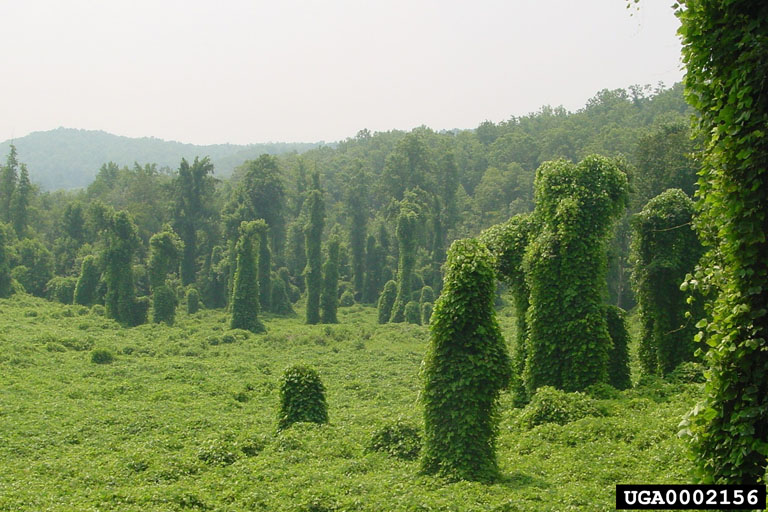
Have you ever seen a kudzu vine? They’re all over the south, their bright green leaves waving gently in the hot, humid air. At first you’ll think that they’re kind of pretty, but once you realize that they’re capable of, you’ll never look at them the same way again.

They’re an invasive species, the kudzu vines; native to Japan and China, they were introduced to America to help prevent roadside erosion. They spread quickly – statistics show that they’re taking over the American South East at a rate of 150,000 acres annually. Kudzu will grow nearly anywhere, on anything, and its advance seems impossible to stop.

Once kudzu starts to take over a field or a forest, it slowly but surely replaces all existing vegetation. It starves the trees and undergrowth by cutting them off from sunlight; once the kudzu has done its work, all that remains is a swath of green, leafy vines, still in the shape of the things they have killed.

kudzu

Sometimes I think that kudzu is the most accurate metaphor for depression that I can come up with. Not just because, at times, it feels like I’m overwhelmed with depression, suffocated and blinded  by it, but also because sometimes I wonder how much of my actual self has been choked off, starved to death. I wonder how much of the me under there is already dead.

Like a tree that’s been covered by kudzu, I don’t look very different from the person I was. I maintain the same shape, the same colour. Outwardly, I’m indistinguishable from someone who isn’t living with depression. And if there are subtle signs that something is wrong – a funny look in my eyes, or a slump to my shoulders – well, those things are easily written off or ignored. With enough effort, I can pass as a person who doesn’t long to spend her days sprawled out on the couch watching re-runs of M*A*S*H, eating chocolate and sobbing.

I am a person who used to be happy. I am a person who used to look forward to things. I am a person who used to laugh, frequently.

It’s not hard to see how much being depressed has altered my life.

What I really wonder, though, is how much of the self I used to be is still intact. When depression first claimed me, I thought that it would be a matter of a few pills and then I would be back to my old self. Now, after years of fighting what Winston Churchill referred to as his “black dog”, years of thinking of it a disease, a medical condition, something that I could recover from, I wonder if it’s possible that the depression is me.

Certainly my life, my choices and my very self have been warped and shaped by depression. At this point, it seems impossible to separate who I really am from all the grinding misery, sadness and negative self-talk that my brain has put me through. When I think about the bad decisions that I’ve made, the not-so-great life choices and the hurtful things that I’ve said, I wonder who or what I’m supposed to blame for them. It seems ridiculous to say that depression didn’t play a part in the fact that I chose to lie in bed, crying and reading trashy novels, instead of doing any homework for basically all of 11th and 12th grade. But it seems just as ridiculous to say that I, myself, the non-depressed, rationally-thinking person who lives somewhere inside of me had absolutely no control over the situation. Surely, at some point, that part must have lacked the will-power or the desire to do what it knew was right.

On especially bad days I begin to believe that I let myself become depressed. I believe that I didn’t fight hard enough or long enough or well enough and, through laziness or lack of discipline, allowed depression to consume me.

Blaming yourself for feeling bad is a slippery slope that never leads anywhere good.

I often think about getting well. Most days it’s the only thing I think about. The truth is, though, that I don’t even know what well is, or what it looks like, let alone how to get there. If I’m being honest with myself, the way that I’m living now feels normal, because it’s the same way that I’ve been living for over half my life. I don’t remember who I was before all this started, and I don’t remember what it was like not to feel like this. I don’t remember what it’s like to get up in the morning and not dread every single thing that has to happen to me before I can finally make it back to bed again.

Someone said to me recently, accusingly, that my problem is that I don’t want to put the necessary work into getting better. The funny thing is, they’re right. I don’t. I’m too tired to do any kind of work. It’s bad enough that I have to get up every day and drag myself through yoga and parenting and writing; I don’t want to have to do any extra work on top of that. Thinking about having to work in order to get well makes me feel exhausted before I’ve even started. Of course I want to get better, but maybe the truth is that I don’t have the energy to do that right now.

It doesn’t help that I don’t really know what people mean by work. Do they mean endless doctor’s appointments? If so, check. Therapy? Check. Medication? Check. Buying self-help books that I’ll never read? Double-check. And, I mean, it’s not like these things are totally useless (except maybe the books), but they’re not really fixing anything, either; mostly they just keep me afloat until the real help arrives. Except that I’m not sure what the real help is, or if it even exists.

The other night, as I was reading through decade-old journal entries, I was struck by how little I’ve changed. I mean, my circumstances have changed, certainly, but the sadness and fear and naked self-loathing I found scrawled on those pages haven’t. Not really. I might be better at hiding those things, better at handling myself in social situations, but truth is that I’m still just as miserable now as I was when I was twenty.

Ten years is a long time to be that miserable.

I also found a quote that I’d copied from Margaret Atwood’s short story, The Sin Eater, which seems just as fitting now as it did then. It’s part of a conversation between the narrator and her therapist, discussing coping skills for her emotional problems:

‘Think of it as a desert island,’ he said. ‘You’re stuck on it, now you have to decide how best to cope.’

‘Until rescued?’ I said.

‘Forget about the rescue,’ he said.

‘I can’t,’ I said.

I can’t forget about the rescue, either.

Because it’s not a nice desert island that I’m stuck on, not one of those tropical ones where you befriend the wild animals and make bras out of coconuts. My desert island is some craggy mass in the North Atlantic, maybe off the coast of Nova Scotia. It’s grey and miserable and wet here, and everything edible tastes like cardboard. It’s always cold, even in the middle of summer. The wild animals are mean, ugly and prone to biting.

The worst part, though, is that the mainland is so close that I can see everyone I used to know going about their daily business. I can even hear them as they talk about all the things that I used to care about. And I’ve tried to get back there. I’ve built boats, dozens of them, to try to cross that narrow strip of water; you can see them there, lined up on the shore of my island, with names like Zoloft and Psychiatry and Therapy painted on their prows.

Nobody ever taught me how to build a boat, though. My crafts are hopeful, but never seaworthy.

Can somebody please send me instructions on how to build a boat?