Tag Archives: feminism!

Why Feminism Is Still Important (or, why I hate the word “equalist”)

1 Nov

Last night I was flipping through Margaret Atwood’s Wilderness Tips (which, by the way, is probably her best book of short stories). In the middle of Uncles, I came across a brief exchange between two characters, one of whom is trying to convince the other to write a guest piece on feminism for his newspaper:

“This would be a different angle.” There was a pause; she imagined him polishing his glasses. “It would be – now that the women’s movement has accomplished its goals, isn’t it time to talk about men, and the ways they’ve been hurt by it?”

“Percy,” she said carefully, “where do you get the idea that the women’s movement has accomplished its goals?”

I feel like this is a conversation that I’ve been having for most of my adult life. For someone who came of age in the 90s and early 2000s, it can be hard to explain to other people why feminism is still necessary. Many of our bigger, more obvious goals – voting rights for women, the ability to own land, equal education for girls, and more control over our own reproductive systems – have, in the western world, largely been achieved. The landscape of third-wave feminism, which began in the early 90s and continues today, is often confusing and tricky to navigate. Some third-wavers question whether “feminism”, a term that might be limiting and can seem as if it’s promoting oppressive gender roles, should even be used. On top of that, it often feels like the current incarnation of the feminist movement has devolved into petty bickering about whether or not mothers should stay at home, or how a “real” woman is supposed to give birth.

So why even call yourself a feminist anymore?

I know a lot of women – smart, strong, progressive women, women that previously self-identified as feminists – who no longer use that label. People want to distance themselves from the negative connotations that surround the term “feminism”, or else they don’t want to seem as if they’re only interested in women’s rights. I can’t tell you how many times people have told me that they’d prefer to be called a “humanist” instead; in fact, this past weekend, a good friend said wistfully to me, “I wish society was at a place where I could call myself an equalist instead of a feminist, but I guess we’re not there yet, huh?”

On the surface, these arguments seem to make sense. I mean, you catch more flies with honey, etc. If using different terminology means that more people are willing to work towards equality, then that must be a good thing, right? I mean, let’s be honest – the term feminist conjures up images of angry women burning their bras, or intimidating women stomping around in army boots telling men what’s what. Feminism is often equated with hating men, or with the idea that women are the superiorsex. In contemporary mythology, stereotypical feminists only make up for their lack of a sense of humour with their surfeit of untamed body hair.

Here’s the thing, though: calling yourself an “equalist” slides you right back into all those traditional gender roles that society wants you to be in. Being an “equalist” ensures that you won’t intimidate anybody, that people won’t see you as someone who goes against the grain. It turns you into a smiling, apologetic woman who says things like, “but I just want everyone to have equality – men and women.” It makes you totally non-offensive, and as such, takes away a lot of your power. Women who describe themselves as equalists strike me as people who are afraid of conflict and who, above all, want to be liked; men who call themselves that strike me as people who want to deny all the challenges that women still face.

When we talk about equality, in a lot of cases men are already hold the standard that women are trying to achieve. It was only last year that women working for Canada Post won the right to equal pay – and this, by the way, stemmed from a case that was filed in 1983. The New York Times recently reported that a a heavy and persistent bias against women still exists in the scientific community; most troublingly, this bias is upheld and perpetuated by just as many women as men, which goes to show you how deeply misogyny is ingrained in our culture. Women still have to be afraid when walking alone at night; hell, we have to be afraid when out at a bar with a friend, or out on a date, or in almost any situation when we encounter a man alone. We live in a culture where women have to fear for our safety in ways that I don’t think men will ever understand.

And, of course, our reproductive rights are always, always in jeopardy.

All of that is only the stuff that’s happening here at home – what about the challenges facing women in other parts of the world? Countries where women have to fight for the right to drive, or work outside the home, or walk around in public with their hair uncovered? Countries where terrorist organizations shoot little girls in the head just because they want to go to school? There are places where just being a woman is treated as if it’s a crime.

This isn’t to say that there are no issues facing men – to the contrary, gender stereotyping certainly affects men as well as women. But when we start talking about equality for men, it often comes to dominate the conversation, derailing any attempts to discuss the ongoing inequalities faced by women. We need our own space to talk about what’s happening to women today; we need our own conversation about issues that are unique to us. We need feminism.

Look, I’ll be honest: I wish we lived in a world where just talking about concepts like equality meant promoting the rights of women everywhere. I wish that we didn’t have to use labels like feminist or pro-choice; I wish that we could just trust people to be sensible human beings and look out for each other. We don’t live in that world, though. Not even close. In spite of the progress we’ve seen over the last few generations, the feminist movement still has a long way to go before it achieves its goals.

Maybe someday we will live in a world where half the world’s the population doesn’t have to suffer simply because they’re women – I mean, I guess anything’s possible, right? That’s what we’re fighting for, right? Until that time, though, I plan on being an intimidating, humourless (though admittedly body-hair-free) feminist.
On Childbirth And Bodily Autonomy

29 Oct

A friend of mine recently gave birth. She’d planned on have a natural, drug-free childbirth, but instead wound up having an emergency c-section. After 30 hours of labour, her son’s head still wouldn’t (or couldn’t) engage, and his heart rate started to plummet frighteningly low. After a few minutes of discussing their options with her midwife and the on-call OB, they decided that a caesarean was her best option.

Her son was born not long after that, a whopping 9 pounds 5 ounces, with a full head of dark hair. He was beautiful and healthy, but instead of feeling as if she’d made a decision that could potentially have saved his life, she felt as though it had been her fault that she’d had to have a c-section. She thought that if she’d just somehow tried harder, or prepared better, she could have had the birth she’d wanted.

I talked to her a few days after her son’s birth, and, of course, asked how she was feeling. “I feel like I failed,” she said, sounding as if she was about to cry. “My son is only a few days old and I’ve already failed him.”

I knew what she meant, because I’d been there. When I’d found out that I would have to have a caesarean, I also, irrationally, had felt as if it was my fault, as if I was already failing my son. I still feel weird about my son’s birth, even now, nearly two years later, or rather I feel like other people are weird about it. I can’t tell you how many times I’ve had someone ask about my childbirth experience, only to shut down the whole conversation when I tell them I had a planned c-section. I often get the sense that other people think that I haven’t really given birth, or that I’ve taken the easy way out.

If you don’t have kids and/or haven’t spent a billion hours on the internet debating all things baby, you might be wondering why natural childbirth is such a big deal. Why does anyone even care?

For starters, giving birth without drugs or interventions means that you and your child will not have to experience the side effects of sedation or the potential harm from invasive procedures. Babies born naturally are more alert, which will make bonding and breastfeeding easier. Plus, not having an epidural means that you can get up and walk around during labour, or find the position that works best for you when it’s time to push. Without drugs, the mother’s recovery will be faster, and she can often leave the hospital the same day, if she wants to. And, of course, there’s the persistent idea that childbirth is more of a “real” experience if you are able to feel every sensation associated with it.

Many people advocate for natural births these days; even the nurse who taught our prenatal class was pretty anti-epidural. Part of this comes as a backlash against the medical model of childbirth, which, not that long ago, saw women in labour being put into a Twilight Sleep, a drug-induced state in which women were conscious but not lucid, and, though these women still experienced pain, were not able to remember it afterwards. In many ways, natural childbirth is an attempt to reassert control over our own bodies; to tell the doctors (most of whom were and are still men) that pregnancy is not a disease, and should not be pathologized. Another part of  the desire for drug-free childbirth comes from the assumption that “natural” is better, or from the idea that our bodies are designed to give birth without the aid of drugs or interventions.

Unfortunately, it’s hard to have a natural birth, and I don’t just mean the physical pain and exertion associated with drug-free childbirth. Hospitals make many people anxious, and trying to give birth while surrounded by beeping machines and scary-looking medical equipment is challenging, to put it mildly. On top of that, you have a regular rotation of people coming in and out of your room, wanting to check how far you’ve dilated, what your heart rate is, what the baby’s heart rate is, and a whole laundry list of other stuff. So giving birth in a hospital setting isn’t exactly conducive to that whole Mother Earth Goddess ideal that many of us hold.

So why not give birth at home? Good question. The answers range from being worried about not making it to the hospital in time if there are complications to not want to have to be bothered cleaning up the mess afterwards, and everything in between. One response that I hear very frequently form Ontario women is that they weren’t able to find a midwife; this was my experience as well.

When I had my first prenatal visit with my family doctor, I was eight weeks pregnant. She asked if I’d thought about how I wanted to give birth, and I told her that I wanted a midwife rather than an OB. She looked at me like I was crazy, and said that there was no way I would be able to find a midwife this far into my pregnancy. But I’m only eight weeks! I said. Technically I’ve only been pregnant for six weeks, if you take into account the fact that the first two weeks of  a 40 week pregnancy happen before a woman ovulates.

My doctor just shrugged and said that there weren’t enough midwives in Ontario, then asked what hospital I wanted to deliver at. When I told her, she frowned and said, Oh, I don’t know if we’ll be able to get you into Mount Sinai this far into your pregnancy. I honestly thought that she was exaggerating, but it took three referrals before we were able to find an OB at Mount Sinai who was still taking patients for my due date.

That was how I learned how insanely competitive giving birth is in Toronto.

There are 540 registered midwives in Ontario, serving a total population of 12,851,821. 1 in 10 births in this province are attended by midwives; 4 out of 10 pregnant women in Ontario would like a midwife but can’t get one. That obviously makes having a midwife-assisted birth in general, and a home birth in particular, pretty challenging. Which, as I said above, can make having a natural birth difficult or even impossible.

That being said, you would think that the natural birth community would be pretty understanding of the fact that most women still end up using the medical model of childbirth. While I would say that the majority of us are pretty chill no matter how your kid comes into the world, there seem to be a lot of people passing judgment on how women give birth.

It’s bad enough that some proponents of natural childbirth make women feel as if they’ve “failed” if they end up having unplanned interventions, but that’s nothing compared to their treatment of women who know ahead of time that they want an epidural, or those who choose to have a planned c-section. The funny thing is that these are often the same women who are very pro-choice and will throw around the phrase “my body, my choice”.

Well, is it our choice, or isn’t it?

It’s different, they’ll argue, when there’s a wanted child involved. It’s not your body anymore. You need to act in the child’s best interests. They’ll send you scary news articles, like this one, which references a study showing that children born before 37 weeks are 5 times as likely to have autism. That particular article is one that someone sent me when they found out I was going to have a planned c-section at 36 weeks; when I told her that the article had upset me, she said that she wasn’t trying to be mean, just giving me the “facts”.

Here are the facts: if I had had a natural childbirth, my son could have died. If my pregnancy had progressed past 36 weeks, my doctor felt that there was a good chance that my water would break, which could have lead to an umbilical cord prolapse, which would have meant death or brain damage to my son.

The thing is, no matter whether or not you are carrying a child, it’s still your body. You still have bodily autonomy. I’m not saying pregnant women should go out and do lines of coke chased by vodka shots, but I do think that we need to allow women to make choices regarding childbirth without judging them.

The argument that I hear most from people decrying women who choose the medical model of childbirth is that they’re selfish. They want an epidural because it’s easier for them. They want a c-section because they don’t want to have to go through labour. They’re planning to be induced at 39 weeks because they want to skip out on the last week of pregnancy. If these are thoughts that you enjoy thinking, here’s something I really, really want you to keep in mind: you do not know the whole story.

You don’t know why someone wants an epidural, I mean, not really. You don’t know why they might want a c-section. Sure, they might give you a reason, but what they tell you may not necessarily be the whole truth. They might have a medical condition that indicates a c-section, or they might be a survivor of sexual abuse and feel triggered by the idea of a vaginal birth. Or they might just not want to have a natural birth, and that’s okay too. Know why? Because bodily autonomy, that’s why.

The thing that frustrates me the most about this judgmental behaviour is how purely anti-woman it is. It stems from the idea that most women aren’t capable of making decisions regarding how they want to give birth. It assumes that a woman who chooses to have a planned c-section hasn’t done her research, has been brainwashed by the medical establishment, or is uneducated when it comes to birth options. It plays into the idea that women are irrational, thoughtless and downright selfish. It promotes the idea that, being left to our own devices, we will make choices that are harmful to us and our children.

These are the same ideas that lead to the body policing that many pregnant women have to endure. We’re told to eat more, but not gain too much weight. We’re cautioned not to exercise too hard, but also to stay fit and healthy. We have people watching every bite we eat, and I even know someone who was denied service at Starbucks because the barista didn’t think that she should have caffeine. When are we going to let women be responsible for their own bodies?

Look, I’m all for natural childbirth. That was what I wanted when I was pregnant with Theo, and if I ever have another child, I would like to try for an unmedicated VBAC. But that’s my choice, based on research that I’ve done and what I’ve heard from friends. If another woman makes a different choice, then I’m sure as hell not going to tell her she’s wrong. Your child’s birth is one of the most important days in your life (I mean, probably, right?), so why would you want to make someone feel bad about how theirs went down? Shouldn’t we be celebrating the fact that we all went through hell, in one way or another, to bring our children into this world?

I think a big part of the problem is that we still haven’t really figured this childbirth stuff out. We still don’t know what works best for us, both as individuals and as a society. The medical model of childbirth has seen the infant mortality rate decline 90% in the last hundred years, and the maternal mortality rate has declined by 99% in that time. On the other hand, within that medical model women still feel as if they are being bullied into interventions and procedures that they don’t want, and often come out of childbirth feeling as if they were coerced into accepting “help” that they felt they didn’t need.

I don’t know what the answer is, I really don’t. More midwives, for a start. Better education about birth options and the possible complications of interventions would also be good. Above all, though, I think we need to put more trust in women. I think we need to allow women to make more of their own choices, and we need to believe that they are capable of making the right choices, not just for themselves, but for their children.

This Is Not My Canada

23 Oct

The Conservative government wants you to believe that they’re not interested in re-opening the abortion debate. They want women to think that they have no intention of infringing on their reproductive rights. The carefully-worded Motion 312 assures you that they aren’t looking to criminalize abortion, they just want find “medical evidence” to determine when a fetus becomes a person.

Most of us realize that changing the abortion legislation in Canada is, in fact, on the agenda of most members of the Conservative Party. However, they are usually able to twist facts and words in such a way that it becomes difficult to argue with them.

Which is why I would like to thank Saskatchewan Conservative MP Maurice Vellacott for being so openly against women’s rights. Thank you, Mr. Vellacott, for showing us the true face of the Conservative Party of Canada.

You see, Mr. Vellacott recently awarded one of the Queen Elizabeth II Diamond Jubilee medals to Mary Wagner. These medals are meant to “honour significant contributions and achievements by Canadians“; 60,000 of them will be awarded over the course of this year. Every Canadian MP was given the chance to nominate 30 people for the medal. The medals are, according to the medal’s website, supposed to go to people who, “have made a significant contribution to a particular province, territory, region or community within Canada, or an achievement abroad that brings credit to Canada.”

Maurice Vellacott chose to give one of his medals to Ms. Wagner, to honour her activities as an anti-abortion activist.

Mary Wagner, who has repeatedly been charged with mischief and violating court orders at abortion clinics, is currently incarcerated at a women’s correctional facility in Milton, awaiting her next court appearance on charges of violating her probation. Her most recent arrest was in August of this year, when she was apprehended at a Toronto abortion clinic. She was also arrested at an abortion clinic in November of 2011 with charges of mischief and breaching probation.

So what do all these charges mean? What, exactly, has Mary done?

Mary goes to abortion clinics and harasses the patients there. She hands out roses and anti-abortion propaganda to patients and tries to convince them not to terminate their pregnancies. Mary preys on women when they are at their most vulnerable; she targets those who have likely already struggled with guilt and fear before deciding that abortion was the best option, and causes them to experience even more grief and pain. Instead of going through official channels to try to have abortion legislation changed, Mary prefers to attack and manipulate individual women.

Along with Mary, fellow anti-abortion activist Linda Gibbons also received a Diamond Jubilee medal from Vellacott. Although Linda is not currently incarcerated she has, in the past, spent a total of nearly ten years in prison for harassing women and abortion clinic employees.

And what does Vellacott have to say about Mary Wagner and Linda Gibbons? He likens them to Martin Luther King and “other human rights activists”. He refers to their activities as “civil disobedience”.

Canadians, this is your government.

I am so angry about this. My hands are actually shaking as I type this out. I am angry, and also afraid. It’s scary to live in a country that rewards people for infringing on the rights of others. The thought that these medals, which are being distributed in honour of one of the longest-ruling female monarchs, are being given out to people who are so decidedly anti-woman makes me feel sick.

I’m glad, though, that Vellacott did this. I’m glad that he’s shown the true face of the Conservative Party to the public. I’m glad that he’s done something so appallingly misogynist that people will have to sit up and take notice.

Please do something about this; this is something tangible that we can fight. You can share this post and bring awareness to what Vellacott has done. You can contact your MP, the Governor General or Stephen Harper. There is even specific contact information for the Diamond Jubilee Medals. I have included all the details below.

If this is something that you care about, please say something. If this isn’t the Canada you want to live in, for the love of all that’s holy please take a stand on this. If enough of us make a stink, then at the very least the public will become aware of what their government really stands for.

You can find your MP and their contact information here.

You can email Governor General David Johnston at info@gg.ca

You can email Stephen Harper at  pm@pm.gc.ca

You can contact the Diamond Jubilee Medal program directly at diamondjubilee@gg.ca or by calling 613-998-6790 or 1-800-465-6890.

Not sure how to word your letter? Here is a sample that you are welcome to use:

Dear [MP, Prime Minister, Governor General, etc],

I am writing regarding Conservative MP Maurice Vellacott’s decision to award the Queen Elizabeth II Diamond Jubilee medal to incarcerated anti-abortion activists Mary Wagner and Linda Gibbons. Wagner and Gibbons have been arrested multiple times on charges of mischief at abortion clinics; they have also been arrested for breaching her probation. 

Mary and Linda have repeatedly broken the law, and a member of the Conservative government is rewarding them for it. Mary and Linda are harassing women and attacking their rights, and our government is giving them medals for it. The Governor General’s website describes these medals as being intended to honour people who “have made a significant contribution to a particular province, territory, region or community within Canada, or an achievement abroad that brings credit to Canada”. Is this really how our government views a “significant contribution” to our country? Is this truly something that the Conservatives believe brings credit to Canada?

I urge you to take action on this issue, in whatever way possible. Please keep me up to date on the actions you plan to take, and the outcomes of these actions.

Kind regards,

[Your name here]

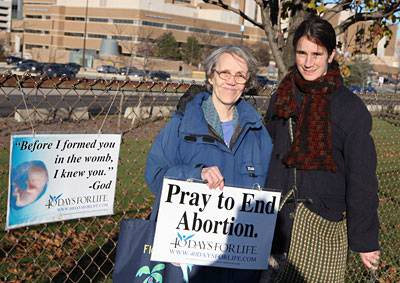
Mary Wagner (right) with fellow pro-life activist and jubilee medal recipient Linda Gibbons

Frida

22 Oct

On Friday night, Matt and I went on a For Real Date to see the Frida & Diego exhibit at the Art Gallery of Ontario. Frida Kahlo is probably my all-time favourite painter; I have literally been counting down the days until this show opened.

I have friends who know a lot more about galleries and exhibiting art than I do. They make intelligent remarks like, I wasn’t thrilled with how this collection was curated, or, I thought the lighting in the third room really brought an interesting tone to the whole show. I hope you’re not here to read anything like that, because I honestly know very little about how galleries should or shouldn’t display art. On top of that, I’ve been waiting at least ten years to see Frida’s works in person, so the AGO could probably have held the show in a dank basement room lit by a single 60-watt bulb and I would still have been thrilled.

The Frida & Diego exhibit is an assortment of Kahlo and Rivera’s works, often juxtaposed in interesting ways. The first room is filled with paintings from Rivera’s days as an art student in Madrid and Paris; they’re neat because you can clearly see the time he spent dabbling in Realism, Cubism and Post-Impressionism. That being said, although his early paintings are clearly technically very good, for the most part they aren’t terribly interesting or different.

Three of Rivera’s earlier works

The second room is more still more Rivera, and includes a reproduction of one his most famous murals, The Arsenal, starring Frida as a communist bad-ass distributing weapons to the people.

Finally, in the third room, we begin seeing some of Kahlo’s work. I dragged Matt from painting to painting, drinking in the familiar scenes and pointing out details that I was noticing for the first time. I began to look at the dates of the paintings, trying to slot them into the narrative of her life, and in doing so  I was struck me was how young she was. I mean, I’d always known that she’d died young, but for the first time I realized that she’d been painting masterpieces when she was younger than me.

Frida was born in 1907 (although she often gave her birthdate as 1910 in order to coincide with the beginning of the Mexican Revolution), and was the third of four daughters born to Guillermo and Mathilde Kahlo. Frida’s father came from a German-Jewish background, and her mother was of Spanish and Indigenous descent; Frida was fascinated by her parents’ history, and her own mixed heritage would come to play an important part in her art. In 1927, at the age of 20, she already considered herself to be a professional painter. She married Diego Rivera in 1929.

Her seminal painting Henry Ford Hospital, which depicts a bed-ridden Kahlo shortly after a traumatic miscarriage, dates from 1932. I kept looking at it and thinking, she was only 25 when she went through that. She was only 25 when she painted that.

Henry Ford Hospital, 1932

Kahlo’s 1932 miscarriage (which was the second of three that she suffered) was by no means the first time she’d experienced pain or hardship in her life. At the age of six she was stricken with polio and, although she made a near-full recovery, for the rest of life her left leg remained smaller and weaker than the right. Then, at the age of 18,  she was riding a bus that collided with a tram car. She suffered massive injuries, including three breaks in her spinal column, a shattered pelvis and multiple other broken bones. She was also skewered by a steel handrail, which pierced her abdomen and came out her vagina. She later told her family that the handrail took her virginity (totally untrue, by the way).

Her boyfriend at the time, Alejandro Arias, described the scene of accident to Kahlo biographer Hayden Herrera in gory but also hauntingly beautiful terms:

Something strange had happened. Frida was totally nude. The collision had unfastened her clothes. Someone on the bus, probably a house painter, had been carrying a packet of powdered gold. This package broke, and the gold fell all over the bleeding body of Frida. When people saw her they cried, ‘La bailarina, la bailarina!‘ With the gold on her red, bloody body, they thought she was a dancer.” – Hayden Herrera, Frida: A Biography of Frida Kahlo

Frida suffered from the effects of that accident for the rest of her life. She underwent 35 separate surgeries in an attempt to repair the damage. The handrail had gone through her uterus, leaving her unable to carry a baby to term; this was especially heartbreaking, as Frida wanted almost more than anything to have a child with Diego.

Part of the reason that Kahlo wanted to have Rivera’s child is that she thought it would bind them together in a way that marriage on its own couldn’t. Diego was a known womanizer, and continued to sleep with other women even after he married Frida. Deeply hurt by Diego’s infidelity, as well as her own inability to carry a child (which would have been Rivera’s fifth, as he had four others by past wives and mistresses), Frida began to have her own affairs with both men and women. Throughout the rest of her life Frida had dozens of lovers, including, purportedly, Josephine Baker and Leon Trotsky.

The fact that both Frida and Diego had numerous love affairs over the course of their marriage (which lasted from 1929 until 1939, then resumed in 1940 and lasted until Frida’s death in 1954), and the fact that both of them slept with women, makes the AGO’s juxtaposition of the two portraits of Natasha Gelman, one each by Kahlo and Rivera, all the more interesting.

Kahlo’s portrait of Gelman, 1943

Rivera’s portrait of Gelman, 1943

In Kahlo’s portrait, Gelman is unsmiling, even stern, while Rivera’s version of Gelman is languorous and sensual, a small smile playing on her lips. Kahlo’s Gelman seems matriarchal, perhaps even a bit masculine, with a square jaw and intently serious gaze. Rivera’s Gelman, on the other hand, takes on a more traditionally feminine appearance, both in the softness of her face and the curve of her hip and leg. Simply put, Kahlo’s version of Gelman looks like a fucking awesome boss lady, and Rivera’s looks like someone he would want to sleep with.

I’m no expert, but I feel like these two pictures say a lot about how Kahlo and Rivera view women, both in general and as prospective partners.

It was also fascinating to see a selection of works by Kahlo that were inspired by her miscarriages hung alongside a series of paintings by Rivera depicting mothers of young children. I can’t imagine how heartbreakingly difficult it must have been for Frida to know that Diego had children with other women; how at times she must have felt inferior and defective because she could bring another “Little Diego” into the world.

Frida Kahlo – Frida Y El Aborto

Diego Rivera – Maternidad

One of my favourite parts of the exhibit was the room that contained media by other people of Frida and Diego. There were photographs on the walls, and a black and white video of the couple was playing on the large screen. Of all the photographs that were included in this show, my favourites by far were those taken by Nickolas Muray, Frida’s former-lover-turned-good-friend.

Nickolas Muray – Frida In The Dining Area Coyoacan With Cigarette

Nickolas Muray – Frida Kahlo on White Bench

In many of Muray’s pictures, Frida is looking straight into the camera. Her gaze is intimate, disarming; her eyes bore into you, and it seems like she’s just about to speak. In some of the pictures, her mouth is quirked into a half-smile, as if she and the viewer share some kind of inside joke. No one else really understands, her expression tells you, no one but you and I, that is. You feel complicit in something, but you’re not sure what.

The video was just as wonderfully intimate as Muray’s photographs. In it, Frida and Diego are shown at home, in the courtyard of Casa Azul. In their every movement, their every look and touch, their tenderness for each other is evident. At one point Frida reaches out to take Diego’s hand and place it on her cheek; her expression when she feels his palm against her face is like that of a cat sleeping in a puddle of sunlight.

On the whole, the show is wonderful. My only issue with it (aside from the fact that several of my favourite Kahlo pieces are missing) is the subtitle, Passion, Politics and Painting. The advertising done for the show, which includes the slogan, “He painted for the people. She painted to survive.” makes it seem as though the politics were all Diego’s and the passion all Frida’s. Even within the exhibit, there is much attention given to Diego’s political activities, and only a few brief mentions of Frida’s membership in Mexico’s communist party.

To say that Frida wasn’t political is a mistake; she was deeply political, and on a very personal level. The way she dressed was political, as was the way she behaved, not to mention her art. In a time when the Western culture and its concept of beauty was beginning to take over Mexico’s cultural landscape, Frida, in many ways, turned her back on it and embraced her Mexican of her heritage. She traded the European clothing of her childhood for traditional Spanish and Indigenous garb. She refused to alter her unibrow, and, in fact, accentuated it and her mustache in her self-portraits. She was known to be unfaithful to her (equally if not moreso unfaithful) husband, and took women as lovers. Perhaps most importantly, she painted and talked about things that no one had ever publicly discussed before: things like miscarriage, infertility, sexuality, violence against women and infidelity.

In many ways, she started conversations that we’re still having today.

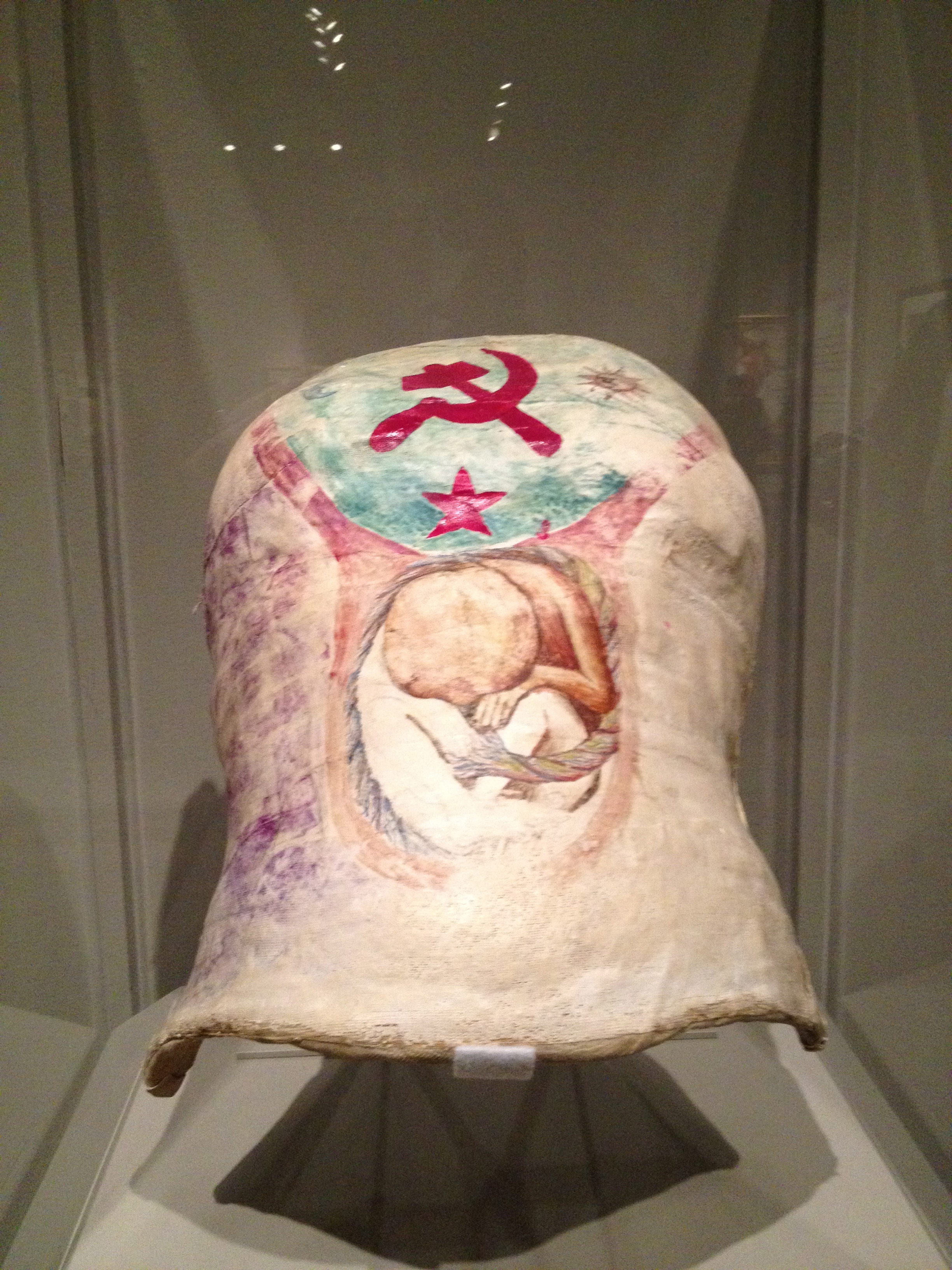
Plus, how can you think someone is not political when they paint this on their own body cast?

Kahlo’s Body Cast with Hammer & Sickle and Fetus

I wish I could explain to you how and why I love Frida so much. I keep starting sentences and then deleting them; all the words I pick seem fumbling and wrong, the emotion either overwrought and clumsy or woefully lacking. Even the things that I’ve already written here seem stilted and lifeless, which is the opposite of what writing about Kahlo’s life should be.

I guess that the best thing that I could say would be this: Frida had a really hard fucking life, but instead of backing down, she took all of her pain and heartache and turned it into something beautiful. She lived and she worked and she loved and she challenged and she pushed and in the end, I think, she won.

***

Frida died of a pulmonary embolism in 1954, at the age of 47. I mean, 47. Fuck. She was so heartbreakingly young. Shortly before her death, she wrote the following in her diary:

I hope the exit is joyful — and I hope never to return — Frida”

I hope that wherever you are now, Frida, you are joyful. I hope that you’re finally free from pain. Most of all, I hope that Diego is there with you.*

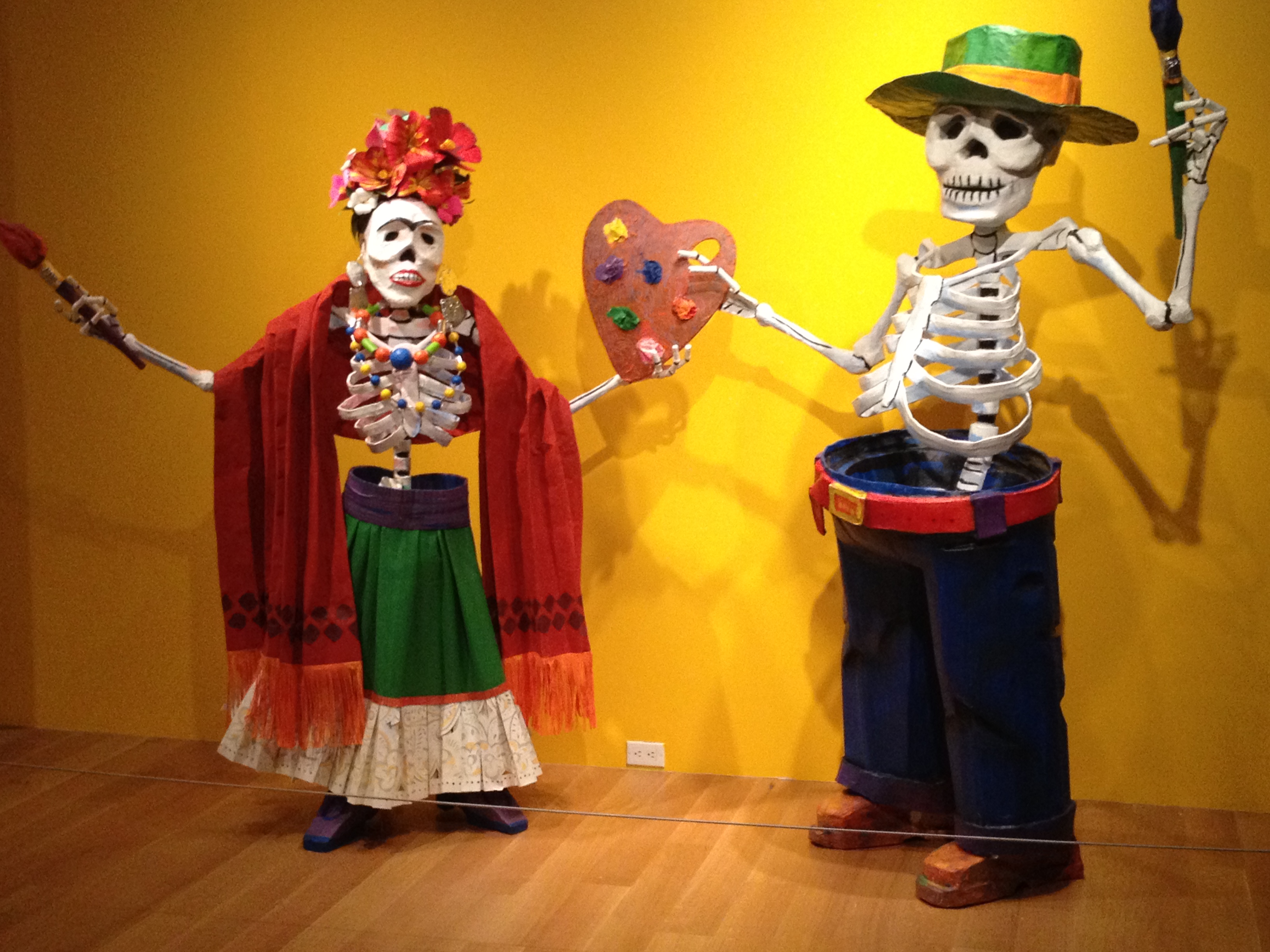
Frida and Diego ofrendas

The exhibit closes with a pair of ofrenda depicting Frida and Diego. An ofrenda is a type of Mexican home altar, most often built for el Dia de los Muertos (The Day of the Dead). An ofrenda typically represents a dead family member, and is honoured by the living with traditional offerings of food and flowers. On October 24th, Mexican artist Carlomagno Pedro Martinez will construct an ofrenda in the gallery space; visitors on that day will be given art supplies and encouraged to contribute drawings and words to Martinez’s work. The installation (along with the entire exhibit) will be on display until January 20th, 2013.

*And that he’s, like, hanging out with you and not busy macking on angels or whatever (I am JUST SAYING, okay?)

p.s. In case you weren’t sure how I felt about Frida Kahlo in general, and this exhibit in particular, here is a visual aid for you:

A Few Small Things

16 Oct

Hey y’all, here are a few things I wanted to share with you today:

1. Here is a post about women in geek culture that I wrote for Shameless Magazine’s blog. I am really proud of it! I am also super stoked that I had the chance to write it, and want to give Shameless Magazine a thousand smooches for publishing my stuff. If you want to read about misogyny, racism, and the lack of representation of queer and trans folks in geek culture, you should check it out. If you want to read about my love for Wil Wheaton, you should DOUBLE check it out.

OMGGGGGG IMAGINE IF WIL WHEATON EVER READ IT, I WOULD DIIIIIEEEEEE.

Hi, Wil Wheaton, call me, okay?

2. It looks like The Gap has pulled the Manifest Destiny shirt, and offered this lukewarm non-apology:

They tweeted something very similar yesterday, but it looks like the tweet has been removed.

I would really love for them to handle this the way Paul Frank handled the recent outcry over their racist and offensive fashion show, and I’m still hopeful that they might, but it’s looking less and less likely.

One of my favourite parts of Paul Frank’s response is that they said they like to collaborate with an Aboriginal artist on future designs and that the profits from that collaboration would be donated to an Aboriginal cause. How amazing would it be if The Gap could follow their lead?

3. My Manifest Destiny post was featured on BlogHer! It’s on the front page of the site, and it feels bananas to load the page and see something I wrote front and centre. I feel super flattered that they featured it!

4. You should really check out my friend L’s response to Gap’s Manifest Destiny debacle over at her blog, Life In Pint-Sized Form. Her grandfather is a full-blood Chippewa, and she brings a fantastic perspective to this issue. Reading what she wrote literally gave me chills.

5. Artist Gregg Deal, who is Aboriginal and a member of the Pyramid Lake Paiute Tribe, created this image in response to Manifest Destiny shirt:

I love these designs because they show so clearly the subtext behind the term Manifest Destiny, a subtext that many people seem hesitant to acknowledge. Let’s call a spade a spade, shall we? I also love that he used humour to address the racism of Gap’s design, because I think that humour can be a super important weapon against all forms of intolerance.

5. October 15th was Pregnancy and Infant Loss Awareness Day. Two of my friends wrote very movingly about their experiences with miscarriage and stillbirth, and I wanted to share their posts with you. The first is from my friend Jodi, who blogs over at Mama To Bean and whose son Joel was stillborn last year – you can read her reflections on what this day means to her here.

The second post comes from The Yellow Blanket, which is written anonymously by a woman who has suffered multiple unexplained pregnancy losses. She writes incredibly movingly about her losses, and what her pregnancies have meant to her.

If you plan on reading these posts, I would suggest that you break out the kleenex.

6. A lot of the stuff in this post has been pretty heavy. If you need something to lift your spirits after all this profound grief/righteous indignation/sadness that you are not, in fact, married to Wil Wheaton, then I highly recommend The Hairpin’s Texts From Little Women. I was reading this in the yoga studio while there was a class going on, and I was trying SO HARD to stifle my laughter because, well, Jo March. God I love Jo March.

Here’s a sample – the italicized text is Jo March, and the plain text is Meg March:

I hope you realize you’re breaking up the family 

I really wish you wouldn’t see things that way

a broken home 
that’s what I come from now 
a broken home

that’s not what they call it when your sister gets married

then why does it feel broken, Meg
why does it feel broken
this is the worst thing 
that has ever happened 
to anyone 
since Father died 

Father didn’t die, Jo!
he’s only been wounded!

oh 
didn’t he? 
for some reason I thought he’d died 

no
he’ll be home in a few weeks
Ah

do you suppose he’s going to want his old greatcoat 
and riding boots 
and shaving things 
and top hat
when he gets back? 

I expect that he will

HANG EVERYTHING” 

Hang everything indeed.

Rape Culture (or, Roman Polanski, I can’t even)

11 Oct

There are few things in life that make as incredibly, blindly, need-to-punch-a-wall-right-now angry as Roman Polanski. Any mention of him makes my blood boil; even just having someone tell me about one of his movies leads to me shouting obscenities for a significant length of time. So imagine how I felt when I saw the following headline on Yahoo News:

Former teen who had sex with Polanski writing book

The article then goes on to say that,

Polanski … fled the country in 1978 on the eve of being sentenced for unlawful sexual intercourse with Geimer, 13 at the time

Let me just sit here a moment while your head explodes a little.

Let’s get a few things straight: Roman Polanski did not have “unlawful sexual intercourse” with a 13 year old girl – he raped her. The victim, Samantha Geimer, testified that the sex was not consensual; in fact, according to her testimony, she explicitly told him no. And you know what? Even if she hadn’t told him no, it would still have been rape. Even if Polanski hadn’t given her alcohol it would have been rape; even if he hadn’t drugged her it would have been rape; even if  she had said yes it would have been rape.

Know why? Because she, a vulnerable 13 year old girl faced with a millionaire film director in his 40s, was subject to an extreme imbalance of power. As Geimer said in her testimony,

We were alone and I didn’t know what else would happen if I made a scene. So I was just scared, and after giving some resistance, I figured well, I guess I’ll get to come home after this

She didn’t fucking know what else would happen if she made a scene. Here was a girl, who had been given champagne and qaaludes, who was faced with unwanted sexual advances from a man more than three times her age, a man who wouldn’t take no for an answer. She was afraid for her life.

What Polanski did was rape. I don’t care that he was later offered a plea bargain (because Geimer’s lawyer did not want her to have to endure a trial) that lessened his charges from rape by use of drugs, perversion, sodomy, lewd and lascivious act upon a child under 14, and furnishing a controlled substance to a minor to the much shorter and nicer-sounding unlawful sexual intercourse. I don’t care that the only thing Polanski plead guilty to was said charge of unlawful sexual intercourse. I just don’t care.

Let’s be really clear on one thing here:

Roman Polanski drugged and raped a 13 year old girl.

Roman Polanski raped a 13 year old, plead guilty to “unlawful sexual intercourse” and, when he realized that he was facing jail time, fled the country. He continued to make movies, continued to receive the financial backing and participation of major studios and A-list movie stars, married a woman 33 years his junior, and had two children. He has suffered basically zero consequences because of what he did.

This is what rape culture looks like.

Rape culture means that we refer to children who were raped by celebrities as “former teens” (what the fuck does that even mean?), and use terms like “unlawful sexual intercourse” instead of “rape” when describing what happened to them.

Rape culture means that Johnny Depp, Adrien Brody, Ewan McGregor, Pierce Brosnan, Kim Catrall, Jodie Foster, Kate Winslet, Helen Bonham Carter Walter Matthau, Harrison Ford, Kristin Scott Thomas, Sigourney Weaver and Ben Kingsley are, by appearing in and promoting Polanski’s films, all tacitly saying that they are just fine with the fact that he raped a 13 year old girl.

Rape culture means that a lengthy list of celebrities, many of whom I used to admire, have publicly defended Polanski.

Rape culture means that Whoopi Goldberg has gone on record saying that what happened wasn’t rape rape.

Rape culture means that so many people are willing to ignore what Polanski did because they just want to sit back and enjoy his movies without having to feel guilty.

Rape culture means that a young girl’s life was destroyed, while her rapist went on to win Oscars for his movies.

Rape culture means that we live in a world where celebrities, the media, and even our friends and family normalize, excuse and condone rape to the point where a rapist can continue to live a happy, normal life with very limited consequences.

Look, I’m not normally the type of person who can’t dissociate an artist from their art; I still love Picasso, even though he treated women terribly. Ditto for Ernest Hemingway. Truman Capote was pretty awful, especially to my girl Harper Lee, but I can still read Breakfast At Tiffany’s and love every word of it. I recognize that the art and beauty a person creates are separate from who they are.

But I will never, ever see a Polanski film. I will not in any way, shape, or form give my tacit support for what he did.

I will not knowingly participate in rape culture.

Samantha Geimer in 1977

Edited to add: A few people have brought up the 1969 murder of Polanski’s pregnant wife, Sharon Tate, and the fact that he is a Holocaust survivor.

A bit of clarification – I am aware of both those facts. I do not like the fact that people use them as an excuse for what he did. I am certain that Polanski was deeply, irreparably damaged by these events. That being said, he made a CHOICE to rape Samantha Geimer. He was conscious of his actions; he even underwent a court-ordered psychiatric evaluation after his arrest. I do not think his past can be used as an excuse or justification.

The Racist Roots of the Pro-Life Movement

2 Oct

Most people probably think of abortion as being a fairly modern convenience, and imagine that the pro-life movement has probably been around for quite some time. For one thing, people who are pro-life often cloak their message in the Biblical idea of thou shalt not kill, and, you know, the Bible has been around for like forever. With that in mind, it would totally make sense for anti-abortion sentiment to have been rampant and widespread for the last couple of hundred or even thousand years.

Except that it hasn’t been.

The roots of the modern pro-life movement can actually be found in late 19th century America. Laws criminalizing abortion in the United States didn’t begin appearing until the 1820s, and even then they were still fairly rare. In the 1860s (so, during and after the civil war), these laws became more common, and by 1900 abortion was illegal in every state.

Before that, abortion was totally legal up until the “quickening”, i.e. when the mother first feels the fetus move. This was partially because at the time, there was no definite way of knowing that a woman was pregnant until she felt fetal movement; of course there were other signs, such as lack of menstruation or things like morning sickness or breast tenderness, but any of those could be symptoms of conditions other than pregnancy. Because of that, the moment when a woman felt her baby “quicken” (which typically happens in the 4th, 5th or even 6th month pregnancy) was really the moment when society considered her to be pregnant. Before that, she was just a woman with an irregular or disrupted menstrual cycle.

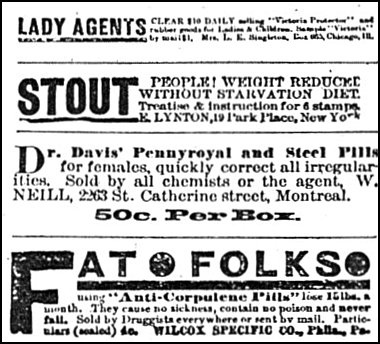
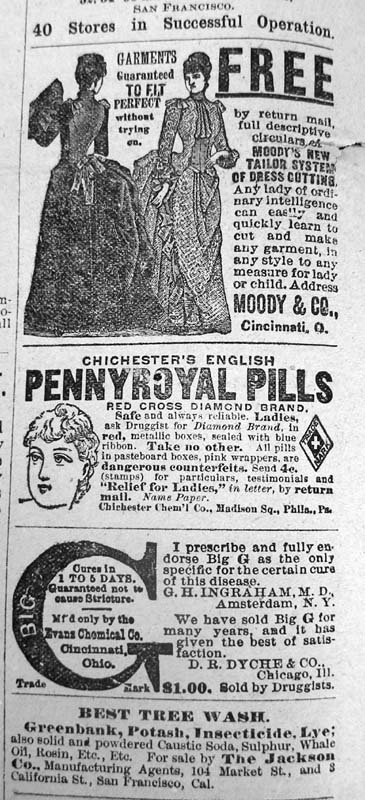
Which is why most advertisements for 19th century abortifacients looked like this:

Most patent medicines promised to do things like “correct irregularities”, or, even more abstractly, offering “relief for ladies”.

Abortion was actually one of the most common forms of birth control in 19th century America. Doctors estimated that there was one abortion for every five or six live births. In fact, the 1867 Richmond Medical Journal reported that,

“Among married persons so extensive has this practice become that people of high repute not only commit this crime, but do not even shun to speak boastingly among their intimates of the deed and the means of accomplishing it.” 

Abortion was so common that classy ladies were chatting up their friends about the best ways to do it.

Probably not what you would expect to hear at a Victorian tea party, right? Kind of amazing to picture, though:

Won’t you please pass the cucumber sandwiches, Priscilla? Oh and did I tell you about this absolutely smashing new way I’ve discovered of aborting unwanted fetuses?

Someone please invite me to that tea party.

So what the hell happened?

Well, people started worrying that if women were allowed to control their own fertility, bad things might happen. Like the end of society as we know it!

Let’s take a look at the historical context: the 1860s were obviously a very turbulent time, especially with regards to racial issues. The fact that there was such an increase in abortion legislation during and immediately after the civil war is quite telling. The aftermath of the war inspired a growing panic among white people that people of colour, who they were sadly no longer able to enslave, might try to take over “their” country. Maybe as payback for all those years of slavery? This panic paved the way for the idea of “race suicide”.

What, exactly, is race suicide, you might ask? I’ll just let my old friend Teddy Roosevelt explain it to you:

” …if the average family in which there are children contained but two children the nation as a whole would decrease in population so rapidly that in two or three generations it would very deservedly be on the point of extinction, so that the people who had acted on this base and selfish doctrine would be giving place to others with braver and more robust ideals. Nor would such a result be in any way regrettable; for a race that practised such doctrine–that is, a race that practised race suicide–would thereby conclusively show that it was unfit to exist, and that it had better give place to people who had not forgotten the primary laws of their being.”

(On American Motherhood, by Theodore Roosevelt, 1905)

That’s right – race suicide is the idea that white people will become “extinct” if they don’t have enough babies.

This fear, that people of colour would out-baby us, is where we find the actual origins of the pro-life movement. It didn’t come out of the idea that abortion was a sin, or the dogma of be fruitful and multiply, but rather the panicked notion that white people might not run the world anymore.

This racism still exists in the pro-life movement, although usually in more subtle ways. I’ve heard of white women requesting abortions and being asked, pleadingly, by medical professionals, if they know how wanted white babies are. And, of course, the pro-life movement is stunningly racist in other ways, for example when they posted this what-is-this-I-can’t-even billboard:

Look, I’m not saying that if you’re pro-life, you must be racist, or that everyone who hates abortion also hates people of colour. But what I am asking you to do is take a look at the history of the movement, educate yourself, and re-examine why you hold the beliefs you do.

I’m also asking you to admit that when it comes to anti-abortion sentiment, it’s not always about God or saving babies or whatever; it’s also about white people, and our xenophobia, and our desire to maintain our death grip on a society that we perceive as being only for us.

ETA: Sadly, the pro-choice movement has a pretty racist history as well. Stay tuned for the next in this series, The Racist History of the Pro-Choice Movement. Racism. It is why we can’t have nice things.

The Myth of the 39th Week Abortion

29 Sep

If you are a Canadian living in Canada (or even a Canadian living abroad, or maybe even a non-Canadian), you’ve probably been hearing a lot about Motion 312. I know I have!

In case you’ve been living under a rock and/or you’re not up on Canadian politics, here’s a section of the motion that should give you a good idea of what it’s about:

That a special committee of the House be appointed and directed to review the declaration in Subsection 223(1) of the Criminal Code of Canada which states that a child becomes a human being only at the moment of complete birth and to answer the questions hereinafter set forth;

 (i)            what medical evidence exists to demonstrate that a child is or is not a human being before the moment of complete birth?,
 
   (ii)            is the preponderance of medical evidence consistent with the declaration in Subsection 223(1) that a child is only a human being at the moment of complete birth?,
 
 (iii)            what are the legal impact and consequences of Subsection 223(1) on the fundamental human rights of a child before the moment of complete birth?,
 
 (iv)            what are the options available to Parliament in the exercise of its legislative authority in accordance with the Constitution and decisions of the Supreme Court of Canada to affirm, amend, or replace Subsection 223(1)?

You can read the full text of the motion here, on Conservative MP Stephen Woodworth’s website.

The Conservative government has been quick to point out that this is not a motion put forth to criminalize abortion, or even reopen the abortion debate. They want you to believe that they simply want to update the 400 year old definition of what a human being is.

The issue is that this motion could pave the way to giving personhood to fetuses, which would certainly cause legislation to be passed on when and how abortions can be performed.

Currently, abortion is not limited by law in Canada. This means that you can have an abortion at any point in your pregnancy, right up to the moment when you give birth. By ascribing personhood to a fetus, the Canadian government would begin moving towards criminalizing abortion. Because, of course, having status as a “person” would mean that the fetus would be protected by the Canadian Charter of Rights and Freedoms.

And on the surface, that seems pretty reasonable. I mean, a typical pregnancy can go to 40+ weeks, but we all know that a baby born earlier can often survive with little or no medical intervention. My son was born at 36 weeks and, other than a little time on the C-PAP machine (which was more likely needed because of my c-section than because of his premature birth), he was totally fine. I even have a friend whose daughter was born at 25 weeks gestation and, while she obviously needed a lot of medical aid in the beginning, she is now two years old and thriving.

So how, in good conscience, could we allow women the legal right to abort a fetus that could survive outside of the womb?

I’m here to tell you that we can, and we should.

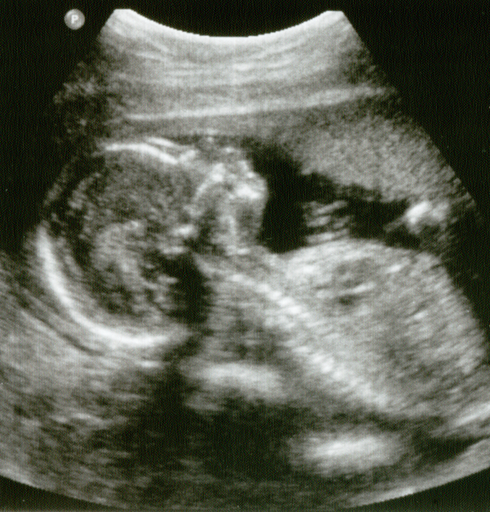
When I was pregnant with Theo, I had my first ultrasound at 11 weeks gestation. I’d had some bleeding early on in my pregnancy, and, going into the ultrasound, I was terrified that they would find something wrong with him.

The minute the probe hit my belly, though, itty bitty Theo appeared on the screen. He was perfect; all blobby torso-head and stubby little limbs. When I saw him, I laughed with relief, and when I laughed, he jumped, waving his arms and legs in protest. We watched, mesmerized, as he wriggled around, his heart a flickering beat in the middle of his chest.

To me, in that moment, he went from being two-lines-on-a-pregnancy-test-morning-sickness-and-achy-breasts to being an actual little person. Seeing him on the screen made me fall in love with him.

And this is the problem: if my feelings could make me believe that a baby the size of a fig is a person, then someone can likely argue that any fetus, at any gestational age, is a person. If I, a staunchly pro-choice feminist can, under the right circumstances, believe that a fetus of 11 weeks gestation is a person, then it’s not impossible for our government to come to the same conclusion.

Yes, I understand that in M-312 they promise to examine “medical evidence” in order to decide whether or not a fetus is a “person” before birth, but really, you could find “medical evidence” to back up just about any claim.

Would they say that a fetus is a person once it can survive on its own, outside of the womb, without any medical aid? Because there is honestly no foolproof way to test this.

Would they say that a fetus is a person once it reaches viability  at 24 weeks? Because the truth is that only 50% of babies born at 24 weeks gestation will survive, and those that do live are likely to have a lifetime’s worth of medical complications. As well, dating ultrasounds are not very accurate, especially once a woman enters her second trimester. Without knowing the exact date of conception, no ultrasound tech could say for certain whether a fetus is 23 weeks or 24 weeks.

Would a fetus become a person at 20 weeks, the age at which some studies have said that they can feel pain?

Would a fetus be declared to be a person at 19 weeks, which is the gestational age at which, if a Canadian woman miscarries, she becomes eligible for maternity leave?

Would a fetus become a person when their heart starts to beat, when they start to grow limbs, or even from the very moment of conception?

You could find medical evidence for all of these claims, but there’s no way of empirically proving when a fetus turns into child, except for the moment of birth, when they begin to live independently of their mother’s body. So, ultimately, the decision would, at least in part, have to be based on the emotions of the committee appointed to decide when personhood begins.

Pro-life advocates would like you to believe that abortion is too common in this country, that people use abortion as a form of birth control, or that it’s wrong to abort a fetus because it could grow up to be the person who cures cancer. Most of all, they want you to believe that women in Canada are actually aborting fetuses at 39 weeks gestation via intact dilation and extraction (more often, and incorrectly, called partial birth abortion).

First of all, let’s look at the prevalence. In 2005, the last year for which this data is available, the abortion rate was 14.1 abortions for every 1,000 women – so, 1.41% of Canadian women had an abortion that year. You guys, that is not a very big number.

Of that number, only a tiny percentage – in 2010, it was something like 0.2 percent of the TOTAL NUMBER OF ABORTIONS – were performed after 21 weeks gestation. I am having a hard time finding actual government statistics for this, but I got that number from a pro-life site, so I doubt that they are underreporting.

Regarding the use of abortion as the only form of birth control – I have honestly never known anyone who has done this. Abortion is still a painful medical procedure, and it’s not something anyone wants to go through. My other issue with this line of thinking is that it’s a way of saying that some abortions are okay, but some are wrong. Like, if it’s your first abortion and it’s because the condom broke and you took the morning after pill and for some reason that didn’t work, then it’s fine to have an abortion. But if you’re not careful with your birth control and you’ve have multiple pregnancies terminated, then it’s wrong to abort. As this brilliant article says, there should be no hierarchy of abortions. On demand, without apology.

The any-fetus-could-grow-up-to-cure-cancer argument is one of my favourites, only because it totally ignores the fact that, if the woman does terminate her pregnancy, maybe she will be the one to go on to cure cancer. Maybe the financial burdens of having a child would have made university impossible for her, or maybe the mental distress of carrying an unwanted pregnancy would have meant that she wasn’t up to the task of higher education. Maybe raising a kid would mean that she couldn’t spend hours and hours in a lab looking at test tubes or whatever the fuck it is researchers do. We so often hear about the fetus could-have-beens, but no one ever talks about what greatness the mother could have gone on to achieve.

And, finally, the 39th week abortion. The great myth of the 39th week abortion. This myth exists because technically, legally even, it could happen. Yes, it could happen – but it doesn’t.

I challenge you to find me an incidence of a healthcare professional who provided an abortion at 30+ weeks, because I doubt you can. Even second trimester abortions are hard to obtain in Canada, and women often end up being sent to clinics in the States if they are over 20 weeks gestation. The vast majority of these women are choosing to terminate that late in their pregnancy because they’ve only just learned that the fetus is severely or fatally impaired, or that there’s a significant health risk to the mother, or both.

I promise you that no one gets to 39 weeks of pregnancy and is suddenly like, gee, I’ve been meaning to get this thing aborted, I guess I should stop putting it off!

Finally, criminalizing abortion won’t stop it from happening; history has proved this time and time again. What it will mean is that women will be forced to seek out unsafe abortions with possibly life-threatening consequences. Sadly, this is an indisputable fact.

I’ve never had an abortion, and I hope I never will. I would frankly be beyond horrified if a woman terminated her pregnancy at 39 weeks. I’m still glad, though, that it’s possible from a legal standpoint. I’m glad that there are no laws that say what a woman can or can’t do to her pregnant body, which, by the way, is still her body. Because once you start creating that legislation, no matter how well-meaning it is, it’s a slippery fucking slope. A slope that ends in the Handmaid’s Tale. Kidding. Well, mostly kidding.

Just (or, an insidious little word that I use too often)

27 Sep

I teach a regular yoga class on Sunday evenings. My friend Charlene, who is an amazing teacher that I respect like whoa, teaches the class right before mine. For a few weeks now she’s been threatening promising to take my class, the thought of which was basically vomit-inducing.

I mean, imagine this: you, a neophyte in your field, suddenly have someone with years of experience and training under their belt, someone who has been inspiring you with their amazingness for quite some time now, who wants to be your student. Pretty nerve-wracking, right?

Anyway, I was nervous, my voice quavered a little when giving instructions, and every time I looked at her I forgot everything I’d ever learned, but other than that it went pretty well. Afterwards she thanked me for the class and said she’d enjoyed it, so I asked if she would email me with some feedback and constructive criticism.

I received her (extremely lovely and thoughtful) email the other night, and one paragraph really jumped out at me:

I noticed that you say “just _________”  a lot, as in, “just reach your arm up, just step forward”.  I catch myself doing this as well sometimes and realise that it detracts from the impact of the practice and my presence. There are no “justs” in yoga, since every movement and breath should be linked with some degree of awareness and attention- everything we do matters. Saying “just” a lot also makes the class seem more casual than perhaps we want it to be, since after all, people come to class to learn….they need to trust that we are confident in our capabilities to guide them.

Having read this, I’ve been carefully monitoring my speech for the last few days, and I’ve come to the following conclusion: I say just a lot.

I don’t just say it in a yoga context, either. I use it quite often when I’m talking about myself, and about my accomplishments. This morning I was sitting in the cafe across the street from the studio, and a woman asked me what I did for a living. Oh, I just manage a yoga studio, I replied without thinking. The real kicker is, it’s NOT EVEN TRUE. I don’t just manage a yoga studio – for one thing, phrasing it that way makes it sound lesser or inferior to other jobs, and for another thing, I also teach yoga and write, but for some reason I never think to mention those.

I mean, I say some reason, but I totally know the reason. It’s because I am a woman and, as such, it makes my life easier to constantly diminish my own accomplishments and make myself appear less threatening.

Every time I say just, what I’m really saying is, This isn’t important. I’m not important. Please don’t question me on this.

Every time I say I think when I really mean I know, what I’m actually saying is, Please don’t think that I’m trying to show you how smart I am or how accomplished, I’m sure you’re very smart and accomplished too.

The dangerous thing is that I keep telling myself that if I just teach more often, or get more stuff published, or accumulate more successes, then I will stop feeling this way. I tell myself that I use this kind of demeaning language against myself because I’m just not good enough yet, but someday I’ll get there. Really, though, the truth is that if I don’t think I’m there yet, then I will never get there and I will never be good enough, because my desire to self-deprecate will continue to push my goals just out of reach.

Let’s go back to the basics here:

Men feel threatened by women, especially powerful, successful women. This is ground that’s been covered over and over, but it bears revisiting.

Women also feel threatened by the success of other women, because we’ve been set up by society to compete against each other. There’s some jealousy in there, of course, but I also get the feeling that women often feel like success is something finite, and if one woman uses up a big chunk of success, then there will be less for everyone else. And maybe that’s a even a bit true, because while society seems to tolerate plenty of successful men, it doesn’t seem to have a lot of room for women at the top.

So how do you react when you’re challenged by someone on your success? Do you get defensive, grow angry and maybe start to lose your temper as you try to prove your point? Some people do, and that’s not necessarily a bad or wrong reaction – but it is one that’s certainly far more accepted from men than it is from women. If a man becomes righteously angry, he’s often lauded for it. If a woman does the same thing, it’s frequently blamed on her menstrual cycle, or her lack of sex, or because, you know, ladies.

So what’s one way around this problem? To be nice and reasonable, because you catch more flies with honey? To be nice enough that you can convince men that sure, you’re smart and well-educated, but you’re not one of those women. To be reasonable enough to prove that not all feminists are hysterical and crazy, some are totally kind and thoughtful and soft-spoken.

To be so fucking nice and reasonable that you start to undermine yourself, to diminish yourself because you don’t want to cause conflict. To be so respectful of other people’s opinions, so concerned about not offending them, that it starts to become hard to stand up for what you yourself believe in.

I’m not saying don’t be nice and respectful, but what I am saying is that these are qualities that men have come to expect from what they think of as “reasonable” women. And every time you describe yourself as just being whatever, every time you back away from an argument by conceding that everyone’s allowed an opinion even though what the other person is saying is totally wrong and offensive to you, you are playing right into that expectation.

I’ve written here about being careful about the words we use when talking about other women, but we also need to watch the words we use when talking about ourselves. In order to be successful, we need to learn to talk ourselves up, to speak positively about our accomplishments, and not be afraid of a little conflict. We need to learn to be assertive, because society isn’t going to begin tolerating assertive until more women are comfortable in that role.

So I challenge you to spend a few days watching what you say, and taking stock of how often you use words like just or think or only when you’re talking about yourself or your opinions. Ask yourself what your speech would sound like without those words. Finally, try to make a few statements about yourself every day that celebrate your work, your life, or your accomplishments instead of demeaning them.

Because if you don’t take yourself seriously, probably no one else will.

The Oatmeal Is Actually Pretty Gross, You Guys

26 Sep

When I was a kid, I loved watermelon. Loved it. I couldn’t get enough of that shit.

Then one day, when I was five or six, I ate a bunch of that delicious summertime fruit, caught some kind of stomach bug, and ended up puking violent pink puke all night. Ever since then, I haven’t been able to stand the taste or smell of watermelon.

This is pretty much how I’m feeling about The Oatmeal right now.

A few days ago I wrote a post about The Oatmeal’s recent comic, My dog the paradox. I had some concerns regarding the misogynistic language he used in it, but I was pretty nice about it. I’m a pretty nice person, you guys.

I don’t feel so nice right now.

See, in my post about the dog comic, I was all, I’m disappointed, because I thought that The Oatmeal was smarter and better than this. I’ve since learned that apparently The Oatmeal is not better than this.

Apparently, not only did Matt from The Oatmeal write a comic about his dog, he also wrote an extremely hilarious comic called 5 Super Neat Ways To Use A Hooker. I know! So funny! I bet you’re laughing already, without even having clicked on the link!

Basically it’s a comic about how sex workers are objects, and you could use them in a variety of ways, such as to prop up couch forts, or act as bird feeders.

The whole thing is pretty fucking gross. The drawings, which show garishly made up women with blank stares and bodies hanging out of their clothing, make it even worse.

Don’t worry, though. Matt from The Oatmeal already knows that you’re angry. He knows that you’re offended. He just doesn’t care, because the problem isn’t him, it’s you.

In his contact section, he’s pretty open about the fact that he doesn’t give a shit about what you think. Not only that, but he definitely doesn’t want to hear anything negative from you about his comics:

Do not expect diplomacy. The Oatmeal is a one man operation, and this gives me the right to say horrible things to you if it pleases me. You may even have a valid point or fantastic insight, but this won’t stop me from calling you horrible names and claiming to have spent an evening or two with your mother. [hahaha, a YOUR MOM joke – those things are always hilarious!]

Do not email me because you are offended by: my hooker comic, eating horses, abortion, how Twilight works, or my usage of the word retard.

Do remember that this site is for fun, and to not take it too seriously. If you don’t understand satire don’t email me.

Um, Oatmeal Dude? I think you might be the one who doesn’t understand satire. Let’s have a look-see at how Merriam-Webster defines it, shall we?

1: a literary work holding up human vices and follies to ridicule or scorn

2: trenchant wit, irony, or sarcasm used to expose and discredit vice or folly

In what way is 5 Super Neat Ways To Use A Hooker holding up human vice and folly to ridicule or scorn? I’ve got news for you, buddy: it’s not. What it is doing is reinforcing the idea that sex workers aren’t people.

We live in a world where being a sex worker is the most dangerous occupation in North America, at least in terms the homicide rate. According to one statistic, the homicide rate for sex workers was estimated to be 204 per 100,000. Compare that to the next highest rate, which is for female liquor store employees and is 4 per 100,000 or the highest rate for men, which is 29 per 100,000 for male taxi drivers.

We live in a world where Robert Pickton confessed to murdering 49 women, most of them sex workers. A world where he disposed of their bodies in a variety of disgusting, inhuman ways, and then had the balls to initially plead not guilty.

We live in a world where, in a recent study done in San Francisco, 82% of the sex workers interviewed had been physically assaulted, 83% had been threatened with a weapon and 68% had been raped while employed as sex workers.

A huge part of this violence is because sex workers are viewed by society as things rather than people. Things to be used. Things that exist solely to fulfill men’s needs. Things to be mocked in an online comic.

But, you know, Matt from The Oatmeal is being totally satirical when he compares them to objects or animals, or when he draws their blank, expressionless faces and their sagging, doughy bodies.

I used to think The Oatmeal was smart and funny. I mean, it has a lot of comics about cats, and I am a total sucker for comics about cats! I also enjoyed the way it dissected pop culture, and some of the stuff it had to say about religion. I thought the dude who wrote it was pretty hilarious and cool.

Now, though, every time I think of The Oatmeal, I get that pukey watermelon feeling. I can’t ever look at it the same way, and it’s going to be hard not to yell THIS GUY HATES WOMEN when people try to share his comics with me.

You know what pisses me off the most? The fact that I was willing to give him the benefit of the doubt. The fact that I was all, well, I’m sure he didn’t mean to be a misogynist. Even if I’d just seen his hooker comic, I might have been able to continue to believe that he didn’t know any better, or that he didn’t understand. But no, his contact section clears that right up for me – he knows that what he’s saying is terrible, he just doesn’t give a fuck. He doesn’t give a fuck because it’s satire.

I’m so angry and disappointed. I’m so fucking tired of smart, funny things that are basically men-only spaces. I’m tired of feeling like I’m a persona non grata just because I have a vagina.

Man, misogyny. THIS IS WHY WE CAN’T HAVE NICE THINGS.