
In the beginning God created the heaven and the earth. And the earth was without form, and void; and darkness was upon the face of the deep, etc.
And then God created the Garden of Eden, and made a dude out of mud to be in charge of it. Then one day when this dude, Adam, was sleeping God took one of his ribs (ew) and from that rib magically made Adam a lady-friend, Eve. Then Adam and Eve lived in paradise for, like, three days, until Eve, the original third wave feminist (she embraces diversity, change and choice!), took some bad advice from a phallic symbol serpent and ruined everything.
And we’ve been nostalgic ever since.
Sometimes I think that nostalgia is the human condition. I mean, we’ve got a minimum of three major religions based on this yearning to get back to a past that none of us remember or even understand; the most we know about it is that Adam thought it was awesome. Then again, Adam also thought that wearing fig leaves was awesome, and was married to someone who was basically his clone (I mean, is that how it works? what with the rib and all? what’s the science here? anyone?). Anyway, what I’m trying to get at is that I’m not sure how reliable of a source he is.
I mean, here’s the thing: I am the queen of nostalgia. Ask anyone – I basically get nostalgic at the drop of a hat.
(Hey, remember that time you dropped a hat? How great that was? How much fun we had? Why don’t we ever have good times like that anymore?)
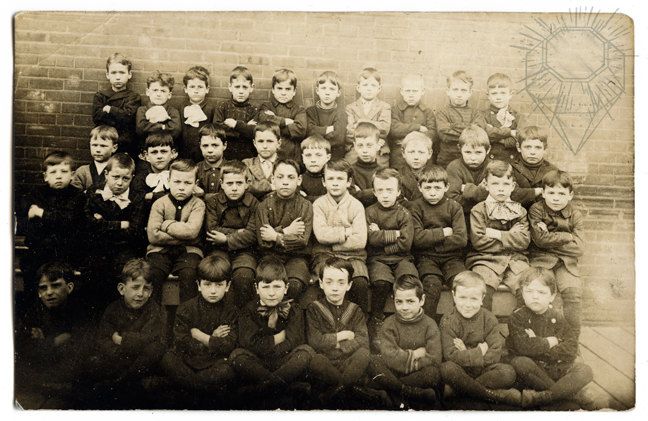
I don’t just moon over actual things that I’ve experienced either; I spent a good chunk of my childhood feeling nostalgic for just about any time in history, from the ancient world all the way up to The Great Depression (I blame a combination of having an aunt who is an egyptologist, reading excessive amounts of historical fiction, and watching Annie on VHS until the tape wore out). I used to drive my mother bananas by whining at her that I should have been born in the Victorian era (in response to which she would usually remind me of my fondness for indoor plumbing), and nearly every elementary school class photo shows me decked out in some kind of puffed-sleeve Anne of Green Gables floral-printed nightmare, grinning like a Cheshire Cat.
If there was a book at the public library with a picture of a girl in a laced-up bodice and peasant skirt, I’d read it. If there was a weirdo food mentioned in something I’d read (blanc mange, I am looking at you), I’d tried to find a recipe for it. After learning that people seriously believed in fairies until not that long ago, I began to (non-ironically) leave food in our backyard in case the fair folk were hungry for chocolate-covered graham crackers and milk. And you know what? To be honest, my adult self is not that different, although nowadays I would probably eat the cookies, fairies be damned.
What I’m trying to get at here is that I’m totally guilty of romanticizing the past. Totally! That being said, I don’t use that as an excuse to hate the present. I mean, I like flush toilets and computers and being able to vote and science-based medicine and all that good stuff. I am pretty down with modern life (although I am sad that I don’t get to wear bustles or hoop skirts). I guess what I am trying to say is that I am confused by people who think that living a middle-class existence in the western world is basically the worst, ever. I’ve heard women bemoaning the fact that feminism has ruined womanhood (is that even a word? my spellcheck thinks it’s a word), and the fact that women can now vote, own property and work after marriage is somehow preventing them from being stay-at-home mothers or housewives or whatever. I’ve heard people complaining about the “chemicals” in antibiotics, and saying that they only do homeopathic or herbal treatments – nothing “unnatural” or doctor-prescribed. I hear people talking wistfully about the days when science didn’t exist and everything was just natural and wholesome and wonderful.
People talk a lot about “authenticity” when it comes to objects and experiences. They don’t want Walmart to exist; they want everyone to buy things from farmer’s markets and local mom-and-pop pharmacies and department stores. They want to drive to Mennonite country to buy hand-made furniture and hand-dipped candles. They want to practice yoga at sunrise on a mountaintop with someone who has studied in India and can read their chakras. When they travel to South America, they don’t want to go on a guided tour; they want to see the unspoiled part of the rain forest, want to see the “real” locals who are unspoiled by contact with the west. We’re obsessed with our idea of what’s “real”; these days, people worship at the temple of the real.
Sometimes I think that our desire for authenticity has a lot to do with our love of nostalgia. We think that the people who came before us lived lives that were somehow more “real” than our own.
But you know what guys? The past is a foreign country, and so on, and so forth. We don’t know what it was like back then; all we can go by is what we’re told, or by deciphering what’s been left behind. We will never be able to understand how people felt or lived back then; their circumstances, though not totally alien to ours, are different enough that we will never fully be able to grasp their emotions, or beliefs, or the ins-and-outs of their daily lives. We just have to trust that yes, being a woman before feminism was a raw deal, and yes, modern medicine saves lives, and yes, science and modernity serve some kind of purpose. I’m not saying, let’s not be critical of society; what I’m saying is let’s keep pushing forward and trying to make things better instead of daydreaming about a past that we can never get back.
I’m not saying that Walmart is amazing, or that any of the things I mentioned up there are bad in and of themselves, just that it’s hard to have some kind of moral superiority about where you shop when there are kids who would probably starve if there weren’t discount stores where their parents could get a cheap meal. I’m also not saying that our society isn’t obsessed with consumerism, because we are; we’re consumerist as hell. But you know what? People in the past didn’t own less things because they were better than us; it was because they couldn’t afford them. If you want to live a life of simplicity where all you can afford is a mattress on the floor and one change of clothes, then by all means, please go ahead. However, don’t kid yourself that you’re being more “real” than the next person.
Sometimes I think that the appeal of history is that we know how all the stories end. We know who wins the Battle of Hastings, and whether or not Julius Caesar crosses the Rubicon, and whether or not the Titanic will ever reach New York (spoiler: it won’t). And yeah, a lot of history was scary and bloody and downright awful, but at least we know what happens. I mean, better the devil you know, right? Our modern lives terrify us because we don’t know how anything will end; sometimes it seems like we’re careening towards our own destruction, running full-tilt at things like global warming and nuclear war and widespread poverty and famine. I’ve got news for you, though: if these things terrify you, all the hand-dipped candles in the world aren’t going to save you. If you’re scared (and you probably should be), then get up and go do something, for God’s sake. Sitting at home wishing that you lived in Elizabethan England is going to accomplish exactly nothing.
I mean, except reminding you how awesome those giant ruffs were. Can we bring those back, please?

Bustles – the best, right? Baby got back, etc.





 The Belle Jar
Deconstructing Racism And Privilege
18 OctBefore we start, let me be really upfront about a few things.
First of all, I am not an expert on racism; I haven’t studied it extensively, and what I’m about to write here is mostly based on a few smart books/articles, conversations with friends, and stuff that I’ve read online. Oh, and feelings. I have a lot of feelings about racism.
Second of all, I’m white. I mean, like, really white. I have the complexion of an anemic Swede. So obviously I don’t fully understand racism and its impact because I will never personally experience it directed towards me. Everything that I’m writing here is offered as the perspective of someone who lives in the land of white privilege.
So with that baseline in place, I want to talk a bit about racism in general and some of the fallout from The Gap’s Manifest Destiny debacle in particular (sidebar: isn’t debacle a great word? let’s all agree to use it more often). I’ve been reading some of the comments left on my blog, on my Facebook page, on BlogHer and on this piece in The Guardian, and many of them are, well, troubling. To put it mildly.
Here’s a small sampling of some of the comments:
“Oh for pity’s sake, must everything be offensive? Political Correctness gone wild.”
“WHAT aboriginal community in the U.S. ? This belief in the U.S. is dead. The only complainers are the very few who were conquered. Conquering is not new to any culture. If the Native Americans weren’t so busy trying to conquer each other, they might have been able to keep more of their land. It seems every culture grew from conquering over a culture for whatever reasons they had. The system is world wide. Just because we finally gave it a name doesn’t mean we alone own it.”
“OMG, and the shirt is black too, with white text. We must read everything into this!”
“What I find truly annoying it that creating a fuss over this sort of trivial nonsense only makes it that much harder to battle genuine racism … Instead of fighting actual racists, they find it easier to make normal people, without racists tendencies, to tread on eggshells around minorities.”
“I think this is absolutely ridiculous that natives feel entitled to stick their nose into everyone’s business because it ‘hurts their feelings’.
We get it, we took your land and you feel a deep entitlement to free education, no taxes and who knows what else. But you know what… throughout history people have been stealing land from other people. You need to stop drawing pity to your people and move forward like the rest of the world.
You are just a bunch of entitled greedy leeches that like to cry out and draw attention to yourselves.”
I think that a lot of these responses are knee-jerk reactions that come from a place of fear. We see something like the Manifest Destiny tee, and we don’t see a problem with it. Then someone tells us that it’s racist, and our reaction falls into one of the following categories:
1. We accept that it’s racist, and work to understand the how and why of it
2. We deny that it’s racist, and then defend that denial
I think that a lot of people choose the latter because accepting that the t-shirt is racist, and knowing that they didn’t initially understand why, means that they are racist. And they’re not racist! They have friends who are people of colour! They would never do/say/think anything racist! So, logically, if they are not racist, then the shirt must not be, either.
For those of you who are afraid of being racist, I’m going to tell you something that will maybe sort of let you off the hook:
If you are white, you are racist.
To be clear, for the purposes of this post I’m defining racism as prejudice plus power. In the western world, in this specific time in history, only white people can be racist. People of colour can certainly be prejudiced against those of other ethnicities, but they can’t be racist because they don’t have the societal power to enforce those prejudices.
Look, it’s not your fault that you’re racist; you’re probably a really nice person and yes, I do believe you when you tell me that you have friends of many different ethnicities. You grew up in a world where you were immersed in white privilege, and that privilege was constantly being reinforced by your education, the media and society in general. You didn’t ask for that privilege; it was handed to you whether you wanted it or not. Given these circumstances, you can’t help being racist.
But believe me when I tell you that you are racist. I am racist. We need to acknowledge and accept this before we move forward.
That fact being established, I want to be really clear on something: it is not for white people to say what is and isn’t racist. It’s not our place to roll our eyes and say, Really, do I have to be offended by everything now?
I’m not saying that there is never any overreaction when it comes to racial issues. What I am saying is, if a person of colour tells you that something is racist, give them the benefit of the doubt. If you don’t understand why it’s racist, ask them to help you understand. If the explanation makes you uncomfortable, ask yourself why it makes you uncomfortable.
And for the record, I would rather overreact to something than under-react to it. I would prefer to be labeled hysterical than labeled an apologist. I would rather be hated for being outspoken than look back on a a terrible event and feel like I could have done something if only I’d had the courage to open my mouth.
So remember earlier, when I told you that I was sort of letting you off the hook? Well, here’s the part where it turns out that I’m not letting you off the hook at all. Yes, you are a good person. No, you can’t help being racist. What matters now is what you do with this information; what matters is whether or not you remain blind to the fact that you are subject to prejudices against people of colour, or whether you accept it and say, okay, what do I do now?
To say stuff like, “… creating a fuss over this sort of trivial nonsense only makes it that much harder to battle genuine racism”, is to remain wilfully blind to your own racism. It’s to see racism as a series of overtly cruel acts perpetrated by other people, and not as an inherent part of the invisible systems we all participate in that benefit white people.
To make comments to the effect that what was done to the Aboriginal peoples in North America is ancient history, and that “conquering” is just a normal part of civilization, is to remain wilfully ignorant to the truth of what happened, and how it’s still happening today.
To say that we live in a society where political correctness has gone overboard and to dismiss the cries of racism from people of colour as a gross overreaction is to assert that it is, in fact, up to white people to decide what is and isn’t racist. It’s saying that people of colour aren’t smart enough to know what true racism is, or that all they want is our pity or our land or our money. It’s perpetuating the idea that only white people know what is best, and it’s insinuating that it would be wrong or even dangerous to have people of colour in positions of power where their poor judgment and conniving ways could have a disastrous effect on everyone.
Okay. What do we do now?
I’m going to say something that might seem really scary, but here it is:
Let people of colour have a voice. Seriously listen to what they have to say. When what they say frightens and confuses you, don’t shut them out. Keep listening. Be willing to work with them; be willing to have them tell you that you’re wrong. Spend every moment of every day fighting against your prejudices. When you want to leave a comment like the ones above on an online article, take a moment before you hit the reply button and think, what am I really saying here?
It’s hard, I know. Many (most?) of us grew up in an era where overt racism was very much frowned upon, but the underlying racist structure of society was never talked about. We grew up with books and television shows and movies that were racist, although we didn’t know that at the time, and it can be difficult to cherish the memories of those things while at the same time admitting that they were problematic. We grew up knowing that racism was so wrong, which means admitting that we’re racist makes us feel like monsters.
The hardest thing of all is accepting that society has to change, because why would we want to change things when everything is set up to benefit us? What motivation is there to have anything be different from the way it is?
Well, for one thing, I want Theo to grow up in a better world than I did; I don’t want him to have to have the same prejudices I do. I want to stop feeling guilty just because my skin is white. I want to look at someone and see who they are, instead of first noticing their race.
Most of all, I want to live in a world where everyone is equal. Yes, I know that people will always be born into different socioeconomic circumstances; yes, I understand that some people will always have to struggle more than others just to achieve the same thing. But that struggle should never, ever be tied to a person’s skin colour. A person should not be set up to fail from the very beginning just because they’re not white.
And if you don’t understand that, then I don’t know what to say.
Tags: Aboriginal Peoples, blogging, colonialism, doooooooom, Gap Inc., I like to rant, Manifest Destiny, Mark McNairy, never read the comments, people of colour, prejudice, prejudice + power, privilege, race, racism, scary shit, The Gap, things that are hard to talk about, things that make me sad, white privilege