Tag Archives: anxiety

That Time I Wrote A Book And Couldn’t Get It Published (or, you’re all silently judging me right now, aren’t you?)

29 Sep

Did you know that I wrote a book? A novel, even?

Probably not. I haven’t told many people. I’m actually kind of embarrassed about it.

I wrote it back in 2008. One night, Matt and I went to see a Toronto Consort performance of medieval labyrinth music (I guess this is a thing) at Trinity St. Paul’s. It was February, or maybe March, and there was still snow on the ground. Inside the church was warm, cozy even, and the lighting and music were both conducive to drowsy daydreams. By the end of the concert I had the whole plot mapped out in my head, and spent the walk home explaining it to Matt, expanding and solidifying my ideas as I said them out loud.

It took about six months to write, and when I finished, I thought, Phew, the hard part is over.

I’d met a literary agent the year before who had read one of my short stories and liked it so much that she asked me to contact her if I ever wrote a novel. I foolishly thought I was totally set. I finished my first draft in August of 2008, and I was supposed to be going back to school that September, so I gave my little book a quick once over (too quick, I realize now) and sent her off the day before my classes started.

Of course, I ended up having a cycling accident a few days into classes, which effectively ended my educational plans for the next several months.

I decided to devote my suddenly copious amounts of spare time to getting my book published. I started contacting agents and publishers, and actually heard back from a few. A woman at a major Canadian literary agency asked me to send in the first few pages, and then wrote back and asked me to send the rest. A small publisher asked me to send the full manuscript. A few other agents asked for the first chapter, or writing samples.

In early 2009, I heard back from the small publisher. Unbelievably, they were interested in my book. I was so happy. So ecstatically, incredibly, terrified-of-the-other-shoe-dropping happy. Matt and I went out for dinner. I started telling people about my book. Matt’s parents sent him money to buy me flowers. When I met new people, I started introducing myself as a writer.

The publisher asked me to do a second, and then a third draft. They didn’t provide much direction, beyond some vague show-instead-of-tell type of instructions. I felt like I wasn’t doing a great job at editing, but figured if I just pushed through, everything would be fine.

I sent the publisher my third draft, and then in May emailed to follow up with them. They wrote back to say that they weren’t sure if they wanted to publish my book, but that they would let me know for sure in two weeks’ time. In the meantime, they said, I should continue to do rewrites and focus on showing instead of telling.

Three months later, in mid-September, the day after I returned from my honeymoon, I received the following email:

Hi Annabelle,

Sorry for the long stretch between emails. Your manuscript is being sent back to you with a bunch of edits. We can not accept it at this time but we hope that you will read over what we have done and try a new draft. I will be sending you a list of comments made by our editors and hopefully you will be able to put them to use. Thank you for your patience and hopefully we will hear from you again in the future.

The week after that, I received an email back from the original agent I’d contacted, the one who’d liked my short story so much, saying,

[This manuscript] has many of the elements needed for a successful piece of commercial fiction: an authentic-feeling setting—due here, in part, to the author’s attention to period dress and historic cooking; an intriguing premise; and a likeable heroine. However, what [this manuscript] lacks is strong, forward momentum in its narrative.  

Another rejection.

I felt like I was at a total loss. I didn’t know what to do. The hardest part was realizing that this whole thing was my own damn fault – I’d rushed to get it out before it was properly edited, because I just couldn’t be bothered to do it properly. Surely, I told myself, if it shows so much promise, if the characters are likeable and the setting feels authentic, there must be some way to fix momentum of the narrative?

Not only did I have to live with the fact that I’d sabotaged my own success, but I also had to deal with everyone that I’d told about my book. How’s the novel? they asked. When will it be published? Who’s the publisher? 

Embarrassed, I would stutter out that there was a delay, that I wouldn’t be going with the original publisher, that I was still shopping around.

Oh, they said, in a way that was totally loaded with meaning.

Even my mother, who knew the whole story, kept asking and asking about my book. Finally, I had to make her promise to never mention the damn book again until I was the one who brought it up.

It wasn’t just about the book itself; this novel was supposed to Show People. It was supposed to be a giant fuck you to all of the people who had looked down on me, or made fun of me, or just plain wouldn’t give me the time of day. I’d convinced myself that once my book was published, all of the people who didn’t invite me to their high school parties would be kicking themselves for not realizing earlier how awesome I was.

Now, it seemed I’d proven them right. I wasn’t awesome enough to come to their parties, and I definitely wasn’t awesome enough to publish a book. Double whammy!

I stopped writing after that. I felt weirdly guilty devoting my energy to new writing, when here was my poor old book, still waiting to be published. Starting something new seemed tantamount to cheating on her, even though I knew I should put her aside for a while and focus on something else.

I sent out a few more query letters, and a small publisher in Brooklyn asked me to send in my manuscript. So I sent her off again, and waited and waited and waited to hear back. I wasn’t worried, because waiting a billion years is basically standard in the publishing industry. Then, sometime last year, my book, in the same wrapping I’d sent her out in, came back to me.

They hadn’t even bothered to pick her up from the post office.

I often think of the writing process as being like pregnancy, except that you’re gestating a book instead of a baby. But what happens when you’re unable to give birth? What happens to all the time, thought and energy you’ve devoted to making your novel live? What is it that you’ve created, exactly? I mean, other than a stack of paper in a battered brown package that sits on your bookshelf and serves as a reminder of what a failure you are.

I don’t know what to do now. I’m not even sure if my book is any good. I avoid those files on my computer like the plague, and every time I accidentally catch site of one of them, I feel sad and ashamed.

I miss her, though. I think about her a lot. On good days, I tell myself that with a bit of effort, a bit of good old-fashioned elbow grease and some stick-to-itiveness on my part, I could get her out there. On bad days, seeing the name of one of my characters in a newspaper or hearing it in a movie makes me want to cry.

I’m sorry, little book. It’s my fault you’re languishing in my apartment instead of sitting pretty on a shelf at Indigo.

Starting this blog has been an attempt to get myself writing again. By and large it’s been a really positive experience. One of the things that I hated about writing my novel was that it was such a solitary activity – I sat in my dark bedroom and wrote, and the only one who ever read it was Matt. I was dying for feedback, but I felt bad about asking my friends to proofread for me. On top of that, I was terrified that they would hate it.

With blogging, on the other hand, I get instant feedback, most of it insanely great. People read what I write, and for that I’m incredibly grateful. But sometimes I wonder what I’m doing here; I wonder what good it does to write these posts.

And then I wonder if everything I do has to do something or be worth something, and then I wonder why I write at all, and then I kind of get caught up in this endless cycle of self-deprecating wondering.

I guess what I really want to say is:

I failed at something, and I’m not ashamed (much).

I wrote a novel, I poured my heart and soul into it, and it wasn’t good enough (but maybe it could be, someday).

I don’t know what to do now, but maybe someday I will figure it out (I hope).

And maybe someday my little book will find her spot on the shelf at a bookstore, or, even better, the shelf of someone I don’t even know.

Oh and by the way, in case you were wondering, this is what a manuscript looks like after it’s spent a year gathering dust in a Brooklyn post office:

Just (or, an insidious little word that I use too often)

27 Sep

I teach a regular yoga class on Sunday evenings. My friend Charlene, who is an amazing teacher that I respect like whoa, teaches the class right before mine. For a few weeks now she’s been threatening promising to take my class, the thought of which was basically vomit-inducing.

I mean, imagine this: you, a neophyte in your field, suddenly have someone with years of experience and training under their belt, someone who has been inspiring you with their amazingness for quite some time now, who wants to be your student. Pretty nerve-wracking, right?

Anyway, I was nervous, my voice quavered a little when giving instructions, and every time I looked at her I forgot everything I’d ever learned, but other than that it went pretty well. Afterwards she thanked me for the class and said she’d enjoyed it, so I asked if she would email me with some feedback and constructive criticism.

I received her (extremely lovely and thoughtful) email the other night, and one paragraph really jumped out at me:

I noticed that you say “just _________”  a lot, as in, “just reach your arm up, just step forward”.  I catch myself doing this as well sometimes and realise that it detracts from the impact of the practice and my presence. There are no “justs” in yoga, since every movement and breath should be linked with some degree of awareness and attention- everything we do matters. Saying “just” a lot also makes the class seem more casual than perhaps we want it to be, since after all, people come to class to learn….they need to trust that we are confident in our capabilities to guide them.

Having read this, I’ve been carefully monitoring my speech for the last few days, and I’ve come to the following conclusion: I say just a lot.

I don’t just say it in a yoga context, either. I use it quite often when I’m talking about myself, and about my accomplishments. This morning I was sitting in the cafe across the street from the studio, and a woman asked me what I did for a living. Oh, I just manage a yoga studio, I replied without thinking. The real kicker is, it’s NOT EVEN TRUE. I don’t just manage a yoga studio – for one thing, phrasing it that way makes it sound lesser or inferior to other jobs, and for another thing, I also teach yoga and write, but for some reason I never think to mention those.

I mean, I say some reason, but I totally know the reason. It’s because I am a woman and, as such, it makes my life easier to constantly diminish my own accomplishments and make myself appear less threatening.

Every time I say just, what I’m really saying is, This isn’t important. I’m not important. Please don’t question me on this.

Every time I say I think when I really mean I know, what I’m actually saying is, Please don’t think that I’m trying to show you how smart I am or how accomplished, I’m sure you’re very smart and accomplished too.

The dangerous thing is that I keep telling myself that if I just teach more often, or get more stuff published, or accumulate more successes, then I will stop feeling this way. I tell myself that I use this kind of demeaning language against myself because I’m just not good enough yet, but someday I’ll get there. Really, though, the truth is that if I don’t think I’m there yet, then I will never get there and I will never be good enough, because my desire to self-deprecate will continue to push my goals just out of reach.

Let’s go back to the basics here:

Men feel threatened by women, especially powerful, successful women. This is ground that’s been covered over and over, but it bears revisiting.

Women also feel threatened by the success of other women, because we’ve been set up by society to compete against each other. There’s some jealousy in there, of course, but I also get the feeling that women often feel like success is something finite, and if one woman uses up a big chunk of success, then there will be less for everyone else. And maybe that’s a even a bit true, because while society seems to tolerate plenty of successful men, it doesn’t seem to have a lot of room for women at the top.

So how do you react when you’re challenged by someone on your success? Do you get defensive, grow angry and maybe start to lose your temper as you try to prove your point? Some people do, and that’s not necessarily a bad or wrong reaction – but it is one that’s certainly far more accepted from men than it is from women. If a man becomes righteously angry, he’s often lauded for it. If a woman does the same thing, it’s frequently blamed on her menstrual cycle, or her lack of sex, or because, you know, ladies.

So what’s one way around this problem? To be nice and reasonable, because you catch more flies with honey? To be nice enough that you can convince men that sure, you’re smart and well-educated, but you’re not one of those women. To be reasonable enough to prove that not all feminists are hysterical and crazy, some are totally kind and thoughtful and soft-spoken.

To be so fucking nice and reasonable that you start to undermine yourself, to diminish yourself because you don’t want to cause conflict. To be so respectful of other people’s opinions, so concerned about not offending them, that it starts to become hard to stand up for what you yourself believe in.

I’m not saying don’t be nice and respectful, but what I am saying is that these are qualities that men have come to expect from what they think of as “reasonable” women. And every time you describe yourself as just being whatever, every time you back away from an argument by conceding that everyone’s allowed an opinion even though what the other person is saying is totally wrong and offensive to you, you are playing right into that expectation.

I’ve written here about being careful about the words we use when talking about other women, but we also need to watch the words we use when talking about ourselves. In order to be successful, we need to learn to talk ourselves up, to speak positively about our accomplishments, and not be afraid of a little conflict. We need to learn to be assertive, because society isn’t going to begin tolerating assertive until more women are comfortable in that role.

So I challenge you to spend a few days watching what you say, and taking stock of how often you use words like just or think or only when you’re talking about yourself or your opinions. Ask yourself what your speech would sound like without those words. Finally, try to make a few statements about yourself every day that celebrate your work, your life, or your accomplishments instead of demeaning them.

Because if you don’t take yourself seriously, probably no one else will.

What It’s Like To Write

27 Sep

Writing here is sometimes like standing in the middle of a crowded auditorium, peeling off layer after layer of clothing, asking, Do you like me yet? How about now? Or now?

It’s sitting in a confessional and whispering my secrets into the gloom, inhaling the church fug of old incense, furniture polish and a thousand rainy days and exhaling all of my sins.

It’s feeling like a grubby-faced kid writing a note to their crush, trying desperately to play it cool but ending  up with a barely articulate mess of feelings.

It’s sometimes like being pregnant and giving birth to a kitten, while all along I thought I was carrying a baby. And it’s not that I don’t like, maybe even love, the kitten, it’s just not what I set out to make in the first place.

It’s slogging through the morass of possible words, digging in the muck to find the perfect turn of phrase.

It’s realizing that nothing I write will ever be perfect, no matter how obsessively I revise and revise and then revise some more.

It’s hearing Audra say, Perfect is the enemy of good.

It’s wondering if anything I write will ever be good, or even good enough.

***

My friend Meredith posted this poem on Facebook and it’s so exactly right. Every word is like a knife straight through me.

My party piece:
I strike, then from the moment when the matchstick
conjures up its light, to when the brightness moves
beyond its means, and dies, I say the story
of my life

dates and places, torches I carried,
a cast of names and faces, those
who showed me love, or came close,
the changes I made, the lessons I learnt

then somehow still find time to stall and blush
before I’m bitten by the flame, and burnt.

A warning, though, to anyone nursing
an ounce of sadness, anyone alone:
don’t try this on your own; it’s dangerous,
madness.

Simon Armitage, 1993

A Few Meditations On Being a Feminist Parent

25 Sep

My kid has a tractor obsession. Like, he goes bananas any time he sees one of the damn things. This bit of information will, hopefully, help explain why I found myself at the International Plowing Match And Expo on Friday with Theo and my mother.

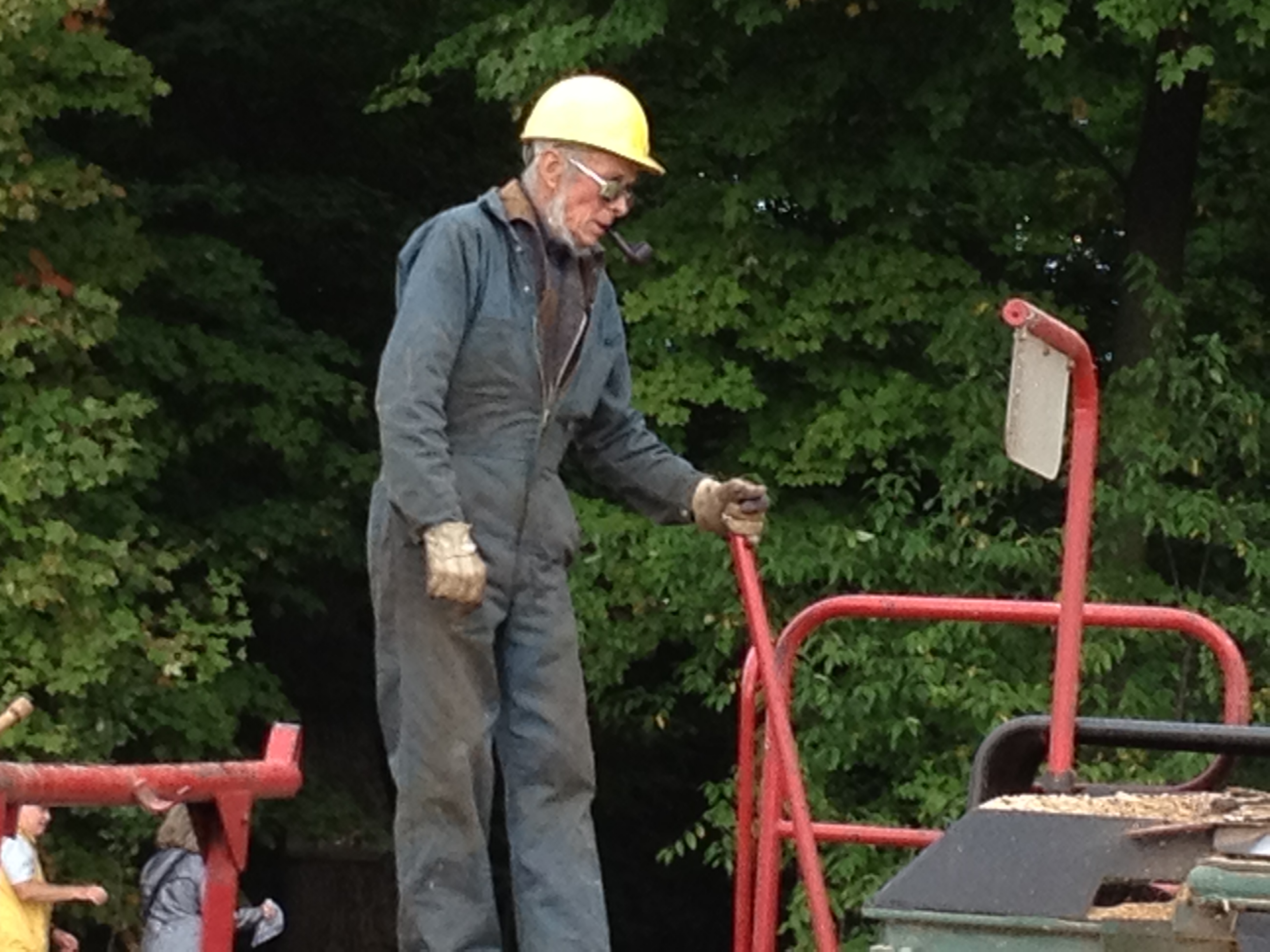
The plowing match was held not far from where I grew up in Kitchener, Ontario, and was filled with men who looked like this:

The pipe is my FAVOURITE PART

It was basically a whole day of mingling with old white farmer dudes, watching people use old-timey plows and admiring farming equipment. In a way, it was oddly comforting, or at least comfortingly familiar – I feel like a lot of my Kitchener childhood was spent around old white farmer dudes, so seeing their mutton chop beards and dingy overalls definitely gave me the warm glow of home.

Anyway, Theo basically had the time of his life. There were so many dang tractors at the show; there was even a tractor square dance. I kid you not. I bought Theo a toy tractor, which he promptly named Go and hasn’t put down since.

That night, after we got back to Toronto, I went over to my friend Caitlin’s place to help her pack for an upcoming move. Afterwards, I texted Matt to let him know that I was on my way home, and asked how Theo was doing.

The response I received was less than encouraging:

Bad. He just threw up.

Theo spent the rest of the night throwing up, and part of Saturday. Weirdly, he seemed totally fine in between bouts of vomiting – he would get ‘er done without much fuss, then run off and go about his business. He was fine all day Sunday, so we brought him to daycare this morning.

Unfortunately, Theo-the-puke-machine turned into Theo-the-poop-machine this afternoon. Which means that one of us has to stay home with him tomorrow.

So here’s where things get tricky: as Theo’s mother, and the person who has been his primary caregiver for, oh, pretty much his entire life, I feel like I should be the one to stay home. But I won’t be, because, as a person who has recently joined Elizabeth Wurtzel’s Club Of Serious Grown Ups And For-Real Feminists, I have to, you know, go to work. Matt’s job is in some ways more flexible than mine, and it was easier for him, in this particular instance, to take the time off.

This made me feel guilty. Because, really, doesn’t a sick baby need their mother most of all?

I’ve been feeling a lot of guilt lately. Granted, we’re only about two and half weeks into Theo’s daycare career, but I’m frustrated that I’m having so much trouble ironing out the bugs in our schedules. The hardest part is that I feel like I barely see him.

In a perfect world, I would only have to work two evenings a week, and would be able to pick him up mid-afternoon most days. In the real world, I’ve had to jump at a few subbing opportunities that have come my way (the first rule for new yoga teachers being Make Yourself Available), and I often find myself coming home before going to pick my kid up so that I can get a bit of housework done before Hurricane Theo returns.

I guess that what it boils down to is, what’s most important to me right now: being with my kid every moment that I’m not managing the studio, or trying to balance my Theo time with my building my career as a yoga teacher time? More and more often, I’m finding that building my career is winning out.

Why? Well, I spent the first nineteen months of Theo’s life devoting the vast majority of my time and energy to his well-being. I’m glad that I did, because that was what worked best for me and my family. But now that Theo is older, and really beginning to assert himself as his own person, daycare seems to be a really good fit for him. He’s excited to go, and he often talks about his friends there: Ella, Anand and Eliana have all come up recently in conversation. Oh, and my favourite, Jonah, which Theo pronounces “Gonad”.

It’s not that Theo and I didn’t have fun when we were home together, but I’ve realized something: this is a tough age for me. I don’t mean that Theo is difficult to be around, or that he’s throwing terrible tantrums (not yet, anyway), but I often find myself unsure of what he needs from me as a mother these days. When he was a tiny baby, it was easy to know what he wanted: me, and plenty of it. When he’s older, and we’re able to have proper conversations, I think I’ll find that easier, too. But this stage, this in-between I-need-you-but-don’t-need-you stage, is tough.

I have a hard time knowing when to inundate him with talking and singing and general in-your-faceness, and when to just let him play quietly. I feel like I spend so much of our time together chasing him away from things he’s not supposed to be touching, and trying to convince him to do whatever it is I want him to do. Maybe I’m kidding myself, but I think that being in daycare for a good chunk of the day makes him more eager to listen to me when he does get home. And instead of spending my time half-assing my way through housework while he desperately tries to get my attention (or dragging myself through it late at night, after he’s gone to bed), I can get it done quickly and easily while he’s not there.

And then there’s the whole work thing: these early days are important for networking, and I need to build a reputation as someone who is eager to work, and able to pick up classes on short notice. I’m creating a foundation for what will hopefully be a solid career. This is something that will, someday, benefit not just me, but Theo, and Matt, and any of our future kids too.

And, finally, it’s becoming increasingly important for Theo to learn that it’s not just mom who’s the solution to all of his problems. As Matt spends more and more time with him, Theo is learning that his father can be just as much of a source of tenderness and comfort as his mother can. He is learning that the world is much bigger than just one person and her boobs, and that people other than mama can be relied on to fulfill his wants and needs. The more time he spends apart from me, the better Theo is becoming at communicating just what those wants and needs are.

You guys, Theo is growing up.

I guess that what I ultimately want to say here is that being a feminist parent is about balance: learning to balance your kid’s needs with your own, and figuring out how that will shape your life. It’s about realizing that you, as a mother, do not need to be the be-all-end-all of your child’s life. You can learn to share the responsibility. You can figure out when to step back and say, I’m going to focus on myself for, like, five minutes and my kid will be just fine.

Most of all, it’s about accepting the fact that you have needs, too, and your kid does not always trump those needs, no matter what some magazine or parenting blog or conservative politician wants you to think.

Now, if only I could beef up Theo’s immune system and get him to stop bringing home these daycare bugs, I would be totally set.

An Open Letter to Nicola Kraus (or, another day, another angry-making article)

18 Sep

Dear Nicola Kraus,

So! I understand that you have discovered the one single method of parenting that works for everyone and you are proselytizing this fact via the Huffington Post. Well, that is good news! Please, tell me more!

No, but seriously: I find articles like yours incredibly difficult to read. Not only is the tone rude and condescending, but the content is full of assumptions and misinformation.

First of all, let’s talk about a few personal pet peeves that I have with regards discussions surrounding attachment parenting:

1. Dr. Sears did not come up with attachment theory. John Bowlby did. Doctor Sears may have popularized the idea and coined the phrase attachment parenting, but it’s a concept that’s been around since the 50s.

2. I bet that you actually practice attachment parenting, even if you don’t want to call it that. In fact, I guarantee it.

The basis of attachment theory is this, which comes from Bowlby’s seminal 1951 work, Maternal Care and Mental Health:

… the infant and young child should experience a warm, intimate, and continuous relationship with his mother (or permanent mother substitute) in which both find satisfaction and enjoyment.

Keep in mind that in the first half of the 20th century, women were getting a lot of not-so-great advice form doctors. They were told to put their babies on a schedule as soon as possible, feeding them only every three or four hours instead of whenever the baby was hungry. They were advised not to pick up their crying babies for fear of spoiling them, and there was also a pervasive belief that crying strengthened the lungs. I have a friend whose grandmother was instructed to wheel her infant son out into the garden every day and let him cry for half an hour. While her baby cried, she would sit at the table and weep because she hated it so much. But she still did it, because her doctor had told her to.

Attachment parenting, by contrast, suggests that you respond to your baby’s needs in an appropriate and timely fashion. Which, I am guessing, is probably something that you do.

Breastfeeding, cosleeping, babywearing, etc. are not necessary for attachment parenting. They’re tools that can help form a bond between parent and child, but they aren’t by any means required. Your friend Dr. Sears says the following:

AP is an approach, rather than a strict set of rules. It’s actually the style that many parents use instinctively. Parenting is too individual and baby too complex for there to be only one way. The important point is to get connected to your baby, and the baby B’s [his term for the set of tools mentioned above] of attachment parenting help. Once connected, stick with what is working and modify what is not. You will ultimately develop your own parenting style that helps parent and baby find a way to fit – the little word that so economically describes the relationship between parent and baby.

So even Doctor Sears says that you need to go with what’s best for you and your family.

I guess that what I really want to say with you is this: I’m happy that your kid is a great sleeper. I’m happy that you found a method that works for you. But what you should realize is: every child and every family is different.

For instance, my kid? My kid is 19 months and still sleeps in my bed, which I’m fine with. He didn’t end up there because I had romantic ideas about forming a bond with him. We have a crib for him. He hated it.

From just about day one, my son point-blank refused to sleep in his crib. He would fall asleep after nursing, I would swaddle him back up and gently (so gently) lie him down in his crib. Within ten minutes he would be screaming. I tried everything – waiting until he was deeply, deeply asleep to move him, putting him down when he was drowsy but still awake, keeping his spot in the crib warm with a heating pad – nothing worked.

On top of that, I was struggling with postpartum depression in the early months of his life, which was made much, much worse by my lack of sleep. Even if I had been comfortable with the idea of letting him cry it out (which I wasn’t), it would have meant several days of even less sleep. The idea of that would have made me cry, except that I already spent most of my time crying.

Once my son started sleeping in my bed, I found that it actually helped with my anxiety. For one thing, it was easy for me to check on him during the night to make sure that he was still breathing. It also made nighttime feeds easier – they were no longer this big production of getting him out of the crib, getting the nursing pillow in place, feeding him, then getting him back to sleep, putting him back in the crib, etc. Once he was in my bed I literally just had to roll over to nurse him and then roll back over once he was done.

The way that my husband and I parent isn’t for everyone. I get that. I try to be respectful of the way other people raise their children, and I think that by and large I’m pretty successful. As long as your kid is healthy, happy and well-fed, I think you’re doing a bang-up job. I would really appreciate it if you could extend me the same respect.

Oh, and by the way? When you let a 12-week-old cry it out, you are not teaching them to self-soothe, you’re teaching them that no one is coming to comfort them (and, by the way, there’s a world of difference between those two concepts). Science is behind me on this one. Science is awesome!

I totally agree with you on one thing, though – parenting is really fucking hard. The hardest part is that you have no idea what you’re doing, and you have to make important decisions on the fly while operating on little or no sleep. But the thing is, everyone is trying to do their best working with whatever they’re given. So why are you making people feel badly about the way they parent, when you already know that they’re doing their damnedest? How is your judgment and condescension helpful in any way? Just a few things you might want to think about.

Anyway, for the record, I don’t think that attachment parenting has made my kid clingy, or, you know, overly attached. In fact, I think the opposite is true: he’s so confident in our bond, so certain that I’ll be there to help him when he needs it, that he feels totally comfortable running off and doing his own thing. He’s happy to take off without looking back, because he just assumes that my husband or I will be close behind him. Because we always have been.

Sincerely,

Annabelle

p.s. You should maybe advise all of your sex-deprived friends to try getting it on in rooms other than the bedroom. The living room couch or the shower are two good suggestions. Tell them to be creative! If they really want to fuck, I’m sure they’ll find a way.

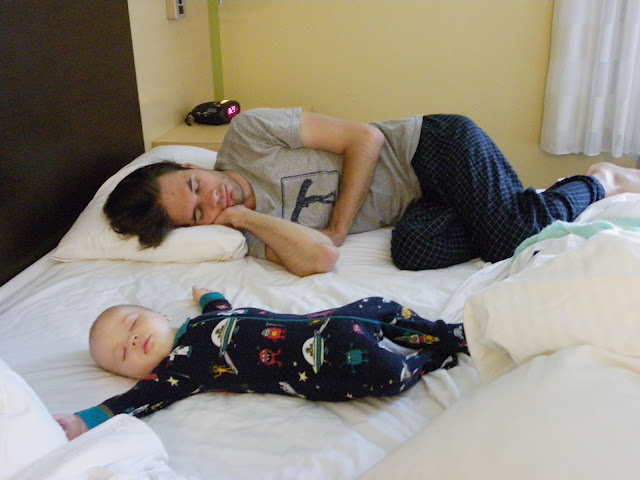
Theo, trying to claim the whole bed for himself

For The Dead

17 Sep

For The Dead

Adrienne Rich

I dreamed I called you on the telephone
to say: Be kinder to yourself
but you were sick and would not answer

The waste of my love goes on this way
trying to save you from yourself

I have always wondered about the left-over
energy, the way water goes rushing down a hill
long after the rains have stopped

or the fire you want to go to bed from
but cannot leave, burning-down but not burnt-down
the red coals more extreme, more curious
in their flashing and dying
than you wish they were
sitting long after midnight

Whenever I feel sad or anxious or overwhelmed, I read this poem. I find it weirdly comforting, especially the line about being kinder to myself. When I am stressed out and angry at myself over something, I often stop and say be kinder to yourself. For some reason it helps.

How To Talk To Pregnant Women (or, everybody just relax)

10 Sep

I don’t know what’s in the water these days, but it seems like a ton of my friends are having babies this year. I’ve been to three baby showers in the past two weeks alone.

Of course, since I am a super self-involved person, all of this baby time has brought me back to those oh-so-special days when I was gestating Theo. Watching my friends get advice from other friends and acquaintances (and sometimes total strangers) has reminded me of the things that I found super unhelpful to hear while pregnant, and  also the things I actually found helpful.

So! I’ve made this useful little guide for you!

First of all, let’s start out with the basics:

1. DON’T: assume someone is pregnant, unless they actually, like, TELL YOU THEY ARE PREGNANT.

I know that this one seems obvious, but, sadly, it still needs to be said.

DO: WAIT UNTIL THEY TELL YOU THEY ARE PREGNANT. I CANNOT STRESS THIS ENOUGH.

(A brief anecdote: the first time I went out without Theo was about a week after he was born. I went to a fancy baby store to buy a fancy nursing bra. I was trying to figure out my size when the clerk helpfully told me that my chest would be bigger once I had the baby and my milk came in.

If you ever want to see a woman who is recently postpartum cry horrible hormonal tears in public, please go ahead and ask her when the baby is due. It makes her feel really great!)

2. DON’T: talk about how huge your friend’s belly is.

Some women probably (maybe?) like this, but definitely not all of them. Unfortunately, it’s really hard to be sure which category someone falls into until you actually say it, so it’s best just to keep your mouth shut.

DO: tell her how beautiful and glowing she looks. Basically every woman loves to hear this. I know, I know, a while ago I was all, try not to give people appearance-based compliments, but I think pregnancy might be the exception to that rule.

3. DON’T: tell her, Wait until the baby comes! You will feel so differently about everything! 

While this is probably true (although maybe not – everyone’s experience varies), it is super annoying to hear. Also, it’s totally unhelpful – it’s really the kind of thing every parent has to figure out for themselves.

DO: share your experiences of what your expectations were like while pregnant, and how things were different once you had the baby. It’s helpful to hear stories about specific things that people have gone through, and it’s much better to hear it phrased as here’s how I felt rather than here’s how you will feel.

4. DON’T: tell someone how bad worrying is for the baby.

I heard this a lot whenever I tried to communicate my pregnancy-related anxieties to people. I found it really unhelpful because, while I understand that what these people were trying to do was get me to relax, what they were actually doing was give me one more thing to worry about . Like, great, I’ve still got all these other things I was feeling anxious over, and now I have to worry about whether all this anxiety is hurting the baby. DOUBLE WHAMMY.

DO: ask your friend about specific anxieties they are having, and, if possible, talk them through. If you have something from your own experience that you can relate this to, that is super helpful! If their anxieties seem overwhelming or debilitating, suggest that they talk to their doctor. Above all, remind them that being anxious while pregnant is very, very common.

5. DON’T: talk about how figuratively shitty everything will be once the baby comes.

It’s true that things will be super nuts once the baby comes! But chances are your friend already knows that, and doesn’t need to be told to get in all their sleep/having fun/quiet alone time before they pop. Also they are probably happy that they’re going to have a kid, so it’s not really cool to make them feel as if they’re making a huge mistake. They’ll have plenty of time to figure that out on their own (kidding, kidding).

DO: tell them how literally shitty everything will be. I feel like the copious amounts of poop my offspring produced was a huge surprise to both of us, especially Matt. I remember him looking at the meconium and saying, it’s like a jet of concentrated evil coming out of his backside.

6. DON’T: tell pregnancy horror stories.

No pregnant woman wants to hear about all the terrible, horrible things that could possibly go wrong while the bun is still in the oven. Sure, some people enjoy hearing these kinds of gruesome tales, but there is a time and a place for everything. Talking to your knocked-up friends is neither of those.

DO: try to keep things positive.

If the desire to tell scary stories comes up as the result of a pregnant woman confiding in you about a specific issue she’s having, please, please don’t tell her that a friend of a friend experienced exactly the same thing with tragic consequences. Try to keep in mind that it’s pretty unlikely that you’re a medical doctor (and if you are, you should be dispensing medical advice, not anecdotes), and b) you’re almost definitely not this specific person’s doctor. Instead of scaring your friend, reassure her that everything is likely fine, while at the same time urging her to talk to her doctor or call the hospital.

7. DON’T: go on and on about how happy your pregnant friend must be, or else say things like, gee, you don’t seem very excited about this baby.

DO: keep in mind that pregnancy can be an emotionally conflicting time for a lot of women. Many people find pregnancy to be traumatic for all kinds of reasons, ranging from  body image issues to past complications or losses.

Just offer a warm congratulations, and then follow your friend’s lead. Making them feel like they should be happier than they are can add an extra layer of guilt onto what might already be a complicated situation.

8. DON’T: be judgmental or rude about parenting choices.

This goes for everything from formula feeding or hospital births to co-sleeping or having a round-the-clock nanny.

Here’s the thing: you don’t know what in this person’s life has lead them to this decision. Sure, maybe it’s a decision you wouldn’t have made, and maybe it’s something that you disagree with – but as long as they plan to keep their child safe, warm, happy and fed (and chances are that they do), then it’s none of your business.

DO: offer advice and resources if the person seems open to it. Tell them about your own experiences if they want to hear about it. If not, just bite your tongue, and keep in mind that things change so dramatically with the arrival of a new baby that many of your friend’s plans will probably end up flying out the window anyway.

9. DON’T: just flat-out contradict someone if they say something that you know is wrong or inaccurate.

Honestly? This will just make them feel stupid and maybe a little defensive.

DO: explain to them why it’s wrong and offer information and resources to back your claim up.

For example, I had a friend who was told that if the baby only nursed on one side per feeding, she should pump the other breast once the feeding was done so that she didn’t get mastitis. I explained to her that up until about six weeks, milk production is hormonally driven, but after that point it becomes supply and demand. If you are nursing your baby AND pumping, then you are signalling to your body to produce more milk. This is fine if you want to keep frozen milk on hand for a babysitter, or for when you return to work, but it’s not necessary if you’re feeding on demand, and definitely won’t prevent mastitis.

I also told her that she should do whatever she feels comfortable doing, and that she’ll figure out what works best for her once the time comes (this sentence in particular is key).

Also, keep in mind that there is a study to back up just about everything, so your friend might already feel like they are well-educated on whatever it is you’re talking about. If they aren’t interested in what you have to say, then maybe just let this one slide. Pick your battles.

For example, if a person has decided after a lot of research that they think it’s best for the baby to dangle out a second-storey window from a Jolly Jumper harness, that argument is definitely worth pursuing. If it’s something more minor, just let it go.

10. DON’T: stick to only pregnancy and baby-related topics.

Seriously, this gets really annoying. When I was pregnant, there were days when I felt like I was nothing more than a gestating uterus on legs. It’s not that I never wanted to talk about pregnancy and babies (because I totally did!), just that that wasn’t all I wanted to talk about. Sometimes I wanted to feel like a smart human being with a smart human brain who thought about smart human things.

DO: keep in mind that your friends are people first, and pregnant ladies second. Try talking about a range of subjects, including but not limited to: books, movies, food, deep philosophical thoughts, Shakespeare’s plays, why Richard III maybe wasn’t such a bad guy, the weather, interior decorating, Wes Anderson films, why Wes Anderson should make a film about Richard III, etc.

Now go forth and converse like a normal human being with your pregnant friends!

Also, feel free to add suggestions for additions to this list in the comments.

“Hmmmm I’m feeling a little TOO content with my pregnancy. I wish someone would say something SUPER JUDGMENTAL to me right now.”

On fear and change

8 Sep

A few years ago, I had a somewhat serious cycling accident. I mean, not super serious; I didn’t die, wind up in a coma, or sustain a massive head injury. Still, it was bad enough that it caused a major disruption in my life.

I had just started the ASL Interpreter program at George Brown College, and, on my fourth day of classes, I was running late. I am normally an insanely wary cyclist, especially when it comes to streetcar tracks, but that day all I could focus on was getting to school on time.

It happened at Church and Adelaide. I was preparing to make a left, and, in the process of moving into the turning lane, was looking back over my shoulder to make sure that there were no cars behind me. Suddenly, I felt the sickening sensation of my front tire leaving the pavement and sliding over the metal of the streetcar tracks.

I tried to correct myself before my wheel went into the groove, but I couldn’t, and I felt a shuddering thunk as my front tire fell into the track. I tried to stop, but I had too much speed and momentum. My back wheel slid out to the right, and I felt my bike jackknife beneath me.

I am going to fall, I realized. In the middle of traffic. I might die.

There was absolutely nothing that I could do.

Weirdly, my memory is a total blank from from the time I realized that I was going to fall until the moment when I was suddenly sitting on the hot, late-summer pavement, watching my bike’s wheels spin impotently in the air. I didn’t lose consciousness or anything like that; I guess my mind just kind of shut down, unable to process what was happening.

By the time I came back to myself, a crowd had started to gather. Two people convinced me to get out of the middle of the road (for some reason I actually needed to be talked into this), and helped me over to the curb, while another called an ambulance. A third wheeled my bike to a side street and locked it there, leaving me with a map of where to find it once I was able to come get it. Two women waited with me until the paramedics came.

At the hospital I found out that I’d fractured my tibial plateau (part of the knee joint), and needed both a bone graft and a metal plate. Because I wasn’t technically emergency surgery, I had to wait until a slot opened up for me, which took three days. During that time I wasn’t allowed food or water from midnight until 8 am, just in case an operating room became available. I had to share a hospital room with three other people; I had to listen to a doctor and a group of interns tell a woman that she was going to die. They closed the curtains around my bed for that, but that did little to shut out the sound.

Recovering from surgery was hell (although I did quickly develop a fondness for strong painkillers). I couldn’t bear weight on my leg  for two months, and then when I could, I had to have physiotherapy to re-learn how to walk. I was in constant pain, and so, so tired; everything seemed like such an enormous effort. Getting dressed and leaving the house was too much for me some days. I mostly couldn’t do anything except lie on the couch, read trashy books and pop pills. School was out of the question, so I dropped out. The whole life that I’d mapped out for myself, the one that was supposed to rescue me from the drudgery of working retail, crumbled.

But, somehow, none of that was as bad as that one, single moment on my bike when I’d realized that I was definitely, for sure, not kidding going to fall. The scariest part of that was not the idea that I might die, but the fact that I had no idea what was going to happen.

Often change, especially change that comes about as a result of a decision that I’ve made, brings me back to that same panicky fear. To extend the metaphor, I am that same careful cyclist in my life, always trying to make the best choices – obeying stop signs, signalling when I change lanes, trying to stay aware of the traffic around me. But really, any choice could result in a terrible fall – I could be doing everything right, and still end up lying in the road, unable to walk.

How can I ever be sure of not falling? How can I be sure that going back to work is the right choice for our family? What if I can’t succeed as a yoga teacher? What if daycare ends up being totally wrong for Theo? When I try to answer any of these questions, I come back to that same terrifying response: I have no idea what’s going to happen. Sure, I can make assumptions, based on research that I’ve done or past experiences, based one what I know about myself and other people. But I can’t know for sure, and that is fucking scary.

On bad days, even little decisions can seem overwhelming – whether or not to publish a blog post, what to have for lunch, what to do in the evening after Theo goes to bed. Each one carries with it the potential of regret – what if I hurt or offend someone with my writing? Or what if it’s no good, or not ready to post? What if I take one bite of my food and realize that it’s not what I really wanted? What if I’m spending too much time online, and not enough with Matt?

Some days it seems like everything has the potential for disaster, or at least disappointment.

So what’s the answer? Try to plan out my life to the point where I feel like I have little or no need to make choices? Hide in my house and try to mitigate the likelihood of fear and disappointment? Tell myself to just get over it and stop caring so much already?

I guess that the best that I can do is continue to take measured, studied leaps and do my best not to fall. To try to take risks when necessary, and even sometimes when not necessary. And most of all, to remember that falling is not the end of the world, and that everyone falls sometimes.

At the end of the day, I just have to hope that every fall is as lucky as the one I had that day at the corner of Church and Adelaide. I have to hope that I am always so fortunate as to have a crowd to help me to safety, and then a team of people to put me back together. I also have to realize that even if there is no one there to help me, I am capable of helping myself.

Tonight is a rough night. My mind is all snarled up with fear and uncertainty and self-doubt. These past few weeks have been one, long preparation to leap, and, having now jumped, I’m still not sure if I can see the place where I’m supposed to land.

I promise I’ll let you know if and when I get to the other side.

Yes, this is actually me.

If This Isn’t Nice, I Don’t Know What Is

3 Sep

I teach a yoga class for my friends on Sunday afternoons. Usually I get three or four people, but today almost no one was able to make it. One friend was working, another was out of town, and a third was eating deep-friend bacon-wrapped Mars Bars at the Ex. You know, the usual Labour Day weekend stuff.

My friend Susan, however, did show up, but both of us were having a hard time getting up off the couches in the lobby and going into the actual studio. We stalled ourselves by talking about Richard III and Anne Boleyn. We promised ourselves that in five minutes we would get up. We even tried bribing ourselves with a short practice and a long savasana.

None of this worked. We just couldn’t be tricked into practicing.

Instead we hung out, discussed about my favourite vacation idea (The Dead Author Tour of New England – it is going to be amazing), critiqued the trailer for the new Anna Karenina movie (you guys, I can’t even), and talked about how difficult it is for both of us to take time off  – we both feel like we need to relax but then get stressed out over how much not-relaxing we end up doing.

Finally, Susan asked if I maybe wanted to go get a pedicure. I wasn’t super stoked on the idea, because I’d just painted my toenails a few days earlier, but agreed that we should do something. Something other than lolling around on couches, I mean. So we left and started walking north along Yonge street.

Trudging uphill in the humid, late-summer air, I suddenly realized what I wanted to do: I wanted to sit in the park, drink grownup drinks and read magazines.

Let’s do it, said Susan.

We sat in the park, we drank, we read excerpts of articles out loud to each other. We talked the way pre-adolescents do, about everything and nothing, mixing big, smart-sounding ideas with meaningless trivia.

At one point, embarrassed about confusing A Room With a View and A Room of One’s Own (don’t judge), I flopped back onto the grass and stared up into the leaves of the tree we were sitting under.

Whoa, I said, you have to see this tree.

Why, asked Susan, lying down beside me, have we been reading magazines like chumps when we could have been looking at this tree all along?

That was a fair question.

It was one of those moments where everything is absolutely perfect; a moment where you wouldn’t change a thing, not the colour of the sky, or the temperature of the air, or even the tiny ant crawling up your leg. It was a moment so good that I was already experiencing nostalgia for it, even while it was still happening.

It made Susan think of a quote from Vonnegut’s A Man Without A Country:

If this isn’t nice, I don’t know what is.”

It made me think of the part in the Stand By Me when Older Gordie Lachance, who’s narrating the movie, reflects back on Vern (played by an itty bitty Jerry O’Connell) saying, this is a really good time:

Vern didn’t just mean being off limits inside the junkyard, or fudging on our folks, or going on a hike up the railroad tracks to Harlow. He meant those things, but it seems to me now it was more and that we all knew it. Everything was there and around us. We knew exactly who we were and exactly where we were going. It was grand.”

Although I’m not sure that either Susan or I could say with any conviction that we know exactly who we are or exactly where we’re going, it did seem that the whole of what we were experiencing was greater than the sum of its parts. It was more than magazines and booze and the hazy, golden early September air around us – yes, it was all of those things, but it was also how easy happiness was in that moment.

I often feel as if I’m constantly chasing happiness, whatever happiness means, only to have doubt or fear or anxiety push it just out of reach. And yet, here I’d achieved it effortlessly. How did that happen?

Later (actually, a fair bit later than I’d originally intended), I walked home to my family. I opened our front door to find Matt and his brother Adam feeding Theo grapes. I mumbled an apology for my lateness, and Matt said, that’s okay.

He didn’t say it in a way that sounded angry or begrudging, even though I’d delayed everyone’s dinner by at least an hour. He said it in a way that meant, I don’t mind and I hope you had a good time.

After supper, as I did the dishes, I could hear Theo shrieking with laughter as he played with my brother-in-law in the other room. I thought, This is good. I am lucky.

And then, more than anything, I wanted to write this out. When things get hard again, as they inevitably will, I want to have this memory preserved somewhere outside of my head. I want it to be able to exist perfectly in and of itself without my mind distorting it. I want to have this here to remind myself that happiness is not only possible, but even, sometimes, easy.

I want to remember that I am lucky.

And if that’s not nice, I don’t know what is.

Oh, and also I found this amazing shirt at Book City. See? Lucky!

Daycare (or, what the hell am I doing here?)

29 Aug

One of my (many and abundant) gifts is that I have a really, really great sense of direction. When we were in Paris a few years ago, I was able to navigate all the twisty-turny alleyways armed with only a small book of street maps and my wits. Although I couldn’t have told you which direction was north, I somehow always had an innate sense of where the Seine was, and would direct us accordingly.

The flip side of this is that feeling lost or disoriented is incredibly terrifying for me. This includes feeling lost and disoriented in a whoa what street am I on and how did I get here? way and also in a larger, more general whoa what the hell is happening in my life right now? sense.

Change is very disorienting for me. I am the kind of person who loves routine, who thrives on knowing what will happen next. I eat the same thing for breakfast every morning. I am not the kind of person you want to take with you on a spontaneous backpacking trip to the Amazon. I find it difficult and painful to break out of any routine, even one that is seriously not working for me. Letting go of a routine makes me feel unmoored, as if I’m sitting in an oarless, rudderless boat, watching the shoreline shrink as I drift out to sea. I usually experience a brief moment of breathless euphoria at my newfound freedom before total panic sets in.

All of this has been a very verbose way of leading up the fact that this morning, I registered Theo for daycare. Next week I am going back to work full time.

Let’s get a few things out of the way: I think that daycare is awesome. I went to daycare and loved it. I think that it will be hugely beneficial to Theo, in part because of the socialization it will offer him, and also because of the structure he will have there. Although this particular daycare costs a little more than we were hoping to pay, it came highly recommended by a friend, and everyone I’ve mentioned it to has something positive to say. I am really, really happy we got a spot there.

But I still feel panicked.

Partly it’s because I’m worried about how the change will impact Theo. Will he understand that I’m coming back at the end of the day? Will he think that I’ve abandoned him? Will he miss me unbearably?

Another thing that freaks me out is the fact that no one there will know Theo as well as I do. How will they be able to interpret his needs properly? How will they understand what he’s saying? Will they be able to learn to speak Theo?

I was talking about this last night with Scott, a super lovely, laid back philosopher/yogi who teaches at our studio. He had some really smart things to say, but when I tried to repeat them to Matt, I couldn’t get the words right. So I emailed Scott and asked him to remind me of what he’d said, and this is what he sent back to me:

What you said to me was that you were worried people would fail to be as a good a mother to Theo as you are.  That they would not be able to read his subtle gestures and give him what he needs when he needs it.

I said that that was exactly what he needs.

“The good-enough mother…starts off with an almost complete adaptation to her infant’s needs, and as time proceeds she adapts less and less completely, gradually, according to the infant’s growing ability to deal with her failure” (Winnicott, 1953)

Having all of his needs met in a relationship were no one is failing to provide for him as he demands actually turns out to be disadvantage, as Theo is coming to know who he is precisely through those failures.  These are not grand or abusive failures where he becomes scared to develop into his own self, but just the right kind of misattunement that will occur at a daycare where someone doesn’t know him as well as you. And when misattunement happens those caretakers will be able to support him and help make reparations with him.  This is what is actually so important: that his caregivers fail to meet his needs and yet in an environment of love they support him through that failure and help him realize that he is a unique person in relationship with others who can survive these failures of connection.

It is what used to happen in extended family care all the time and now must happen in daycare scenarios. It’s an important part of child development that Theo needs at this time. Sounds weird but you send your child off to an other who you expect will not do as a good job as you so that Theo can grow into the independent and capable person he needs to be.

Which was exactly what I needed to hear.

The third facet of my panic is all about me:

What if I don’t like working?

I will be managing a yoga studio (which I already do, but I will be putting in more hours), and trying to pick up some classes to teach to supplement our income. I’ve never done this as a full-time job before. Scratch that, I’ve never taught an actual class, for real money before – everything I’ve done so far has mostly been volunteer work or freebies for my friends. What if I hate teaching yoga as an actual job? What if I can’t find any classes to teach?

What if I fail?

Looking at it one way, I will paying twice the cost of the average university tuition in order to put Theo into daycare so that I can go work at a job that I’m not sure I will love, a decision that might leave both of us miserable. In this scenario, both of us are in the oarless, rudderless rowboat, heading slowly but surely for open water.

Looking at it in another way, maybe this is the only way (or, at least, the best way) for us to grow. We’ve spent a year and a half living in an almost totally symbiotic relationship; maybe now it’s time for us to break free of each other and begin to discover (or rediscover, in my case) who we are as unique individuals.

Maybe we will both love this new arrangement. Maybe he will flourish in daycare, and I will realize that I am finally doing work that I love and feel passionate about.

Perhaps this will give us the chance to develop the skills we need to make or find our own oars, or discover a way to get back to shore under our own power.

Or maybe we will learn to love living at sea and, instead of turning back to what is familiar to us, we will take our homemade oars and chart a course for adventure.

Image