Tag Archives: anxiety

Winter

30 Dec

I am not a winter person. Given my choice of the seasons, I’ll pick summer every time. I love the heat, and I even love the humidity. I like it when stepping out my front door feels like walking into an oven. I like the sun, the warmth, and the long evenings that are perfect for picnicking or taking your kid to the park or drinking sangria on patios with friends. I love lying in the grass and reading for hours on end. I love summer.

Winter is a tough time for me. It’s not just the fact that it’s so cold that, after coming in from a long walk, I have to stand in a scalding hot shower for fifteen minutes until I feel warm. It’s not just the fact that my muscles ache because the cold makes me tense up, makes me walk around hunched over in a desperate effort not to freeze to death. It’s not even the fact that it’s already too cold for me, and I know that it’s going to get colder still. It’s more than that, and it’s subtler than that. It’s the light, both the dim, chilly quality it assumes this time of year, and its waning quantity, meaning that we only get to see the sun for a few paltry hours every day. Even though we’re past the solstice and, logically, I know that the days will be getting longer from now until midsummer, it still, somehow, feels as if the days are growing shorter and darker as we head into January.

These days I feel as if I’ve lost the capacity for joy. I’ll catch myself mid-laugh and realize that I’m faking it, and I’m faking it so well that I’ve nearly got myself convinced. In the same way that it’s sometimes hard for me to believe that spring will ever come again, it’s also hard to believe that anything will ever make me feel good or happy again. I have these thoughts, like, hey, maybe at the beginning of my life I was handed out a finite number of good experiences and now, in the winter of my 30th year, I’ve somehow managed to spend the last one.

Part of it might be the fact that everyone seems to be making their year-end posts, tallying up all their successes and bundling them together into one neat little blog post package. I thought about doing one of those, but I know that I won’t. Every new year always seems to me to be like a fresh, white sheet of notebook paper, but by December 31st it’s so marked up, so wrinkled and worn, so covered with revisions and smudges and holes where I rubbed the eraser too hard that I can’t make sense of it anymore.Rather than dig through my year to find material for a year-in-review post, I just want to throw the whole thing out, baby, bathwater and all. As 2013 approaches, 2012 is still too close to give me the perspective I would need, and all my hurts and failures feel too fresh for me to be able to dissect them. Even my successes seem slippery and hard to pinpoint. The other day, as I was watching the hundreds of comments going up on the article I wrote for the Good Men Project, I messaged my friend Audra and said, “Is this what success is supposed to feel like? Because I feel awful.”

Sometimes succeeding feels just as bad, just as anxiety-inducing, as failure does.

Mostly I just want everything to be over. I don’t mean that I want to die or anything like that, but just that I’m so tired of trying to guess what’s coming next. I’m so tired of trying to figure out what to do next, how to take my next step, or which direction I need to go. I want all of my experiences to be over and done with so that I can sift through them and sort them into boxes labelled “good things” and “bad things.” Then, once I’ve done that, I’ll be able to sit back, write a life-in-review post, and judge whether, when looking at the big picture, the scale tips more towards happy or sad.

I’m so tired. So goddamn tired. The worst part is that I can’t even begin to imagine when I won’t feel like this. Maybe next year? Or maybe when Theo’s in grade school? High school? When he moves out? I can’t help but feel like it’s partly my fault, or even mostly my fault, for not sleep-training him, for breastfeeding for so long, maybe even for choosing to have a kid in the first place. I love my son, but I don’t think I can function like this for much longer. Then again, what would not functioning even look like? Will my legs just give out one day, my knees buckling under my weight, and I’ll have to lie on the ground until I’m rested enough to get up again? How do these things work?

If you asked me what I needed in order to feel better, what it would take to make me feel happy, I wouldn’t even be able to tell you. That’s what’s hardest about all of this: feeling as if it’s whatever it is that’s going to save you is totally beyond your control. If there is something that can save you. If that something, should it exist, ever manages to find you.

Sometimes I think that all of the little things that happen throughout my day, the meals, the conversations, the rote interactions, are nothing more than activities designed to get me from one minute to the next until I can finally lie down in my bed at night and sleep (or not). When seen this way, a life is nothing more than a string of days, days made up of pointless experiences meant to propel you through time. I mean, of course my experiences aren’t meaningless. Or maybe they are. I’m not sure.

I’m trying to think of some kind of life lesson to put in here, some kind of moral to this story, but I’m coming up totally dry. Maybe you can try to find your own moral, because sifting back through this mess of feelings seems like so much work. Everything seems like so much work, to be honest. I feel as if I’ve been sucked totally dry of any and all will or ambition or desire.

The winter here is beautiful. The snow, and the quiet, and the bare trees are beautiful. There’s a hush this time of year that you never feel in the summer, and I know I would miss it if I never felt it again. I don’t hate winter, and I don’t even necessarily need for it to be over, like, right now. I don’t even think I would like to live somewhere that was hot and sunny all year long. I just need something to pin my hopes on, something to look forward to, something to hold out for. I need something to focus on when everything seems so dark and cold that I don’t think I can stand it for one minute longer.

I just need to know for certain that spring is going to come.

IMG_2478

Violent Crimes and Mental Illness

16 Dec

In the wake of the shooting at Sandy Hook Elementary School, there’s been a lot of talk about mental health. Comments like, “Now is the time to talk about mental illness!” and “We need mental healthcare reform NOW before this happens again!” are littering my Facebook and Twitter feeds. Many people, people that I care about and whose opinion I respect, want to use this tragedy as an opportunity to talk about how America’s mental healthcare system needs to change.

But you know what? Now is not the time to talk about that.

Don’t get me wrong, I am hugely in favour of mental healthcare reform, both here in Canada and in America. We need better access to mental health professionals, and shorter wait times to see the ones that are available. We need to end the system of patient abuse that occurs in group homes across the country. We need to make therapy and expensive medications more accessible to people who may not have a steady income. We need to increase the monthly payments to those who are too ill to work, because what they receive now from the government is not enough to live on.  We need to give people with mental illnesses the tools they need to advocate for themselves, and we need to work towards ending the stigma that comes with the term “mental illness”.

I do believe that talking about our mental healthcare system is something that we need to do, and badly.

What we don’t need to do is conflate mental illness with shooting 20 small children.

See, the thing is, mental illness is a pretty broad umbrella term that covers all kinds of things. Depression is a mental illness. So are anxiety, anorexia nervosa, bulimia, PTSD, bipolar disorder, schizophrenia, obsessive compulsive disorder, and many, many other things. And yes, some symptoms caused by some of those illnesses can cause violence, but, given the fact that 1 in 4 Americans suffer from a diagnosable mental illness in any given year, I think that we can safely say that most people who are mentally ill are not prone to going on shooting sprees. In fact, studies have shown that people living with mental illness are four times as likely to be the victim of violence.

It has recently been reported that Adam Lanza was, according to his brother Ryan, suffering from both Asperger’s syndrome (which is on the autism spectrum) and a personality disorder. However, according to the same report, the brothers hadn’t been in contact since 2010, and it is currently unknown whether Adam Lanza had received further diagnoses since then. But the term “mentally ill” was being tossed around for a while before Ryan Lanza’s statements were made public, and, from what I can see, there is still a lot of assumption going on about what Adam might or might not have suffered from.

I know that most of the people who want to talk about mental illness right now are good people. Like the rest of us, they’re trying to figure out what just happened and why, so that we can make sure that we never have to live through a tragedy like this again. I’m sure that these people think that it’s kinder, more humane to say that Adam Lanza was mentally ill, rather than just calling him a monster. Unfortunately, what they’re actually doing is making mental illness the scapegoat here. What they’re doing is adding to the stigma that surrounds mental illness.

At the end of the day, saying things like, “Now is the time to talk about mental illness,” is not going to help anything. It’s not going to make an event like this less likely to happen again. In fact, if anything, by continuing to spin the narrative that the mentally ill are violent killers, you are probably making it less likely for those with mental health issues to seek treatment. By making mental illness out to be this big, scary thing, you are making it more likely that friends and family will ignore any signs of problems in their loved ones out of fear and denial. By simplifying the gun control debate to something like, “Well, mentally ill people just shouldn’t have guns,” you are contributing to the idea that people with mental illnesses are scary, dangerous and cannot be trusted.

And although I don’t feel like it should need to be said, let me reiterate: yes, I want to talk about our mental healthcare system. Yes, I want to talk about mental illness. But I don’t want to talk about it today, not when all anyone can think of are those 20 children whose lives were lost. I don’t want to talk about it when the term “mentally ill” conjures up images of a young man storming into a school, armed to the teeth and ready to open fire on innocent people. Because while there are people whose illnesses cause them to be violent, and those people certainly do need a better healthcare system, the vast, vast majority of people who desperately need to see mental healthcare reform will never harm anyone.

I guess that what I really want to say here is that this hits home for me. I’ve been pretty open on here about living with depression and anxiety; I received my first diagnosis when I was 16, which means that I’ve been grappling with these illnesses for nearly half my life. These disorders are a part of me, and I try hard not to be ashamed of them.

So please keep in mind that when you talk about mental illness, about the tragedies it causes and the lives it takes, you are also talking about me.

PhrenologyPix

How We Talk About Mental Illness

10 Nov

Jared Lee Loughner was sentenced yesterday. In August of this year, he pled guilty to 19 of 49 charges, including first degree murder, after going on a shooting rampage in Tucson, Arizona. His actions left six people dead and injured twelve others, including former Representative Gabrielle Giffords. Yesterday he was given a sentence of seven consecutive life terms in prison, with no chance of parole. Jared Loughner will spend the rest of his life in jail.

I remember this shooting vividly. It happened on January 8th, the day I was admitted to the hospital on bed rest at 34 weeks pregnant. I spent two weeks in the high risk antenatal unit, with only books and my computer to fill long hours spent in an uncomfortable hospital bed. Because I spent so much time online, I followed the shooting and its aftermath intently, metaphorically holding my breath as I, along with so many other people, waited to see if Gabrielle Giffords would live after taking a bullet to the head during the attempt on her life.

That’s what the shooting was, after all – an attempt to assassinate Giffords, whom Loughner hated for many reasons, chief among which was that she was a woman. In fact, he’d said repeatedly, both online and in person, that women should not hold positions of power. That was why he’d shown up there that day, why he’d brought a 9 mm Glock 19 semi-automatic pistol to a public meeting held in a supermarket parking lot  – because he couldn’t stand the idea of a female member of congress. The thought chilled me, as I’m sure it did many other women.

I’ve continued to keep up with Loughner’s legal proceedings, in part because of the mixture of fear, fascination and revulsion the shooting inspired in me, and partly because, in my mind, this event is somehow bound in the circumstances surrounding Theo’s birth. There was something so strange about sitting in a hospital, doing my best to ensure that a healthy new life came into this world, while someone else worked equally hard to take another life, or rather, several lives, out of it.

I’ve read a lot about the shooting.

I’ve read about Gabrielle’s amazing recovery, and her struggles to regain her mobility and independence.

I’ve read about Christina-Taylor Green, the nine year old who was among those killed.

I’ve read about the other victims, and how this tragedy has impacted their lives and the lives of their families.

Mostly, though, I’ve read about Loughner. How at first he was declared unfit to stand trial after a federal judge ruled that he was mentally incompetent, saying, “At the present time, Mr. Loughner does not have a rational understanding of these proceedings.” How he was given a diagnosis of schizophrenia, and was found to suffer from delusions and disorganized thinking. How, when he finally was deemed fit to stand trial, he was so drugged that he could barely talk. How he still resists being medicated, and has to undergo forcible treatment at the hands of prison officials. How he often doesn’t really seem to understand what happened that day, and has stated in court that he believes that his assassination attempt was successful, and that Gabrielle Giffords is now dead.

It’s pretty clear that Mr. Loughner is seriously ill.

I’ve been reading some of the victim impact statements today, and I’ve been surprised at how some of the victims talk about his illness. Take, for example, what Mark E. Kelly, Gabrielle Giffords’ husband, had to say:

“You tried to create for all of us a world as dark and evil as your own. But remember it always: You failed.”

I found this jarring, to be honest. Let’s be really clear here: I think that Loughner’s actions were, indeed, evil. I know that a mentally ill person’s “world” or mind or whatever term you want to use can certainly be called dark. However, it bothers me that Kelly would refer to the delusional world that Loughner lived in as evil. It also bothers me that Kelly seems to believe that Loughner had some kind of agency over his actions, as if he wasn’t driven by the illness that gripped him body and soul.

Another statement that I read said the following:

“We’ve been told about your demons, about the illness that skewed your thinking.

It’s a painful saga, a tale of missed opportunities and lack of support, of the appalling absence of attention to your behavior. Your parents, your schools, your community –- they all failed you.

That is all true, but it is not expiation. It is not enough. There are still those pesky facts.

You pointed a weapon at me… and shot me… three times.”

While the victim, Ashleigh Burroughs, acknowledges that Loughner was ill, she seems dismissive of his “demons”, demanding, instead, that he answer the “pesky facts” – as if he hadn’t already tried to answer them, only to come up with nonsense, jumbled facts and recollections of the day that are flat-out untrue.

I am not here to criticize Kelly or Burroughs, and I am certainly not here to diminish what they went through. They’ve seen and experienced things that I hope to never, ever encounter. I am not saying that how they are dealing with this is wrong, or that what they said is wrong. What I’m saying is that the way that we, as a culture, talk about mental illness is fucked up.

The things is, this hits close to home for me, because mental illness is something I’ve struggled with. Still do, in fact.

It’s not something I really talk about, ever. I’m deeply uncomfortable even as I type this out, but I want to share this with you, so that maybe you’ll understand where I’m coming from.

When I was in high school, things were tough. I felt sad and hopeless, frequently without any concrete reason. I cried, often, both at home and in public. I wonder, now, if my social isolation lead to this, or if my isolation was a product of how miserable I was. Chicken or egg, right? Certainly both lead to a sort of vicious circle of being alone, then being sad because I was alone, then having no one want to be around me because I was so annoyingly, unendingly down on myself and finally ending up, once again, alone.

When I was sixteen I told my mother about how I felt, and she took me to see our family doctor. He gave me a prescription for Paxil and referred me to a therapist. I hated therapy and stopped going after a few months; the medication didn’t seem to do much, so my doctor increased it, and then increased it again. I couldn’t sleep at night, and I was exhausted all day, sometimes napping on my desk during class. I couldn’t concentrate, and often left my homework unfinished because I was too tired or unfocussed. My grades started to slip, and my teachers grew frustrated with me. One even recommended that I be removed from the special arts program that I was part of. I went from being an A student to barely pulling Cs and Ds and the grownups in my life tsked, shook their heads and told me that I would have to work harder. I failed grade 11 math the first time, and then, the second time around, desperate to pass, I cheated on a test. I got caught. I was suspended. My doctor increased my medication. I didn’t feel any better.

In university, things were initially easier. I had lots of friends, and I was once more getting As and Bs. I forced myself to complete my assignments, working in the computer labs late into the night. My concentration improved, and I tried to be less of a perfectionist with my work – even if I thought something was badly done or incomplete, I submitted it. I turned in every single  assignment on time. I figured that what I’d been lacking in high school was gritty determination; I decided that I could push my way through anything. I thought that if I didn’t succeed at something, it was because I hadn’t tried hard enough.

Then, in third year, things got tough again. I had to leave school due to my financial situation, which was hopelessly snarled after three years of monetary incompetence and inattention. My mood grew worse and worse, and the university clinic doctor frantically tried medication after medication, hoping something, anything would work. Nothing did. I finally received an official diagnosis from him of dysthymia, a mood disorder marked by chronic depression. I started to feel like the future was endless and blank, and that I had no way of getting myself out of this hole. I talked about suicide. My doctor had me hospitalized.

I have literally never told that to anyone other than my mother and Matt until now.

Things got better after that, although I’m not sure why or how. My hospitalization was nearly ten years ago now and, although there have since been some serious dips in my mood, until I was hit with postpartum depression I’d managed to steer clear of that dark place. I even totally went off any kind of medication for seven years, encouraged by a hospital psychiatrist who told me that I wasn’t really depressed, that there was nothing chemical about it, I just had bad coping skills.

I stopped thinking of myself as someone who was living with depression; I told myself that I was just moody, or easily upset. If I had to put a name to what I was feeling, I called it anxiety, which seemed easier and more socially acceptable. Calling what I felt depression made me feel like I was making excuses for myself, and it made me feel like a freak. I refused to us the term mentally ill to describe myself. I went back to my philosophy of pushing myself hard, and then harder when things were difficult. For a while, it worked.

Then Theo was born, and everything went dark, and I couldn’t get out of it.

As part of the postpartum depression program I participated in at Women’s College Hospital, I had to have a monthly meeting with a psychiatrist. My family doctor had put me on Zoloft just before I joined the Women’s College program, and it was up to this psychiatrist to figure out whether or not I was on the correct medication, and what the right dosage was. I gave her as complete a medical history as I could, and then immediately asked how long I would have to be medicated.

“Well, let’s see,” she said, looking back through her notes. “It looks like you’ve had two, maybe three major depressive episodes in your life. You’ll need to be on the Zoloft for at least a year, but I would recommend that you stay on it for five.”

I was shocked. The medication was supposed to be temporary; I wasn’t sick, just fucked up on hormones. I’d thought that I would only be taking Zoloft for a few months, until this whole postpartum depression thing cleared up. That was how it was supposed to work, right? When I told her that, she just smiled.

“I think your old doctor’s original diagnosis of dysthymia was correct,” she said, “and, based on what you’ve told me, I think it’s likely you also have generalized anxiety disorder. This isn’t going to go away once your hormones settle down.”

So here I am, nearly two years after the birth of my son, still medicated and still struggling with my mood. I’ve more or less come to accept this, though. I am a person who is depressed. I am mentally ill.

This is hard to talk about, and what makes it harder is the way our society views mental illness. In the media it’s portrayed as frightening and dangerous, or else as funny and laughable, but rarely as something normal, rarely as something that so many people live with every day. We throw around words like crazy, insane, or psychotic when we’re talking about people whose actions we disagree with. In spite of strong evidence to the contrary, we view it as something made up, or an excuse not to get work done. We want people to pull themselves up by their own bootstraps, and we don’t believe them when they tell us that they can’t. We marginalize and mock the people who need us the most.

Mental illness is deeply stigmatized in our society, and will continue to be so until we do something about it.

When we believe that Loughner had agency over his own actions, rather than being controlled by a serious illness, we contribute to that stigma. When Mark E. Kelly refers to the world view of a schizophrenic as evil, he contributes to that stigma. Hell, the fact that we even use words like “evil” or “demons” to describe mental illness contributes to that stigma.

The tighter we hold this stigma, the longer we continue to have beliefs about mental illness that are untrue and have no basis in scientific fact, the harder it is to talk about it. And the harder it is to talk about it, the more people will go untreated. And the more people who go untreated, the higher the risk of something like this happening again.

Which is why I’m talking about this now.
Edited to add: I certainly don’t mean to imply that all those who are mentally ill lack agency over their actions, or even that that those who do lack agency do so all of the time. I also don’t mean to say that someone who is gripped by mental illness will suffer from it forever. I don’t really know how to talk about this, and I acknowledge that I am probably missing a lot of information, and communicating badly. I apologize for that, and for any offence that anyone might take from this.

On Childbirth And Bodily Autonomy

29 Oct

A friend of mine recently gave birth. She’d planned on have a natural, drug-free childbirth, but instead wound up having an emergency c-section. After 30 hours of labour, her son’s head still wouldn’t (or couldn’t) engage, and his heart rate started to plummet frighteningly low. After a few minutes of discussing their options with her midwife and the on-call OB, they decided that a caesarean was her best option.

Her son was born not long after that, a whopping 9 pounds 5 ounces, with a full head of dark hair. He was beautiful and healthy, but instead of feeling as if she’d made a decision that could potentially have saved his life, she felt as though it had been her fault that she’d had to have a c-section. She thought that if she’d just somehow tried harder, or prepared better, she could have had the birth she’d wanted.

I talked to her a few days after her son’s birth, and, of course, asked how she was feeling. “I feel like I failed,” she said, sounding as if she was about to cry. “My son is only a few days old and I’ve already failed him.”

I knew what she meant, because I’d been there. When I’d found out that I would have to have a caesarean, I also, irrationally, had felt as if it was my fault, as if I was already failing my son. I still feel weird about my son’s birth, even now, nearly two years later, or rather I feel like other people are weird about it. I can’t tell you how many times I’ve had someone ask about my childbirth experience, only to shut down the whole conversation when I tell them I had a planned c-section. I often get the sense that other people think that I haven’t really given birth, or that I’ve taken the easy way out.

If you don’t have kids and/or haven’t spent a billion hours on the internet debating all things baby, you might be wondering why natural childbirth is such a big deal. Why does anyone even care?

For starters, giving birth without drugs or interventions means that you and your child will not have to experience the side effects of sedation or the potential harm from invasive procedures. Babies born naturally are more alert, which will make bonding and breastfeeding easier. Plus, not having an epidural means that you can get up and walk around during labour, or find the position that works best for you when it’s time to push. Without drugs, the mother’s recovery will be faster, and she can often leave the hospital the same day, if she wants to. And, of course, there’s the persistent idea that childbirth is more of a “real” experience if you are able to feel every sensation associated with it.

Many people advocate for natural births these days; even the nurse who taught our prenatal class was pretty anti-epidural. Part of this comes as a backlash against the medical model of childbirth, which, not that long ago, saw women in labour being put into a Twilight Sleep, a drug-induced state in which women were conscious but not lucid, and, though these women still experienced pain, were not able to remember it afterwards. In many ways, natural childbirth is an attempt to reassert control over our own bodies; to tell the doctors (most of whom were and are still men) that pregnancy is not a disease, and should not be pathologized. Another part of  the desire for drug-free childbirth comes from the assumption that “natural” is better, or from the idea that our bodies are designed to give birth without the aid of drugs or interventions.

Unfortunately, it’s hard to have a natural birth, and I don’t just mean the physical pain and exertion associated with drug-free childbirth. Hospitals make many people anxious, and trying to give birth while surrounded by beeping machines and scary-looking medical equipment is challenging, to put it mildly. On top of that, you have a regular rotation of people coming in and out of your room, wanting to check how far you’ve dilated, what your heart rate is, what the baby’s heart rate is, and a whole laundry list of other stuff. So giving birth in a hospital setting isn’t exactly conducive to that whole Mother Earth Goddess ideal that many of us hold.

So why not give birth at home? Good question. The answers range from being worried about not making it to the hospital in time if there are complications to not want to have to be bothered cleaning up the mess afterwards, and everything in between. One response that I hear very frequently form Ontario women is that they weren’t able to find a midwife; this was my experience as well.

When I had my first prenatal visit with my family doctor, I was eight weeks pregnant. She asked if I’d thought about how I wanted to give birth, and I told her that I wanted a midwife rather than an OB. She looked at me like I was crazy, and said that there was no way I would be able to find a midwife this far into my pregnancy. But I’m only eight weeks! I said. Technically I’ve only been pregnant for six weeks, if you take into account the fact that the first two weeks of  a 40 week pregnancy happen before a woman ovulates.

My doctor just shrugged and said that there weren’t enough midwives in Ontario, then asked what hospital I wanted to deliver at. When I told her, she frowned and said, Oh, I don’t know if we’ll be able to get you into Mount Sinai this far into your pregnancy. I honestly thought that she was exaggerating, but it took three referrals before we were able to find an OB at Mount Sinai who was still taking patients for my due date.

That was how I learned how insanely competitive giving birth is in Toronto.

There are 540 registered midwives in Ontario, serving a total population of 12,851,821. 1 in 10 births in this province are attended by midwives; 4 out of 10 pregnant women in Ontario would like a midwife but can’t get one. That obviously makes having a midwife-assisted birth in general, and a home birth in particular, pretty challenging. Which, as I said above, can make having a natural birth difficult or even impossible.

That being said, you would think that the natural birth community would be pretty understanding of the fact that most women still end up using the medical model of childbirth. While I would say that the majority of us are pretty chill no matter how your kid comes into the world, there seem to be a lot of people passing judgment on how women give birth.

It’s bad enough that some proponents of natural childbirth make women feel as if they’ve “failed” if they end up having unplanned interventions, but that’s nothing compared to their treatment of women who know ahead of time that they want an epidural, or those who choose to have a planned c-section. The funny thing is that these are often the same women who are very pro-choice and will throw around the phrase “my body, my choice”.

Well, is it our choice, or isn’t it?

It’s different, they’ll argue, when there’s a wanted child involved. It’s not your body anymore. You need to act in the child’s best interests. They’ll send you scary news articles, like this one, which references a study showing that children born before 37 weeks are 5 times as likely to have autism. That particular article is one that someone sent me when they found out I was going to have a planned c-section at 36 weeks; when I told her that the article had upset me, she said that she wasn’t trying to be mean, just giving me the “facts”.

Here are the facts: if I had had a natural childbirth, my son could have died. If my pregnancy had progressed past 36 weeks, my doctor felt that there was a good chance that my water would break, which could have lead to an umbilical cord prolapse, which would have meant death or brain damage to my son.

The thing is, no matter whether or not you are carrying a child, it’s still your body. You still have bodily autonomy. I’m not saying pregnant women should go out and do lines of coke chased by vodka shots, but I do think that we need to allow women to make choices regarding childbirth without judging them.

The argument that I hear most from people decrying women who choose the medical model of childbirth is that they’re selfish. They want an epidural because it’s easier for them. They want a c-section because they don’t want to have to go through labour. They’re planning to be induced at 39 weeks because they want to skip out on the last week of pregnancy. If these are thoughts that you enjoy thinking, here’s something I really, really want you to keep in mind: you do not know the whole story.

You don’t know why someone wants an epidural, I mean, not really. You don’t know why they might want a c-section. Sure, they might give you a reason, but what they tell you may not necessarily be the whole truth. They might have a medical condition that indicates a c-section, or they might be a survivor of sexual abuse and feel triggered by the idea of a vaginal birth. Or they might just not want to have a natural birth, and that’s okay too. Know why? Because bodily autonomy, that’s why.

The thing that frustrates me the most about this judgmental behaviour is how purely anti-woman it is. It stems from the idea that most women aren’t capable of making decisions regarding how they want to give birth. It assumes that a woman who chooses to have a planned c-section hasn’t done her research, has been brainwashed by the medical establishment, or is uneducated when it comes to birth options. It plays into the idea that women are irrational, thoughtless and downright selfish. It promotes the idea that, being left to our own devices, we will make choices that are harmful to us and our children.

These are the same ideas that lead to the body policing that many pregnant women have to endure. We’re told to eat more, but not gain too much weight. We’re cautioned not to exercise too hard, but also to stay fit and healthy. We have people watching every bite we eat, and I even know someone who was denied service at Starbucks because the barista didn’t think that she should have caffeine. When are we going to let women be responsible for their own bodies?

Look, I’m all for natural childbirth. That was what I wanted when I was pregnant with Theo, and if I ever have another child, I would like to try for an unmedicated VBAC. But that’s my choice, based on research that I’ve done and what I’ve heard from friends. If another woman makes a different choice, then I’m sure as hell not going to tell her she’s wrong. Your child’s birth is one of the most important days in your life (I mean, probably, right?), so why would you want to make someone feel bad about how theirs went down? Shouldn’t we be celebrating the fact that we all went through hell, in one way or another, to bring our children into this world?

I think a big part of the problem is that we still haven’t really figured this childbirth stuff out. We still don’t know what works best for us, both as individuals and as a society. The medical model of childbirth has seen the infant mortality rate decline 90% in the last hundred years, and the maternal mortality rate has declined by 99% in that time. On the other hand, within that medical model women still feel as if they are being bullied into interventions and procedures that they don’t want, and often come out of childbirth feeling as if they were coerced into accepting “help” that they felt they didn’t need.

I don’t know what the answer is, I really don’t. More midwives, for a start. Better education about birth options and the possible complications of interventions would also be good. Above all, though, I think we need to put more trust in women. I think we need to allow women to make more of their own choices, and we need to believe that they are capable of making the right choices, not just for themselves, but for their children.

How To Have A Good C-Section (or, how I learned to stop worrying and love major surgery)

26 Oct

I woke up the morning of January 8th, 2011, and lay in bed, waiting for Theo to kick me good morning. I was 34 weeks pregnant, and this was our wake-up ritual: he would wriggle around like a maniac, and I would spend a few minutes lying on my side, rubbing the outline of his body and telling him what we were going to do that day. Sometimes he would stick his feet in my ribs, and I would tickle his toes. Sometimes he would take a big stretch and I would try to map out how he was sitting inside of me.

That morning, though, I didn’t feel anything.

No big deal, I figured; he was probably asleep. Surely it wouldn’t be long before he was awake and kicking up a storm.

I had a bagel and coffee for breakfast and then lay on the couch with Matt, waiting for the caffeine to pass through the placenta and jolt Theo awake. We were watching a movie, but I couldn’t concentrate on it; all I could think about was the absence of movement inside of me.

I tried everything I could think of to get Theo to move – I drank ice water and lay on my side, poked and prodded him until I worried that I might be bruising my baby in utero, had Matt put his mouth up against my belly and talk to his son. Nothing worked.

We decided that we should go to the hospital.

When we got to the labour and delivery ward, I had to sit and wait for a bed to become available. Then we discovered that I hadn’t properly registered, so Matt had to go back down and re-do the paperwork. I was becoming increasingly anxious, and I was frustrated that the nurses didn’t seem to share my sense of urgency. Finally, they got me into an examining room and asked me where my OB usually found the baby’s heartbeat. I said it was loudest on the left side of my belly, so they put the doppler there.

Silence.

I started to cry. Matt tried to say something to calm me down, but he had tears in his eyes, too. The nurse frowned and moved the doppler around while the continuing silence made me sob harder and harder. This must have only gone on for a few seconds, but it seemed like hours. I was sure that Theo was dead; I pictured having to call my mom to tell her that her grandchild wouldn’t be born alive. I pictured myself having to be induced and delivering a cold, white baby.

Finally, way over on my right side, the nurse found a faint but steady heartbeat. The nurse smiled and said that she’d known all along that he was fine. I still couldn’t stop crying.

The nurse brought in a portable ultrasound machine, since I still wasn’t feeling Theo move. As she moved the probe over my belly, she asked me if I knew that he was breech. No, he’s not, I said, he’s been head down since 26 weeks. In fact, I had seen my OB three days earlier, and he had confirmed that the baby was head down. Not anymore he’s not, said the nurse.

They brought in the on-call doctor who confirmed that no only was Theo breech, he was footling breech, one of the rarest fetal positions and the most dangerous to the baby. On top of that, his umbilical cord was hanging down by his feet, which meant that, if my water were to break, he would be at high risk for a cord prolapse.

They hooked me up to a contraction monitor and told me that I was having strong contractions (none of which I could feel, by the way). They checked my cervix and I was 2 cm dilated and 100% effaced. Not a big deal, they said – some women dilate early. Two hours later I was 5 cm dilated.

At 34 weeks pregnant, I was in labour with a baby who wanted to meet the world feet first.

They wanted to do a caesarean that night. They would have, too, except that two emergency c-sections came in, tying up all the operating rooms. While we waited for an OR to open up, I sat in my bed and tried to use Jedi mind-tricks to stop my labour. Think calm thoughts, I told myself. I stared at the printout on the contraction monitor and willed the jagged lines to smooth themselves out. I stared at my belly and willed Theo to stay put.

Whatever I did must have worked, because by the time they checked my cervix again, I was still 5 cm dilated. My contractions continued, but were definitely less frequent than before. I made a deal with the on-call OB – if they would agree to delay my c-section, I would stay on bed rest in the hospital until I was full-term and/or my cervix started dilating again. She wasn’t thrilled with the idea, but she agreed to admit me for the night and check with my doctor. Luckily, he was a super cool dude, and when he came to see me on Monday morning he said he thought I’d made a good suggestion, and was totally fine with me hanging around the hospital until whenever.

This gave me some time to figure out what I was going to do. Up until this point, I’d planned on having a natural birth; I’d read books like Ina May Gaskin’s Guide to Childbirth , Martha Sears’ Birth Book and Henci Goer’s The Thinking Woman’s Guide To A Better Birth. I’d looked forward to giving birth, imagining that I would have some kind of mystical earth goddess experience; I’d been weirdly excited to know what real contractions felt like. I’d spent months participating in online pregnancy forums, decrying the medicalization of childbirth and the deplorable c-section rate in the western world. I hadn’t even read anything about c-sections, because there was no way that I was going to have one.

Except now I was.

I started to look for online resources for moms who were having caesareans but still wanted the whole touchy-feely earth goddess experience. I discovered, to my chagrin, that there weren’t many. Most people seem to think that a good birth and c-sections are diametrically opposed. Many people in the natural birth community are very, very anti-caesarean (one woman even went so far as to send me a video of a midwife delivering a footling breech birth, like, hey, thanks for your support), and many of those who support the medical model of childbirth tend to see birth as something that you just endure and get through, rather than a positive experience. I think that it’s totally possible to have a c-section and still have a good birth.

I’ve put together a list of things that worked well for us and resources that I found helpful:

If You Are Having A Planned Caesarean:

1. Educate yourself. This one is huge. Read as much as you can about c-sections, both about the procedure itself and what recovery will be like. Talk to other women who have had c-sections, and ask your OB for a run-down of how the procedure typically happens at your hospital. It’s also a good idea to read about the possible emotional effects of a c-section.

2. If you plan on breastfeeding, consider contacting a lactation consultant (the nice thing about being in the hospital was that the lactation consultant came to me), or else join the La Leche League and talk to women who have had similar experiences. Find out what kind of resources your hospital offers breastfeeding mothers – for example, mine held a breastfeeding class twice a day and had a lactation clinic. Make sure you get yourself a nursing pillow, because I promise you that you will be SO THANKFUL for it. Also,there are some good resources online here and here and here.

3. If you plan on breastfeeding, do so as soon as possible after surgery. I was able to breastfeed in the recovery room, less than half an hour after my son’s birth.

4. Make a birth plan of what you would ideally like to happen. You can ask for things like playing your own music during the surgery, doing skin-to-skin in the OR, and delaying (or even forgoing) the application of the eye gel. Remember that it doesn’t have to be the mother who does skin-to-skin – your partner also has some important bonding to do.

5. Eat really well at your last meal before your surgery (this will typically be 8 hours earlier). Make sure you get a lot of protein and that whatever you have is really filling, because they won’t let you eat afterwards until you fart (not kidding).

6. If you are having a c-section because your baby is breech, consider trying an external cephalic version. I wasn’t able to do this because I continued having contractions right up until my c-section (and we discovered during my surgery that I have a heart-shaped uterus, so it wouldn’t have worked anyway), but it’s definitely worth trying.

If You Are Planning On Having A Vaginal Birth

1. Educate yourself about c-sections anyway! It won’t hurt, and you’ll be prepared in case you do need one.

2. Include a “Caesarean Contingency Plan” as part of your birth plan. Sure, chances are that you won’t have a c-section, but if something goes wrong, it’ll probably go wrong pretty quickly, which means that it would be better to have what you want written out ahead of time.

3. Make sure that your partner is clear on what you want if you need a c-section – in the craziness of the OR, you’re going to need them as an advocate more than ever.

For Everyone

1. Allow yourself the time to mourn the birth you didn’t have. Some women feel that they’ve “failed” if they end up having a c-section; some feel that they haven’t really given birth. Talk about your feelings with your partner, and remind yourself that your experience was just as important and valid as anyone who had a vaginal birth.

2. Keep in mind that women who have c-sections are at a higher risk for postpartum depression. Make sure to watch yourself carefully for any of the signs and talk to a healthcare professional immediately if you think you might be showing some of the symptoms.

3. Take all of your medication on time. Trust me, you will feel way worse if you delay or skip a dose. The vast majority of medications are safe for breastfeeding; if you’re not sure, ask your doctor, nurse, pharmacist or La Leche League leader.

4. Hold a pillow against your incision whenever you cough, sneeze or laugh. I don’t know why, but this helps.

5. Take a shower as soon as you are feeling up to it. It will be the best shower of your whole life.

6. Accept help. If you have someone willing to do everything for you, let them.

Theo’s birth wasn’t what I had planned for, and it wasn’t the birth I would have chosen, but it was still good. I sometimes think that this was my first real lesson in parenting: the idea that not everything would happen on my own terms, that there would be times when I was not in control of the situation, but could still try to make the best of things.

So no, Theo’s birth wasn’t ideal, but I do think that it was the best birth that it could have been. And I’m thankful for that.

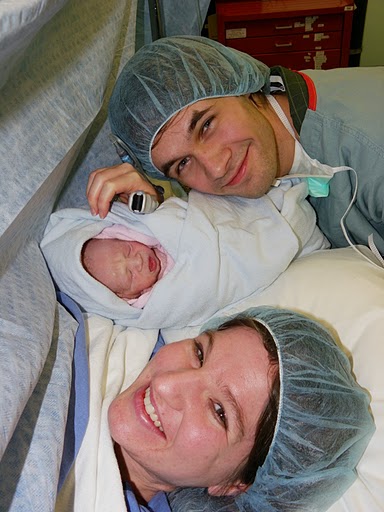
If you follow the simple steps that I have outlined above, then you, too, can look this happy while having a giant gash cut in their abdomen.

If you have any other suggestions, please feel free to add them in the comments!

I Hate Hallowe’en

12 Oct

I have a confession to make. It’s not a super-secret-feelings confession, or a oh-my-god-politics-feminism-whatever confession, or anything cool like that. It’s this: I hate Hallowe’en.

Everyone I know loves Hallowe’en. They start planning their costumes weeks, even months in advance. They have parties and events lined up for October 31st, and often begin celebrating several days before. They glory in the chance to be someone else, to go out and see friends, to gorge on candy, and above all to have fun.

Meanwhile, back at the ranch, I’m sitting alone, uncostumed and super jealous.

I can’t remember the last time I had fun on Hallowe’en. Maybe it was sometime in university? Maybe high school? Maybe kindergarten? Who can say, really. I haven’t even bothered dressing up for the last few years. When someone starts to tell me about their awesome costume ideas, I just glower at them. When they tell me about all the fun parties they’ll be attending, I pointedly say that I have plans to stay home and do my nails. I am the Hallowe’en equivalent of a grinch, whatever that might be.

Part of the problem is that I’m not sure how to do Hallowe’en as an adult. I guess I’m just not sure what the point of the holiday is? I mean, yeah, you get the chance to be someone you’re not, which sounds great, in theory, but never seems to work well for me in practice. My costumes always end up being half-assed, uncomfortable and too obscure, so that I spend the whole day adjusting my hair/dress/tights/whatever and explaining over and over who or what I’m supposed to be. Parties always end up being too big and filled with people I barely know or don’t know at all, which is kind of a social nightmare for me.

On top of all that, I have some kind of Hallowe’en curse that means that something shitty always happens on Hallowe’en. The most memorable one was the year my ex-boyfriend kissed me on the dance floor at a bar and, when I asked for an explanation, promptly fled. Being the rational person I am, I followed him. This resulted in me running around Halifax’s North End at midnight dressed as Jackie O., yelling that he would have to talk to me eventually so he might as well just turn around and get it over with.

I hate Hallowe’en.

This year, Matt and I have been talking about doing costumes again, but really, what’s the point? We’re not doing anything on the 31st other than taking Theo out trick-or-treating and then stealing all his candy afterwards. Matt will dress up for work because they have some kind of contest, but I will probably just bundle my grinchy self up in a giant sweater and when people ask me who I’m supposed to be, I’ll yell that I’m dressed as an exhausted yoga teacher/mother/writer who can’t get her shit together.

All joking aside, I feel like this is something that I can (and should) overcome, possibly with copious amounts of booze and candy corn. I’m hopeful that having a kid will remind me of why I used to love Hallowe’en so much – I really want to start enjoying it again, I swear. I want to be out there having just as much fun as the rest of you, but I think I need help.

For those of you who love Hallowe’en (so, basically all of you) – what do you get out of it? Why do you dress up? Any tips on how to stop being such a killjoy and start getting into the spirit of things? Most importantly: what the hell should I dress up as?

Dressed up as Frida Kahlo in 2006, which is the last time I bothered thinking up a Hallowe’en costume

Bullying Part III (or, all hail Margaret Atwood)

10 Oct

This will be the final instalment of my totally unplanned Bullying Trilogy (seriously, it started out with me just wanting to talk about clothes).

After I made my last post talking about how I was bullied in my teens, my friend Audra asked if I’d read this 2011 article from New York Times, Bullying As True Drama. In fact, I had read it when it first came out and hadn’t really given it much thought. Re-reading it, though, I found myself nodding and muttering, yes, yes, yes under my breath.

So much of this article hits home for me. This part, for instance:

Many teenagers who are bullied can’t emotionally afford to identify as victims, and young people who bully others rarely see themselves as perpetrators. For a teenager to recognize herself or himself in the adult language of bullying carries social and psychological costs. It requires acknowledging oneself as either powerless or abusive.

Or this:

While teenagers denounced bullying, they — especially girls — would describe a host of interpersonal conflicts playing out in their lives as “drama.”

At first, we thought drama was simply an umbrella term, referring to varying forms of bullying, joking around, minor skirmishes between friends, breakups and makeups, and gossip. We thought teenagers viewed bullying as a form of drama. But we realized the two are quite distinct. Drama was not a show for us, but rather a protective mechanism for them.

And especially this:

“Teenagers want to see themselves as in control of their own lives; their reputations are important. Admitting that they’re being bullied, or worse, that they are bullies, slots them into a narrative that’s disempowering and makes them feel weak and childish.”

Like I said in my last post, bullies can smell a victim. The minute that you admit to yourself or to others that you’re being victimized, then I guarantee you that, barring serious intervention, the bullying will get worse. To make matters even more difficult, many kids (and adults) don’t realize that they’re bullies; this behaviour is so ingrained in our culture that it seems downright normal. I’m certain that most of the kids inflicting “drama” on others have, at some point, been on the receiving end of “drama”. To them, it’s an unpleasant but ultimately unavoidable part of life.

We also need to realize that the ways in which bullying happens have changed; it often occurs online, or through texting; it’s not always public. This, then, is where I think David Dickson, chairman of the Bullying Prevention Initiative of California, really misses the mark with definition of bullying as happening, “typically in a social setting in front of other people“. That definition certainly doesn’t hold true today; in fact, I’m not sure that it’s ever been accurate.

One of the best literary instances of bullying that I can think of is the torment that Elaine Risley goes through at the hands of her so-called “best friends” in Margaret Atwood’s Cat’s Eye. Though all three of her friends are party to the bullying, few outside of that group know what’s happening. In fact, Elaine is pretty clear about the fact, were she to tell anyone about being bullied, she would feel as though she were breaking some kind of sacred code:

“Whatever is going on is going on in secret, among the four of us only. Secrecy is important… to violate it would be the greatest, the irreparable sin.”

A few adults in Elaine’s life seem to have some inclination as to what’s going on; she hears the mother of one of her friends saying that she deserves to be bullied because she’s a “heathen”, and, several years after the bullying occurs, Elaine’s mother makes a vague reference to the girls giving Elaine a “bad time”. Those instances aside, none of the grown-ups seem to know or understand the severity of what’s happening. The three girls are at Elaine’s school, and one of them is even in her class, but none of the teachers seem to notice that anything is amiss with their relationship; even her peers see only a group of “best friends” and nothing more.

Based on all the above, I wouldn’t say that Elaine’s bullying is public; in fact, her tormentors are very careful to maintain the façade of friendship that they’ve built up. Does that mean that it’s not bullying?  Elaine is certainly emotionally, mentally and physically scarred by what she’s going through; not only are her self-confidence and happiness eroded to the point of non-existence, she also begins experiencing symptoms of severe anxiety such as fevers, stomach aches and tendencies of self-harm (among other things, she begins biting her fingers, and pulling patches of skin off her lips and the soles of her feet).

Another important thing to note is that, much like the girls mentioned in the Times article, neither Elaine, her friends, nor the adults in her life ever use the term bullying. Instead, they use euphemisms like giving her a hard time. At one point Elaine’s mother even tells her not to let the other girls push her around, and not to be spineless, as if that’s any kind of helpful advice. So the message that Elaine receives both from her “friends” and the adults in her life is that the way she’s being treated is her own fault.

This, then, helps explain why, when the balance of power shifts between Elaine and her “friend” Cordelia,  Elaine begins to bully her back. While Cordelia spent most of grade school bullying Elaine, Elaine turns around and spends much of high school treating Cordelia equally terribly. In her mind, though, she’s not a bully; she can’t be, because, in Elaine’s eyes and the eyes of the world, her “friends” from elementary school weren’t bullies either.

At one point, when things are at their worst, Elaine’s mother says to her,

I wish I knew what to do.

And that, that right there, is often the hardest pill for both adults and teenagers to swallow – the fact that when bullying or “drama” occurs, the adults involved often just don’t know what to do.

I’m going to go out on a limb here and guess that part of the reason teens started using the term “drama” to sort of re-brand bullying was the realization that, possibly for the first time in their lives, the adults around them had no clue how to stop them from hurting. So the term “drama” isn’t just a protective mechanism for the kids themselves; it’s also their way of protecting their parents and teachers, a way of reassuring them that it’s okay that they have no idea how to help because it’s nothing, just drama, and their help isn’t needed.

Matt and I were both bullied when we were younger, and because of that we’ve talked extensively about what we would do if Theo was ever bullied. I would like to say that we’ve come up with an awesome plan but, really, we haven’t. If things were ever to get really bad and Theo were to express a desire to change schools, Matt would prefer to go ahead and do that, whereas I would rather that he learn to work things through with his peers rather than running away. Of course, Matt doesn’t know what he would do if things were equally bad at Theo’s new school, and I have no idea how Theo is supposed to learn to rationally work things through with a bunch of hormonally-crazed teenagers.

I think, though, that at the end of the day that Times article has it right; instead of focussing on the “negative framing” of bullying, we need to work towards teaching our kids what healthy peer relationships look like and how to be good digital citizens. We need to teach our kids empathy and the ability to recognize when “drama” has gone too far. We need to find ways to empower our kids instead of making them feel weak or victimized.

I know, I know, this is a lot of talk without a lot of substance to back it up, but hey – I’ve hopefully got a few more years to figure it out. And while I’m teaching Theo how to be a smart, confident, independent person, I’ve got him to teach me how to be a thoughtful, wise and effective parent. So far, I think we’re both doing a pretty okay job.

Bullying (or, nolite te bastardes etc.)

7 Oct

I’ve written on here about some of the less-than fun stuff I went through as a teenager, but I think that last night was the first time that I’ve ever publicly referred to it as bullying. And now I kind of want to talk about it?

A little bit of background:

I’d had the same group of friends throughout most of elementary school. The five of us had been pretty tight, spending every recess and lunch hour together, pairing up for science projects and book reports. On the weekends we would force our parents to shuttle us around the city for various playdates and sleepovers.  I’d known them for so long that I couldn’t imagine ever not being friends with them.

Then, one mid-day recess in seventh grade, my friends told me they had to talk to me.

We sat in a circle on the schoolyard pavement, near the edge of where the grassy field began. It must have been October or November, because I remember that the sky was grey and there was a chill in the air. My friends started out by saying that they’d been talking about me, and had realized that they collectively found me annoying. They told me that they’d come to the decision that they didn’t want to hang around with me anymore, and asked me to stop joining them at lunch and recess. I tried to argue with them, then tried to bargain, but it was pointless; their collective mind was made up.

Basically, they broke up with me.

What had already been a difficult year went from tough-but-manageable to downright miserable. Even before I was de-friended, I was already being picked on by my classmates for my bad skin, the way I dressed, and the nerdy things I liked. Now, not only was that all still happening, but I suddenly had no one to protect me, and no one to tell me that I wasn’t an ugly pathetic loser.

As the year went on, the kids who made fun of me became braver, making more and more publicly humiliating comments about me. One kid said that I didn’t need to use whiteout, because I could just use the pus from my pimples – the teacher laughed at that along with everyone else. Another kid wondered aloud why my clothes were so terrible, since my father was a lawyer and could almost certainly afford something better than ill-fitting sweatshirts and track pants. Boys from my class prank-called me in the evenings, pretending to ask me out – then repeating everything I’d said on the phone the next day to the rest of my class.

I didn’t tell my parents what was happening because I was embarrassed, although they must have noticed that I wasn’t being invited to my friends’ houses anymore. I didn’t want them to know how much of an outcast I’d become at school, because it seemed like it was mostly my own fault for being unlikeable. Anyway, I reasoned, even if they did know, what could they do?

When I started high school, I chose a school that almost none of my classmates were going to. The only person from my class who was coming with me was the girl I’d become close with in 8th grade, so that was fine. I figured that this was the perfect chance to start over. No one at this huge new school knew me, or knew my past; I would walk through those front doors in September as whoever I wanted to be.

I didn’t get to start over, though. Does anyone ever really get a fresh start? I still had all the problems that had led to being teased in the first place: bad skin, the wrong clothes, and geeky interests. Even worse, the last two years had left me with zero self-confidence, which meant that I was constantly second-guessing myself. Because of this I had a hard time making friends, and when I did I was clingy and jealous. I was even more of a mess when it came to boys. Boy, was I ever.

Bullies can smell a victim, and I was soon back to being the butt of the joke. I went to an arts high school where I majored in dance, and the girls in my dance class were saccharine sweet to my face (most of the time), but made fun of me as soon as my back was turned. By the end of the year I was so tired of it that I transferred out of dance class and instead majored in visual art, where I was surrounded by pretentious art school kids, stoners and comic book nerds – on the whole, a much nicer group.

I don’t mean to make it sound like I was totally friendless. I mean, yeah, I had people that I hung out with – a pretty big group of friends, actually. But even within that group I was teased. Early high school was pretty much just as shitty as late grade school.

My later high school years were better, and the same goes for university. I moved out east for school, made some great friends, and became the stunningly self-confident adult you see before you today. Things are mostly totally fine now. I am mostly fine now.

What’s strange is that now I’m friends on Facebook with a lot of the people who made me miserable (maybe some of you are reading this now – hi guys! kind of awkward! sorry!). We’ve never talked about or even acknowledged what happened; after half a lifetime of not knowing these people, we mostly just “like” each others’ statuses and comment on photos of each others’ kids. Initially, I felt awkward having them back in my life, mostly because I worried that they were still judging me and still finding me wanting, but now we’ve settled into a sort of comfortable camaraderie, reminiscing about our collective school days as if we’ve been friends all along.

Maybe they’ve forgotten what happened, or maybe it just never seemed like a big deal. Maybe they feel bad.  Maybe I’m the one with the problem. Maybe they were right, and I am a pathetic loser. Maybe they were dealing with their own stuff at the time and didn’t realize how much it sucked for me. Most likely it’s a combination of most of the above.

I find that when I talk about what happened, I use a lot of euphemisms; I’ll say that I went through a tough time when I was younger, or else that I had a bad year the year I turned 12, or any other number of variations on the same thing. I’ve been hesitant to use the word “bullying” when talking about my own circumstances, for a couple of reasons:

1. Was I even bullied? I mean, yes, I was teased, but does that count as bullying? When does it cross the line from normal kid behaviour to bullying? Or is bullying so pervasive in our culture that it now seems normal?

2. Weirdly, I feel anxious about what the people who are my friends now will think of the fact that I was such a loser. There’s a part of me that thinks that they’ll start to reconsider our friendship, start to notice all of the less-than-stellar components of my personality.

3. Saying that I was bullied is admitting that I also became a bully later in high school. I made fun of people, talked behind their backs, told secrets. I was even party to making a girl cry in 11th grade chemistry class. I was mean, and I liked being mean.

I do think that it’s important to start a dialogue about this, especially in reference to the first point. In the wake of Jennifer Livingston’s on-air response to an email criticizing her weight, in which she refers to the man who sent her the email as a bully, there has been a lot of discussion about what qualifies as bullying, and whether or not it was the appropriate word to use in that instance. David Dickson, chairman of the Bullying Prevention Initiative of California, says“Bullying, normally, is what someone, in a very mean spirited way, continually and on a repeated basis, does to another person, typically in a social setting in front of other people…It was a stupid letter he wrote, but he commented privately.” 

Now, I’m not an expert on bullying, and none of the definitions that I’ve found online have really been satisfactory, but it seems wrong to ignore this entire discussion just because what happened doesn’t fit Dickson’s fairly narrow definition of what bullying is. Whether or not the letter sent to Livingston was public, it was certainly hurtful and unnecessary, especially considering that she’s likely spent a lifetime of facing comments like that. Also, it sucks to have a so-called bullying expert be so condescending and dismissive, especially when bullying in our culture is so often dismissed as kids just being kids (or, in this case, fat ladies just being too sensitive).

Maybe Dickson wouldn’t consider what I went through to be bullying. I mean, sure, it was public, and it was often mean-spirited, but maybe it wasn’t very mean-spirited, or maybe it wasn’t repeated or continual enough. Maybe it was just teenagers being dicks to each other, and I’m just an oversensitive lady-type. Usually writing things out here makes them clearer (and hey, it’s cheaper than therapy), but this time it just makes them seem murkier and more confused. Was I the one with the problem? Were they the ones with the problem? Was I undeserving of friends? Am I still?

What I do know is this: I’m tired of pretending that nothing happened, and I’m tired of feeling like I did something wrong and have something to hide. I’m tired of waiting for all of my friends to discover that once-upon-a-time I wasn’t cool, and then to high-tail it out of my life – so take that, brain, a pre-emptive admission of uncoolness. Most of all, I wouldn’t want any other kid to feel as shitty as I did.

So yeah. Can we talk about this?

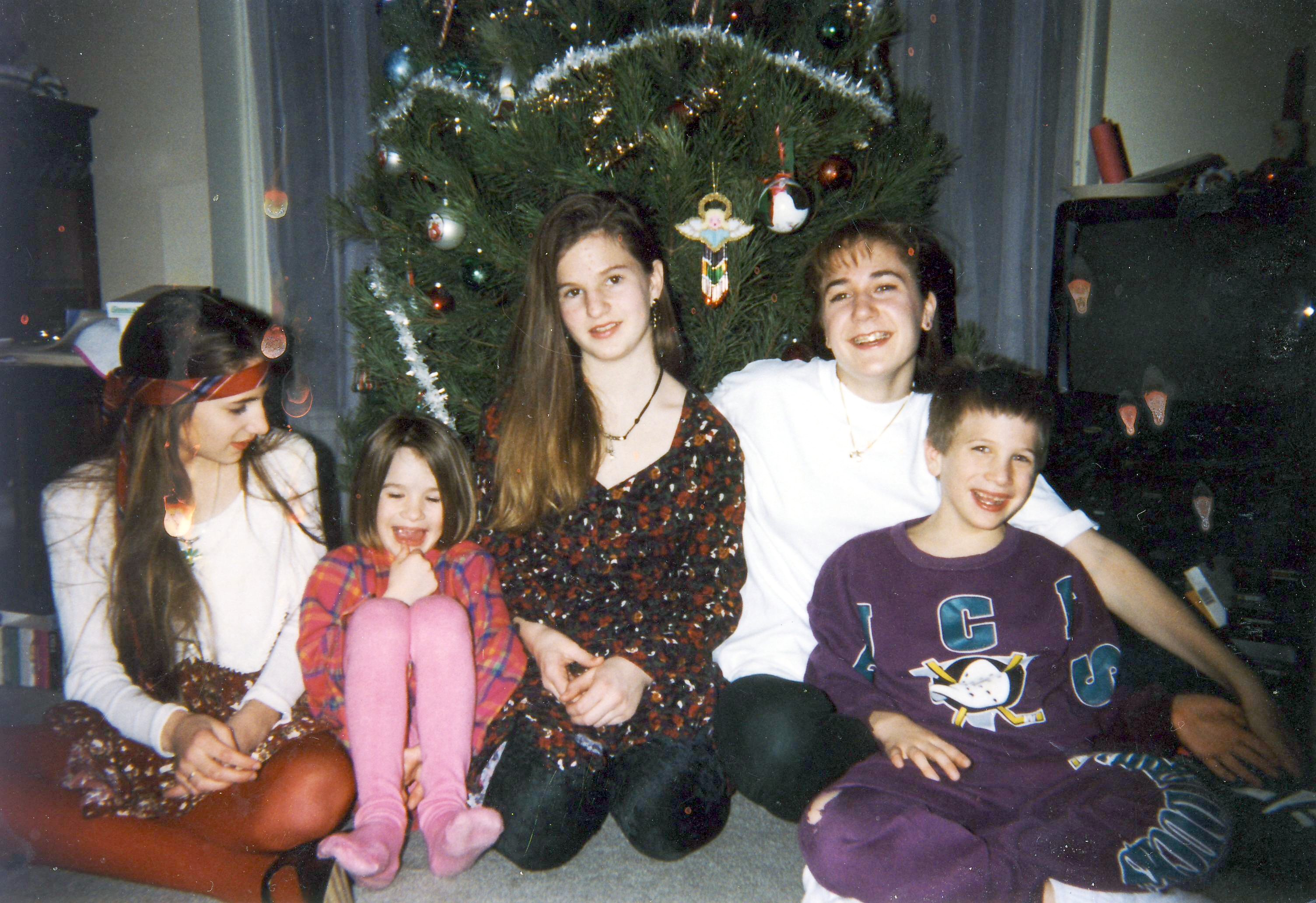
Me at age thirteen, centre, with my cousins and sister.

Failure Is Easy (And Sometimes Success Fucking Sucks)

4 Oct

I did a teaching demo today for the owners of a local yoga studio. It was an amazing opportunity – their space is beautiful, they have a ton of teachers that I love and respect on their schedule, and it’s walking distance from my house. I’ve known the two owners for nearly a year, and they’re wonderful women – both are amazing instructors who have a quiet, gentle presence that would put anyone at ease.

Needless to say, I was fucking petrified.

I started out by nervously giggling my way through a short interview, and then spent a few minutes fumbling around with the audio system, trying to get my music to play and hoping that the trembling in my hands wasn’t obvious. I’d planned and reviewed the sequence that I was going to teach, so fortunately I didn’t forget it or anything, but my voice had gone strangely squeaky, and I could tell that my breathing was shallow. After a few minutes, though, I hit my stride and started to feel more confident. After all, I teach several times a week, right? I know how to do this.

Right?

Afterwards, they smiled at me, and told me what a lovely teaching voice and style I had, mentioned that I’d given excellent cues and had clearly been well-trained, and finally said that I had a beautiful practice.

Even a three-year-old could have heard this but coming a mile away.

But, one of them said gently, we noticed that you didn’t look at us. Do you ever walk around the room while you teach? Do you ever offer adjustments?

I do, I do, I stammered, I mean, maybe not as many adjustments as some other teachers, but I can do them. I mean, we learned how to. And I can walk around the room while I teach. We did focus on that in our training. Walking, that is, around the room, and not just demonstrating the poses to the students. It was something my teachers talked a lot about.

It must have been hard to teach to us, said the other, it was probably overwhelming to teach to the two owners of the studio.

I was totally nervous, I said. Didn’t you hear my voice shaking?

It was the sort of thing I knew I shouldn’t have said even before I said it, but then it came out anyway.

They talked to me a bit longer about the importance of connecting with your students, of having a relationship with them, and of maintaining an awareness of what’s happening in the room at all times. I said a few thing that probably sounded like feeble excuses. They thanked me for coming in, said that they had no immediate spots available on the schedule, but would keep me in mind for the future. I thanked them a little too profusely for having me in to demo for them (because it’s an honour to even be asked, right?) and then rushed out the door.

I don’t know which reaction to criticism is worse: to tell yourself that what other people see is wrong, that they just don’t understand what you’re trying to do, that they’re the ones with the ones with the problem, not you, or to do what I did, which was to tell myself that I’d flat out failed.

The thing is, they were right. I didn’t look at them while I was teaching. I probably don’t connect with and engage with my students enough. I do need to get up off the mat and walk around the room more often.

I could have said to myself that I would work harder, that I would take workshops on how to give adjustments, that I would get better and be the best teacher possible. The problem with that line of thought is that it seemed overwhelming and exhausting. I was tired just thinking about it.

It was easier to tell myself that I’d failed, that I was a bad teacher, that I should just give up and move on. It was easier to blame myself for not being prepared enough, for not thinking to look at them often enough, or even for scheduling a demo like this before I felt fully confident in my skills.

Failure is easy. Failure means that I get to give up, relax, not be so hard on myself. Failure means that I get to spend more time at home with my husband and son, and less time improving myself. Failure, somehow, means less anxiety.

Success, on the other hand, can be totally scary. With every success comes the idea that you need to build on it, keep the momentum going, continue to grow bigger and better every day. And success, of course, makes every little failure seem all the more bitter.

Every time I write something on here that elicits a reaction from people, that ends up being passed around on Facebook, or generates a lot of comments, I feel like my next post has to be even better. And then if I go a few days without posting anything that gets a big response, I feel like I’ve lost it, whatever it is: the ability to write, maybe, or to communicate effectively, to touch people.

A few things, though:

1. Every post I write doesn’t have to win the Nobel Fucking Prize for Bloggers

2. I am still just getting started as a writer who is writing things for other people, and not just scrawling messy feelings in my diary.

3. I am still a novice teacher; I just graduated in June for Pete’s sake

4. Who the hell is Pete, anyway? Is it Peter like the apostle Peter, the one who became the first Pope?

5. I really hate that dude.

I am a good teacher; I am also a good writer. I have innate talent in both of those areas (I mean, if I do say so myself). BUT (did you see that but coming?), innate talent will only get you so far. The rest of the way to success is hard fucking work. It’s hard work, and the road is never smooth – every time I succeed, it will likely be followed by a few failures, and it will be a while before I get to the point where I feel like everything is settling down and working out the way I want to. Maybe I never will. See? Fucking scary.

People like to say that failure is not an option, except that it totally is. I could totally pack up my yoga mat and go home. And I could justify that decision a million ways: teaching was wearing me out (true!), I felt like I wasn’t seeing my family enough (also true!), I wasn’t sure how to improve or move forward (double true!). Failing would be easy.

But I don’t want to fail.

I don’t want that to be the lesson that I teach Theo.

I don’t want that to be the lesson that I teach myself.

So if you’ll excuse me, I will take my lovely voice, my excellent cues and my beautiful practice and go work on learning how to properly walk around the room. It’s going to suck at first, and I’ll probably screw it up the first few times I try it, but I’ll ride that out and see it through until I get better. And I will get better, because I am a smart lady who can figure this shit out.

My child, even though I am a stupid misogynist and it’s totally my fault women can’t be priests, I will pray for you.

Writing, Yoga and Doing What You Love

1 Oct

When you first start writing, chances are you’re not doing it for anyone other than yourself. You might begin by keeping a journal, or producing badly illustrated, yarn-bound books about anthropomorphic cats named Stubby, or else writing raw, angst-written teenage poetry by moonlight while the rest of your family (who, by the way, don’t understand you) are asleep. I mean, maybe. It’s not like I’m drawing examples from my personal life here or anything.

It might be that writing for yourself is all you want to do, and that’s great. That means that you can write whatever you want, edit as much (or as little) as you want, and basically be able to not give a fuck about, well, anything. JD Salinger (the king of giving no fucks) said,

There is a marvelous peace in not publishing. … It’s peaceful. Still. Publishing is a terrible invasion of my privacy. I like to write. I live to write. But I write just for myself and my own pleasure. … I don’t necessarily intend to publish posthumously, but I do like to write for myself. … I pay for this kind of attitude. I’m known as a strange, aloof kind of man. But all I’m doing is trying to protect myself and my work.

If you want any kind of commercial success, though, you need to start thinking about other people. In a best case scenario, you could write exactly what you want to write, and, due to some crazy alignment of the stars or a perfect moment of cultural zeitgeist, it would make the New York Times bestseller list. For example, you could write smutty Twilight fan fiction, change a few names, and have it become a wildly successful work of erotica. However, if that business model isn’t working for you (and don’t worry, you’re not alone), you need to figure out who your audience is and what the hell they want to read.

I feel like this is kind of where I am right now, not just with writing but also with yoga.

When I first started practicing yoga, it was (obviously) something I only did for myself. I remember my first class vividly; I struggled through it, but afterwards I was so relaxed that I felt high. It was love at first downward dog.

In the beginning it was just a physical practice, but later it became something more. I’m hesitant to describe it as “spiritual”, but the way I practice now certainly goes deeper than just my body. There have been times when yoga has triggered unexpected emotions in me; I laughed the first time I went into urdhva dhanurasana (full wheel), and kicking up into handstand still makes me insanely happy. There have been poses that have made me feel irrationally angry, and, much to my embarrassment, I’ve cried in class once or twice. Luckily, the lights were dim, and I was able to slink out the door without anyone noticing that something was amiss.

The feeling that I associate the most with yoga, though, is what I like to refer to as the “bell jar” feeling. I call it that because of the way Sylvia Plath describes feeling after her first shock treatment:

All the heat and fear had purged itself. I felt surprisingly at peace. The bell jar hung, suspended, a few feet above my head. I was open to the circulating air.

The bell jar, of course, is the metaphor she uses to describe her depression:

If Mrs. Guinea had given me a ticket to Europe, or a round-the-world cruise, it wouldn’t have made one scrap of difference to me, because wherever I sat – on the deck of a ship or at a street café in Paris or Bangkok – I would be sitting under the same glass bell jar, stewing in my own sour air.

I mean, let’s face it, we all have bell jars of one sort or another, though some may be lighter and clearer than others. For me, yoga, both the physical practice and the philosophy, was the best way of lifting mine for a little while.

Then I started teaching yoga, and it went from being this beautiful, deeply personal thing to being, well, a business. When you’re teaching, you can’t just do whatever you want. You can’t just teach your favourite poses over and over, or have a 20 minute savasana. I mean, sure, if you’re some kind of yoga superstar and you’re having to turn people away from your overcrowded classes, then maybe. But I’m still working my way up the ladder, and for now I have to figure out what the people want and how to give it to them.

It’s been a tough lesson to learn, especially since people in the yoga world aren’t always exactly, well, yogic. They can get angry if a class isn’t exactly what they wanted, or if they think you’ve made a mistake, or if you go five minutes too long or too short. You, the teacher, are providing a service, and the student, your customer, is always right. Or, rather, they are if you want them to ever come back to your class. Which, by the way, you probably do.

And then there’s the fact that you, as a teacher, should maintain a personal practice. It’s hard, though, to convince myself to roll out my mat when I get home from a day that’s been nothing but yoga: teaching yoga, doing yoga studio admin, writing emails about yoga. By the time I make it back to my apartment, all I want to do is snuggle Theo, hang out with Matt, and write.

So yeah, I’m feeling a little burned out on yoga these days. And then I feel guilty for feeling burned out, because it seems unfair to my students that their teacher is kind of tired of yoga. And then I think about how everyone always tells you to try to find work doing what you love, and I wonder if the natural consequence of doing what you love is that instead of loving your job, you end up feeling resentful about something that used to bring you so much joy.

Today, though, I cracked Patanjali’s Yoga Sutras for the first time in months. Reading through the second sutra, I caught myself thinking, oh yes, I do love this. Later, when I went to teach my class, I ended by talking a little bit about what I’d read in the sutras that day, and that felt good. Afterwards one of my students came up to me and told me how much she’d enjoyed the class, especially the bit at the end. And that felt really good.

I guess that what I’ve realized is that there has to be balance between what you love and what you give out to other people. Yes, you need to offer something that people want, at least if you want to make any money doing whatever it is you’re doing, but you need to inject some of yourself into your work as well. Being yourself when you teach or when you write is what makes your work authentic, and people can sense that. Have you ever read a book that was written specifically to appeal to a certain demographic? Usually they’re pretty terrible. By the same token, a book that’s just the author nattering on and on about whatever their pet subject is can often be just as bad.

So if you can find that perfect sweet spot of sharing what you love and giving what people need, then you’re probably golden. If you can find a way of separating thing-that-I-love-doing from thing-that-I-get-paid-for while at the same time acknowledging that, to a certain degree, they are the same thing, then you’re probably way ahead of the curve. And if you can find a way to admit that it’s okay to feel burned out on the places, people and leisure activities in your life, and that you can come back to them when you feel ready, then you get a thousand high fives.

And that, my friend, is a lot of high fives.

Check out all the fucks I’m giving. Oh wait, there are none.