Further Adventures in PPD (or, why I might be sort of grimacing in your baby shower pictures)

28 Aug

I mentioned in my last post that we went to a baby shower this past weekend. This is actually the first of several baby showers that I have to attend over the course of the next month.

In order to mentally prepare myself for this baby shower, I did what any normal person would do: I put blue streaks in my hair. I thought that this would make me feel punk-rock, like I was someone who was capable of kicking ass and taking names. Instead, it made me feel sort of mermaid-ish, or else like a devotee of the Drowned God – not necessarily bad things, but also not really what I was going for.

I find baby showers, and many things baby and pregnancy related to be fairly nerve-wracking. My reasons for this are twofold:

1. It brings back all the old whoa I am such a shitty mom feelings from Theo’s early days. I look at pregnant women and I think, I bet she is better at being pregnant than me. I bet she is one of those people who did all those fancy scientific things like figuring out when she was ovulating and how long her luteal phase is, and totally planned her pregnancy based on what astrological sign she wanted her kid to be. She probably did not go in a hot tub or sauna while totally unaware of her pregnancy, and I bet she didn’t do crazy things like rock climbing and hiking in the Rockies. She probably carefully counted the days from the time she had sex until she could take a pregnancy test, and then wrapped up the pee stick in a fancy bow and gave it to her husband and then they cried tears of joy while holding each other in the moonlight.

2. I am really, really, really fucking jealous of anyone who can take the occasional moment to sit back and enjoy their pregnancy, rather than wondering if the alcohol content of the de-alcoholized wine they used to make the stew they are having for dinner will have serious adverse effects on their baby. I am so jealous of women whose main concerns are how swollen their feet are, or if the nursery will be ready in time. I’m sorry, I know it’s petty, and it’s something I’m working on, but still: it’s there, it sucks, and I want to acknowledge it.

There is something in my brain that switches into bonkers PPD mode whenever people talk about things they’ve given up during their pregnancy, like caffeine, or sweets, or anything fun that I didn’t give up. I think, oh shit, I didn’t sacrifice enough. I am not a good enough mother.

A few months ago, I went into a full-on tearful rant at someone after they talked about choosing not to have ultrasounds because they think that they’re bad news for fetuses. What’s especially funny about that is that while pregnant I was already aware of the concerns some people have about prenatal scans, and I actually did a fair amount of research on it. In the end, I felt well-educated on the issue, and drew the conclusion that I would prefer to have ultrasounds. But when she started talking about the choice she’d made, it was like the logical part of my brain just shut down. It was like, sure, look at Theo, he is fine and healthy! But what if not having ultrasounds could have meant that he was even more fine and healthy?

So much of my PPD has been about what if?

So much of it has been dangerous lines of thinking, like, if only I can stop making mistakes and just do everything perfectly, I will stop feeling this way. It is my fault that I feel this way, because I can’t stop fucking up.

When people talk about these choices that they’ve made, what they are really trying to do is communicate to me how they feel about their pregnancy, and maybe have a dialogue about what it’s like to be a pregnant woman in an era where we are  faced with so many (often confusing) choices. But somehow all I hear is, you’ve failed as a mother.

So what’s the solution? I could do what I ended up doing this weekend, namely pleading a headache midway through the shower and escaping to my room to cry. Or I could just try to avoid anything baby or pregnancy related (hah). Or I could grit my teeth and smile, and then later feverishly google things like “possible effects of c-section on baby’s future cognitive development”. None of those things seem like particularly good options, though.

I guess the thing is that I have no idea what to do, other than keep on keeping on, taking one day at a time, and all those other trite clichés. It’s possible that I need to learn to ask for help more frequently, or else try to explain myself better to the people around me. Perhaps I should get this shirt, in hopes that it will deter people from telling me any pregnancy/baby stories that might set me off.

Maybe one lesson that I can take from this is that a lot of parenting is going to come with this feeling of, I have no idea what I’m doing, or, even more accurately, I feel totally unable to handle this but, somehow, I have to.

Anyway, any tips, advice or commiseration are truly appreciated.

Oh, and feel free to compliment my awesome hair:

Image

It may not be very punk, but it still looks pretty rad, no?

Home, or something like it

27 Aug

I am writing this in the car on the way back to Toronto (science! technology! the future! etc.), on our way home from a long weekend in Quebec. We were there for my cousin’s baby shower, and also to visit my grandmother and other assorted extended family.

My grandparents moved to Saint-Bruno in the early 50s, shortly after they married. Back then it was a tiny hamlet south of Montreal just beginning to experience post-war boom. Although the town itself has been around since the mid 1700s, most of the houses there fall squarely into the mid-century bungalow category. My grandmother says that when they first moved to Saint-Bruno, it was still remote enough from the bustle of big-city Montreal that the selection of furniture and appliances that they could order for delivery was seriously limited. She and her neighbours all had exactly the same couch from Sears, which was available in only three staid, somber colours.

My grandmother has lived in the same house for nearly sixty years. What I love the most about her house is that change happens there at a glacier’s pace; although rooms are occasionally rearranged, with furniture sometimes drifting from one room to another, and the downstairs bathroom has been refitted to accommodate my now-wheelchair-bound grandmother, so much else is exactly as I remember it from my childhood.

So many versions of me exist in this house – as a squalling infant, pushed up the rocky drive in an old metal pram by my mother; as a rambunctious toddler, staying with my grandparents for a few weeks while my parents prepare to move to Ontario. There’s me throughout my primary school years, all skinny tanned legs and long blond hair, my clear skin and self-confidence both shining with pre-pubescence.

I’m there as a sullen  teenager, resentful that I’ve been forced to leave my friends behind just so that I can visit my dull grandparents. I’m there as a self-absorbed early-twentysomething, convinced that a few years of university mean that I know more than everyone. I’m there in my rebellious phase, shocking (or so I think) in my low-cut tops and short skirts, bragging about boys and booze. I’m there with my first serious boyfriend, who then became my husband. I’m there pregnant. I’m there as a new mother.

I’m in the cool, dark basement playing school with my cousins; it’s the late 80s, and one of my imaginary classmates is named Charlie Sheen. I’m tearing around on a Christmas sugar high, unable to sit still long enough for holiday pictures. I’m sitting at the kids table during a family dinner, happy that I don’t have to endure adult conversation.

I’m eating breakfast with my grandfather at the oil-cloth covered kitchen table. I’m 19 years old and midway through my first year of university. He tells me that he has lung cancer. I don’t have the right words to say to him, so I just tell him that my mother already told me. We sit in silence for the rest of the meal.

I’m back four months later for his funeral.

I can’t turn a single corner in this house, can’t enter a room or pick up an object without encountering one or several shades of myself. It helps that this place has a sort of fairy tale quality to it; the hedge surrounding the backyard is easily ten feet high, giving off a sort of sleeping-beauty-enchanted-forest vibe, and the interior of the house is neatly preserved as if by magic in another era. Stepping through the door sometimes feels like traveling through time, although I don’t know whether I’m going back to my own childhood in the 80s and early 90s, or my mother’s, several decades earlier.

It’s not just the house either, it’s the town itself. Out for a walk with Theo, I pass the lake where we watched Saint-Jean-Baptiste day fireworks, the same lake where my sister once cut open her foot on a stray piece of glass. We pass Mount Bruno United Church, where my grandfather laid the cornerstone back in the 1960s. I am inside that church, simultaneously in the midst of being baptized, crying at my grandfather’s funeral, and singing in my cousin’s wedding.

Maybe it’s because I’ve lived a fairly uprooted life (by my calculations, I’d moved 13 times by the time I was 25), but having a house like this that has been there at every stage of my life seems positively extraordinary. Maybe if you’re someone whose parents still live in the same place where they grew up, this whole post seems bizarre and pointless, but bear with me here, there is a message in here somewhere.

I guess the thing is that I don’t really feel like I have a hometown. People ask me where I’m from, and I hesitate. Do they mean, where was I born? The answer to that would be Montreal, but since we only lived there for a few years, I can’t really think of it as my hometown, can I? If they mean where did you live the longest? or where did you grow up?, then the answer is Kitchener, but since I have no family left there, and since I spent so much time actively planning how I was going to escape southwestern Ontario, that doesn’t seem like the right answer either. Do they mean where do you live now? That would be Toronto, but I don’t really consider myself a Torontonian, for many reasons.

So maybe the answer is Saint-Bruno. Maybe that’s the place that I have the strongest ties to, or at least the most emotional ones.

We had such a lovely weekend. We played in the creek at the Parc du Ruisseau:

We ate tomatoes fresh from my grandfather’s garden

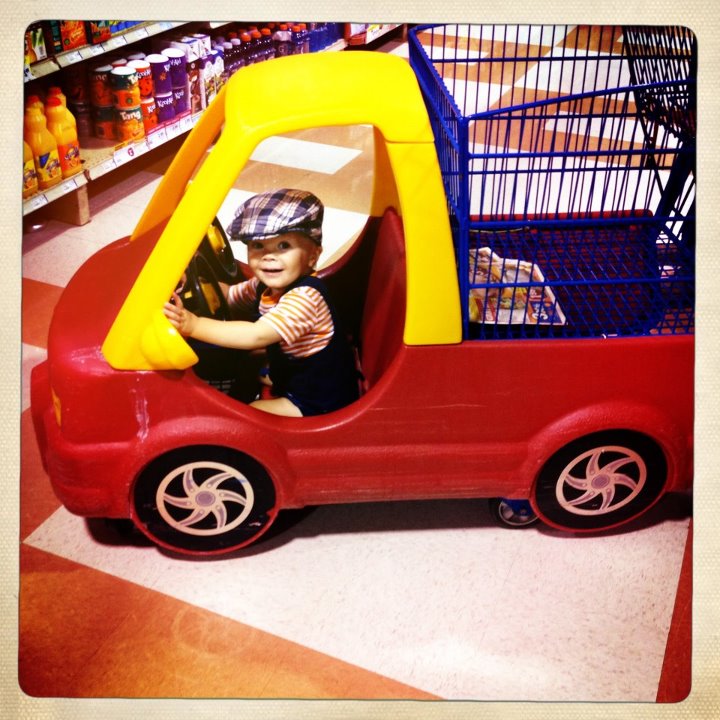
We discovered the WORLD’S MOST EXCITING SHOPPING CART:

Basically, everyone, especially Theo, had a total blast.

I hope that we can make it back there soon. I hope that we can visit often enough that Theo starts to understand why I feel the way I do about Saint-Bruno. And most of all, I hope that he has someplace, any place, in his life that is as secure and familiar and unchanging as my grandmother’s house is for me.

Optimism is better than despair (or, What Would Jack Do?)

23 Aug

A year ago today the rest of Canada and I woke up to learn that Jack Layton had died. A man who had worked tirelessly to better our country, who had spent his life fighting for equality for all Canadians, was gone. I was in shock. I didn’t know what to do.

My friend Mandi and I had a coffee date that morning, so I packed Theo up in his stroller and set out for her place in the east end. Did you hear about Jack? I whispered to her, as if it was some kind of secret. As if saying it out loud would make it true.

She lived around the corner from his office, and we had to walk by it to get to the coffee shop. I want to get some flowers, I told her, to leave in front of his office. But there were no flower shops nearby – just a few East Chinatown convenience stores. The only plant we could find was a little pot of stunted bamboo shoots.

He’ll like it, I said to Mandi, after all, his wife is Chinese.

We started giggling and couldn’t stop. It was easier than crying, or at the very least more socially appropriate.

That week I watched in awe as Torontonians came together to share their love for Jack. Our famously cold, unfriendly city began to bare its soul in chalk messages written all over Nathan Phillips Square. When thunderstorms washed away the chalk, the people came back and filled the square with writing all over again. I have rarely seen something more beautiful than that.

I think that what Jack would have loved most of all was the unity among the people of Toronto that week. All of us, from all walks of life, keenly felt his absence. Although many of us might not have realized what we’d had while he was still living, we suddenly realized how much we’d lost after his death.

Tonight I went back to Nathan Phillips Square for Dear Jack: A Celebration. Much like last year, there were chalk messages written everywhere, and there was a large orange-bedecked crowd milling around. Most of the evening was lovely; I enjoyed the performances (especially Raffi!), and it broke my heart in just the right way to hear Olivia Chow speak about Jack. But I was frustrated that some people chose to use tonight as a platform for their political ideologies.

One woman wrote “Dear Jack, Toronto apologizes for Rob Ford. At least you missed that!” And I thought, how is this a response to someone who asked for love, hope and optimism? Or, as my friend Melissa said, we have 364 days a year to trash Rob Ford – couldn’t we use today as a time to get together to mourn, love, and look towards the future?

I’m glad I went, though. Theo enjoyed running around and playing with the chalk, and I loved running into various friends, exchanging hugs and murmurs of I can’t believe it’s been a year.

We miss you, Jack. I miss you. Thank you for everything you did. Most of all, thank you for inspiring us to continue to fight to build a better country, for helping us to believe in a more loving and just world. I think that your true legacy is the group of people who are using what you’ve built as a starting point, and are now running headlong towards the future, spreading love, hope and optimism along the way.

I won’t let anyone tell me it can’t be done. I will change the world.

Postpartum depression (or, hey, let’s do some oversharing!)

22 Aug

I wanted to start this post off with something very dramatic like, when Theo was six weeks old, I was contemplating suicide. That has a nice ring to it, doesn’t it? Edgy, yet thoughtful. The problem is, it would be a lie – by the time Theo was six weeks old, I’d gone way past contemplation and was firmly into planning territory. It’s just that “planning” doesn’t have quite the same literary panache as “contemplating”, you know?

It would be pills, I decided: the percocets I had left over after my c-section, and some sleeping pills that’d been sitting around since before my pregnancy. I would have to do it while Matt was at work, but close enough to the end of the day that Theo wouldn’t have to be alone with his dead mother for too long. I would get some formula, I decided, and sterilize some bottles – that way Matt could feed him immediately, because Theo would likely be hungry by the time I was found. I would write a note, a good one.

Planning things out step by step like this made me feel better; it made it seem as if I had some kind of control over my life.

I didn’t want to die because I hated Theo. In fact, I loved him ferociously. I wanted to die because I knew that I was totally and utterly incapable as a mother. I wanted to die because I knew that if I lived, if I had to continue to be Theo’s primary caregiver, then I would continue to fuck things up horribly. I wanted to die because if I did, someone else would have to step in as his mother, and whoever it was would surely be more competent than me.

At that moment I sincerely believed that even random people I passed on the street were more qualified to raise my son than I was.

I tried to tell people how I felt, tried to convince them that I was an unfit parent, but no one seemed to believe me. They dismissed my worries as normal, and told me that every first-time mother felt the same way. I knew that what I was feeling was far from normal, but I didn’t know what to do about it. I thought about running away, packing a suitcase full of warm weather clothes and boarding a plane, but that seemed crazy. Suicide, however, seemed totally logical.

Although I’m referring to what I went through as postpartum depression, my anxiety and fear had been around for most of my pregnancy. Here I’d gone 27 years only having to take care of myself (and often doing a pretty poor job of it), and now suddenly I was 100% responsible for this tiny life inside of me. It seemed like that should be enough to drive anyone around the bend.

Was I eating enough, I wondered? Was I eating the right things? Did I need more iron? Was I getting enough omega 3 to ensure healthy brain development? I started carrying around a list of fish, rated from highest mercury content to lowest. I would whip this list out at restaurants and do a few quick calculations in my head – had I already ingested any potentially mercury-laced fish this week? How big of a portion could I have? It didn’t seem fair that Matt didn’t have to change his life at all while his son gestated, but I had to watch every bite that went into my mouth.

And then there was the alcohol. See, I hadn’t known I was pregnant for the first few weeks, and I’d had maybe two or three glasses of wine, total, in that time. Midway through my pregnancy I became convinced that my child was going to have fetal alcohol syndrome. I hadn’t even given birth yet, and I’d already ruined my child’s life. How could I be such a selfish, terrible person?

By the end of my pregnancy I’d become incredibly paranoid about everything, so it was almost with a sense of relief that I greeted the news that, at 34 weeks, I had to be hospitalized and put on bed rest. Here I would be in a place where I was eating a doctor-approved diet, where I would be hooked up to a big, clunky machine twice a day in order to monitor my son’s heart rate, and nurses were only the press of a button away. After months of fretting over taking care of myself and the baby, suddenly I could put myself in someone else’s hands.

And then Theo was born, at 36 weeks, via c-section. I’d thought that once he was out of me, once I could hold him in my arms and know for certain at any given moment that he was alive and well, things would be better. It wasn’t like that, though. I held him briefly in the operating room while they stitched me back up, but then they whisked him away, concerned about the grunting he was doing (a sign of laboured breathing, they said). Matt went with him, and my mother went off to call my grandmothers and aunts and uncles. I sat alone in the recovery room and waited, wanting only to hold my son.

They brought Theo back to me and let me try to nurse him, but he wouldn’t, or couldn’t. He started grunting again, so they took him away again, this time across the street to Sick Kids for an x-ray of his lungs. You need to prepare yourself for the fact that he might end up in the NICU, the nurse told me. I knew that wasn’t the end of the world, but still, it was scary. On top of that I’d read so many things about how the first few hours of a baby’s life are critical for bonding and creating a breastfeeding relationship – would missing this time with him have an effect on the bond we had?

The thing was, I was already having doubts about our mother-son bond, even that early in the game. When I’d been pregnant, I’d felt like Theo and I had intuitively understood each other. He would kick, and I would ascribe meaning to those kicks. I would rub his feet as they poked my ribs, and I felt like he just knew that my actions meant, baby, I love you. But once Theo was born, I realized that he was a total stranger. I didn’t know what he thought or wanted at all, and he didn’t give a shit about my feelings.

That first week things went from bad to worse. I couldn’t get Theo to latch, and every attempted nursing session was a nightmare. His weight dropped down to 4 lb 12 oz, which, while still within the range of normal, seemed frighteningly low. I felt like I’d failed at having the birth I wanted, had failed at properly bonding with my son, and was now failing at providing him with even the most basic necessities, like food. I couldn’t believe that they actually trusted me enough to let me take my kid home a few days after his birth.

There was something else, too. During my c-section, I heard my doctor say to his intern, look at this, here’s why he was breech. I asked him what he’d found, and he told me that I have a bicornuate uterus (like a cat! he said brightly). This means that instead of having one large chamber, my uterus has two smaller ones. Theo’s head had been stuck in one of the chambers and he’d been unable to flip into the proper position.

Of course, as soon as I could, I googled bicornuate uterus. Wikipedia had the following to say:

Pregnancies in a bicornuate uterus are usually considered high-risk and require extra monitoring because of association with poor reproduction potential.

A bicornuate uterus is associated with increased adverse reproductive outcomes like:

  • Recurrent pregnancy loss: the reproductive potential of a bicornuate uterus is usually measured by live birth rate (also called fetal survival rate).
  • Preterm birth: with a 15 to 25% rate of preterm delivery. The reason that a pregnancy may not reach full-term in a bicornuate uterus often happens when the baby begins to grow in either of the protrusions at the top. A short cervical length seems to be a good predicter of preterm delivery in women with a bicornuate uterus.
  • Malpresentation (breech birth or transverse presentation): a breech presentation occurs in 40-50% pregnancies with a partial bicornuate uterus and not at all (0%) in a complete bicornuate uterus.
  • Deformity: Offspring of mothers with a bicornuate uterus are at high risk for “deformities and disruptions” and “malformations.”

So here I’d been worrying about stupid things like omega 3 and iron while, deep in the dark recesses of my body, my own uterus was secretly working against me. This whole time I’d been afraid of the wrong thing – I was like France, setting up the Maginot Line, while all along the Germans were planning to attack from the opposite direction.

I was clearly (biologically, even) not meant to be anybody’s mother.

The first few weeks of Theo’s life were awful. I’d always been a bad sleeper, and now it was worse. Theo wriggled and grunted in his sleep, and it kept me awake. Every little sound that came out of him made all of my muscles tense up, making rest nearly impossible. Whenever I complained about how tired I was, people would say, sleep when the baby sleeps, as if that was some great revelation. As if it was something that I couldn’t come up with on my own. Breastfeeding continued to suck, and I began to dread feeding time. I would push it back by 5, 10 or 15 minutes, as if that made any difference. My days were lonely, boring and frustrating.

It was the carrier that finally pushed me over the edge. See, we live on the third floor and our building doesn’t have an elevator. I’m not strong enough to drag our stroller up and down the stairs. So, whenever we went out, I used a carrier for Theo. And whenever he fell asleep in the carrier, he grunted with every breath.

I asked everyone about the grunting – my mother, my sister-in-law, friends with kids. Everyone assured me that it seemed totally normal. Then, while obsessively googling “grunting” “breathing” and “baby carrier”, I found one lone site that said that grunting was a sign of laboured breathing (which I already knew), and prolonged grunting could mean that the baby’s blood oxygen level was low. Which could lead to many health complications, including brain damage.

The thing is, I’d known something was wrong. I’d known. I’d asked everyone and yes, they’d reassured me, but why hadn’t I trusted my own instincts? Because I stupidly and selfishly wanted to be able to leave the house, that’s why. If I was any kind of good mother, I would have stopped using the carrier as soon as he started grunting. I would have stayed home until Theo was old enough for the grunting to fix itself. But I wasn’t a good mother. I was a terrible mother. Not only that, but I was a clear danger to my child.

When I read that part about the brain damage, I handed my sleeping son to my visiting mother-in-law, went into the bedroom and cried for three hours. How could I ever undo this? How could it ever be fixed? It wasn’t as if I could just have a new kid and start fresh, having learned from my mistakes. A baby wasn’t like a paper that you could crumple up and toss in the garbage. I was stuck with my sad, damaged kid, and would be stuck with him for the rest of my life. He would be a constant reminder of what a terrible person I was.

If I’d been home alone at that moment, I likely would have killed myself then and there. But I wasn’t alone, so instead I confessed everything to my mother-in-law, hoping she would call the CAS and have Theo taken into protective custody (or, at the very least, have me arrested). Instead, she convinced me to go to the doctor.

And I did go to the doctor, and joined a program at Women’s College Hospital specifically for women with PPD, and I went on medication, and saw a therapist. All of that helped, but I think what helped the most was seeing Theo grow up and realize that no, in fact, he wassn’t brain damaged. He’s a totally normal, lovely, happy kid. And these days I’m mostly a totally normal, lovely, happy mom. And we have a pretty decent bond, I would say.

I still have my moments of fear and paranoia. I still occasionally freak out over little things (just ask Matt – I make him do all my baby-related googling now). I will probably always be a somewhat high-strung parent, but I can live with that.

What makes me sad is that I will never get those first few weeks of Theo’s life back. They will always exist for me in this cold, dark haze. I will never be able to think of Theo as a newborn without associating his early babyhood with that terrible time in my life. And that sucks. It sucks big time.

What also sucks is that I feel like I can’t talk about my experience with PPD. I often dance around the issue, saying “I had a tough time at the beginning,” or, “things were really hard for me”. I’ve never said, “being a new mother made me suicidal”. Well, not until now.

But I want to talk about it. I want to share my experience so that maybe someone else will think, hmmm, maybe I’m not bonkers and/or a terrible mother, maybe it’s my hormones. I want to feel like I’m not the only one who went through this, and I also want other women to feel like they’re not alone. I want them to know that things will get better, that they should talk to their doctor, or call a suicide hotline.

Most of all I want them to know that they are, in all likelihood, fantastic mothers.

Theo and I a few hours after his birth

For anyone who is in a state of mental health crisis, here is a link to the Mental Health Crisis line. You can also call Telehealth, if you’re in Ontario. If you are experiencing any kind of depression or are having suicidal thoughts, please, please call one of the numbers above, or else contact your doctor or local mental health crisis line.

The Manly Art of Breastfeeding (or, hey, LLLC, I think maybe you need to be less transphobic)

20 Aug

Full disclosure: for the first year following my son’s birth, I was a member of the La Leche League Canada, and I still occasionally attend meetings. Back in the dark ages when Theo was an itty-bitty newborn, we had a hell of a time breastfeeding, and without the help of an awesome support system which included LLLC, I doubt we would have been able to persevere. So first off, thanks LLLC, for all the amazing work you do. My personal experience with you has mostly been nothing but positive.

Given the fact that I owe the LLLC a huge debt of thanks for my (still ongoing) breastfeeding relationship, it was with a great deal of surprise and dismay that I read about their rejection of Trevor MacDonald’s application to become a leader.

Trevor is a transgender father who gave birth to a son 13 months ago and has been breastfeeding him ever since. Due to past chest-reduction surgery, Trevor has issues with milk production, and uses what sounds like an SNS to supplement with donated milk. Because of this, Trevor initially struggled with breastfeeding, and credits the LLL with providing him with the help and resources he needed. Like me, Trevor would likely have been unable to breastfeed without the help of LLLC. Unlike me, the LLLC will not consider him as a potential leader. Why? Because he self-identifies as a man.

So, let’s break this down: here we have someone who brings a wealth of breastfeeding knowledge, has personal experience with milk production problems and supplementation systems, has navigated the tricky world of milk donation, and wants to share all of this with others who are in need. So what is LLLC’s problem? Well, according to a spokesperson for LLLC:

“[T]he roles of mothers and fathers are not interchangeable. Since an LLLC Leader is a mother who has breastfed a baby, a man cannot become an LLLC Leader.”

and

[Trevor] acknowledge[s] that some women may not be comfortable working with a male Leader. A Leader needs to be able to help all women interested in breastfeeding.”

Er, what? So because of some outdated wording in LLLC policy that doesn’t reflect the current gender landscape we inhabit, Trevor can’t be a leader because he doesn’t identify as a mother. Oh, okay. That makes sense. No wait, it doesn’t. Why can’t they just change the wording to say that an LLLC leader must be a parent who has breastfed? Surely it’s the breastfeeding experience that’s the most important qualification?

Next, what’s up with that thing about the roles of mothers and fathers not being interchangeable? What does that even mean? Hey, LLLC, if you’re listening, I’d really like some clarification about that! Do you mean that biologically, fathers are far less likely to become pregnant, give birth and then breastfeed a child? Because less likely does not equal totally never happens. Or do you mean there’s something inherently different about the way that mothers and fathers parent, and therefore a father could never dispense parenting advice to a mother? If so, I, and a lot of people, have a bone to pick with you.

And then there’s that second quote, about the fact that Trevor, as a transgender male leader, would women uncomfortable – that quote actually makes my skin crawl. Know why? Re-read it, but substitute something about race or religion or sexual orientation in place of male. Now do you see it? Transphobia is just as awful as racism, or religious intolerance or homophobia, but because society is really only just starting to deal with the idea of trans men and women, it is tolerated way, way more frequently.

And finally, Fiona Audy, chair of the organization’s board of directors, said the following:

“La Leche League is about supporting parents who wish to breastfeed their babies, and we don’t want to get drawn into a discussion about gender issues, which is not our focus.”

I hate to tell you this, Fiona, but your organization’s ignorance and intolerance has already drawn you into this discussion. It’s what your organization chooses to do now that will define how you will be seen by me and millions of other people.

Image

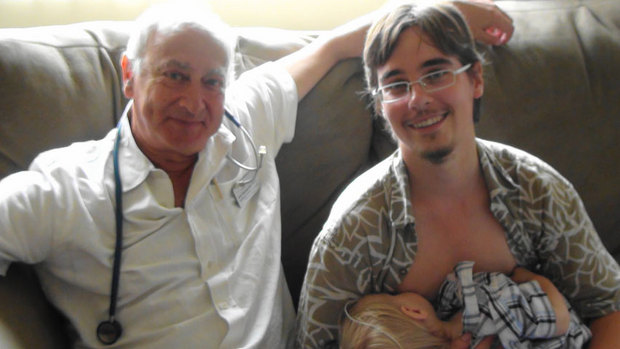
Trevor MacDonald with breastfeeding guru Dr. Jack Newman

Trevor has a blog, Milk Junkies, in case you’re interested in checking it out. He has also started a Facebook group called Birthing and Breastfeeding Transmen and Allies.

20 books that I hope Theo reads when he’s older, part I

20 Aug

It’s not exactly a big secret that I love reading (also – that would be a pretty weird thing for me to keep secret). I’m 30 and I still get crushes on fictional characters, although maybe I have better taste now than I did as a moony teenager in love with Holden Caulfield. One of my greatest hopes for Theo is that he will grow up to love books even a fraction as much as I do. In light of that fact, I’ve created a list of 20 books that I loved when I was a kid as a sort of starting point for Theo’s future reading career. Because it’s never too early for this sort of thing, right?

Keep in mind that I haven’t read some of these books in, like, 20 years, so my reviews/descriptions might not be entirely accurate. However, what I can offer you is the dominant impression these books leave me with so many years after the fact:
Image

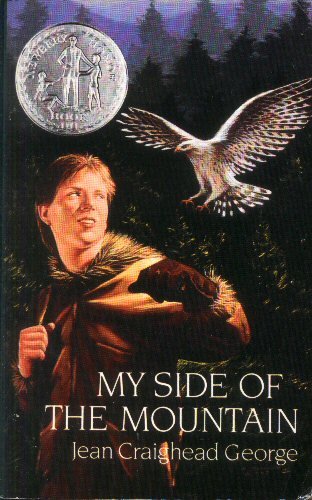
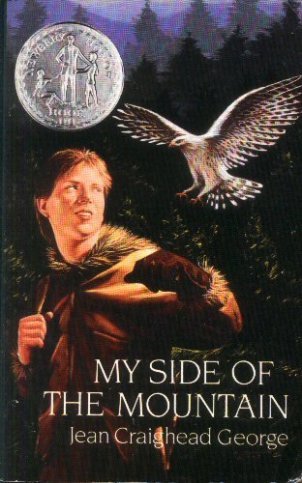
1. My Side of the Mountain by Jean Craighead George, 1959

This is a book about a 12-year-old boy, Sam, who gets sick of living in his parents’ crowded New York City apartment with his 10,000 8 brothers and sisters. His solution to this problem is to take off for the Catskill Mountains and find this piece of property his family abandoned years before (they used to have a house or something there, like, three generations ago, but then they moved to the city I guess).

Sam tells his parents that he’s going to run away to the mountains and basically says that he will go whether they’re cool with it or not, so they totally let him go. Um, amazing! How come my parents weren’t that cool when I was 12? Anyway, he apparently learns some wilderness skills or whatever at the public library (TAKE THAT, ROB FORD), and then is all, see ya, giant family and tiny apartment.

My main memory of this book is that this kid was fucking SERIOUS BUSINESS. He finds a peregrine falcon that he trains to hunt for him. He lives in a tree. He almost dies, like, fifty times. At one point he is skinning a rabbit and is like, hmmm, I really want to eat his liver. So he does, and then he’s like, welp, I guess I was vitamin D deficient. I don’t know why, but that scene struck me as especially hardcore. HE ATE A LIVER, YOU GUYS. A LIVER. I guess liver really grossed me out when I was young?

Another big impression that this book left on me was that I was a huge wuss. I would never, ever go off and live in the mountains by myself in a house that I had to dig with my own hands. I could never be that self-sufficient. Also, I could never go that long without seeing another human face (even if occasionally I fantasize about it). In spite of my wussiness, though, I still managed to identify with Sam because, hey, who doesn’t want to run off and leave everything behind sometimes? Who doesn’t want to push themselves to the limit to discover how much they can endure, and how much they’re really capable of?

And I guess that’s the main message I got from this book: if you really want something, and you really prepare for it, you can achieve it. And also maybe you will get a sweet pet falcon out of the deal.

Image

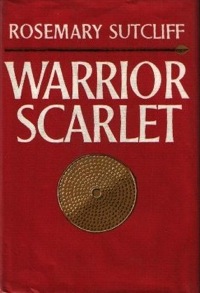
2. Warrior Scarlet, Rosemary Suttcliff, 1958

This one takes place in Britain, during the Bronze Age. It tells the story of Drem, a kid with only one functioning arm. The thing is, Drem really, really wants to be a warrior (in case you were wondering, this is kind of a Big Deal in his tribe). At first everyone is all, no way can you be a warrior, your arm doesn’t even work! You’ll have to go live with the sheep-herders. Have fun with the sheep, Drem! And then they’re like, well, I guess you can train with the other youth. Maybe.

So of course Drem goes to train with the other boys his age, seems to prove that he’s able to keep up with them, and totally starts to get over the fact that he’s different. He even starts to bond with his peers! BUT (you totally knew there was a but coming here), in order to become a warrior he has to kill a wolf. And of course the killing gets all fucked up (the wolf injures him really badly, so his friend steps in to help, which is TOTALLY NOT ALLOWED according to the tribe), and it looks like Drem will be spending the rest of his life with the sheep people. Of course, some other stuff happens, Drem ends up somehow killing the exact same wolf he failed to kill years before, and there’s a happy ending where he completes the super seekrit initiation ceremony and becomes a full-fledged warrior. Yay! Everybody wins! Except the wolf, I guess.

My main memory of this book is how insanely fascinating, beautiful and bad-ass it made Bronze Age Britain sound. I remember poring, practically drooling, over passages about midnight bonfires and sacred rituals and ancient magic, and whoa, did I ever want to live in that world. I remember this being a book that I daydreamed about a lot, and that’s something that I want for Theo. I want him to have books that he loves so much he ends up spending hours and hours imagining what it would be like to exist within the confines of that story.

Plus, you know, super seekrit initiation. SO AWESOME.

3. A Wrinkle in Time, Madeleine L’Engle, 1962

First, can we all just agree that Meg Murry is awesome? She’s not conventionally attractive, she has self-esteem issues, she’s socially awkward, she beats other kids up, and she’s super smart. I mean, sure, she’s not as smart as Charles Wallace, but then who is? Anyway, she’s someone that a lot of people can identify with. And she ends up kicking major ass.

The book takes place in small town America (I want to say somewhere in New England, but I’m not sure) during the cold war. The Murrys are a family that includes two super-smart parents, their super-smart daughter Meg, their super-super-smart son Charles Wallace and their totally boring and average twins, Sandy and Dennys. Mr. Murry disappeared during some kind of secret science mission, and now everyone in their village thinks that he just ran off and abandoned his family. Oh and everyone also thinks that Charles Wallace is developmentally delayed, even though he’s a genius like whoa.

Anyway, Meg and Charles Wallace end up teaming up with some extraterrestrial-type ladies, Mrs Whatsit, Mrs Who and Mrs Which, and Meg’s hot schoolmate Calvin O’Keefe (who is super popular but ALSO has issues) in order to go rescue Mr. Murry. They travel through space and time in a sort of “wrinkle” called a tesseract (SCIENCE!!!!) and have some adventures before finally arriving at the planet where the force of ultimate evil darkness is keeping Meg’s dad prisoner. Even though you would think that it would be Charles Wallace who ends up saving the day (because he’s so frigging precocious), it’s actually Meg’s badass contrariness that gets everyone out of there alive. HIGH FIVE FOR SMART, CONTRARY WOMEN.

My main impressions from this book were: a) whoooaaaa I think I like science fiction and/or fantasy (it was probably the first sci-fi/fantasy book I read) b) I wish I could be part of the Murry family and c) I triple wish that Calvin O’Keefe was my boyfriend (he is seriously so nice, you guys don’t even know). It’s a book about a smart, resourceful young woman who realizes that she’s strong and awesome and ALSO she gets a hot, nice boyfriend without even changing anything about her looks. He even tells her he likes her in glasses! Aw, you guys, I love this book so hard.
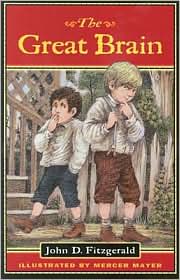
 

4. The Great Brain, John Dennis Fitzgerald, 1967

This is actually the first of a series of books about Tom Fitzgerald, the titular Great Brain. The books, which are set in late 19th century Utah, are narrated by Tom’s long-suffering younger brother, John. See, Tom is a genius, but he only wants to use his powers for evil, i.e. “swindling” people out of their possessions and thinking up get-rich-quick schemes. He also does things like trying to frame the schoolteacher for being “a drunk”. You guys, these were THE BEST BOOKS EVER, basically.

No, but seriously, even though Tom occasionally receives his comeuppance, he still gets away with a lot of stuff. When I was a kid, I mostly wanted to hang out with him and stir up shit and learn how to swindle people out of their possessions because, hey, it sounded like a lot of fun! Plus, they had so many whacky adventures. If these books are anything to go by, Utah is way more fun than any place I’ve ever lived.

Image

5. Le Petit Prince, Antoine de Saint-Exupéry, 1943

There is some kind of law that every French-speaking person has to read this book at least once over the course of their childhood. Now, let’s be totally clear: no kid is going to understand this book. They might enjoy it, but they won’t understand it.

Plot-wise, the book is about a pilot who crashes in the Sahara and is struggling to survive. One day, a young boy, the titular Little Prince appears. Now, this Little Prince is from space (!!) where he lives on his own personal asteroid (!!!) that has three active volcanoes (!!!!) and one rose. Weirdly, the humanoid prince falls in love with the rose (to be fair, I guess he didn’t have a whole lot of options in terms of life partners), who then lies to him because she’s super vain and kind of rude. They break up for a while, but then I guess they get back together.

The Little Prince decides he needs to explore the universe, so he sets off to visit a bunch of other asteroids, each of which is populated by a single, ridiculous adult. One of these adults, a geographer, is all, hey, you should totally check out the planet Earth! And the Little Prince is like, okay cool!

On Earth, the prince meets more ridiculous adults, and discovers that his rose isn’t beautiful or unique after all. He’s pretty bummed about this until he meets a fox (who totally steals the spotlight and gets the best lines in the book) who convinces him that yeah, dude, your rose IS special because she’s the one you love. Whoa! Revelation!  The prince also meets a weird snake who tells him that he can send him back to his home asteroid, but the prince is all, no, that’s cool, I’m good for now.

Anyway, the prince tells this whole story to the pilot, and then helps him find a well so that he doesn’t die of thirst or whatever. Then the prince is like, welp, I guess I’ll go find that snake again! The pilot realizes that the Little Prince will have to let the snake kill him in order to get him back home, and tries to convince him to stay on Earth. The prince totally ignores him and lets the snake bite him. Sorry, pilot! The story ends with the pilot looking for the prince.

As a kid you read this book and you’re like, hmmm, I guess this is fine. It’s kind of funny or whatever. Then you read it as an adult and you’re like, oohhhh, I get it. Adults are boring and totally sucky, while kids are awesome (fact). Also we have to appreciate the people we have in our lives who love us, and not spend time comparing them to other people (double fact). And finally, you realize that you want to spend all day hanging out with the fox, who says things like, “On ne voit bien qu’avec le cœur. L’essentiel est invisible pour les yeux.” (One sees clearly only with their heart – the essential is invisible to the eyes)

As an adult, I’ve read Saint-Exupéry’s other books, and have realized that he is this crazy amazing poetic philosopher. Wind, Sand and Stars is, in particular, my favourite. But I’m glad that I read The Little Prince when I was a kid, even if I didn’t understand it. I’m glad to have my childish impressions so that I can compare them to how I see the book now – I think that’s especially important given that it’s a book about the magical worldview children have that we lose as we age.

I’ll finish off here with a quote from Wind, Sand and Stars:

Old bureaucrat, my comrade, it is not you who are to blame. No one ever helped you escape. You, like a termite, built your peace by blocking up with cement every chink and cranny through which the light might pierce. You rolled yourself up into a ball in your genteel security, in routine, in the stifling conventions of provincial life, raising a modest rampart against the winds and the tides and the stars. You have chosen not to be perturbed by great problems, having trouble enough to forget your own fate as man. You are not the dweller upon an errant planet and do not ask yourself questions to which there are no answers. You are a petty bourgeois of Toulouse. Nobody grasped you by the shoulder while there was still time. Now the clay of which you were shaped has dried and hardened, and naught in you will ever awaken the sleeping musician, the poet, the astronomer that possibly inhabited you in the beginning.

Stay tuned for parts II, III and IV. And please feel free to leave book suggestions in the comments – if I get enough of them, I will do a whole post about your suggestions. I would write about books all day every day, if I could.

p.s. Can we all just agree that Holden Caulfield would be, like, the worst boyfriend in the history of ever?

Theo at 19 months (or, you guys, my baby is so old now)

18 Aug

Dear Theo,

You’re 19 months old today! I meant to write a post about you when you turned 18 months, but then July got a little crazy and by the time things settled down, you were almost not 18 months old anymore, so I apologize for that. Lucky for me you’re still illiterate, so hopefully you’ll never know about my little faux pas. That is, unless I post it to some kind of “web” that is “world wide” that never forgets anything you post on it ever. Oh wait. Well, maybe the internet won’t exist by the time you’re old enough to Google your own name.

You are a super rad kid. You are so full of mischievous energy that it’s hard to keep up with you sometimes (okay, most times). I love you so hard.

You’ve got an adventurous streak a mile wide. You’re totally happy to run off in any direction and just assume that a responsible adult will follow you. You are becoming more and more interested in testing boundaries, but you’re so funny and cheeky about it that it’s hard not to smile instead of correcting your behaviour.

You’re talking all the time now, and starting to put together a few small (as yet verbless) sentences. One of my favourite things is to ask you what your name is, because you will proudly point to yourself and say “baby!” I love going for walks with you, because you point out so many things to me – we have lengthy discussions about every fire hydrant, bus and tractor that we pass.

One amazing thing that has happened in the last few days is that you are starting to become interested in letters. Your favourite is the letter O – you point it out everywhere you see it and say “ooooooh”. When you see a D, you say “woof woof!” because D is for dog. I’m so excited that we’re jumping into this world of letters and words and reading. I hope you’ll love books as much as I do.

I love the names you make up for the people around you. I’m Mama and your father is Dada, of course, and then there’s Gaga (your grandmother), Nana (either our friend Nathalie, or Anna who works at the Early Years Centre), Mimi (Nathalie’s daughter Marine, who babysits you), and Gack (Jack Layton, who I have totally taught you to recognize). Now if only you would learn to pronounce Catherine and Claire, you would have a pair of very happy aunts.

You’re finally starting to become more interested in solids, although you still nurse quite a bit. You’re tall and a little on the skinny side, but you come by that honestly from your father. From me, you got your love of all things carbohydrate. Every time that we go to the store you demand that I buy you bread. That’s my boy!

You love reading, playing with your train set, playing “house” with your little people, and above all, you love any toy with wheels on it. You love music and dancing, and your two favourite songs are The Perpetual Self, Or What Would Saul Alinsky Do? by Sufjan Stevens and Call Me Maybe by Carly Rae Jepsen. You will specifically ask for each of these songs.

You love going to the park, donning your “yark” (shark) bathing suit and splashing around in the wave pool. You go to the park several times a week with Marine; now when I take you I feel like you’re a celebrity, because everyone there knows and loves you. You adore Mo, a little girl we often see at the park – when you catch sight of her you call out “Mooooooooohhhhh!”

You’ve definitely got a budding sense of humour, and you’re nearly always in a good mood. It’s very rare for you to cry, even if you fall and hurt yourself. You’re curious, crazy stubborn, and above all, you’re so much fun. I love you so much.

My little yark

The so-called Mommy Wars (or, what I learned from watching the X-Files)

15 Aug

If you are a person living in the world who has children, knows people who have children, or has ever spent any time on the internet, you’ve probably realized that people like to debate various parenting ideologies.

Now, for most of human history, I would say that the dominant parenting philosophy has been do the best you can with what’s available to you and hope that your children survive until adulthood (and also it would be nice if they didn’t turn out to be serial killers or Rob Ford or whatever). In fact, this same philosophy is still employed in many parts of the world today. However, for those of us living in the western world, most of us have more options when it comes to how we raise our kids. More options should equal everyone is happier and has a better time, right? Wrong.

Maybe I should rephrase that first sentence: if you are a person living in the world who has access to the internet, you have probably heard of the (sigh) Mommy Wars.

Can I just take a moment to say how frigging much I hate the term “Mommy Wars”? Like, a lot. For one thing, who put the mommy in mommy wars? Yes, every child has a biological mother (I mean, probably – but I’m not super up on science or whatever, so I could be wrong), but many children have other styles of parents or guardians, mostly fathers, but also sometimes grandparents, aunts, uncles, etc. So why the focus on mothers? Oh right, because women are crazy and can’t control their emotions society loves to crap on women.

Full disclosure – I watched a lot of X-Files growing up. Like, I could probably still recite entire chunks of dialogue from that show. Because I am aware of Mulder’s lasting influence over me (paranoia! the unexplained! the government is up to something!), I am hesitant to be all THIS IS A CONSPIRACY. But, you guys, I think this might be a conspiracy.

Here’s the thing: I really do believe that one thing holding women back from achieving equality with men is the fact that we’re too busy fighting viciously amongst ourselves. The energy we spend snarking and nitpicking and flat-out attacking each other could do so much good in the fight against the injustices that we face, if only we could see the bigger picture. And who does it benefit the most to keep women from seeing the bigger picture? Well, you know, the patriarchy.

Although men don’t often participate in the more vitriolic discussions surrounding parenting, many of the things that perpetuate the “mommy wars” (you have no idea how much it makes my skin crawl to have to keep typing that out) come from men. Men in the media who continue to remind us that breastfeeding beyond a certain age is weird and gross (for example, Martin Schoeller, the photographer whose contentious oeuvre recently graced the cover of Time Magazine), men in politics who think they should tell us how, when and why to have children, male doctors weighing in on parenting philosophies that really have negligible impact on children’s physical health, and even the frigging Pope who somehow thinks that he gets some say over our sex lives.

The patriarchy doesn’t want us to be better mothers; it wants us to become so consumed by the idea of doing it “right” that we don’t notice how little power and agency we have in our lives. It wants us to continue to be distracted by busy work so that it can continue to do what it does best: try to run our lives.

Let’s face it – most of the debates that fuel the “mommy wars” (stay-at-home mom vs. working mom, breastfeeding vs. formula, babywearing vs. not babywearing, bed-sharing vs. cribs) are just one valid choice pitted against another valid choice, with the same arguments being repeated over and over, ad nauseam (no, seriously, I actually feel a little nauseous sometimes). The thing is, all of the above parenting choices are fine. No one is a bad parent because of ANY OF THESE THINGS. Every parent is different, and every kid is different, and same style of parenting isn’t going to work for everyone.

So let’s all step away from our computers, take a deep breath and realize that being a parent is really fucking hard work. And you know what the best way to get through these tough times is? Supporting each other, and supporting the choices other people make. Let’s all hug it out and promise to have each other’s backs, okay?

Oh, and let’s get out there and kick the patriarchy right in the balls, you guys.

Image

… that it’s possible to be a parent and not be a dick about it

Voyeurism

14 Aug

My mother has often accused me of being a Nosey Parker. And it’s true, I am. If you are sitting next to me in a coffee shop tearfully breaking up with your girlfriend, I will totally eavesdrop. If you are standing close to me on the subway reading a book, I will try to get a look at the title – and if it’s something I’ve read, I will crane my neck to try to see what page you’re on. If you drop a torn-up, handwritten letter in the middle of the street, I will totally pick it up, read it, and then post it on the internet.

So, you know, fair warning.

Anyway, I found this today:

Front:

… this relationship, and I sta … 

You should learn to treat women with fairness, equally and with respect, if you want respect back. Stop being ridiculous always trying to see if the grass on the other side is greener. I consider myself old for this games you should’ve think of this before you went ahead, hiding, over the phone conversation (like you didn’t want me to heard you go upstairs secretly).

I don’t need this shit in my life this … kind of stress, I am pretty sure …

Back:

… with that money you … better. With lot more space for your clothe for your things in general.

ALL I want to say is “you are right”. I have also many reason to start by saying that for better or worse this is the best for the both of us.

Lately you are in a bad mood more often and that’s because you are not happy anymore, and I understand.”

So much heartbreak in such a tiny handful of sentences. So much to wonder about – how did the author go from demanding respect for herself and calling her lover out on his or her bad behaviour to saying that their lover is right and they understand? What happened in the missing paragraphs? Who tore it up and left it in the street – the person who wrote it, perhaps thinking better of it, or the person who received it?

So many mysteries contained in one rain-dampened, ragged-edged piece of paper.

Ah, life.

The Gender Gap (or, what’s up with baby clothes, you guys?)

14 Aug

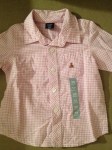
I bought this shirt for Theo today. I bought it for one reason, and one reason only: it’s pink, and it’s clearly labelled “baby boy”.

Can we just take a moment here to consider how amazing it is that Gap, a major retailer, has pink and lavender in their baby boy section?

Can we also take a moment to consider how incredibly depressing it is that, in my two years of shopping for baby clothing, this is the only time that I have ever seen pink or lavender in the boys’ department of any store? And trust me, there have been many stores; I’m, like, a shopping professional.

It’s not exactly a huge revelation to say that baby clothing is hyper gendered these days. Which sucks on several levels. Let’s work through those levels, starting from the most shallow and then digging a little deeper.

First of all, boy clothes are hella boring.

Boy clothing (even baby boy clothing) all tends to be depressingly similar. The major themes are: sports, cars/trucks/other machinery, “boy” animals (think dogs, snakes, bugs, sharks, etc.), rock music, and “cute” (read: stereotyped) sayings, like “mothers, lock up your daughters” and “strong like daddy”.

Not only that, but the colour scheme is always the same: navy blue, grey, brown and dark green.

ZZZZZzzzzzzzzzzzzzzzz

Oh wait, is this post still happening? Sorry, I got so bored thinking about boy clothes that I fell asleep.

Anyway. Moving on.

Secondly, have you ever wondered why baby clothing in particular is so gendered? I mean, it’s actually worse than clothing for preschool/school-aged children. Know why? Because all babies look the same.

I mean, obviously they don’t actually – some babies have dark skin, some babies have birth marks, some babies are Asian, some babies have a lazy eye, and so on. What I really mean is that babies don’t look like one gender or the other. Babies are basically totally androgynous.

So, how do you save someone from the horrible embarrassment of thinking that little Molly is actually a boy? You girl the shit out of her. Lace, bows, a giant flower headband for her hair – you coat her in layer after layer of femininity in a desperate attempt to prove to the world that she’s genetically XX, not XY.

People love making comments about babies’ genders. When I’ve been out and about with Theo, I have had so many people say to me, “oh, he looks like such a boy,” or “he’s got a really masculine face, doesn’t he?”

The funny thing is, when Theo was younger I dressed him in a lot of my old baby clothes, some of which were pretty damn feminine. A lot of people assumed that he was a girl, and cooed over how cute and ladylike his features were. WHO HAS A MASCULINE FACE NOW, EH, RANDOM STRANGERS THAT I MEET ON THE STREET?

So why is this all so important? I mean, why do I care how people dress their kids? Well, that brings me to my final point:

Society is made incredibly uncomfortable by anyone who doesn’t conform to gender norms. Especially boys.

This is one of the very few things that scare the shit out of me about raising a boy.

I read this excellent, intelligent and occasionally heartbreaking piece in the New York Times magazine this past weekend, and one paragraph in particular jumped out at me:

These days, flouting gender conventions extends even to baby naming: first names that were once unambiguously masculine are now given to girls. The shift, however, almost never goes the other way. That’s because girls gain status by moving into “boy” space, while boys are tainted by the slightest whiff of femininity. “There’s a lot more privilege to being a man in our society,” says Diane Ehrensaft, a psychologist at the University of California, San Francisco, who supports allowing children to be what she calls gender creative. “When a boy wants to act like a girl, it subconsciously shakes our foundation, because why would someone want to be the lesser gender?” Boys are up to seven times as likely as girls to be referred to gender clinics for psychological evaluations. Sometimes the boys’ violation is as mild as wanting a Barbie for Christmas. By comparison, most girls referred to gender clinics are far more extreme in their atypicality: they want boy names, boy pronouns and, sometimes, boy bodies.

I have rarely seen my thoughts on gender inequality so neatly distilled and pared down to one perfect sentence:

Girls gain status by moving into boy space, while boys are tainted by the slightest whiff of femininity.

YES. OH MY GOD YES.

It scares the shit out of me that there are people who would refer their son for a psychological evaluation because he asked for a Barbie doll. It frustrates me so much that we don’t have much in the way of support for kids who don’t fit neatly into the boxes marked “boy” and “girl (although obviously things are changing). And finally, it makes me incredibly sad to think that Theo will go through life with people constantly evaluating his masculinity, people who may resort to physical violence if they find him wanting.

I don’t know if Theo will ever question his gender, or want to engage in more traditionally feminine activities, or anything like that. I want him to grow up in a house where he can feel free to be who is, play with the toys he likes, dress the way he wants, and so on. I also want to protect him. I realize that these two desires may end up being mutually exclusive.

For now, I’ll offer him a variety of toys – trucks and trains, dolls and a kitchen set. I won’t narrow his world to only “boy” books and “boy” music and “boy” movies.

And, of course, I’ll dress him in pink checked shirts from the boys’ department at Baby Gap.