Archive | Uncategorized RSS feed for this section

Winter

30 Dec

I am not a winter person. Given my choice of the seasons, I’ll pick summer every time. I love the heat, and I even love the humidity. I like it when stepping out my front door feels like walking into an oven. I like the sun, the warmth, and the long evenings that are perfect for picnicking or taking your kid to the park or drinking sangria on patios with friends. I love lying in the grass and reading for hours on end. I love summer.

Winter is a tough time for me. It’s not just the fact that it’s so cold that, after coming in from a long walk, I have to stand in a scalding hot shower for fifteen minutes until I feel warm. It’s not just the fact that my muscles ache because the cold makes me tense up, makes me walk around hunched over in a desperate effort not to freeze to death. It’s not even the fact that it’s already too cold for me, and I know that it’s going to get colder still. It’s more than that, and it’s subtler than that. It’s the light, both the dim, chilly quality it assumes this time of year, and its waning quantity, meaning that we only get to see the sun for a few paltry hours every day. Even though we’re past the solstice and, logically, I know that the days will be getting longer from now until midsummer, it still, somehow, feels as if the days are growing shorter and darker as we head into January.

These days I feel as if I’ve lost the capacity for joy. I’ll catch myself mid-laugh and realize that I’m faking it, and I’m faking it so well that I’ve nearly got myself convinced. In the same way that it’s sometimes hard for me to believe that spring will ever come again, it’s also hard to believe that anything will ever make me feel good or happy again. I have these thoughts, like, hey, maybe at the beginning of my life I was handed out a finite number of good experiences and now, in the winter of my 30th year, I’ve somehow managed to spend the last one.

Part of it might be the fact that everyone seems to be making their year-end posts, tallying up all their successes and bundling them together into one neat little blog post package. I thought about doing one of those, but I know that I won’t. Every new year always seems to me to be like a fresh, white sheet of notebook paper, but by December 31st it’s so marked up, so wrinkled and worn, so covered with revisions and smudges and holes where I rubbed the eraser too hard that I can’t make sense of it anymore.Rather than dig through my year to find material for a year-in-review post, I just want to throw the whole thing out, baby, bathwater and all. As 2013 approaches, 2012 is still too close to give me the perspective I would need, and all my hurts and failures feel too fresh for me to be able to dissect them. Even my successes seem slippery and hard to pinpoint. The other day, as I was watching the hundreds of comments going up on the article I wrote for the Good Men Project, I messaged my friend Audra and said, “Is this what success is supposed to feel like? Because I feel awful.”

Sometimes succeeding feels just as bad, just as anxiety-inducing, as failure does.

Mostly I just want everything to be over. I don’t mean that I want to die or anything like that, but just that I’m so tired of trying to guess what’s coming next. I’m so tired of trying to figure out what to do next, how to take my next step, or which direction I need to go. I want all of my experiences to be over and done with so that I can sift through them and sort them into boxes labelled “good things” and “bad things.” Then, once I’ve done that, I’ll be able to sit back, write a life-in-review post, and judge whether, when looking at the big picture, the scale tips more towards happy or sad.

I’m so tired. So goddamn tired. The worst part is that I can’t even begin to imagine when I won’t feel like this. Maybe next year? Or maybe when Theo’s in grade school? High school? When he moves out? I can’t help but feel like it’s partly my fault, or even mostly my fault, for not sleep-training him, for breastfeeding for so long, maybe even for choosing to have a kid in the first place. I love my son, but I don’t think I can function like this for much longer. Then again, what would not functioning even look like? Will my legs just give out one day, my knees buckling under my weight, and I’ll have to lie on the ground until I’m rested enough to get up again? How do these things work?

If you asked me what I needed in order to feel better, what it would take to make me feel happy, I wouldn’t even be able to tell you. That’s what’s hardest about all of this: feeling as if it’s whatever it is that’s going to save you is totally beyond your control. If there is something that can save you. If that something, should it exist, ever manages to find you.

Sometimes I think that all of the little things that happen throughout my day, the meals, the conversations, the rote interactions, are nothing more than activities designed to get me from one minute to the next until I can finally lie down in my bed at night and sleep (or not). When seen this way, a life is nothing more than a string of days, days made up of pointless experiences meant to propel you through time. I mean, of course my experiences aren’t meaningless. Or maybe they are. I’m not sure.

I’m trying to think of some kind of life lesson to put in here, some kind of moral to this story, but I’m coming up totally dry. Maybe you can try to find your own moral, because sifting back through this mess of feelings seems like so much work. Everything seems like so much work, to be honest. I feel as if I’ve been sucked totally dry of any and all will or ambition or desire.

The winter here is beautiful. The snow, and the quiet, and the bare trees are beautiful. There’s a hush this time of year that you never feel in the summer, and I know I would miss it if I never felt it again. I don’t hate winter, and I don’t even necessarily need for it to be over, like, right now. I don’t even think I would like to live somewhere that was hot and sunny all year long. I just need something to pin my hopes on, something to look forward to, something to hold out for. I need something to focus on when everything seems so dark and cold that I don’t think I can stand it for one minute longer.

I just need to know for certain that spring is going to come.

IMG_2478

Idle No More

26 Dec

Last night, as we sat down to Christmas dinner, my mother’s dining room table practically groaning under the weight of all the food, I couldn’t help but think of Chief Theresa Spence, who is now on the 14th day of her hunger strike. As I piled my plate high with turkey, stuffing, potatoes and turnips, as the members of my family bowed their heads for grace and then raised their glasses in a toast, I thought of the woman who, only 100 miles away in Ottawa, was willing to die for her people.

Today, as others are rushing out to buy cheap goods in a glut of mass consumerism, I’m reminded of how very much so many of us already have, while others have so little.

Theresa Spence is the chief of the troubled Attawapiskat First Nation, a Cree community near James Bay, which drew media attention earlier this year due to its ongoing housing crisis. Residents in Attawapiskat, and many other First Nations communities, face a shortage of funding when it comes to, well, just about everything, but the situation is especially dire with regards to housing and education. Late 2011 found families in Attawapiskat, including young children, living in uninsulated tents; some of those who were lucky enough to have more adequate housing still lacked basic necessities like running water, and were using buckets for toilets. Although the crisis in Attawapiskat drew significant media attention, it seems that little there has changed over the course of the year.

Chief Spence’s hunger strike and the Idle No More movement it helped spark aren’t just about the subhuman living conditions in Attwapiskat and other reserves, though. It’s not just about the dire conditions found on so many First Nations reserves across the country. It’s not just about Bill C-45, which was passed earlier this year and both reduces the federal protection for Canadian waterways and also facilitates the government selling of reserve lands without consultation. Yes, it’s part of the fight against all those injustices, but it’s also about so much more.

It’s about the fact that our government has continued to ignore or downplay the rights and needs of this country’s Indigenous Peoples.

It’s about the fact that a small group of powerful, mostly white people still insist that they know what’s best for the diverse and culturally rich Canadian First Nations, even though history has proved time and time again that they don’t.

It’s about the fact that Prime Minister Stephen Harper publicly apologized in 2008 for the Canadian residential school system, which forced countless Indigenous children from their homes and into schools where they were beaten, sexually abused and grossly mistreated, and actually promised to help forge a “new relationship” with the First Nations based on “partnership” and “respect”, and yet refuses to meet with Chief Spence.

It’s about the fact that the next year, at the 2009 G20 summit, Harper said that Canada had “no history of colonialism.”

It’s about the fact that in the years since Harper promised to improve relations with First Nations peoples, he has instead cut aboriginal health funding, and his government sent body bags to a Manitoba reserve after its leaders requested federal assistance in dealing with an outbreak of swine flu.

It’s about the fact that over 600 Aboriginal women are missing, and no one seems to give a shit.

It’s about the fact that the Indian Act is so fucking oppressive that I don’t even know where to start. For one thing, a First Nation can only be “formed” and formally recognized by the crown if the Minister of Indian Affairs approves it, even if that nation and its people have existed since long before white settlers came to North America. For another, First Nations peoples have very little control over reserve land, and the Minister must approve any land sales or transfers. Not only that, but First Nations people need to seek government approval for selling or bartering any crops, livestock and other products grown, reared or cultivated on reserve lands; any First Nations person failing to do so will be guilty of an offence. Reserve lands, including roads, bridges and fences, must be maintained by the Band Council, and if the Minister decides that they’re not doing an adequate job, he can order them to make repairs, and any money for those repairs must come from the Band Council. Oh, and if you’re an Indigenous Person, you’d better hope that the government doesn’t declare you to be “mentally incompetent”, as that means that the Minister can force you to sell, lease or mortgage your land as he sees fit. Even a dead Indigenous person isn’t safe from the Minister; no wills drawn up on reserve lands are considered legally valid until the Minister approves them.

Like, what in the actual fuck? Other Canadians don’t have to live this way, and if they did, there would be a fucking revolution. Why are we okay with our government treating the First Nations this way? Even worse, why do people make remarks about Indigenous Peoples wanting special treatment, sneering at things like government-funded post-secondary education and exemption from paying certain taxes. To anyone privileged enough to make comments like that, I have only this to say: you fucking try living through a Northern Ontario winter in an uninsulated tent, shitting and pissing in a bucket and knowing that the government maintains control over nearly every aspect of your lives but pretty much refuses to lift a finger to help you, and then come talk to me about special treatment.

Chief Theresa Spence’s demands are simple: she wants to meet with the Prime Minister and the Governor General. She wants to sit down with them and discuss the plight of Canada’s Indigenous Peoples. She has said that, should Harper refuse her request, she will die for her people.

Harper won’t meet with Spence. Instead, as Spence starves herself in a teepee near the Parliament buildings in Ottawa, he’s enjoying Christmas with his family in Calgary, and composing hilarious tweets about bacon.

Rather than engaging Spence himself, Harper has deputized his Minister of Indian Affairs, John Duncan, to meet with her. Duncan, in turn, has publicly decried Spence for refusing to meet with him, and has urged her to end her hunger strike, out of “concern” for her health. As if it’s not offensive to Indigenous Canadians to say that our Prime Minister is so busy and important that he has to pawn them off to the ministry that has been specially created to deal with them. As if there’s nothing inappropriate about a white man to telling a First Nations woman how to behave or what to do with her body.

Look, I’m not a member of the First Nations. I’m a product of colonialism, descended from settlers who came here from France in 1645. I’m as white as they come. But that doesn’t mean that this isn’t my fight. This should be every Canadian’s fight. The treatment of the First Nations peoples should matter to everyone, no matter what the colour of their skin; this is a case of human rights, not just Aboriginal rights. We all need to take action on this issue.

At the end of the day, we all share the same country. And we need to make this a country that treats all of its citizens with dignity and respect, not just its white citizens, not just its privileged citizens. Other countries view Canada as a fair, peaceful nation where all people have the same rights and privileges – we as Canadians need to start living up to that reputation.

The Canadian First Nations have spent more than a century waiting for things to improve, waiting for better treatment at the hands of the government and hoping that every new promise made by each successive Prime Minister would prove to be more substantial than the empty talk of all the ones that came before. The time to wait is over; now it’s time to stand up and fight back.

Thank you, Chief Theresa Spence, for being so brave, braver than I could ever be. I stand in solidarity with you.

Attawapiskat Chief Theresa Spence

Attawapiskat Chief Theresa Spence

Home for Christmas

24 Dec

By the time I finished high school, I couldn’t wait to get the hell out of Dodge Kitchener. Actually, that’s a lie – I’d been planning my escape since sometime in my early teens; it’s just that in my final semester of secondary school, my need to leave and branch out on my own was becoming dire. Part of it was that I just plain hated Kitchener (sorry, fellow Kitchenerites – I’ve since revised my opinion somewhat!); I was a pretentious kid who read French existentialists and smutty Leonard Cohen books, and I saw myself as being too big, too smart for my provincial hometown. Part of it was that I was sure that people only thought of me as a loser geek because they were accustomed to doing so; I thought that if I moved somewhere where no one knew me, my new peers would be sure to recognize me for the super smart intellectual with a killer fashion sense and razor sharp wit that I was. But probably the biggest reason for wanting to leave Kitchener was my family.

As the oldest child in a single parent family whose siblings were 6 and 11 years younger than her, things were, well, less than stellar. For one thing, I did a lot of free babysitting duty, which made it hard to get an after school job and earn a few dollars for myself. This, in turn, made it hard to keep up with classmates whose families were better off than mine; my clothes weren’t as nice as theirs, I didn’t always get to go along on class trips, and in my last year of school, I couldn’t afford the $20 student card, which meant that I didn’t qualify for any of the student awards. Because my mother only had a certain number of sick days per year, and because little kids tend to spend a lot of time getting sick, I was often the one to stay home with my sisters when they were running a fever or had the flu. Worst of all, or so it seemed to me, I was perpetually stuck in little-kid land. Our family television was occupied with an endless loop of Barney, The Lion King and (worst of all) Mary Kate and Ashley Olsen; I wasn’t allowed to watch any of the shows that I wanted, because they were all “inappropriate” (like, whatever, the X-Files is clearly fine for all age groups), and even just suggesting that we could turn the television off and enjoy some peace and quiet was met with a chorus of screams and protests.

I mean, sure, none of this seems that bad in retrospect, and some of it even makes me sound downright whiny, but when I was 16 all of this stuff felt like a Big Deal.

So when it came time to apply to universities, I pinned all of my hopes on one way out on the east coast, nearly 1,500 miles away from my mother’s house. I received an early offer of acceptance, which I jubilantly waved in my mother’s face. When my sisters asked if they could come visit me, I smiled and said, sure, but secretly I was thinking, so long suckers. Freedom was so close that I could taste it.

In September of that year, I packed a huge rubbermaid container full of clothing and books and set out on my 36 hour train trip to Halifax. As I hunkered down in my seat, staring at the Eastern Ontario woods and listening to Tori Amos on my discman, I thought about the fact that no one on that train knew who I was. I was finally free to be whoever I wanted to be.

University life, of course, wasn’t exactly the dreamland I’d pictured it to be. For one thing, it turned out that, even stripped of all my history and baggage, I was still a loser geek. After a few years in Halifax I would find a way to make that work for me, but that first semester was tough, sometimes bordering on downright awful. For one thing, while none of the people I met had any preconceived notions about my nerdiness, the flip side of that was that they didn’t have any positive associations with me, either. Determined to prove that I was just as cool as they were, I became unbearable, trying to show how smart I was by loudly talking over people, attempting to make “interesting” and “daring” fashion choices while actually making a fool of myself, using alcohol to get over my shyness and then spending the rest of the night throwing up in my dorm room sink. By the time late November rolled around, it was pretty clear to me that I was failing miserably at convincing everyone that I was witty and cool. Worst of all, I was surrounded by people who thought that I was a huge loser 24/7. I realized that there was something to be said for having a family who was obligated to love me unconditionally to come home to every night.

I distinctly remember the moment that I realized how homesick I was. I had a part-time job working in a clothing store, and one evening, as I was folding t-shirts, I started crying when Judy Garland’s version of Have Yourself A Merry Little Christmas came on the radio. Although I tried to be discreet about wiping away my tears, my boss noticed that I was a snotty, sniffling mess and asked me what was wrong. “I miss my mom,” I howled, running towards the stock room to hide my shameful, babyish sobs. What the hell had happened to the hopeful, confident girl who had left Kitchener just a few months ago? I honestly didn’t know; the only thing that I was certain of was that I wanted to go home.

The day after I finished exams, I flew into Toronto’s Pearson airport, then from there took a bus to Kitchener. When my mother and sisters met me at the downtown bus station, I hugged them all tightly. I could tell by their faces how excited they were to see me, and I wondered how I could have ever left people who loved me so damn much.

Of course, a few weeks at home reminded me of all the little, irritating things that had driven me away in the first place, but when the new year rolled around and I left once again for Halifax, I had a better appreciation of all the good things I was leaving behind along with the bad.

My relationship with my mother and sisters has greatly improved over the last decade. Now I love coming home to visit; it’s hard to put into words the comfort of being around people who have had the same experiences as you, who speak the same family shorthand, who understand all the in-jokes. Of course, that also means that they probably know all, or at least most, of your excruciatingly embarrassing moments, but the further I get from my teenage years, the more those memories seem funny instead of painful. And, anyway, I know enough of my sisters’ embarrassing moments to give back as good as I get, which all part of how nature intended the family eco-system to stay in balance: everyone has dirt on everyone else, and dredging up your sister’s awkward past means that your own becomes fair game. This means that my family’s golden rule is, don’t dish it out unless you’re sure you can take it, and by “take it”, I mean, laugh at yourself.

Being home this year has reminded me of just how true the old adage about it taking a village to raise a child is. We’re pretty isolated, family-wise, in Toronto; getting some time to ourselves means a lot of planning and orchestration. We’re lucky to have several fantastic babysitters for Theo, but, of course, their fantastic-ness means that they’re in high demand, and it can be tricky to book time with them. And, of course, having to pay for someone to watch Theo whenever we want to go out to see a movie makes date night thrice as expensive as it used to be, so sometimes Matt-and-Anne time just isn’t financially feasible. Here, though, we can hand off Theo to his Gran and Aunties just about anytime we want, and they, of course, are delighted by the chance to spend time with the grandson/nephew that they rarely get to see. And Theo, of course, is downright thrilled to be around my mother and sisters. He loves his babysitters, of course, but there’s really no substitute for a grandmother, is there?

After a tough few months during which Matt and I were both pulling a lot of hours at work, coming home for Christmas this year feels a lot like it did in my freshman year. I thought we were doing fine on our own, I thought that we were free and independent and grown up, but being at my mother’s house has made me realize just how much I’ve missed my family.

theo_tree

Dear NRA, The Answer Is Almost Never More Guns

21 Dec

By now, you’ve almost certainly heard about the NRA’s press conference earlier today regarding the Sandy Hook school shooting. After waiting a week and remaining “respectably” silent (do you think they meant “respectfully”?), they are now ready to tell us how to solve the problem of gun violence:

More guns.

I mean, naturally, the answer is always more guns, isn’t it?

It gets worse, though; the answer isn’t just more guns, it’s GUNS IN SCHOOLS.

That’s right, you read correctly: the answer is armed personnel in schools in order to protect innocent children.

Because, says the NRA, the real truth is,

…that our society is populated by an unknown number of genuine monsters. People that are so deranged, so evil, so possessed by voices and driven by demons, that no sane person can every possibly comprehend them. They walk among us every single day, and does anybody really believe that the next Adam Lanza isn’t planning his attack on a school, he’s already identified at this very moment?

Because it’s fear-mongering and exploitative when people rightfully point out how dangerous automatic and semi-automatic weapons are, and how lax gun control laws lead to tragedies like what happened at Sandy Hooks, but it’s totally not fear-mongering to say that society is populated by an unknown number of genuine monsters.

And because having men and women carrying guns in our schools is totally going to make children feel safe. Seeing an armed man or woman every day definitely isn’t going to make them feel as if being at school is a dangerous, life-threatening activity.

I mean, pardon my language, but Jesus fucking Christ, when does it end?

Is there ever going to be a time when more guns isn’t the answer?

Don’t worry, though; the NRA has another solution to gun violence.

They want a national registry of the mentally ill.

Yes, you heard that correctly: they don’t want a firearm registry, but they want the government to register every single person diagnosed with a mental illness. Because apparently what they’ve taken away from the whole “now is the time to talk about mental illness” discussion is that, rather than improve access to mental healthcare and work to reduce stigma, what we actually need to do is keep tabs on all the crazy people.

Never mind the fact that the mentally ill are four times more likely to be the victims of violence. Never mind the fact that “mental illness” is an incredibly broad category that includes an array of disorders ranging from anorexia nervosa to depression to schizophrenia. Never mind the fact that not all people with mental illness are violent, and not all violent people are mentally ill. Let’s just get on with this and start keeping tabs on the one in four Americans who have been or will be diagnosed with a mental illness at some point in their lifetime.

And fuck, I know that it doesn’t even bear saying, but how the hell do you think this will affect the stigma surrounding mental illness? Do you think that people will be more willing to go to their doctors and ask for help if they know that a diagnosis will land them on a national registry of people that the NRA believes to be deranged, evil monsters?

There is one thing, and one thing only that I agree with the NRA on: we live in a culture of violence. We live in a society that not only normalizes but celebrates violence. What I can’t wrap my head around is the fact that they don’t seem to understand that owning and using a gun contributes to that culture of violence.

I also don’t think that Grand Theft Auto makes anyone go on violent rampages, but hey, what do I know? Not as much as the NRA, apparently.

Look, I get it – guns don’t kill people, people kill people. But you know what? Adam Lanza would have been able to kill a fuck of a lot less people had he been carrying a knife, a club, or a crow bar. Saying that guns don’t kill people, etc., is like saying that polio doesn’t kill people, shitty immune systems do. But guess what? You still wouldn’t have died of polio had you not been fucking exposed to virus in the first place.

You guys, the way we view guns and violence is fucked up, and we need to fix it. I don’t know what the answer is; I can theorize, based on events that have happened in other countries, that stricter gun control is what’s needed, but it’s true that I can’t say for sure that that would fix everything. What I do know that is the answer is definitely not more guns. The answer is not a national registry of the mentally ill. And the answer is most definitely not armed personnel in schools.

gun-da-kop2p44

Obligatory Christmas Post

21 Dec

I know it’s been a while since I’ve written here. I mean, four whole days without a blog post – that shit is, as they say, crazy.

Part of my lack of posting has been because I took some time to write a piece for the Good Men Project about rape culture, and how it affects men. The editors really liked my article (squee!), but shit kind of got real in the comments. Let’s just say that many, many people disagreed with me (there were nearly 200 comments at last count), and found me to be of questionable intelligence. Oh well. It is what it is, it takes all kinds, and so on and so forth, you know? If even one person read it and was like, hmm, maybe rape culture is a thing, a thing that seriously contributes to the fucked up ways we talk about male rape victims then hey, I guess my job here is done.

The other reason that I haven’t been posting here is that I’ve been writing honest-to-goodness fiction. Like, not even a thinly-veiled autobiography, but an actual story about things that actually never happened to me. This is the first time that I’ve been able to write about pretend things for nearly three years, so I am kind of stoked. I just hope that I’m not jinxing myself by mentioning it here.

I don’t really have much else to say. I think I’m a little politicked-out, and I’ve also realized that I’m way happier when I write about things that don’t make me go into a blind rage. I’m sure I’ll be back tomorrow being all YOU GUYS DID YOU HEAR ABOUT THE LATEST ATROCITY, but tonight, in the spirit of the upcoming Christmas holiday, I want to share with you one of my favourite Christmas stories.

When I was in high school, I worked at Tim Hortons. Several times a week I donned a maroon and white striped polyester shirt and a pair of extremely flattering maroon polyester pants so that I could stand behind a counter and sell donuts for a couple of hours. While it wasn’t as bad as, say, the time my dentist didn’t give me enough anaesthetic before drilling into my tooth, it wasn’t exactly the highlight of my life, either.

One of the things Tim Hortons used to do back then was make custom cakes (they might still do this, I actually have no idea). You could fill out a sheet specifying what type of cake you wanted, what colours of icing, and what message you wanted scrawled across the top, and then a few days later you could pick up your very own delicious cake baked and decorated by minimum-wage earning teenagers.

One day towards the end of December we received what was probably the strangest order we’d ever seen. This customer wanted a vanilla cake covered in white frosting with “Happy Birthday Baby Jesus” written on it. Their requested pickup date was December 24th.

We duly made the cake, of course, snickering over it as we did so. We tried to figure out what kind of person might have ordered this cake. Was it a local, zealous religious group? Someone’s idea of a funny way to end Christmas dinner? Was someone actually planning on having a child on Christmas and naming him Jesus?

When the customer arrived to pick up his cake, I went out back, yelled, “GUYS, THE JESUS CAKE DUDE IS HERE!” and waited as just about every single employee came out front to see who this person was. He looked pretty normal, maybe a little sheepish, but really, nothing out of the ordinary.

Naturally, we asked him what the hell was up with the Jesus cake. His answer was one of the best things I’ve ever heard.

His daughter had turned three that year, so he and his wife had decided to explain the Christmas story to her. She’d been appalled that Jesus, a poor defenceless baby, had been born in a barn. After hearing the basics, she’d begun to pepper her parents with questions.

“Did he have a bed?”

“Did he have toys?”

“Did he even have diapers or bottles or a pacifier?”

Finally, she asked what seemed to her to be the most important question:

“Did he have a birthday cake for his birthday?”

When her parents answered that no, he didn’t have a birthday cake for his birthday, she’d started crying.

“That’s not fair,” she’d said. “Everyone should have a birthday cake, especially Baby Jesus”

A few weeks later, when her parents had asked her what she wanted for Christmas, the only answer she would give them was, “A birthday cake for Baby Jesus.”

After telling this story, her father had laughed, saying that he figured he’d take this chance to enjoy the fact that his daughter wasn’t old enough to ask for a long list of toys. He thanked us, paid for his cake and left. Those of us who were working that day cooed over the adorable story and then quickly forgot about it; it hadn’t been nearly as interesting or as scandalous as we’d imagined.

Thinking back, though, I wonder if that kid didn’t understand Christmas better than most of us. Because it’s not about the giving or the getting, is it? It’s not about stuffing yourself with food, or drinking too much wine, or watching corny old Christmas specials. It’s about giving to those who have not, about loving one another and, most of all, it’s about family. That kid, and her reaction to the unfairness of Baby Jesus and his lack of cake, was on to something. She knew what was really up with Christmas, probably more than I ever will.

Happy birthday, Baby Jesus. Whoever you were, whatever you were, if ever you were, I’m glad I get to use your birthday as an excuse to be with my awesome family. So thank you for that.

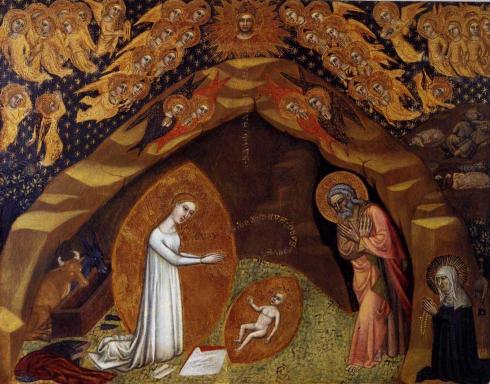
Niccolo_di_Tommaso-St_Bridget_and_the_Vision_of_the_Nativity

See? Definitely no birthday cakes.

Violent Crimes and Mental Illness

16 Dec

In the wake of the shooting at Sandy Hook Elementary School, there’s been a lot of talk about mental health. Comments like, “Now is the time to talk about mental illness!” and “We need mental healthcare reform NOW before this happens again!” are littering my Facebook and Twitter feeds. Many people, people that I care about and whose opinion I respect, want to use this tragedy as an opportunity to talk about how America’s mental healthcare system needs to change.

But you know what? Now is not the time to talk about that.

Don’t get me wrong, I am hugely in favour of mental healthcare reform, both here in Canada and in America. We need better access to mental health professionals, and shorter wait times to see the ones that are available. We need to end the system of patient abuse that occurs in group homes across the country. We need to make therapy and expensive medications more accessible to people who may not have a steady income. We need to increase the monthly payments to those who are too ill to work, because what they receive now from the government is not enough to live on.  We need to give people with mental illnesses the tools they need to advocate for themselves, and we need to work towards ending the stigma that comes with the term “mental illness”.

I do believe that talking about our mental healthcare system is something that we need to do, and badly.

What we don’t need to do is conflate mental illness with shooting 20 small children.

See, the thing is, mental illness is a pretty broad umbrella term that covers all kinds of things. Depression is a mental illness. So are anxiety, anorexia nervosa, bulimia, PTSD, bipolar disorder, schizophrenia, obsessive compulsive disorder, and many, many other things. And yes, some symptoms caused by some of those illnesses can cause violence, but, given the fact that 1 in 4 Americans suffer from a diagnosable mental illness in any given year, I think that we can safely say that most people who are mentally ill are not prone to going on shooting sprees. In fact, studies have shown that people living with mental illness are four times as likely to be the victim of violence.

It has recently been reported that Adam Lanza was, according to his brother Ryan, suffering from both Asperger’s syndrome (which is on the autism spectrum) and a personality disorder. However, according to the same report, the brothers hadn’t been in contact since 2010, and it is currently unknown whether Adam Lanza had received further diagnoses since then. But the term “mentally ill” was being tossed around for a while before Ryan Lanza’s statements were made public, and, from what I can see, there is still a lot of assumption going on about what Adam might or might not have suffered from.

I know that most of the people who want to talk about mental illness right now are good people. Like the rest of us, they’re trying to figure out what just happened and why, so that we can make sure that we never have to live through a tragedy like this again. I’m sure that these people think that it’s kinder, more humane to say that Adam Lanza was mentally ill, rather than just calling him a monster. Unfortunately, what they’re actually doing is making mental illness the scapegoat here. What they’re doing is adding to the stigma that surrounds mental illness.

At the end of the day, saying things like, “Now is the time to talk about mental illness,” is not going to help anything. It’s not going to make an event like this less likely to happen again. In fact, if anything, by continuing to spin the narrative that the mentally ill are violent killers, you are probably making it less likely for those with mental health issues to seek treatment. By making mental illness out to be this big, scary thing, you are making it more likely that friends and family will ignore any signs of problems in their loved ones out of fear and denial. By simplifying the gun control debate to something like, “Well, mentally ill people just shouldn’t have guns,” you are contributing to the idea that people with mental illnesses are scary, dangerous and cannot be trusted.

And although I don’t feel like it should need to be said, let me reiterate: yes, I want to talk about our mental healthcare system. Yes, I want to talk about mental illness. But I don’t want to talk about it today, not when all anyone can think of are those 20 children whose lives were lost. I don’t want to talk about it when the term “mentally ill” conjures up images of a young man storming into a school, armed to the teeth and ready to open fire on innocent people. Because while there are people whose illnesses cause them to be violent, and those people certainly do need a better healthcare system, the vast, vast majority of people who desperately need to see mental healthcare reform will never harm anyone.

I guess that what I really want to say here is that this hits home for me. I’ve been pretty open on here about living with depression and anxiety; I received my first diagnosis when I was 16, which means that I’ve been grappling with these illnesses for nearly half my life. These disorders are a part of me, and I try hard not to be ashamed of them.

So please keep in mind that when you talk about mental illness, about the tragedies it causes and the lives it takes, you are also talking about me.

PhrenologyPix

Shooting at Sandy Hook Elementary School

14 Dec

Every weekday morning Matt and I go through the same routine of getting Theo up and fed and dressed, making sure that he’s ready for another day at daycare. Every morning I kiss him goodbye, and, if I’m lucky, I get to hear him tell me that he loves me. He doesn’t really know what that means, of course, but he knows that it’s something that we say to each other, something that makes people smile. He knows that I like to hear it.

Every morning I watch Matt push Theo’s stroller out the front door and down the sidewalk, and I feel good, because I know he’s safe. He’s safe with Matt, and he’ll be safe at daycare. I know that I won’t have to worry about him all day long; I will be able to devote all (well, most) of my thoughts to yoga, writing, and all of the daily tasks that are part of managing a yoga studio. I can focus on things like drafting invoices, digging through endless paperwork, and updating our studio website and blog.

I don’t worry about Theo because his daycare is a good one. We chose it carefully, after polling local friends for recommendations and doing exhaustive online searches for ratings and reviews. Theo loves his daycare, and I know that the staff and other kids there love him. He’s always excited to be dropped off in the morning, running into his room without even a kiss goodbye for Matt, and in the evening he often doesn’t want to leave.

It would never occur to me that daycare wasn’t a safe place for him.

Just like it almost certainly didn’t occur to parents in Newtown, Connecticut to think of their children’s school as an unsafe place for them.

As you’ve probably heard, 27 people were killed in a shooting today at Sandy Hook Elementary School in Connecticut.

At least 20 of those people were children.

An entire classroom is still unaccounted for.

Although there isn’t much information available, sources are saying that most of the shootings took place in a kindergarten classroom.

Why on earth would someone want to shoot five year olds?

Seriously, why?

This is the kind of thing that my brain has a hard time processing. Less than two weeks before Christmas, 20 families have lost a young child; countless other families will spend the holidays in the hospital with sons and daughters who are fighting for their lives or else enduring tedious, painful recoveries. I don’t know why the fact that it’s nearly Christmas, and the fact that tonight is the 7th night of Hanukkah, makes this tragedy seem, if possible, even more devastating, but somehow it does.

Maybe because I can’t help thinking about those 20 families, and how every December from now on they’ll have to watch the world around them celebrate while they are forced to confront painful memories of their child’s death. I can’t help imagining how every time they decorate a tree or light a menorah, they will have to think about that one person who isn’t there to hang ornaments or add their voice to the blessings sung as the candles are lit. Every time they draw up a shopping list for holiday gifts, they’ll notice that one name is conspicuously absent. Every festive meal will have one chair empty. The holidays will never not be a time of death and mourning for them.

What is especially awful is how commonplace mass shootings are starting to seem. You start to wonder if you have room in your heart and your mind to remember all of the victims, regular, every-day people who went to school, or the mall, or a movie theatre and thought that they were safe. You start to wonder if anyone is ever really safe, and then realize that you can’t live your life thinking that way. You start to build walls, emotionally and mentally, as a form of self-protection. You don’t think about it because you can’t; after the initial shock, you try hard to forget, knowing all the while how lucky you are to be able to do so, while others have to live through constant reminders of what they’ve lost.

In the days to come, there will be a lot of talk about gun control; people who are for it, and people who are against it. The NRA will issue its typical statement, something along the lines of, It’s not guns that kill people, people kill people. Conservatives will talk about the second amendment. Liberals will be told not to “exploit” this tragedy to further their own agenda; they’ll be shut down with cries of, Today is not the day to talk about gun control.

As a friend of mine said today on Facebook, those people are right. Today is not the day to talk about gun control. That day passed many years and many homicides ago.

Gun-related violence is a problem, one that is only growing worse. How is it exploitative to look at a tragedy like this, dissect it, and try to figure out how to prevent it in the future? How is it exploitative to point out that, without a semi-automatic pistol, the shooter would not have been able to injure or kill nearly so many people? How is it exploitative to wonder what laws need to change in order for something like this to never, ever happen again?

And yeah, you can say that guns don’t kill people, people kill people, but there’s no way that a guy with a knife or a sword or a bow and arrow would have been able to create this kind of tragedy.

I’m glad that Theo is still so young, because that means that I won’t have to try to explain this to him. I can hold him close, and cover him in kisses, and cry quietly into his hair without him wondering why; at not-quite-two, I’m sure he’ll just write it off as another weird mom thing. And if he does happen to notice that I’m not really myself right now, well, he’ll be able to forget about it soon enough. Sadly, there’s a part of me that wonders how soon it will be until I can forget about it, too.

But forgetting makes it easier to avoid having to deal with what’s happened. It makes it easier not to ask the difficult questions, or make difficult decisions. Forgetting means that we don’t have to change anything, that we don’t have to be confronted with this kind of rage and sorrow until the next shooting happens.

Forgetting guarantees that this will happen again.

And to anyone who thinks that I’m trying to take their rights away from them, I’ve got news for you: I’m not.

I just want all of our kids to be safe in all of the places where they should be safe. They deserve that much, at the very least.

article-2248197-16848C90000005DC-585_634x514

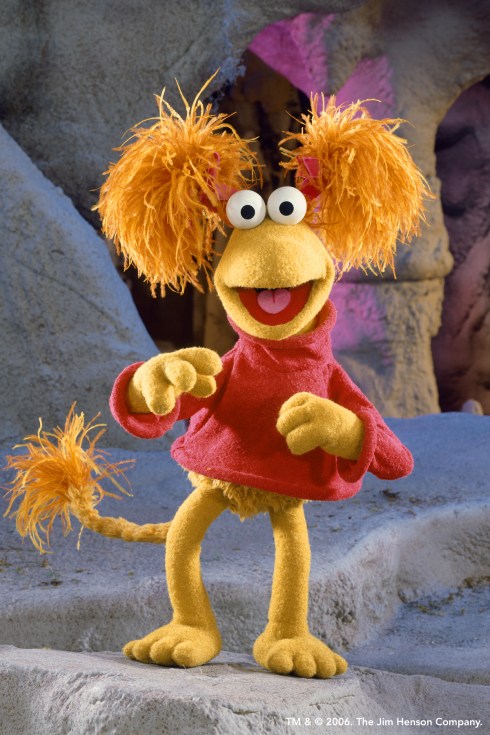
Red Fraggle is a Feminist Icon

13 Dec

It wasn’t until I learned that I was pregnant with Theo that I suddenly realized how very little I knew about, well, babies. I mean, in theory they’re great, but in practice they’re kind of terrifying. Like, I was going to be responsible for what now? I could barely even take care of myself, never mind another person, and one who was tiny, helpless and incontinent at that.

Being the book-o-phile that I am, my solution was to immediately run out and buy a ton of books about pregnancy, childbirth and parenting. I also went online and joined a bunch of mommy communities, which were, um, interesting. After sifting through all of the information available to us, Matt and I began to try to come up with the Best Plan Possible for raising our kid. Because, you know, that’s totally a thing that’s going to work out.

Babies just love plans, and are definitely going to turn out exactly the way you want them to.

Sorry, I’ll wait until your done laughing your fool head off before I continue.

One of the things that Matt and I decided was that we were going to follow the AAP’s guidelines and not expose our children to any television under the age of two. That wouldn’t be overly challenging, we figured; after all, we barely watched television ourselves, and surely it would be easy to watch what little we did after our bundle of joy went to bed. Anyway, we thought, what benefit was there in letting our children watch television? Especially when the world around them was so fascinating? Surely we would be happy to engage and entertain our children at all times. Surely we would never, ever want a short, say, half-hour break from them.

Of course, one of the first things you do when you become a parent is break all of your own rules. You quickly learn that there aren’t very many hard and fast rules, and the few that do exist weren’t created by you. Sure, it’s great to be consistent and back your words up with actions, but when you become a parent you learn how valuable flexibility can be. It’s easy to be an expert on childrearing when it’s all still theoretical; once you have an actual, physical, screaming baby, it’s often advantageous to revisit your policies and re-evaluate what your priorities are.

All of this is to say that we totally caved on the no TV thing.

When Theo was fourteen or fifteen months old, we started watching short YouTube clips of Fraggle Rock at bedtime. It was nice to spend 10 minutes every evening curled up together on our big bed, watching nostalgic television by lamplight. Afterwards, we would talk about what we’d just watched, and then I would nurse Theo to sleep. It was a pretty great way to end the day.

In the course of revisiting one of my favourite childhood shows, I realized something: Fraggle Rock was pretty fucking progressive with regards to gender roles.

I also realized that Red Fraggle was probably my first real feminist icon.

When it came to strong female role models, I was actually a pretty lucky kid. I had my mother, who was and continues to be a kick-ass inspiration, a woman who always worked outside the house, raised three kids on her own after my father left, and recently purchased her first home after spending year and years saving up for a downpayment. I had my grandmother, a women who also worked outside the home for her entire adult life, and who once took her employer to court because he wouldn’t allow women to wear pants in the workplace. I had my aunt, an Egyptologist who travelled to the Middle East for archeological digs. I had my great-aunt who, as a missionary to Niger in the 1960s, dedicated her life to educating girls. I definitely wasn’t lacking for real-life women to look up to and be inspired by.

But I wasn’t able to relate to those women and their accomplishments in the same way that I could relate to an adorable red-headed muppet who was about the same size I was and dealt with a lot of the same issues I did.

Red Fraggle is just awesome. She’s smart, funny, opinionated, competitive and likes to be in charge. She speaks her mind, like, frequently, and the other Fraggles almost always listen to what she has to say (even if they don’t ultimately agree with her). She’s adventurous, athletic and generally pretty fearless. She doesn’t wear pink (except for her hair ribbons). Oh, and she’s sarcastic. So delightfully sarcastic.

She also has some of the best lines spoken by a female character in a children’s show, like, ever. The following is from season one, episode fifteen, ‘I Don’t Care’:

Red: Hey Mokey! They gave me somebody else’s lines for this scene!

Mokey; Uh, let’s see, you say, I know my prince will come and rescue me.

Red: Who needs a prince? I can rescue me!

Mokey: And then you say, hark, I think I hear the hoofbeats of his fiery charger.

Red: Oh good grief.

[a brief interlude of dialogue between Mokey and Boober]

Red: But I don’t have to be rescued, Mokey! I can climb on this trellis! Better yet, I’ll swing on this vine. Why don’t we call it the Tale of the Triumphant Princess?

What’s great is that Red has no issue being a princess, she just wants to be a princess who can take care of herself. She’s totally fine with being feminine and girly, but she doesn’t want to have to rely on anyone else. Instead of waiting around to be rescued, she wants to take charge of her own destiny – a pretty admirable trait.

Red challenges traditional gender roles, both openly and tacitly. One of the best things about Fraggle Rock is that the other characters are totally fine with her behaviour. Sure, she can be abrasive and obnoxious at times, and yeah, she has a hard time admitting when she’s wrong, but these aren’t presented as being character flaws because she’s female; they’re presented as being negative traits because of the impact they have on herself and other people.

Oh, and in case you were wondering, Red is the best swimmer in Fraggle Rock. Better than any of the boys, even.

The neat thing about this show is that it’s not just Red who challenges gender roles; it’s Boober and Wembley too. It’s presented as being totally fine for Boober, a male Fraggle, to prefer to stay home all day washing socks and cooking. It’s also fine for Wembley to “wemble”, i.e. waiver with indecisiveness. That last one is especially interesting because a lot of Wembley’s “wembling” comes from a place of not wanting to pick sides when his friends argue and, ultimately, not wanting to hurt anyone’s feelings. It’s pretty rare for a male character to be shown as being so openly emotional. Rare, but awesome.

Mokey and Gobo, the two remaining Fraggles in the main cast of characters, are more typical of their genders: Mokey, a wispy poet who wears long flowing robes and speaks in a vague, dreamy voice is the sort of den mother of Fraggle Rock, and Gobo, bold, adventurous and a natural leader, spends his days exploring the rock and coming up with escapades for his friends. They participate in breaking down gender barriers, though, by letting their friends be who they are and encouraging them to do the things they love. They never ask Red, Boober or Wembley to behave in a certain way because of their gender; they only ask that each of them treats the others with respect.

Anyway, I guess it’s clear that we’ve totally, unapologetically broken our rules about television. We still don’t watch much of it; mostly just Fraggle Rock and Mister Dressup (okay, and sometimes Jay-Z videos, but only because Theo specifically asks for them). Children’s television, especially newer shows, are still pretty much a foreign country to me, one that I’m sure I will someday have to explore. Until then, I’m happy with my Fraggles and the lessons they’re teaching my son. For example, swimming before breakfast is great, music and dancing are a necessity, and boys and girls are totally, happily equal.

Sounds like utopia to me.

Red

“I’d Rather Risk Rape Than Quit Partying” – Rape Culture and The Good Men Project

11 Dec

I’m tired of blogging about rape culture.

No, honestly, I am. It gets exhausting after a while. It wears you down, you know? There’s just so much awfulness, so many rape apologists, and it takes a lot of energy to wade through it, dissect it, call it out and then deal with the backlash.

I’ve diagnosed myself with what Jezebel calls “rape fatigue“, a pretty accurate term for how I feel.

I wasn’t going to blog about anything serious this week. I was going to blog about cute things, funny things. I had a whole post planned out about how Red Fraggle is a feminist icon. It was going to be great, you guys.

And then The Good Men Project published a piece called “I’d Rather Risk Rape Than Quit Partying.”

And, well, here we are.

Let’s deconstruct this article, shall we?

We’ll start with the title:

I’d Rather Risk Rape Than Quit Partying

Let’s be clear: while the author does, later, admit that he would rather be raped than stop partying, that’s not what the bulk of this article is about. What he’s actually saying here is that he would rather risk raping someone than stop partying.

You might need a moment to digest that sentiment; I know I did.

Next, we have a caveat from the editors:

We at the Good Men Project do not endorse or support the author’s worldview, but it does speak to a very common experience that is often taken for granted and rarely talked about, except in vague and theoretical terms. We thank the author for being willing to speak openly about it, and share his struggle with his own experiences, though we want to make very clear that we do not agree with his conclusions.

You don’t agree with his conclusions, but you still published it, didn’t you? You’re still giving a voice to someone who is an admitted, unapologetic rapist. Whether or not you “agree with his conclusions”, you are still giving him your support by posting this to your site. You are adding another voice to rape culture.  You are normalizing rape. This is not okay.

Now on to the article itself:

When you party, when you move in party circles, you accept certain tradeoffs.

You accept that you’ll always be the bad guy in after-school specials and sitcoms about teenagers. You’re the bad kid who offers Buffy Summers a beer and gets her almost eaten by a snake demon. You accept that you won’t always be able to piece together everything that happened the next day. You’re forced to enjoy Katy Perry’s “Last Friday Night” not because you like Katy Perry but because you just plain recognize it.

You accept these tradeoffs because they come with amazing times. They come with glowing memories of an intensity entirely beyond the mundane, they come with crazy sex with amazing people, they come with living a few hours at a time in a world where anything, anything at all, can happen. I’ve moved from one party scene to another my whole adult life, because nobody wants to be that creepy old person or that inappropriately young person, but there are always plenty of people who won’t walk away from that incredible sense of liberation and possibility that you only find at the bottom of the bottle and a hot room full of crazy people.

Anonymous Writer is a hipper than me, has cooler friends, and goes to better parties. He’s a bad-ass who has lots of amazing sex and maintains a love-hate relationship with Katy Perry. He can only find “liberation and possibility” while drunk in a room full of strangers. Got it.

I swear to God, it is only after the fact that you start figuring out that one of the tradeoffs you’ve accepted is a certain amount of rape. The way crooked businesses accept paying fines for their infractions as the cost of doing business, you gradually, an inch at a time, realize that some of the stories you’ve heard, some of the stories you’ve lived, didn’t involve what they call good consent nowadays.

Yes, because rape is just a consequence of having a good time. Raping someone is just the price you have to pay in order to party hard like Anonymous Writer does.

And you know what? Lack of consent is lack of consent, no matter whether something happened twenty years ago or yesterday. I don’t care whether they didn’t call it “good consent” back in the dark ages; it’s still rape.

With what I’ve learned as an adult, I’m pretty sure I’m technically a rapist. Technically nothing. One woman told me herself.

Anonymous Writer is a rapist. Got it.

Our encounter was years before—I’d been in a drinking contest and she’d been drinking and flirting with me (yes, actually flirting) all evening.

She was actually flirting! You can take this rapist’s word for it!

As blurry and fucked-up as I was, I read her kiss of congratulation to me as a stronger signal than it was, and with friends hooting and cheering us on, I pressed her up against a wall and… well. Call it rape or call it a particularly harsh third base, I walked away with the impression that it had been consensual, if not really sensible. (She had a boyfriend at the time, but their boundaries were fuzzy.)

He was peer-pressured into pushing her up against a wall, either raping her or going to a “particularly harsh third base” (whatever that even means), but it’s fine because he thought it was consensual. Oh, and because her boundaries with her boyfriend were “fuzzy”. Got it.

Years later, she was in a recovery program—not for alcohol, ironically—and she got in touch with me during the part where she made peace with her past. She wanted to clarify that what had happened between us was without her consent, that it hurt her physically and emotionally, that it was, yes, rape.

Here is one story about a time she was drunk, which totally makes it ironic that she’s not in an alcohol recovery program. Also, being raped was probably her fault because she had substance abuse problems.

Oh, and by the way, she was raped. By Anonymous Writer.

We talk about who is and is not a rapist, like it’s an inextricable part of their identity. “I’m a Libra, a diabetic, and a rapist.” That doesn’t work, though. Evidently I walked around for years as a rapist, totally unaware. Nobody stuck that label on me, I certainly never applied it to myself, even now it only feels like it fits when I’m severely depressed. The label, the crime, simply coalesced for me one day, dragging years of backstory behind it.

Anonymous Writer isn’t a rapist, because he doesn’t feel like one.

I literally could not come up with a better way of summing up how rape culture works than that one, single sentence.

That is the damnable thing. We all cluck our tongues at those evil bastards who force themselves on girls—or guys—who are insensibly passed out. At the same time, we all acknowledge that a glass or two of wine helps pave the way for a lot of good times. And in the trackless, unmappable gray swamps in between, we cough and change the subject.

Consent is not trackless or unmappable. Consent is fucking consent. Deal with it.

In the real world, especially among experienced drinkers, being blackout drunk doesn’t necessarily look like being passed out on the floor, helpless prey for any passing predator. It can look like being drunk, but fully in control. It can look like being passionately excited. It can look like being a great dancer. It can look like being very sexually aggressive.

It’s not just booze, of course. Ecstasy makes everything incredibly tactile and you want to touch everyone. Weed makes some people insatiably horny. I had to fend off a young woman recently who was talking a mile a minute and sliding her hands inside my shirt, I was still together enough to tell she wasn’t all there, on what turned out to be a mixture of acid and cocaine. There is plenty of fun stuff out there, but mostly it’s booze. For the majority of people, it’s going to be drinking they have to watch out for.

If you’re not sure that someone can consent, don’t have sex with them. If someone is drunk and you’re not sure how drunk, don’t have sex with them. If someone is drunk, don’t have sex with them. There. I’ve made it easy for you.

A friend of mine once told me about a girl who he knew for a fact had only had two drinks. He didn’t know she was on prescription medication that amplified those two drinks beyond all measure. He thought she was just very horny when she wouldn’t leave him alone or take “Are you okay?” for an answer. It wasn’t until she kept calling him by the wrong name and couldn’t remember the right one that he realized she was not able to consent, and called a halt to things before they went any further. He says he had to dissuade her from pursuing things further, because she was really into it, apart from not knowing who he was or where she was.

“Can you imagine?” he tells me in horrified tones. “I was almost a rapist.”

How do I tell him that I was in a similar position and made a different call? How do I tell him that I am what he’s terrified he almost was?

Well, I guess Anonymous Writer doesn’t have to, because rape culture! He will never be prosecuted. He will never go to jail. He will never even have to admit under his own name that he’s a rapist.

Here’s the plain, awful fact: people can have more and better sex drunk than they can sober. Some of the best, most fulfilling relationships of my life have started out with joyously drunken sex. I’ve had amazing times, orgies sometimes, where it’s simultaneously true that everyone’s consenting and having fun, and that they wouldn’t be consenting and having fun if they were stone sober.

Here’s a plain, awful fact: Anonymous Writer is a rapist.

Here’s another plain, awful fact: you don’t have to have sex when you’re drunk, even if it feels really great. You don’t have to have orgies where you know that the participants would not be consenting if they were sober. You don’t have to rape, but you do. And then you make excuses for it.

Those aren’t the times that bother me. The ones that bother me are the ones where I got loaded, had some fun with a lady, and then she never wanted to contact me again. Messages go unanswered, social contact is dropped.

It doesn’t bother Anonymous Writer when he rapes someone, as long as they remain friends with him.

There are men, rape-apologist pieces of shit, who will tell you that women cry “rape” every time they have sex they later regret. I carry no brief for those assholes. What eats at me is that there’ve been cases, more than one and less than six, in my life where either explanation would seem plausible. If a woman had consensual sex with a guy because they were both drunk, and later she decided he was a loser and she regretted it, she might refuse to have further contact with him because, hey, awkward. But if a woman was raped by a man who thought she was still capable of consent when she was too far gone, she might refuse to have further contact with him because, hey, rapist.

Except, as far as we know, none of these women (other than the one mentioned above) have cried rape. So there was no need for that sentence. They either refused to answer Anonymous Writer’s calls because they regretted having sex with him, or because they felt violated. This has nothing to do with anyone crying rape.

And, by the way, Anonymous Writer, you did rape.

That’s not the worst part either.

Oh good.

It’s been pointed out to me that I’m using a lot of heteronormative language here, men/me as rapist, women as rape victims, and I honest to God don’t mean to do that. It’s just the linguistic habits I grew up with.

But there have been times I’ve cut off all contact with women after drunkenly fooling around with them, the same criterion that, in reverse, makes me suspect myself of rape.

There have been times of “I regret going to bed with her” and times of “I don’t recall going to bed with her.”

There’s been at least one time I was informed, days after the fact, by multiple eyewitnesses, that I’d had sex with a girl. This came as news to me, and explained a couple messages I’d gotten from her, a girl I generally had no interest in getting involved with.

It must be bad manners to admit to being a rapist and to also say one is a rape survivor, all in one article. I don’t know any set of social mores where that’s okay. I certainly don’t feel like a rape survivor, whatever that’s supposed to feel like. I just can’t quite find a workable standard where I’m one but not the other. I don’t say that as any kind of apology or justification for my actions or my mistakes. I’m just trying to state the facts nobody ever quite wants to state.

So the worst part isn’t that Anonymous Writer raped someone, it’s that he’s not sure whether or not he’s been raped, although he doesn’t feel as if he has been.

That’s the worst part here.

Some might think it’s monstrous of me to keep drinking, keep partying. But I have had so many good, positive, happy experiences because I took a chance and altered my state and connected with someone else sexually, it seems crazy to throw all that away. Do people who’ve been in car accidents give up driving?

Translation: I will continue to knowingly rape women, and here is a shitty metaphor about car accidents to explain why I’ve chosen to do this.

Translation: the conditions that lead to me raping women are too much fun to give up.

Translation: I live in a culture that will continue to forgive and excuse me for every rape I’ve committed.

When I sit down and think about it, it seems like I’ve accepted a certain amount of rape as the cost of doing business, and so have most of the people I know. And that seems like the most sick, fucked-up, broken solution to anything ever. And maybe finding it livable-with condemns us all to hell. I don’t know. I can’t even talk about it under my own name.

Fuck you.

* * *

I want to be thoughtful about this. I know that I should be. I should say that this man clearly has addiction issues and needs help. I should offer him my support, because he is also a rape victim. I should be kind, forgiving, generous. But I can’t. I can’t do any of those things to someone who is an unapologetic rapist, someone who is clear on the fact that he will rape again. Someone who views rape as a “trade-off” for having a good time.

Rape is not something inevitable that happens because you’re partying too hard, because you drink to excess, or because you’re having too much fun. Rape is a choice that this man makes. This man knows that his drinking and partying will lead to having sex with a partner who cannot consent, and yet continues to do so. This man is an unapologetic rapist.

I know that I talk a lot about rape culture, but you guys? This is rape culture right here. It’s articles like these that make men feel better about raping women. It’s articles like these that contribute to victim blaming (if a woman doesn’t want to be raped, she shouldn’t drink so much, right?) It’s articles like these that normalize rape, that make rape seem like a by-product of enjoying oneself, that make rape seem inevitable and uncontrollable.

This is rape culture. This is our culture.

tumblr_l1dvl9euhs1qbxsq7o1_500_large

I Hate Flying

10 Dec

In case you were wondering what it’s like to fly on an airplane with me, it’s pretty much like this:

"This should be open because it's civil rights."

“This should be open because it’s civil rights.”

I am terrified of flying. Seriously. Even just glancing up and seeing an airplane in the sky as I’m happily going about my daily business makes me feel queasy. Whenever we go to the airport to pick up or drop off a friend or family member, I think, Better you than me, buddy. I’ve taken the train all the way east to Halifax and all the way west to Edmonton because I refuse to fly. Friends will suggest taking a vacation together to some exotic locale, and I just laugh. If they want to go on vacation with me somewhere exciting, then they’ll have to sit in a dirty, smelly bus to New York or wherever for hours on end; they sure as hell aren’t going to manage to drag me anywhere with palm trees.

I don’t really know where my fear of flying came from. There was actually a time when I loved everything about air travel – from walking along the airport gangway (I don’t know why, but this part always seemed very exciting), to the thrill of the moment when you feel the airplane lift into the air, to the tiny over-packaged meals that taste like reconstituted cardboard. For a kid who spent four gruelling days every summer driving from Ontario to Nova Scotia and then back again, flying seemed like nothing short of a luxury.

All of my flying experiences were positive until the winter of my second year at university, when I was flying from Halifax into Ottawa. Everything was lovely and normal until we hit some kind of air pocket or something and the plane suddenly dropped like the dead weight it was. The actual drop was over pretty quickly and the flight continued as if nothing had happened, but I couldn’t help feeling shaken. To make matters worse, the girl beside me began crying hysterically, saying that her father was in the air force and she’d flown a million times and had never experienced anything like this and we were all going to die. Helpful, right?

Anyway, we landed without further incident, and other than spending a few hours feeling very grateful to be back on solid ground, I didn’t think much about what had happened for the rest of my holidays.

Then, on my way back to Halifax, I realized that two of my close friends were on the same flight. I began to think about how sad it would be if our plane went down and we all died together; how our group of friends would mourn us, maybe even build a memorial. Then I started to think, Aren’t we descending a little quickly? We’re not even over Nova Scotia yet!

Embarrassingly, it didn’t take much for me to go from wondering why we were starting our descent so early to, Oh God, we’re all going to die. 

I’ve been afraid of flying ever since.

The last time that I was on an airplane was when we flew to Paris for our honeymoon in 2009. I managed to convince myself to get on that plane by telling myself three things:

1. I needed to fucking suck it up if I ever wanted to visit parts of the world that weren’t accessible by Via Rail.

2. God would not let Matt and I die on our honeymoon.

3. If we did die, at least it would be romantic. We would be forever remembered as the couple who died in a plane crash while on their honeymoon. Also, we would probably die happy. Right?

I prepared for this trip by doing two things: going to my (prescription-happy doctor) for a bottle full of Ativan, and watching Mayday marathons. Mayday, for the uninitiated, is a documentary show about airline disasters. I figured that it would be helpful to know some of the things that could potentially go wrong during a flight; plus, once I knew enough about airline disasters, it seemed possible that I might be able to avert them. For instance, I learned from Mayday’s episode about Aeroflot Flight 593 that you should never let children fly a commercial airplane. If I were on a plane and saw that happening, I could be like, You guys, this is a bad idea. Total hero material, right here!

A few minutes before we boarded our flight in Montreal, I popped a pill. They were the sublingual type, meaning that they melt under your tongue and enter your bloodstream faster. Once we found our seats on the plane, I took another pill because I still felt anxious. As we began preparing for takeoff I took yet another pill because, although I felt woozy, I definitely still felt anxious. Shortly after our plane lifted off the ground, the safety video began playing on the tiny video screens on the backs of the seats in front of us. Something was wrong, though; the video kept re-starting, and finally the screen just went black.

I started to cry.

A kindly flight attendant noticed my distress and came over. The following is a basic approximation of the conversation we had:

Kindly Flight Attendant: What’s wrong?

Me: I’m sorry, I’m just a really nervous flier! And right now I’m freaked out because the safety video isn’t working.

Kindly Flight Attendant: Oh, don’t worry! Those things have nothing to do with flying the plane. They’re not connected to the engine or anything like that! Plus, the entertainment system is kind of flaky. In fact, some days it doesn’t work at all!

Me: Well what about Swissair Flight 111? That went down because the entertainment system overheated and caused a fire. HOW DO I KNOW THAT’S NOT WHAT’S HAPPENING HERE?

Kindly Flight Attendant: …

Kindly Flight Attendant just walked away and didn’t say another word to me for the whole trip.

Naturally, after that encounter, I had to take another pill.

After that, I fell asleep, and didn’t wake up until we were flying over the UK. We started our descent, which is weirdly the least frightening part of flying for me – it means that we’re either going to be landing soon, or else it won’t be long until we die a fiery death. Whichever way the dice land, at least the anticipation is over!

Once we landed, I was still feeling a little out of it, so I decided to get a coffee. As the guy at the airport cafe poured my drink, Matt noticed me dumping fistfuls of change into their tip jar. He politely yet firmly asked me what the hell I was doing. I told him that I was giving them our Canadian change, because we wouldn’t need it anymore. Because we weren’t in Canada anymore. Duh.

I guess the Ativan might have had more of an effect on me than I’d thought.

We ended up spending a wonderful week in Paris once I’d gotten over my drugged state. I ate my weight in croissants, drank a lot of cheap but delicious wine, and basically decided that Paris was my favourite city of all time. I am an obsessive planner when it comes to travelling, so even though we only had seven days in the City of Lights, I created such an air-tight itinerary that we got to see pretty much everything we wanted to. I also made it my mission to take pictures of every single statue of Joan of Arc that I could find (because Joan of Arc is the best, obviously).

Joan and I - a romance for the ages

Joan and I – a romance for the ages

Of course, the only bad thing about taking a trip to Paris was that we had to come home at the end of it. Which meant that I had to get on a plane again.

No big deal, I said to myself. I’ll just take a bunch of Ativan and pass out again.

And that’s what I did.

Or, rather, that’s what I thought I did.

It wasn’t until a few weeks after our trip that Matt mentioned a show that we’d watched together on the plane. I patiently explained to him that I’d never watched that show with him; I’d watched it with a friend in Halifax earlier that year. He kept insisting that we’d watched it on the plane, which kind of freaked me out, because I’d obviously just married a dude who a) had hallucinations or b) thought it was hilarious to lie so obviously and conspicuously to me.

After another few minutes of arguing, I finally said, There’s no way that we watched that show on the plane. I slept the whole way on both flights.

Matt looked at me like I’d grown a third arm.

No, you didn’t, he said, you were awake for the entire flight back.

Even as I kept insisting that he was wrong, I began to feel a wave of horror wash over me.

I hadn’t slept on the way home. I’d been awake the whole time. I had absolutely no memory of this.

I began interrogating Matt with a Spanish Inquisition level of intensity. What had I said to him? How had I acted? Had I seemed like myself? Did I take off my clothes or do anything else embarrassing? Could he give me a play-by-play of the entire eight hour flight?

His answers were less than comforting. For example, he told me that I’d been talking to the woman next to me for a good chunk of the flight. Naturally, I asked what I’d been saying to the woman. Matt just shrugged and said, I don’t know, you were speaking French.

I WAS SPEAKING FRENCH IN THE MIDDLE OF AN ATIVAN BLACKOUT. I WAS TALKING TO STRANGERS IN FRENCH AND NO ONE HAS ANY IDEA WHAT WAS SAID.

Horrifying.

I begged Matt to tell me that I’d at least stayed in my seat the entire flight and not bothered anyone other than the Francophone woman next to me. I really needed to know that he’d kept an eye on my altered-state self the whole time.

He thought about it, then said that at some point I’d gotten up to go to the bathroom.

Did you follow me? I asked him, hopefully, desperately.

He just rolled his eyes.

The thing is, for all he knows, the minute I was out of his sight I started taking off my clothes and/or making out with the flight attendant. It’s possible! Literally ANYTHING is possible.

I told him that if we ever flew again, it would be his job to follow me everywhere, up to and including into the tiny airplane bathroom.

Of course, when I said that, I had no intention of ever flying again anyway.

You guys, having a phobia of flying sucks. Like, it sucks badly. First of all, every single person that you know feels the need to tell you that more people die in car accidents than in airplane crashes. Every time someone says that to me, I’m like, Whoa, really? You are the first person to ever mention that to me! Thank you! I’m cured!

No, but seriously, the next person to tell me that will get – well, they’ll probably just get a dirty look, but what I want to do is way worse than that.

I know that my fear of flying isn’t logical. If it was logical, I would probably be over it by now. I would just talk myself out of it. I am the master of talking myself out of things. You should see how well I talked myself out of cleaning the bathroom the other day. I did it in like five minutes! So that’s really not the problem here.

Logically, I know how safe airplanes are. I know how unlikely it is for anything to go wrong on an airplane, thanks to my sister-in-law, I even sort of know how they fly (hint: it’s not by magic). But even though my mind knows all those things, it has made an executive decision not to give a shit about facts and to go on being afraid. Thanks, mind. Thanks a bunch.

I hate not being able to fly. I hate that there are so many places that I might never visit because of my stupid malfunctioning brain. I hate that anytime I go someplace far away it takes me fifty years to get there, whereas it would take the average, flying-capable person an hour. I feel like I’m missing out on so much, and I don’t know what to do about it.

I guess I could do the Ativan thing again, although the idea doesn’t thrill me. It’s not so much the blackouts that scare me (well, they might scare me a little), but the fact that a lot of my anxiety happened in the weeks leading up to our flight. Also, in spite of all the drugs I took, I still felt pretty scared on the plane.

Another issue is that now I have Theo. I can’t imagine flying with Theo and Matt; not only would I be totally useless as a parent, but for Matt it would be like dealing with TWO toddlers.

Basically, what I really need is for someone to just knock me out anytime I have to fly, like B.A. Baracus on the A-Team:

If that means that I have to wear a lot of gold jewelry and say “I pity the fool”, well, that’s a price I’m willing to pay.

In all seriousness, what I probably actually need to do is start taking short flights with people who are super chill about flying. People who will hold my hand and tell me that everything is fine and/or tell me to shut up about dying already. I need someone who is willing to put up with my bullshit for at least an hour, probably longer when you factor in the trip to the airport, checking in, going through security and waiting for the flight to board.

I guess that what I am saying here is that I am now accepting applications from people who are willing to put up with my bullshit for a minimum of four hours. COULD THIS BE YOU? Apply within!

p.s. I’m not willing to share my Ativan, even if you’re brave enough to fly with me. I will need the entire contents of my pill bottle, and possibly more.