Archive | Uncategorized RSS feed for this section

High Tech Panties Won’t Stop Rape

28 Oct

There is currently an Indiegogo campaign created by AR Wear for a line that they call Anti-Rape Clothing. These garments, which include a pair of boy-cut brief-style panties, running shorts, leggings and “travelling shorts,” are allegedly designed and built to be unremovable except by the owner, who has some sort of key to release the locking mechanism on the waistband. Basically they act as a chastity belt, although of course we are not supposed to think of them as chastity belts. AR Wear wants us to believe that this is some sort of modern innovation, and not just a contemporary twist on an outdated garment meant to oppress and subjugate women. In fact, AR Wear wants us to believe that the opposite is true – that their anti-rape wear will actually empower women and offer them some sort of freedom that they might have been lacking.

Let’s get a few things straight:

Perpetuating the myth that rape is preventable or avoidable by anyone other than the rapist is not empowering.

Giving society one more reason to blame rape victims for their rape is not empowering.

Continuing to embrace the idea that rape has something to do with what kind of clothing you are wearing (or not wearing) is not empowering.

Nothing about this product is empowering, except maybe for rapists.

There is already a long list of things that women shouldn’t do if they don’t want to be raped – they shouldn’t wear revealing clothing, shouldn’t go out at night alone, shouldn’t drink, shouldn’t talk to strangers, shouldn’t trust men, any men, not even men they know. Really, the end game of all rape prevention advice is that women should stay at home, alone, in a locked house, but even that scheme isn’t 100% foolproof. There is no actual way for a woman to prevent being raped.

And yes, I’ve heard all the rhetoric about mitigating risks and being more careful, most of which boils down to telling women not to do one or all of the things listed above. One analogy that people often use is the seatbelt metaphor – that you wouldn’t drive without wearing a seatbelt, even if you are a good driver. The idea is that we all make choices every day to make our lives safer, and telling women not to indulge in risky behaviour like wearing a cute dress or going for a run alone is no different than telling someone to put on their seatbelt when they get in their car.

Except that car accidents are accidents. People don’t rear-end you on purpose. You don’t drive into a fence on purpose. You don’t skid off the road on purpose. These are things that happen by accident. Rape is not in any way comparable to a car crash. Rape is a violent crime committed by a rapist. Rape is done with the intention to rape.

I feel like I shouldn’t even have to say this, but I’ll say it anyway:

Rape is not an accident that happens to you because you didn’t take enough precautions or because you weren’t paying close enough attention. Rape is a deliberate choice for violence and harm made by another person.

AR Wear’s Anti-Rape clothing does little more than offer society one more reason to blame rape victims for their rape. It gives people the chance to say, “Well, if only she’d been wearing those special panties, this wouldn’t have happened.” This falls in line with the same old victim-blaming mentality of, “If only she’d been dressed differently, if only she hadn’t been drinking, if only she’d screamed or kicked or fought harder.” It’s all part of the same culture that still puts the responsibility on women not to be raped. It’s the same culture that says, “Of course rape is wrong, and of course what he did was terrible, but.”

There should never, ever be a but.

It also bears mentioning that idea behind this clothing operates off the assumption that most rapists are strangers, who attack women in dark alleys late at night, when actually the opposite is true – most rapists are acquaintances with, or even romantic partners of, the victim. So what would happen if a woman did have AR Wear’s Anti-Rape clothing on, removed said clothing of her own volition, and then was raped? It would be so unbelievably easy for a judge to rule that it couldn’t possibly have been rape, because the victim chose to take off her own protective clothing.

And what happens if a would-be rapist becomes frustrated trying to remove the Anti-Rape panties? Doesn’t it seem likely that rather than stopping a rapist cold, it might incite them to other forms of violence?

This clothing does not make women less vulnerable to the threat of rape. Not really. It just seeks to make a profit off of a deep and very legitimate fear that almost every woman has. And the reality of the situation is that this product does not, as the Indiegogo campaign claims, give women “more power to control the outcome of a sexual assault.” It is unbelievably damaging and ignorant to say that victims of sexual assault could have had more power to control the outcome of what happened to them. This is victim-blaming, pure and simple.

The only person who has the power to control the outcome of rape is the rapist.

The only person who can prevent rape is the rapist.

The only person responsible for rape is the rapist.

I don’t know how many more times this has to be said until it is properly understood.

AR Wear's Anti-Rape Clothing

AR Wear’s Anti-Rape Clothing
Nostalgia Machine: Re-watching The X-Files

28 Oct

I’ve been re-watching The X-Files since I’ve been sick, and it’s weirdly been more emotional than I thought it would be. I mean, yes, I snarkily posted this mini-review on Facebook:

So the x-files is basically a show set in the far distant past, back when they didn’t have cell phones or digital cameras. It centres around a 15 year old boy with daddy issues named Fox Mulder. He sulks around and breaks rules and believes in every ridiculous thing ever and uses his Feelings and Troubled Past to justify everything he does. He has a lot of Feelings, by the way. The show also features an actual bonafide adult named Dana Scully who is literally the most patient, tolerant person on the planet and also understands how things like Science and Logic work.

And I still stand by all of that.

But, still.

Emotions.

I was eleven years old when The X-Files first came on the air.

I looked something like this:

Anne youth photo0018

I was in that weird place between childhood and puberty; I had the beginnings of breasts, but no period yet. I liked boys, but had no idea what to do about that fact. I read grownup books, but still secretly played pretend. The siege of my childhood had begun, and I wasn’t yet sure whether to welcome the invading army or fight at all costs.

As if there was even a fight to be had.

I don’t know why I started watching The X-Files – I think I overheard someone talking about it at school, or maybe it was because my Aunt Carolyn, the arbiter of all things cool, was a fan. I’m certain that most of the appeal was because the show seemed so forbidden in our house. My mother has the lowest threshold for fear when it comes to scary movies; even Jumanji was too much for her to stomach. She saw one episode of The X-Files, said that it was disgusting and grotesque, and swore that she would never watch it again.

So of course I had to find a way to see it.

I would tape it off the television, onto cassettes labelled Star Trek or Road to Avonlea. Even though we only had one VCR in our house, this wasn’t so hard because the X-Files aired at 9 pm on Friday nights, at which time my parents were either bribing, cajoling or threatening my sister Catherine to go to bed, or else they were holed up in their own bedroom, trying to pretend for an hour or two that they had no children. If they happened to be in the living room when the VCR started clicking and whirring, I would make up a lie about taping some old movie musical off CBC and then change the subject. Somehow, I never got caught.

I would set my alarm for one in the morning, and when it went off, I would creep downstairs and settle myself into a little nest of blankets and pillows on the couch. I didn’t dare turn any lights on, so the house was completely dark. I would sit there in rapt attention, drinking in every tiny detail of Mulder and Scully’s weekly adventures, even the stuff that I didn’t understand. Especially the stuff that I didn’t understand. Afterwards, I would rewind the cassette to the beginning and tape an hour of test patterns or infomercials, so that no one would know what I had been up to.

I was a cautious kid by nature; nothing that I’d done up until that point had ever felt so daring.

The X-Files gave me the same queasily excited feeling that I got from looking through the Victorian medical dictionary we had in the basement. I didn’t exactly enjoy poring over highly detailed drawings of deformed fetuses or diseased genitals, but I couldn’t seem to look away. Those crumbling onionskin pages had some sort of pull on me that I couldn’t quite explain. And as much as aliens and deadly parasites and ageless dudes who wake from their hibernation every thirty years in order to gruesomely murder people and eat their livers terrified me – and let’s be clear here, as an eleven year old, The X-Files fucking terrified me – I couldn’t look away. Part of it was that I was sort of daring myself to be cooler, less wussy than I was, but part of it was that I was genuinely, horrifyingly fascinated.

It wasn’t long before that horrified fascination somehow turned into love. I loved Mulder, whose deadpan goofiness fit perfectly with his desperate need to believe that there was something, anything out there. I loved Scully, with her take-no-bullshit attitude and her scientific smarts. I loved Skinner, and Deep Throat, and the Cigarette Smoking Man. I loved their stupid basement office with its stupid UFO poster. I loved all of it.

I guess I sort of grew up with The X-Files. That show might have been the first inclination that I had that the government didn’t always have the good of the people in mind. I learned about conspiracy theories, and unethical experiments carried out with the full knowledge of legislative officials, and exactly what happens to the people who go against the official party line. Most of all, I learned to trust no one, and if there’s ever been a more fitting slogan for being a teenager, I haven’t heard it yet.

The X-Files also acted as a touchstone between my father and I after he left. He started watching the show too, and during our weekly phone calls we would compare notes on the latest episode. My father had always had strange nightmares about being abducted by little grey men, so aliens were already a bit of a family joke; once my father and I were both watching The X-Files, that joke amplified in and echoed across the distance, both literal and figurative, between us. We would buy each other alien and spaceship-themed presents at Christmas and on birthdays, and those became a sort of code between us, a code that translated to mean, “I love you. I’m proud of you. No matter what.”

I kind of lost the thread of The X-Files plot towards the end of high school. The mytharc was too complicated, and anyway, I was too old to be watching the same babyish shows that I’d liked when I was eleven. I had new and more exciting ways of feeling daring, like drinking and kissing boys and smoking pot. I didn’t have time for Mulder and Scully anymore, in the same way that I didn’t have time for my family anymore. And then in the last season Mulder wasn’t even there, which, I mean, fuck that. Right?

I did watch the last episode of the show, though, which aired just a few months before I turned twenty. And when I say watch, what I really mean is cried through the entirety of. Because, fuck, man. The Lone Gunmen were dead. Mulder and Scully were finally together. And the siege of my childhood was definitely, without even a shadow of a doubt, over. The city was conquered, the population killed or enslaved, and the buildings razed.

I was a grownup, and The X-Files was gone.

But re-watching it? Re-watching brought me right back to that dark living room twenty years ago, the light from the screen flickering across my impossibly young face. It was like rewinding the tape to the beginning, back to the hard, bright cynical innocence of the early 90s, back to Scully’s boxy suits and Mulder’s enormous wire-framed glasses. It was falling asleep and dreaming something lovely, or else maybe like finally waking up. It was perfect nostalgia.

mulder20and20scully20conv2001

Sometimes It Hurts When I Breathe

23 Oct

I’ve realized that I live in this cycle of frantic activity followed by total emotional and/or physical collapse. This has been happening a couple of times a year since my late teens, and you would think that by now I would be able to recognize the signs enough to stave off the impending crisis, but no. Apparently not.

My head’s been strangely fuzzy for a few weeks now, and my body’s been aching with the weight of something – my bag on my shoulder, my kid on my hip, all of my stupid anxieties. I kept feeling like I couldn’t catch my breath, and then one morning I woke up and I literally had a hard time breathing. So I called in sick to work, stayed in bed for the morning, and then ran some errands in the afternoon. By the next day I was fine, just tired.

I’ve been so goddamn tired these past few weeks, you guys.

I kept meaning to rest, but it always seemed like I had something pressing that needed to be done. A class to teach. Work email. Regular email. A workshop that I signed up for 6 months ago. Studio paperwork to take care of. Invoices. More invoices.  A band that I’ve been wanting to see live for ages and ages. A blog post that I’ve been putting off writing. Guest lecturing a high school English class. A friend having a crisis. Another friend having another crisis. A friend not having a crisis but that I haven’t seen for months. Matt. My sisters. My mothers. My grandmother in Spain. Housework. More housework.

And then there’s Theo. Because even once I’d checked everything else off my list, there was always Theo. How could I ever justify taking a break when I had Theo who needed my time and attention? Theo, who uncomplainingly let Matt pick him up from daycare and feed him dinner and bathe him nearly every night of the week because I had to work the evening shift at the studio or teach a class or do whatever it is that I do that seems to take up all of my goddamn time. Theo, who makes me feel pangs of guilt just by smiling at me. Theo.

So there was never a question of taking a break, because there was never a way of getting to the end of the list. And even though I will happily berate other people for not practicing proper self-care, I am terrible at it myself. Doing things for the express purpose of feeling good always seems like a terrible self-indulgence. Like, how can I justify spending an hour napping or reading on the patio or going out by myself for a coffee when it meant that all the other things weren’t getting done? How can I especially justify doing any nice stuff for myself when it means taking time away from my kid? My kid who I barely get to see these days anyway?

What I’m trying to say here is that I’m a horrible hypocrite.

I’ve spent the past two and a half weeks pushing myself through this deepening haze, shuttling from one end of town to the other, from Toronto to Kingston for Thanksgiving and then back again, from writing to teaching to mothering to hand-holding to coughing until I couldn’t catch my breath, until I was bent double and thought I might throw up in the gutter and oh god how embarrassing.

I forgot to mention that along with the exhaustion, there was a cough.

Finally, at the end of last week, I had this conversation with Nathan:

Nathan: When are you going to see a doctor?

Me: I’m fine, it’s just a cough.

Nathan: You’ve had this cough for what, two weeks now?

Me: Sometimes these things linger on. You know how it is. I’m fine.

Nathan: You are not fine! You might have pneumonia!

Me: I don’t have pneumonia. If I had pneumonia, I’d have a fever.

Nathan: You do have a fever.

Me: I would have a higher fever. I would be, like, bedridden.

Nathan: Maybe you have walking pneumonia.

Me: NO I DON’T.

Nathan: You know what? If it was me who was coughing like this, you would have forced me to go to the doctor ages ago. You would have even come with me, just to make sure that I went.

Me: Uh, yeah. That’s true. I guess.

Nathan: And you know what the worst part of it is? Your cough is so bad that I can’t even make fun of it anymore. You’ve taken away one of my few joys in life.

So I went to the walk-in clinic yesterday and the doctor sort of nodded his head and jotted down a few notes and said that it sounded like I probably had bronchitis. Then he moved his stethoscope around my back for a while and asked me to breathe deeply a couple of times. He kept bringing his stethoscope back to the same spot and pausing there.

“I think I hear some crackles in your upper left lobe,” he said. “I want you to go for a chest x-ray – you might have walking pneumonia.”

Afterwards, when I texted Nathan with the news, I received this delighted reply:

“Wait, wait, wait … walking pneumonia came up?

If you weren’t sick I would revel in my rightness, but you are, so I won’t.

I could be the first person to receive a doctorate just by watching medical dramas. 7 seasons of House, 8 ER, 3 Chicago Hope …”

I went for the chest x-ray today. Afterwards, I asked the tech when my doctor would have the results, and he told me they would be sent out in three to five business days.

“I just want to know for work,” I said. “Pneumonia just sounds so much more impressive than bronchitis.”

“Where do you work?”

“I manage a yoga studio and I teach yoga classes.”

“Let’s just say,” he said, glancing at the image on the screen, “that you might want to take it easy for a while.”

So I’m trying to take it easy. I’m trying not to think of all the messages in my inbox. I’m trying not to feel guilty about popping a kid-friendly DVD in the machine as soon as Matt and Theo got home. I’m trying to rest, and most of all I’m trying not to feel guilty for resting.

Because most of my to-do list can wait.

Because the best way to be a better mother is to get well.

Because it’s fine – good, even – to take a break sometimes.

I’m not good at this stuff. Not just because I kind of sort of maybe enjoy having a hectic life, and not just because doing stuff for myself makes me feel pangs of guilt, but also because I’m not great at being taken care of. I’m hardwired to make sure that everyone around me feels safe and happy and healthy, and I will gladly scold friends and family for not going to the doctor as soon as I think they should, or not taking enough time off work, but when it comes to myself it’s a completely different story. I hate having other people care for me; it makes me feel deeply, skin-crawlingly uncomfortable in the way that few things do. In fact, just thinking about it right now makes me want to barf, although that might also be from the super-strong antibiotics that I’m on.

But I’m going to try to be good and lie still and let other people bring me things, because right now, I kind of have to. More than that, I’m going to try, really try, to break out of this cycle that I’ve been in for the past decade. Because this shit’s getting old, this pattern is not sustainable, and I can and will change.

tumblr_lt3caueE7R1qze7sso1_500

How To Be A Grownup

19 Oct

It’s late afternoon on Thanksgiving Monday. I’m lying on a chaise longue on my mother’s back deck, a ratty old knitted blanket across my lap and a book that I am not reading in my hands. I am pretending to be a 19th-century invalid, recuperating from a non-specific ailment at a sanatorium in the Swiss Alps. I am breathing deeply, imagining that I am taking something called the fresh air cure. The sun is warm, its light buttery and yellow. I can hear my son laughing in the distance as my husband chases him around my mother’s small garden, and I pretend that he is a small Swiss child who lives in a nearby thatched cottage. I tell myself that he is amused by the antics of the goats he is herding. This is, I assume, what small, 19th-century Swiss mountain children do: live in picturesque cottages and laugh heartily as they herd their goats.

I am thirty one years old and I am still playing pretend.

Is this what grownups are supposed to do?

Ten years or so into my purported adulthood and I’m still not really sure how to be a grownup, or what that even means. As a kid, I thought that being an adult meant that you did whatever you wanted, although for some reason all of my grownup fantasies were oddly baking-specific. For instance, I imagined myself making cookies whenever I pleased, and thought about how I would be allowed to use the electric mixer without any help. I would, I told myself, be able to wear party dresses every day of my life. And while all of these facts are empirically true and have been true for over a decade, the ability to do these things is neither as satisfying as I thought they would be, nor do they make me feel especially like a grownup.

What does adulthood mean? What is it supposed to look like? As a kid, there seemed to be recognizable difference between adults and not-adults, but now that demarcation is becoming less and less clear. There also seem to be more stages on the way to adulthood than I’d first realized – I used to think that you were either a child or an adult, but now it turns out that, rather than being a binary, it’s more like an evolutionary process, from infant to toddler to preschooler to that nebulous age between when grade school starts and puberty begins to teenager to university student to young adult to – what? Just plain adult, I guess.

Except that I’m not really sure if I feel like an adult.

Mostly I just still feel like myself.

It probably doesn’t help that I don’t look so very different from my teenage self; sure, there are a few lines here and wrinkles there, but the basic structure is exactly the same. I dress the same way that I did as a teenager, too, or rather I dress the way that my teenage self would have had the funds been available. I don’t wear what I think of as grownup clothing: crisp white shirts, tailored suits, prim polyester dresses in black or grey or navy. I like the same things as I did when I was a teenager, more or less – reading, writing, watching painfully earnest indie movies, dressing up, acting out, telling bad jokes, sitting on people’s living room floors while drinking and playing board games. I still read Little Women when I’m feeling down and want literature that’s akin to comfort food. I still get that same funny ache at the end of Empire Records when everyone is dancing on the roof, just like I did when I was sixteen. I still put waaaay too much sugar in my coffee. When we drive past a cemetery or over a bridge, I still hold my breath.

I’m still me, and I can’t help having this weird sense of disappointment over not being the prettier, smarter, more capable creature that I thought growing up would turn me into.

Maybe  part of the problem is that I’m no longer certain of what being an adult looks like. I used to think that there was a sort of set formula: you finished high school, went to university, started a career, fell in love, got married, bought a house, had kids, then watched your own kids repeat the same steps. But then I watched as this blueprint, which seemed to be the  How-To guide accepted and promoted by family, teachers, guidance counsellors, and just about every movie or book that I’d ever seen or read, failed my parents and many of their peers. They hated their jobs. They hated each other. My father stopped being a lawyer, left my mother, and moved to the city where he lived in a bachelor apartment and worked as a bike courier. My mother was exhausted and miserable, trying to raise three kids by herself on a secretary’s salary – by the end of the day, once everyone was fed and bathed, once the homework was done and the dishes were clean and half a dozen petty arguments had been mediated, it was all she could do to sit in front of the television and fall asleep to the sound of the laugh track of some corny late-90s sitcom.

That wasn’t what I wanted for my life.

I didn’t know how else to move ahead, though, so I tried my hardest to follow that old How-To guide. As the end of high school approached, the adults in my life encouraged me to apply to universities. Or rather, there wasn’t even much encouragement – it was just assumed that this was what I would do, and any divergence from that plan seemed impossible. There didn’t seem to be any alternatives that my parents or guidance counsellors felt were acceptable. College, it was intimated, was for the not-so-bright, and with my critical thinking skills I belonged in an undergrad program somewhere. Getting a job was out of the question, unless I wanted to be stuck working at McDonald’s for the rest of my life. Even taking a year off to figure my shit out was frowned upon – I was too flighty, they said, and would almost certainly never go back to school if I left. So my mother scraped together the hundred or so dollars needed for the application process, and I filled out the forms, and it felt like we were doing the right thing.

And I don’t mean to make it sound like I didn’t want to go to university – I did, I swear I did. I just want to make it clear that it also felt like that was the only way that I had of moving forward with my life. And I was desperate for some way, any way, of moving forward.

The problem with university was that while everyone agreed that I belonged there, no one seemed certain how I was supposed to pay for it. The provincial loan system was Byzantine, the forms and online application difficult to navigate, and the resulting funding amount impossible to understand. For example, the government could refuse to give you a loan if your parents earned a certain amount per year, even if said parents were not helping you pay for your education. Lines of credit from the bank weren’t much better – I mean, they were fine, I guess, if you had someone to co-sign. I didn’t.

When I asked the grownups around me how I could possibly afford this education that was supposed to be so critical to my life, they gave these strange sort of blank stares and suggested that I get a summer job.

Because when they’d gone to post-secondary school, a summer job had been enough to pay a year’s tuition and then some. That was obviously no longer the case.

The good old How-To guide hadn’t anticipated changes like this.

I managed to finish two years of university on a combination of government student loans, kind student affairs workers and a healthy state of denial. By the end of that second year, though, my finances were so badly fucked up that there was no question of finishing my degree. Two steps in to my path to adulthood, and I was already failing the model. Or rather, the model was failing me.

I’ve spent the last ten years trying to figure out if and how I can make the old blueprints work for me. It’s true that I can check off a few things on the list – I did manage to fall in love once or twice, I am married, I do have a kid. On the flip side, I haven’t finished school, I’m not sure that I would call my hodge-podge of jobs a “career,” and I can’t imagine a time when I will ever be able to own a house. Even the things that I’ve managed to check off seem, upon closer examination, to grow a bit murkier. My marriage doesn’t necessarily always look like what I thought a marriage should be. I don’t spend as much time with my son as I could. I often worry that I’m a bad partner or a bad mother. I am slowly learning that marriage and motherhood aren’t so much accomplishments as they are a lifelong work in progress. I’m also learning that being a wife and mother aren’t necessarily fool-proof indicators of adulthood; it’s not as if some magic switch is flipped when you say “I do,” or in the moment that your child is first placed in your arms.

So where does that leave me?

It’s both freeing and terrifying to realize that the old formula for adulthood doesn’t apply to my life is both dizzyingly freeing and incredibly terrifying. On the one hand, in theory, my life gets to be whatever I want it to be. On the other hand, I have no fucking clue what I’m doing, and the potential for failure seems high. It’s like wandering in the forest without a map, or even a guide to the flora and fauna – this glade seems like a nice place to build my home, but what if it floods every year during the spring thaw? These berries look tasty, but what if they’re poisonous? Of course there’s always the possibility of a happy ending, but it seems to be equally probable that I will die alone, frozen to death, maybe, or else eaten by wolves.

Lately I’ve been looking hard at my friends’ lives, trying to pick and choose the things that I want to emulate. What’s funny is that it’s not the friends who have the most material successes, the ones with the best jobs or the nicest houses that I’m drawn to, but rather the ones who have certain traits and behaviours that I covet. I admire, for instance, my friend who makes difficult choices, who goes ahead and does things even when he’s afraid or thinks that something is impossible. I admire another friend who’s an expert at saying no. I want to be more like the friend who seems to have that extra split second to figure out if their emotional reaction to any given situation is warranted and appropriate. I want to be like the friend who seems effortlessly organized, who holds family meetings every week to figure out who will be where doing what when during the next seven days. I want to be the person who fights for their beliefs without being disrespectful or unnecessarily cruel to the people who don’t agree with me. I want to be measured, calm, and collected.

And I want to do all of this and still be able to get a little weepy over Empire Records.

What I’m realizing is that, while creating a guide to my own personal grownup life, the best place to start is with myself. I need to work harder to build the type of person that I’m happy with before extending my energy outward. I need put a dot in the middle of the map marked you are here and then radiate all other lines outward from that spot. When I write this all out, it sounds unbelievably selfish, but I also can’t think of any other way to make a guide that suits the kind of life I want to live; because before I make that guide, I have to figure out my own shit, which means answering all of the big questions like what the fuck do I want, and why am I even here, and where do I go next?

Maybe that’s the best way to be a grownup.

vintage-women-typists

How To Talk To New Parents

9 Oct

Social media can be an amazing tool for first-time parents. Facebook, Twitter, Tumblr and their ilk give housebound caregivers the chance to connect with other people without having to leave their bedroom. They make it easier to find others who are currently in or have been in similar situations. They provide a platform where people can ask for advice, pose specific questions (often of the is-this-normal variety), share milestones and pictures and funny anecdotes, or just flat-out vent about how hard parenting is. Because let’s be real: parenting is fucking hard.

I’ve noticed an unfortunate trend in how some people reply to these social media posts, though – some people (most often people WHO ARE PARENTS) are condescending, dismissive and even sometimes unintentionally (I hope) hurtful in their responses. I’ve experienced this myself, and lately I’ve been noticing that a few of my friends with new babies have been enduring this same unfortunate phenomenon. What I’ve noticed the most is people saying things like, “Oh, you think it’s bad now? Wait until she’s a toddler!” or “Wait until you have two!” or “It’s fine if you can’t breastfeed, you can just give formula!” or worst of all, “Just relax, this is supposed to be a happy time!”

First of all: telling someone to relax very often results in THE EXACT OPPOSITE OF THAT HAPPENING. Also? If a parent thinks that what they’re going through is bad? It’s probably bad! And how is it at all a good idea to respond to someone talking about how difficult things and how much they are struggling with the assurance that things will only get worse? WHY WOULD YOU EVEN SAY THAT? Is that intended to be some kind of warning, like, get out now while you still can? Finally, things like breastfeeding or co-sleeping or having a natural childbirth may not feel like a big deal to some people, but to others they can matter a whole fuck of a lot. I know that when Theo was a baby, breastfeeding him was literally the only thing I felt like I was doing right as a parent. If I’d had to stop, or had been unable to do it, I would have been devastated, and hearing someone downplay or otherwise invalidate how I felt would have made me feel even worse.

So with all of that in mind, I thought that it might be smart to put together a handy-dandy guide for talking to new parents. So let’s get started!

A few things to keep in mind with regards to new babies:

1. Remember that the transition from non-parenthood to parenthood is one of the scariest, most stressful, and most physically gruelling things a person can go through. If you’re a woman who has recently experienced pregnancy, your body is suddenly totally unfamiliar and your hormones are all fucking over the place. If you’re breastfeeding, you suddenly have a baby attached to your nipple every few hours, which, let me tell you, is not a sensation that’s necessarily easy to get used to. Even if you haven’t given birth and are not breastfeeding, just the very fact of having a new baby is physically draining. Like, there’s a reason that sleep deprivation is a form of torture, you know? On top of all that, your entire way of living has completely changed. Everything suddenly revolves around this tiny, helpless little being, and all of the familiar road-markers of your old life have suddenly disappeared. Worst of all, you’re often expected to map out your new life on your own, without much in the way of practical help. There is no real way to prepare for the type of culture shock you will experience when becoming a new parent.

2. Keep in mind that newborns are often terrible. Terrible! Not on purpose, of course, and this doesn’t apply to all babies, but the fact remains that infants are frequently some of the most unpleasant people. First of all, they seem to hate you. They scream all the time, and when they’re not screaming, they’re staring at you balefully. They never smile – not even when you are devoting all of your time and energy to taking care of them. They just take and take and take from you and never, ever give back. If they were a grownup friend, you would dump them in a hot second. You can’t dump your kid, though – I mean, you can, but it’s generally frowned upon. And of course you love your baby and you rationally recognize that soon the baby will start smiling and gurgling and generally being much more pleasant, but neither of those facts mitigate how terrible it feels to be screamed for ten consecutive hours a day. And when you add on the fact that new parents often struggle with things like feeding and getting their child to sleep and whatnot, it becomes pretty clear that the early days of parenthood are not always the magical snuggly bonding time that we tend to get all starry-eyed and wistful over.

3. Remind yourself that all kids are different. Just because your newborn was an angel who slept twenty three hours a day and was a champion breastfeeder does not mean that every baby will be like that. Just because your child was more difficult as a toddler than as an infant does not mean that that will hold true for everyone. For example, I find Theo much easier and more fun as a toddler than he was as an infant. Like, when he is upset, he can now actually tell me what’s wrong! We’ve also been lucky in the fact that Theo is quite verbal, which helps cut down on tantrums and meltdowns. An added bonus of his verbal skills is that we can now have real conversations about real things instead of my having to produce an endless monologue that goes something like, “Do you see the sky? The sky is blue. Blue is such a pretty colour! Your eyes are blue! My eyes are brown! Do you see the doggie over there? The doggie says woof woof! What a nice doggie! I like doggies! Do you like doggies?”

But not every kid is like Theo. Not every kid is this verbal at the age of two and a half, and lots of other children his age are much more prone to tantrums. This is a (relatively easier) age for us, but it isn’t for everyone. All kids are different.

A few DOs and DON’Ts for how to talk to the new parents in your life:

1. DO offer advice, especially if the parent asks for it. Bonus points if this advice is based on your own personal experience

2. DON’T expect that parent to follow your advice. They might, they might not. You are offering that advice because you are friends with that person and care for them, and the future of your relationship should not hinge on whether or not they do what you advised.

3. DO try to be helpful if/when you visit your friend – bring food, offer to clean or tidy, ask if the parents would like you to take the baby out for a walk so that they can shower/eat/have some time together. Feel free to offer specific services or else just plain ask the parents what would be the most helpful for them. Remember that these visits should be more about making things easier for the new parents rather than giving you the chance to cuddle a tiny baby.

4. DON’T tell horror stories, either about your own early parenting days or those of people you know. These types of stories usually aren’t helpful, and can actually be pretty scary.

5. DO listen and make sympathetic noises.

6. DON’T invalidate their feelings. Seriously. Don’t tell them that they’re overreacting or being silly. Don’t make remarks about how the human race could never have survived if every parent was this hung up on the small stuff. Just don’t.

7. That being said, DO remind them that babies grow and change very quickly, that this stage will soon be over and that things will get better.

8. DON’T tell them that you understand their struggle because you have a new puppy and puppies are actually more difficult and time-consuming than babies. Seriously. I wish that this point wasn’t based on a true story, but alas.

9. DO keep an eye out for symptoms of postpartum depression.

10. DON’T tell the parents that they should be enjoying themselves more than they are, or that this is supposed to be the “happiest time in their lives.” Probably it is a super happy time for them, but it’s likely also incredibly stressful and worrisome.

A final note:

Remember that your friends’ experiences as new parents are not about you. This is not your chance to re-hash everything about your own parenting. This is not your chance to show off your knowledge and expertise. What you should be doing now is supporting your friends as much as possible, in the same way that others hopefully supported (or will support) you as a new parent. Your words and behaviour towards your friends should be with their welfare in mind, rather than how you can make yourself look better or smarter. In short, be the kind of person that you would want to have around when things get tough.

And maybe you could even offer to change a diaper or two. Maybe.

184703_10150431721705215_3498101_n

Gilmour Girls: A Reading List for David Gilmour

7 Oct

This list is not as diverse as I wish it could be. It’s still very white, and there isn’t a super great representation of queer and trans* folk. It sort of ended up being both a reading list for David Gilmour and a list of my favourite books by women. Writing this has been a great exercise for me, and has illustrated pretty clearly that I need to expand my own reading repertoire – I do love women writers, but I still tend to favour white, cis-gender women. Helloooooo to my own cultural bias.

I didn’t include any Alice Munro or Virginia Woolf because Gilmour says that he likes both of those authors, and I don’t have multiple books by the same author. Those were some rules that I arbitrarily made up for myself.

Please feel free to add to this list or to fangirl with me over how much you love some of these books. Fangirling is the best!

1. Half of a Yellow Sun by Chimamanda Ngozi Adichie

Ohhhh, books about Ordinary People set against the backdrop of Serious Historical Events, you get me EVERY. DAMN. TIME.

2. Cat’s Eye by Margaret Atwood

The best book that I’ve ever read about the nearly-invisible cruelties that little girls practice on each other, and the lifelong fallout of that sneaky, subtle bullying.

3. Sense and Sensibility by Jane Austen

One of the best depictions of depression and suicidal ideation in classical literature.

4. Fun Home by Alison Bechdel

My friend Jesse said it best: Alison Bechdel’s memoirs are like magic. You read them, and they’re technically about her, but somehow you end up learning about yourself?

5. The Mists of Avalon by Marion Zimmer Bradley

Shut up, I don’t even care, I fucking love this book. DO NOT LOOK AT ME LIKE THAT. 

FEMINIST KING ARTHUR, Y’ALL

6. Villette by Charlotte Brontë

I don’t care if Jane Eyre is your favourite book of all time, I swear to you that this book is better.

7. Rubyfruit Jungle by Rita Mae Brown

I have four words for you: Lesbian. Coming. Of. Age.

In the south.

With cheerleaders.

And bourbon.

8. Parable of the Sower by Octavia Butler

Oh good lord I am such a sucker for dystopian fiction it is not even funny.

9. My Ántonia by Willa Cather

Sort of like Little House On The Prairie for grownups. Except for the fact that Little House On The Prairie is totally for grownups too.

10. Chéri by Colette

In which a young, beautiful man (who loves silk robes and pearls) is kept and petted and spoiled by a woman twice his age, and then has to deal with her departure when he gets engaged to a much younger woman. Maybe one of the best role reversals in literature? Anyway I love Colette so much.

11. Rebecca by Daphne Du Maurier

Like Jane Eyre except better, spookier and more accurate in terms of how creepy and skin-crawly the Mister Rochester character is. You guys, MISTER ROCHESTER IS AWFUL. 

12. Geek Love by Katherine Dunn

Probably the weirdest book I’ve ever read and that’s saying something.

13. Stone Butch Blues by Leslie Feinberg

I think this is my favourite novel about transgender experience?

14. The Butterfly Ward by Margaret Gibson

This weird little book of short stories found its way into my hands on my birthday about ten years ago. I’ve never read anything else by this author – never even seen anything else by her – but some of the stories in this book haunt me still.

15. The Talented Mr. Ripley by Patricia Highsmith

I don’t even care if you liked the movie. Suck it up and read the book.

16. Their Eyes Were Watching God by Zora Neale Hurston

The book that made me realize that I needed to cultivate better, stronger friendships with women. Friendships where I felt empowered instead of competitive.

17. The Woman Warrior: Memoirs Of A Girlhood Among Ghosts by Maxine Hong Kingston

I don’t even know how you could see this book’s title and not immediately need to read it

18. The Namesake by Jumpha Lahiri

If you read this book while you are pregnant you will suddenly begin obsessively stock-piling baby names as if there might be some kind of baby name shortage.

19. The Wizard of Earthsea by Ursula K. Le Guin

I read this as a very impressionable teenager and was hooked.

20. Small Island by Andrea Levy

Race and class in post-war London how does that sentence fragment not make you tingle with excitement even a little?

21. Fall On Your Knees by Ann Marie MacDonald

I have read this book so many times and it is so painfully near to my heart that I don’t even know what to say about it. Frances Piper is one of my favourite fictional characters of all time ever.

22. Wolf Hall by Hilary Mantel

Thomas. Cromwell. THOMAS CROMWELL. MARRY ME THOMAS CROMWELL.

As a post-script, I think that, as David Foster Wallace would say, this was Hilary Mantel’s way of imposing her phallus on the consciousness of the world seriously thought what does that even mean.

23. The Group by Mary McCarthy

A lovely, weirdly prescient little midcentury gem about a group of friends and how their lives diverge after college. A lot of discussion about how fucking hard it is for women to have it “all” – if that’s even possible.

24. The Bluest Eye by Toni Morrison

If this book doesn’t give you Feelings I am pretty sure that means that you don’t have a soul.

25. The Street by Ann Petry

A single mother living on her own 1940s Harlem. Do I have your attention yet?

26. The Bell Jar by Sylvia Plath

As if this was not going to be on this list. Have you even met my blog.

27. Clay Walls by Kim Ronyoung

Faye, a second generation Korean-American, says at one point that reading is, “just a way for me to see how other people live. I haven’t found a book yet written about the people I know.” And then Kim Ronyoung wrote that book.

28. The God Of Small Things by Arundhati Roy

This one took me two reads to love, but love it I do.

29. The Sparrow by Mary Doria Russell

Speculative fiction gives me a total boner.

30. Push by Sapphire

Ohhh this book made me break out into a sick sweat. Maybe one of the best reminders of my privilege that I’ve ever had?

31. Memoirs Of An Ex-Prom Queen by Alix Kates Schulman

Another one that took me a while to love – I felt like the main character was so privileged and whiny. And then I realized that that was kind of the point, and also that those things didn’t take away from her experiences.

32. Caucasia by Danzy Senna

Probably the first book to really make me think about race – definitely the first time I ever questioned the idea of being colour-blind, and my first encounter with the idea of passing privilege.

33. Prep by Curtis Sittenfeld

The most painfully accurate description of what it’s like to be a white, lower-middle-class girl.

34. A Tree Grow in Brooklyn by Betty Smith

I don’t even care if this is a YA book, it’s balls to the wall one of my favourite books. BALLS TO THE WALL.

35. White Teeth by Zadie Smith

One of those epic books that spans several generations and several families, except this one explores race and class in 1980s England. And it’s so unbelievably good.

36. Eagle of the Ninth by Rosemary Sutcliff

I don’t even care that this book is super dated, it is the book that made me fall in love with historical fiction and also bromance.

37. Angel by Elizabeth Taylor (no, not that Elizabeth Taylor)

Probably the most selfishly awful, incredibly unlikeable protagonist I’ve ever encountered (and that’s including Holden Caulfield), but. 

38. A Complicated Kindness by Miriam Toews

Heartbreaking and darkly funny and also Miriam Toews is one of the best human beings on this planet maybe.

39. The Age of Innocence by Edith Wharton

Spoiler alert: it wasn’t so innocent. Also you will want to punch Newland Archer a bunch. But it’s good, I promise.

40. Oranges Are Not The Only Fruit by Jeanette Winterson

Scary Evangelical Christian Lesbian Coming Of Age. No but seriously.

book-porn

Guest Post: Three Compliments

4 Oct

This week has been incredibly hectic, and I haven’t had the chance to write anything here, not even the reading list for David Gilmour which I promise is STILL COMING. In light of that, a few friends have stepped in and offered guest posts – here’s one from my lovely friend Joanna, whom I’ve known since high school, about the ways that we “compliment” babies and toddlers. Enjoy! 

Three Compliments by Joanna Schmidt

Three “Compliments” I’d prefer you wouldn’t give my baby:

I love my kids. They are the most important people in my life. So naturally, hearing them complimented warms my heart. I love when they are called cute or pretty or someone says their hair is lovely. Even more so, I love when people tell me that my child is clever or funny, kind or a good older sibling.

There are, however, a few “compliments” that I find to be not so complimentary:

1. “He’s such a flirt” or “ooo, he’s flirting with me!”

My son is 13 months old. Sometimes he’s outgoing and has a quick smile that lights up his face. He will play peek-a-boo with anyone that will give him a grin, whether at home or with a stranger in the grocery line. Funny noises make him break into an infectious giggle. Like all of us, he’s sometimes shy, and that means he sometimes puts his head down and looks up at strangers through the lashes on his big blue eyes, a nervous smile on his face.

Also, he wants to kiss ALL the babies.

However, none of these things is flirting. He is socializing. He is learning about his environment and the people in it. He is developing a sense of self worth as his smiles and interactions are causing others to smile back at him. He is playing games and having fun.

Check out the Wikipedia definition of flirting: http://en.wikipedia.org/wiki/Flirting Flirting has sexual undertones or seductive undertones. Babies are cute and cuddly. They give drooly smiles. They are adorable. Babies are not sexual. They are not seductive.

2. “Watch out mama, the girls are going to love him!”

This one is tricky. Because, you know, it might be true. He’s classic cute baby. He has these lovely wispy curls and big Disney Princess eyes. He’s tall for his age. It is likely that he will fit society’s narrow definition of traditional attractiveness when he gets older.

The thing is, as parents, we’re busy trying to teach our kids that being attractive is not necessarily what makes you loveable. We’re teaching them that how you act and what you do are the things that define you.

One of my proudest parenting moments to date has been in a conversation with my then 4 year old daughter. She was watching Beauty and the Beast and turned to me, totally unprompted and said of Gaston,

Belle doesn’t like him because he’s mean. The other three beautiful girls think that he’s beautiful but he’s not because he’s not nice. He’s a bully and I think that he’s really the beast.”

SO FREAKIN’ PROUD!

Secondly, the idea of watch out mama also bothers me – what are you saying about these girls that you imagine are going to love my son? Why would I need to watch out? What does this statement say about how we view young women?

And finally, I’m also very conscious that at his age, he has not asserted anything about his sexuality yet. His sister is six. Recently two of my female friends were married. She was very excited for them and proclaimed, “I’m so glad they are happy but I don’t want to marry a girl”. She says things like, “When I grow up and fall in love with a boy, I think it will be L______.” We’re pretty safe now to use terms like boy/man/husband/boyfriend with her. But my boys are younger than her and have not expressed their preferences yet. With them I use terms like person that you fall in love with, or the partner/person that you choose to marry. Statistically it is likely they will be attracted to females, however, until I know for sure I don’t want to make assumptions. Assumptions can alienate. Assumptions could make it hard for one of my boys to express who he is. And really, wouldn’t that be so incredibly sad?

3. He’s going to be such a heartbreaker!

And here’s the big one. This is what made me write this. I hear this often about my little baby boy.

Since when was it a good thing to break someone’s heart? Have you ever had your heart broken? Have you ever had to break someone’s heart? It SUCKS!

My hope is that he is NOT a heart breaker. My hope is that he finds just the right person at just the right time and they love each other forever. I know this is unlikely but I don’t want my son to be a person who causes or feels pain. I still like to wish that he’ll be one of the lucky few that falls in love with his best friend in high school and lives happily ever after.

The other thing that I don’t like about the “heartbreaker” comment is that it sets him apart from the babies that are not “heartbreakers”. Does that mean there are babies that are not as conventionally attractive that are bound to have their hearts broken over and over?

So, here’s the thing. Please feel free to compliment my child. Sometimes hearing that you’ve noticed that he/she has grown up a lot in his/her behaviours lately, or hearing that they made a choice that was kind or compassionate is what gets me through my, at times, difficult days. If my child overhears that, (s)he will catch my eye and see pride and joy and hopefully make a good choice again.

And me? I’ll try to notice the same moments and communicate that pride to your children too.

Joanna's three children

Joanna’s three children

An Open Letter to David Gilmour

25 Sep

Dear David Gilmour,

As a woman writer I’d like to say thank you.

No, honestly, thank you.

Thank you for being privileged enough, culturally tone-deaf enough, and even just plain stupid enough to say that you don’t love women writers enough to teach their works in your class. Thank you for saying what so many other male professors think but are afraid to admit. Thank you for opening up this huge fucking can of worms that most people are happy enough to pretend doesn’t even exist.

Seriously, thank you for reminding me that, as a writer who happens to be female, I will always be a woman first and a writer second.

Oh and thank you especially for throwing in that little racial comment about how you also don’t love Chinese writers, because you might as well shit all the beds while you’re at it, right?

But thank you. Thank you for proving how very unequal the world is when it comes to female writers and queer writers and trans writers and any writer whose skin isn’t lily-fucking-white. Thank you for pulling back the curtain and showing the dark, misogynist, racist underbelly of academia. Because when people like you pull shit like this, everyone is finally forced to pull their collective heads out of the sand and accept how very biased the academic world is.

Look, I’m not here to tell you what literature you should love or not love. None of us can help which writers resonate with us while others, though we can admit that they are technically proficient, brilliant with language, and certainly not without talent, fail to move us. We like who we like. I get that.

What I don’t get is how very little self-reflection there seems to be in your discussion of which writers you love and why. Have you ever wondered why you might possess such a bias against female writers, Canadian writers, and (apparently) Chinese writers? Have you considered what influence your own professors and their prejudices have had on you and how they have warped your perspective and taste? Have you thought about the fact that your own relative privilege means that without serious thought and introspection it’s going to be a real fucking challenge for you to understand the context and nuance of writers who don’t fit the mold of cis-gender white male?

And maybe what I really want to know is if you were ever up for that particular challenge, and if the answer to that question is yes, then I need to know when the fuck you got so literarily lazy that you could no longer stretch yourself enough to inhabit a skin that didn’t resemble your own. Because that’s what the best literature does, right? It takes us completely outside of ourselves and forces us to view the world from a completely different perspective. If done well enough, that experience changes us. Hopefully it makes us better people. I don’t understand how you could ever become a better person if you only ever read books with protagonists whose take on the world is, ultimately, not so very unlike your own.

I also want to tell you that as a professor, your first responsibility is to your students, not yourself. Like a good book, a good professor should change a student. The best teachers that I’ve had in my life have been the ones who’ve taken me out of myself and made me see the world in an entirely different way. Passion for what you teach is, of course, incredibly important and can’t be discounted, but so, too, is the ability to extend yourself beyond your own petty likes and dislikes in order to give your students a well-rounded view of literature. How can you possibly be doing that when every year you devote all of your time to re-hashing all of your favourite books? How can you open someone else’s eyes when you refuse to do anything but perpetuate your own biases? And honestly, if you can’t challenge yourself when it comes to how and what you read, how can you ever challenge anyone else?

Finally, I want to ask you how, as someone who is a writer who also happens to be female, I am supposed to process this. When you say that you “teach only the best,” what should I take away from that? Am I supposed to just sadly shake my head and assume that my vagina* prevents me from ever writing anything interesting or good? Am I supposed to laugh in a world-weary way and say, “well, that’s just one man’s opinion,” as if your opinion isn’t symptomatic of a much larger problem within academia? Or am I supposed to think that you are somehow trying to throw down the gauntlet, as if you could maybe bully women into writing something that you love?

Because the thing is, I’ve got my own fucking gauntlet to throw down.

I’ve got a dare for you, David Gilmour. I dare you – I fucking dare you – to spend six months reading nothing but writers who aren’t white cis males. Read female writers. Read Chinese writers. Read queer and trans and disabled writers. Read something that’s difficult for you to love, then take a deep breath and try harder to love it. Immerse yourself in worlds and thoughts and perspectives that are incredibly different from your own. Find a book that can change you and then let yourself be changed.

I’ll even put together a top-notch reading list, if you like.

In return, I will let you teach me to love one of the books on your curriculum. I live in Toronto; I can easily audit one of your classes. Prove to me that you’re a decent professor, and that the books that you teach will, in fact, change me the way that the best literature can and should.

I’m totally up for this if you are.

Sincerely,

Anne Thériault

Photo on 2013-09-25 at 4.18 PM

*Not all female writers have vaginas, and not all people with vaginas are female. However, since in my case my sex aligns with my societally-expected gender, and because I love the word vagina, I’m gonna run with this.

The First Lesson Is: Don’t Be Afraid Of Falling

16 Sep

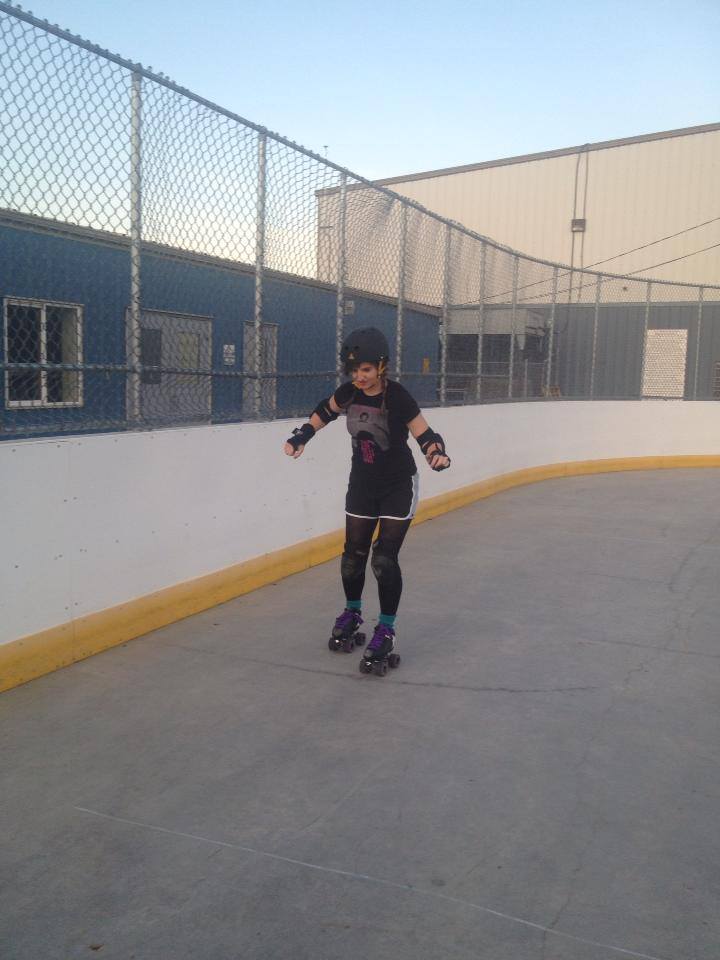
My sister-in-law brought me along to her roller derby practice last night. She’s been doing the derby thing since March of this year, and I have been hella jealous. If there was ever anyone who was meant to be a bad-ass lady who roller skates, wears short skirts, body-checks other women and has a hilariously punny name. I mean, COME ON. That sounds like heaven to me.

Given all of that, why have I never tried to join a derby league in Toronto? Oh, I don’t know, because of Reasons I guess. I work a lot of evenings and didn’t want to have yet another night away from my family. I wasn’t sure how to find a good league, and was kind of freaked out at the thought of starting a new activity by myself with people that I don’t know. I’m not sure that I’m cut out for team sports; the idea of being yelled at by a coach makes me want to cry.

Most of all, though, I was afraid.

I wasn’t even sure that I could roller skate, for one thing – the last time that I’d tried was something like fifteen years ago at the now-defunct Forum Roller Rink in Cambridge, Ontario. I was there to celebrate the birthday of this dude that I had a huge crush on, by the way, and let’s just say that my roller-skate-skills did not exactly win me a place in his heart. As I recall, I fell. A lot. Embarrassing, sprawling falls, the type that cause people to point and laugh. Eventually I just sat off on the side, nursed a Dr. Pepper and tried not to cry. Story of my life, am I right?

Another problem was that I typically don’t enjoy participating in activities that I am not already good at, especially activities that involve me failing publicly. I have a very low threshold for embarrassment. I’m also a perfectionist, and I get frustrated with myself very quickly if I don’t master a new skill, like, immediately. Given all of this, it’s kind of amazing that I ever try anything new at all, although if I really think about it I can see that all of the new activities that I’ve tried over the past few years have mostly been things that I knew that I was sort of predisposed to be good at. For example, I had a feeling that I would be awesome at yoga because I’ve always been really flexible. Blogging didn’t intimidate me because, all modesty aside, I knew that I was a half-decent writer. I knew that I would be good at drinking scotch because it’s no secret that I’m a pretentious, snobby asshole.

I am not really good at any of the skills necessary for roller derby, other than a love of short skirts and the fact that I’m a hilariously scrappy fighter.

All kitted out - sadly no skirt, though

All kitted out – sadly no skirt, though. And yes, my shirt says, “The Bell Jar” on it.

Finally, the biggest fear holding me back was that I was afraid of falling. I was afraid of falling because of my bad knee. I was afraid of falling and being run over by other, faster, better skaters. Mostly, though, I was afraid of falling and looking stupid.

Imagine my surprise when my sister-in-law told me that the first lesson was going to be learning how to fall. Because, she said, I was going to fall whether I liked it or not, and learning how to do it properly would help prevent injury. Being a good skater wasn’t so much avoiding falling as knowing how to do it in a safe and controlled way.

So after wobbling pathetically around the rink a few times on my borrowed roller skates, I let her teach me how to fall. I learned how to fall on one knee. I learned how to fall on two knees. I learned how to do a four-point fall on my knees and forearms. I learned how to get up safely and quickly after each type of fall. Amazingly, after a good solid half hour of falling, I suddenly felt much more comfortable on my skates.

I had a sort of epiphany last night, skating around and around that open-air arena under the darkening Alberta sky. I realized how very much I need to learn how to fall in basically every area of my life. I need to learn that it’s possible to make mistakes and even fail and then get back up again and keep going. Right now, the thought of making mistakes in just about any arena – work, being a parent, my interpersonal relationships – makes me want to throw up. I feel like making a mistake is the end of the line, that there’s no going back, that whatever I’ve done will colour that relationship or work environment forever. The funny thing is that it’s almost never other people who make me feel that way; I make myself feel that way. If I inadvertently say something hurtful, or if I forget to do something or get something wrong, I have a really hard time forgiving myself and getting past it. To me, making mistakes feels like the world is ending.

But you can’t live like that, you know? You can’t just not make mistakes – that’s an impossible goal. Even if you are living the safest, most risk-free life ever, you’re still going to make mistakes. And anyway I don’t want to live that life – I want to take risks, I want to try new things, I want to push myself. So I think that I have to learn how to make mistakes, by which I mean how to react in an emotionally appropriate manner to my mistakes, and also how to work to quickly fix them instead of diving under the covers and crying for three days. I want to learn how to have arguments or even fights that don’t end with me apologizing profusely (or sobbing incoherently) because any kind of conflict makes me feel sick.

Most of all, I need to realize that if I want to succeed at something – anything – I might have to fail first.

There’s a theory by mid-century child pediatrician and child psychoanalyst Donald Winnicott that says that one of the many reasons why play is important for children is because it’s a safe place for children to make mistakes. In play, children are able to explore the world and themselves without fear; they are able to try new things and make mistakes without serious consequences. Winnicott says, “It is playing and only in playing that the individual child is able to be creative and to use the whole personality, and it is only in being creative that the individual discovers the self.”

I think that maybe I need to re-learn how to play. I need more spaces in my life that feel safe enough to fall and fail in. I need to find activities that help me feel more comfortable taking risks in the rest of my life. Maybe roller derby is the perfect place to start.

Still a bit wobbly

Still a bit wobbly

And for the record, the rest of the practice was fantastic. I learned how to skate on one foot, how to stop and start, how to turn corners. My sister-in-law taught me how to “get a whip,” which involves skating up behind someone, grabbing them by the hips and pulling yourself forward and past them. I got to watch the more experienced derby ladies skate up to thirty times around the track in five minutes. I got to watch the “benched” players practice skating formations, jamming and taking hits. I watched people fall over and over again, only to get right back up and keep going.

It was amazingly great.

SKATING LIKE A BADASS

SKATING LIKE A BOSS

Tips For Writers

14 Sep

Write because you have something to say.

Write because you’ve always wanted to.

Write because you only just realized that you might die next week, or tomorrow, or five minutes from now, and you want to leave something behind for posterity.

Write because you have a secret fire burning inside of you and the only way that you can fan the flames is by sharing your thoughts with someone else.

Write because you’re bored and don’t have anything better to do.

Write for yourself.

Write for other someone else, or maybe everyone else.

Write because you love seeing your stats counter surge every time you post something. Write because nothing satisfies you quite so much as seeing others share what you’ve written. Write because you like the attention; there’s nothing wrong with liking the attention.

Write because it fills the emptiness in your heart or your soul or your pancreas or wherever your particular emptiness happens to be.

Write because nothing will ever fill that emptiness, and you want to find a way to connect with someone, anyone who might understand.

Write because your tenth grade English teacher told you that you had potential.

Write because your ex told you that your characters were dull and your dialogue stilted, as it’s a well-known fact that there’s nothing better in life than proving someone else wrong.

Write because you have a calling for it, you were born for it, because it’s the only thing you’ve ever wanted to do for your entire life.

Write because you only just decided yesterday that it might be neat to try to stringing a few pretty words together.

Write because even though your imagery might be clichéd and your metaphors weak and your reasoning best described as childish and unsound, you still have a noted talent fur cussing and it’s a scientifically-proven fact that a well-placed f bomb can make or break a paragraph.

Write a thousand words every day.

Write ten words every day, even if those words are nothing more than, “I hope you have a good at school, honey.”

Write one word every day. Today’s word is perigee; tomorrow’s will be sesquipedalian.

Write a book so strange and obscure that no major publisher will ever touch it.

Write something because you know that it will be commercially-viable.

Write serious fiction.

Write romance novels.

Write an epic fantasy series that’s actually a thinly-disguised takedown of your toxic workplace, starring your awful cubicle mate as vile R’hakhnae, the Insect Queen.

Write a review of the movie you saw last night.

Write a grocery list.

Write anything and everything, if writing is what you want to do. Don’t listen to people who want to peddle some kind of elite ideal of what it means to write; don’t buy into the idea that you can only refer to yourself as a writer if you’ve been published in the New Yorker or you have a stack of rejection letters a foot deep or you frequently stay up all night weeping softly into a glass of scotch because you can’t arrange exactly the right words in exactly the right order to say exactly whatever it is you want to stay. Don’t fall into the trap of thinking that you’re only a writer if you’ve spent a decade or more suffering for your art, starving in a garret in London or maybe Paris. Try to steer clear of the folks who will want to tell you that only one particular genre or style is real writing.

Write.

Just write.

In fact, I’ll even go so far as to say please write, because I promise you that there’s someone out there who’s dying to hear what you have to say, someone whose life might be changed by whatever sentiment you’re about to commit to paper or screen or cardboard-back-of-the-cereal-box. Write because you are the only person who has lived your particular life, and this has shaped your thoughts in such a way that you are the only one on this planet capable of expressing a thought in your own particular way.

Write because no other person who came before you or who will come after to you will ever, ever be able to do it in quite the same way that you can.

Write  because if you don’t tell that story, the one that’s been slowly burning inside of you for the past year, the one that sits like a lump in your throat that never goes away or plays incessantly in the back of your head like a bad song with a good hook, will never be told if you don’t tell it.

Write because you’re the only one who can do this and we’re all counting on you.

Write because.

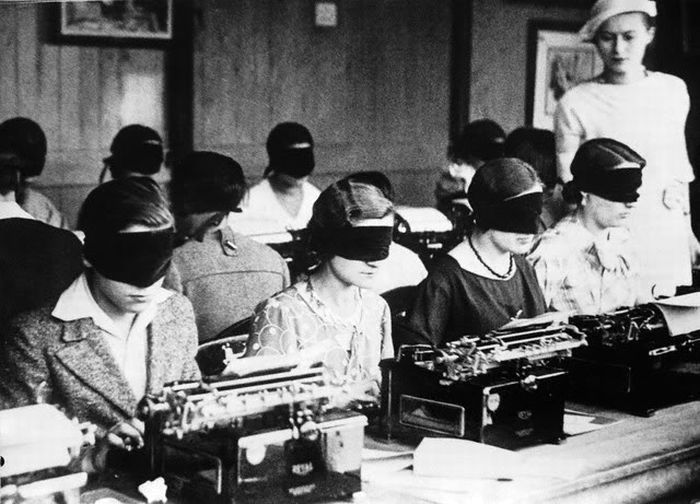
floral-pattern-piano-typewriter-vintage-writing-machine-Favim.com-79331