Archive by Author

It’s Okay To Feel Weird About Your Pregnant Body

23 Feb

Dear Fug Girls,

I like you. I like you a lot. I’ve been reading your site for, like, probably ten years now. I remember the days when Jessica wrote X-Files recaps for Television Without Pity (and those were some good days!). So, suffice to say I’m a pretty big fan.

And, as a fan, I want to tell you that what you wrote yesterday about Kim Kardashian wasn’t cool. Like, really not cool.

I get that hearing women talking about their weight can be stressful, maybe even triggering, and that one of the ways to deal with that is through humour, but I don’t think that it’s ever okay to make fun of a woman for being uncomfortable about her body. Because you know what? Everything in the freaking world is conspiring to make her feel uncomfortable about her body, and mocking her is not helping.

Look, pregnancy sucks. I mean, in some ways it’s kinda neat, but in a lot of ways it sucks big time. Your body, which has probably remained fairly static for most of your adult life, is suddenly taken over by a parasite and starts expanding in all kinds of weird ways. And suddenly, it’s not your body anymore. I mean, it is, but it’s totally unfamiliar to you, and also its housing a weird tiny thing that kicks and squirms a bunch. I spent a lot of my pregnancy feeling like the dude in Alien, to be honest, although thankfully I gave birth to an actual human being who was surgically removed from my abdomen rather than bursting out in a totally badass, metal way.

Anyway, what I’m trying to get at here is that even though I’m a thin woman, and even though my pregnancy weight looked perfectly fine on me, I still felt uncomfortable gaining weight. And I am not someone whose appearance is routinely picked apart by tabloids. I am not someone who felt obligated to prove that she’s “bikini ready” at six weeks postpartum. So if pregnancy made me feel weird about my body, I can only imagine how hard this must be for Kim Kardashian.

I’ll be honest: I don’t know a whole lot about Kim. I know that she’s with Kanye West, and I know that she’s done a bunch of reality shows, and I know that people love to hate her. I know that people like to make comments about how she’s famous for “nothing” (which is a hilarious criticism, because if anyone offered to let me be famous for nothing, I’d be like, “sign me up, bro” – who wouldn’t want to get tons of money for doing nothing?), although the number of times I see her out promoting stuff make me have a hard time believing that she really does nothing. I know that she’s a woman of colour who’s got hips and boobs, and I know that she’s already endured tons of criticism about her size from the media, long before she ever got pregnant. I know that she’s a woman, and as such she’s going to be scrutinized and mocked and ridiculed far more than her male counterparts.

At the end of the day, I’m just not really interested in shaming anyone for their feelings. Especially when those feelings have totally valid roots in the way our media and culture treat women. If Kim Kardashian wants to talk about how gaining weight while pregnant is upsetting, then more power to her. I’ll be happy to tell her a thousand times that she looks fantastic no matter what. Because there’s absolutely no good that can come from telling someone that their feelings are wrong, or bad, or stupid.

Anyway, that’s all I’ve got. I hope you guys will consider this the next time you post about someone’s weight gain. I mean, as much as I know that making fun of the way people dress is your gig (and usually it’s a pretty funny gig!), maybe you’ll be able to be a bit more empathetic the next time something like this comes up.

Sincerely,

Annabelle

p.s. The pants were pretty ugly, though, I’ll give you that

p.p.s. Say hi to the Mulder and Scully action figures for me! I hope they’re locked in an eternal embrace now that they’re retired from TWOP

p.p.p.s. I kinda hope these crazy kids make it, not gonna lie

kim-kardashian-kanye-west


ETA: Go Fug Yourself put an addendum on their post, which is pretty awesome:

** I may need to clarify that I am not trying to say that pregnant women can’t be thrown off by the changes in their bodies. But there is a difference between that and denial. To me, wearing those pants doesn’t say, “I am feeling awkward about my changing form.” Rather, that garment, to me, is a fingers-in-ears scream of, “LA LA LA NOTHING IS
CHANGING AT ALL.” My point was, don’t let denial get in the way of biological necessity — and also, those trousers are odious. But the former is dipping into armchair psychoanalysis, so I apologize if I overstepped…

Checking In

20 Feb

I know that I haven’t written here in a while (SIX WHOLE DAYS, LIKE, YOU PROBABLY THOUGHT I’D QUIT BLOGGING OR SOMETHING), and I just wanted to check in and let you guys know that I’m doing all right.

More than all right, actually. I feel better. Frighteningly, miraculously, tentatively better. It’s so new and so strange that I’m a bit hesitant to write about it yet or even say it out loud – like I could jinx it or something. But I also want you to not worry about me, so I thought I should tell you: I feel better.

I don’t know if I would say that I was happy exactly, but then I’m not sure that “happy” is the opposite of “suicidal”. I’m coming to distrust the idea of being happy anyway – I hear the word thrown around too much, hear too many people talking about how they deserve happiness. But I’m not sure that anyone deserves happiness, you know? There’s a quote from Zadie Smith’s White Teeth that the cynic in me has always loved, and I feel like it might apply here:

You hear girls in the toilets of clubs saying, ‘Yeah, he fucked off and left me. He just couldn’t deal with love. He was too fucked up to know how to love me.’ Now how did that happen? What was it about this unlovable century that convinced us we were, despite everything, eminently lovable as a people, as a species? What made us think that anyone who fails to love us is damaged, lacking, malfunctioning in some way? And particularly if they replace us with a god, or a weeping madonna, or the face of Christ in a ciabatta roll—then we call them crazy. Deluded. Regressive. We are so convinced of the goodness of ourselves, and the goodness of our love, we cannot bear to believe that there might be something more worthy of love than us, more worthy of worship. Greeting cards routinely tell us everybody deserves love. No. Everybody deserves clean water. Not everybody deserves love all the time.

I’m starting to think that maybe not everyone deserves happiness all the time. Actually, I think I’m just getting tired of hearing people talk about deserving anything – I’m tired of people’s sense of entitlement, their willingness to trample over others in order to acquire something they feel that they deserve.

But anyway, I digress.

I’ve been trying to follow the hospital psychiatrist’s orders and prioritize things that make me happy, and I think that by and large I’ve been succeeding. I’ve started keeping a proper, paper journal again, and it’s actually wonderful to be able to write without thinking about having an audience (except that I basically always think about having an audience, but I’m figuring that no one will read my journals until I’m dead and thus don’t care). I’ve been taking time out of my day to go to hip cafés where I sit and scribble happily in my notebook while sipping a latte, feeling like everyone looking on must know that I am a For Real Serious Writer Lady.

I’ve been doing other things too – things like spending an hour or two at the art gallery, or wandering around Roncesvalles and checking out the cute shops. Today I went to a friend’s place and lay on her couch for three hours, sipping gin and tonics, dissecting Salinger books and watching Star Trek. It was nice – more than nice, really. And I felt like myself, for the first time in a long time. But I also felt guilty.

Let me see if I can explain the guilt. It’s like this: I constantly feel like I’m running out of time. I don’t just mean that there aren’t enough hours in the day to get things done (although I do feel that way) – I also mean in general, in my life. I feel like I spent too much time fucking off (read: being depressed) in my early 20s and now I’m 30 and all of my peers are ahead of me and I’m struggling to catch up. And I know it’s not a race, but it still feels like one, and I feel like I now have to work extra super hard just to prove that I should even be allowed on the track.

Anyway, what all this amounts to is that I have a hard time doing anything that I don’t view as useful or productive. Even spending time with Theo fits into this category, as I see parenting as a way of creating and shaping an awesome future adult. And yeah, being Theo’s mom is pretty rad, but sometimes that seems more like a pleasant side effect of parenting rather than the main point.

I also feel guilty because it’s like, who am I to get to do all these nice fun things? Like, why do I get to go out and see my friends and hang out in coffee shops while Matt has to stay home and parent? How is that fair? What if he starts to resent me?

Do I actually believe that being depressed gives me special privileges or something?

And then I think, if I were sick with anything else and the doctor’s orders were to take it easy, would I feel guilty?

No, probably not. But if I were sick with anything else, there would be blood drawn, tests run, and hopefully some kind of irrefutable scientific proof that I was sick. But with depression there is no proof, not really. You all have to take me at my word that some days, I feel like dying.

And what happens if you ever stop taking me at my word?

After years and years of talking about suicide but not actually dying, won’t I start to seem like the boy who cried wolf?

I don’t want to lose you guys. Because I love you. Because I’d be lost without you. Because your support has mostly been what’s kept me going these past few weeks.

Anyway, all of this is to say that you don’t have to worry about me, because I’m feeling better.

And that means that, at least for now, I don’t have to worry about losing you.

xoxo

Annabelle

P.S. On a lighter note, just in case you were wondering what a Shrevolution looks like:

shrevolution!

Shrevolution! Or, I Hate Valentine’s Day

14 Feb

I’m just going to go ahead and put this out there: I’m not exactly the world’s biggest fan of Valentine’s Day.

I mean, it’s fine when you’re a little kid. You make sure to wear something red or pink, tell your parents how much you love them, and draw hearts all over every-fucking-thing. Everyone in your class gives you a card, your gorge yourself on chocolate, then spend the afternoon in a sugar-fuelled frenzy and throw up all over your babysitter’s carpet. End of story.

Then you hit puberty, and Valentine’s Day becomes this huge, looming thing. Like, it’s the only day where you can truly prove just how much you love (or, at least, want to fuck) another person. You can be in a happy committed relationship for every other day of the year, but if you happen to be single on Valentine’s Day, then you, my friend, are the most pathetic person in the world. Or at least you’re made to feel like you are.

My dislike for Valentine’s Day has slowly evolved over the years. In grade school I thought it was fine, maybe even sort of fun, and in high school I endured it, handing out ironic valentines to friends and crushes alike (go ahead, ask me how well that worked in the dating department). By university, though, I was ready to declare open season on V-Day.

I decided that the modern-day, grown-up version of Valentine’s Day was nothing less than a capitalist nightmare, chock-full of obligations to spend money: on flowers, on dinner, on chocolates, on jewellery, on sexy lingerie. There were other, insinuated obligations, too. For example, women were expected to pay for all the attention and money lavished on them by putting out, whether they wanted to or not. I even once had a male friend say to me, “If I buy my girlfriend flowers for Valentine’s Day, she basically has to have sex with me, right?”

Uh, no, dude. She doesn’t.

And, I mean, seriously, out of all the thinly-Christianized pagan celebrations to take hold this side of the Atlantic, how did crappy old Valentine’s Day manage to make it onto that list? Why can’t we celebrate May Day and dance around may poles? How come we don’t do anything for St. John’s Eve, a.k.a. Midsummer? I would way rather build some bad-ass bonfires in June than hand out ugly, mass-produced cards in February.

All of this was part of the reason why my roommates and I decided to throw an Anti-Valentine’s-Day party during second year. My mother had put a package of pink, heart-shaped Post-It notes in my stocking that Christmas, so we used those to decorate our apartment, scrawling things like, “LOVE IS AN ILLUSION” and “FUCK YOU” on them. You know, the usual romantic stuff.

Aside from the fact that a girl that no one liked and no one would admit to inviting ended up vomiting red wine all over our bathroom, the party was a resounding success.

The next year, my friends and I celebrated Valentine’s Day a little differently. Our plans started innocently enough: we were going to go eat greasy, delicious, non-romantic food and then go somewhere for drinks. There were four of us, two of whom had boyfriends, and all we really wanted was a quiet, Galentine’s night out.

Once we got to the pub, things went downhill fast.

A few drinks into the evening, the ranting began. And, naturally, the more we drank, the more belligerent we became.

“Fuck Valentine’s Day!” said one of my friends, “People think it’s all about women, but really it’s all about dicks getting some action.”

“Yeah, fuck dicks,” said another. “I mean, don’t actually fuck them, but also, fuck them.”

“Valentine’s Day should be for clits, not dicks! Dudes should be obligated to prove that they can perform proper oral sex before taking a woman out for V-Day,” said someone else. “Clit not dick! Clit not dick!”

Clit Not Dick ended up becoming our mantra for the evening. We repeated it frequently and loudly. We decided that we were going to start a revolution based on our new slogan, one that would free women everywhere from the oppressive shackles of Valentine’s Day. We began approaching romantic-looking couples at other tables to ask if they’d hear the good news about Clit Not Dick. We harassed the band with demands for songs by Veruca Salt, Hole, and, strangely, Counting Crows (they actually did end up playing Mr. Jones, probably just to make us go away).

This was back in the days when you could still smoke in bars, so we started chain-smoking to go along with our drinking. Soon our ashtray was overflowing, and our table was surrounded by a blue haze. We decided that we should pact that night, the four of us, to continue spreading word of the revolution. We touched the glowing tips of our cigarettes together and called it a cigarette pact because, we said, cigarettes don’t lie.

Later, we spilled out onto the street and, arm in arm, began marching down Spring Garden Road singing We Shall Overcome. Whenever we saw a girl getting into a car with a guy, we would run over and try to convince her that she didn’t need him, she only needed herself! We proselytized about the revolution to everybody, shouting CLIT NOT DICK at random intervals.

We found a phone booth and somehow managed to cram all four of us into it. We dialled the tips line for the local newspaper and left them a long, rambling message about capitalism, the revolution, and how Valentine’s Day oppressed women, and, naturally, clit not dick. We finished up by saying that we expected to see something about this in the next day’s paper.

“GET ON IT,” my friend yelled into the phone before hanging up.

One of my friends was so drunk when she got home that she was slurring her words. She tried to tell her boyfriend It’s the revolution! but apparently it came out sounding like Shrevolution! 

Naturally, once the rest of us heard that word, we adopted it as the new name for our movement.

The next year we held another Shrevolution, but the year after that I met Matt, and everything changed.

I learned to love Valentine’s Day and everything that went with it.

PSYCH. I still hate Valentine’s Day. Matt, who is kind of into it, has had to accept that I’m just not a very romantic person. I mean, don’t get me wrong, we’ve tried to celebrate it, if only because it seemed to mean something to Matt. But I think he realized pretty early on that it wasn’t my thing – the fact that for our first Valentine’s Day together he gave me a red silk pillow with I Love You embroidered on it and I gave him a swiss army knife may have helped tip him off – and now we’re pretty low-key about it.

But tonight, the Shrevolution will ride again. A bunch of my old Halifax friends are now living in Toronto, and three of us are going out to the Drake tonight to eat fancy, romantic food and get trashed on overpriced cocktails. Because as much as I might laugh at my younger self for some of my ridiculous Shrevolution antics, I can’t say that I entirely disagree with her thoughts on V-Day: that it’s too commercial, too capitalist, and there’s too much obligation to spend money that you might not have. Also the fact that you should celebrate your love for someone every day, not just spend one day a year in the back corner of a third-rate restaurant because that was the only place you could get a reservation, exchanging cheesy Hallmark cards and crappy gifts. Because you know what? Love fucking deserves better than that.

So while you are sitting there trying to whisper sweet nothings in your lover’s ear over the din of everyone else trying to do the same, I will be laughing raucously, swearing like a sailor, and yelling rude things.

Happy Shrevolution, you guys!

awesome_antivalentines_day_cards_640_02

Sylvia

11 Feb

Today marks the 50th anniversary of Sylvia Plath’s death.

Is this something that people do? Celebrate the anniversary of someone’s death? Certainly celebrate is the wrong word – mark is probably better, or even observe.

Today I am observing the 50th anniversary of Sylvia Plath’s death.

It’s no secret that I love Sylvia. I mean, I named my blog after her only novel (actually, I named it after what I would have called my all-girl rock band if I’d had one, but the band was named after the novel, so really it all amounts to the same thing). I’ve read everything she’s ever written. I have a weird sort of embroidered picture of her hanging on my dining room wall.

I’ve even joked about being her reincarnation. I mean, there are a few similarities between us, right?

We’re both depressed, oversharing lady-writers, for one thing. We both come from families whose finances went into decline at some point during our childhoods. Her father died when she was eight; mine left when I was thirteen. Of course you can’t compare death to a divorce, but I think it would be fair to say that those events left us both dealing with what are colloquially referred to as “daddy issues.”

Oh, and my son shares a birthday with her son Nicholas. So there’s that, too.

Of course, this is basically where the similarities end. Sylvia worked hard throughout high school and ended up attending Smith College on a full scholarship. She then went on to receive a Fullbright Scholarship to Newnham College, Cambridge. Meanwhile, I burned out early in high school, too tired and sad and stupid to get my shit together, and went from being an honour roll student in grade nine to receiving mostly Cs and Ds in my final year. I did get into Dalhousie University (though just how I managed that, I’m still not sure), and while there had all As and Bs, but still, I was never the academic star that Sylvia was.

Sylvia published her first poem when she was eight, and went on to publish several poems and short stories before she finished university. One of her stories, Sunday At The Mintons, won her a coveted spot as a guest editor at Mademoiselle magazine in New York.

I published my first poems and short stories, well, never, and I can’t even properly edit my own stupid blog, let alone a whole magazine. I’ve also never been to New York, although I have watched a lot of Friends and Mad Men, which is basically the same thing, right?

I guess that, all in all, Sylvia and I aren’t much alike, at least not on the surface. But when I read her writing, I feel that, as The Bell Jar‘s Esther Greenwood says about her friend Doreen, everything she writes is like a secret voice speaking straight out of my own bones.

I get Sylvia Plath. I mean, I get her. I get her dark, sad, humour, and I get her anxieties, and I get her hopelessness. Up until now, I’ve used her as a sort of guide in the darkness, reading and re-reading my well-thumbed copies of her books, looking for passages that will get me through my fits of sadness. A paragraph here, a stanza there, a kind of spiritual sustenance to tide me over until things get better. For most of my adult life, I’ve looked up to her.

But then, for all of my life until now, she’s been older than me. Wiser, hopefully. Maybe even more mature.

What do I do now that I’m about to out-age her? She’ll be thirty years old forever, but I’ll only be thirty for a few more months.

How do I continue to look up to someone who will soon be younger than me? Will I still love her writing in 10 years’ time? In 20? Will I look back someday and, instead of finding inspiration in her words, discover that all along she’s been a boring, self-obsessed, talentless hack?

What happens when you outgrow the people you admire the most? Probably nothing. Probably it’s normal.

But in a strange way I feel that by letting go of Sylvia and moving on, I’ll be abandoning her. In a funny way, I feel that she needs me, as much as I need her.

I’ve been thinking a lot about her last few weeks alive. Not much is known about what was going through her mind, since Ted Hughes burned her last journal, but we do have a handful of poems dating from late January and early February and, of course, a few firsthand accounts.

We know that the quality of her poems changed in those last weeks, becoming less about the self, their mood more disembodied, alien. We know that her incandescent poetic rage, that rage that has made her so famous, had begun to fade in her works, replaced by a sort of resigned hopelessness. We know that she worked feverishly, producing poem after poem, trying to translate her tangled thoughts into perfectly-ordered words.

We know that Sylvia went to her doctor and told him that she felt as if she was heading for a breakdown. We know that she began taking antidepressants and sleeping pills. We know that she reached out to her friends, Jillian and Gerry Becker,  for help and a place to stay. We know that several days before she died, her doctor began trying (unsuccessfully) to find her a spot in the hospital.

Each night that she stayed with the Beckers, Sylvia would take her sleeping pills and recite a sort of monologue about all of the people who had wronged her, all the men, beginning with her father, who had deserted her, and how utterly miserable she was. She would go on and on, ignoring any questions that Jillian put to her, as if she was in a trance. Eventually she would pass out.

Having Sylvia stay with them began to be a strain on Jillian – she had to do everything for Sylvia and her children, cleaning, feeding and entertaining them. When Sylvia announced on Sunday, February 10th that she wanted to go home, Jillian didn’t press her to stay. There was supposed to be a nurse coming to help Sylvia the next morning, and besides, surely the doctor would find a hospital bed for her soon. And also, as Jillian said in the article I linked to above, pity tires the heart.

Gerry drove Sylvia home Sunday afternoon, and she wept the whole way there.

That night Sylvia left the window in her children’s room open, and shoved cloths and towels underneath their door. She also placed tape all around the door frame, to stop up the cracks. She then turned the gas taps in her oven on all the way and, placed a little folded cloth in the oven to act as a pillow, and laid down.

She was found the next morning by the nurse and a handyman working on the property who broke into her flat when no one answered the door.

By that point, she’d been dead for several hours.

Her children, though cold from having slept next to an open window in February, were fine.

And pity tires the heart.

I think that there’s a state that you sometimes get into when you’re deeply depressed. You feel as though you’re walking along a sort of knife’s edge between artistic inspiration and suicide. In an instant, all the dead, flat hopelessness you’ve been feeling gives way to an ecstatic misery. You suddenly feel as if you’ve been given a special insight into how the world really is, and you work like mad to get that insight down on paper or on canvas or whatever. And you know that you’re playing a dangerous game, but you also think that it’s worth it.

It’s worth it to go that close to the edge, if there are rare, exotic gifts to bring back.

It’s worth risking death, so that you can tell everyone else what it was like.

It’s worth almost everything, if it means that you’ll write something great.

It’s like circling round and round a black hole, getting a few inches closer each time. You’re discovering all kinds of amazing things that no one has ever known before, but you never imagining that you yourself might be drawn in.

It’s like standing at the edge of a lake of poison, and knowing that the poison, if taken in small enough quantities, will give you brilliance and genius that you’ve only ever dreamed of. The poison, if taken one spoonful at a time, will give you an enormous drive to create. And you want that. Oh, how badly you want that, want all of it.

But even though you know that the poison could kill you, you’re not overly wary of it. You’re that you’ll be able to set limits. You’re confident that you’ll be able to stop when you need to. But after taking one sip, you talk yourself into taking another, and then another. And you feel fine, not sick at all. You drink and drink and drink, and maybe even dive right in.

And it’s not until it’s too late that you realize what a mistake you’ve made.

And maybe there’s no one to save you. Because pity tires the heart.

I am trying so hard not to tire all of your hearts.

Sylvia, I am thinking of you today. I promise that you do not tire my heart.

sylvia_kids

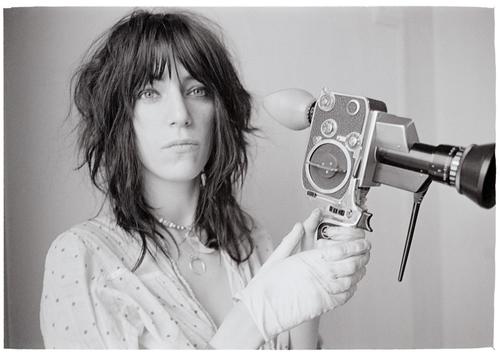
Patti Smith – Camera Solo

6 Feb

When the Art Gallery of Ontario announced that they would be doing a major exhibition of Patti Smith’s photographs, I can’t say that I was overly excited. We’re members there, so I figured that I’d see it eventually, but I wasn’t going to make a special trip for it or anything.

I have to admit that before today, I didn’t know much of Smith beyond her status as the godmother of punk and her seminal 1975 album Horses. Part of my disinterest in her show probably stemmed from the fact that I often don’t trust artists who dabble in other forms of art – actors who put out an album, say, or musicians who try to be novelists. I guess that part of my curmudgeonry is because they don’t have any obligation to be talented in fields other than their own – some label will release David Hasselhoff’s album because he’s David Hasselhoff, not because he’s good. I figured that Patti Smith and her photography had a similar story.

Then today, I scheduled myself two hours of do-something-pleasant time (which is a thing I’m trying to do lately) between 11 and 1. I decided to go down to the AGO, wander through the galleries, and maybe park myself in the members’ lounge (actually several shabby-chic rooms in a Victorian mansion that’s attached to the gallery) and write in my journal. But when I got to the AGO and showed off me membership card and ID to the woman working at the desk, she asked if I’d come to see the members-only preview of Patti Smith’s show. I told her no. She asked me if I wanted to see it. I shrugged and said sure, because I’d already seen just about everything else in the gallery.

Smith’s show was a revelation. After making a tour of the main room, I sat down in one of the comfortable old wooden chairs provided (tastefully arranged on an oriental rug) and started scribbling in my notebook. The first words that I wrote were, “miniature & melancholy & perfect,” which seem like an accurate way of summing up how I felt.

The exhibition is made up of approximately 70 photographs taken with Smith’s vintage Polaroid camera, presented there as gelatin prints, as well as a handful of personal objects, and Equation Daumal, a film Smith directed which was shot on 16mm using Super 8 film.

The room is bare and white, with the rug and chairs occupying the floor space along with a large piece of artwork constructed by Smith. The photographs that line the walls are tiny (as you imagine vintage Polaroids would be) and are displayed in groups of four or five, sometimes with cases full of related objects underneath.

Some of the photographs are self-portraits. Some are of Smith’s children. Most of them, though, can be summed up by this quote by Smith, which is posted on one of the walls:

I have a strong relationship with the dead, even a happy one. I get pleasure out of having their things and sometimes photographing them.

Some of the dead are people she knew – Robert Mapplethorpe, for example, the well-known photographer and her one-time partner who died of AIDS in the late 1980s. Most of the photographs, however, are of people who inspired her and the various objects they owned.

There’s Herman Hesse’s typewriter. The river Ouse where Virginia Woolfe drowned herself, her pockets full of stones. A stuffed bear belonging to Tolstoy that served to hold calling cards in its outstretched hands. A funeral wreath. William Blake’s grave. Nureyev’s ballet slippers. Virginia Woolfe’s bed. Victor Hugo’s bed. Frida Kahlo’s bed. So many photographs of beds belonging to dead, famous people.

Why beds? I wondered, then realized all the various uses we put them to.

Beds are places where we sleep, yes, and also dream. We fuck in beds. We eat, read, maybe write in bed. Beds are places where we fight with the people we love the most; beds are places where we make up those fights, with whispered reconciliations, skin brushing against soft skin. Sick days are spent in bed, sleeping, Facebooking or watching old movies. Nearly all of us are born in a bed; many of us will die in one, too. Beds are equally places of pleasure and pain, but even more than that, they’re places of transition. Beds are where we make our way in and out of this world, making them a sort symbolic doorway or portal.

There are objects in Smith’s collection, too. Her father’s chipped white bone china mug, a cross that belonged to Mapplethorpe, and a sort of totem Smith made for Brian Jones. There’s a pair of slippers belonging to Pope Benedict XV, the man who canonized Joan of Arc. There’s a stone from the river Ouse.

There’s an entire section devoted to Arthur Rimbaud, photographs of his bed, the path near his house, his grave. There are drawings that Smith has done of Rimbaud, black lines with a few dabs of colour. The large object in the middle of the room is a reconstruction she’s done of the litter Rimbaud designed to carry him 100 miles across Ethiopia, to a place where he could seek medical treatment after falling ill in the jungle.

As I walked around the room, I thought, yes. Yes. I live here. Here, in this grainy black and white land between living and death. I know the holiness that surrounds the grave of a painter or poet that you love. I know the happiness of holding an object that someone I love once cupped in their hands. I know this place. I live here.

The whole exhibit was a sort of communion with the dead. It was about the ways we connect with those we’ve loved and lost, through sight, through touch. It was a reminder that love still exists, even after death. And what do you do with all that leftover love, the heart-searing shit that’s left behind when you lose someone you care about? What do you do with the love you have for a poet or painter or musician who has greatly inspired you but died long before you were born?

You channel it into something, even someone else, I suppose. You put it into your own art, or your work, whatever it is, or into your children or your lovers or your friends. Or else maybe you waste it, let it drain out of you, use it to feed your loneliness.

I’ve been thinking all afternoon of the things that I have that once belonged to people who are now dead. My names, for a start – Annie, after my great-grandfather’s sister who died of tuberculosis when she was 16, and Rebecca, from my mother’s beloved Nana Kelley. I have a scarf that belonged to my Grampy, an old wool plaid affair that’s looking rather moth-eaten these days. I have my grandmother’s father’s Latin grammar book. I have a photograph of my Poppa in his RCAF uniform from when he served in WWII. I have a letter that my father’s grandmother sent to my mother when she was pregnant with me, a note that has my great-grandmother’s name, the date and “Halifax City” written neatly in the upper right-hand corner.

I have things that belonged to people I’ve never known, too . A blue vintage dress printed with purple and orange flowers. An American 1st edition of Camus’ The Outsider. My antique engagement ring. I have all the words of the dead that line the walls of my living room, shelf upon shelf of well-loved books. I am surrounded by the dead.

I still feel breathless, almost light-headed, even several hours after seeing the exhibit. I wish that I had sufficient words to explain how it affected me, but every sentence in this post, though carefully and meticulously constructed, somehow seems flat and emotionless.

I can tell you this: it was lovely. You should see it. And then you should sit down, and think of your beloved dead.

Patti+Smith+beautiful+with+camera

Sometimes I’m Tired Of Being A Mom

4 Feb

“Sleep when the baby sleeps!”

I started hearing it the day Theo was born. Actually, I probably started hearing it way before then, but it’s likely that I didn’t pay much attention. I just filed it under “obvious advice is obvious,” and thought nothing more of it. Of course I was going to sleep when the baby slept. Just like of course I was going to have a natural birth, breastfeed like a champ and have a kid who slept through the night at six weeks. Because, unlike all the other moms in the world, I’d read all the right books, bought all the right products, and participated in a million online discussions about how not to fuck up your kid. I was so set.

I was sure that motherhood was going to be so fulfilling. I mean, yeah, I knew it would be hard, but hard in a being-super-brave-through-tough-times-like-Florence-Nightingale sort of way, not hard in a grinding, miserable, I-hate-my-life way. Surely I would come out of those long, desperate, sleepless nights glowing with motherly love, just happy to have been able to offer my screaming child even a modicum of comfort. Surely I would be happy to sacrifice any and everything for my kid.

Surely I would never, ever resent him.

After Theo was born, people kept reminding me to sleep when he slept. But I didn’t want to; I wanted to stay awake and just stare and stare at this amazingly tiny new human I’d just created. I’d just made an entire new person that had never existed before – how could I be expected to sleep after doing that? Besides, I remember thinking, I’ll sleep later. Because, up until that moment in my life, there had always been a later. Whenever I’d had a long week at work, I’d been able to plan to sleep in on the weekend. I’d been able to look forward to vacations when Matt and I could grab catnaps together between fun activities. I’d always, always been been able to think ahead to a time when I would be able to catch up on my sleep, maybe even take some kind of sleeping aid to ensure maximum restfulness.

When you become a parent, there never seems to be a later when it comes to sleep. You either grab it when you can, or you go without. Not long after Theo was born, I learned the hard way that I couldn’t do the former – when Theo slept, I was too anxious to rest, and when I did finally manage to fall asleep, I was awakened by every. single. tiny. noise he made. I don’t know if it was because I was so fucked up on hormones, or if it was the postpartum depression beginning to rear its ugly head, but no matter how hard I tried, I couldn’t sleep when he slept.

And you know what’s the worst? Not being able to sleep when you are bone-fucking-tired and you know that your kid is going to wake up screaming soon and then you won’t get to sit down for the next five hours.

At some point towards the end of that hazy first week of motherhood, I remember thinking, “When is someone coming to take this baby away so that I can go back to my real life?”

And then I realized that this baby was mine, and no one was going to take him away, and this was my real life now.

With that thought came a bizarre mixture of guilt over wanting to go back to my non-baby life, and blind panic of the “holy shit I have a kid, what the fuck have I just done?” variety.

In all the months I’d spent preparing to have a kid, I’d never fully realized what it would be like to have a kid.

Sometimes having a kid sucks. A lot. I love him, and I love being his mom, but sometimes I’m so tired of being a mom, anyone’s mom. Sometimes I just want to be myself. I want to go back to my old life, the life where I slept in on weekends, watched TV whenever I wanted to, and sometimes spent all day having sex with my husband. It doesn’t help that my life now bears a striking surface resemblance to my old life; I live in the same apartment, wear many of the same clothes, eat the same foods. I even look pretty much the same, except that I’m a cup size bigger than I was (thanks, breastfeeding!). I’m surrounded by reminders of the way I used to live.

It also doesn’t help that most of my friends still, in some ways, live in my old life, staying out late, drinking too much, and going to the bathroom without having a toddler follow them to watch them pee. And I promise that I’m not trying to be all, having a kid is so hard and my non-mom friends don’t get it, but let’s be honest: most of them don’t, really, in the same way that I didn’t get it, either. And I’m jealous that they don’t get it, jealous that they don’t have to watch what they eat or drink or smoke because they’re afraid of contaminating their breast milk, jealous that they can go to bed and not have a whimpering toddler wake them up five times a night, jealous that when they go home at the end of the day, their work is done, while mine lasts forever and ever and ever.

Sometimes I’m so tired of being a mom.

Sometimes I’m so fucking tired. Period.

And you know what sucks the most? Knowing that all of this is my fault. I don’t mean so much in the sense that I chose to have a kid (although that is true), but more that I haven’t done any sleep-training, haven’t tried too hard to night-wean and, at 24 months old, still can’t really imagine being away from him overnight. Know why? Because I’m a wuss, that’s why. Every time I think about sleep-training Theo, I think of all the crying that will be involved, and I wince. I’m not the crying-it-out-will-ruin-your-kid-forever type, but you know what? I just can’t. I’m sorry, but I can’t. Hearing him cry makes me feel like every nerve in my body is on fire. And it’s one thing to hear my kid cry because I won’t let him splash his hands in the toilet; it’s another when he’s crying because he just wants to be held, or sung to, or breastfed.

And that’s why my 24-month-old still sleeps in my room and still breastfeeds pretty much whenever he wants at night. Because I am too tired and too wussy to do anything about it.

I’m tired and you guys?

Sometimes I still miss my old life. A lot.

And that makes me feel really awful.

anne_theo

Dispatches From The Dark Side

1 Feb

Trigger warning for talk of suicide

If I was writing about almost any other health issue, I wouldn’t hesitate to post this.

If I had diabetes, or cancer, or liver failure, you wouldn’t feel strange reading this.

If I started out by saying, “I went to the hospital last night because I had the flu,” no one would think twice about this. No one would call it oversharing. I wouldn’t feel ashamed or embarrassed.

But I didn’t go to the hospital because I had the flu.

I went to the hospital last night because I wanted to die.

I mean, I say that, and that’s how I felt, but the truth is that I didn’t really want to die, did I? If that had really been my intention, I would have just done it. I wouldn’t have talked about it, wouldn’t have told anyone, and certainly wouldn’t agreed to go to the hospital.

Intention is tricky, though, slippery, even, all tangled up with impulse, drive and desire; I don’t think I’ll ever understand what it is that I actually want. It’s like peeling an onion, folding back layers and layers of truths and semi truths, never able to really get to the core of how or why I feel these things.

I’m not writing this because I want your pity, or comfort, or advice (although you can offer them if you want to).

I’m writing this because I want to be honest. I want to be like someone who paints their self-portrait and doesn’t spare any details; I want to show you my pimples, the dark smudges under my eyes, the crease that bisects my forehead, evidence of a lifetime of squinting because I didn’t want to wear my glasses.

I’m writing this because I don’t want to be embarrassed or ashamed anymore, and for some reason saying these things publicly makes them easier to bear. It’s like racing to tell all of your darkest secrets before your ex-best friend can betray your trust; you get to keep some kind of control over the situation. Sort of.

I’m writing this because I want to talk about it, and this is the only way that I know how. I’ve developed this online voice, this sort of character that’s both me and at the same time an amplification of me, a louder, brasher, more combative version of myself. It’s easier for me to write about this in this character; I would never be able to look you in the eyes and say these things.

I promise that we don’t have talk about this in person. The next time we meet, we don’t have to refer to what’s written here.

But right now I do want to talk about wanting to die. If you’re not up for that, I totally give you permission to stop reading right now.

I wish I could tell you why I want to die, but I can’t. The truth is that I have a good life, maybe even the best. I’m married to someone that I love a whole lot, someone who loves me in return. My son is amazing; I’m not even sure that there are words to describe how great he is. I enjoy my work. I like where I live.

On paper, I should be very happy.

But still, I want to die.

I can’t tell you why, but I can tell you what it feels like.

It feels like all of the days ahead of me are grey and blank and empty. Not empty in the sense of possibility, but empty in the sense of being hopeless.

It feels like wearing a shirt that’s rough, scratchy, uncomfortable, and that shirt is my skin and I can’t take it off.

It feels like discovering that all of my favourite foods suddenly taste like cardboard, but I eat and eat and eat anyway because I need something to fill all that empty space.

It feels like standing in direct sunlight, feeling in on my back, my shoulders, my head, but never having my brain think sun. All it can think is heat. Like there’s this distinction, this appreciation that I can’t make anymore; everything is broken down to its most basic elements. Nothing is good or beautiful – everything is awful and dull in its own way.

It feels like the life-support system in my brain failed, and no one bothered to install a back-up. So now the ship is going down and the lights are flickering and we’re running out of oxygen and everyone is panicking.

It feels like being tired all of the time, like never being able to get enough sleep. I just want to sleep.

I do things. I go out, and I spend money on things that I used to enjoy, in my former life, the life that, on the surface at least, is nearly indistinguishable from the one I live now. I don’t enjoy anything anymore, though, and spending money that on things that don’t make me feel better only adds another layer of shame and guilt onto what I’m already feeling.

At home, at night, I feel trapped. The lights are too bright, the air too dry. I can’t sleep. I can’t read. I can’t watch TV. I can’t write. I can’t talk. I pace and pace and pace, trying to get rid of the prickly, irritable energy that’s building up in my veins, in my bones. I think that I could feel better if the apartment was clean, if the dishes were done and the bathroom sink scrubbed, but I don’t know where to begin, so I pace some more.

I just don’t want to feel anything anymore. I don’t even want to feel the good things. I just want to go to a place that’s beyond feeling.

And I know that suicide is selfish. But I also know that if I was dead, I wouldn’t care about anything anymore. I wouldn’t have to feel guilty about the people that I’ve left behind.

But I can’t help imagining Theo, what it would be like for him if I were to die. How he would cry and cry for me. How he would never be able to understand that I wasn’t coming, not ever. I think about how I would break his heart, think about the fault lines that I would trace along that tiny, powerful muscle, cracks that would break over and over for the rest of his life and never, ever heal.

I don’t really want to die.

I just want to sleep and sleep and sleep forever.

But it sort of amounts to the same thing, really, which is why I went to the hospital last night. Because I love Theo and don’t want to leave him. Because even if I couldn’t feel anything anymore, I would still find some way to miss him.

I live in a big city, so there’s a special hospital just for head cases like me. It even has two sites, one downtown and one in the west end. I went to the one downtown.

They lock you into the ER waiting room. There is a sign on the door that says AWOL Flight Risk. I wanted to take a picture, but I didn’t think they would like that.

There was a woman screaming in a room at the end of the hall.

There was a young man in a suit brought in by two police officers.

There was an unconscious woman brought in on a gurney. Her feet were bare.

There was a girl on the bench next to me, lying with her head on her mother’s lap. Her father was there, too. He said,

“You said that at the last minute something told you not to jump. What was it?”

But she didn’t answer.

While I was there, two code whites were called, which means that there’s a violent patient somewhere in the hospital. One of them, according to the man on the intercom, had a weapon. Both calls sent the ER staff into a flurry, running for doors and phones and elevators.

And I thought, I don’t belong here. I am not having an emergency. These people are having emergencies. I am someone who is fine, only a little sad sometimes. I am coping. I get up every day, go to work, take care of Theo. I am fine. I just have to be stronger, better, less self-indulgent.

And I wanted to leave, but I didn’t.

Finally it was my turn to see the doctor. She was young, kind. Her outfit wouldn’t have looked out of place in my closet, and I coveted her glasses.

She listened to me, took a few notes. Recommended a few things. She said that her main prescription was to try to prioritize things that make me happy.

I’m not sure how easy that will be to execute, but I like it anyway. I’m strangely pleased that instead of having me try another pill, a different pill, she handed me a piece of paper telling me to prioritize my own happiness. It seems like something that would happen in a book, or a movie, and I’ve always wanted to live in a book or a movie.

So how do I feel now?

Raw, I guess.

The same, I guess.

Maybe a little more hopeful, so that’s a start.

I still can’t stop reading Anne Sexton’s Wanting To Die.

I still can’t stop reading Ted Hughes’ book Birthday Letters, or poem his Last Letter.

But maybe I’ve read them a few times less today than I did yesterday.

I am trying to find some happy way to end this post, but I can’t think of any. I want to offer you some kind of hope. Then again, if I had cancer, or diabetes, would I feel that same urge to comfort you, to take care of you? Maybe. I don’t know.

I will leave you with this, one of my favourite quotes from the Bell Jar. It’s as true for me now as it was for Sylvia Plath when she wrote it more than 50 years ago.

“Don’t you want to get up today?”

“No.” I huddled down more deeply in the bed and pulled the sheet up over my head. Then I lifted a corner of the sheet and peered out. The nurse was shaking down the thermometer she had just removed from my mouth.

“You see, it’s normal.” I had looked at the thermometer before she came to collect it, the way I always did. “You see, it’s normal, what do you keep taking it for?”

I wanted to tell her that if only something were wrong with my body it would be fine, I would rather have anything wrong with my body than something wrong with my head, but the idea seemed so involved and wearisome that I didn’t say anything. I only burrowed down further in the bed.

I would rather have anything wrong with my body than something wrong with my head.

But since I do have something wrong with my head, I’m glad I’ve got all of you to listen.

For anyone who is in a state of mental health crisis, here is a link to the Mental Health Crisis line. You can also call Telehealth, if you’re in Ontario. If you are experiencing any kind of depression or are having suicidal thoughts, please, please call one of the numbers above, or else contact your doctor or local mental health crisis line.

art-bell-jar-butterfly-drawing-illustration-Favim.com-134637

Abortion and Down Syndrome

29 Jan

First of all, let’s get one thing straight: I am not in the business of judging women for when and why they choose to abort. If you’re only going to take one thing away from my blog ever, please let it be that.

Now that we’ve got that out of the way, I have something that I want to talk about.

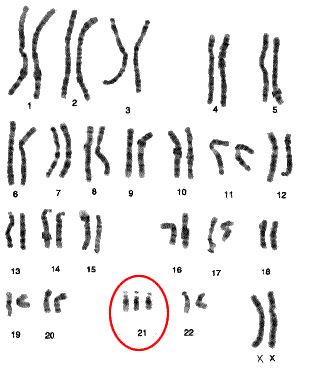
I want to talk about the fact that, according to some studies, an estimated 90% of fetuses that receive a prenatal diagnosis of Down Syndrome are aborted.

It should be noted that the actual numbers may be less than that, and some studies show a decrease in recent year in the number of pregnancies terminated after a prenatal Down Syndrome diagnosis. We’ll go with that 90% figure, though, because it seems to be fairly accurate and is the one that I see pop up the most often.

It should also be noted that this figure should not be misinterpreted as “90% of fetuses with Down Syndrome are aborted.” That statement is patently untrue. For one thing, many people opt out of prenatal genetic testing, or do not have access to it. So while it’s a fact that thousands of fetuses are aborted after a diagnosis of Down Syndrome, it should also be noted that there are still thousands of babies with Down Syndrome being born in North America every year.

All of that being said, that 90% is not an insignificant number. And we have to look at what that means, both in terms of the pro-choice movement, and in terms of the stigma surrounding Down Syndrome.

With regards to the pro-choice movement, there’s been talk recently (in the US, at least) of enacting a ban on abortions due to fetal abnormalities. A bill was introduced in North Dakota last week that, if passed, would charge doctors who perform abortions for reasons of sex selection or genetic abnormalities with a Class A misdemeanour, which could potentially result in a year of prison time. Indiana is trying to pass a bill that would charge doctors who perform abortions in cases of genetic abnormalities with a Class C felony, which can result in up to 8 years of prison.

Needless to say, I think these laws are a terrible idea, for a number of reasons.

First of all, as previously noted, I don’t think that banning abortion does much good anyway, as studies have shown that it does not affect the abortion rate.

Second of all, I never, ever think that giving women less information or less choices is the way to go. I think that women should be given all the information available about their fetus. I think that women should always have the option to abort that fetus, even if their reason is the sex of the fetus or because the fetus has Down Syndrome. And I think that limiting abortions because the reason for one particular abortion makes us uncomfortable is a slippery slope.

Thirdly, I think that these laws would be difficult, maybe even impossible to implement. Would they allow for abortions in cases where the genetic abnormality is incompatible with life? While it’s true that a doctor can diagnose genetic abnormalities with 100% accuracy given the right tests (tests like amniocentesis which, by the way, many women avoid because they carry a risk of miscarriage), no doctor can ever truly predict whether a disability or genetic disorder is incompatible with life. Does this mean that doctors will force women to continue pregnancies in cases of anencephaly, because in rare cases babies born with that condition can survive outside of the womb, albeit with absolutely no quality of life?

Finally, and most importantly, I don’t think that the fact that 90% of fetuses diagnosed with Down Syndrome are being aborted is the problem. I think that it’s a symptom of the problem, and as such, I don’t think that a ban on abortions is going to fix anything.

The really problems are stigma, lack of education and lack of resources.

We need to have doctors who are better educated about Down Syndrome, so that they can provide better information to their patients. This is especially crucial given that a new blood test is being developed that can, with 100% accuracy, predict whether or not a fetus has Down Syndrome. This is a test that can be administered by family doctors, meaning that now your general practitioner, the person who, as things stand now, has had very limited training when it comes to disabilities, will now be counselling you on whether or not to terminate your pregnancy. Many doctors will give women misinformation, or blatantly one-sided information, that will lead to the decision to abort. We need doctors who are providing the full picture, so that women can make truly informed decisions.

We need more government resources for families with children with disabilities. My mother is a social worker who works with children with disabilities, and I have heard many first-hand accounts about how little the government provides, and how incredibly financially straining it can be for a family with a child with Down Syndrome. People living with Down Syndrome can have a whole host of medical problems, sometimes spending years at a time in the hospital. And while, yes, we have socialized medicine in Canada, which means that the hospital bills will be paid (assuming that the hospitalized person is in a ward, not a private room, and excluding the cost of medication), what we often don’t take into account is the time that a parent of a child with a disability will have to take off work. Some parents even find that they are unable to work and have to care for their children full-time, or else face the idea of having their child institutionalized (this scenario is, admittedly, rare for children with Down Syndrome, but happens quite often for children with more serious disabilities or delays).

Above all, we need to work to reduce stigma. We need to find ways to teach society that a diagnosis of Down Syndrome is not the end of the world; that people with Down Syndrome can and do live long, healthy lives and contribute in many ways to the world around us. Most people with Down Syndrome are able to work outside of the home; many are able to leave their parents’ homes and go to assisted-living communities or places like the L’Arche homes. We need to have people with genetic problems and developmental disabilities become more visible in our society; why not have a character with Down Syndrome on a children’s television show? Why not feature more children with developmental delays in children’s books, or in movies? Why not include children and adults with Down Syndrome in consumer advertising campaigns, modelling for clothing companies or whatever? How are we ever going to teach society that those with disabilities are people, too, if they remain almost totally invisible?

I was speaking with a friend today about receiving a prenatal diagnosis of potential Down Syndrome (she’d had ultrasounds, but had opted not to have an amniocentesis, so doctors couldn’t say 100% whether or not her son had Down Syndrome). She said a few things that really struck me:

I remember a few weeks before his anatomy ultrasound reading a story of a mom who had a baby with Down Syndrome without any prior clues on any testing.. and I was like “oh well, what’s the big deal?” And then when everything went down for us I understood what the big deal was. It wasn’t that I didn’t want HIM, it was that everything that I wanted for him may not have been possible […] I think another factor for me was that it was like suddenly this baby that I had inside me for 20 weeks was a stranger. Because I had built up one image in my head of the perfect baby and suddenly they were someone different. Not any less perfect, but just not what I was preparing myself for, so I definitely went through a grieving period, even though I didn’t think Down Syndrome was a big deal prior to that.

Reading her comments made me tear up a little, because I think that this is something that we don’t often talk about, the idea that a diagnosis of Down Syndrome can feel like a loss. We don’t talk about the fact that the baby you’ve been envisioning all along, the baby you’ve been in love with no longer exists, and needs to be grieved. I remember that after I had my c-section and was upset about the fact that I hadn’t been able to have the natural birth that I wanted, someone told me that it was okay to grieve that birth. And hearing that helped.

And I think that in the society we live in, the society that teaches us that people with Down Syndrome are inferior, that their lives are worth less and, as such, they are to be pitied, it only makes sense that some women, as part of their grieving process for the child they thought they were carrying, will choose to abort a fetus with Down Syndrome. A diagnosis of Down Syndrome can often makes a mother feel that she might never love her child, might never want to hold them or care for them. What good will it do to force that mother to continue her pregnancy? And if you tell me that she’ll learn to love her child, that every mother automatically bonds with her child, well, you’re voicing the same anti-choice rhetoric that’s used against young or unprepared women who are facing an unplanned or unwanted pregnancy.

Banning abortions in cases of genetic abnormalities isn’t going to make people believe that those living with Down Syndrome are any more valuable, or less pitiable. Banning those abortions won’t magically make more funds or resources available to struggling families. Banning those abortions won’t make doctors any more knowledgeable about Down Syndrome or other disabilities. Banning those abortions won’t make a mother feel more capable of loving a baby with Down Syndrome. Enacting such a ban will only going mean that there are more mothers and fathers who feel lost, alone and unable to cope.

Is that really what we want?

trisomy

Feminism and Abortion

27 Jan

I like to think that there aren’t a lot of hard and fast rules when it comes to feminism. I think you can be married and have kids and be feminist. I think you can be single and childless and be feminist. I think you can be a stay-at-home mom and be feminist. I think you can be a working mother and be feminist. I think you can breastfeed and be feminist. I think you can formula-feed and be feminist. I think you can wear cute dresses and pretty pink lipstick and a giant fucking bow in your hair and be feminist. I think you can wear jeans and combat boots and cut your hair real short and be feminist. I think you can be a woman and be feminist. I think you can be a dude and be feminist.

I don’t, however, think that you can be anti-choice and be feminist.

This week marks the 40th anniversary of Roe vs. Wade, the landmark decision by the United States Supreme court to legalize abortion (up until then, the only legal abortions in America were those done in cases of rape or incest).

In the 40 years since Roe vs. Wade, the abortion issue has only grown more contentious. There are many people who are still vocal supporters of the pro-choice movement, but there are also many people who don’t support a woman’s right to bodily autonomy.

And you know what? I wish I could say that I understood, but I don’t.

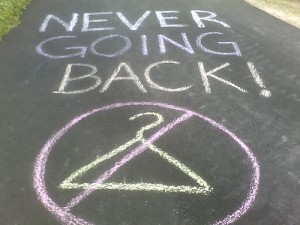
I don’t understand why you would try to enact a ban on abortions when banning abortion does not actually affect the abortion rate.

I don’t understand why you would try to create legislature that is almost certainly going to be dangerous to the health of women, sometimes even leading to their deaths.

I don’t understand why you would spend your time preaching at women about dead babies, telling them at what gestational age they develop fingers and toes and referring to abortion as “murder”, rather than using your time to promote access to things like birth control and sex education.

And I really, really don’t understand how and why Ross Douthat thinks he can convince women that they can be anti-choice and feminist.

I think that part of the problem is that Douthat doesn’t seem to understand what the feminist movement and the abortion debate are all about. And you know what? Far be it for me to elect myself the Boss of Explaining Feminism and The Pro-Choice Movement to Ross Douthat, but I guess someone has to do it, so here goes.

Douthat begins by complaining that Nellie Gray, a former-WAC-corporal-turned-bureaucrat-turned-lawyer who helped establish the March for Life, the annual rally against Roe vs. Wade, is not a “case study for students of second-wave feminism.” This, Douthat argues, is because “cultural stereotypes” cause us to believe that the anti-choice movement has a more “complicated relationship” to women’s advancement than all those Liberal left-wingers want us to believe.

I bet you are wondering how on earth banning women from exercising their reproductive rights is anything more than a reverse of all the hard-won equality that feminism has fought for. I know that I sure am! Let’s see what Ross Douthat has to say.

First of all, Douthat wants you to understand that one of the “stereotypes” about the anti-choice movement, the idea that they are trying to reinforce traditional gender roles by forcing women to have children and stay out of the work force, just isn’t true! He notes that,

Jon Shields of Claremont McKenna College pointed out last year, pro-life sentiment has been steady over the last four decades even as opposition to women in the work force (or the military, or the White House) has largely collapsed. Most anti-abortion Americans today are also gender egalitarians: indeed, Shields notes, pro-life attitudes toward women’s professional advancement have converged so quickly with pro-choice attitudes that “the average moderately pro-life citizen is a stronger supporter of gender equality than even the typical strongly pro-choice citizen was in the early 1980s.” Among the younger generation, any “divide over women’s roles nearly disappears entirely.”

Translation: the anti-choice movement totally gives you permission to work outside of the home! And wear pants! And vote! They support all kinds of radical choices for women!

I mean, except whether or not to have kids once you’re already pregnant.

You’re totally allowed to be in control of your own body right up until that one, single, solitary sperm encounters that one single, solitary egg – after that moment, you’re up baby creek without a paddle.

Douthat then goes on to assert that,

The pro-life cause has proved unexpectedly resilient, in other words, not because millions of Americans are nostalgists for a world of stricter gender norms, but because they have convinced themselves that the opportunities the feminist revolution won for women can be sustained without unrestricted access to abortion.”

What he actually means is that SOME of the opportunities the feminist revolution won for women can be sustained without unrestricted access to abortion. You know, all the opportunities that don’t involve a woman’s right to choose whether she has kids or not.

And before you jump in to tell me that if a woman doesn’t want to have kids, she should just use birth control, let me tell you that that’s not how it works. Even with all sex education in the world, even with easy access to birth control, women are still going to have unplanned pregnancies.

Sex education is easily forgotten in the heat of the moment. Birth control fails. We all know that no form of birth control is 100% effective, except for abstinence.

Please, go ahead and raise your hand if you think that preaching abstinence is going to work.

Lindsey Graham, you can put your hand down right now.

Douthat finishes his article by saying that,

For its part, if the pro-life movement wants not only to endure but to triumph, then it needs … [to offer] … realist’s explanation of how, in policy and culture, the feminist revolution could be reformed without being repealed.

Ross Douthat, let me explain this to you using small words, so that you will understand:

If you are trying to take choices away from women, that is not feminist. If you want to enact policy that will quite certainly lead to women’s deaths, that is not feminist. If you think that you, as a man, get to have any say over what happens to women’s bodies, that is really not fucking feminist.

Got it?

Good.

And you know what? If you really, truly believe that life begins at conception, why not work to fund research and raise awareness regarding miscarriage and infertility? One in four pregnancies ends in miscarriage, and those are only the pregnancies that women know about. It’s actually estimated that 50-75% of all embryos fail to implant due to genetic problems, hormone imbalances and other factors – if you really want to save unborn babies, why not go that route? You’d be saving way more “lives” that way than by banning abortion.

And let’s not even talk about all the ways in which you don’t help the children you’ve “saved” from being aborted. You know, the children born to mothers struggling to make ends meet, the children who don’t have access to healthcare, the children who don’t get enough to eat on a daily basis. Those children.

The thing is, Ross Douthat, you and I both know that this isn’t about saving unborn children. This isn’t about the fact that you believe that abortion is murder. This is about controlling women, plain and simple. This is about you thinking that you can use the rhetoric of the feminist movement to somehow trick women into agreeing with your anti-choice stance.

So please refrain from ever using the word “feminist” in conjunction with the anti-choice movement ever again.

p.s. Also, please never use the term “mansplaining” ever again.

p.p.s. No one says “chauvinist” anymore. Just sayin’

p.p.p.s. I don’t like you.

prochoice-300x225

What It’s Like To Live Here, Part II

25 Jan

You start to think about hitting rock bottom, what that means, what it would feel like.

You picture it like this:

You’re walking through the woods, along the same path you’ve taken a thousand times before, and suddenly the forest floor gives way beneath you. You fall, for what seems like ages, until you hit the ground. You look around and discover that you’re in some kind of underground cavern. The walls are smooth, the hole you fell through far out of reach. There’s no way you could ever get out on your own.

It’s awful at first, but soon, surprisingly soon, you get used to it. You sleep a lot. You tell yourself stories. You sing, or talk, or shout, just to hear the sound of your own voice. For a few hours each day the sun climbs high enough for you to see it, its rays filtering through the grasses and leafy undergrowth on the surface, throwing strange patterns on the floor.

Sometimes your friends come by. They call to you, but you can’t make out what they’re saying, because they’re too far away. They bring you things: food, books, a blanket. Useful things. Things that would have mattered to you in your old life, in the world above. They don’t seem so necessary anymore, though. You’re not cold anymore. You’re not hungry. You don’t read. That’s not your life anymore, you’re beyond wants, beyond needs. You just lie there, sleeping and singing.

Depression is easy in many ways, often easier than happiness. It doesn’t require much of you, doesn’t ask much of you. All that it wants is for you to suffer, but after a while that suffering feels familiar, comforting almost. Depression is the place you come always back to, and though its landscape is ugly, the colours muddied and muted, it feels strangely like home. Though its’ terrain is bare and uninviting, you know every inch of it, and you derive a sort of satisfaction from that fact. After a while, depression starts to feel normal.

Happiness, by contrast, begins to seem garish, the colours offensively bright, the people too loud, too smiling. While depression saps your energy gently, quietly, happiness is exhausting in a different way.

The other problem with happiness is that it never seems like a real place. You know from experience how quickly the landscape can change around you, melting and shifting like objects in a Dali painting, slowly but surely transforming itself back into that place you know best.

Happiness can’t be trusted; it’s tricky, elusive, and undependable. Depression, whatever else you might say about it, is as regular and predictable as a Swiss clock. Depression, whatever else you might say about it, is honest. It tells you how awful the world is; it doesn’t spare you any gory details.

People tell you not to listen to depression. People want you to think that depression lies.

“Who are you going to trust?” asks your depression, “Some stranger on the internet, or me, the thing you’ve known for almost your entire life? Come on now, be reasonable.”

You want so desperately to be reasonable.

You tell your therapist that you think you need to develop some coping skills. This is the kind of terminology they use, right? Coping skills? You hope that by saying this, you sound like someone who actively wants to get better, someone who’s trying her hardest.

Your therapist tells you that she thinks you already have them, those magical coping skills. You leave her office thinking, what the fuck does she know?

Then you remember what life was like before you felt any kind of ability to cope. You remember crying, publicly, humiliatingly, your sobs coming in huge, heaving gasps that left you unable to breathe. You remember being unable to get out of bed. You remember the world ending, over and over again, all day, every day.

You thank whatever god is out there that you’ve developed coping skills.

Then you get angry, because even though you’re coping, everything still really fucking sucks.

You call your mother and tell her that you’re having a tough time.

“Think of one thing that you’re grateful for everyday,” she tells you. “Write it down.”

After you thank her, politely, and say goodbye, and tell her that you love her, after you’ve hung up the phone, you think, fuck gratitude.

What has gratitude ever gotten you?

Probably lots of things, maybe everything, but you don’t care. You don’t feel like considering that right now.

You don’t feel like considering anything, or anyone. You just want to be left alone, forever. Seeing people makes you feel as if you have some kind of obligation to get well, but you don’t want to have any obligations anymore.

You imagine that at rock bottom there are no obligations.

You start to avoid people, your friends, your family, the strangers who smile at you on the street. You tell yourself that you don’t need human interaction. You tell yourself that you don’t want it.

Then one day you’re crossing the road, and there’s a policeman directing traffic. He motions to you to wait halfway while he lets a car go by, then puts his mittened hand on your back, in the space between your shoulder blades, and says kindly, “Go ahead now, honey, it’s your turn.”

For some reason that one small act is so nice that you think you might cry.

It’s winter, always winter, and you know that this year, spring is never going to come. Fuck logic. Fuck science. Where you live, those things don’t apply. You know that there won’t be a spring in the same way that birds know to fly south in the fall, the same way that spiders know how to build a web. You know it more surely than anything you’ve ever known. You know it in your very bones.

You haven’t hit rock bottom. Not yet. If you did, that would be the real emergency. People would be called. Help would come. You feel guilty about how badly you want help to come. You feel guilty about how appealing rock bottom seems, sometimes. You feel guilty about just about everything.

You fall. And you fall. And you fall. And sometimes you snag a passing tree branch or a rock jutting out into space, and sometimes you even start to pull yourself back up, just a little. But the branch always breaks, and the rock always crumbles. And then you go back to falling.

You wonder how long and far a person can fall.

article-0-135CF5ED000005DC-870_964x451